

 Sydney
 0452 243 240
Blog
2026 Commercial Solar Payback Guide for Sydney Businesses


What if the most valuable asset on your Sydney business premises wasn’t your inventory or your equipment, but the empty roof above them? We understand that watching your quarterly energy bills fluctuate while facing the 2026 STC rebate reduction is enough to make any business owner feel uneasy about their future overheads. It’s a common concern, especially when you’re trying to balance immediate cash flow with the need for long-term operational stability.
The good news is that the commercial solar payback period has shifted from a decade-long gamble into a high-performance tactical asset. In this guide, we’ll show you how a well-engineered 10kW system can reach break-even in under 5 years, effectively insulating your business from the volatile energy market. We’ll explore the impact of hardware choices like SigenStor or FOX ESS on your ROI and explain why professional servicing and switchboard upgrades are essential to securing your energy independence well into the 2030s.
Key Takeaways
- Discover why 2026 presents a unique opportunity for Sydney SMEs to achieve a break-even point in under five years through strategic hardware selection.
- Understand the financial advantages of a 10kW solar power system, including how to maximise the remaining STC rebates before they reduce further.
- Learn why prioritising self-consumption over feed-in tariffs is the most effective way to shorten your commercial solar payback period and lower quarterly overheads.
- Identify the “payback killers” like system degradation and see how professional solar system servicing protects your long-term revenue.
- Realise the importance of a precision business case and switchboard upgrades to ensure your transition to energy independence is seamless and safe.
Defining the Commercial Solar Payback Period for Sydney SMEs
Defining the commercial solar payback period is about more than just looking at a single figure on a spreadsheet. In its most basic form, it represents the time required for your cumulative energy savings to equal the initial net cost of your installation. The commercial solar payback period is the break-even point where the system begins generating pure profit for the business.
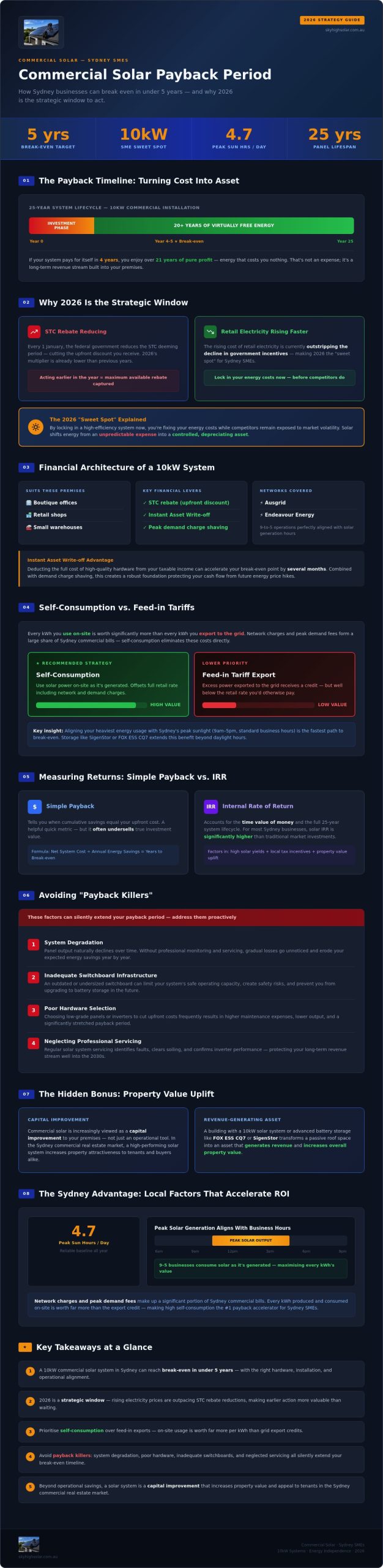
While some business owners worry about the gradual reduction of STC rebates, 2026 has emerged as a strategic “sweet spot” for Sydney SMEs. This is because the rising cost of retail electricity is currently outstripping the decline in government incentives. By locking in a high-efficiency system now, you’re essentially fixing your energy costs while your competitors remain exposed to market volatility. It’s a proactive move that shifts your energy from an unpredictable expense to a controlled, depreciating asset.
Distinguishing between simple payback and Internal Rate of Return (IRR) is also vital for accurate business accounting. While a simple payback calculation tells you when you’ll get your cash back, IRR accounts for the time value of money and the total lifestyle of the system. For most Sydney businesses, the combination of high solar yields and local tax incentives makes the IRR of a solar investment significantly higher than traditional market investments.
Simple Payback vs. Total ROI: What Matters for Your Bottom Line?
A simple payback calculation is a helpful quick metric, but it often undersells the true value of the investment. Most premium panels are engineered for a 25-year lifespan. If your system pays for itself in four years, you’re looking at over two decades of virtually free energy. Beyond the immediate operational savings, commercial solar is increasingly viewed as a capital improvement. In the Sydney commercial real estate market, a building with a high-performing 10kW solar power system or advanced storage like a FOX ESS CQ7 battery is a far more attractive prospect for tenants and buyers alike. It transforms a passive roof space into a revenue-generating asset that increases the overall property value.
The ‘Sydney Factor’: Local Electricity Tariffs and Sunlight Hours
Geography plays a massive role in your financial modelling. Sydney enjoys an average of 4.7 peak sun hours per day, which provides a reliable baseline for energy production throughout the year. However, the real secret to a rapid return lies in your operational schedule. Businesses operating on a standard 9-to-5 basis in the Ausgrid or Endeavour Energy networks are perfectly positioned to consume solar power as it’s generated. Since network charges and peak demand fees make up a significant portion of Sydney commercial bills, every kilowatt-hour you produce and use on-site is worth significantly more than the credit you’d receive for exporting it. When you align your heaviest energy usage with Sydney’s peak sunlight, the path to break-even becomes remarkably short.
The Financial Architecture of a 10kW Solar Power System
For many Sydney SMEs, a 10kw solar system has become the definitive entry-level standard. This size is particularly effective because it aligns with the daytime base load of a typical boutique office, retail shop, or small warehouse. It provides enough power to significantly offset air conditioning and lighting costs without triggering the complex grid protection requirements often associated with much larger commercial arrays. By focusing on this “sweet spot,” businesses can achieve a highly efficient balance between upfront capital and monthly savings.
The 2026 financial landscape for solar is defined by the steady reduction of the Small-scale Technology Certificate (STC) deeming period. Every year on January 1st, the federal government reduces the number of years a system can claim certificates, which effectively lowers the upfront discount. In 2026, the multiplier is lower than in previous years, making the commercial solar payback period slightly more sensitive to timing. Securing your installation earlier in the year ensures you capture the maximum available rebate before the next annual reduction takes effect.
Beyond rebates, the role of the Instant Asset Write-off remains a powerful tool for Sydney business owners. While tax regulations can shift, being able to deduct the cost of high-quality hardware from your taxable income can accelerate your break-even point by several months. This tax efficiency, combined with the system’s ability to “shave” peak demand charges, creates a robust financial foundation that protects your cash flow from future energy price hikes.
2026 Incentives: STCs and the NSW Energy Savings Scheme
Navigating the transition in 2026 requires understanding that incentives are moving toward performance and efficiency. While STCs provide an immediate discount, the NSW Energy Savings Scheme (ESS) offers additional pathways for commercial entities to recoup costs through energy-efficient upgrades. For businesses looking at larger scales, systems exceeding 100kW move into the Large-scale Generation Certificate (LGC) territory, where certificates are created based on ongoing generation rather than an upfront “deeming” process. It’s a more complex path, but one that rewards long-term reliability and high output.
Component Quality: Why Cheap Inverters Lengthen Your Payback
Selecting the right hardware is a decision that impacts your ROI for the next two decades. While a budget string inverter might seem attractive initially, the hidden cost of downtime is a significant risk. If an inferior inverter fails, your entire energy production stops, often wiping out a full year of savings while you wait for parts or repairs. We often compare the long-term performance of the GoodWe ET G2 hybrid series against the granular reliability of Enphase microinverters. While the initial investment varies, the intelligence and durability of these premium brands ensure your system remains operational every day. If you are looking to secure your premises, our team at Sky High Solar can help you design a commercial solar solution tailored to your specific roof profile and energy needs.
Primary Drivers of Your Solar Return on Investment
Maximising your return requires a shift in perspective. It’s no longer just about how many panels you can fit on your roof; it’s about how much of that energy you can use the moment it’s produced. In the current market, the commercial solar payback period is dictated primarily by your self-consumption rate. Using your own solar power is roughly three times more valuable than selling it back to the grid. While feed-in tariffs offer a small credit, they pale in comparison to the savings achieved by avoiding high retail electricity rates and associated network fees.
For every 1kWh of solar energy consumed on-site, a Sydney business saves the full retail rate plus network charges. This immediate offset is the engine that drives your ROI. Beyond simple usage, solar also plays a critical role in “peak shaving.” Many commercial energy contracts include significant demand charges based on your highest point of usage during a billing cycle. By using solar to power heavy machinery or cooling systems during the middle of the day, you lower those peaks and dramatically reduce the fixed costs on your energy bill.
Getting the size right is equally important. While it’s tempting to cover every square metre of available roof space, an oversized system can actually hurt your payback period. If you’re exporting the majority of your power for a negligible tariff, the initial capital outlay takes longer to recoup. We focus on precision sizing to ensure your system is a lean, high-performance asset that matches your actual operational needs.
The Self-Consumption Pivot: Matching Load to Generation
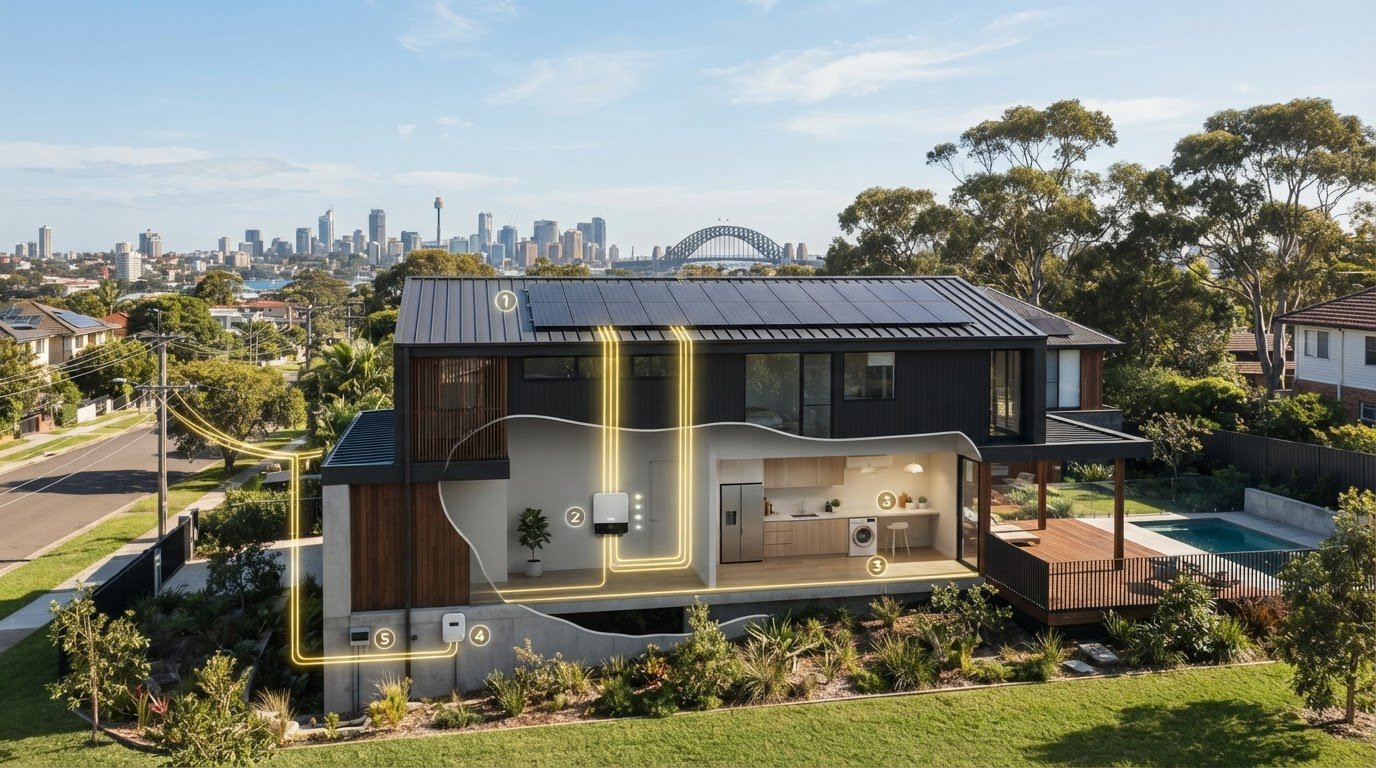
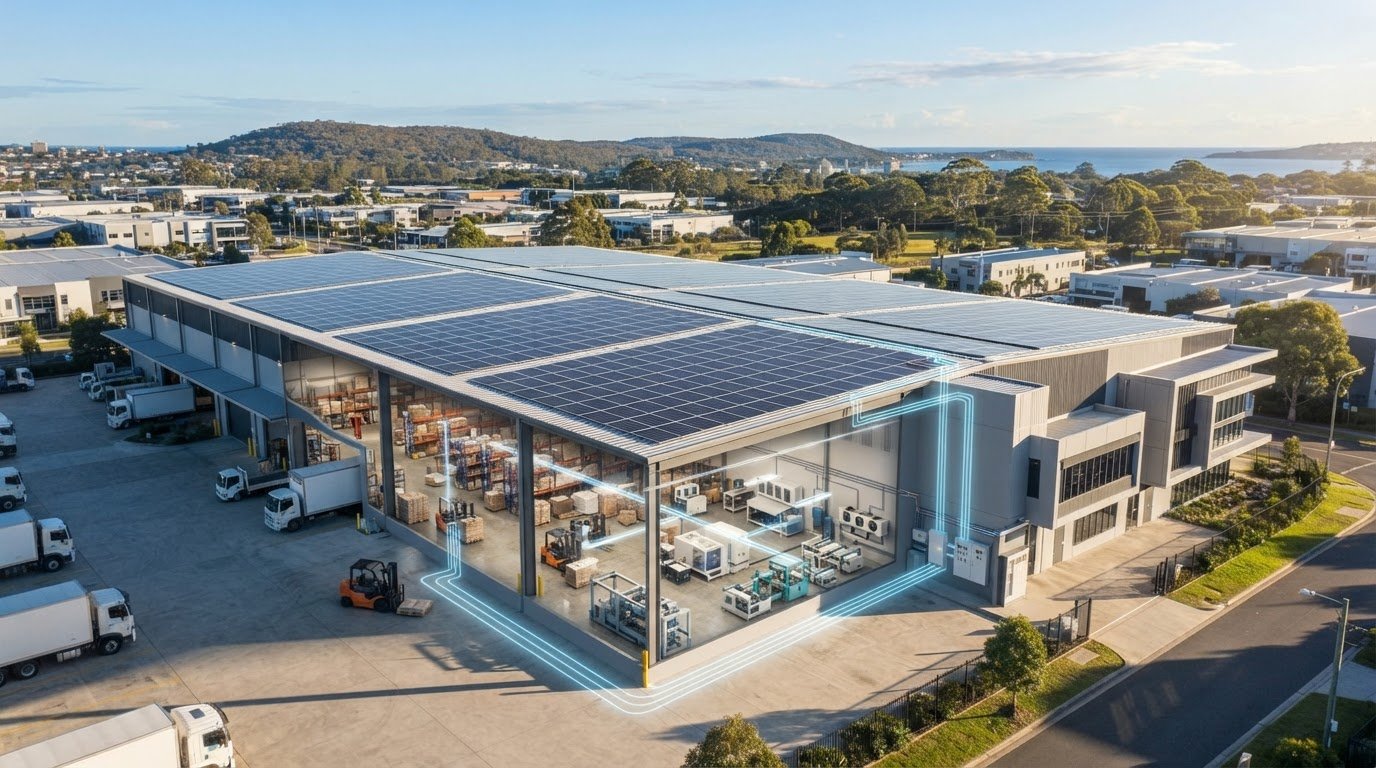
Understanding your load profile is the first step toward energy independence. Are you a “Daytime Peaker” like a medical centre or a “Constant Consumer” like a refrigerated warehouse? By identifying these patterns, you can use smart monitoring to shift high-energy tasks to midday when production is at its highest. Integrated solutions like SigenStor allow businesses to manage these loads intelligently, ensuring that solar power is directed where it’s needed most or stored for later use, further accelerating your break-even point.
Tariff Optimisation: Working with Sydney Retailers
Your existing electricity plan might be working against your new solar investment. Once your system is installed, it’s essential to review your “Time of Use” (ToU) rates. Many Sydney retailers offer different structures that can either enhance or hinder your savings. While the role of the solar feed-in tariff in 2026 is secondary to self-consumption, negotiating a competitive rate for your excess energy still provides a helpful “top-up” to your annual savings. It’s about ensuring every facet of your energy contract is aligned with your hardware’s output.
Avoiding ‘Payback Killers’: Ensuring Long-Term System Performance
Even the most precise financial model can be derailed by “payback killers.” These are technical or environmental factors that silently erode your system’s efficiency over time. Solar degradation is a reality for all PV modules, but the rate of decline varies wildly between entry-level and premium hardware. While budget panels might lose a significant percentage of their output annually, high-tier options maintain a much flatter performance curve. This durability ensures your commercial solar payback period stays on track over two decades rather than drifting outwards due to poor hardware choices.
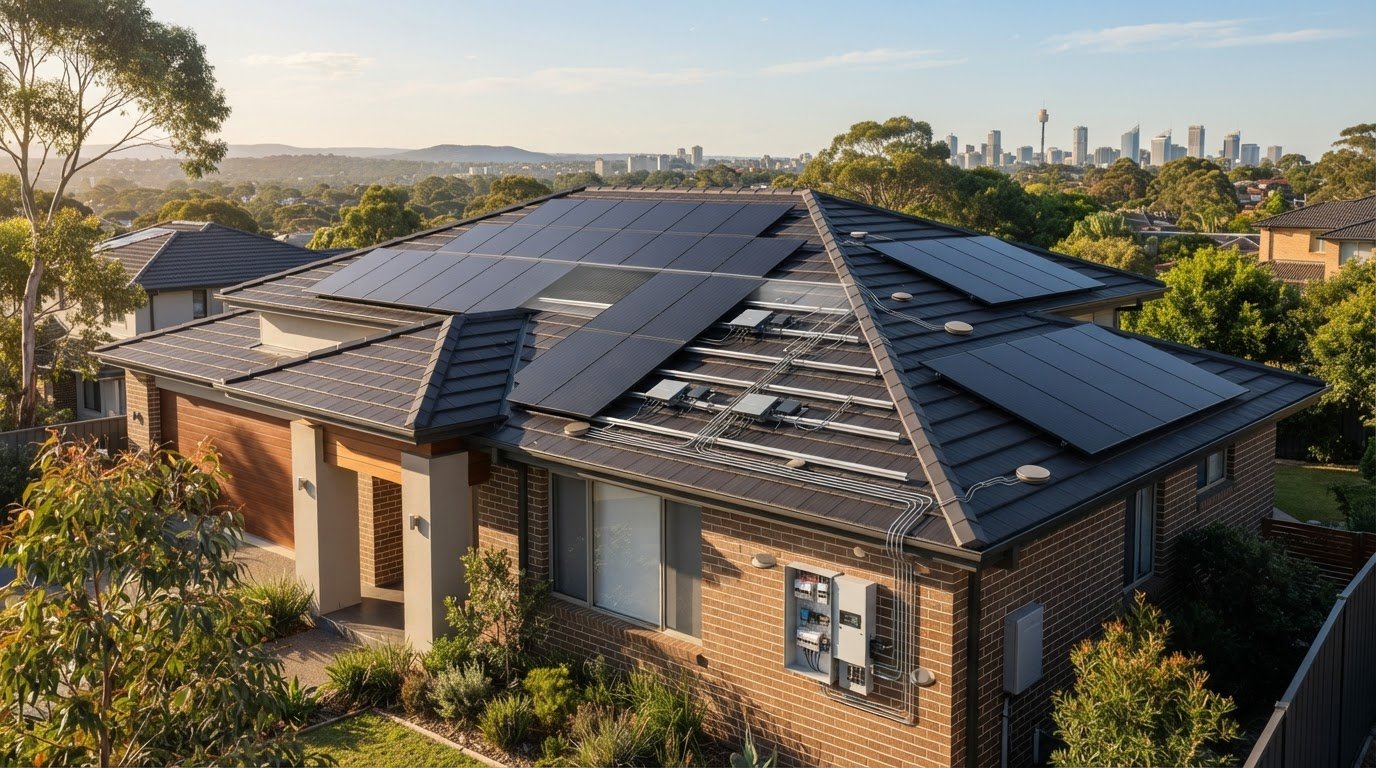
Another frequently overlooked factor is the state of your existing electrical infrastructure. A commercial solar array places new, sustained demands on your building’s electrical heart. If your switchboard is outdated, it can lead to frequent tripping or safety risks that cause unexpected downtime. Upgrading your switchboard to meet the latest AS/NZS 3000 standards isn’t just about compliance; it’s about guaranteeing the uptime required to meet your ROI targets. A system that is offline due to a faulty breaker is a system that isn’t paying for itself.
Sydney’s skyline is also a dynamic variable that requires careful consideration. A new high-rise development or even a growing treeline can introduce shading that wasn’t present during your initial site survey. This is why intelligent system design is crucial. Using advanced hardware like Enphase microinverters or SigenStor solutions allows each panel to operate independently. This prevents a single shaded module from dragging down the performance of the entire string, protecting your revenue from local urban changes.
The Necessity of Professional Solar System Servicing
Sydney’s urban environment poses unique challenges for solar owners. Between the construction dust in the CBD and the salt spray in coastal suburbs, panels can quickly accumulate a film that blocks sunlight. Professional solar system servicing is a revenue protection strategy that goes beyond just cleaning. It involves a comprehensive health check of the electrical components to identify “invisible” faults. A single string failure can go unnoticed for months without proper monitoring, quietly extending your payback timeline while you continue to pay higher energy bills. We provide preventative maintenance that ensures your investment continues to perform at its peak through every season.
Sydney-Specific Installation Logistics
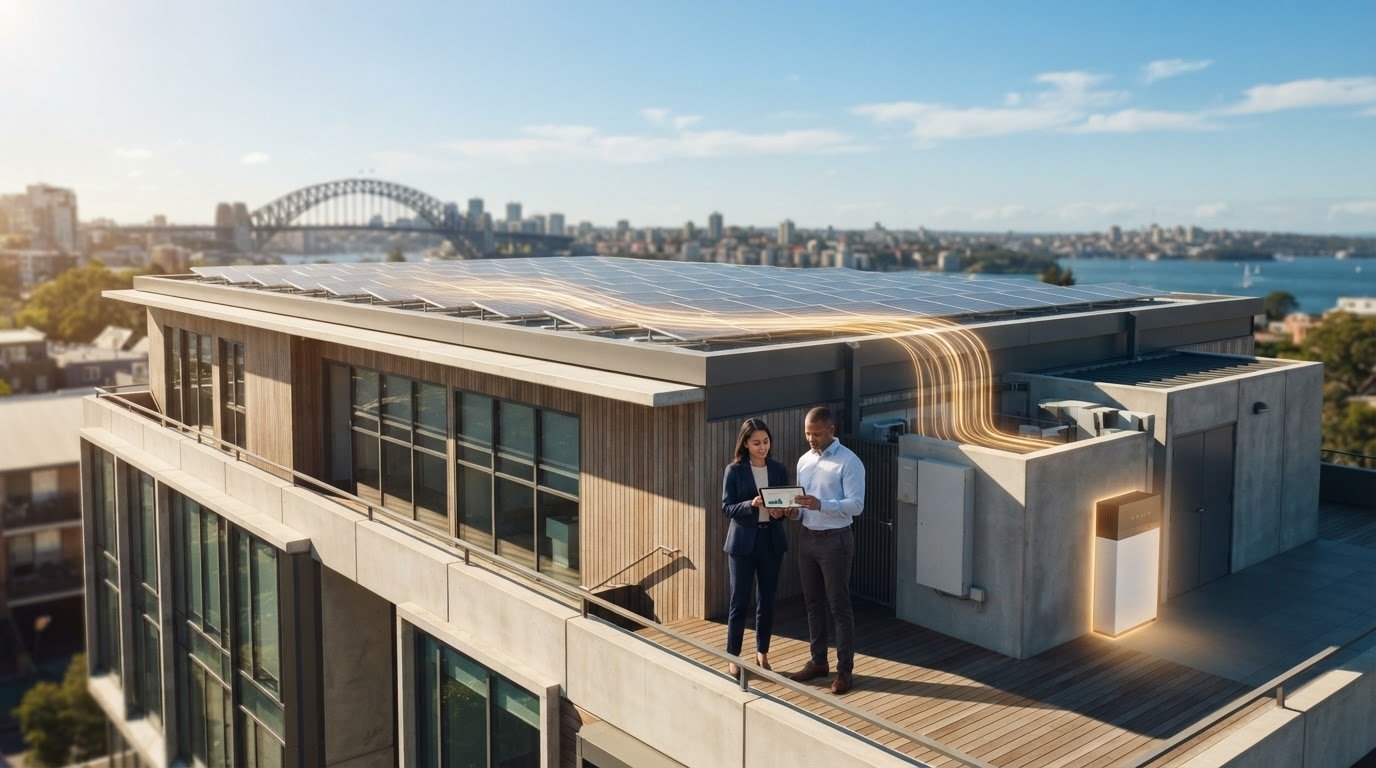
Installing solar in the Sydney metro area requires a specialist touch. Whether you’re dealing with heritage building restrictions or complex flat-roof mounting in the CBD, the logistics can be demanding. These challenges highlight why a professional 6.6kw solar system or 10kW installation is vital for long-term reliability. A botched install can lead to water ingress or structural issues that far outweigh any initial savings. If you want to ensure your system is built to last, you can book a professional solar system service with our licensed team to audit your current setup and protect your return on investment.
Partnering with Sky High Solar for a Precision Business Case
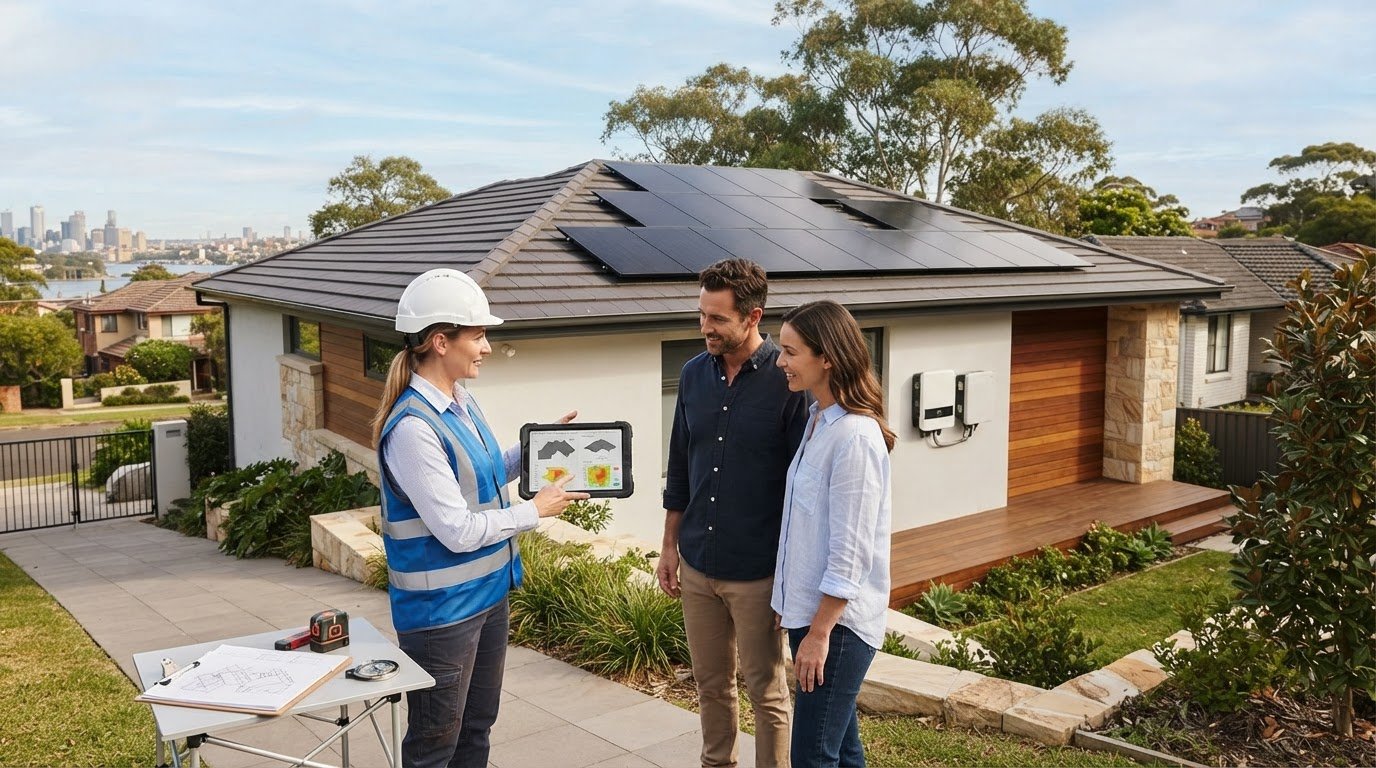
While a “one-size-fits-all” online calculator might provide a rough estimate, relying on generic tools is often dangerous for Sydney business owners. These calculators frequently fail to account for the nuances of local network charges, specific roof orientations, or the complex interval data that defines your actual energy usage. To accurately predict your commercial solar payback period, you need a model built on precision rather than averages. A slight miscalculation in self-consumption rates can shift your break-even point by years, making a site-specific analysis the only reliable way to secure your investment.
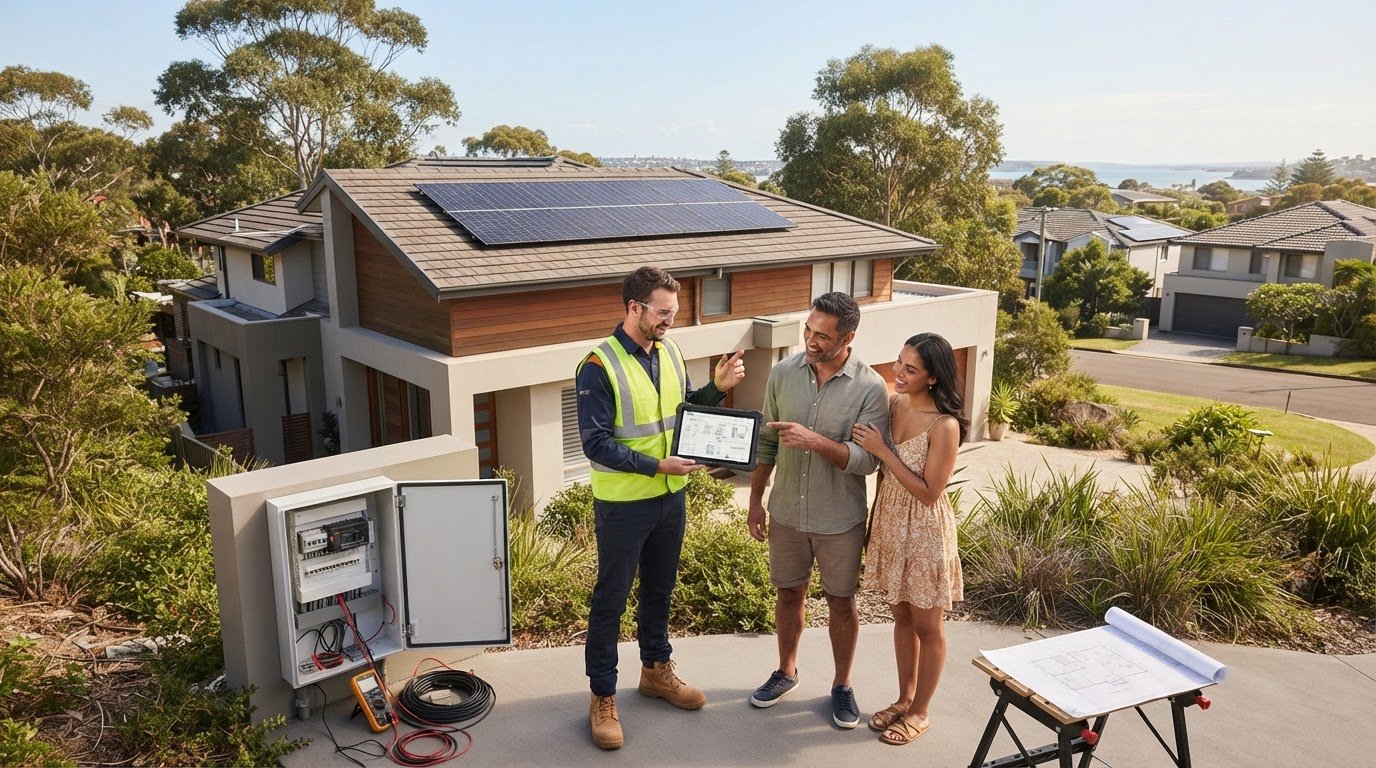
The Sky High Solar difference lies in our identity as licensed electricians who prioritise commercial ROI over simple volume. We don’t just sell panels; we engineer financial assets. By conducting a customised energy audit, we can determine if a standard 10kW solar power system is sufficient or if a bespoke solution is required to meet your operational goals. Our focus remains on creating a transparent, data-driven business case that gives you the confidence to move forward with a system designed specifically for your premises.
From Quote to Commissioning: The Sky High Process
Our methodical approach ensures that every system we commission is optimised for maximum return. We begin with a detailed interval data analysis, looking at exactly when your business consumes power throughout the day. This information informs a custom system design using premium components like FOX ESS or Tesla, ensuring the hardware matches your load profile perfectly. Finally, we manage a seamless installation with minimal disruption to your daily operations, allowing you to transition to renewable energy without missing a beat.
Future-Proofing with Battery Storage and EV Charging
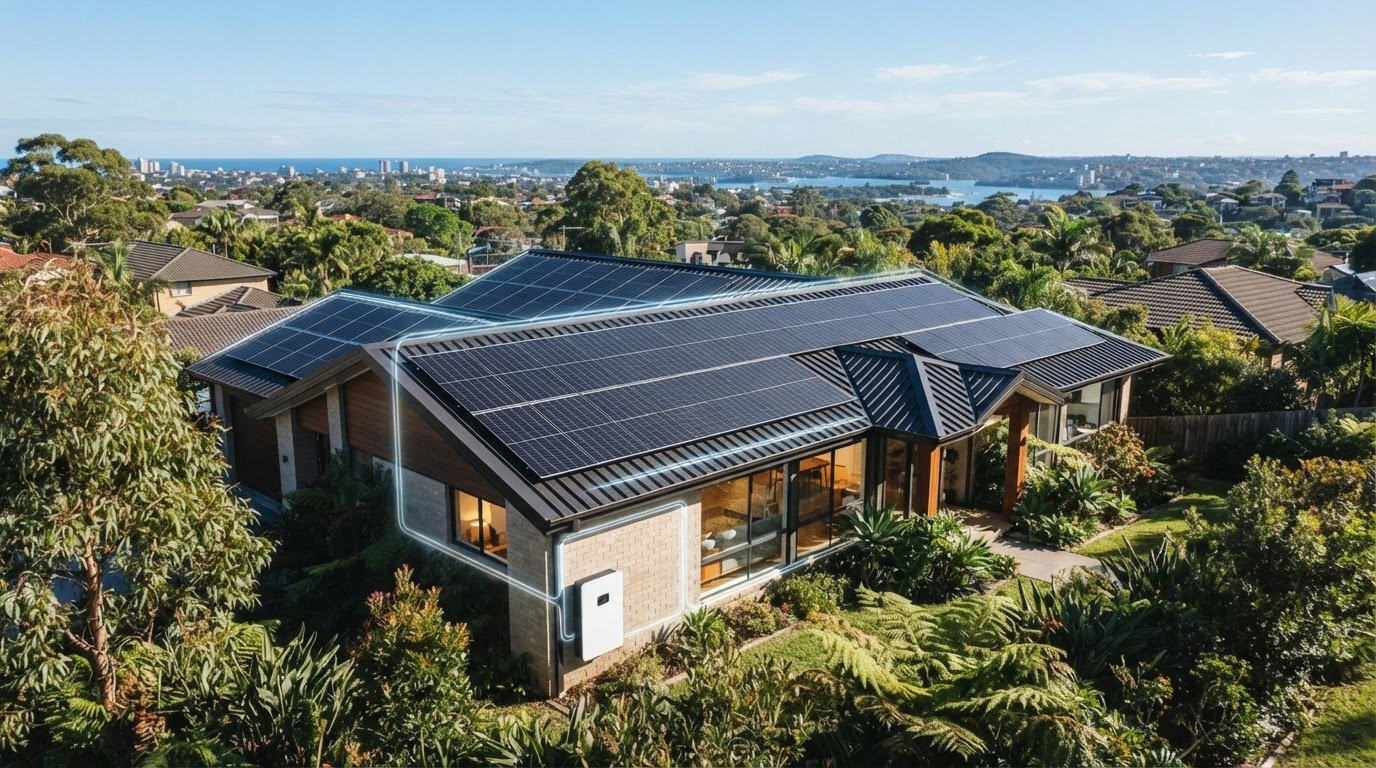
As we move through 2026, the question of adding storage has become central to the commercial solar payback period discussion. Integrating a FOX ESS battery can often accelerate your ROI by capturing excess generation that would otherwise be exported for a low tariff. This stored energy then powers your business during expensive peak periods or overnight. Beyond storage, many Sydney businesses are now integrating SigenStor EV DC chargers. This addition does more than just support a green fleet; it attracts high-value customers and prepares your business for the next decade of the Sydney energy transition. By planning for these integrations now, you ensure your premises remain competitive and energy-independent as the market evolves. The same principles of intelligent energy management that apply to commercial premises are equally relevant for property owners exploring rooftop solar for homes, where integrated ecosystems are transforming residential properties into high-performance power stations.
If you are ready to move beyond estimates and secure a definitive timeline for your energy independence, the next step is a site-specific commercial solar feasibility study. Our team is ready to help you navigate the complexities of the 2026 landscape with clarity and professional authority.
Take Control of Your Future Operational Costs
Navigating the 2026 energy landscape requires a balance of technical precision and strategic timing. By focusing on high-efficiency 10kW systems and prioritising on-site consumption, Sydney businesses can effectively compress their commercial solar payback period. It’s about transforming a dormant roof into a high-performance asset that delivers predictable, lower overheads for decades to come. Quality hardware and proactive servicing ensure this transition remains a source of long-term stability rather than a maintenance burden.
As licensed Sydney electrical contractors and premium FOX ESS and Enphase partners, we bring deep expertise to 10kW and commercial-scale installations. We’re committed to helping you move beyond generic estimates with a data-driven approach to energy independence. You can Request a Commercial Solar Feasibility Study for Your Sydney Business today to discover exactly how a tailored system can benefit your premises. We look forward to helping your business thrive in a cleaner, more efficient future.
Frequently Asked Questions
What is the average commercial solar payback period in Sydney for 2026?
Most Sydney SMEs can expect a commercial solar payback period of between 3 and 5 years in 2026. This rapid return is primarily driven by high retail electricity tariffs and the increasing efficiency of premium hardware. Businesses with high daytime energy consumption, such as medical centres or retail hubs, typically reach their break-even point the fastest.
Does a 10kW solar power system require a switchboard upgrade for my business?
A switchboard upgrade is often necessary for older Sydney commercial premises to ensure the system operates safely and meets current AS/NZS 3000 standards. Modern solar arrays place a consistent, high load on your electrical infrastructure that older boards weren’t designed to handle. Investing in an upgrade prevents unexpected downtime and protects the long-term revenue your system generates.
Can I still claim the solar rebate (STCs) for my business in 2026?
Yes, you can still claim Small-scale Technology Certificates (STCs) in 2026, though the value reduces every year. The federal government reduces the “deeming period” multiplier each January, which means the upfront discount is slightly lower in 2026 than it was in 2025. Securing your installation earlier in the year helps you maximise the available incentive before the next scheduled reduction.
How does the NSW Energy Savings Scheme affect commercial solar ROI?
The NSW Energy Savings Scheme (ESS) provides additional financial incentives for businesses that implement energy-saving activities. While solar is a primary driver of savings, combining it with ESS-eligible upgrades like LED lighting or high-efficiency HVAC systems can further lower your operational costs. This holistic approach creates a more persuasive business case and shortens the overall timeline to energy independence.
Is solar worth it for a business that rents its premises in Sydney?
Solar is definitely worth considering for renters if your remaining lease term exceeds the 3-to-5-year payback period. Many Sydney landlords are increasingly open to “green lease” arrangements where solar is installed as a capital improvement. This setup benefits the tenant through lower quarterly bills and the landlord through increased property value and improved NABERS ratings.
What maintenance is required to keep my commercial solar payback on track?
Professional solar system servicing is essential to ensure your production doesn’t drop due to Sydney’s urban dust or coastal salt spray. We recommend regular panel cleaning and a comprehensive electrical health check to identify any string failures or inverter issues. Maintaining peak performance is a revenue protection strategy that prevents your payback period from drifting outwards due to “invisible” faults.
How do demand charges on my business bill impact my solar savings?
Demand charges are based on your highest point of electricity usage and can account for a significant portion of a commercial energy bill. Solar helps by “shaving” these peaks during the day when your business is most active. By reducing your maximum draw from the grid, you lower these fixed network charges, which adds a layer of savings beyond just the kilowatt-hours produced.
Should my Sydney business wait for battery prices to drop before going solar?
Waiting for battery prices to drop is usually a false economy because the “cost of delay” is so high. Every quarter you wait is another quarter of paying full retail rates to your energy provider. A more effective strategy is to install a “battery-ready” system using a FOX ESS or GoodWe hybrid inverter now, allowing you to save immediately while retaining the flexibility to add storage later.