

 Sydney
 0452 243 240
Blog
Commercial solar system

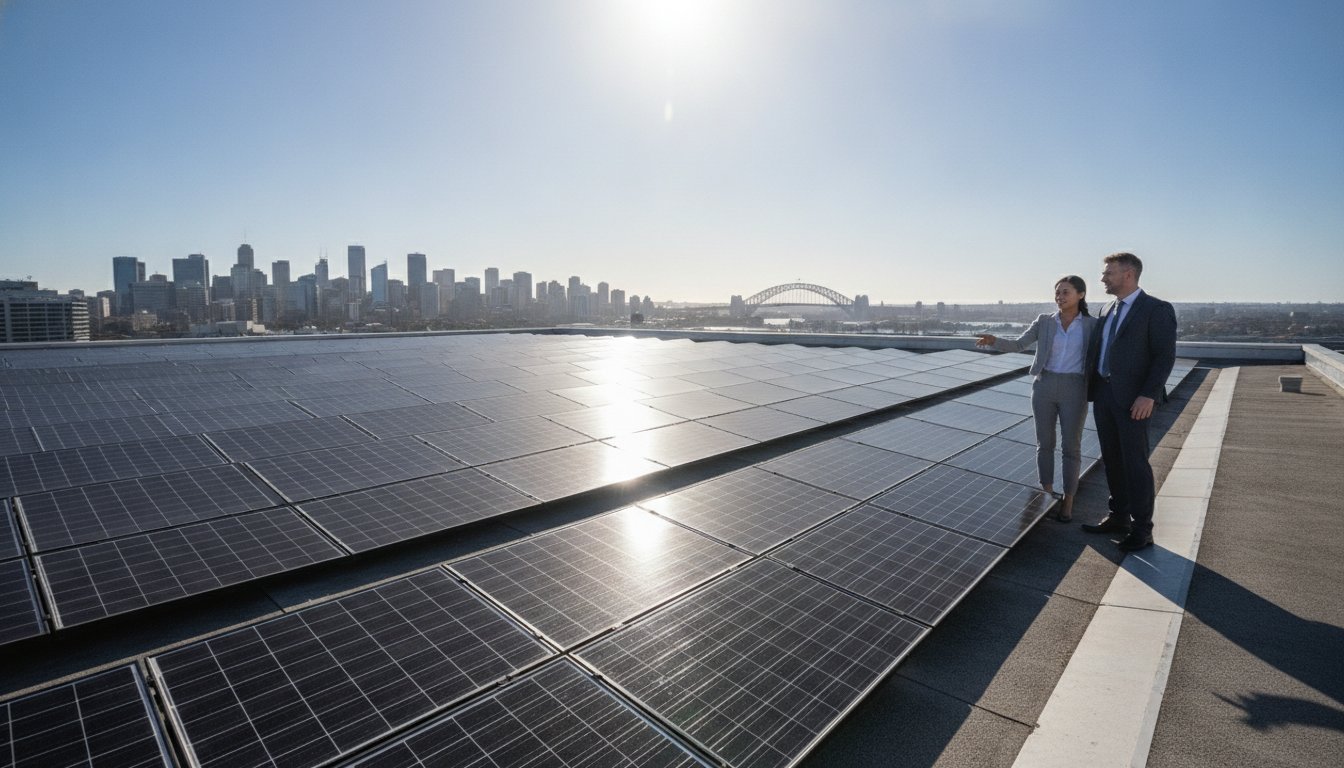
TL;DR: A commercial solar system reduces operating costs by matching high-capacity hardware to daytime energy loads, typically achieving a full return on investment within five years.
- Commercial market prices range from $11,400 to $38,000, with a median cost of $22,400.
- Financial viability collapses unless you prioritize on-site self-consumption over low NSW grid feed-in tariffs.
- A 10kW system size is the recommended benchmark for smaller commercial footprints to optimize payback.
- Sky High Solar and Electrical data shows unmaintained arrays lose 25% output from simple branch shading.
Installing a commercial solar system reduces business operating costs by turning unused roof space into clean energy. Financial data indicates system costs scale with capacity, while an investment aligns power generation with your daytime usage. Matching hardware size to your daily consumption Profile shortens the path to lower electricity bills. The decision questions that matter most are capacity versus real load, payback under NSW feed-in limits, and whether your site, approvals, and maintenance plan support the return you model.
Size commercial solar to your Sydney daytime load
Matching your operation with the right commercial solar installation raises energy independence and trims overheads. Sizing array output to actual peak operational hours limits reliance on expensive grid power, and selecting proper capacity stops excessive energy exports from weakening return on investment.
Segment guide (typical situations):
- Daytime-heavy retail or workshop load: design for self-consumption first; a standard 10kW system size often fits smaller operational footprints while keeping initial overhead controlled.
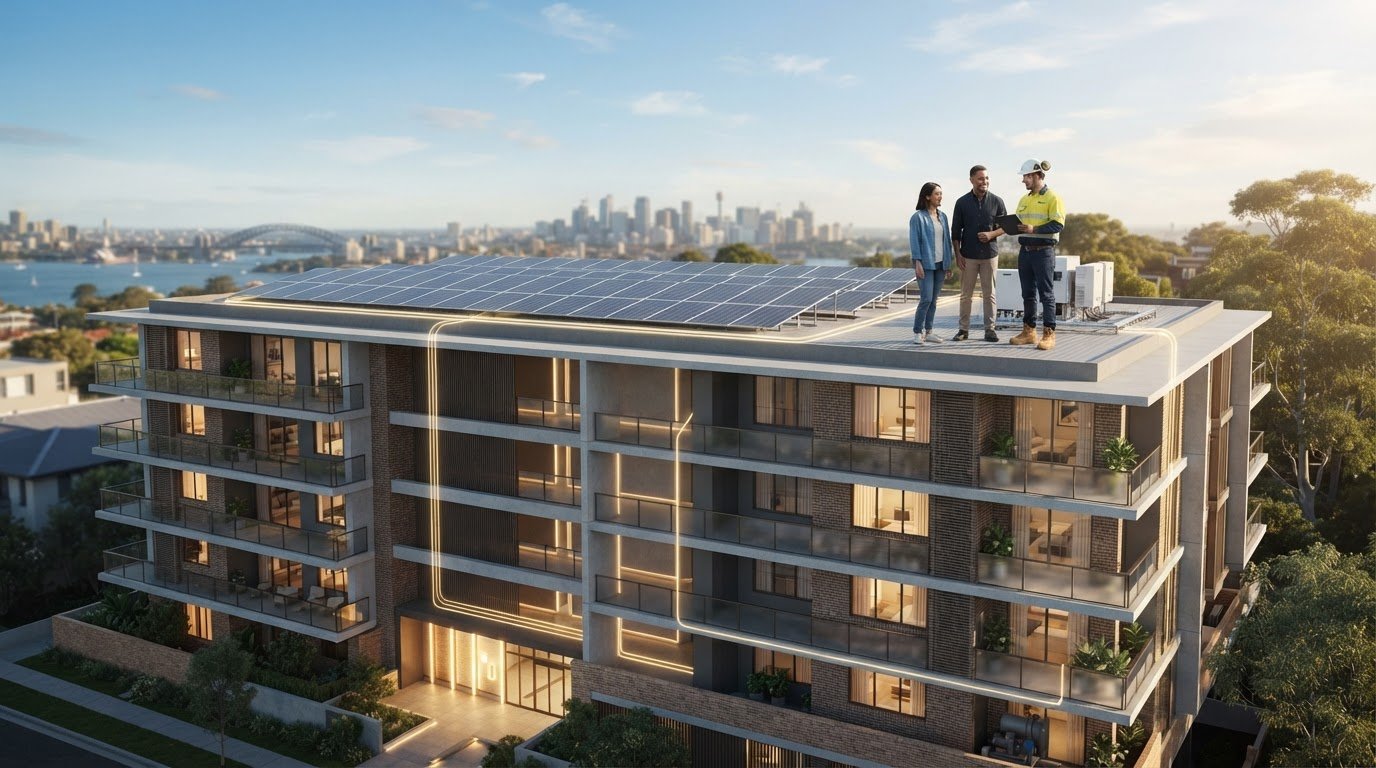
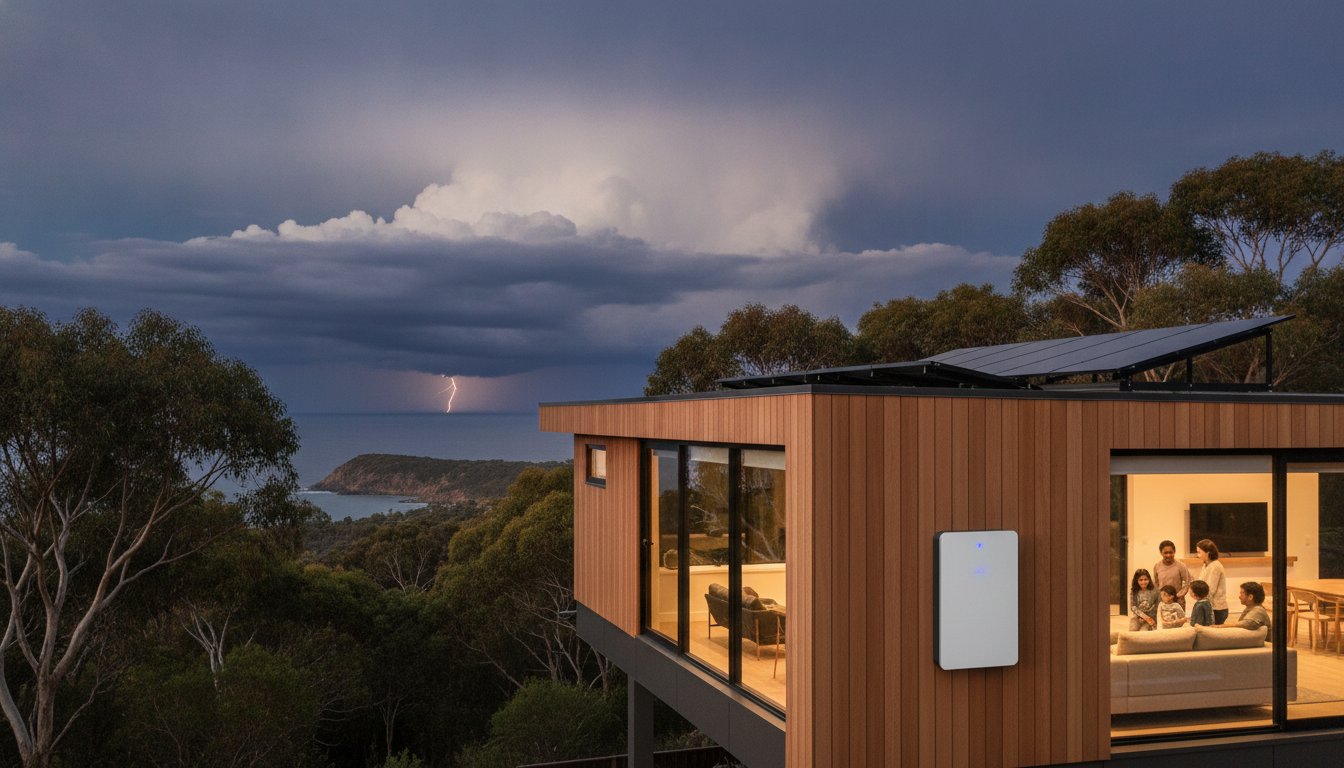
- Evening or night-shift work: pair the array with grid-stable battery storage so excess generation covers later operations instead of low-value export.
- Sites tempted by export income: treat NSW feed-in tariffs as secondary, because internal consumption remains far more profitable under historically low rates.
Every commercial solar choice (LCOE) depends on matching day-to-day energy patterns with engineered hardware. According to Wikipedia’s 2026 solar power reference, solar technologies convert sunlight directly into electricity to support industrial demand efficiently. Configurations around 6.6kW and 10kW have become common benchmarks on rooftops that need solid capacity for electrified demand; for commercial properties, scaled versions of these layouts form the backbone of clean energy setups across New South Wales.
Commercial sites often explore selling power back to the grid (feed-in tariff). NSW feed-in rates remain historically low, so prioritising on-site use protects the business case. Adding a solar battery (grid-stable battery storage) retains excess generation for evening operations. Exploring Commercial Solar Panels Sydney | Solar System Installation provides options tailored to regional grid conditions. Precise capacity planning is a custom-tailored fit for your business power needs, and self-consumption drives the savings you can bank.
Tip: Assess daily peak demand before selecting capacity to ensure optimal self-consumption rather than over-exporting to the grid.
An active user on the community.glowforge.com board titled "Solar Power, Everything Else, Glowforge Owners Forum" asked: Let’s assume I want to run my laser on solar only." (source)
This reader query shows how specialized equipment needs targeted system planning to run off-grid or on a dedicated solar supply, and why peak usage and sizing matter for high-draw machinery.
Commercial hardware built for business-scale daytime demand
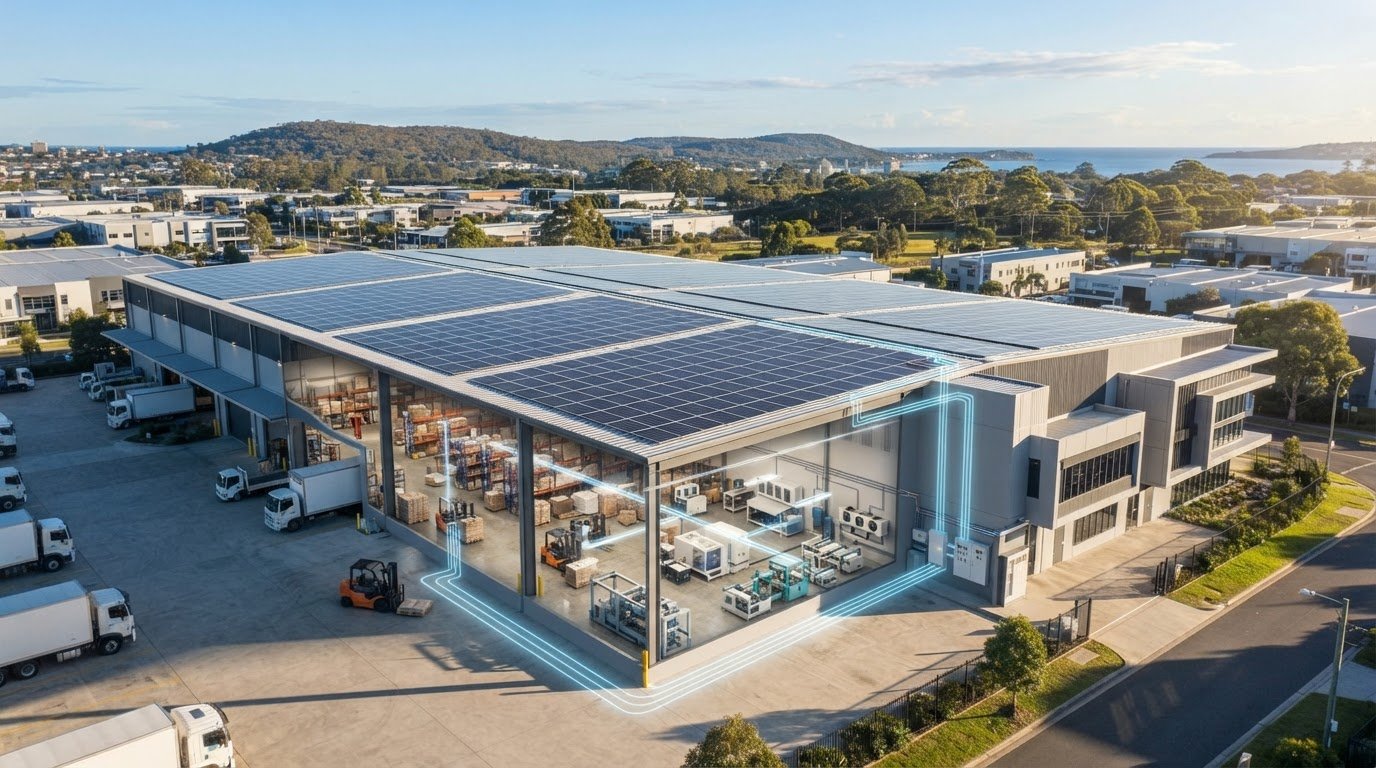
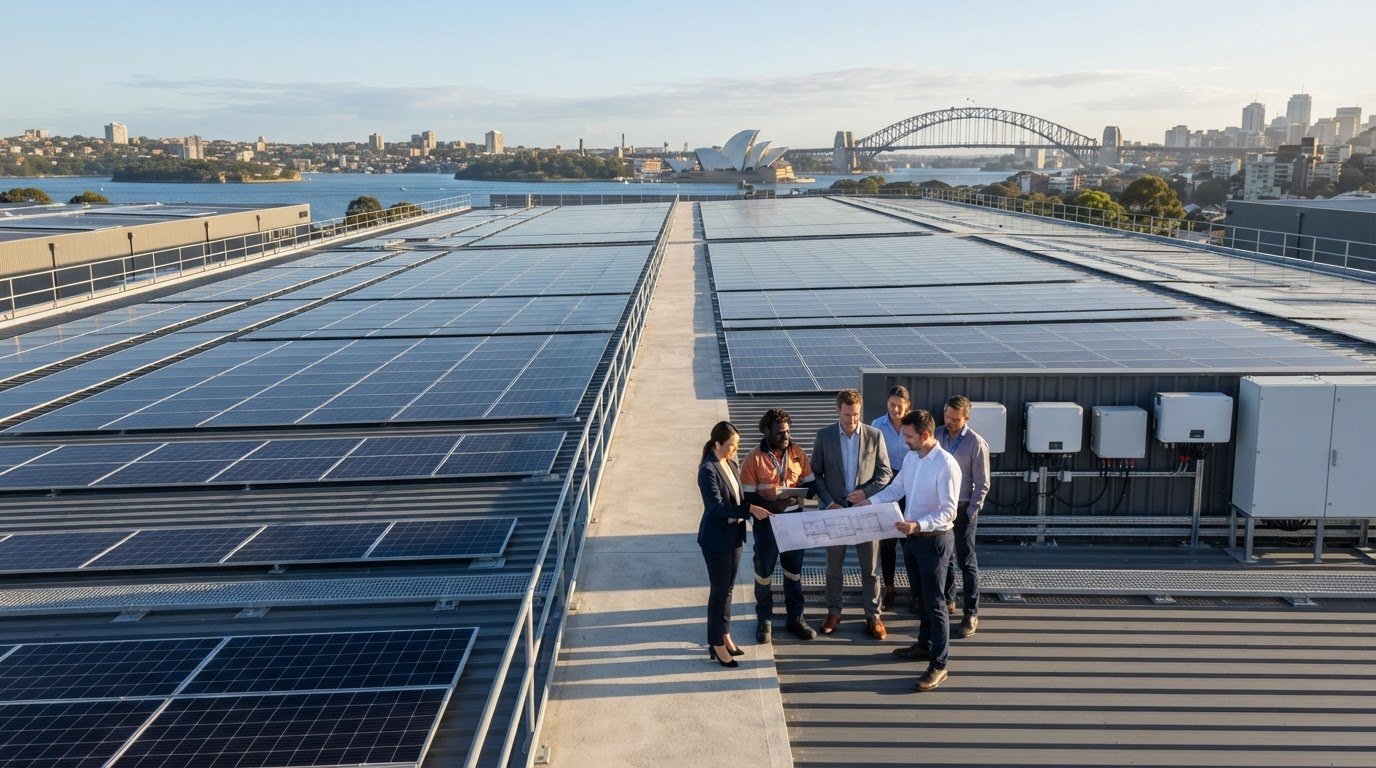
A commercial solar system uses heavy-duty hardware built to supply daytime energy for businesses, factories, and large commercial facilities: an industrial engine beside a standard sedan engine.
While home setups handle modest energy needs, commercial units feature higher-capacity three-phase inverters and tough mounting frames. They carry large power loads under constant workplace demand without early failure.
You gain direct financial advantages. Operating during peak business hours lets you consume clean energy immediately and cut daily utility bills. If you need spare energy for night shifts, adding a Solar Battery Installation & Storage Sydney | Home Battery keeps the site supplied.
Selling power back to the grid is possible, yet low grid export limits in NSW make self-consumption the stronger money saver. Systems are scaled to the facility energy Profile, and larger operations benefit most from high-capacity hardware. Upgrading with commercial solar builds long-term value, reduces overheads, and shrinks your carbon footprint.
ROI and cash flow: calculating real commercial payback
Commercial solar systems improve cash flow by substituting expensive grid power with cheap, self-generated electricity, so more cash remains inside the business.
Strict financial limits apply to feed-in tariffs when selling power back to the grid in NSW, which turns self-consumption into the primary profit driver. Chasing high export rates is unreliable because feed-in values fluctuate; designing for internal consumption steadies the balance sheet. Based on market sampling, a standard 10kW system size fits smaller operational footprints while keeping initial overhead controlled.
| System Option | Financial Focus | Payback Dynamic |
|---|---|---|
| 10kW System Size | Self-consumption efficiency | Under 5 years |
| Battery Integration | Peak-shaving protection | Extended offset period |
Long-term returns depend heavily on hardware health. Arranging a regular Solar Panel Maintenance, Repair & Service Penrith schedule prevents generation losses from dirt accumulation or inverter faults. Skipping a routine solar panel checkup (solar health check) erodes system yield over time.
Initial solar investments can stall if hardware fails early or expected rebates disappear before installation, a real concern for owners who model payback tightly.
Over on the forum.cleanenergyreviews.info discussion "Melbourne South East & Mornington solar installers", a participant posted: $6200 seems a little dear for that system if so, and I’d say $9k for Seraphim and Enphase ~4.75kW seems high too." (source)
That buyer concern shows how hidden costs or missing incentives distort financial projections, which is why precise payback calculations belong in the decision, not after the contract.
Situation → solution → result: owners who price only on sticker cost and ignore incentives or service often see projections collapse; locking hardware scope, rebate timing, and a maintenance path keeps a well-engineered 10kW commercial system on track for break-even in under 5 years. Ask for a facility-specific quote if you want those figures against your own load Profile.
Cut operating costs by generating power on your own roof
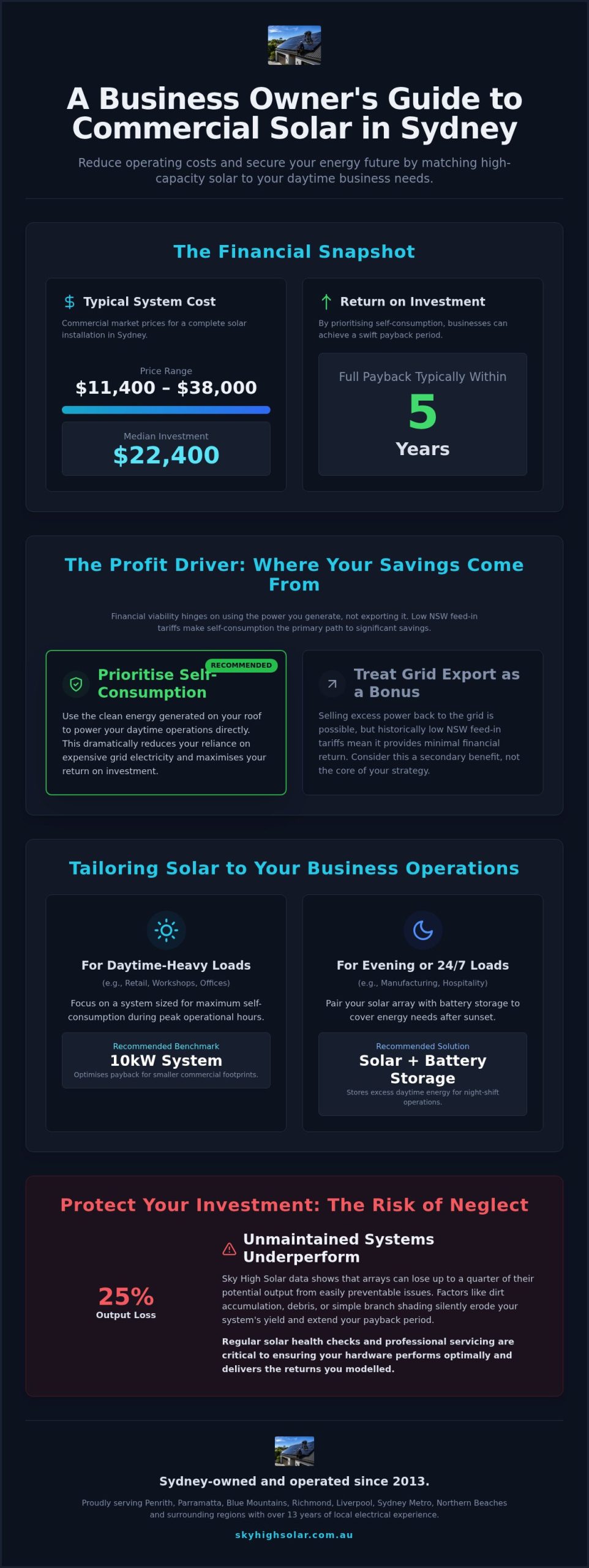
Commercial solar reduces operational overheads by converting daytime rooftop exposure into immediate corporate energy savings.
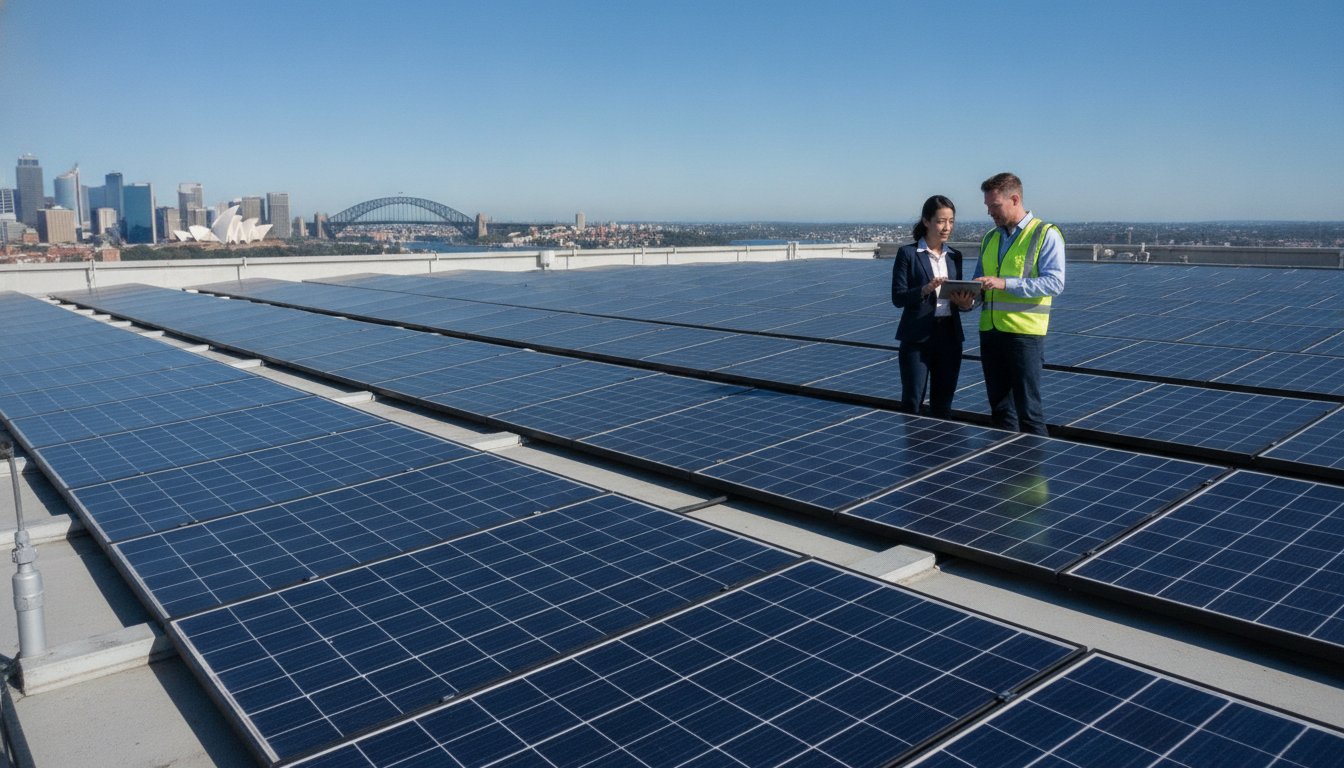
Situation → solution → result: during field installations across Sydney, untrimmed tree branches regularly shadow north-facing arrays and cut output by nearly a quarter; timely site clearing restores baseline yield before the loss compounds across billing cycles. Running your own generation also buffers the business against volatile utility rate hikes.
According to the ABS 2025 report on household solar electricity generation, renewable power output continues to transform regional energy markets. Commercial properties cut grid reliance during peak tariff hours and protect profit margins directly. A solar choice (LCOE) framework helps you evaluate long-term financial returns with clearer inputs.
Selling power back to the grid offers limited financial upside in NSW today due to low export rates. Profitability comes from consuming energy onsite or combining systems with a Home EV Charger Installation Sydney | Commercial setup to fuel operational fleets efficiently. High-efficiency hardware supports asset value when it is sized to the load you already pay for.
When commercial solar becomes a risky business choice
Commercial solar becomes a risky investment when unreliable providers make unapproved equipment substitutions or trigger long administrative grid delays.
In practice, suppliers sometimes swap contracted hardware due to stock shortages, leaving businesses with different panels than quoted. Weak project management also creates long post-installation waits for a two-way power meter (bi-directional smart meter), freezing financial return until the meter is live.
Signing a weak deal can leave you with substitute parts and no practical way to switch the system on. Buying strictly on low upfront cost often backfires when approvals and warranties are vague.
Smart buyers insist on strict hardware guarantees before signing. Lock exact solar panel warranty (post-installation review) documentation and confirm local Sydney grid approvals upfront so downtime does not erase the modelled saving.
Keep operations online from site assessment to grid connection
Installing commercial solar needs careful scheduling so daily workflow stays intact and unexpected power shutdowns stay off the calendar.
Submitting paperwork early prevents costly financial mistakes. A common buyer trap is installing equipment before formal network sign-off, which forfeits government financial incentives entirely.
- Site assessment: Engineers evaluate roof structural integrity and electrical layout.
- Regulatory approval: Approvals are secured before hardware touches your roof.
- Hardware mounting: Installers fit panels, inverters, and two-way power meters (bi-directional smart meters).
- Grid connection: Local distributors test and connect your setup safely.
Completing these steps in order protects cash flow and the rebate path. A solar panel checkup supports ongoing peak generation; schedule maintenance during off-peak hours so production work is not interrupted. Map milestones against your site with a project quote when you are ready to lock dates.
Capture STC rebates and local incentives before grid connection
Government financial schemes offset system costs through Small-scale Technology Certificates (STCs) and state programs.
Situation → solution → result: missing submission deadlines causes lost savings on commercial systems, because failing to submit paperwork before grid connection invalidates entitlement; an installer who sequences applications before connection keeps the upfront STC discount intact and shortens payback.
STC credits act as an upfront discount applied at purchase. Lower upfront expenses shorten the payback period by converting a future credit into cash at buy time. Selling power back to the grid can add a smaller return, though lower export caps limit that benefit in NSW.
Navigating strict compliance rules calls for an experienced installation partner. Sky High Solar and Electrical manages the application timeline so deadlines are not missed. Verify paperwork status during a solar panel checkup, then book a quote while the incentive window still aligns with your build.
Protect yield with maintenance, warranties, and health checks
Preventative maintenance protects your commercial investment and holds energy output steady over time. Commercial installations need regular performance monitoring and a periodic solar panel checkup to spot failing components early.
Dirt accumulation cuts generation quickly, so regular solar cleaning (soft wash technique) is required for strong operation. When hardware fails, a prompt solar panel warranty claim limits downtime cost.
Many business owners chase providers for post-installation work or delayed refunds after grid connection delays. An established installer reduces that friction. Sky High Solar and Electrical has been operating since 2013 and remains Sydney-owned, with support that does not hand you off between evasive sub-contractors. Set up monitoring and maintenance through a personalised service quote when you want a single accountable schedule for the site.
Frequently asked questions
How Much Do Commercial Solar Panels Cost?
Commercial system costs depend on your roof shape, hardware quality, and energy needs. Market pricing for commercial work ranges between $11,400 and $38,000, with a median of $22,400. A solar choice (LCOE) evaluation helps calculate true returns against your load; Contact the team for a tailored figure set.
What sizes are available for businesses?
Commercial solar system sizes range from small setups to large arrays that power heavy industrial operations. Benchmark options like 10kW system layouts suit many small enterprises, while larger commercial sites often need custom capacity designs tied to peak daytime demand.
How does the installation process work?
Installation begins with an engineering audit before installers mount your system and test electrical hookups. Technicians also install a two-way power meter to track energy flow, and compliant commercial builds follow the approval-first sequence described above.
How long does it take to install commercial solar panels?
On-site physical assembly usually finishes within a few days for typical commercial solar system projects. Overall project timelines vary based on utility approvals and grid connections, so experienced project management matters as much as the roof work itself.
What are the main disadvantages of commercial solar power?
High upfront capital demands and variable weather patterns present the largest ongoing challenges. You can offset costs by selling power back to the grid, though NSW market limits apply, and scheduled solar panel checkup visits remain necessary to hold generation performance.
Final Steps for Your Commercial Solar Investment
Selecting a commercial solar system means balancing upfront expenditure against long-term maintenance and capacity: the same questions raised at the start (load match, self-consumption under low NSW feed-in rates, rebate timing, and who stands behind warranties).
Proper capacity sizing lets your business use daily generation without paying for idle hardware. In 2026, certified electrical solutions help Sydney businesses secure financial and environmental gains through tailored system design.
The Sky High Solar and Electrical team has provided trusted installations across Sydney since 2013. Contact the team for a tailored site evaluation and a detailed cash-flow proposal when you are ready to compare options against your meter data.