

 Sydney
 0452 243 240
Blog
Ultimate Guide to 10kW Solar Systems for Sydney Homes (2026)

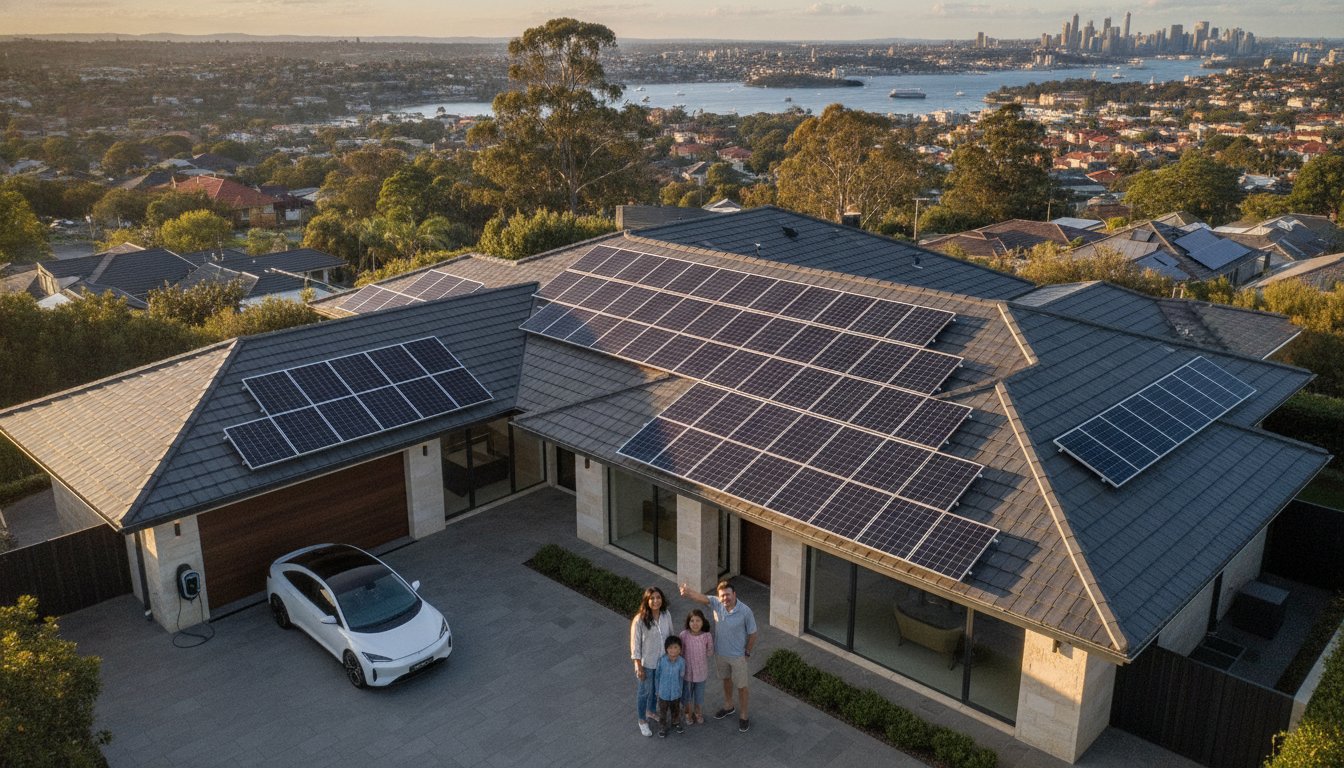
What if your next quarterly statement from Ausgrid or Endeavour Energy arrived with a balance of zero, or even a credit? You’ve likely felt the sting of rising energy prices and wondered if a 10kw solar system is the right investment to finally bring those costs under control. It’s common to feel hesitant when faced with technical jargon about 1-phase versus 3-phase power, or to feel anxious about “solar cowboys” who lack the electrical expertise to back up their sales pitch.
Investing in this capacity is no longer about simply having a “big” array; it’s a strategic move to future-proof your home against an unpredictable energy market. This system size provides the necessary headroom to power high-draw appliances while preparing for a seamless transition to an electric vehicle. In this guide, we’ll clarify the actual roof requirements and installation considerations for Sydney properties heading into 2026. You’ll discover how a high-tier, intelligently designed system delivers a sophisticated level of reliability and a genuine return on investment in our unique coastal climate.
Key Takeaways
- Learn why a 10kw solar system is the modern benchmark for Sydney households, providing the essential energy headroom to power electric vehicles and high-capacity storage.
- Understand the updated physical requirements for your roof, as 2026 panel efficiencies allow for high-output arrays on smaller footprints than older technology.
- Get a clear breakdown of current STC rebate levels and how they influence the total return on investment for premium components in the NSW climate.
- Discover how to navigate technical hurdles like 3-phase power requirements and export limits to ensure your system delivers seamless, long-term performance.
- Identify how to avoid “solar cowboys” by prioritising licensed electrical specialists who focus on the longevity and safety of your home’s energy infrastructure.
What is a 10kW Solar System and Why is it Trending in Sydney?
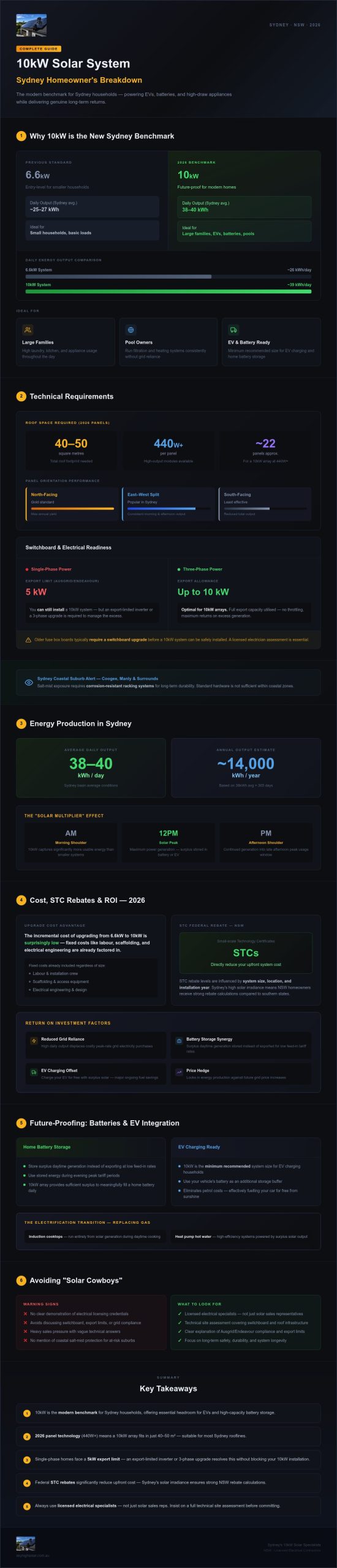
A 10kw solar system represents a robust energy solution consisting of approximately 10,000 Watts of total panel capacity. While the 6.6kW array was once the default choice for suburban households, the shift toward higher-capacity systems has accelerated across Sydney. This trend isn’t just about chasing bigger numbers; it’s a calculated response to the way we live now. Modern homes are increasingly energy-intensive, and a larger array provides the necessary foundation for true energy independence.
The secret to the popularity of the 10kW array lies in the “solar multiplier” effect. Larger systems don’t just produce more power at high noon; they capture significantly more usable energy during the “shoulder” periods of the morning and late afternoon. Even on overcast days in the Sydney basin, a 10kw solar system can often generate enough electricity to cover base loads, such as refrigeration and standby appliances, while a smaller system might struggle. This makes it the ideal choice for:
- Large families with high laundry and kitchen appliance usage.
- Pool owners who need to run filtration and heating systems consistently.
- Homeowners planning to install an EV charger or a high-voltage battery.
10KW vs 6.6kW: Which is Better for Your Household?
Choosing between these two common sizes often comes down to your daily consumption patterns. While a 6.6kW system remains a solid entry point for smaller households, the daily yield of a larger unit, which averages around 38-40kWh in Sydney, offers a much wider safety net. The incremental cost of upgrading from a 6.6kW to a 10kW capacity is often surprisingly low, as the fixed costs of labour, scaffolding, and electrical engineering are already accounted for. For a deeper look at the entry-level alternative, see our 6.6kW Solar System Sydney Guide.
The ‘Future-Proofing’ Factor
We’re seeing a rapid transition from gas-fired heating and cooking to high-efficiency electric alternatives. A larger system provides the capacity to run induction cooktops and heat pump hot water systems without relying on the grid. It’s also the minimum recommended size for households planning to charge one or more electric vehicles. By generating a surplus of energy during the day, you can offset the impact of lower feed-in tariffs in NSW by storing that energy in a solar battery storage system or your car’s battery, rather than selling it back to the grid for a few cents.
Technical Requirements: Roof Space and Electrical Readiness
Installing a 10kw solar system requires a precise evaluation of your property’s physical and electrical infrastructure. While older technology demanded vast expanses of roof, 2026 panel efficiencies have changed the calculation. Modern high-output modules, often exceeding 440W per panel, mean a 10kW array typically occupies between 40 and 50 square metres. This compact footprint allows many Sydney homeowners to achieve high energy yields even on complex or multi-storey rooflines where space is at a premium. For a broader overview of how modern rooftop solar for homes has evolved into a sophisticated integrated ecosystem, our 2026 Sydney guide covers the full landscape of technology and regulation.
Orientation plays a vital role in performance. While a North-facing array remains the gold standard for total annual yield, East and West orientations are increasingly popular in Sydney. An East-West split can provide a more consistent energy production profile, matching the morning and afternoon peaks of a busy household. Given our proximity to the ocean, we prioritise high-quality, corrosion-resistant racking systems. In coastal suburbs like Coogee or Manly, salt-mist protection is essential for the long-term durability of the installation.
Is Your Switchboard Ready for 10kW?
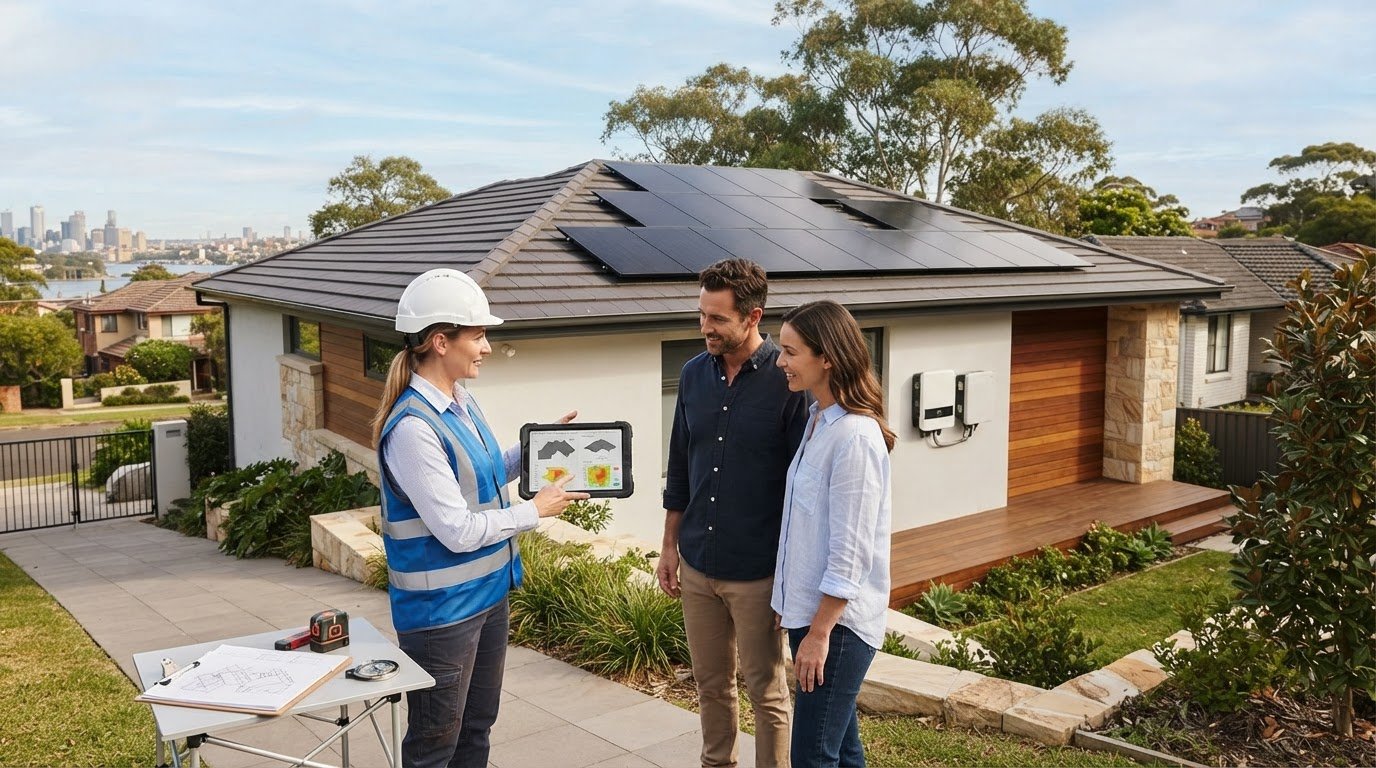
Moving to a higher-capacity system often triggers the need for a switchboard upgrade. Modern safety standards require specific circuit protection that older fuse box style boards simply cannot accommodate. If your home is on single-phase power, Ausgrid and Endeavour Energy typically impose a 5kW export limit. This doesn’t mean you cannot have a 10kw solar system; it simply means we may need to install an export-limited inverter or discuss a three-phase power upgrade. Our team of licensed electricians manages this technical heavy lifting, ensuring your home’s infrastructure is safe and compliant. You can book a technical site assessment to see if your current board is ready.
Roofing Materials and Installation Complexity
Whether your home features traditional terracotta tiles, versatile Colorbond, or modern Klip-lok profiles, the mounting method must be exact to ensure a watertight finish. Sydney’s urban density often introduces shading challenges from neighbouring trees or newer multi-storey builds. To solve this, we frequently utilise Enphase microinverters. Unlike traditional string inverters, microinverters allow each panel to operate independently. If one panel is shaded by a chimney or a branch, the rest of your 10kw solar system continues to produce at maximum capacity, ensuring you don’t lose valuable energy to minor environmental obstacles.
Energy Production: What a 10kW System Delivers in Sydney
A 10kw solar system in the Sydney basin produces an annual daily average of approximately 40 to 45 kilowatt-hours (kWh). To put this volume into perspective, it’s enough energy to run a large ducted air conditioning system, power a high-performance pool pump, and cycle through several loads of washing while still having capacity to spare for a high-voltage battery. This level of production moves a household beyond mere bill reduction and into the territory of genuine energy self-sufficiency.
Sydney’s climate, while generally sun-drenched, presents specific environmental stressors like high humidity and intense summer heat. These factors can impact the efficiency of lower-tier components. We prioritise panels with superior temperature coefficients to ensure that your 10kw solar system maintains its output even when the mercury climbs in January. The goal is to maximise “self-consumption” — using the power as it is generated — rather than relying on grid exports, which offer a lower financial return compared to the cost of buying electricity.
Sydney Weather Patterns and Solar Performance
Our local weather is often influenced by “East Coast Lows,” which can bring several days of heavy cloud and rain. This is exactly where the 10kW capacity proves its worth. Even in low-light conditions, a larger array harvests more ambient energy than a standard 6.6kW system. During the shorter winter days of June and July, when the sun sits lower in the sky, the extra panel capacity ensures you aren’t left relying entirely on expensive grid power. Many of our designs incorporate “over-clocking,” where we install a higher panel capacity than the inverter’s nominal rating to maximise production during these weaker light periods.
Grid Export Limits and Smart Inverters
A common point of confusion for Sydney homeowners involves the export limits set by Ausgrid and Endeavour Energy. Most single-phase properties are limited to exporting 5kW back to the grid at any one time. It’s a mistake to think this makes a 10kW array redundant. In reality, it makes the system more valuable. While you can only export 5kW, your home can simultaneously consume the remaining 5kW to run appliances or charge an electric vehicle.
Smart hybrid inverters, like the GoodWe ET G2 Hybrid HV Inverter, manage these limits with precision. These intelligent units prioritises powering your home and charging your storage battery first. Only once those needs are met is the surplus energy directed to the grid within the allowed limit. This ensures you capture the maximum value of every photon without falling foul of utility regulations.
Cost, Rebates, and ROI: The Financial Breakdown for 2026
Investing in a 10kw solar system is a significant financial decision that requires a focus on long-term value rather than just the initial outlay. In the Sydney market, pricing generally falls into two categories: value-driven systems and premium, high-performance configurations. While a lower entry price might seem attractive, premium components from brands like Enphase or Tesla often provide a lower total cost of ownership due to their extended warranties and superior degradation rates. Choosing high-tier equipment ensures that your asset continues to perform at peak efficiency well into its second decade of operation.
The federal government’s Small-scale Technology Certificate (STC) scheme remains a vital factor in 2026, though it’s important to recognise that this subsidy is phasing out. Each year, the number of certificates you can claim reduces, which effectively increases the net cost of installation over time. By acting now, you lock in a higher rebate level before the next scheduled reduction. Most Sydney households find that the payback period for a high-quality 10kw solar system is remarkably short when compared to the 25-year expected lifespan of the panels. To get a detailed breakdown of how these incentives apply to your property, you can request a personalised financial estimate from our electrical team.
NSW Government Incentives and Rebates
The landscape for state-based incentives has shifted toward storage and smart integration. In 2026, NSW homeowners can often access specific programs designed to encourage the pairing of solar arrays with solar battery storage solutions, such as the FOX ESS CQ7. These incentives are frequently bundled with grants for smart EV charging infrastructure, making the transition to an all-electric lifestyle more accessible. Waiting for “better technology” or lower prices is rarely a winning strategy, as the rising cost of grid electricity and the declining federal rebate usually outweigh any minor drops in hardware costs.
ROI: 10kW vs The Bank
When you compare the returns of a solar installation to traditional financial products, the results are often striking. A well-designed system frequently delivers an annual return that far outpaces the interest rates found in standard savings accounts or mortgage offsets. Additionally, the Sydney real estate market continues to place a premium on energy-efficient homes. A 10kW array is a visible, high-value asset that can significantly enhance property resale value. The Levelised Cost of Energy (LCOE) provides the most accurate measure of value as it calculates the total cost of your 10kw solar system over its operational life divided by every kilowatt-hour it produces. This metric proves that generating your own power remains one of the most stable investments available to homeowners today. If you also operate a business from your premises, understanding the commercial solar payback period can reveal additional financial advantages for your operations. Business owners looking to take this further can explore how a dedicated commercial solar installation in Sydney can slash OPEX and leverage the $20,000 instant asset write-off available in 2026.
The Next Step: Integrating Batteries and EV Charging
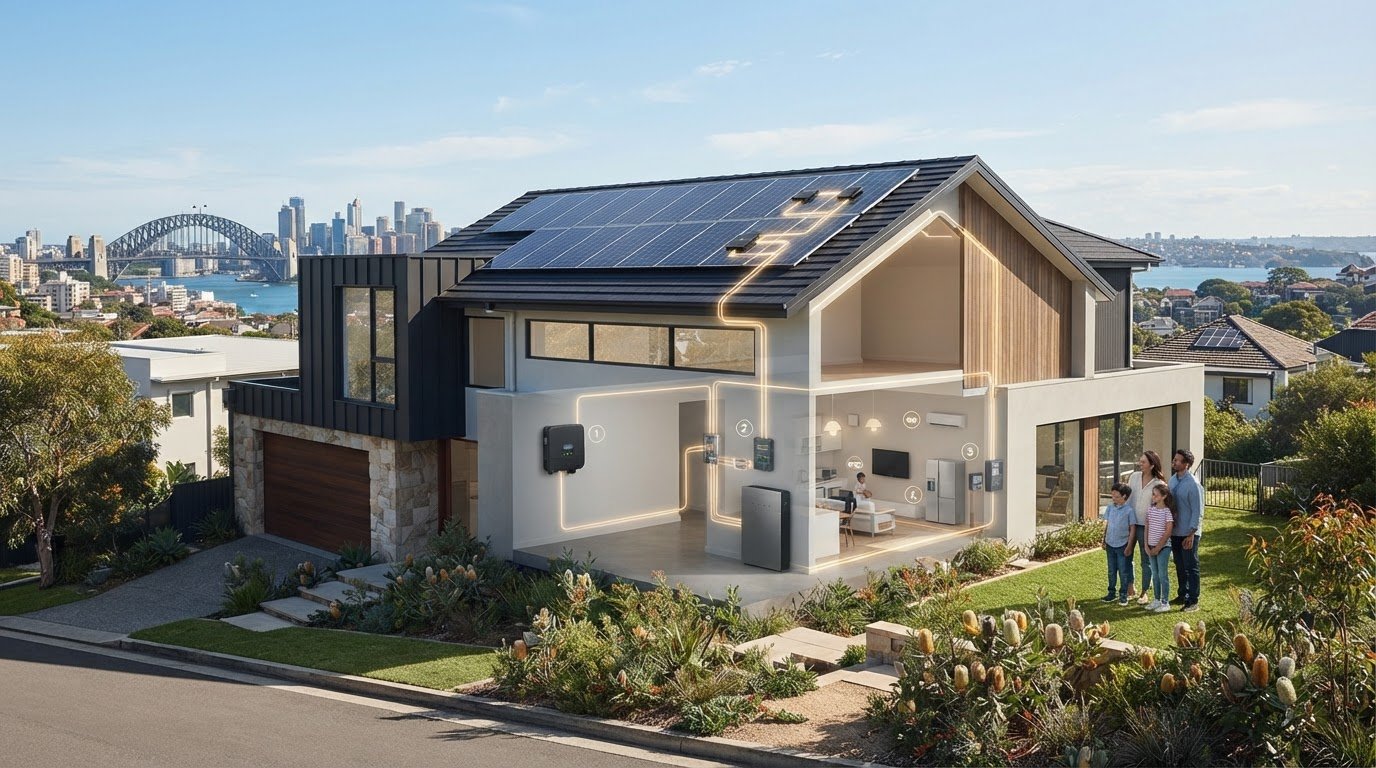
A 10kw solar system provides the substantial energy harvest required to make home battery storage truly effective. While smaller arrays might struggle to fill a high-capacity battery like the FOX ESS CQ7 or a Tesla Powerwall during the shorter days of winter, a 10kW setup generates a consistent surplus. This excess energy is the key to achieving near-zero quarterly bills. By storing your daytime production for use during expensive evening peak periods, you insulate your household from the volatility of the NSW energy market.
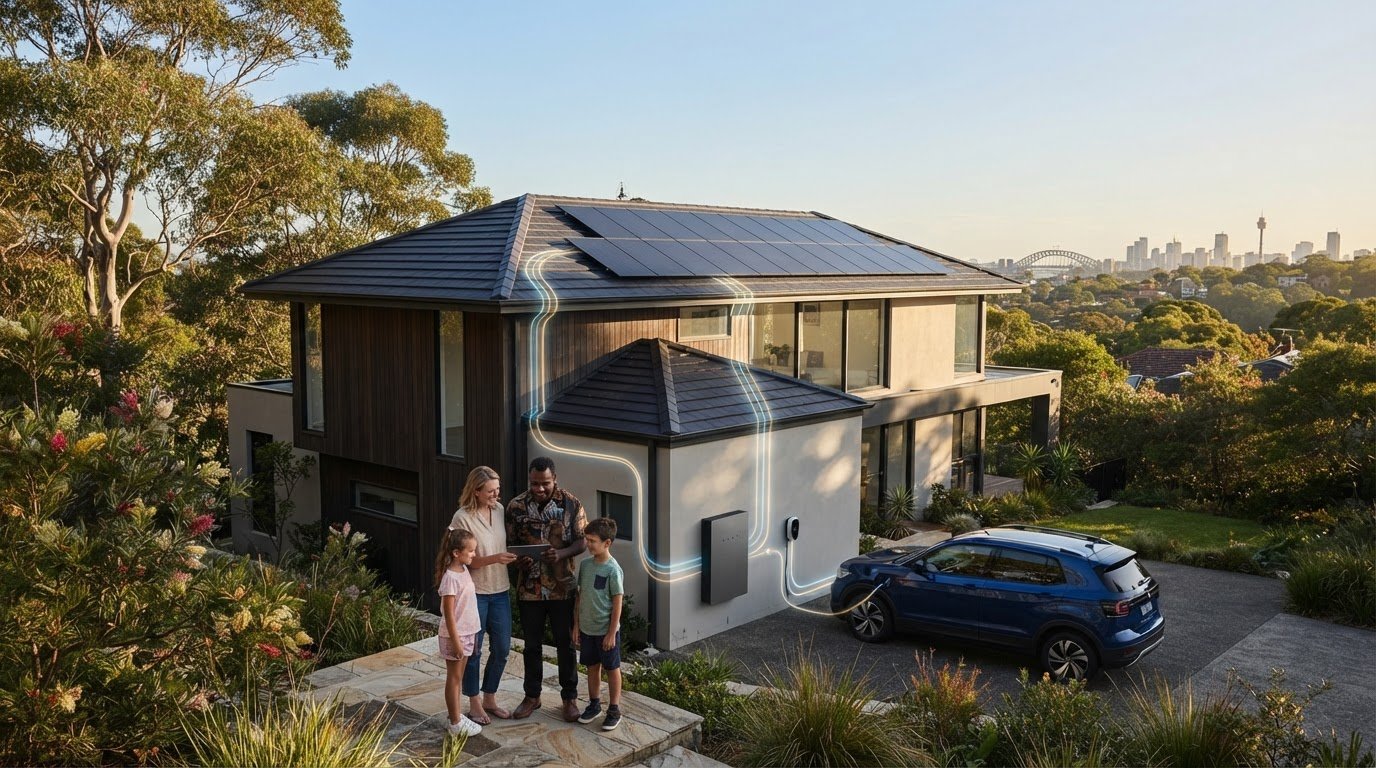
Integrating an electric vehicle into this ecosystem creates a closed-loop energy cycle. With a 10kw solar system, you can effectively “fuel” your car for free using the power captured from your own roof. This transition is further enhanced by participating in Virtual Power Plants (VPPs). These programs allow your system to support the grid during times of high demand, often providing a financial credit in return and turning your home infrastructure into a proactive revenue stream.
SigenStor: The Integrated Solar & EV Revolution
The SigenStor Integrated Solar Inverter & EV DC Charger represents a significant leap forward for Sydney homeowners. Unlike traditional AC chargers, this DC-coupled solution delivers faster charging by feeding solar power directly into the vehicle’s battery. It eliminates the efficiency losses associated with converting power between AC and DC multiple times. Beyond the technical performance, the SigenStor offers a sleek, stackable design that saves valuable space in your garage or carport, providing a sophisticated aesthetic that matches its intelligent performance.
Choosing the Right Inverter for Future Expansion
The choice between a GoodWe ET G2 Hybrid HV Inverter and a FOXESS Three Phase 10.0kw Hybrid Inverter often depends on your specific expansion plans. Both are world-class options, but they offer different advantages in terms of monitoring and integration. If you aren’t ready to install a battery today, ensuring your system is “battery-ready” with a high-quality hybrid inverter is a critical step in future-proofing your investment. It prevents costly hardware replacements down the line when you decide to add storage.
Every Sydney property has unique electrical characteristics, from switchboard capacity to shading profiles. While guides provide a strong foundation, a professional site audit by a licensed electrical contractor is the only way to ensure your 10kw solar system is designed for maximum efficiency. Taking this step ensures that your transition to a smart, self-sufficient home is both safe and rewarding.
Secure Your Home’s Energy Future
Transitioning to a 10kw solar system is more than a simple upgrade; it’s a strategic investment in your home’s long-term autonomy. We’ve explored how modern panel efficiency and intelligent inverter technology allow these high-capacity arrays to thrive on Sydney rooflines, providing the essential foundation for battery storage and electric vehicle charging. By addressing technical requirements like switchboard readiness early, you ensure your property is prepared for the energy demands of 2026 and beyond.
As licensed Sydney electricians and premium Enphase and Tesla partners, Sky High Solar and Electrical brings technical precision to every installation. We specialise in sophisticated SigenStor EV solutions that turn your rooftop production into free transport fuel. The journey toward a near-zero bill starts with a design tailored to your specific roof and consumption patterns. Our team is here to remove the complexity from the process, acting as your trusted partner in the transition to a modern energy footprint.
Get a Professional 10kW Solar Audit for Your Sydney Home
Taking control of your energy footprint is a rewarding step toward a more sustainable and cost-effective future for your family.
Frequently Asked Questions
How much roof space does a 10kW solar system need in Sydney?
A 10kw solar system typically requires between 40 and 50 square metres of usable roof space. This physical footprint has decreased over the years as panel efficiency has improved, meaning you can achieve a higher output from a smaller area. The exact dimensions depend on the specific wattage of the modules chosen, usually around 440W to 450W per panel in 2026. We ensure the layout avoids shading and maintains all required Australian edge clearances.
Is a 10kW solar system too big for a single-phase house?
A 10kW system isn’t too big for a single-phase home, but it does require careful management of export limits. Most Sydney network providers like Ausgrid limit single-phase exports to 5kW. By using a smart hybrid inverter, you can consume a portion of the power within the home or direct it to a battery while exporting the remaining 5kW to the grid. This setup maximises your self-consumption without exceeding utility restrictions.
How many panels are in a 10kW solar system using 2026 technology?
You’ll typically need between 22 and 24 panels for a 10kw solar system using current 2026 technology. Higher-efficiency N-type modules are now the industry standard, providing better longevity and performance in the Sydney heat. Because each panel produces more power than older models, you require fewer individual units to reach your target capacity. This reduction in panel count also simplifies the installation process and reduces the weight load on your roof structure.
What is the average daily output of a 10kW system in NSW?
The average daily production for a 10kW array in NSW is approximately 40 to 45 kilowatt-hours (kWh). Production peaks during the long summer days in January and naturally dips during the shorter winter months of June and July. This annual average is more than double the consumption of a typical Australian household, providing a significant buffer for high-draw appliances like ducted air conditioning or pool heaters.
Can I run my whole house and charge an EV with 10kW of solar?
Yes, 10kW of solar capacity is the ideal size to power a modern home while simultaneously charging an electric vehicle. A system of this scale generates enough surplus energy during the day to replenish an EV battery without relying on expensive grid power. To get the best results, we recommend using an integrated DC charger, which allows for faster and more efficient energy transfer directly from your panels to the car.
How much will a 10kW solar system save me on my Sydney electricity bill?
A 10kW installation can reduce your quarterly electricity bills to near-zero or even result in a credit balance. Your actual savings depend on how much of the generated power you consume during the day versus how much you export. By shifting heavy appliance use to daylight hours or adding a battery to store the surplus, you can almost entirely eliminate your reliance on the retail energy market.
What is the payback period for a 10kW solar system in 2026?
Most Sydney homeowners see a complete return on their investment within 4 to 7 years. This payback period is influenced by your current electricity rates, the size of the federal STC rebate, and your household’s self-consumption patterns. Given that premium components are designed to last for 25 years or more, the system provides nearly two decades of essentially free electricity after the initial cost is recovered.
Do I need a special permit from Ausgrid for a 10kW installation?
Yes, you must obtain a formal connection offer from Ausgrid or Endeavour Energy before the installation begins. This process ensures that the local grid can safely handle the additional power your system will generate. As licensed electrical contractors, we manage these applications on your behalf, navigating the technical requirements and ensuring all approvals are in place before any work starts on your property.