

 Sydney
 0452 243 240
Blog
Solar Panel Maintenance Checklist Sydney: The 2026 Homeowner’s Guide


Your solar panels are currently fighting a silent, daily battle against Sydney’s corrosive salt-mist and punishing 2026 summer humidity. While many homeowners believe a heavy downpour is sufficient to maintain their system, the reality is that environmental stressors in New South Wales can degrade premium components faster than you might realise. If you have noticed a steady decline in your energy production or feel uncertain about the safety of your rooftop connections, your concerns are well-founded. Implementing a professional solar panel maintenance checklist Sydney homeowners can rely on is the most effective way to ensure your system remains a high-performing asset in our unique coastal climate.
We recognise that your solar installation was a significant investment in both sustainability and long-term financial stability. This guide provides a professional-grade roadmap to help you understand the 2026 regulatory landscape, including the latest CSIP-AUS inverter standards and federal battery incentives. You will learn how to distinguish between simple cleaning and the technical servicing required to protect your manufacturer warranties. We provide a clear schedule of tasks designed to lower your power bills through peak efficiency, ensuring your transition to modern energy remains safe, rewarding, and entirely seamless.
Key Takeaways
- Understand how Sydney’s unique salt-mist and intense UV radiation degrade solar hardware and why coastal properties require specialised protection.
- Learn how to implement a professional-grade solar panel maintenance checklist Sydney homeowners can use to identify production dips using Enphase or SigenStor monitoring.
- Discover the safety risks of DIY rooftop cleaning and why professional servicing is necessary to remove the stubborn pollution that standard rain often fails to clear.
- Identify the critical technical milestones, including annual battery health checks and the mandatory 5-yearly electrical audits required for insurance compliance.
- Master the documentation requirements needed to protect your manufacturer warranties and ensure your long-term energy investment remains secure.
Why Sydney’s Climate Demands a Specific Solar Maintenance Plan
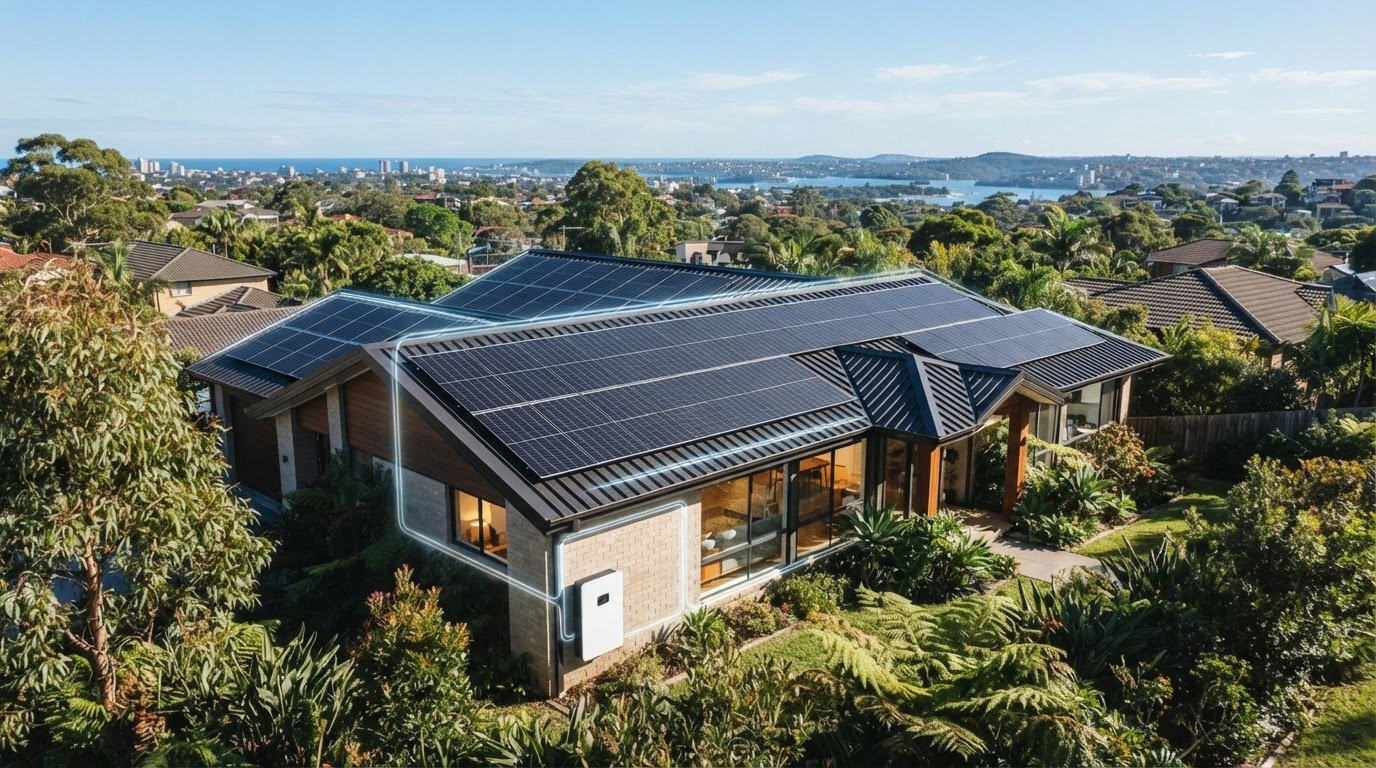
Sydney homeowners often view solar as a set and forget technology. While premium systems like Enphase or SigenStor are engineered for durability, our local environment presents challenges that standard manufacturers don’t always anticipate. From the corrosive spray of the Pacific Ocean to the relentless UV radiation of the Greater West, your system is under constant pressure. Adhering to a tailored solar panel maintenance checklist Sydney homeowners can rely on is the difference between a system that lasts 25 years and one that fails prematurely.
The Sydney Salt-Mist Factor
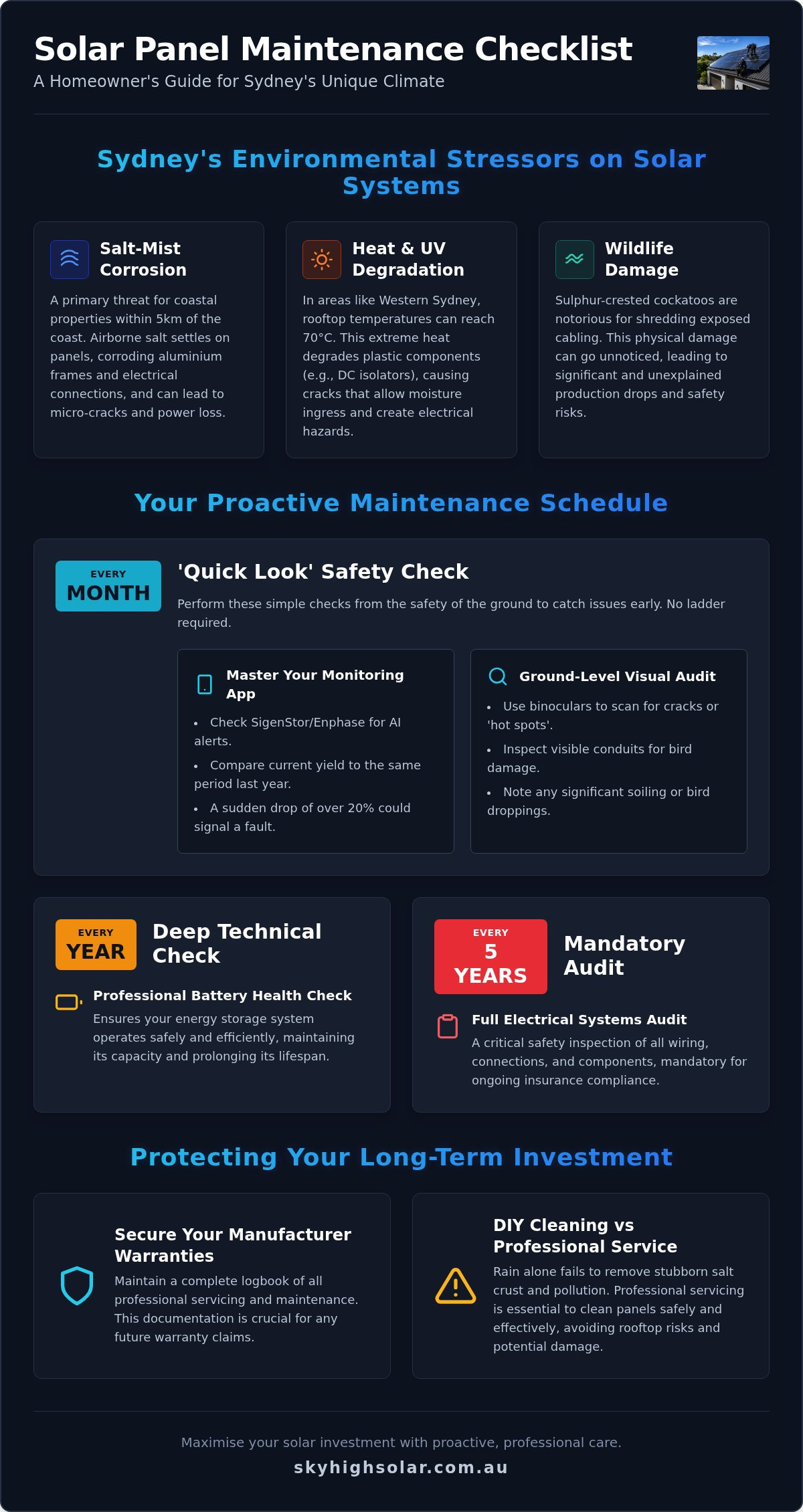
Salt-mist corrosion is a primary concern for residents in coastal hubs like Manly, Cronulla, or the Northern Beaches. If your home is within five kilometres of the coast or the harbour, airborne salt particles are likely settling on your array. These particles don’t just sit there; they create conductive paths that can cause leakage currents or corrode the aluminium frames of your panels. Regular inspections ensure these deposits are cleared before they compromise the structural integrity of your mounting hardware or electrical connections. For those in the Eastern Suburbs, this salt buildup is the leading cause of micro-cracks and frame degradation.
Heat and UV Degradation
While the coast deals with salt, Western Sydney faces extreme thermal stress. On a typical 35°C summer day, rooftop temperatures can soar to 70°C. This cycle of intense heating and cooling causes thermal expansion, which puts immense strain on DC isolators and mounting clips. High UV levels also accelerate the degradation of plastic components, making them brittle and prone to cracking. Understanding Solar panel performance and degradation is vital for long-term reliability. When plastic enclosures crack, moisture enters the system, leading to potential electrical faults or safety hazards that could have been avoided with a simple visual check.
Beyond the weather, local wildlife adds another layer of complexity. Sydney’s Sulphur-crested cockatoos are notorious for shredding exposed cabling, treating your investment like a chew toy. This physical damage often goes unnoticed until your production drops. Simple neglect leads to a measurable financial loss; a mere 10% drop in efficiency due to dirt, salt crusting, or bird droppings can significantly inflate your quarterly power bill. Proactive maintenance ensures you aren’t paying for energy you should be generating for free. Using a solar panel maintenance checklist Sydney residents can follow helps you spot these issues before they become expensive repairs.
Your Monthly ‘Quick Look’ Maintenance Checklist
Maintaining peak efficiency doesn’t require a ladder or a technical degree. By spending five minutes each month on a solar panel maintenance checklist Sydney homeowners can protect their investment directly from the ground. This routine focuses on early detection. It ensures that small environmental factors don’t spiral into system-wide failures or safety hazards. Establishing this habit is the most reliable way to guarantee your system performs as expected through every season.
Mastering Your Monitoring App
Your first line of defence is the palm of your hand. Modern systems offer granular data that makes troubleshooting straightforward and transparent. If you are using a SigenStor energy hub, take advantage of the AI-driven underperformance alerts. These notifications act as a proactive watchdog for your energy production. When reviewing your data, compare the current week’s yield with historical production from the same month last year. This accounts for seasonal changes in sun position. A sudden 20% drop across the entire array often suggests a global issue like a fault code. Conversely, a dip in a single panel usually points to localized shading or stubborn bird droppings.
The Ground-Level Visual Audit
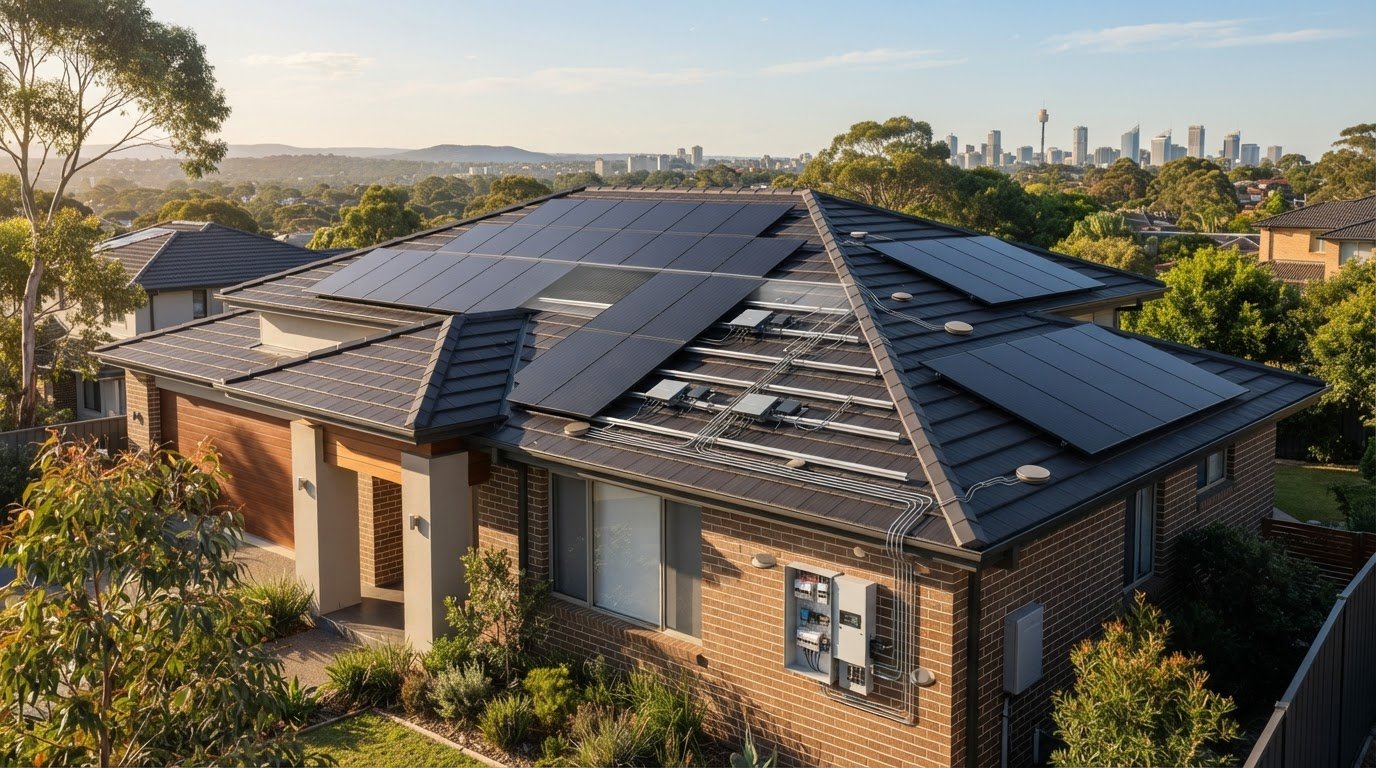
Next, perform a physical scan. Grab a pair of binoculars to inspect your 6.6kW solar system from the safety of your garden. Look for “hot spots”, which appear as darker patches on the glass, or any visible cracks. Check the conduit for signs of those cable-shredding cockatoos that frequent Sydney’s suburbs. Pay close attention to the rooftop DC isolator. It is a critical safety component. Ensure its protective cover is still intact and hasn’t become brittle or detached due to intense UV exposure. If you notice new tree growth casting a shadow over your panels, it is time to arrange a professional trim to restore your production levels.
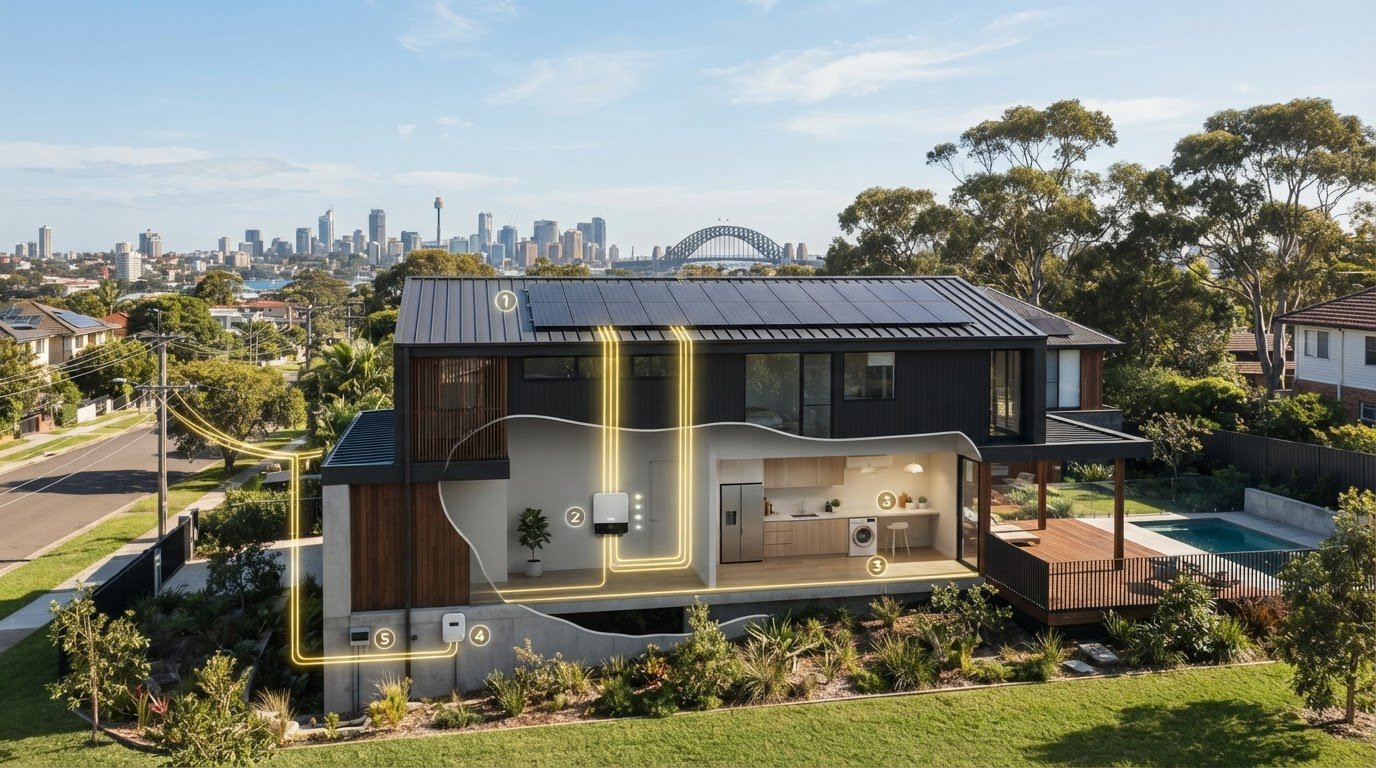
Finally, visit your inverter unit. A solid green light typically indicates a healthy, active system. If you see a red light or an alphanumeric fault code, record it immediately. These codes provide a diagnostic shortcut for technicians, saving significant time during a site visit. If your app or inverter indicates a persistent issue that you cannot resolve from the ground, it is wise to consult a specialist in professional solar system servicing to ensure your safety and maintain your warranty. Consistent monthly checks keep your system reliable and your energy bills predictable.
Cleaning Solar Panels: DIY Safety vs. Professional Servicing
A common misconception among Sydney homeowners is that our frequent coastal showers are enough to keep an array clean. In reality, light rain often mixes with salt spray and urban pollution to create a sticky, opaque film that inhibits light absorption. This “self-cleaning” myth can lead to a significant drop in production over time. Including a regular cleaning schedule in your solar panel maintenance checklist Sydney ensures your system continues to offset your energy costs effectively without the interference of a corrosive grime layer.
Safety must remain your primary priority during any maintenance task. We strongly advocate for a “stay on the ground” rule; climbing onto a wet, angled roof is a high-risk activity that is best left to insured specialists. If you choose to clean your panels from the ground, use a telescopic pole with a soft brush and plain water. Never use high-pressure washers, as the force can compromise the delicate seals between the glass and the frame. Similarly, avoid abrasive chemicals or detergents, which can leave a residue that actually attracts more dust and may void your manufacturer warranty.
When to Clean Your Panels in Sydney
Timing is critical to prevent “thermal shock”. Splashing cold water onto panels that have been baking in the 2026 summer sun can cause the glass to crack instantly. Always clean your panels in the early morning or late evening when they are cool to the touch. For residents in the Greater West, post-bushfire season requires special attention, as heavy ash and soot are often hydrophobic and won’t wash away with rain alone. We recommend a cleaning frequency of twice a year for coastal properties to manage salt buildup, while inland homes may only require an annual scrub.
Professional Servicing: More Than Just a Scrub
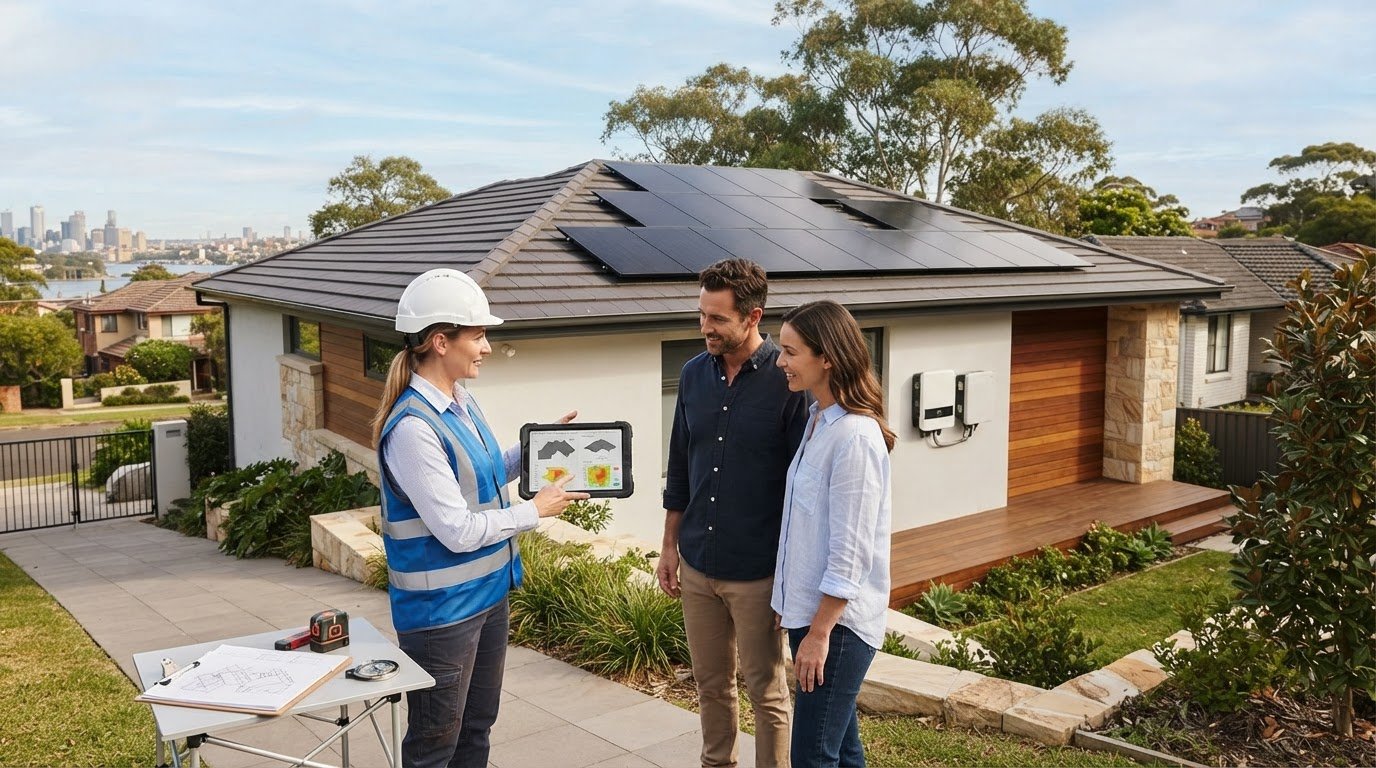
While a DIY clean improves aesthetics, it doesn’t address the technical health of your installation. The hidden benefit of professional solar system servicing lies in the comprehensive safety audit performed by a licensed electrician. Technicians check the integrity of DC isolators, which remain the leading cause of solar-related fires in Australia when left to degrade. They also perform torque testing on mounting bolts that may have loosened during Sydney’s intense seasonal wind gusts. By using thermal imaging cameras, specialists can detect micro-cracks and “hot spots” that are invisible to the naked eye, ensuring your system remains safe and efficient for years to come.
Annual and 5-Yearly: The Deep Technical Checklist
While monthly visual checks identify obvious surface issues, the long-term health of your installation depends on more rigorous, technical evaluations. These milestones are designed to verify the electrical integrity of your system and ensure that safety mechanisms remain fully operational. Integrating these deep-dive tasks into your solar panel maintenance checklist Sydney strategy provides the peace of mind that your investment remains a secure asset rather than a liability. Establishing a schedule for these technical audits is essential for maintaining high-tier performance.
Sydney Storm Season Readiness
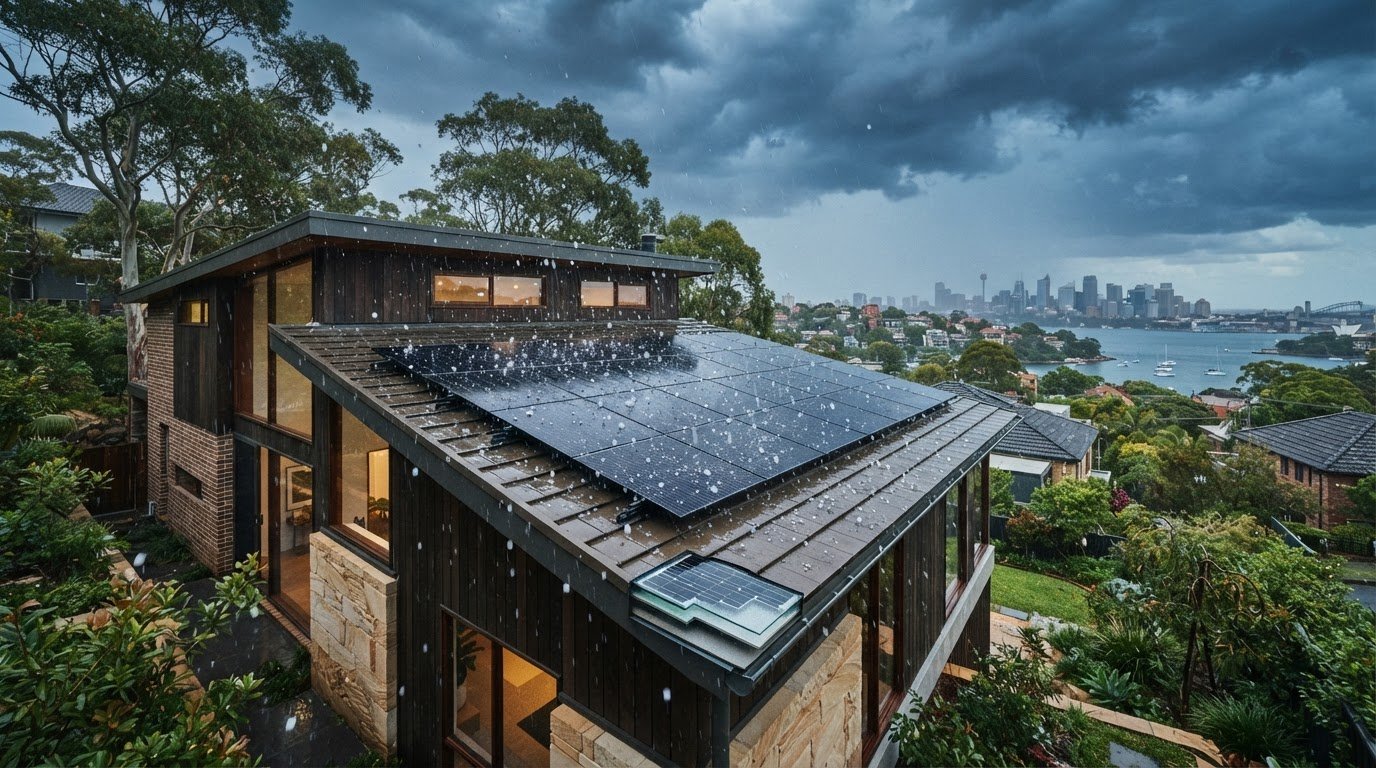
Sydney’s storm season typically begins in October, bringing heavy downpours and high-velocity winds that test the limits of rooftop hardware. Before these rains arrive, it is essential to inspect all roof penetrations for signs of potential water ingress. Over time, the seals around mounting points can perish due to the extreme heat cycles common in New South Wales. You should also ensure that drainage pathways around your inverter and battery housing are clear of leaf litter and debris. This prevents moisture buildup that can lead to internal corrosion or electrical short circuits. Finally, a licensed professional should verify the integrity of the solar array’s earthing system. This system is your primary protection against surge damage during electrical storms, yet it is often overlooked during casual inspections.
The 5-Year Professional Audit
Every five years, your system requires a comprehensive electrical audit. Many Australian insurance providers now view this as a mandatory requirement for maintaining coverage on residential properties. This technical review involves insulation resistance testing of all DC cabling to ensure the protective layers haven’t degraded or been compromised by local wildlife. For those with a 10kW solar system, the audit includes a detailed inspection of the switchboard components, including circuit breakers and surge protection devices. This process ensures your installation meets current safety compliance standards and is recertified for another five years of safe operation.
Optimising your solar battery storage is another critical annual task. A technician will check firmware versions and review charge/discharge logs to ensure the battery cells are balancing correctly. This proactive approach helps identify early signs of capacity loss before they impact your daily energy savings. If your system is approaching a milestone or you haven’t updated your solar panel maintenance checklist Sydney recently, you can book a comprehensive solar system servicing to ensure your home remains safe and efficient.
Maintaining Your Warranty: The Paperwork Trail
A premium solar system is only as good as the warranty backing it. However, many homeowners are surprised to find that “Manufacturer Exclusions” often include damage resulting from a lack of documented upkeep. If a fault occurs and there is no evidence of regular servicing, the manufacturer may argue that the issue was preventable. This makes a consistent solar panel maintenance checklist Sydney residents follow not just a performance tool, but a vital legal safeguard. Without a clear trail of maintenance, you may find yourself liable for expensive repairs that should have been covered.
Keeping a “Maintenance Log Book” is the most effective way to protect your rights. You should record the date of every visual inspection, the name of the licensed electrician who performed your 5-yearly audit, and any specific actions taken, such as panel cleaning or firmware updates. This trail of evidence is often the deciding factor in a successful warranty claim. When you can prove that you’ve adhered to a professional-grade solar panel maintenance checklist Sydney specialists recommend, manufacturers are far more likely to honour their commitments without dispute.
Common Warranty Killers
Several factors can instantly invalidate your protection. In our coastal environment, visible salt-mist buildup that hasn’t been cleaned is a common reason for rejected claims. Manufacturers expect you to mitigate known environmental risks to prevent corrosion. Similarly, any DIY repairs or modifications performed by non-licensed individuals will void your workmanship and product guarantees. Finally, ignoring persistent fault codes on your monitoring app for weeks or months demonstrates a lack of “duty of care”. This negligence gives manufacturers grounds to deny support for subsequent failures that could have been caught early.
The role of your installer is paramount in this process. Using a local Sydney specialist ensures you have a steady hand to guide you through the technicalities of a claim. Before engaging a service provider, verify they are still in business and hold current Solar Accreditation Australia (SAA) credentials. Many “fly-by-night” retailers leave customers stranded with “orphan” systems that no one is willing to service or support when things go wrong.
The Sky High Solar and Electrical Advantage
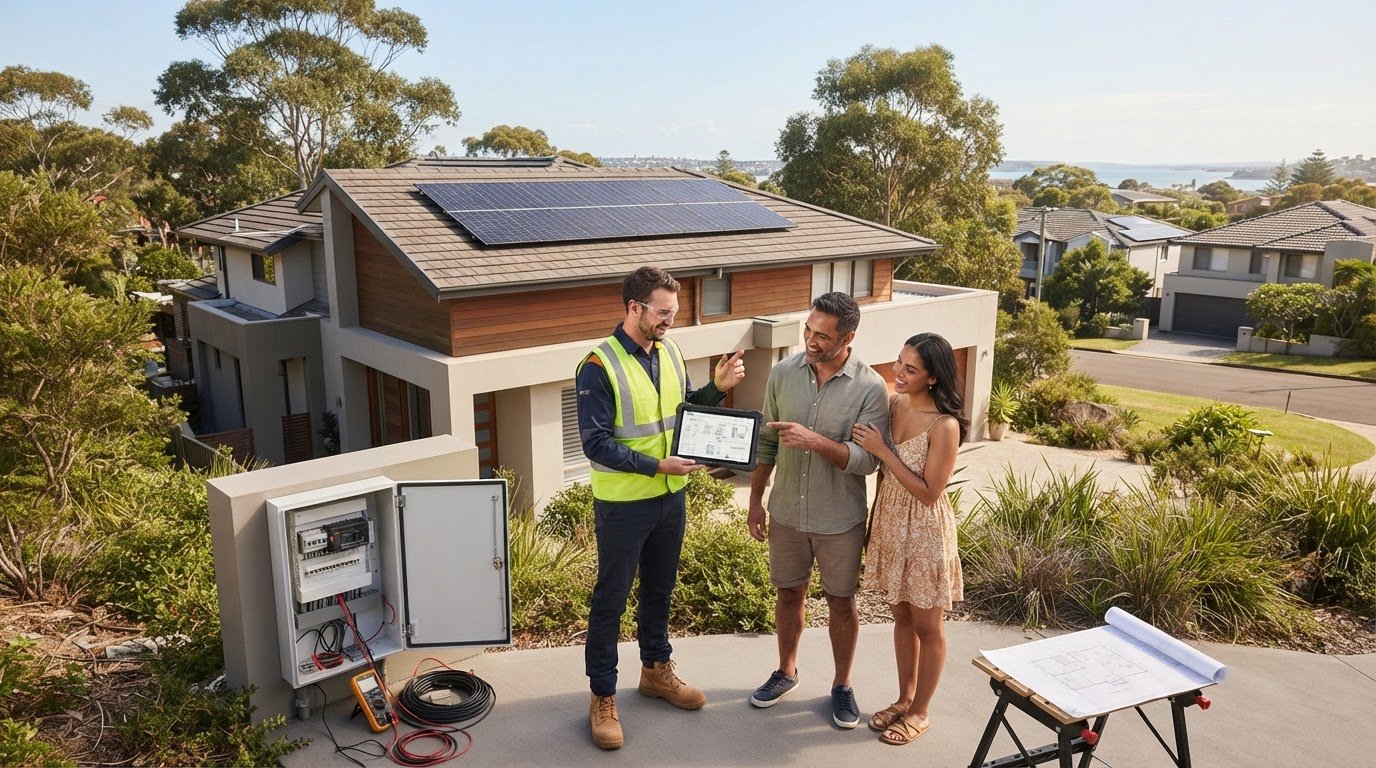
At Sky High Solar and Electrical, we act as your professional guide in the modern energy landscape. We maintain meticulous records of every service we perform, providing you with the documentation needed for premium brands like Enphase and Tesla. Our team understands the specific nuances of the NSW climate and handles the complex warranty claim process on your behalf, removing the stress of technical disputes. We ensure your system remains compliant with the latest 2026 regulations, including the new CSIP-AUS inverter mandates.
Don’t leave your long-term energy security to chance. Book a professional solar health check for your Sydney home to ensure your investment remains protected by a valid warranty and continues to deliver peak efficiency.
Protecting Your Solar Investment for the Decades Ahead
Securing the future of your energy system requires a proactive approach that balances simple monthly monitoring with deep technical expertise. Sydney’s intense UV radiation and coastal salt-mist are persistent forces, but they don’t have to compromise your system’s longevity. By adhering to a comprehensive solar panel maintenance checklist Sydney residents can ensure their hardware remains efficient, their warranties stay valid, and their homes remain safe from electrical hazards.
At Sky High Solar, our team of Sydney-local licensed electricians acts as your trusted partner in this journey. As premium Enphase and Tesla partners, we specialise in protecting systems against unique local stressors like salt-mist corrosion. We help you navigate the complexities of 2026 regulations while maintaining the professional records required for successful warranty claims. Get a Professional Solar Maintenance Quote for Your Sydney Property to guarantee your system delivers peak performance through every season. Taking these small, methodical steps today will reward you with reliable, clean energy for many years to come.
Frequently Asked Questions
How often should I clean my solar panels in Sydney?
Sydney coastal homes should aim for twice a year, while inland properties usually require an annual clean. Coastal salt-mist creates a conductive film that blocks sunlight and corrodes frames faster than standard dust. If you live near the harbour or ocean, more frequent checks are necessary to maintain peak efficiency. This schedule should be a core part of your solar panel maintenance checklist Sydney routine so your system isn’t prone to long-term degradation and continues to perform optimally.
Can I use a pressure washer to clean my solar panels?
You should never use a pressure washer on your solar array. The high-velocity water stream can force moisture past the protective seals or cause micro-cracks in the tempered glass. These tiny fractures are often invisible but will lead to significant performance drops over time. Instead, use a soft-bristled brush and a low-pressure garden hose to gently remove surface grime. You don’t want to risk your manufacturer warranty or the structural integrity of the mounting hardware with excessive force.
Do I need to turn off my solar system before cleaning it?
Yes, it’s a critical safety requirement to shut down your system before starting any cleaning. While panels are designed for outdoor use, using water around high-voltage DC electricity carries inherent risks if there’s any existing cable damage. Follow the shutdown procedure located on your main switchboard or inverter to ensure the system is electrically isolated. This provides peace of mind while you work around the mounting hardware and ensures your personal safety throughout the entire cleaning process.
What is the most common cause of solar system failure in NSW?
Water ingress in the rooftop DC isolator is the most frequent cause of system failure and fires in New South Wales. Exposure to Sydney’s intense UV radiation can cause plastic enclosures to become brittle and crack over time. Once the seal is compromised, moisture enters the electrical housing, leading to internal arcing. Regular professional inspections are vital to identify these degraded components before they cause a total system shutdown or a safety hazard that isn’t easily detected from the ground.
Will bird droppings really affect my solar production that much?
Bird droppings can significantly impact your energy output by creating “hot spots” on individual cells. Unlike light dust, droppings are opaque and concentrated, which forces the affected cell to dissipate energy as heat rather than conducting electricity. This localized heating can permanently damage the panel’s internal structure. Keeping your panels clear ensures your system operates at its rated capacity and prevents premature failure of the solar cells. It isn’t just about aesthetics; it’s about protecting your long-term energy investment.
Does a solar panel warranty cover cockatoo damage?
Standard manufacturer warranties typically don’t cover damage caused by local wildlife like Sulphur-crested cockatoos. These birds are known for shredding exposed cabling and conduit, which is considered an external environmental factor rather than a manufacturing defect. We recommend installing protective mesh or ensuring all cabling is tucked securely behind the rails. This proactive approach is a key step in a robust solar panel maintenance checklist Sydney homeowners use to avoid out-of-pocket repairs that aren’t covered by their policy.
How much does a professional solar service cost in Sydney?
The cost of a professional service in Sydney depends on your system’s size and the safety requirements for accessing your roof. While industry rates vary, a comprehensive health check by a licensed electrician includes technical electrical testing and performance audits that go beyond simple cleaning. Investing in regular maintenance is far more economical than dealing with a total inverter failure or the ongoing financial loss of a system that isn’t producing at its full potential for your home.
Should I clean my panels after a Sydney bushfire?
You should definitely clean your panels following a bushfire event or a period of heavy smoke. Ash and soot are hydrophobic, meaning they won’t simply wash away with the next light rain. This debris creates a thick layer that can reduce production by 20% or more. A gentle wash with plain water and a soft brush will restore your production levels and prevent the ash from baking onto the glass during the next heatwave that isn’t far away.