

 Sydney
 0452 243 240
Blog
10 Common Solar Installation Mistakes to Avoid: The Sydney Homeowner’s Checklist

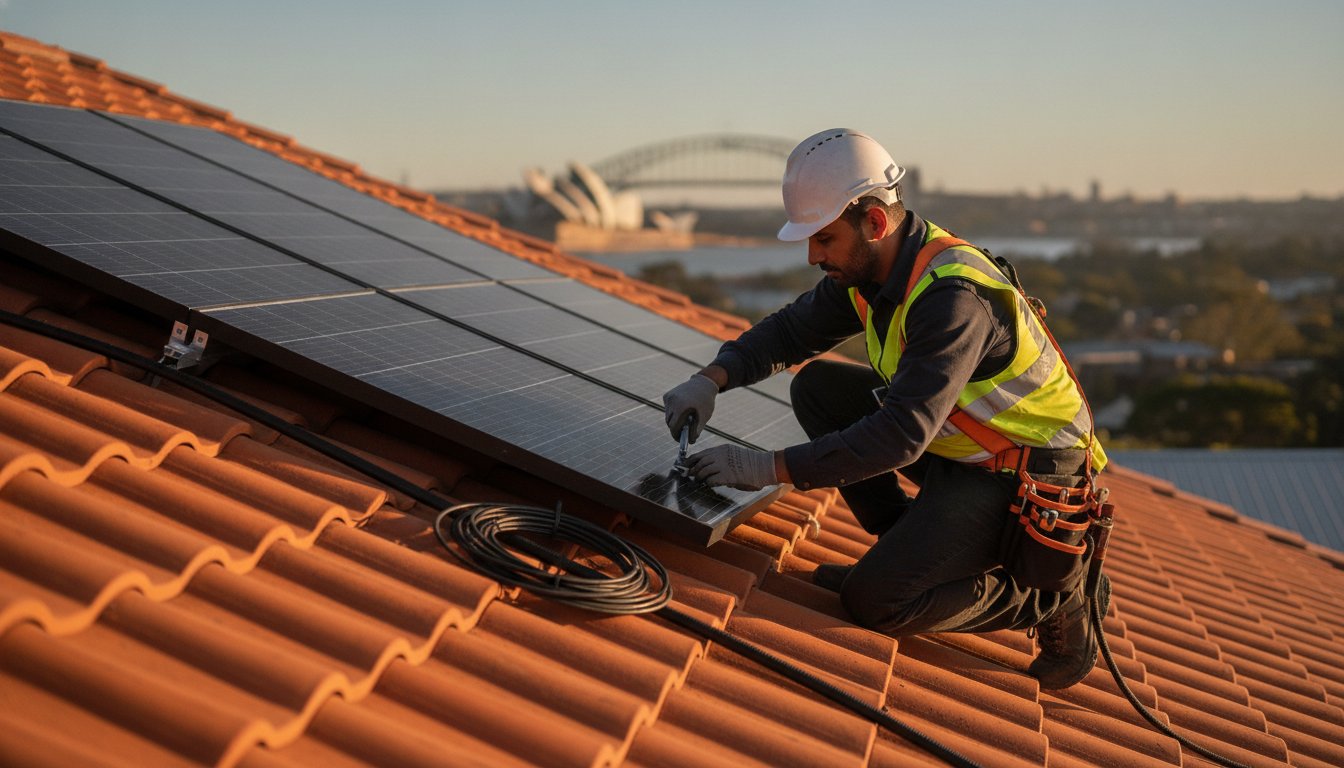
Did you know that nearly 18.6% of all solar installations are currently rated as substandard by the Clean Energy Regulator? For Sydney homeowners, this statistic highlights the importance of knowing the common solar installation mistakes to avoid, as it represents the real risk of fire hazards, poor wiring, and “orphan” systems left behind by companies that disappear overnight. You likely want a system that slashes your electricity bills and prepares your home for a future EV, yet the path to getting there is often cluttered with confusing jargon about 6.6kW versus 10kW sizing.
We understand that choosing solar is a significant investment in your property’s long-term value and energy independence. This guide identifies the pitfalls that often catch people out, helping you distinguish between a “solar cowboy” quote and a high-quality, engineered electrical asset. We will walk you through the essential steps to ensure your system remains safe, compliant, and productive for decades. From avoiding poor component selection to understanding the latest NSW grid requirements, this checklist provides the clarity you need to move forward with absolute confidence.
Key Takeaways
- Spot the “solar cowboy” tactics used in the Sydney market and learn why a cheap quote often leads to higher long-term costs through inferior mounting and wiring.
- Navigate the sizing debate by understanding why 6.6kW is frequently the sweet spot for NSW rooftops and how to optimise panel orientation beyond just North-facing.
- Prepare for the hidden requirements of a safe installation, such as essential switchboard upgrades and specific compliance rules for Ausgrid and Endeavour Energy networks.
- Learn the common solar installation mistakes to avoid when choosing inverters to ensure your system is ready for seamless battery integration and EV charging.
- Use our practical checklist to verify that your installer is a licensed NSW electrical contractor capable of providing a comprehensive roof layout and shading analysis.
The “Cheap Quote” Trap: Why Low-Cost Solar Often Costs More
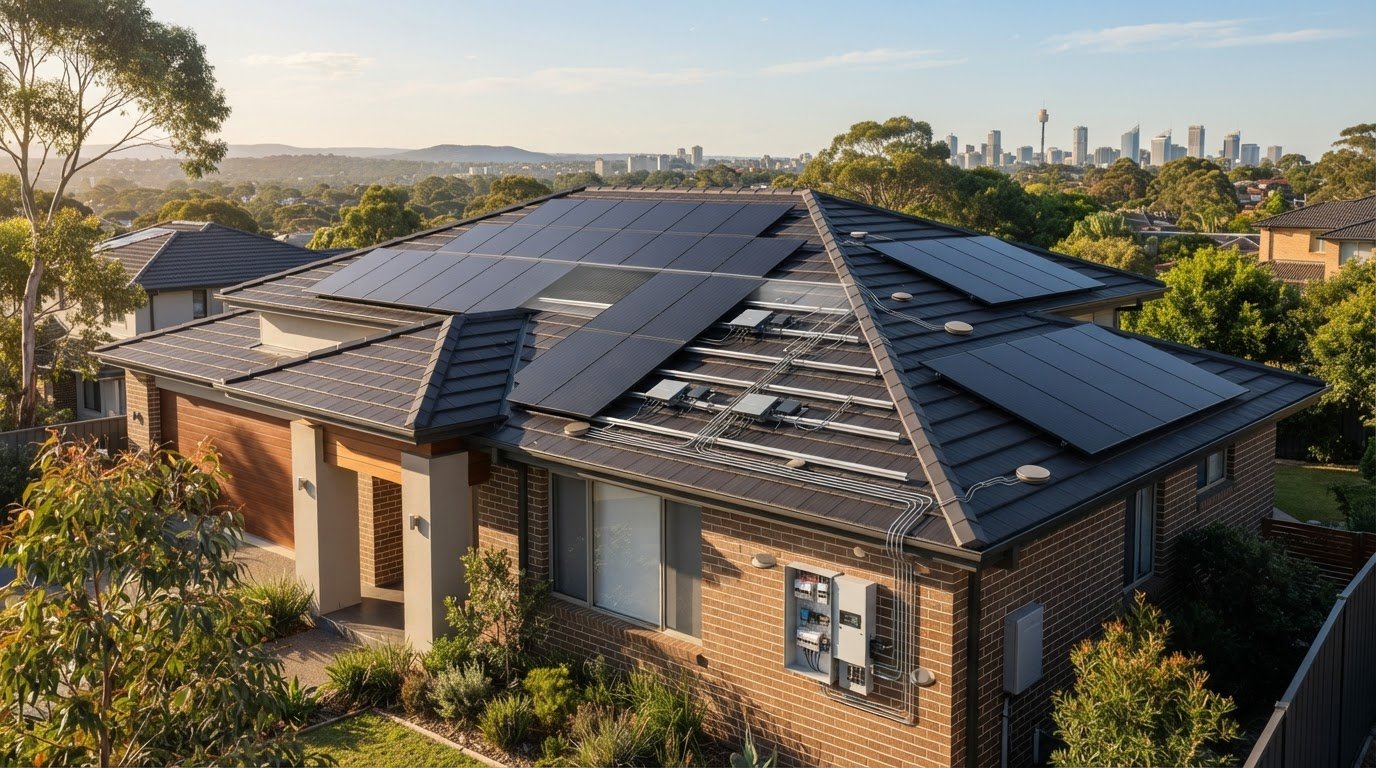
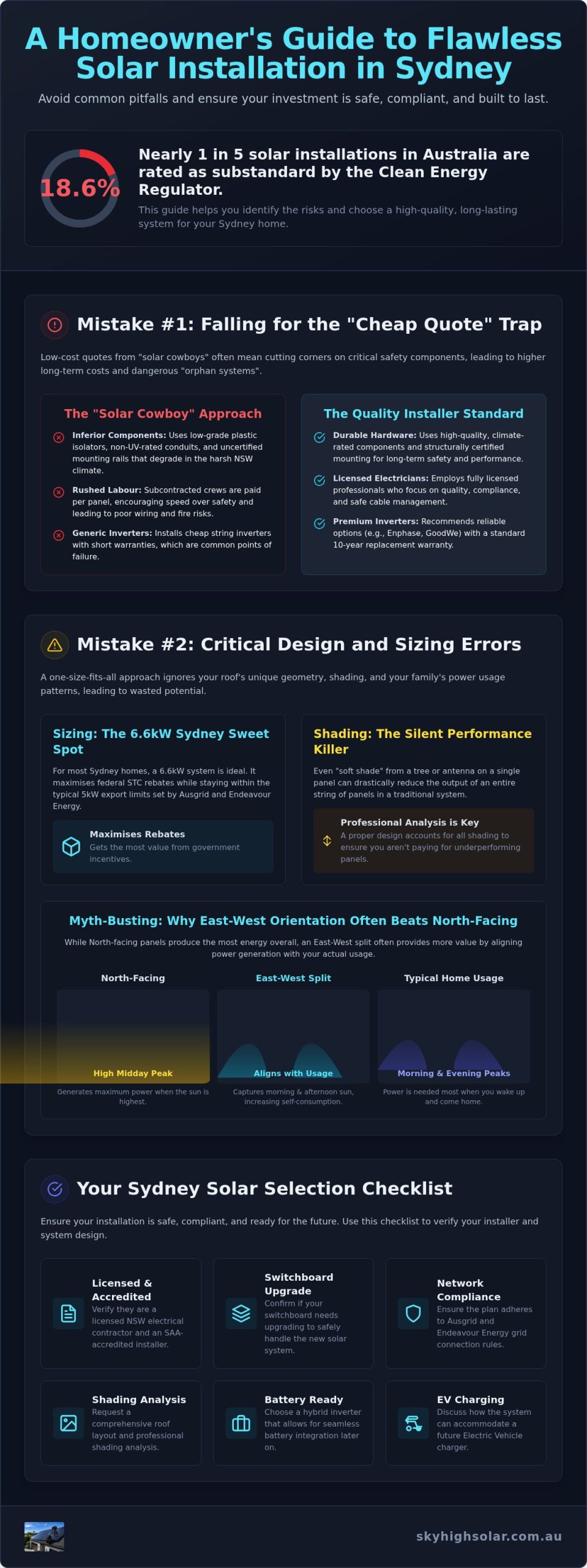
Sydney’s solar market has seen a surge in “solar cowboys”, retailers who chase volume over longevity. Falling for a low-cost quote is one of the most common solar installation mistakes to avoid. These operators often slash prices by compromising on the “balance of system” components that keep your home safe. While the panels might look identical on paper, the underlying engineering often fails to meet Australian standards.
A well-engineered photovoltaic (PV) system requires high-quality electrical components to ensure energy flow is managed safely over a 25-year lifespan. Cheap installers frequently cut costs by using materials that aren’t designed for the harsh NSW climate. Some of the technical shortcuts include:
- Non-UV-rated conduits that become brittle and crack in the Sydney sun.
- Inferior mounting rails that lack proper structural certification for high winds.
- Low-grade plastic isolators that are prone to water ingress and fire risk.
The danger of subcontracted crews paid per panel rather than per quality hour is one of the critical common solar installation mistakes to avoid. This volume-based model encourages workers to rush, leading to poor cable management and missed safety checks. When these companies inevitably collapse under the weight of warranty claims, you are left with an “orphan system”. Investing in a licensed electrical contractor ensures you aren’t just buying hardware, but a long-term service partnership.
The Problem with “Tier 1” Marketing Jargon
Tier 1 is a financial metric used to rank manufacturers by bankability, not a guarantee of panel efficiency. Sales-heavy firms use this term to mask a lack of technical expertise. You should prioritise SAA-accredited installers who are licensed electrical contractors. Local Sydney support is vital; if a component fails, you need a partner on-site rather than a national call centre that won’t answer.
Inverter Quality: The Heart of Your System
The inverter is the hardest-working component and the most frequent failure point in cheap setups. Choosing a generic string inverter often results in premature downtime. Premium options like Enphase microinverters or a GoodWe ET G2 Hybrid inverter provide the intelligence and durability required for our climate. A 10-year replacement warranty is the Sydney standard for reliability, ensuring your investment is protected against the inevitable wear of high-voltage energy conversion.
Design Disasters: Orientation, Shading, and Sizing Errors
A solar system is not a plug-and-play appliance; it is an engineered asset that must be tailored to your specific roofline. One of the most common solar installation mistakes to avoid is failing to account for the unique geometry and environment of your property. For the majority of Sydney households, a 6.6kW system represents the ideal “sweet spot”. This size maximises the federal Small-scale Technology Certificate (STC) discount while remaining within the standard 5kW export limits typically enforced by Ausgrid or Endeavour Energy. If your installer undersizes the inverter relative to the panel array, you may experience “clipping”, where the system generates more energy than the inverter can process, leading to wasted potential.
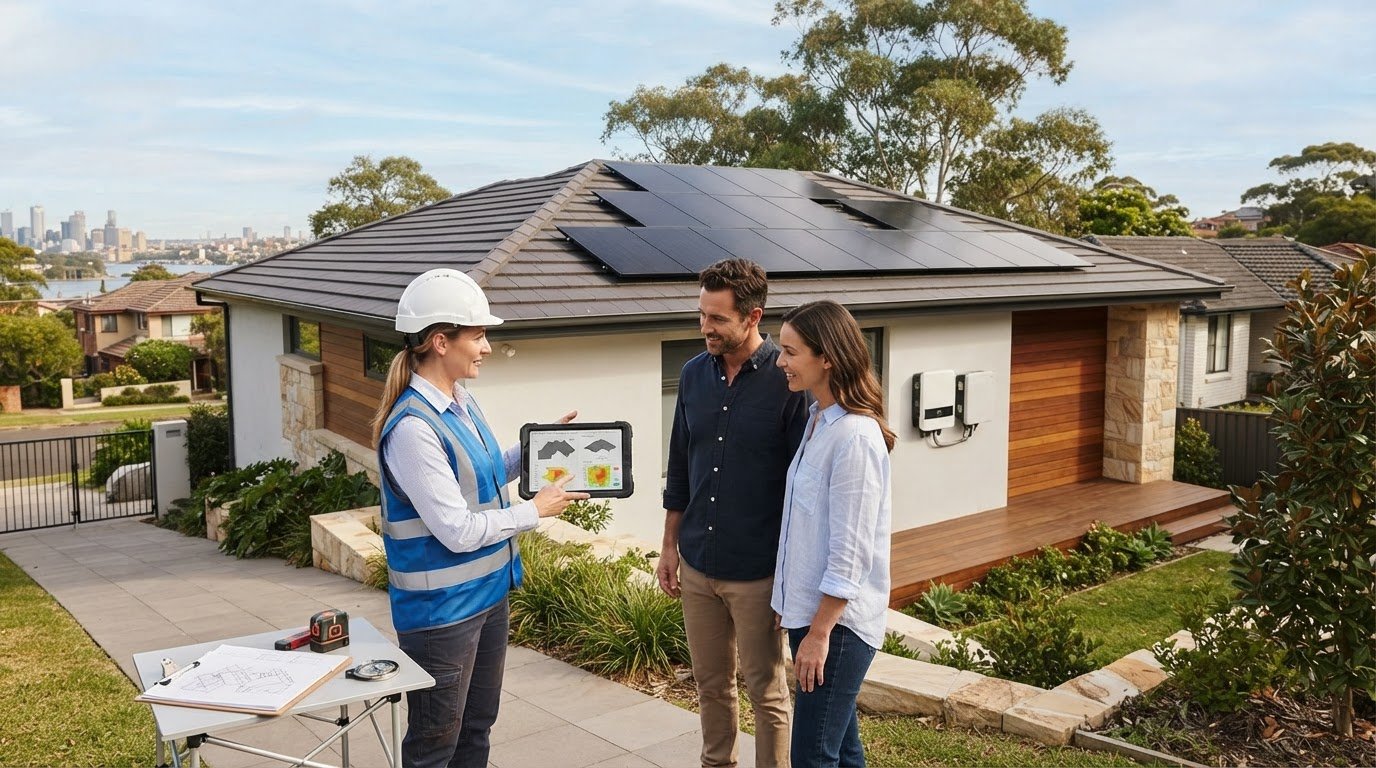
Shading is another critical factor that is often underestimated. Even “soft shade” from a chimney, television antenna, or a neighbour’s tree can significantly impact total output. In a traditional string inverter setup, a shadow on a single panel can reduce the performance of the entire string. Referencing the Australian Government’s Solar Consumer Guide provides a clear baseline for how professional shading analysis should be conducted to protect your investment. Accurate design ensures you aren’t paying for panels that spend half the day in the dark.
Why East-West Splits Often Beat North-Facing
The belief that North is the only viable orientation for NSW homes is a persistent myth. While North-facing panels produce the most total energy, an East-West split often aligns better with actual household usage patterns. By capturing the morning and late afternoon sun, you provide power during your busiest times. Utilising 6.6kW solar systems in this configuration increases self-consumption, which is far more financially rewarding than exporting power for a minimal feed-in tariff. For complex Sydney rooflines with multiple facets, Enphase microinverters are the superior choice for managing individual panel output independently.
Structural Integrity and Sydney Roof Types
Sydney’s older suburbs often feature aged terracotta or concrete tiles that require delicate handling. A major error in the industry is failing to inspect for roof timber rot or neglecting to replace tiles cracked during the installation process. In high-wind coastal zones, rail-less mounting systems often lack the necessary structural resilience and can fail during severe weather events. A reliable installer will always verify the integrity of your roof before any work begins. For a system built to last decades on your specific roof type, exploring a tailored residential solar solution is the best way to ensure long-term stability.
Electrical Oversights: Switchboards and Compliance
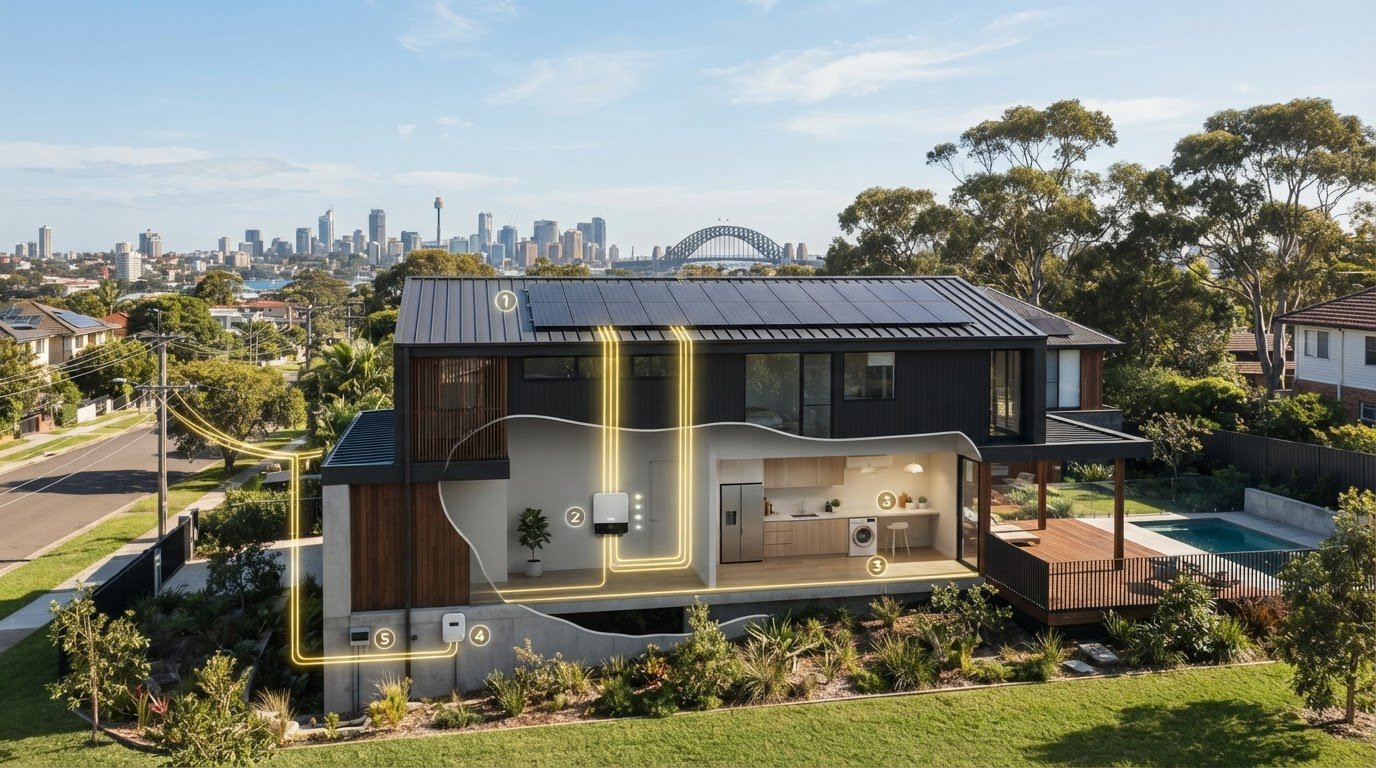
While the panels on your roof are the most visible part of your investment, the electrical infrastructure behind them determines whether your system is a high-performing asset or a significant safety liability. One of the most common solar installation mistakes to avoid is overlooking the condition of your existing electrical switchboard. Many homes in Sydney’s inner suburbs still rely on outdated porcelain fuse boxes. These legacy systems were never designed to handle the bidirectional energy flow of a modern solar array. Attempting to “slap” a solar system onto an un-upgraded board is a recipe for electrical faults and potential fire hazards.
Safety compliance in NSW is exceptionally rigorous, yet some installers still take shortcuts with DC isolators. Poorly installed or low-quality DC isolators remain the leading cause of solar-related fires in Australia. Ensuring these components are correctly mounted and weather-sealed is a non-negotiable requirement for any reputable licensed electrical contractor. Additionally, your installer should provide a smart meter as part of the package. Without one, you are essentially flying blind; a smart meter provides the granular data needed to track your return on investment and adjust your energy habits to maximise savings.
Switchboard Upgrades: The Foundation of Safety
In suburbs like Balmain, Surry Hills, or Paddington, dangerous old fuse boxes are a frequent sight. Upgrading to a modern switchboard with circuit breakers is often the “hidden cost” of a quality installation, but it serves as the essential foundation for your home’s energy future. A modernised board provides the necessary space and safety overhead for future battery storage additions. Under AS/NZS 3000 standards, every solar circuit must be protected by a high-quality Residual Current Device (RCD) to prevent electric shock and ensure the system disconnects instantly during an electrical fault.
Grid Connection and Export Limits
Sydney homeowners must navigate the specific requirements of two major networks: Ausgrid and Endeavour Energy. A frequent error is failing to apply for grid connection approval before the physical installation begins. You might install a large 10kW system only to discover your network provider limits your export to 5kW to maintain grid stability. This is another area where common solar installation mistakes to avoid can impact your long-term financial outcomes. Modern hybrid inverters, such as the GoodWe ET G2, are designed to manage these export limits intelligently, ensuring you prioritise charging your battery or powering your appliances before sending excess energy back to the grid.
Future-Proofing Fails: Ignoring EVs and Batteries
Sydney is transitioning rapidly toward electric transport, yet many homeowners continue to install “blind” systems that lack the intelligence to manage future loads. Selecting a “dumb” inverter that cannot communicate with a battery or an electric vehicle (EV) is one of the most frequent common solar installation mistakes to avoid. While a standard inverter might be cheaper today, the cost of retrofitting communication modules or replacing the unit entirely in three years far outweighs the initial savings. A truly modern system should act as the central hub for your home’s energy ecosystem.
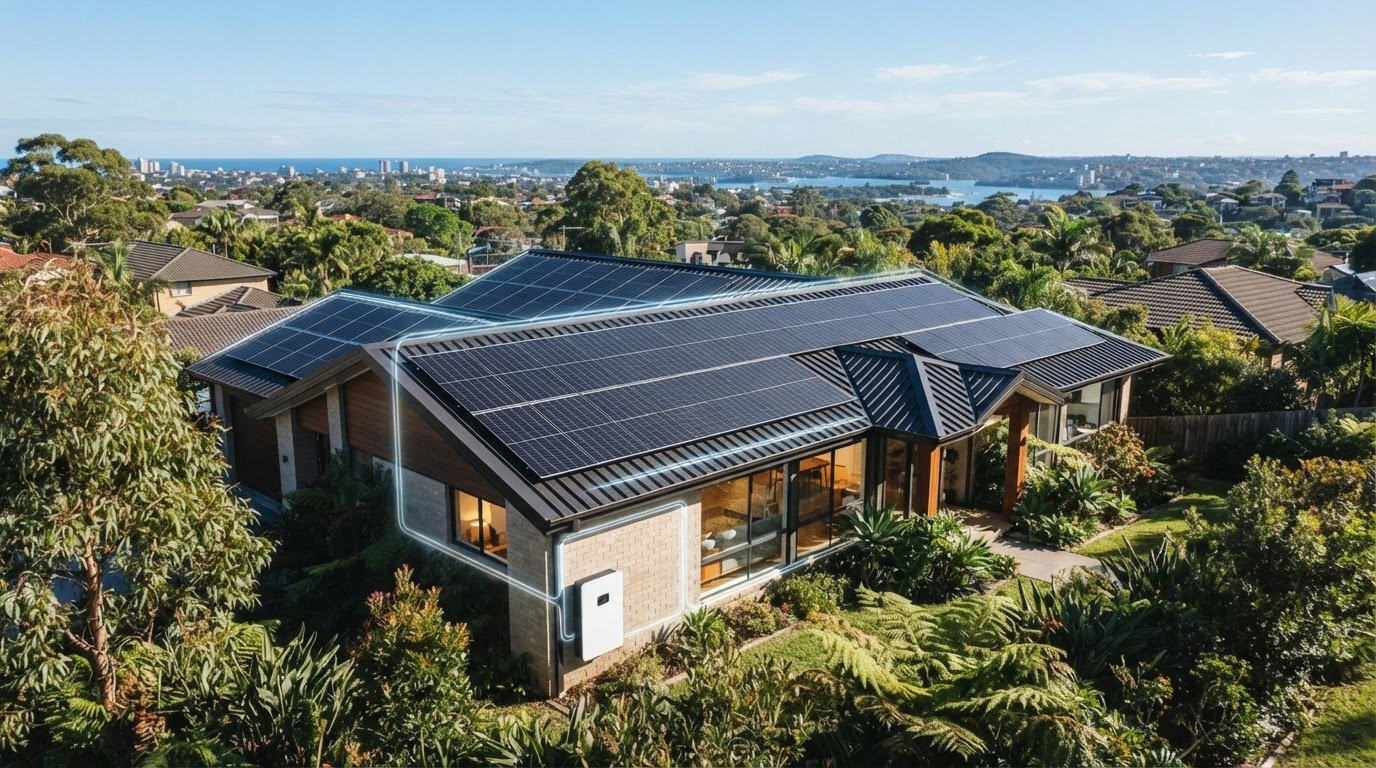
High-voltage battery systems, such as the FOX ESS CQ7, represent the next step in residential energy storage. Unlike older, low-voltage alternatives, these systems offer superior round-trip efficiency and faster discharge rates. This performance is essential when running high-draw appliances like induction cooktops or air conditioning during the evening peak. Integrated solutions like SigenStor take this a step further by combining the inverter, battery, and EV charger into a single, sleek unit. This clever design reduces installation labour and saves valuable garage space, making the transition to a sustainable home feel organised and seamless.
EV Ready: Preparing for the Electric Transition
Most Sydney residents will own an EV within the next decade. If you install a standard AC charger later, you may face expensive switchboard modifications or additional cabling costs that could have been avoided. Choosing SigenStor’s integrated DC charging allows you to bypass the vehicle’s internal AC converter, resulting in faster and more efficient home charging directly from your panels. When planning your array, consider the solar-to-EV ratio; for a typical 40km Sydney commute, you generally need about 2kW of dedicated solar capacity to ensure your car runs purely on harvested sunshine.
Battery Ready vs. Battery Installed
There is a significant difference between a system that is “battery compatible” and one that is truly battery-ready. An AC-coupled system adds a second inverter for the battery later, which can lead to energy conversion losses and a more complex setup. A DC-coupled system using a hybrid inverter is the gold standard for new installs. Even if you aren’t ready for a battery today, selecting a hybrid inverter now ensures your home is prepared for the Federal Cheaper Home Batteries Program. This program, which launched on July 1, 2025, offers rebates currently valued at approximately $272 per usable kWh, making high-quality storage far more accessible.
Ready to future-proof your Sydney home with a system that grows with your needs? Contact us for a quote on our EV charging solutions today.
The Sydney Solar Selection Checklist
Selecting the right partner for your energy transition is just as critical as the hardware you choose. One of the most common solar installation mistakes to avoid is treating the purchase like a retail appliance rather than a long-term infrastructure project. To ensure your system delivers the promised ROI, you must move beyond the marketing gloss and verify the technical foundations of the company you are hiring. This final checklist provides the practical steps needed to secure a high-performing system that stands the test of time in the Sydney climate.
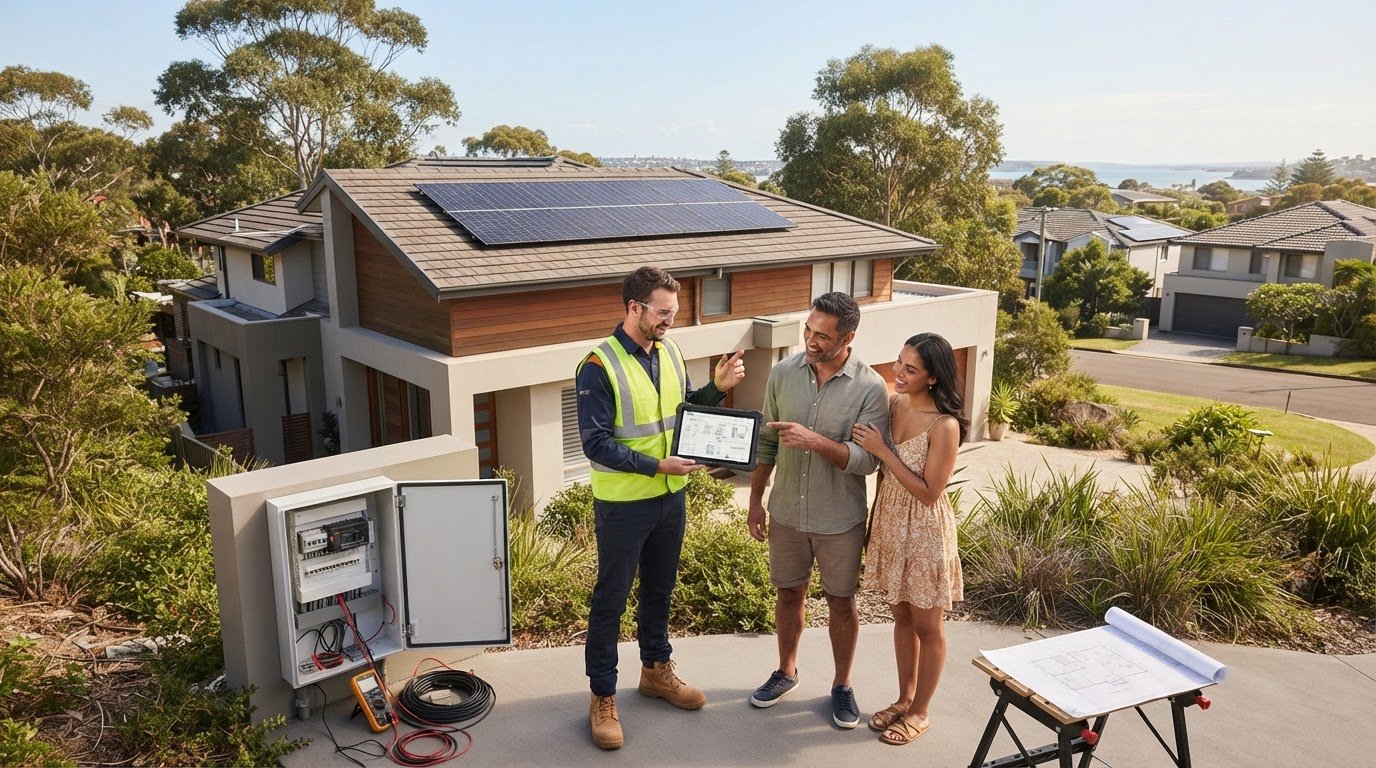
The first step is to verify that the company is a licensed NSW Electrical Contractor, not merely a solar retailer. Retailers often act as middle-men, selling the system and then auctioning the job to the lowest-bidding subcontractor. This disconnect is where quality often slips. By hiring a firm with in-house licensed electricians, you ensure the person designing your system is the one responsible for its safety and performance. A professional installer will always provide a specific roof layout plan that includes a detailed shading analysis. If a company relies solely on satellite imagery without accounting for local obstructions like chimneys or neighbouring trees, they are likely to miss critical design flaws.
Accountability is the hallmark of a “Steady Hand” in this industry. You should confirm who holds the warranty and who you will call if the system stops producing in five years. Avoid the “orphan system” trap by choosing an established specialist with a local Sydney presence. Finally, ensure the quote includes advanced monitoring software. Being able to see your real-time production and consumption on your phone is essential for managing your energy habits and preparing for future additions like an EV or battery storage.
Questions to Ask Your Sydney Installer
- “Will you be upgrading my switchboard to current AS/NZS 3000 standards as part of this quote?”
- “What is the specific wind-loading rating for this mounting system to ensure it handles Sydney’s coastal gusts?”
- “Can you provide three local Sydney references from installations completed in the last 12 months?”
- “Are the installers on my roof your full-time employees or third-party subcontractors?”
Final Red Flags to Watch Out For
Pressure is a poor substitute for expertise. Be wary of door-to-door sales tactics or “today only” discounts that discourage you from performing due diligence. Another major red flag is a quote that doesn’t involve a physical site visit or a comprehensive electrical assessment of your existing wiring. Extremely low prices that sit significantly below the market average often indicate that the installer is cutting corners on the balance of system components or using unaccredited labour. Choosing a specialist who prioritises quality over volume is the most effective way to protect your home and your investment.
Securing Your Sydney Energy Future
Investing in solar is a strategic move toward energy independence and long-term financial security. By prioritising engineered quality over the lowest initial price, you ensure your system remains a high-performing asset rather than a safety liability. We have explored how proper orientation, compliant electrical work, and future-ready hybrid inverters are essential components of a successful transition. Recognising these common solar installation mistakes to avoid allows you to navigate the Sydney market with absolute confidence.
A high-quality installation provides the peace of mind that your home is ready for the next generation of energy technology. As local Sydney experts since 2013, Sky High Solar and Electrical are licensed NSW Electrical Contractors who specialise in premium brands like FOX ESS and Enphase. Our focus is on delivering durable, intelligent solutions that integrate seamlessly with your lifestyle and prepare you for an electric future.
Are you ready to build an energy system that truly lasts? Get a Professional Sydney Solar Assessment from Sky High Solar and Electrical and take the first step toward a smarter, more sustainable home today. Your future self will thank you for choosing quality from the start.
Frequently Asked Questions
How do I know if my Sydney roof is suitable for solar?
A professional site assessment is the only way to confirm suitability with certainty. We evaluate the structural integrity of your roof, especially for older Sydney homes featuring aged terracotta or concrete tiles. We also perform a digital shading analysis to account for local obstructions like chimneys or neighbouring trees. A roof with at least 20 to 30 square metres of clear space and minimal shading is typically ideal for a standard residential system.
Do I really need a switchboard upgrade for a 6.6kW solar system?
You likely will if your home has an older fuse box. Modern 6.6kW systems require a switchboard that complies with current AS/NZS 3000 standards, including the installation of high-quality safety switches (RCDs). This ensures the board can safely manage bidirectional energy flow. Upgrading now is a proactive step that also prepares your home for future additions like an EV charger or a high-voltage battery storage system.
What happens if my solar installer goes out of business?
This results in an “orphan system”, where you lose your workmanship warranty. While manufacturer warranties for components like Enphase inverters or Tesla batteries remain valid, you will have to pay a different licensed electrical contractor for any labour required to fix faults. This is why choosing an established local specialist is one of the best ways to bypass common solar installation mistakes to avoid and ensure long-term support for your investment.
Is it better to get a 6.6kW or a 10kW system for a 4-bedroom Sydney home?
A 6.6kW system is the standard “sweet spot” for most Sydney families because it maximises federal STC discounts while fitting within standard 5kW export limits. However, if you have high daytime energy use or plan to add an EV charger and a FOX ESS battery, a 10kW system provides the necessary headroom. We recommend reviewing your interval data to see which size aligns best with your actual household consumption patterns.
Can I add a Tesla Powerwall to my existing solar system later?
Yes, you can. The Tesla Powerwall is an AC-coupled battery, which means it can be retrofitted to almost any existing solar array regardless of the inverter brand. However, it’s often more cost-effective to plan for storage during the initial install. If you have a hybrid inverter like the GoodWe ET G2, adding a compatible high-voltage battery later is even more straightforward and efficient than a completely separate AC-coupled installation.
What is the most common reason solar panels fail in Australia?
Water ingress into poorly installed DC isolators is the leading cause of system failure and fire risk in Australia. The harsh Sydney sun also degrades non-UV-rated conduits and inferior mounting hardware over time. Using high-quality components and ensuring cables are neatly tucked away from the roof surface prevents these issues. Professional servicing every few years helps identify these common solar installation mistakes to avoid before they lead to total system failure.
Do I need to clean my solar panels regularly in Sydney?
You generally don’t need to clean them regularly as Sydney’s rainfall is typically sufficient to wash away dust. However, if you live near major construction sites, heavy traffic, or under a bat colony flight path, a build-up of grime can reduce efficiency by 5% or more. We recommend a visual inspection every six months. If you notice significant debris, use a professional solar servicing company to avoid damaging the delicate panel coatings.
How long does a typical Sydney solar installation take?
Most residential installations are completed within a single day. A standard 6.6kW system typically takes about four to six hours for a team of three licensed electricians. If you are adding complex components like a SigenStor integrated hub or a FOX ESS battery, the project might extend into a second day. We also handle the grid connection paperwork, though the final meter reconfiguration by your energy retailer can take several weeks.