

 Sydney
 0452 243 240
Blog
Challenges of Solar on a South-Facing Roof in Australia: What to Consider

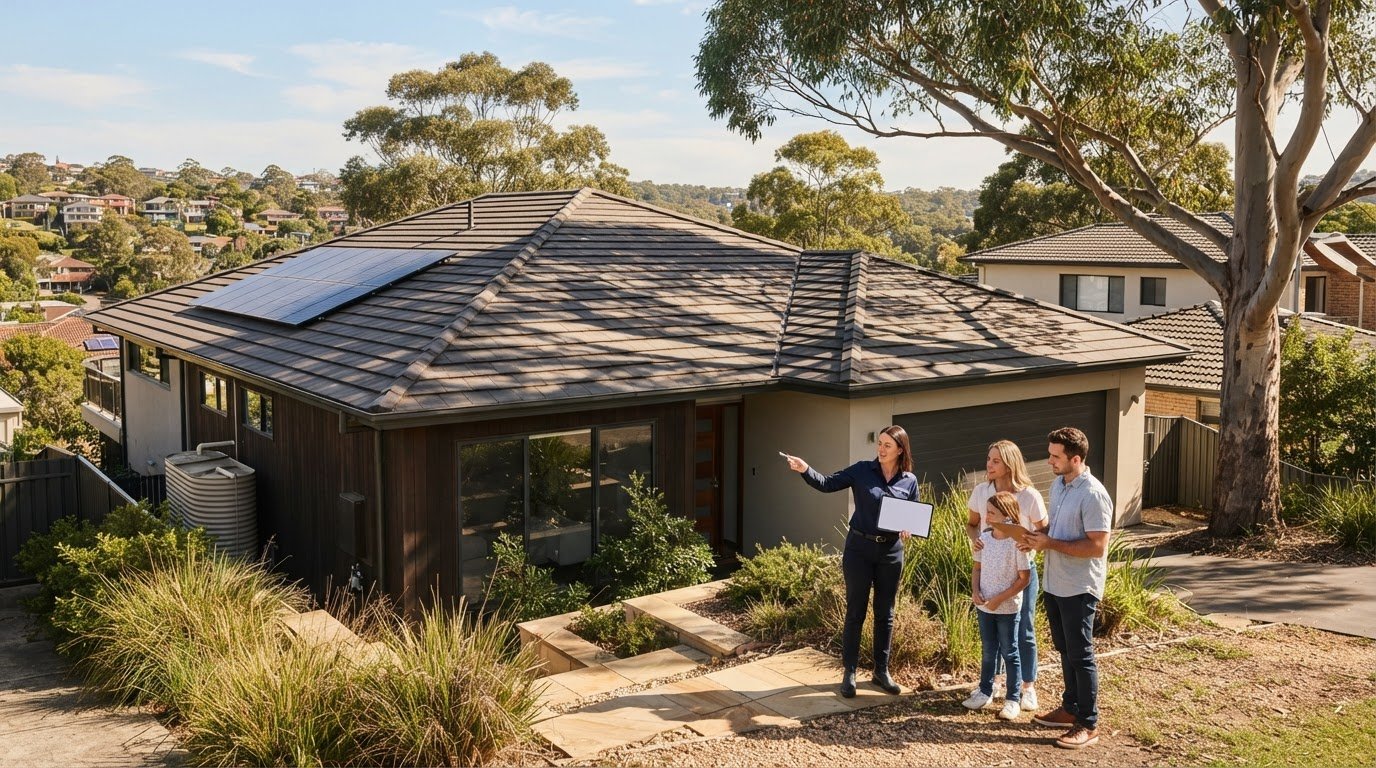
A south-facing roof doesn’t automatically rule out solar, but it does call for a closer look at the design. If you’re weighing the challenges of solar on a south-facing roof Australia, start with more than compass direction: roof pitch, shade, usable space and your household’s energy use all affect whether an array suits your Sydney home.
It’s reasonable to wonder whether panels on a south-facing roof will generate enough electricity, or whether another roof area would be a better choice. Orientation can affect when and how much your system generates, but the outcome depends on the conditions at your property. A battery may help you use stored solar energy later; it doesn’t increase the panels’ generation.
This guide explains the likely trade-offs, what a professional assessment considers, and which design options may make a south-facing array more practical. You’ll also learn how to compare roof areas and identify the details that matter before deciding. With a site-specific assessment, you can make an informed choice about solar for your home, rather than ruling it out on roof direction alone.
Key Takeaways
- A south-facing roof can still be assessed for solar; orientation is one design factor, not an automatic reason to rule out installation.
- The challenges of solar on a south-facing roof Australia depend on your roof’s pitch, shade and usable area, as well as when your household uses electricity.
- Compare north-, east- and west-facing roof areas to understand how panel direction may affect generation timing and system design.
- Use a step-by-step pre-assessment to review roof direction, shading, household consumption and existing electrical conditions.
- A site-specific assessment can help you weigh suitable design options without relying on assumed generation or savings.
What does a south-facing roof mean for solar in Australia?
A south-facing roof can be assessed for solar, but its orientation affects the sunlight panels receive and their expected generation. North-facing arrays are generally favoured in Australia because the sun travels across the northern part of the sky. That’s a useful starting point, not a verdict on every home. The Solar Power in Australia overview provides broader context for the country’s solar resource, while your roof’s conditions determine how that resource applies to your property.
Roof direction describes which way a roof surface faces; system suitability considers whether a solar design can work for the property and household. An array is the group of panels installed on one or more roof areas. Solar generation is the electricity those panels produce. The challenges of solar on a south-facing roof Australia are therefore about assessing the whole site, not judging a roof by its compass direction alone.
Why roof direction matters in the southern hemisphere
Panels receive different amounts of direct sunlight as the sun’s position changes through the day and across the seasons. A north-facing array is generally positioned to capture more direct sun in Australia. A south-facing surface may receive less direct sunlight, but its actual output depends on the roof’s pitch, shading, weather and system design.
Direction is one part of the assessment. A nearby building, tree or roof obstruction can cast shade, while a clear roof surface may have a different sunlight profile. The same compass direction can produce different results on two homes, so broad rules cannot predict a particular system’s generation.
Does a south-facing roof rule out solar panels?
No. Orientation alone doesn’t establish whether a property is suitable. A south-facing roof may still be considered if it offers usable, unshaded area and other roof sections are limited, obstructed or unsuitable for the design. Where several roof aspects are available, their combined area and conditions can shape how an array is arranged.
Keep two questions separate: how much electricity might the system generate, and whether that generation offers value for your household. Lower generation is a possibility to assess, not proof that the system won’t make financial sense. The answer depends on the proposed design, your electricity use and the value you place on using solar-generated power at home.
A site assessment turns general guidance into a property-specific view. It brings roof direction together with pitch, shade, usable space and system design, rather than treating “south-facing” as a yes-or-no label. That gives you a sound basis for comparing roof areas and deciding what to examine next.
How roof pitch, shade and Sydney conditions affect south-facing solar
Compass direction is only part of the picture. On a south-facing roof, pitch can change how directly sunlight reaches the panels, while shade may reduce the light available to some or all of the array. Two roofs facing the same way can therefore present different design options.
A south-facing array’s output is shaped by roof direction and pitch, shading, season and weather, usable panel area, and the design of the solar system. These factors need to be considered together. A clear, well-positioned section of roof may be more useful than a larger area affected by persistent shade.
Roof pitch, obstructions and usable panel area
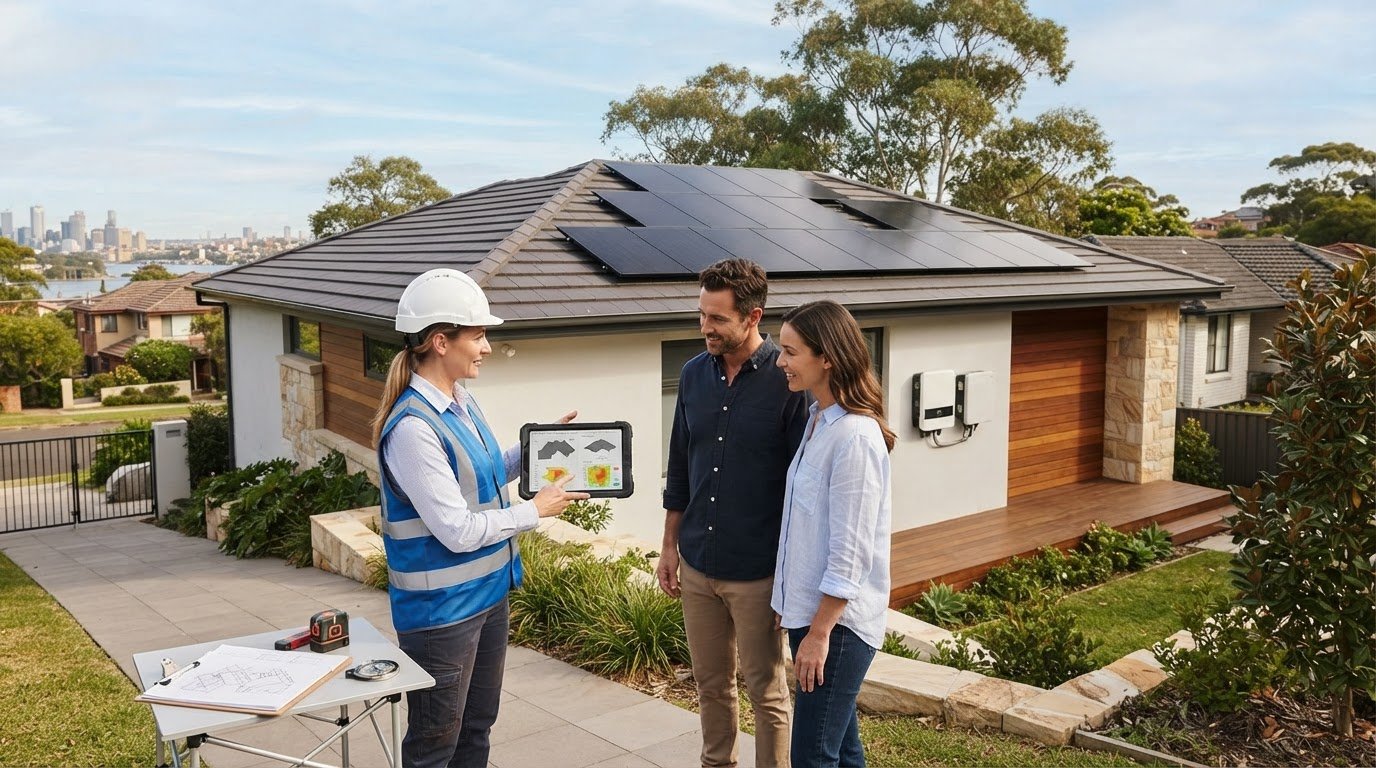
A roof inspection should record its pitch and orientation, then identify how much area is suitable and free from shade. Chimneys, skylights and other roof structures can limit panel placement or cast shadows. Trees and neighbouring buildings can also block sunlight, with the effect changing as the sun moves through the day and the seasons.
A quick look from the ground, or a single observation on a sunny day, can’t show the full shading pattern. For example, a tree may cast a shadow across a roof in the morning but leave it clear later. A sound assessment considers where shade falls and how it may change, rather than treating one moment as a reliable guide to annual generation.
Weather and season matter too. Cloud cover changes the sunlight available, and the sun’s path shifts over the year. That means one day’s production, whether high or low, isn’t a dependable measure of what a system will generate across different conditions.
Why a Sydney site assessment needs local context
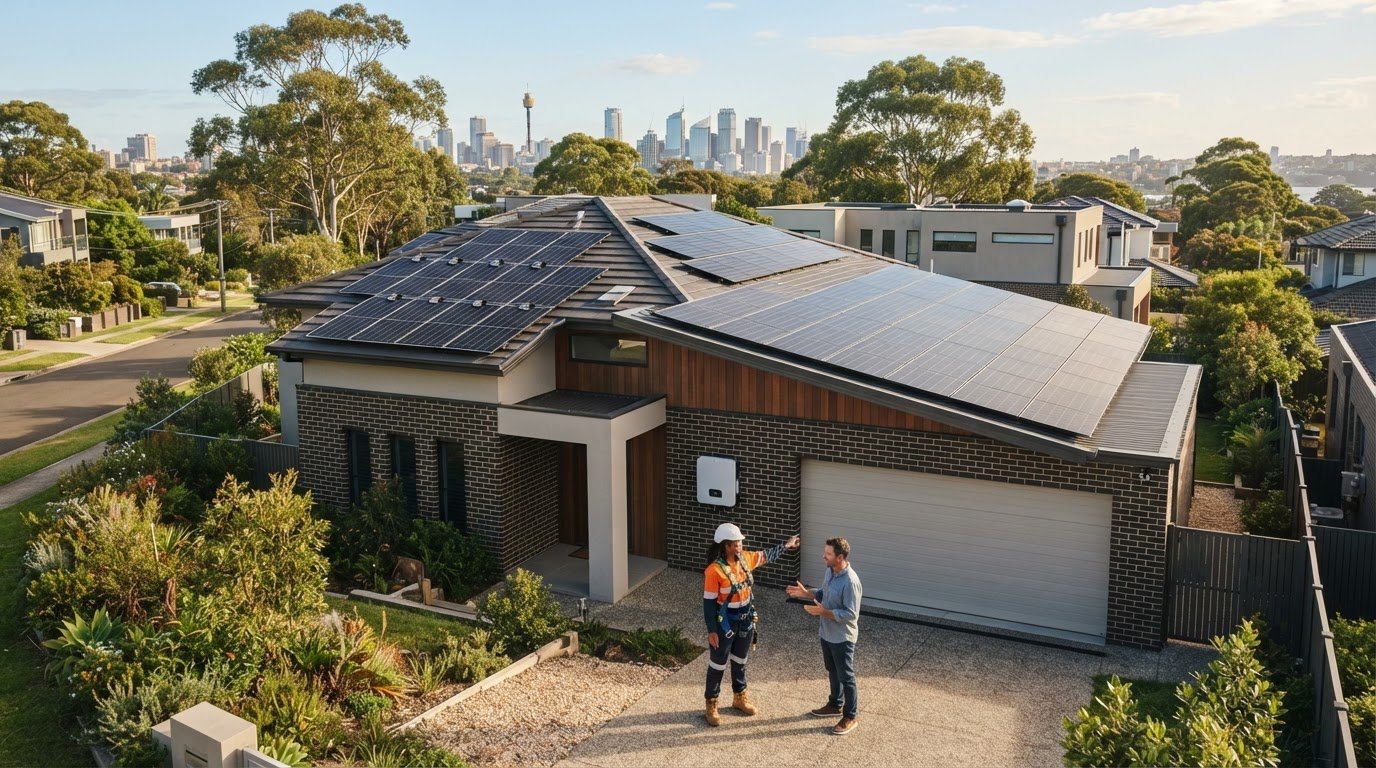
Sydney homes vary from detached houses with open rooflines to tightly spaced properties surrounded by neighbouring buildings. A multi-storey structure next door, established trees or roof-mounted equipment can create shading that isn’t obvious from the street. The relevant question is how those features affect the specific roof areas available for panels.
The assessment should also consider roof condition and the home’s existing electrical setup as part of planning an installation. These details affect how a system can be designed and connected. Requirements can depend on the address and local network, so avoid assuming one connection rule applies across all Sydney properties; applicable requirements need to be considered for the particular installation.
The challenges of solar on a south-facing roof Australia can’t be judged accurately from orientation or a brief visual check alone. A site-specific assessment brings together roof pitch, shade, usable area, roof condition and electrical factors to inform the design. If you’re considering solar in Sydney, a roof and solar system assessment can help translate those site details into practical design considerations.
South-facing vs north-, east- and west-facing solar: what changes?
Roof direction affects when sunlight reaches panels, so it can influence how your solar generation lines up with household electricity use. North-facing arrays are generally favoured in Australia, but an ideal compass direction won’t help if the roof area is shaded or too limited for a practical layout. Compare the available roof sections, not just their labels.
| Roof direction | Broad generation pattern | Potential consideration |
|---|---|---|
| North | Often strongest around the middle of the day. | Can suit homes that use electricity during daylight, subject to roof conditions. |
| East | Generally favours morning sunlight. | May align with earlier household activity and morning energy use. |
| West | Generally favours afternoon sunlight. | May better match later-day electricity use, depending on household routines. |
| South | May receive less direct sunlight, with timing and output shaped by the roof and site. | Assess the usable area, shade and system design before deciding. |
How generation timing may differ by roof direction
Think about when electricity is used at home. If appliances run during the day, generation from a north-facing section may overlap with some of that demand. An east-facing array may produce more of its energy earlier, while a west-facing one may contribute later in the day. These are broad patterns, not guarantees for an individual roof.
Actual output depends on the complete system and site, including pitch, shading, weather and array layout. Your household’s routines matter too: a roof direction that better matches your use may help you consume more solar electricity as it’s generated. A 6.6kW Sydney solar system guide can provide useful system-sizing context, but the right design still depends on the property.
When a split-array design may be worth assessing
If suitable roof areas face different directions, a design may place panels across more than one aspect. For example, a home with clear east- and west-facing sections could be assessed for a layout that spreads generation across more of the day. That doesn’t mean every multi-direction roof should use a split array.
Panel placement, shade on each roof section and inverter configuration all affect how a split design works. The available roof area may also make one direction more practical than another, even if it isn’t the preferred orientation in general. The challenges of solar on a south-facing roof Australia include weighing these site-specific trade-offs against the household’s energy use, rather than assuming one direction or layout is always best.
Compare each roof aspect for clear, usable panel space and likely generation timing. A site-specific design can then account for the combined layout without relying on guaranteed yields or a universal orientation ranking.
How to assess whether your south-facing roof is worth installing on
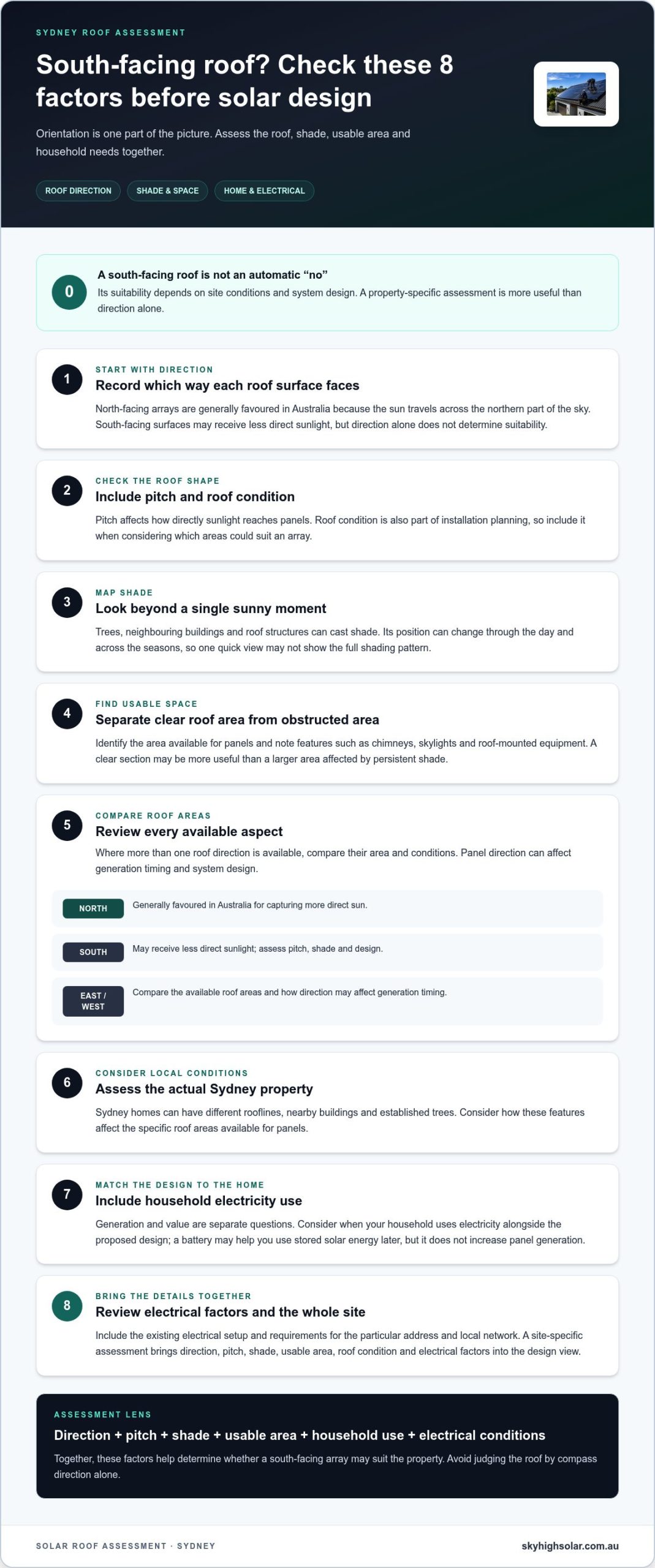
Assess the roof first, then consider whether a proposed system makes sense for your household. This keeps physical suitability separate from generation estimates, electricity use and potential bill impacts. The challenges of solar on a south-facing roof Australia are best assessed with property details and realistic assumptions, not orientation alone.
A homeowner checklist before requesting a design
Use this sequence to prepare useful information for a project-specific assessment. You don’t need to calculate system output yourself; the aim is to record what’s known about your home and energy use.
- List the available roof sections. Note which way each section faces and whether you’re considering only the south-facing area or other aspects as well.
- Record roof pitch and condition. Note visible features that could affect panel placement, and flag any roof concerns for professional assessment.
- Observe potential shade. Make brief notes about shade from trees, chimneys, neighbouring buildings or other obstructions at different times. These observations are useful context, not a substitute for assessing changing shade conditions.
- Estimate usable area. Record which roof areas appear clear of obstructions, without assuming every open section can take panels.
- Gather electricity-use information. Recent bills or usage records can help show how much electricity your household uses and when demand occurs.
- Note future plans. If you may add a battery or change household energy use, include that in the discussion. A battery is an option for changing when solar energy is used, not a way to increase panel generation.
Compare expected generation, use and incentives carefully
Once the roof has been assessed, consider expected generation alongside your household’s consumption. Electricity used directly while the system is generating is self-consumed; electricity sent to the grid is exported. These are separate parts of the value assessment, and the result depends on the system design, your usage patterns and the assumptions used to estimate generation and bill impacts. No roof direction can guarantee a particular saving.
System capacity should also relate to the home’s energy needs and the roof space available. For context on how system size is considered for Sydney households, see this 10kW solar system guide for Sydney homes. A guide can help you understand sizing, but it can’t replace a design based on your roof, electrical setup and consumption.
Before including any rebate or incentive in your calculations, check current NSW and federal scheme rules and your eligibility. Treat an estimate as an estimate, and review the assumptions behind projected generation, self-consumption and exports.
Ready to move from a roof checklist to a tailored design? Arrange a project-specific solar assessment to consider your roof and household needs together.
Designing solar for a south-facing roof with Sky High Solar and Electrical
A south-facing roof calls for a design based on the property, not a standard panel layout. Sky High Solar and Electrical considers roof aspects, shading and usable area alongside your household’s energy needs. The aim is to understand the design trade-offs and develop a system suited to the site, without assuming a particular generation level, saving or outcome.
Sky High Solar and Electrical has operated in Sydney since 2013 and undertakes licensed electrical work. That local installation and electrical experience matters when general orientation advice needs to become a practical design, including consideration of the home’s existing electrical setup and applicable compliance requirements.
What a professional solar design should account for
A south-facing assessment should connect the roof findings with the proposed system, rather than treating panel direction in isolation. Key design considerations include:
- Panel layout: which roof sections offer usable space, and how shade or obstructions may affect placement.
- Inverter configuration: how the system components are matched to the proposed array and its roof aspects.
- Household use: when you use electricity, to inform the system design and how much generation may be consumed at home.
- Electrical conditions: the existing setup and any work needed to integrate the system safely and appropriately.
If inverter sizing is part of the design, the 133% oversizing rule must be checked against current requirements and its applicability to the proposed system. It shouldn’t be assumed to apply in every situation. Applicable electrical work may also require a certificate of compliance electrical work (CCEW), which documents that the work meets relevant Australian safety standards and is legally compliant.
When battery storage may enter the discussion
A battery may be considered if you want to use some solar electricity at a different time from when the panels generate it. Storage can shift the timing of energy use; it doesn’t change the roof’s orientation or increase the panels’ generation. Whether it belongs in the design depends on your household’s needs and the project details.
For a closer look at how storage fits into a home energy plan, the Sydney solar battery storage guide covers battery-specific considerations. It can help you prepare questions about storing and using solar energy, while the roof and system design remain specific to your home.
The challenges of solar on a south-facing roof Australia are best resolved through a clear assessment of the roof, electrical conditions and household requirements. Discuss a solar assessment for your Sydney home with Sky High Solar and Electrical to explore the design considerations for your property.
Make your next solar decision with confidence
Your solar plans can be a chance to clarify what you want from your home’s energy setup over the years ahead. Before committing, take time to review the proposed design, understand its assumptions and consider whether its trade-offs fit your priorities. A considered decision today can help you feel more confident about the system you choose.
If questions remain about the challenges of solar on a south-facing roof Australia, use them to guide a practical discussion about your property and energy goals. You don’t need to settle every detail at once. Start with the information that matters most to you, then decide on a next step with a clearer understanding of your options.
To discuss your home’s requirements, arrange a solar assessment for your Sydney home. A measured approach can help you move forward with confidence.
Frequently Asked Questions
Can you install solar panels on a south-facing roof in Australia?
Yes, provided the roof and electrical installation can support a suitable design. Before agreeing to a proposal, check that it identifies the roof sections where panels are planned and explains the assumptions behind its generation estimate. You can also share any roof plans or renovation details you have, as these may help clarify usable space and installation considerations for your Sydney home.
Do south-facing solar panels work in winter?
Yes, they can generate electricity in winter. If winter performance matters to you, ask for seasonal estimates as well as an annual projection, then consider how your household’s winter demand may differ. For example, heating or more time spent indoors can change electricity use. A seasonal view helps you judge whether the proposed system aligns with your needs beyond the sunnier months.
How much less electricity do south-facing solar panels generate?
There’s no single reduction that applies to every roof, so a general percentage may not describe your home. Ask for a property-specific estimate that states the assumptions used, including the proposed panel layout and any shade considered. The challenges of solar on a south-facing roof Australia are easier to evaluate when you can compare the estimate with your own electricity-use records, rather than relying on a broad rule of thumb.
Is an east- or west-facing roof better than a south-facing roof for solar?
East- and west-facing roof areas are often worth comparing with a south-facing section, but the best choice depends on the property. Use your electricity records to identify when demand is highest, then compare those periods with the expected generation profile for each proposed layout. A roof section with less ideal orientation may still be a stronger candidate if it offers more clear, practical panel space.
Can solar panels on different roof directions be connected to one system?
Yes, panels on different roof directions can sometimes be part of one system. The design needs to account for the different operating conditions of each panel group. Depending on the equipment selected, this may involve separate inverter tracking inputs or module-level electronics. The proposal should make clear how each roof section is configured, so you can understand how the system is intended to manage panels facing different directions.
Will a battery make a south-facing solar system more worthwhile?
Possibly, but assess the battery as a separate investment rather than assuming it improves the panels’ output. Its value depends on factors such as your evening electricity use, retail plan, export arrangements and the battery’s usable capacity. Compare the expected costs and benefits of solar alone with a solar-and-battery option, using your household’s actual usage and current tariff details.
How do I assess shade on a south-facing roof before installing solar?
From the ground, take dated photos of the roof from consistent viewpoints and note anything that could affect access or panel placement. Share these with the installer alongside any site plan or property drawings you have. Don’t climb onto the roof to inspect it. A professional assessment can use this background to focus its inspection and explain any design limits before you decide how to proceed.