

 Sydney
 0452 243 240
Blog
Solar Inverters Explained: How to Choose the Right System for Your Sydney Home

A higher-rated solar inverter isn’t automatically the right choice for your Sydney home. The right fit depends on your panels, roof layout, household energy use and battery plans, not just the figures on a spec sheet. Comparing inverter types can feel technical, especially when you’re also weighing up system size and future flexibility.
This guide explains what a solar inverter does and how it works with the other parts of your system. You’ll compare string, micro and hybrid inverter designs, see how battery plans can shape your choice and learn why your Sydney network area matters. Ausgrid and Endeavour Energy have different export settings, so your suburb can affect how your system connects to the grid. We’ll also cover professional installation and compliance documentation, giving you a clearer basis for planning a safe system around your home.
Key Takeaways
- Understand how a solar inverter converts panel output into electricity your home can use, and how it connects with the rest of your system.
- Compare string, microinverter and hybrid designs by the role each needs to perform, rather than assuming one type suits every home.
- See how inverter rating, the 133% oversizing rule and local grid export limits affect system design in Sydney.
- Use a practical checklist to weigh your electricity use, roof layout, battery plans and local conditions such as coastal salt-mist and summer humidity.
- Learn how Sky High Solar brings together the property, panels and inverter, with options including GoodWe, FOXESS, Enphase and Tesla solutions.
What Does a Solar Inverter Do in a Sydney Solar System?
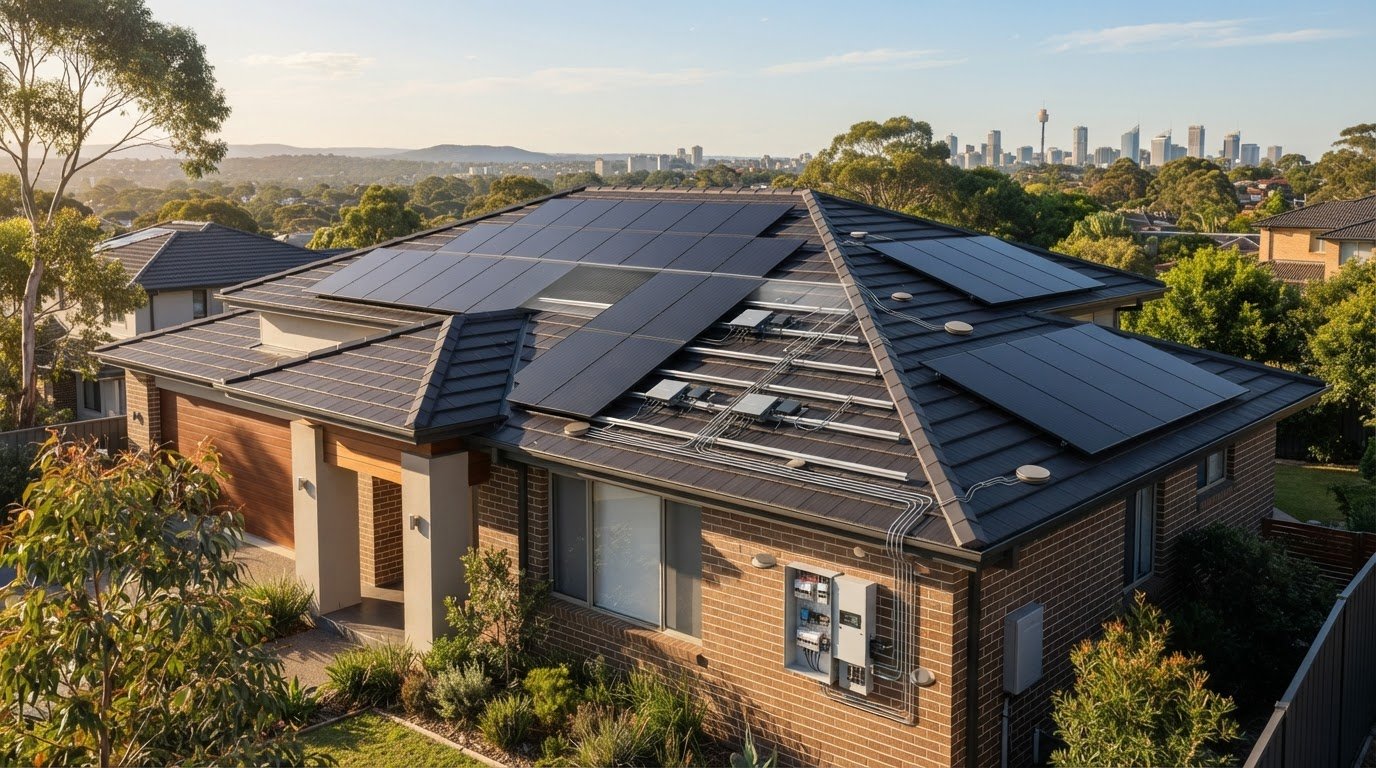
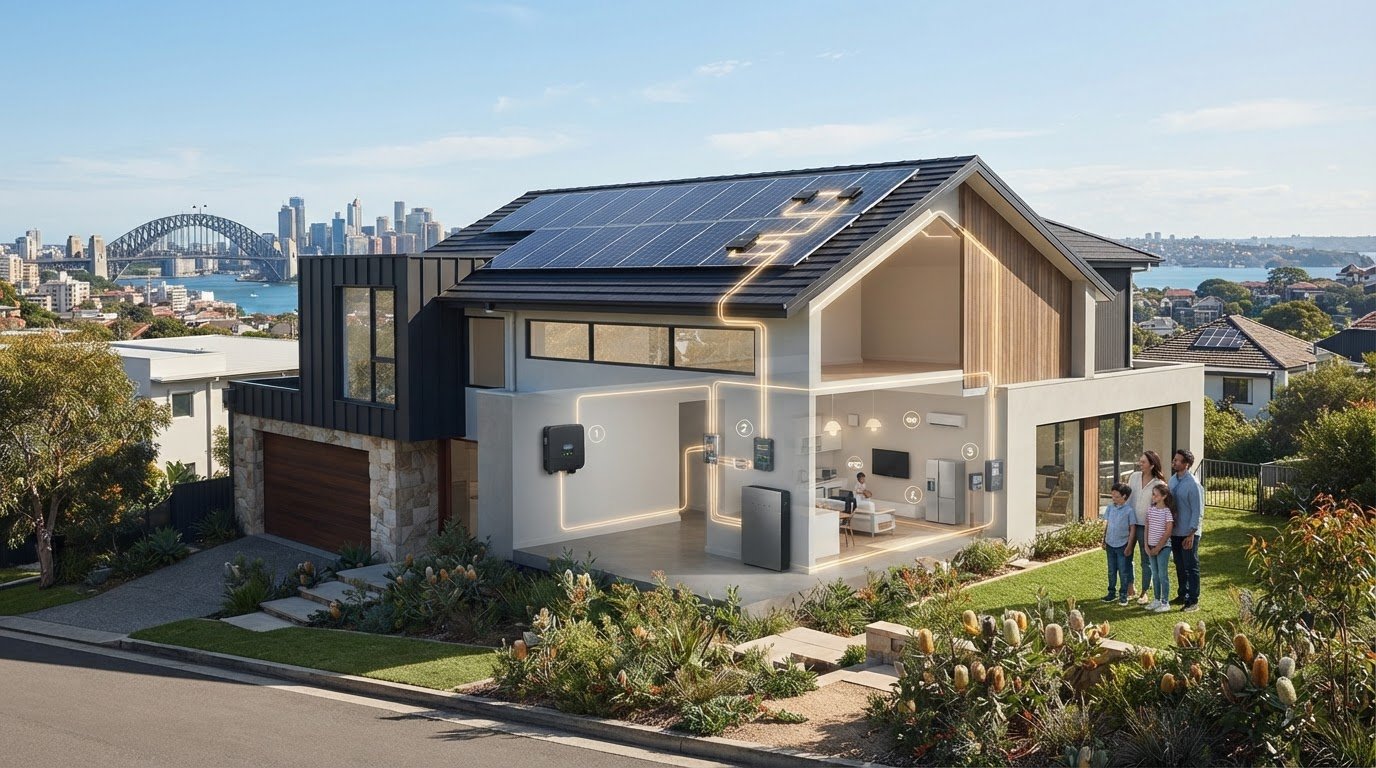
A solar inverter converts solar-generated direct current (DC) electricity into alternating current (AC) electricity that your home can use. It sits between your rooftop panels and household circuits, and also manages the system’s connection to the electricity grid.
A solar inverter converts the DC electricity produced by solar panels into AC electricity suitable for household use and, in a grid-connected system, export.
How Solar Electricity Moves from Panels to Your Home
Solar panels generate DC electricity when sunlight reaches their cells. The inverter changes that power into AC, the form used by household appliances and circuits. While the system is generating, solar electricity can supply the home’s electrical loads.
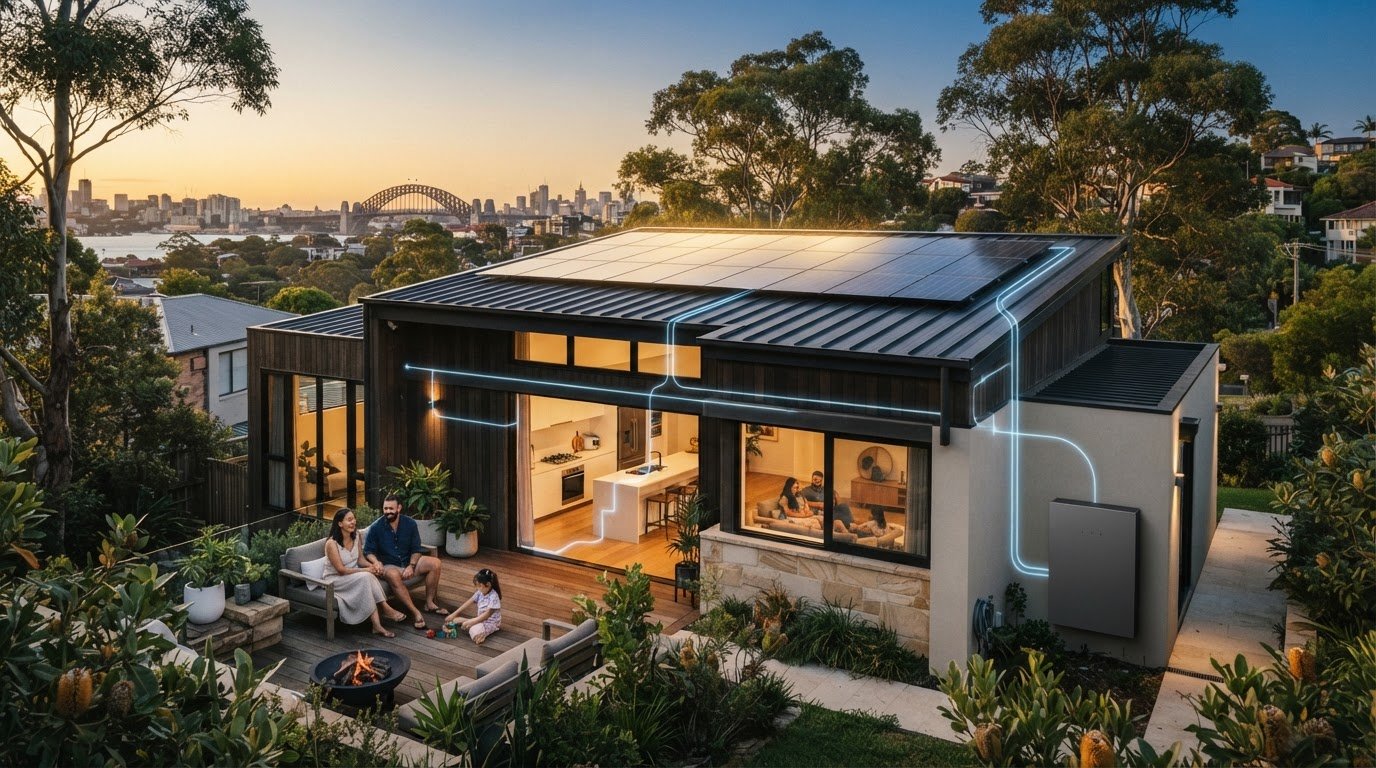
If the panels produce more electricity than your home is using, surplus power can be exported to the grid, subject to the system’s connection settings. When solar generation is below household demand, electricity can be drawn from the grid. The balance changes with sunlight, panel output and when appliances are running.
Why Inverter Choice Matters Beyond the Product Label
An inverter’s capacity is one design figure, not a forecast of your bill savings. The result also depends on the solar array, household electricity use, roof conditions and installation. A product label can’t account for these site-specific factors by itself.
For a Sydney home connected to the grid, the inverter needs to work as part of a system designed for the property and its connection conditions. A household that uses more power during daylight, for example, may use more solar generation directly than one whose largest loads run in the evening. The practical task is to match the system design to your energy use, not simply choose the highest rating available.
Roof layout and installation conditions matter, too. Panel orientation, shaded areas and the route for electrical connections can affect how the array and inverter are configured. Sydney’s coastal salt-mist and summer humidity are also relevant when planning equipment placement and ongoing care. A suitable design considers these factors alongside the inverter brand and rating.
For a broader technical overview of inverter functions and common features, see this guide to the solar inverter. For your own system, focus on how the inverter, panels and household loads work together. A properly designed and professionally installed system gives you a clearer basis for assessing solar use and grid export, without treating capacity as a guarantee of savings.
How Solar Inverter Types Fit Different System Designs
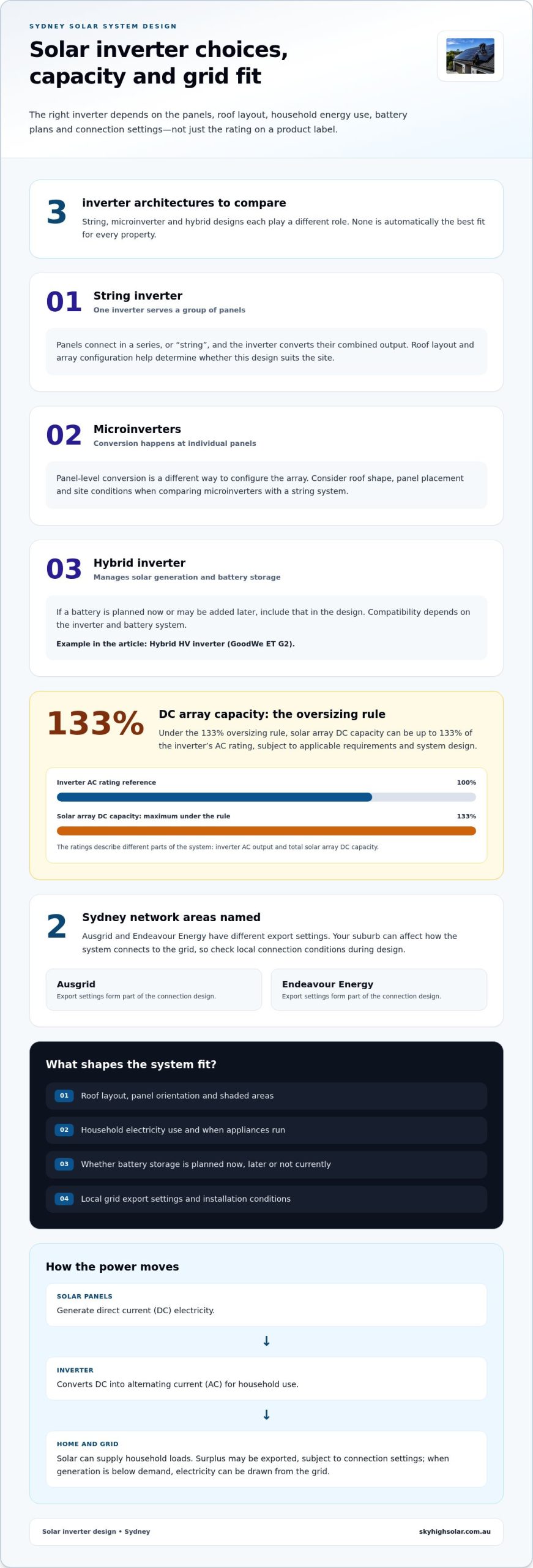
For a grid-connected Sydney home, inverter architecture describes how solar panel output is converted and managed. The main options are string inverters, microinverters and hybrid inverters. Each plays a different role, and the right fit depends on your roof, array layout and plans for storing solar energy.
A standard inverter converts solar power for household use, while a hybrid inverter is designed to manage both solar generation and battery storage.
String Inverters and Microinverters at a Glance
A string inverter serves a group of panels connected in a series, or “string”, and converts their combined output. With microinverters, conversion happens at individual panels. These designs affect how the array is configured and how its components work together. Neither is automatically the better choice for every property.
Roof shape, panel placement and site conditions can all influence the design. A roof with panels spread across different sections, for instance, may call for a different layout from a roof with one consistent array. When comparing Enphase microinverters with a string system, consider the roof and the intended array design, rather than judging by the product type alone.
What a Hybrid Inverter Adds to a Solar Design
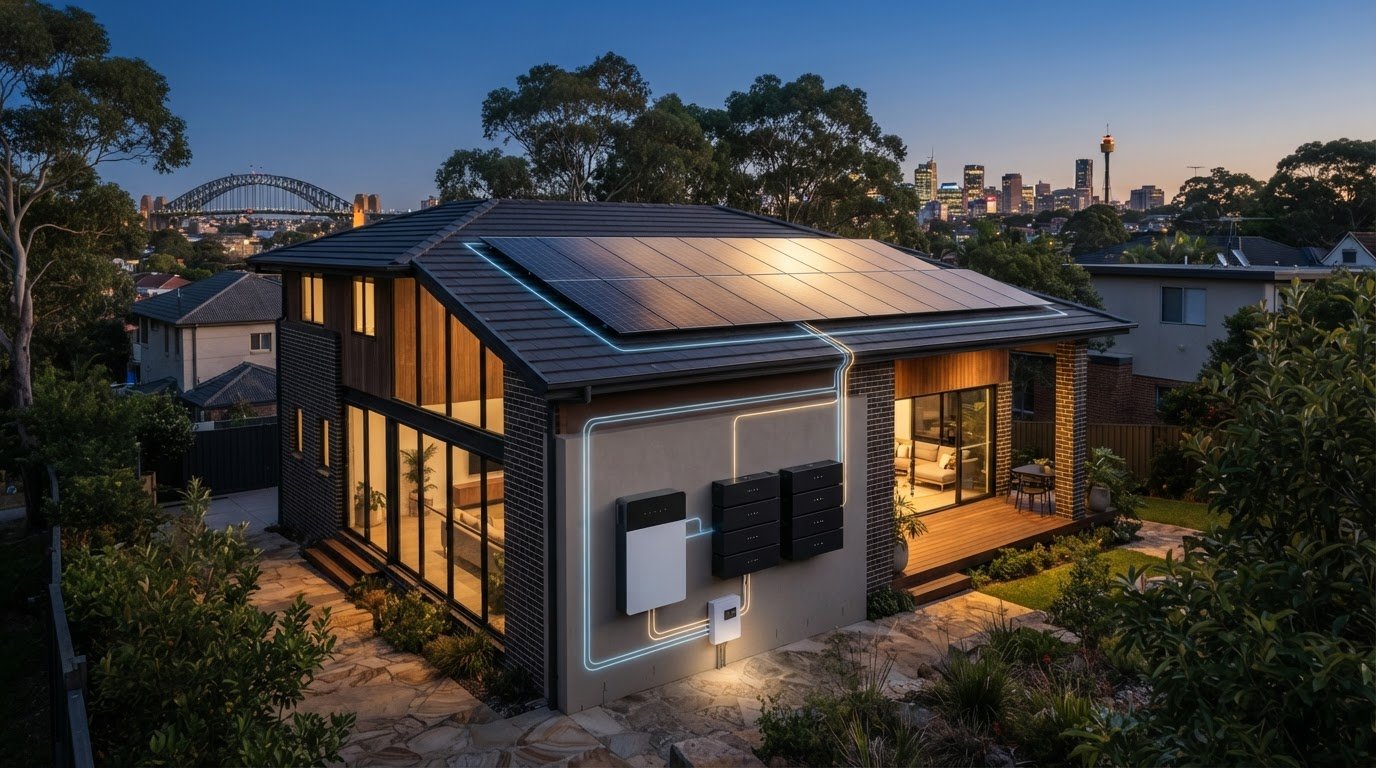
A hybrid inverter manages solar generation and battery storage within the system. If you’re considering a battery now or may add one later, include that plan when selecting an inverter. Compatibility depends on the inverter and battery system, so an inverter selected for panels alone may not suit every future storage configuration.
Think about whether battery storage is part of the installation now, a possible later addition, or not currently in your plans. That decision helps shape the system design without assuming every household needs the same setup.
Sky High Solar and Electrical installs the Hybrid HV inverter (GoodWe ET G2) as part of solar and battery solutions. Its suitability depends on the project design, including the array and intended storage arrangement. Assess the inverter as one component of the complete system, rather than selecting it by model name in isolation.
As you compare options, focus on what the system needs to do at your property. A discussion of roof layout, panel configuration and battery plans can make technical product information easier to interpret. For help planning a home installation, explore residential solar solutions from Sky High Solar and Electrical.
How Inverter Capacity, the 133% Oversizing Rule and Grid Limits Connect
When planning a solar system, two capacity figures matter: the inverter’s AC output rating and the solar array’s total DC capacity. They’re related, but describe different parts of the system. In Sydney, your network’s export requirements can also shape the design.
Under the 133% oversizing rule, the solar array’s DC capacity can be up to 133% of the inverter’s AC rating, subject to applicable requirements and system design.
Reading Inverter and Panel Capacity Together
Capacity is commonly expressed in kilowatts (kW). The inverter’s rating describes its AC output capacity, while the array’s rating is the combined nominal DC capacity of its panels. These figures aren’t interchangeable: the array rating doesn’t mean the inverter will produce that amount of AC power at every moment.
For example, a 5 kW inverter paired with approximately 6.65 kW of panels illustrates a 133% DC-to-AC capacity ratio. This shows the relationship between the ratings, not predicted output. Sunlight, panel orientation, shading, temperature and other site conditions affect generation. The design should suit your roof and household objectives, rather than simply aiming for the largest array the ratio might allow.
What the 133% Oversizing Rule Means for a Home
The 133% oversizing rule permits solar panel capacity to be up to 133% of the inverter rating to maximise energy production. Solar Accreditation Australia guidelines allow this DC-to-AC sizing relationship. Its application still depends on the system design and requirements for the installation, so the ratio shouldn’t be treated as automatic approval for every Sydney property.
Oversizing doesn’t guarantee greater savings. Whether it suits your home depends on the panel arrangement, site conditions, inverter selection and how the system is intended to operate. The rule concerns array capacity relative to inverter rating, not how much electricity can be exported to the grid.
Export settings are a separate connection consideration, and your Sydney network area matters. Ausgrid covers Sydney’s east, north and central areas, as well as the Central Coast and Hunter. Its fixed export limit is 10 kW per phase; from 23 November 2026, flexible exports of up to 10 kW are scheduled to become the default for new systems. Endeavour Energy, which serves Greater Western Sydney, the Blue Mountains and Illawarra, currently has a fixed limit of 5 kW per phase. Flexible exports, which can allow up to 10 kW when network capacity permits, are scheduled to become standard for new and upgraded systems later in 2026.
Array sizing and export limits address different parts of the design, so both need consideration. Your suburb helps identify the network requirements that apply, while the roof and your energy goals inform the panel-to-inverter configuration.
A Practical Solar Inverter Selection Checklist for Sydney Properties
Start with your home, not a product label. Use this checklist to organise the details that shape the design, then have the proposed system assessed against current NSW and local network connection requirements before installation.
Questions to Resolve Before Inverter Installation
- Map your electricity use. Note when your household uses the most power and which major appliances contribute to demand. This gives the system designer a clearer picture of how the solar array and inverter should fit your energy profile.
- Review the roof layout. Record which roof sections could hold panels, their orientation and any areas shaded by trees or nearby buildings. These conditions can affect the array configuration and how it works with the inverter.
- Set out your battery plans. Decide whether storage is part of the installation now or a possible future addition. Battery compatibility depends on the inverter and overall system design, so include this intention early. The solar battery storage guide can help you think through how storage fits into a home energy plan.
- Consider equipment location. Sydney’s coastal salt-mist and summer humidity are practical site factors. Discuss the proposed equipment location and how the local environment will inform maintenance planning.
- Check system sizing. Compare the planned panel-array capacity with the inverter rating, and consider how the design suits your household and roof. For a broader look at system sizing, refer to the 6.6kW solar system guide.
Sydney Installation and Compliance Checks
Your suburb determines which electricity network applies, and connection and export requirements can vary across Sydney. These requirements may influence the system design, so consider them alongside the roof, array and intended use. Requirements can change, so use current NSW and network information rather than relying on assumptions or details from an older installation.
Electrical work should be carried out by licensed electrical contractors. A certificate of compliance electrical work (CCEW) is official documentation confirming that electrical work meets Australian safety standards and is legally compliant. Keep it with the project’s compliance records and details of the installed system.
Before approving the design, make sure you understand how the inverter rating relates to the planned panels, how your battery plans have been considered and which network requirements apply to your property. Sky High Solar and Electrical plans and installs residential solar systems around the property and its electrical design. Discuss your solar installation requirements with the team to take the next step towards a suitable, professionally installed system.
How Sky High Solar Plans and Installs Solar Inverters
A well-designed solar system is planned as a whole. Sky High Solar and Electrical considers your property, panel array, inverter and battery plans together, so the selected equipment fits the project rather than being treated as a standalone purchase. This gives you a clearer view of how the system is designed to work and what the installation involves.
Sky High Solar and Electrical installs GoodWe hybrid inverters, FOXESS three-phase hybrid inverters, Enphase and Tesla solutions. The suitable choice depends on the property and project requirements, including array design and whether battery storage is part of your plans. Equipment selection is tailored to those factors rather than assuming one configuration will suit every home or business.
From Site Assessment to System Commissioning
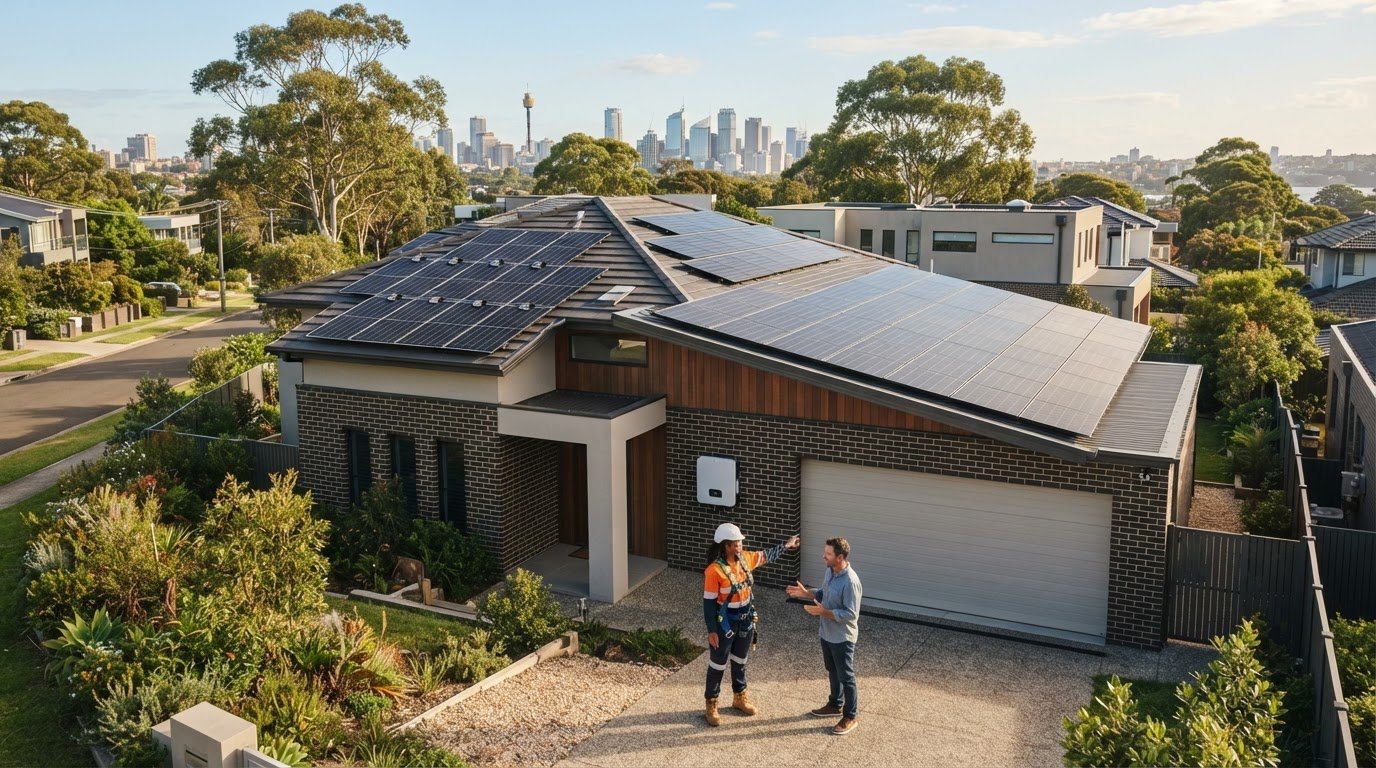
The process starts with assessing the property and project requirements. That information informs system design, including the relationship between the panels, inverter and any planned battery storage. Once the design is established, licensed electrical contractors carry out the installation and commission the system. Equipment selection is tailored to the site and agreed design.
After installation, a post-installation review is a final check to confirm compliance with standards and registration for rebates where applicable. Electrical work is documented with a certificate of compliance electrical work (CCEW). These steps keep safety, compliance and project records in view as the system moves from design to operation.
Support for Sydney Homes and Businesses
Sky High Solar and Electrical has served the Sydney community since 2013, supporting residential and commercial solar projects across Sydney Metro and surrounding regions. Local conditions and the property’s electrical setup are part of planning a suitable system, whether you’re considering solar for your home or business.
System care doesn’t end at commissioning. Sky High Solar and Electrical provides solar system servicing and solar health checks to assess how an installed system is operating and identify maintenance needs. Ongoing care is particularly relevant in Sydney, where coastal salt-mist and summer humidity can affect equipment placement and maintenance considerations. A service check also gives you a practical opportunity to review system condition as your energy needs change.
If you’re planning a new installation or considering how a solar inverter fits with future battery storage, bring those requirements into the design discussion early. Sky High Solar and Electrical can align the property, array and equipment choices in a considered system plan. Discuss a solar inverter and system design with Sky High Solar and Electrical.
Turn Your Solar Plans into a Clear Design Brief
Turn what you know about your home into useful information for system design. Before discussing a solar inverter, jot down when your household uses the most electricity, any planned changes such as an electric vehicle, and whether battery storage is on your horizon. Note roof areas that may be shaded and any preferences about equipment placement, too.
These details give the design conversation a practical starting point. They also keep the focus on how the system should work for your property, rather than choosing equipment by brand name or rating alone. For a Sydney installation, include the property location so the relevant network connection requirements can be considered.
A well-planned system should make sense for your needs today while taking likely energy plans into account. You don’t need to resolve every technical detail on your own. Discuss your solar system design with Sky High Solar and take the next step towards a considered solar plan for your home.
Frequently Asked Questions
How long does a solar inverter usually last?
A solar inverter’s service life varies with the product, installation conditions and maintenance, so there isn’t a single lifespan to rely on. Check the manufacturer’s warranty and operating guidance for the exact model installed at your home. Fault history, environmental exposure and changes in system performance can help a qualified technician assess its condition. A gradual output change alone doesn’t confirm the inverter needs replacing; consider it alongside other system information.
Can I replace a solar inverter without replacing my panels?
Yes, it may be possible to replace the inverter and retain existing panels, but compatibility and component condition need assessment first. The electrician should review panel specifications, system design and wiring, as well as connection requirements that apply to the property. This helps determine whether the replacement can work with the installed array and whether other components need attention. Have a licensed electrician complete the work; don’t attempt a direct swap.
Will my solar inverter work during a blackout?
A standard grid-connected solar system generally shuts down during a grid outage for safety, so don’t assume the panels will keep household circuits running. Backup power depends on the system design and compatible equipment; having a hybrid inverter alone doesn’t establish that backup is available. Check your system documentation for its outage behaviour, and discuss which circuits you’d want supported when planning a solar inverter system.
Why is my solar inverter making a noise?
Some sounds can occur during normal operation, but a sudden or unusual noise deserves attention. Note when it happens, such as during the day or after a change in weather, and check the display or manual for alerts. Don’t open the unit or attempt electrical repairs. If the noise persists, changes noticeably or appears alongside a fault message, arrange an assessment by a qualified technician.
What should I do if my solar inverter displays a fault code?
Record the fault code and look up its meaning in the manufacturer’s operating manual. You can also note whether the system appears to be generating, but don’t remove covers or handle wiring. If the alert remains or you’re unsure what it means, have a qualified solar service professional assess the system. Sky High Solar provides solar system servicing to help investigate faults and check system operation.
Does a solar inverter need an internet connection?
Internet access is generally relevant to remote monitoring and app-based performance information, rather than the inverter’s basic conversion of solar electricity. Monitoring and connectivity requirements depend on the inverter and system setup, so check the product documentation for your model. If internet access is lost, that alone doesn’t show that the solar system has stopped operating. Check the inverter’s indicators and generation information through available means.