

 Sydney
 0452 243 240
Blog
Strata Solar By-Laws in NSW: Approvals, Rules and Next Steps

Could your strata scheme refuse solar just because panels change the building’s appearance? In NSW, by-laws can’t prohibit sustainability infrastructure on that basis from 1 July 2025, except where specific heritage protections apply. Solar proposals also follow a sustainability infrastructure resolution process, so the approval pathway may differ from what you expect.
If you’re researching strata solar bylaws NSW, it’s understandable to be unsure where to begin. Roof access, common property, electrical upgrades and ongoing maintenance can all shape a proposal. A successful vote also doesn’t automatically settle how the installation will be funded or managed.
This guide explains which strata records and decision-makers to check, what to clarify about your building, and how to prepare a proposal that addresses safety, shared property and long-term responsibilities. You’ll also learn about common strata solar system options and why a by-law may be needed to cover ownership, access and maintenance. Checking scheme requirements early gives a solar and electrical contractor a clearer basis for assessing the practical installation considerations, while leaving strata and legal advice to the relevant professionals.
Key Takeaways
- Start by checking your scheme’s by-laws and registered documents, then confirm how they apply to the proposed work.
- Use current NSW Fair Trading guidance and legislation to help identify the approval pathway for your specific proposal.
- Compare solar options by considering roof access, shared use, cabling, metering and ongoing responsibilities.
- Prepare a clear proposal with equipment locations, cable routes, affected areas and any assumptions about the installation.
- Use this guide to understand strata solar bylaws NSW, then consult a qualified strata adviser and a solar contractor about approvals and technical feasibility.
Strata solar by-laws in NSW: what owners need to check first
Rooftop solar in a strata scheme can affect shared property and involve several decision-makers. Before choosing panels or asking for approval, establish which parts of the building the proposed work touches and which scheme records apply. A panel array may sit on the roof, while cabling, conduits and other equipment could cross or occupy different areas.
By-laws are rules that apply within a particular strata scheme. They’re not the same as NSW legislation, which sets the broader legal framework, or the scheme’s registered documents, which help show how the property is divided and managed. Strata title provides useful background on how individual lots and shared property fit within this form of ownership. For your solar proposal, rely on current scheme records and official NSW information rather than a general explanation.
What do strata by-laws cover for a solar proposal?
By-laws may address how common property is used, renovations and the scheme’s approval processes. They can help you identify issues to raise, but a by-law alone may not resolve every legal, ownership or technical question. Obtain the current registered by-laws and relevant strata records, then check them against current NSW legislation and guidance. Don’t rely solely on an old email, meeting note or informal summary.
Requirements depend on the scheme and the specific proposal. A system serving one apartment may raise different questions from a shared installation. Equipment locations and cable routes can also affect what needs to be considered. If the documents are unclear, ask the strata manager or a qualified strata or legal adviser to help interpret them.
Is the roof common property in your strata scheme?
Don’t assume the roof is common property, or that an owner has the right to use it for panels. Check the strata plan and scheme records to understand how relevant areas are identified and whether any conditions or prior decisions apply. If ownership or responsibility remains unclear, seek clarification from the strata manager or a qualified adviser before treating a roof area as available.
Map the proposed work beyond the panels themselves. Consider:
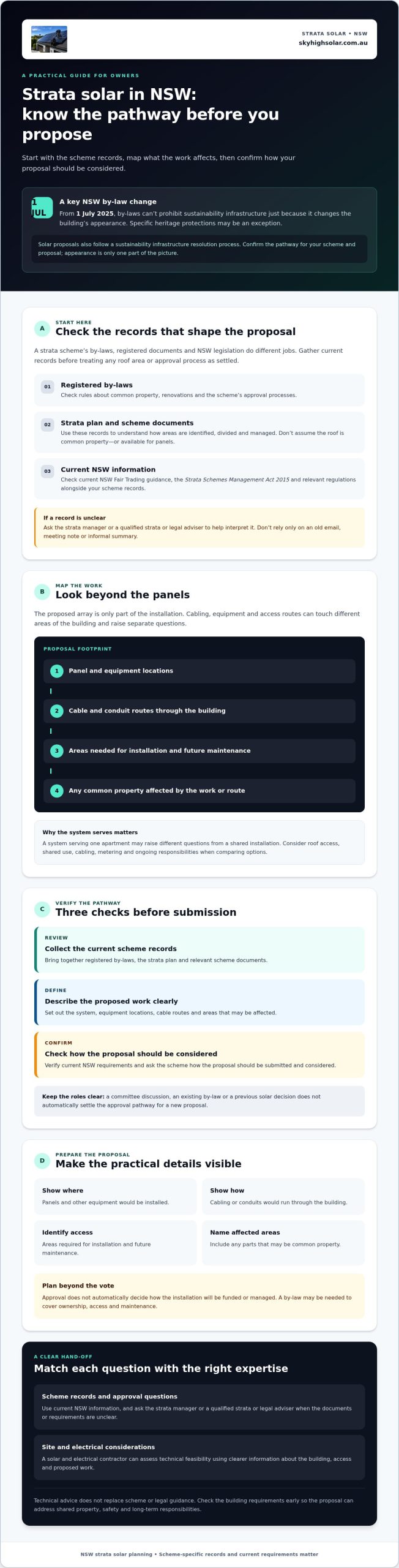
- where panels and other equipment would be installed
- how cabling or conduits would run through the building
- which areas need to be accessed for installation and future maintenance
- whether any parts of the route or work area may be common property.
This early document check helps you frame the right approval questions. It also gives a solar contractor a clearer basis for discussing site and electrical considerations, without treating technical advice as a substitute for scheme or legal guidance.
NSW strata solar approvals: identify the right decision pathway
Once you’ve checked the scheme records, establish which approval process applies to your proposal. A committee discussion, a by-law or a previous solar decision doesn’t automatically settle the matter. The pathway can depend on the work proposed, the areas affected and the current rules for your scheme. If you’re searching for strata solar bylaws NSW, treat your building’s records and current legal requirements as essential parts of the answer.
Use a verification-first sequence:
- Review the records: gather the current registered by-laws, strata plan and relevant scheme documents.
- Define the work: describe the proposed system, equipment locations, cable routes and any areas that may be affected.
- Confirm the pathway: check current NSW requirements and ask the scheme how the proposal should be submitted and considered.
Which NSW rules apply to solar work in a strata scheme?
Start with current information from NSW Fair Trading and check the Strata Schemes Management Act 2015 and relevant regulations. The NSW strata by-laws guidance is a useful government reference for how by-laws operate, including their relationship to sustainability infrastructure. Read it alongside your scheme’s registered by-laws and strata plan for context specific to the building and proposal.
Official guidance can help you identify the right questions, but it won’t determine how every document applies to your building. For strata solar bylaws NSW, verify the current rules rather than relying on general advice or an older interpretation. If you’re uncertain about the required resolution, decision-maker or effect of a by-law, seek advice from a qualified strata or legal adviser.
Who should you speak to before lodging a proposal?
Contact the strata manager first. Ask for current documents and the scheme’s process for submitting a solar proposal. Then ask the strata committee or owners corporation how proposals are considered and what information they expect. These contacts can help clarify the process, but don’t assume who has authority to make the final decision until you’ve checked the applicable law and scheme records.
Keep a written trail. Record your questions, who responded and which documents or guidance you received. This makes it easier to resolve different interpretations and prepare a proposal that addresses the scheme’s actual process.
After checking the approval questions, a solar and electrical contractor can help identify site considerations such as roof access, cable routing and switchboard requirements. Sky High Solar and Electrical provides solar and electrical services in Sydney. For solar and electrical planning, confirm the scheme’s approval requirements separately.
Compare strata solar options by roof access, shared use and responsibility
A solar design needs to suit more than the available roof space. In a strata building, the intended users, equipment locations, cable routes, metering and maintenance access all shape what is practical to propose. Treat individual and shared systems as planning scenarios, not automatic rights or approvals. Check the scheme documents and applicable process before settling on a design.
For general system-sizing context, see this 6.6kW solar system guide. A system size that suits a standalone home may not translate directly to a strata building, where roof access, shading, shared electrical infrastructure and how energy will be used also matter.
Individual lot solar versus a shared strata system
A proposal intended to serve one lot raises different practical questions from a shared system designed to supply common areas or more than one apartment. Neither arrangement is automatically permitted or preferable. Before choosing, clarify who the proposed system would serve, where its panels and other equipment could go, and how electricity use would be measured.
Consider how each option may affect:
- Roof allocation: Is the proposed panel area available for this design, and what records clarify responsibility for it?
- Cable routes: Would cabling or conduits cross shared areas or pass through parts of the building that need to be considered separately?
- Metering and use: How would generation be measured, and how would the intended users receive or account for the electricity?
- Access and upkeep: Who would need access to the panels and related equipment for inspection, repairs or maintenance?
Before asking for a preferred design, work through ownership, responsibility and cost allocation with the relevant scheme contacts and professional advisers. Current NSW strata by-laws guidance can help with general context, but the specific proposal still needs to be assessed against the scheme’s records and current requirements.
How do batteries and future energy needs affect the proposal?
If battery storage is part of the project, include it in the initial planning rather than treating it as a minor add-on. Consider its proposed location, electrical connections, access needs and relationship to shared areas alongside the solar design. If a battery is only a future possibility, label that clearly and ask whether the current design can accommodate further planning without assuming the later work is already approved.
Ownership, maintenance, access and any proposed allocation of costs or stored electricity should be discussed with the scheme and qualified advisers. For general background, read this solar battery storage guide. A site assessment can help identify roof and electrical considerations, while scheme approval and responsibility arrangements need to be confirmed separately.
Prepare a strata solar proposal with this practical checklist
A clear proposal helps the scheme assess what’s being installed, where work will take place and what responsibilities need to be agreed. Keep the description straightforward, separate confirmed details from assumptions, and ask the strata manager what format the scheme requires before lodging anything. This makes it easier to identify unanswered questions early.
What information should a solar proposal include?
Describe the intended system and who it is designed to serve. Mark the proposed panel and equipment locations, cable routes and any lot or shared areas that may be affected. Include a site assessment or preliminary technical information if available, and identify anything that still needs checking.
Your preparation checklist can include:
- Work areas: which roof, lot or shared areas may be involved, and where equipment is proposed.
- Electrical scope: anticipated work, cable and conduit routes, and known switchboard or building constraints.
- Access and disruption: how installers may reach work areas and any expected effects on residents or shared spaces.
- Ongoing responsibilities: questions about maintenance, insurance, damage and later repairs. Treat these as matters for scheme discussion, not agreed terms.
Label assumptions clearly. If a cable route hasn’t been confirmed, mark it as provisional rather than presenting it as final. Ask the strata manager to confirm the submission format and supporting documents before lodging your proposal.
What should you confirm before installation is scheduled?
Obtain the required scheme decision in writing before treating the proposal as approved. Check that its scope matches the design you intend to install, and confirm project-specific electrical and building requirements with appropriately qualified professionals. Ask the contractor to clarify the proposed work and which electrical compliance documents, including a certificate of compliance electrical work (CCEW) where applicable, will be supplied.
Check grant eligibility early. The NSW Solar for Apartment Residents (SoAR) Grant may co-fund shared solar projects, subject to its current criteria and available funding. As at September 2026, eligible applications must come from a residential owners corporation under the Strata Schemes Management Act 2015, have a passed sustainability infrastructure resolution, and show a payback period within 10 years. Applications are stated to close at 5 pm on 4 December 2026, or earlier if funds are allocated. Confirm current criteria, remaining funds, required documents and project deadlines through official NSW grant information before relying on the grant in your proposal.
For practical input on roof, switchboard and installation considerations, review your strata solar installation plan with a Sydney solar and electrical contractor. Confirm scheme approval and grant eligibility separately with the relevant scheme contacts and official sources.
Plan strata solar installation in Sydney with the right professional support
Scheme approval and technical feasibility are separate checks. A proposal may receive the required scheme decision but still need design changes after a contractor assesses the building. Address both before scheduling work: confirm the scheme’s decision in writing, then have qualified professionals review the proposed installation and project-specific requirements.
What should Sydney strata owners ask a solar contractor?
Choose a contractor with the appropriate licence for the proposed electrical work, and ask for a clear scope. An assessment should consider the actual property, including roof layout and condition, shading, switchboard, cable routes and access constraints. In Sydney, the details of the site matter more than broad assumptions about local conditions.
Before proceeding, ask:
- What roof, switchboard and installation checks are included in the assessment?
- Which parts of the proposed design are confirmed, and which remain subject to further inspection?
- What work areas and access arrangements will installers need?
- Who will communicate with the strata manager, and what information or documents can the contractor supply?
- How will applicable electrical work be documented, including a certificate of compliance electrical work (CCEW)?
Also clarify which responsibilities sit with the contractor and which remain with the owners corporation or other parties. Ask how changes will be addressed if the final site assessment identifies a constraint. Keep technical documents aligned with the proposal and the scheme’s written decision.
How can Sky High Solar and Electrical support the installation stage?
Sky High Solar and Electrical provides solar installation and electrical contracting services in Sydney. Once you’ve checked the strata solar bylaws NSW requirements for your scheme, a site assessment and electrical planning can help identify practical considerations for an approved proposal, such as roof access, cable routes and switchboard needs.
This input can inform your next steps, but it doesn’t replace the scheme’s approval process or guarantee a particular design or installation outcome. Leave legal interpretation and approval decisions to the owners corporation and qualified strata or legal advisers, and confirm project-specific building and electrical requirements with the relevant professionals.
For a practical discussion about your Sydney solar and electrical requirements, discuss your Sydney solar project with Sky High Solar and Electrical.
Take the next step towards a well-planned strata solar project
A well-prepared strata solar proposal connects scheme requirements with a realistic technical assessment. Check the relevant records and approval pathway, then have qualified professionals assess the building and proposed work. Clear planning helps the scheme weigh potential benefits, such as using solar generation to offset some shared electricity use and reducing reliance on grid electricity, against project costs and responsibilities.
The value of solar depends on the system design, how electricity is used and the arrangements agreed by the scheme. No savings or performance outcome is guaranteed, but a considered proposal gives owners a stronger basis for assessing the financial and environmental trade-offs.
Sky High Solar and Electrical provides solar installation and electrical services in Sydney, including residential and commercial solar systems, battery storage and solar system servicing. To discuss the practical requirements of your strata project, contact Sky High Solar and Electrical about your Sydney solar project.
Frequently Asked Questions
Do I need owners corporation approval to install solar panels in a NSW strata scheme?
You may need owners corporation approval, particularly if the proposal affects common property or shared building areas. The pathway depends on the work, your scheme records and current NSW requirements. For strata solar bylaws NSW, check the approval process for your specific proposal with the strata manager and consult current official guidance. Don’t schedule work until you’ve confirmed the required decision and have it recorded in writing.
Can an owners corporation refuse a solar installation in NSW?
An owners corporation can’t prohibit sustainability infrastructure solely because of its external appearance, except where specific heritage protections apply. NSW treats solar installation as a sustainability infrastructure resolution, which requires a simple majority to pass. That doesn’t mean every proposal is automatically approved. Confirm the current requirements, prepare clear technical information and seek qualified strata or legal advice if the decision pathway or reasons for refusal are unclear.
Are solar panels on a strata roof considered common property?
Not necessarily. Check your scheme’s strata plan and records before assuming who owns or controls the roof. Panels may be proposed for one area, while cabling, conduits, inverters or access routes involve other parts of the building. If the records don’t make ownership or responsibility clear, ask the strata manager or a qualified adviser. The answer can affect approval questions, access arrangements and responsibility for maintenance or repairs.
What should I include in a strata solar application?
Include a plain-language description of the system, who it will serve and where the panels and other equipment are proposed. Add a plan showing affected lots or shared areas, cable routes and installation access. Attach preliminary technical information if available, and label assumptions or details still to be confirmed. Raise questions about disruption, maintenance, insurance and later repairs, and ask the strata manager which submission format and documents the scheme requires.
Can a strata owner install a solar battery as well as solar panels?
A battery can be included in a strata solar proposal, but don’t assume it follows the same approval or installation pathway as panels. Its proposed location, electrical connections, access needs and effect on shared areas should be reviewed as part of the project. Confirm scheme requirements and have qualified professionals assess the technical details. If battery storage is only a future possibility, distinguish it from the current proposal.
Who is responsible for maintaining strata solar panels?
Responsibility depends on the approved arrangement and what the scheme agrees. Clarify who will arrange and pay for maintenance, who can access the panels and associated equipment, and who will manage repairs if damage occurs. Don’t assume the installer, an individual owner or the owners corporation automatically takes responsibility. Check the relevant scheme documents and have the agreed responsibilities recorded before installation.
Where can I check the current NSW strata rules for solar installations?
For strata solar bylaws NSW, start with current NSW Fair Trading guidance, the Strata Schemes Management Act 2015 and relevant regulations. Review your scheme’s registered by-laws, strata plan and other relevant records for building-specific context. If you’re unsure how the rules apply, seek advice from a qualified strata or legal adviser. A solar and electrical contractor can assess technical considerations separately from legal approval.