

 Sydney
 0452 243 240
Blog
Solar for Sydney small business: a practical guide

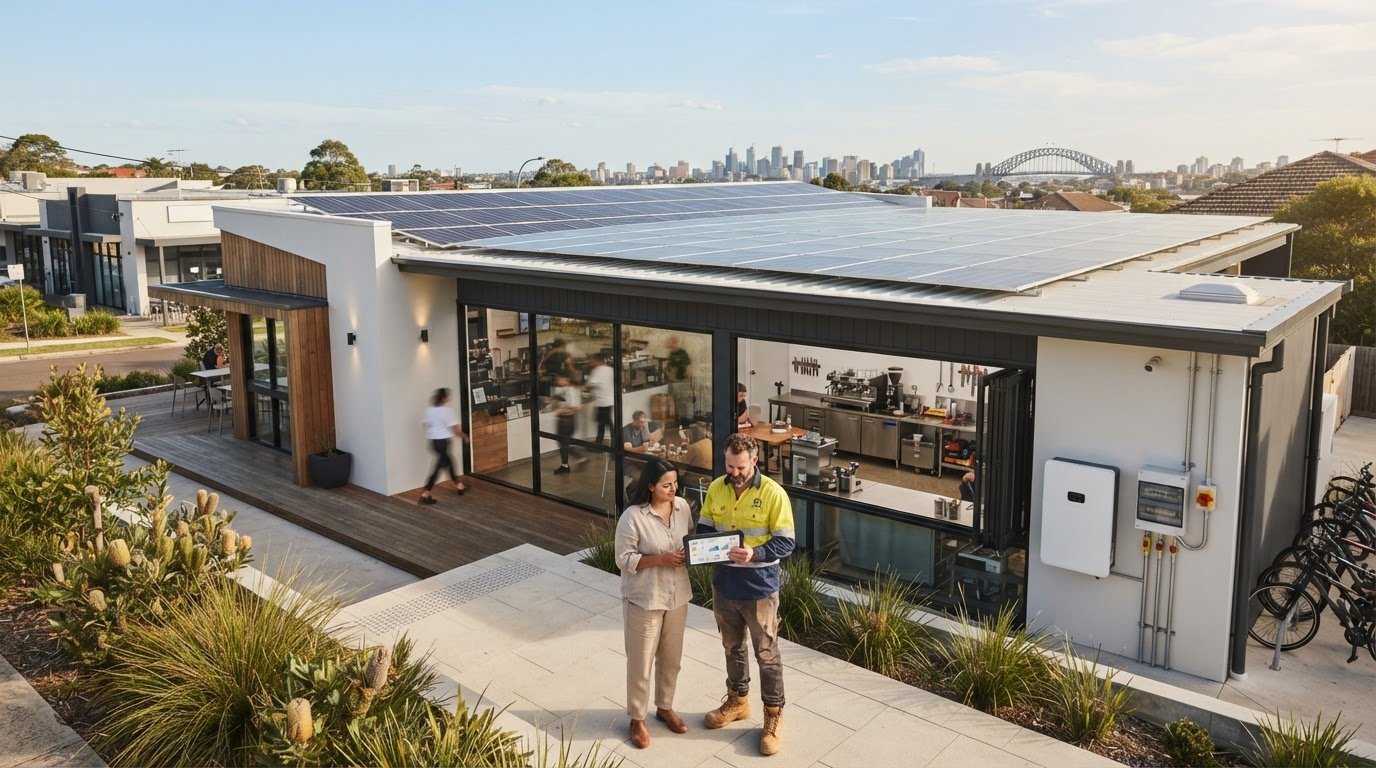
Could a smaller solar system deliver more value than a larger one? For solar power for small business Sydney sites, the answer often depends on how much electricity you use while the sun is shining. A system sized around your real operating pattern can be a better fit than one based on your total bill alone.
Energy use, roof constraints and installation planning all affect the decision. Export payments, battery options and incentives also need to be assessed against your site and electricity plan. This guide sets out practical steps to help you decide whether solar suits your business and what to consider before committing.
We’ll look at your load profile, roof and electrical capacity, system sizing, metering and battery choices, as well as how future growth could change your needs. You’ll also learn why self-use matters when assessing export value and how to plan for a safe, compliant installation around business operations. Sky High Solar and Electrical provides commercial solar solutions and electrical services for Sydney businesses, including switchboard upgrades where required.
Key Takeaways
- Assess solar power for small business Sydney by matching system design to daytime electricity use, operating hours and plans for growth.
- Use electricity bills, interval data and a load schedule to identify when your business consumes power and which equipment drives demand.
- Compare solar-only, battery storage and grid exports against your usage patterns, meter setup and export arrangements.
- Check roof condition, site access, switchboard capacity and meter arrangements before installation to plan the work around business operations.
- Identify the DNSP for your site and account for its connection and export requirements, alongside electrical compliance and safety.
Is solar power for a small business in Sydney a good fit?
Small-business solar is a site-designed system that generates electricity for use at the business premises. Its suitability depends less on the type of business and more on when, where and how electricity is used. For solar power for small business Sydney, start by comparing the site’s daytime demand with the hours solar generation is available.
Self-consumption is solar electricity used by your business as it’s generated. Exported electricity is surplus power sent to the grid instead of being used on site. Using solar generation directly can reduce the electricity your business needs to import at that time. The value of exported power depends on your electricity plan and the site’s connection arrangements. Solar may also support emissions goals, though financial and environmental benefits depend on system design and actual use. For wider context, see this overview of Solar power in Australia.
Operating hours matter because solar generation and business demand need to overlap. A site with daytime activity may be able to use more solar power directly than one whose main operations happen after hours. Compare when demand occurs, not just the total electricity shown on a bill.
Which Sydney businesses may benefit from daytime solar generation?
Offices, workshops, retail premises and hospitality sites may have daytime loads that align with solar generation, but the business type alone doesn’t determine suitability. Computers, machinery, lighting, cooling and refrigeration can all contribute to daytime use. Review when these loads operate and whether their schedule changes across the week or year. In Sydney, seasonal cooling demand, quieter trading periods and changes to opening hours can affect how closely electricity use matches generation.
When should a business pause before committing to a system?
Check who controls the premises and how long you expect to use the site. If you lease, plan to relocate or need landlord approval, resolve those matters before investing in equipment attached to the building. A site assessment should also consider roof condition, shading and usable area, as these affect panel placement and system design.
Pause if the premises, roof or operating plans are likely to change, or if important site details remain unclear. Solar isn’t suitable for every business, and you can’t assume a particular bill outcome without assessing the site and its energy use. Start by gathering recent electricity bills, noting operating hours and listing major daytime loads. This gives you a practical evidence base for deciding whether to proceed.
How to assess your business energy use before choosing solar
A useful solar assessment starts with evidence, not a system size chosen by rule of thumb. For solar power for small business Sydney, the load profile helps guide system design, but it can’t guarantee a particular bill outcome. Gather energy-use information alongside site details so the design reflects how your business operates now and what may change.
What electricity data should a Sydney business gather?
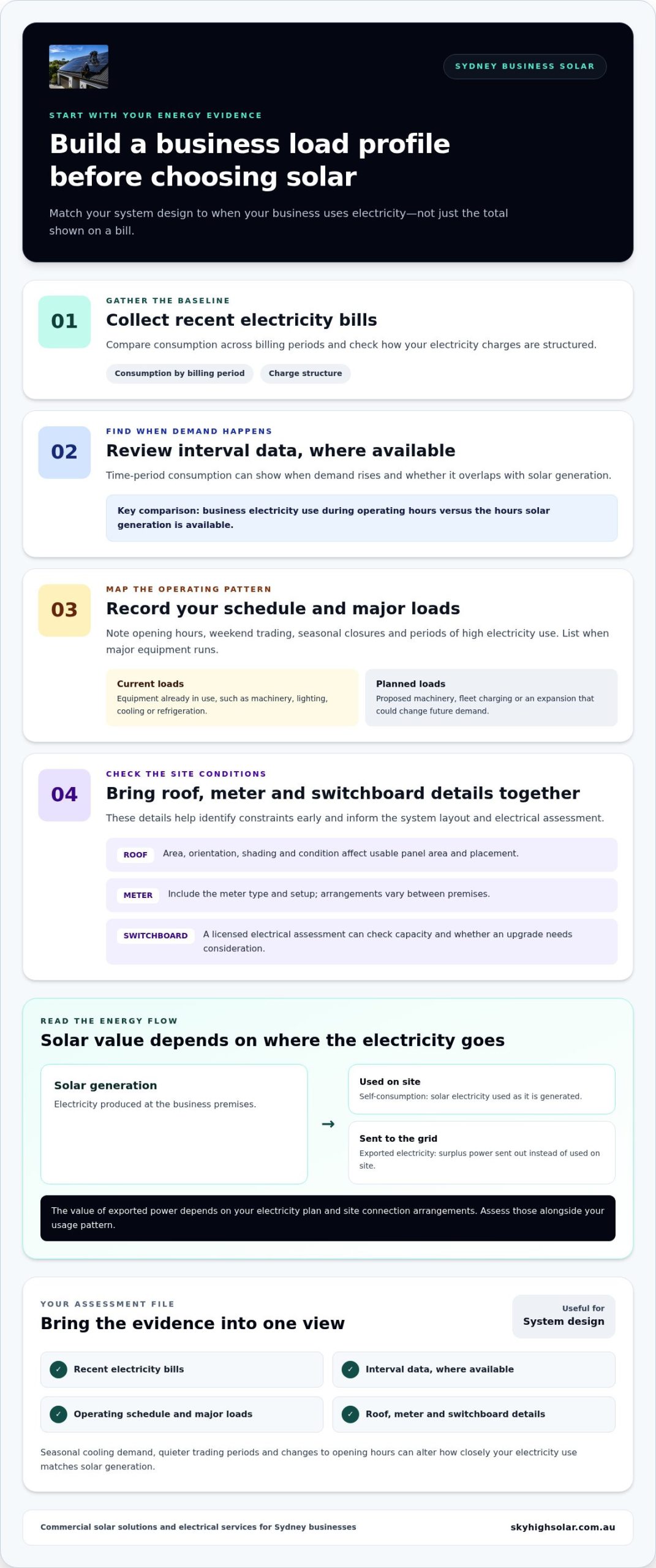
Work through these steps before considering a system design:
- 1. Collect electricity bills. Gather recent bills to compare consumption across billing periods and understand how charges are structured.
- 2. Review interval data, where available. Interval data divides consumption into time periods. It can show when demand rises and whether that demand overlaps with solar generation.
- 3. Map the operating schedule. Record opening hours, weekend trading, seasonal closures and periods of high electricity use. Note when major equipment runs rather than relying on a general description of a typical day.
- 4. List major and planned loads. Include equipment already in use, plus proposed machinery, fleet charging or an expansion that could change future demand.
Seasonal patterns matter. Cooling loads, quieter trading periods and changes to opening hours can alter the match between consumption and generation. A bi-directional smart meter records electricity consumption and exports to the grid. Meter arrangements vary between sites, so include the meter type and setup in your assessment rather than assuming every premises measures imports and exports in the same way.
How do roof, meter and switchboard conditions affect the assessment?
Energy data is only part of the picture. Roof area, orientation, shading and condition help determine the usable panel area and inform the system layout. Metering affects how consumption and exported electricity are recorded. A licensed electrical assessment can establish whether the existing switchboard and electrical capacity suit the proposed installation, or whether upgrades need to be considered.
Bring together your bills, interval data, operating schedule, future load plans and site details. This helps identify constraints early and gives the design process a practical basis. For a wider overview of project decisions, read the commercial solar installation Sydney buying guide.
Sky High Solar and Electrical provides commercial solar solutions and electrical services, including switchboard upgrades where required. A commercial solar assessment can bring your business’s energy data together with its site conditions and operational plans.
Solar panels, batteries or exports: compare the options for a small business
For solar power for small business Sydney, the right configuration depends on when you use electricity and what happens to generation your business doesn’t use straight away. Solar panels generate electricity on site. A battery stores some of that energy for later use. They serve different purposes, so battery storage is a separate design decision.
| Option | Potential benefit | Trade-off to consider |
|---|---|---|
| Solar-only | Solar generation can supply business loads while it’s being produced, reducing the electricity you need to import at those times. | Generation that doesn’t match demand may be exported. The value of exports depends on your electricity plan and connection arrangements. |
| Solar with battery storage | A battery can store surplus solar energy for use later, such as when the business still needs electricity after generation declines. | Storage adds equipment and design considerations. Its value depends on usage patterns, battery configuration and which loads it is set up to support. |
| Grid export | Surplus generation can be sent to the grid under the site’s applicable export arrangements. | Export credits are separate from charges for electricity imported from the grid. Don’t assume exported power offsets those charges at the same rate. |
When might a business consider battery storage?
Check whether your site continues to use electricity after solar generation falls, or whether selected operations need backup support. A battery may shift some solar energy for later use, but backup depends on the system design and the loads configured for it. Don’t assume it will keep the whole site running. For battery fundamentals, see our solar battery storage guide.
How do tariffs, exports and incentives affect the decision?
Review your electricity plan in two parts: charges for power imported from the grid and any credit for exported energy. Compare those terms with your demand pattern before deciding whether exporting surplus or storing it better suits the business. Export value alone doesn’t show the full effect on your bill.
Incentives can affect project calculations, but eligibility and payment rules depend on the scheme and installation. Before including a federal incentive or the NSW Peak Demand Reduction Scheme (PDRS) in your assessment, check current requirements and payment details through official Australian Government and NSW Government information. Don’t treat an incentive as guaranteed.
Sky High Solar and Electrical plans commercial solar solutions around your site and operating needs. Explore commercial solar planning as you compare the options.
What should Sydney small businesses check before installation?
Good project planning brings site access, electrical readiness and business operations into the same conversation. Before installing solar power for small business Sydney premises, work through these checks with your installer so the design and installation plan reflect the property and how it’s used.
- Site access: Identify safe access routes, delivery points and areas that need to remain clear for staff, customers or tenants.
- Roof condition: Review the roof’s condition and suitability before planning panel placement. Record known maintenance needs or access restrictions.
- Switchboard: Include switchboard capacity and any electrical work required in the project scope. A licensed electrical assessment can identify relevant upgrade requirements.
- Metering: Record the existing meter arrangement and whether it can measure consumption and exports as required for the proposed setup.
- Operating hours: Note busy periods, deliveries and activities that could be affected by installation work. Plan how you’ll communicate with staff or tenants.
Which Sydney network and compliance checks belong in project planning?
Identify the distribution network service provider (DNSP) for the premises. Connection, export and technical requirements can vary by network and project, so assess the proposed system against the current requirements for that property. A general rule or another site’s approval is not a substitute for a project-specific check.
Plan for applicable electrical documentation as part of project close-out. A certificate of compliance electrical work (CCEW) is documentation provided for applicable electrical work. The work and documentation must meet the current requirements for the project.
How can installation be planned around day-to-day trading?
Agree on practical arrangements before work begins. Discuss access, deliveries, work areas and any locations that need to stay available for normal trading. Let staff or tenants know about planned activity and coordinate work around the site’s operating schedule where possible. The project plan should set out the expected work sequence and any likely impact on site access.
Include switchboard capacity and required electrical work in the scope rather than leaving them to resolve at the last minute. A Sydney switchboard upgrade guide explains how an upgrade may fit into solar planning.
Sky High Solar and Electrical plans commercial solar and electrical work around each site. Licensed electrical contractors carry out the work, with a CCEW provided for applicable electrical work. Plan your Sydney business solar installation with site access, safety and operating needs in view.
Plan your small-business solar project with a local Sydney installer
A clear project path helps you move from electricity data to an installation plan that suits your premises. For solar power for small business Sydney, gather your energy information, assess the site, compare system options, confirm the property’s requirements and plan the work around business operations.
What information should you have ready for a solar assessment?
Bring recent electricity bills, interval data if available, operating hours and a list of major equipment. Add details that could affect the design or installation plan:
- Whether you own or lease the premises, and any landlord approval or roof-access considerations.
- Planned changes such as new equipment, fleet charging, expansion or a possible relocation.
- Questions about battery storage, export arrangements, switchboard upgrades and coordinating work around staff, tenants or customers.
These details connect your energy use and business plans with the physical site. They also give the assessment a practical starting point, so design options can be considered in context rather than in isolation.
What happens from assessment through post-installation review?
The project moves from a site assessment to a system design tailored to the premises and operating needs. Planning accounts for relevant connection requirements, electrical checks, access and installation coordination. After the work, a post-installation review can check the completed project and applicable documentation or registrations. Licensed electrical contractors carry out the electrical work, with a certificate of compliance electrical work (CCEW) provided for applicable work.
Sky High Solar and Electrical is Sydney-owned and operated, and has worked in the local solar and electrical industry since 2013. That local experience is relevant when a commercial project needs solar planning considered alongside electrical work, including a switchboard upgrade where required.
A site-specific assessment can clarify which system options suit your energy use, what property or electrical constraints need attention, and how installation can be coordinated with day-to-day operations. Discuss a solar assessment with Sky High Solar and Electrical to plan the next step for your Sydney business.
Move forward with a site-specific solar plan
A sound solar decision starts with your business’s actual electricity use and the way your premises operate. Match system design to daytime demand, compare solar-only and battery options against your needs, and account for roof, meter, switchboard and network requirements before installation. That groundwork helps you assess whether solar power for small business Sydney sites is a suitable investment without relying on assumed savings.
Sky High Solar and Electrical is Sydney-owned and operated, and has served local businesses since 2013. As licensed electrical contractors since 2013, the team can plan commercial solar alongside relevant electrical work and provide a certificate of compliance electrical work (CCEW) for applicable work.
Take the next step with a site-specific assessment. Arrange a site-specific solar assessment for your Sydney business and get a clearer view of your options, site requirements and installation plan. A well-planned project can support informed energy decisions and a considered path towards lower grid reliance.
Frequently Asked Questions
Is solar power worthwhile for a small business in Sydney?
Solar can be worthwhile if your business uses a meaningful share of its electricity while the system is generating, but the answer depends on your site and energy profile. Review bills and interval data, operating hours, roof suitability, meter arrangements and electrical capacity. For solar power for small business Sydney, compare the value of using generation on site with export arrangements, and weigh the project against your ownership plans and expected time at the premises.
How do I work out what size solar system my small business needs?
Start with recent electricity bills and interval consumption data, if available. Map when the business operates and note major loads such as refrigeration, cooling, machinery or equipment. Include planned changes, such as fleet charging or expansion, as these can affect future demand. A site assessment then considers usable roof area, orientation, shading, meter setup and switchboard capacity. System sizing should reflect both your load profile and the practical limits of the premises.
Can a small business add a battery to its solar system?
Yes, a battery can be included in a solar design or considered for an existing system, subject to site and equipment compatibility. It stores some solar energy for later use, which may suit businesses that continue using electricity after solar generation declines. If you need backup, the system must be designed around the selected loads it will support. Don’t assume a battery will power the whole premises during an outage.
Do Sydney businesses need approval to connect a solar system?
Connection arrangements depend on the property, proposed system and local distribution network service provider (DNSP). Export limits and technical requirements can vary, so identify the DNSP for your premises and confirm the current requirements for that specific project before installation. The installer should account for applicable connection steps as part of project planning. Don’t assume that requirements or approvals for another Sydney site will apply to yours.
What is a certificate of compliance electrical work (CCEW)?
A certificate of compliance electrical work (CCEW) is official documentation confirming that applicable electrical work meets Australian safety standards and is legally compliant. It provides a record associated with the work carried out. For a solar project, include relevant electrical documentation in the installation close-out, alongside applicable project records or registrations. Sky High Solar and Electrical provides CCEW for applicable electrical work completed as part of its services.
Can solar panels reduce a business electricity bill if the business is closed during the day?
They may, but the benefit depends on whether the premises use electricity while the system is generating. Equipment that runs outside trading hours, such as refrigeration or security systems, may use some solar power directly. Surplus generation may be exported under the site’s arrangements, but export credits are separate from electricity import charges. A battery may shift some generation for later use, depending on system design and business demand.
Are NSW incentives available for small-business solar or batteries in 2026?
Potential incentives include federal support for eligible solar or battery installations and the NSW Peak Demand Reduction Scheme (PDRS) for eligible commercial and industrial batteries. The PDRS provides an upfront discount through a certificate-based process, not a cash-back payment. Eligibility, system thresholds and programme rules depend on the installation and current scheme requirements. Check official Australian Government and NSW Government information before including an incentive in your project budget, as eligibility isn’t guaranteed.