

 Sydney
 0452 243 240
Blog
Commercial Solar Investment NSW: The 2026 Business Finance Guide


What if your Sydney warehouse or office roof was no longer a recurring maintenance cost, but a high-yield financial asset that effectively paid for its own installation? With the 2026 expansion of the Small-scale Renewable Energy Scheme (SRES) now covering systems up to 1MW, a strategic commercial solar investment nsw has transitioned from a simple utility upgrade to a sophisticated cash-flow tool. Many local business owners feel the pressure of rising operational overheads and the complexity of comparing chattel mortgages against operating leases. It’s natural to feel cautious about navigating shifting technical standards or worrying that today’s battery technology might soon be superseded.
This guide will show you how to transform solar energy into a self-funding business asset that delivers an immediate reduction in monthly OPEX and maximum tax depreciation benefits. We’ll explore the September 2026 NSW battery incentives and the mandatory CSIP-AUS inverter standards that ensure your hardware remains bankable and grid-compliant. You’ll learn how to navigate current interest rates and the latest regulatory requirements to secure a premium energy solution that protects your bottom line. By the end of this article, you’ll have a clear roadmap to modernising your energy footprint with confidence and clarity.
Key Takeaways
- Discover how to structure your commercial solar investment nsw as a cash-flow positive asset that uses energy savings to cover monthly repayments.
- Learn how the 2026 expansion of the Small-scale Renewable Energy Scheme (SRES) to systems up to 1MW can reduce your upfront capital costs by approximately 20%.
- Compare the tax benefits of chattel mortgages and operating leases to find the most effective way to preserve your business’s working capital.
- Understand the new NSW battery incentives available through the Peak Demand Reduction Scheme, which offer significant discounts on high-capacity storage systems.
- Identify the essential 2026 technical requirements, including CSIP-AUS smart inverter compliance, to ensure your system remains bankable and future-proof.
Why NSW Businesses are Prioritising Commercial Solar Investment in 2026
Sydney’s commercial landscape has reached a tipping point where electricity is no longer just a manageable utility; it’s a volatile operational risk. For many SMEs in New South Wales, the shift toward a commercial solar investment nsw has moved from an environmental “extra” to a core survival strategy. With the Australian Government’s August 2026 expansion of the Small-scale Renewable Energy Scheme (SRES) now including systems up to 1MW, the financial barrier for mid-sized enterprises has effectively vanished. This policy shift targets the “missing middle,” allowing businesses to claim upfront savings of approximately 20% on systems that were previously ineligible for the most accessible rebates.
Choosing to finance these systems allows companies to preserve their working capital for core operations, such as inventory or staffing, rather than sinking significant liquid cash into rooftop hardware. The evolution of Solar power in Australia shows that while the technology has matured, the real innovation in 2026 lies in how these assets are funded. By leveraging strategic finance, a business can install premium hardware like SigenStor or FOX ESS systems without impacting their daily cash reserves. It’s a method of acquiring high-tier infrastructure that pays for itself through the avoided cost of grid power.
Hedging Against Sydney Energy Volatility
Recent shifts in the NSW energy market have seen retail prices remain stubbornly high despite fluctuations in wholesale costs. While the Default Market Offer (DMO) saw some reductions for small businesses in early 2026, many Sydney operators report that rising daily supply charges have offset these gains. A fixed-rate finance agreement for solar provides a predictable “price ceiling” for energy, which is invaluable for long-term budgeting. Beyond the balance sheet, a robust solar strategy helps businesses meet increasingly strict ESG (Environmental, Social, and Governance) targets. This is now a prerequisite for many commercial tenders and supply chain contracts across Sydney’s industrial hubs.
The ‘Self-Funding’ Model Explained
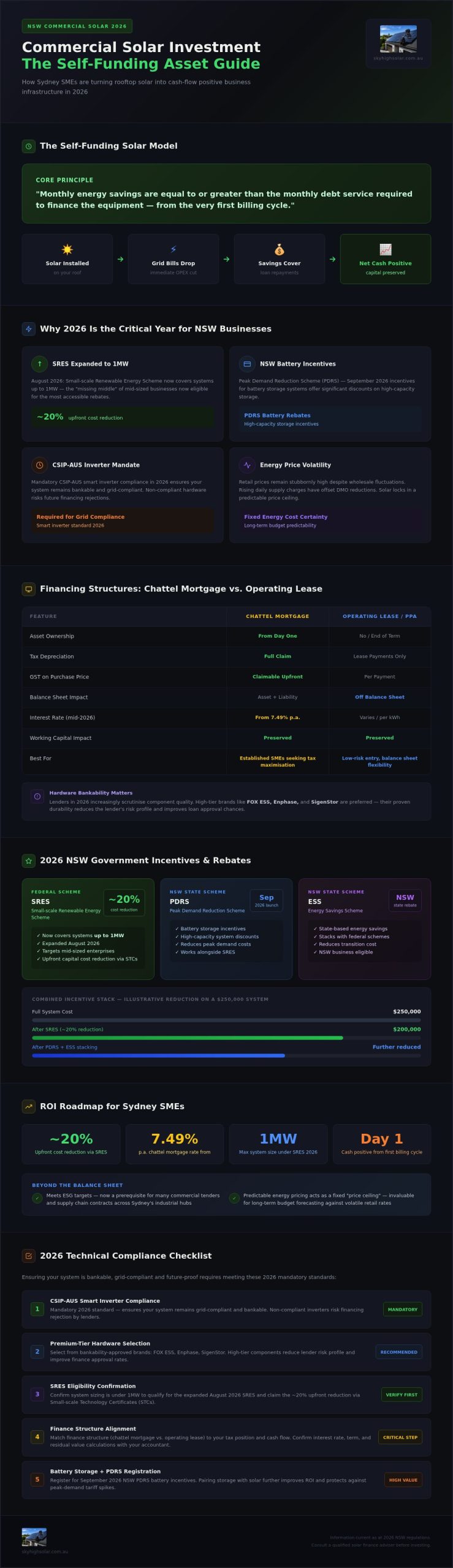
The traditional view of solar as a long-term expense has been replaced by the “Self-Funding” model. This approach relies on the fact that monthly energy savings often exceed the monthly finance repayments from the very first billing cycle. It represents a significant psychological shift; business owners now view their roof as a revenue-generating asset rather than a maintenance burden. When paired with the NSW Peak Demand Reduction Scheme (PDRS) incentives for battery storage, the ROI becomes even more compelling. Self-Funding Solar is a financial structure where the monthly reduction in electricity costs is equal to or greater than the debt service required to finance the equipment.
Comparing Financing Structures: Chattel Mortgage vs. Solar Leasing
Selecting the right financial vehicle is as critical as choosing the panels themselves. For a commercial solar investment nsw, the finance structure dictates your tax position, cash flow, and eventual ownership of the asset. Lenders in 2026 increasingly scrutinise the “bankability” of the hardware involved. High-tier components from brands like FOX ESS, Enphase, or SigenStor are often preferred by financial institutions because their proven durability reduces the risk profile of the loan. As of mid-2026, interest rates for chattel mortgages on these premium assets start from approximately 7.49% p.a., though rates vary based on your business’s credit history and trading longevity.
The choice usually comes down to whether you prioritise immediate ownership or balance sheet flexibility. While many Sydney SMEs opt for direct ownership to capitalise on tax incentives, others prefer the low-risk entry point of a Power Purchase Agreement (PPA) or an operating lease. Each path offers a different way to interact with the NSW Energy Savings Scheme and other state-based incentives designed to lower the cost of transition.
The Chattel Mortgage Advantage for NSW SMEs
A chattel mortgage is the most common choice for established NSW businesses that want to own their system from day one. Under this structure, the financier takes a mortgage over the solar equipment as security, but the title stays with your business. This allows GST-registered companies to claim the full GST amount on the purchase price in their next BAS, providing a significant cash-flow injection early in the project. Additionally, you can typically claim tax depreciation on the system and deduct the interest component of the repayments. For a deeper look at how these rules apply in the current financial year, see our guide on Commercial Solar Tax Benefits NSW: The 2026 Business Guide.
Solar Leasing and PPAs: Off-Balance Sheet Options
Operating leases and PPAs offer an alternative for businesses that prefer to treat solar as a service rather than a capital purchase. An operating lease keeps the equipment off your balance sheet, which can be helpful if you need to maintain specific debt-to-equity ratios for other business lending. At the end of the term, you often have the option to upgrade to the latest technology, buy out the system at fair market value, or extend the lease.
Power Purchase Agreements (PPAs) take this a step further. With a PPA, a provider installs the system on your roof at no upfront cost, and you simply buy the electricity it generates at a rate lower than the grid. This is an excellent “set and forget” option for businesses with large roof spaces and high daytime energy needs. If you’re unsure which path fits your current growth phase, the team at Sky High Solar and Electrical can help you evaluate a tailored commercial solar solution that aligns with your financial goals.
Navigating 2026 NSW Government Incentives and Rebates
The financial landscape for a commercial solar investment nsw has undergone a significant transformation in 2026. A pivotal shift occurred on October 1, 2026, when the federal government expanded the Small-scale Renewable Energy Scheme (SRES) to include systems up to 1MW. Previously, the 100kW cap acted as a barrier for many mid-sized industrial facilities, but this expansion now allows larger projects to access Small-scale Technology Certificates (STCs). This change provides an upfront saving of approximately 20% for eligible systems, which is typically applied as a direct discount on the purchase price. By reducing the initial capital requirement, businesses can finance a smaller principal amount, leading to more manageable monthly repayments and a faster path to cash-flow neutrality.
Timing remains a critical factor for any strategic investment. The value of STCs reduces annually as the scheme moves toward its 2030 phase-out. Securing your incentives in 2026 ensures you capture a higher multiplier before the next scheduled reduction. To maintain eligibility, the Clean Energy Regulator now enforces strict documentation standards. As of March 1, 2026, all accredited installers must submit geotagged and timestamped photos of the installation process. Working with a specialist ensures these regulatory hurdles are handled seamlessly, protecting your right to claim thousands of dollars in federal support.
Maximising STCs and LGCs for Commercial Systems
Understanding the distinction between certificate types is essential for larger facilities. While the new 1MW SRES cap covers a vast majority of commercial rooftops, systems exceeding this size still move into the Large-scale Generation Certificate (LGC) market. LGCs are created annually based on the actual energy produced, rather than being granted as an upfront lump sum. The Australian Renewable Energy Agency (ARENA) continues to play a vital role in supporting these large-scale integrations, ensuring that the technology remains reliable and grid-compliant. For most Sydney SMEs, the STC route provides the most immediate financial relief, as the rebate is factored into the finance agreement from day one.
2026 Battery Rebates and Financing Storage
Energy storage is no longer an optional add-on; it’s a fundamental component of modern energy management. From September 1, 2026, the NSW Peak Demand Reduction Scheme (PDRS) has introduced substantial upfront incentives for battery systems ranging from 20kWh to 30MWh. For instance, a 100kWh battery system can now receive a discount between $21,000 and $29,500. Integrating high-performance hardware like the SigenStor system or FOX ESS storage allows businesses to shift their solar consumption to peak evening periods when grid prices are highest. Financing these integrated solutions ensures that the hardware is bankable and that the projected savings are robust enough to cover the debt service comfortably.
Regional NSW businesses in the manufacturing and agriculture sectors may also be eligible for specific state grants designed to improve energy productivity. These grants often target energy-intensive processes and can be used alongside federal incentives to further reduce the payback period. By aligning your financing strategy with these specific 2026 windows, you can transform a necessary utility cost into a durable, high-yielding business asset.
The ROI Roadmap: Payback and Cash Flow for Sydney SMEs
Calculating the return on a commercial solar investment nsw has evolved beyond a simple “years to payback” figure. In 2026, sophisticated Sydney businesses view ROI through the lens of monthly cash flow and debt service coverage. While the typical payback period for a well-designed commercial system remains between 3 to 5 years, the actual financial performance is heavily influenced by your financing terms. With interest rates for chattel mortgages starting at approximately 7.49% p.a., the goal is to ensure your monthly energy savings comfortably exceed your loan repayments. This creates a cash-flow positive scenario where the system effectively pays for itself from the first billing cycle.
Recent shifts in the NSW market have made self-consumption the primary driver of ROI. With some energy retailers decreasing feed-in tariffs to as low as 3c/kWh in 2026, exporting power to the grid is no longer a viable financial strategy. Instead, the value lies in “behind the meter” savings. Every kilowatt-hour generated and consumed on-site offsets retail electricity prices, which remain a significant operational burden for Sydney operators. High-quality components from brands like Tesla or GoodWe are essential here; their superior conversion efficiency and reliability ensure that your projected savings don’t vanish due to equipment downtime or technical faults.
Self-Consumption: The Key to Commercial ROI
Businesses that operate during peak daylight hours, such as manufacturing plants or retail centres, see the fastest return on their investment. To maximise this, we utilise smart monitoring and energy audits to identify opportunities for load shifting. By moving energy-intensive processes to coincide with peak solar production, you can push your self-consumption rates higher. This reduces your reliance on the grid during expensive peak periods and shortens the break-even point of the project. A precisely sized system, tailored to your specific load profile, ensures you aren’t paying for capacity you don’t use.
Maintenance and Longevity: Protecting the Asset
The long-term financial success of your system depends on proactive Operations and Maintenance (O&M). “Cheap” systems often fail the ROI test because they lack the durability to survive Sydney’s harsh weather conditions, leading to repair costs that erode your savings. A 1% increase in efficiency through professional solar panel servicing sydney can save thousands of dollars over a 20-year term. By investing in premium hardware and regular maintenance, you protect the “bankability” of the asset and ensure it continues to generate revenue long after the finance has been repaid. For a tailored analysis of your site’s potential, you can request a commercial solar ROI assessment from the specialist team at Sky High Solar and Electrical.
How to Secure Commercial Solar Financing in Sydney
Moving from financial strategy to implementation requires a technical package that satisfies both commercial credit departments and Sydney network standards. In 2026, a successful commercial solar investment nsw relies on a clear, 5-step roadmap: energy audit, system design, finance approval, installation, and final commissioning. This structured journey ensures that the bankable hardware discussed in previous sections is supported by the precise documentation required to release funds. By aligning your technical specs with lender expectations from the outset, you avoid delays in the capital approval process.
Local Sydney knowledge is vital for navigating the grid connection phase, which is now a prerequisite for finance settlement. Since mid-2026, compliance with the Common Smart Inverter Profile Australia (CSIP-AUS) is mandatory for new systems under 200kW to ensure grid stability. If your chosen inverter doesn’t meet these specific network standards, lenders may withhold finance because the asset cannot be legally connected to the grid. Working with a specialist who understands these regulatory nuances ensures your system remains a viable, revenue-generating asset.
Preparing Your Business Case
Lenders in 2026 demand evidence-based projections rather than generic estimates. You’ll need to present 12 months of interval data to validate the self-consumption claims that drive your ROI roadmap. This is paired with a preliminary switchboard and roof structural assessment to confirm the site is ready for high-capacity arrays. When these technical specifications are included in a finance-ready proposal, it reduces the lender’s perceived risk and typically results in a smoother approval cycle and more favourable terms.
Choosing the Right Sydney Partner
Sky High Solar and Electrical brings a deep electrical background that bridges the gap between financial planning and grid-compliant engineering. Our team ensures that your project documentation meets the strict geotagging and timestamping requirements now enforced by the Clean Energy Regulator for rebate eligibility. Many businesses are now opting to bundle commercial EV charging station installation into their primary finance package, creating a single, streamlined repayment for all onsite energy assets.
To move forward, the first step is booking a site-specific energy assessment to verify your infrastructure’s current capacity and potential for expansion. You can also consult our commercial solar installation guide to understand the finer points of the 2026 buying process. Taking this systematic approach ensures your transition to energy independence is professional, predictable, and fully funded from day one.
Future-Proofing Your Sydney Operations with Strategic Solar
The landscape of energy in New South Wales has fundamentally changed. A commercial solar investment nsw is no longer a discretionary expense; it’s a strategic financial decision that leverages government incentives and modern finance to protect your bottom line. By utilising the expanded 1MW SRES scheme and the latest battery rebates, your business can transition to a high-efficiency model that effectively pays for itself. Choosing the right financing structure, whether a chattel mortgage or a sophisticated lease, ensures that your working capital remains free for core business growth while your monthly utility overheads plummet.
As Sydney-based licensed electrical contractors, Sky High Solar and Electrical specialises in the seamless integration of premium FOX ESS and SigenStor systems. We provide the expert guidance needed to navigate 2026 NSW energy rebates while ensuring your installation meets the highest technical standards for grid connection and bankability. It’s time to turn energy volatility into a durable, revenue-generating asset that strengthens your competitive position in the market. Request a Finance-Ready Commercial Solar Proposal from Sky High Solar and Electrical and take the first step toward a more resilient and profitable future for your business.
Frequently Asked Questions
What is the typical interest rate for commercial solar financing in NSW in 2026?
As of mid-2026, interest rates for chattel mortgages on premium solar assets start from approximately 7.49% p.a. for established businesses with strong credit profiles. These rates can extend up to 20% p.a. depending on your trading history and the specific nature of the hardware being financed. Lenders often offer more competitive terms for “bankable” technology from brands like FOX ESS or Enphase, as these systems demonstrate higher long-term reliability and lower risk.
Can I finance the entire cost of the solar system including installation?
Yes, most commercial lenders in Sydney provide 100% financing that covers the total project cost. This includes the high-efficiency panels, inverters, mounting hardware, and professional installation services. At Sky High Solar, we ensure your finance package also incorporates necessary infrastructure improvements, such as switchboard upgrades or structural roof reinforcements, so you don’t have to use your own working capital for any part of the transition.
How does the Instant Asset Write-off work for commercial solar in 2026?
Eligible NSW businesses can typically use tax depreciation rules to offset the cost of their solar investment against their taxable income. While the specific thresholds for the Instant Asset Write-off are subject to annual federal budget updates, a commercial solar investment nsw remains a highly tax-effective move. Businesses using a chattel mortgage can often claim the full GST component on their next BAS and deduct the interest portion of their repayments, significantly improving short-term cash flow.
Is a solar PPA better than a chattel mortgage for a small business?
The choice depends on whether you prioritise long-term ownership or zero upfront costs. A Power Purchase Agreement (PPA) is often better for businesses that want a $0 upfront option and prefer to pay only for the energy produced. However, a chattel mortgage is usually the preferred choice for most NSW SMEs because it leads to full ownership of the asset. This allows the business to claim significant tax benefits and eventually enjoy “free” energy once the loan is repaid.
Do I need to own the building to get commercial solar financing?
Ownership of the premises is not a requirement for securing commercial solar finance in Sydney. Many tenants successfully finance solar systems by providing a copy of their commercial lease and obtaining written permission from the landlord. Lenders typically prefer that the remaining term of your lease is at least as long as the term of the solar loan to ensure the asset remains productive for the duration of the finance agreement.
What happens to the financing if I sell my business or move premises?
If you sell your business or move, the solar finance agreement usually needs to be paid out or transferred to the new owner through a process called novation. While solar panels are technically moveable assets, the cost of deinstallation and relocation is often high. Most business owners find that the presence of a high-quality solar system increases the value of their lease or the sale price of the business, allowing the loan to be settled as part of the transaction.
Can I include a battery and EV charger in my solar finance package?
Including storage and charging infrastructure in a single commercial solar investment nsw package is a standard practice in 2026. Financing integrated solutions like the SigenStor system allows you to bundle the solar array, battery storage, and EV DC charger into one monthly repayment. This approach maximises your self-consumption and prepares your business for the transition to electric fleets, all while taking advantage of the NSW Peak Demand Reduction Scheme incentives.
How long does the approval process take for commercial solar loans in Sydney?
The approval process for standard commercial solar loans typically takes between 2 to 5 business days. To ensure a swift turnaround, you should have 12 months of energy interval data and your latest financial statements ready for review. More complex financing structures or very large systems exceeding 100kW may require additional technical documentation and can take up to two weeks for final credit approval and settlement.