

 Sydney
 0452 243 240
Blog
Solar Panel Return on Investment NSW: 2026 Financing & Payback Guide


What if your quarterly electricity bill didn’t just stop climbing, but actually started funding your home’s long-term energy independence? With Sydney electricity prices now averaging a staggering 36.73 cents per kilowatt-hour, many homeowners feel trapped between rising costs and the fear of “solar cowboys” installing sub-par gear. It’s a valid concern; a system that fails in five years will never deliver a true solar panel return on investment NSW families can rely on.
We understand that the complexity of zero-interest loans and shifting feed-in tariffs can make the transition feel overwhelming. This guide is designed to remove that friction, promising a clear path to maximising your ROI through the 2026 Home Energy Saver Program and premium hardware like the Tesla Powerwall 3 or Enphase IQ 5P. We’ll provide a transparent breakdown of current payback timelines, compare the net-present value of the latest financing options, and explain how intelligent configurations can bypass the “sun tax” to ensure your system remains a high-performing asset for decades.
Key Takeaways
- Learn how to accurately calculate your solar panel return on investment NSW by identifying the crossover point where cumulative energy savings outweigh your total system and financing costs.
- Discover how to leverage 2026 “Green Loan” structures to achieve a cash-flow positive outcome, where your monthly electricity savings effectively cover your repayments.
- Understand why investing in premium hardware like Enphase microinverters and Tesla storage is a strategic move to ensure your system’s performance lasts well beyond its payback period.
- Maximise your financial gains by navigating the latest NSW feed-in tariff benchmarks and Federal STC incentives before they undergo scheduled reductions.
- Explore how integrated solutions like SigenStor combine solar, storage, and EV charging to future-proof your home’s energy independence and maximise long-term value.
Understanding Solar ROI in NSW: The 2026 Landscape
Defining solar ROI isn’t just about looking at the initial purchase price. It’s the precise moment where your total energy savings surpass the entire cost of the system, including any financing interest. Achieving a strong solar panel return on investment NSW requires a shift in perspective. You aren’t just buying hardware; you’re acquiring a high-yield solar asset designed to generate tax-free returns for decades.
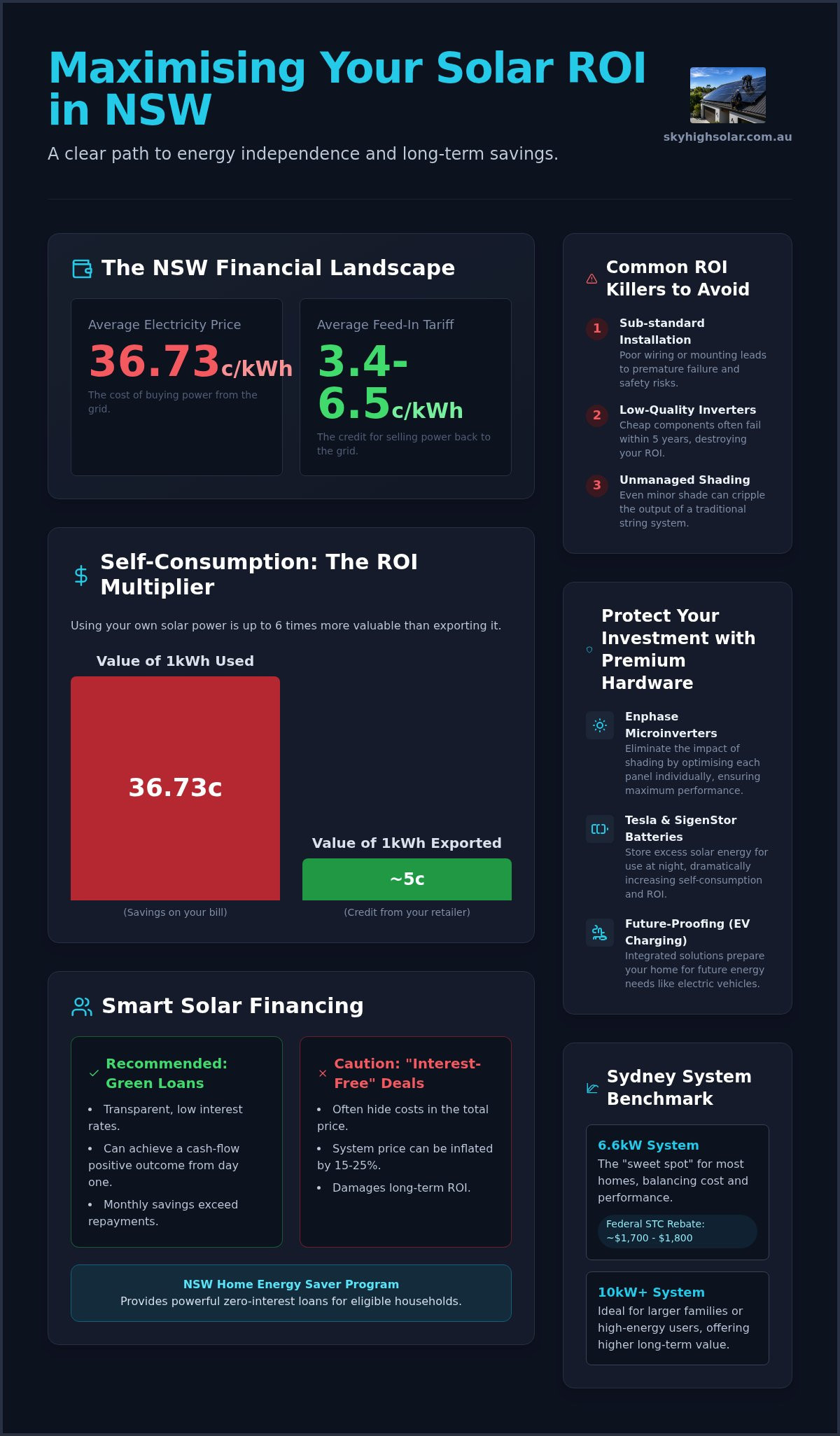
New South Wales remains a premier location for these returns. With high average sunlight hours and electricity rates now sitting at 36.73 cents per kilowatt-hour, the financial incentive to generate your own power has never been higher. As noted in the broader context of Solar power in Australia, NSW households benefit from some of the most favourable insolation levels in the country. However, certain “ROI killers” can derail these gains:
- Sub-standard installation: Poor wiring or mounting leads to premature system failure.
- Persistent shading: Even a small amount of shade on one panel can significantly drop the output of a traditional string system.
- Low-quality inverters: Cheap components often fail within five years, right as the system should be entering its most profitable phase.
By avoiding these pitfalls, you transform your installation from a budget liability into a reliable energy generator.
The 6.6kW Benchmark: Why Sydney Homeowners Start Here
A 6.6kW solar system is widely considered the residential benchmark in Sydney. This size perfectly balances the upfront cost with the Federal STC rebate, which provides an immediate discount of approximately $1,700 to $1,800 in 2026. For a standard household, this configuration typically offers a rapid payback window. For larger families or those with high daytime usage, upgrading to 10kW solar systems can often yield a higher net-present value, despite the larger initial outlay, by covering a greater percentage of the home’s total energy demand.
Key Factors Influencing Your Payback Period
The most critical factor for your solar panel return on investment NSW is self-consumption. With average feed-in tariffs ranging between 3.4 and 6.5 cents per kWh, every unit of energy you use directly from your roof is worth roughly six times more than what you get for exporting it. Efficiency is also dictated by your roof’s orientation. While North-facing panels maximise total yield, West-facing arrays often align better with peak afternoon energy prices when your home’s demand is highest. Finally, don’t overlook switchboard upgrades. Ensuring your home’s electrical centre is modern and compliant is a necessary step that impacts the final investment figure but guarantees long-term system safety and reliability.
Residential Solar Panel Financing Options in NSW
The landscape of funding renewable energy has shifted. While many homeowners once waited years to save for an upfront purchase, the rise of specialised “Green Loans” has changed the maths. These finance products offer significantly lower interest rates than standard personal loans because they’re secured against a sustainable asset. This shift is a primary driver for a better solar panel return on investment NSW, as it allows families to start saving immediately without draining their cash reserves.
When structured correctly, solar financing can achieve a “Day One Cash-Flow Positive” result. This means your monthly electricity savings are larger than your loan repayments. Essentially, the sun pays for the system while you pocket the difference. However, you should be wary of “Interest-Free” marketing. These deals often hide the cost of finance by inflating the system’s purchase price by 15% to 25%. A transparent, low-interest green loan is almost always a superior financial move for long-term ROI.
For eligible households, the NSW Home Energy Saver program provides a powerful entry point, offering zero-interest loans for solar and battery systems. Choosing a financier who understands the local Sydney market ensures your application aligns with current state incentives and installer timelines.
Green Loans vs. Mortgage Top-ups
Many Sydney residents consider redrawing on their mortgage to fund solar. While mortgage rates are often the lowest available, this approach can be deceptive. If you take 20 years to pay off that solar “top-up” alongside your home loan, the total interest paid could exceed the cost of the panels. Dedicated green loans from providers like Brighte or Plenti typically run over 5 to 7 years. This shorter term ensures the debt is cleared well before the system’s peak earning years, protecting your net-present value.
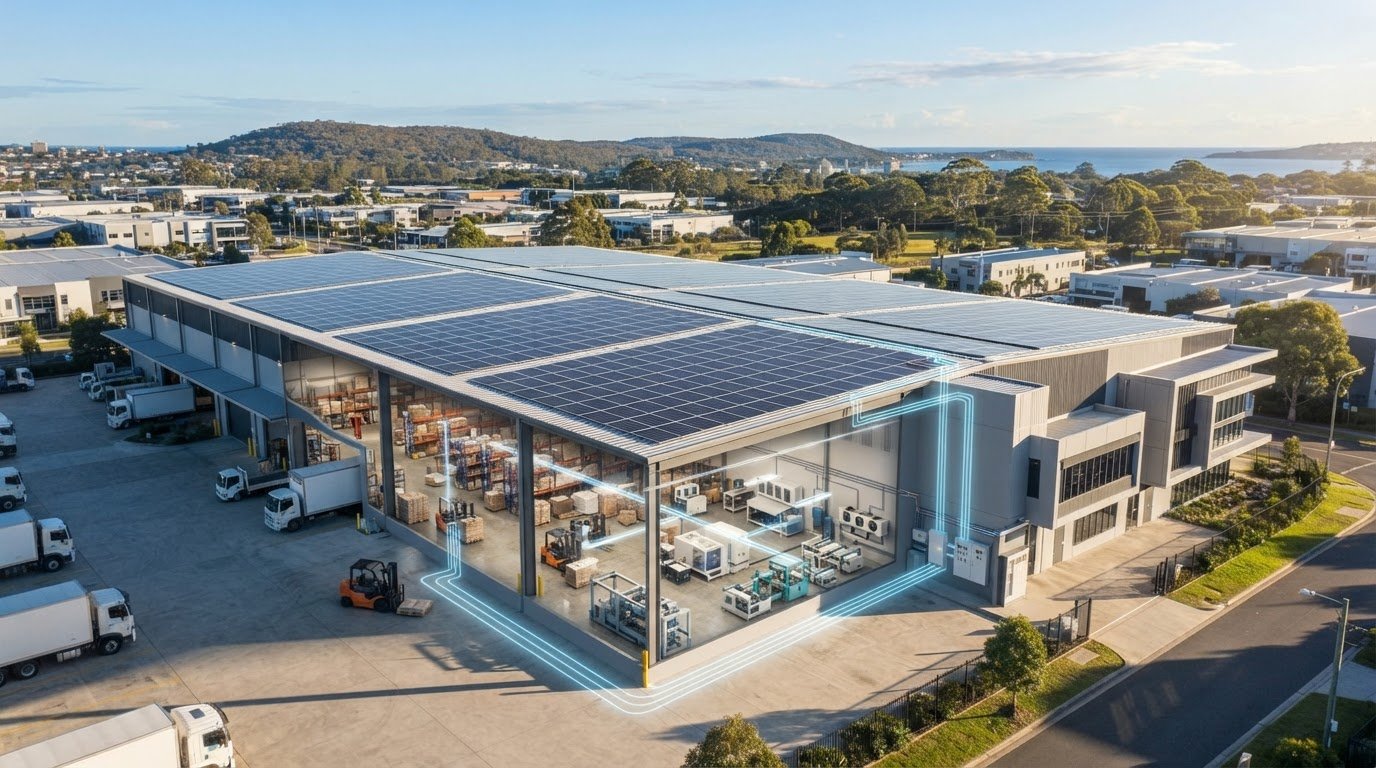
Commercial Solar Financing for Sydney SMEs
For local businesses, the ROI logic is even more compelling. Engaging in a commercial solar installation allows SMEs to utilise Power Purchase Agreements (PPAs) or equipment leases. These structures often require zero capital outlay. When combined with instant asset depreciation tax benefits, a 10kW+ system becomes a massive operational advantage for daytime-heavy businesses, further accelerating the solar panel return on investment NSW companies expect. If you’re unsure which path fits your property, our team can help you model your potential savings based on your current energy profile.
Hardware Choice: How Enphase and Tesla Protect Your ROI
Viewing solar through a short-term lens is a common mistake that can lead to significant financial frustration. True solar panel return on investment NSW is a 25-year game, not a five-year one. Cheap components might look attractive on an initial quote, but they often fail right as the system should be generating its highest net profit. Premium hardware like Enphase and Tesla acts as a reliable insurance policy against “ROI leakage,” ensuring your system stays online and efficient for its entire operational life. Premium hardware often has a shorter real-world payback than budget gear because it eliminates the hidden costs of repairs, system downtime, and early replacement.
Microinverters vs. String Inverters: The ROI Gap
Enphase microinverters are a game-changer for Sydney’s leafy suburbs and complex rooflines. Unlike traditional string inverters, which have a single point of failure that can shut down your entire array, microinverters operate independently on each panel. If one panel is shaded by a chimney or a growing gum tree, the rest of the system continues to produce at full capacity. This setup allows for granular monitoring and much higher uptime, ensuring every ray of sunlight is converted into savings. While a budget string inverter might only carry a 10-year warranty, Enphase offers a 25-year limited warranty, providing certainty that your investment remains protected through multiple technology cycles.
The Battery ROI Equation in 2026
In 2026, the financial case for solar battery storage has reached a tipping point. High-voltage systems like the FOX ESS CQ7 allow you to capture excess solar energy during the day and discharge it during the evening peak, when electricity prices are at their most expensive. This strategy effectively bypasses the low feed-in tariffs currently offered by retailers. The impact of the NSW Battery Rebate also significantly lowers the upfront cost, making it easier to integrate storage into your initial financial plan.
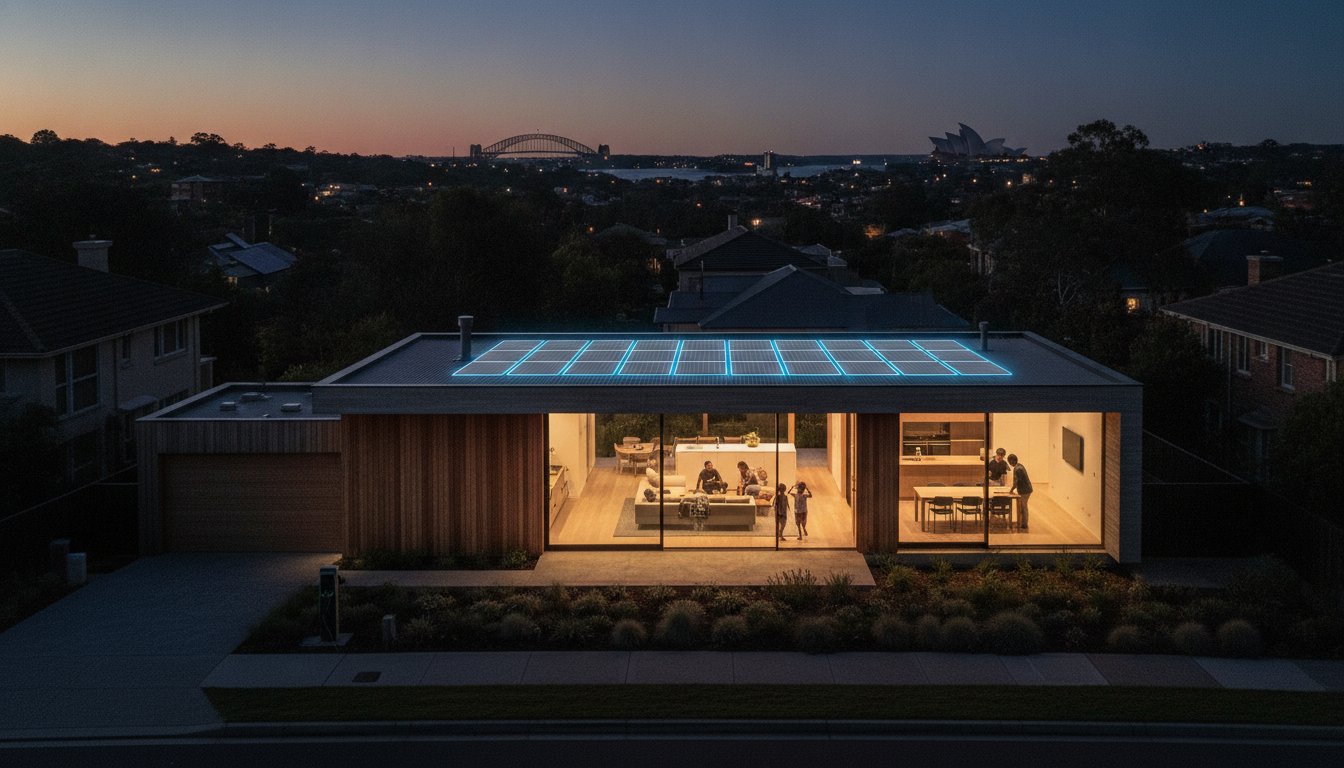
For those looking to future-proof their energy hub, SigenStor offers a sophisticated solution that integrates EV charging directly into the solar and battery model. This creates a seamless energy ecosystem where your car is powered by the sun, further accelerating your solar panel return on investment NSW. Many households utilise the NSW Home Energy Saver program to fund these high-spec upgrades, ensuring they don’t sacrifice quality for the sake of upfront cash flow.
Maximising ROI: NSW Incentives and Grid Strategies
Securing a high solar panel return on investment NSW involves more than just installing panels; it requires a tactical approach to the 2026 incentive landscape. The first step is capitalising on the Federal Small-scale Technology Certificate (STC) scheme. This provides an upfront discount of approximately $1,700 to $1,800 for a typical 6.6kW system in Sydney. Because this rebate reduces every year on the 1st of January, locking in your installation early preserves the maximum possible subsidy.
Once your system is live, your focus must shift to grid interaction. With the Independent Pricing and Regulatory Tribunal (IPART) setting voluntary feed-in tariff benchmarks between 3.4 and 6.5 cents per kWh, simply exporting power is no longer the most profitable path. Households must navigate the “sun tax” introduced by distributors like Ausgrid and Endeavour Energy, which charges for exports during the middle of the day. You can bypass these costs by aligning heavy appliance use, such as pool pumps and washing machines, with peak production hours or by leveraging Virtual Power Plants (VPPs) to earn premium credits for your stored energy.
The 2026 NSW Battery Rebate Explained
The NSW Government now offers zero-interest loans of up to $15,000 for eligible households to install solar and battery systems. When paired with the federal “Cheaper Home Batteries” program, which offers a 30% discount at the point of sale, the financial barrier to storage has dropped significantly. These incentives can shave years off the payback timeline for premium units like the Tesla Powerwall 3 or the FOX ESS CQ7. To qualify, your combined taxable income must be under $210,000, and your Sydney installer will need to verify your eligibility through the official Home Energy Saver portal before work begins.
Smart Charging: Integrating EVs into your ROI
Integrating an electric vehicle is the ultimate multiplier for your solar panel return on investment NSW. Charging an EV using solar energy is roughly six times cheaper than using the grid and significantly less expensive than petrol. The SigenStor Integrated Solar Inverter & EV DC Charger is a standout solution here, as it allows for direct DC charging, which is more efficient than standard AC methods. As “Vehicle-to-Home” (V2H) technology matures, your car will eventually act as a secondary battery for your house, protecting your ROI against future energy price spikes. If you want to see how these grid strategies apply to your home, you can request a custom ROI model from our Sydney specialists today.
Why Sky High Solar is the Strategic Choice for Sydney ROI
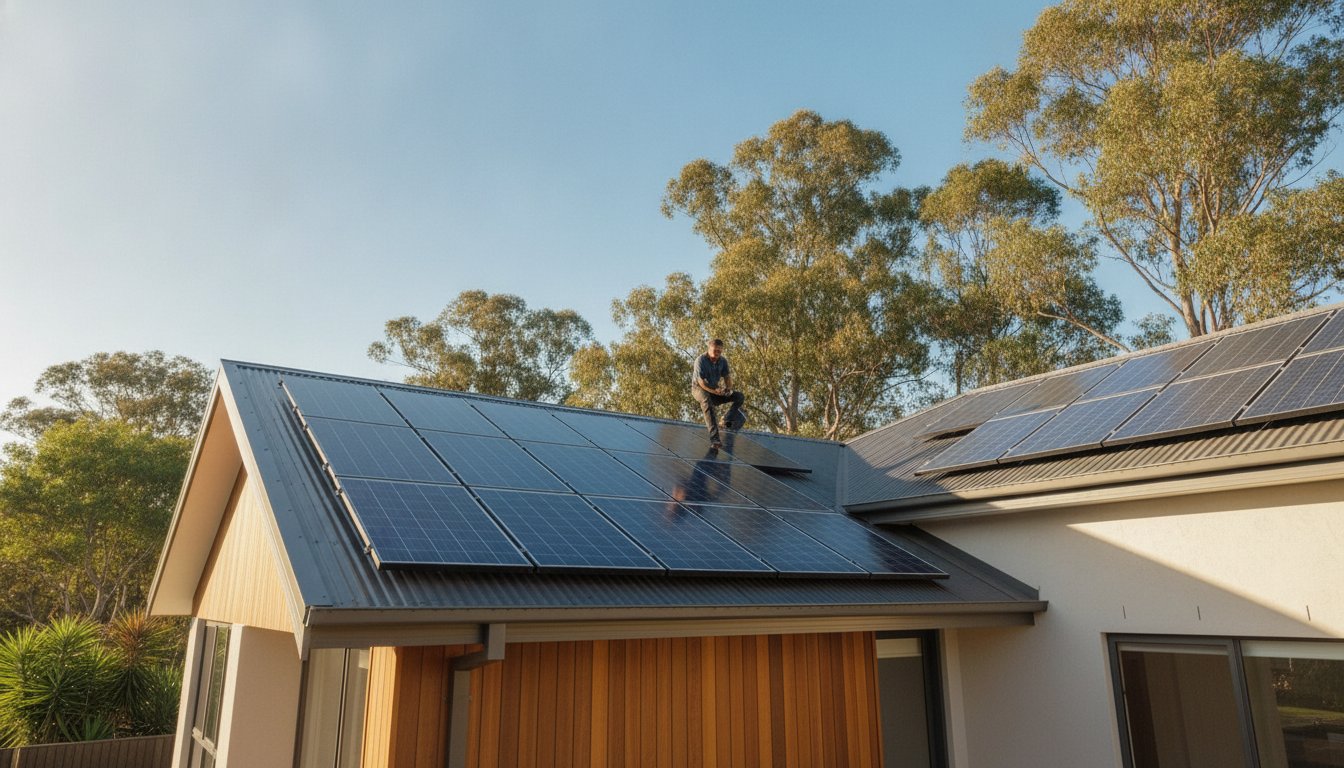
While previous sections have detailed the hardware and incentives that drive financial gains, the final yield of your solar panel return on investment NSW rests on the technical execution of the install. A system is only as reliable as the electrical infrastructure supporting it. At Sky High Solar and Electrical, we distinguish ourselves by leading with trade expertise rather than retail sales tactics. As licensed electricians, we ensure that every component, from the roof-mounted microinverters to the high-voltage battery storage, is integrated with surgical precision to maximise your home’s energy harvest.
Our methodology involves custom ROI modelling that accounts for the specific nuances of your property. We look beyond the generic estimates provided by online tools, instead analysing your actual consumption patterns to predict a realistic payback timeline. This level of detail is essential for Sydney homeowners who want a transparent financial forecast. Whether you are located in Penrith, Parramatta, or the Northern Beaches, our local presence ensures that if your system requires attention, a qualified professional is never far away.
Expert Installation and Switchboard Readiness
Our foundation as licensed electrical contractors since 2013 provides a level of stability that is rare in the rapidly shifting solar market. We recognise that moving to a 10kW system or adding high-capacity storage often places significant demand on your home’s existing electrical centre. Sky High Solar and Electrical specialises in switchboard upgrades, ensuring your property remains safe and compliant while being fully optimised for modern energy loads. This dual expertise in both solar and general electrical contracting means we can handle complex integrations that standard installers might avoid.
Your Next Steps to Energy Independence
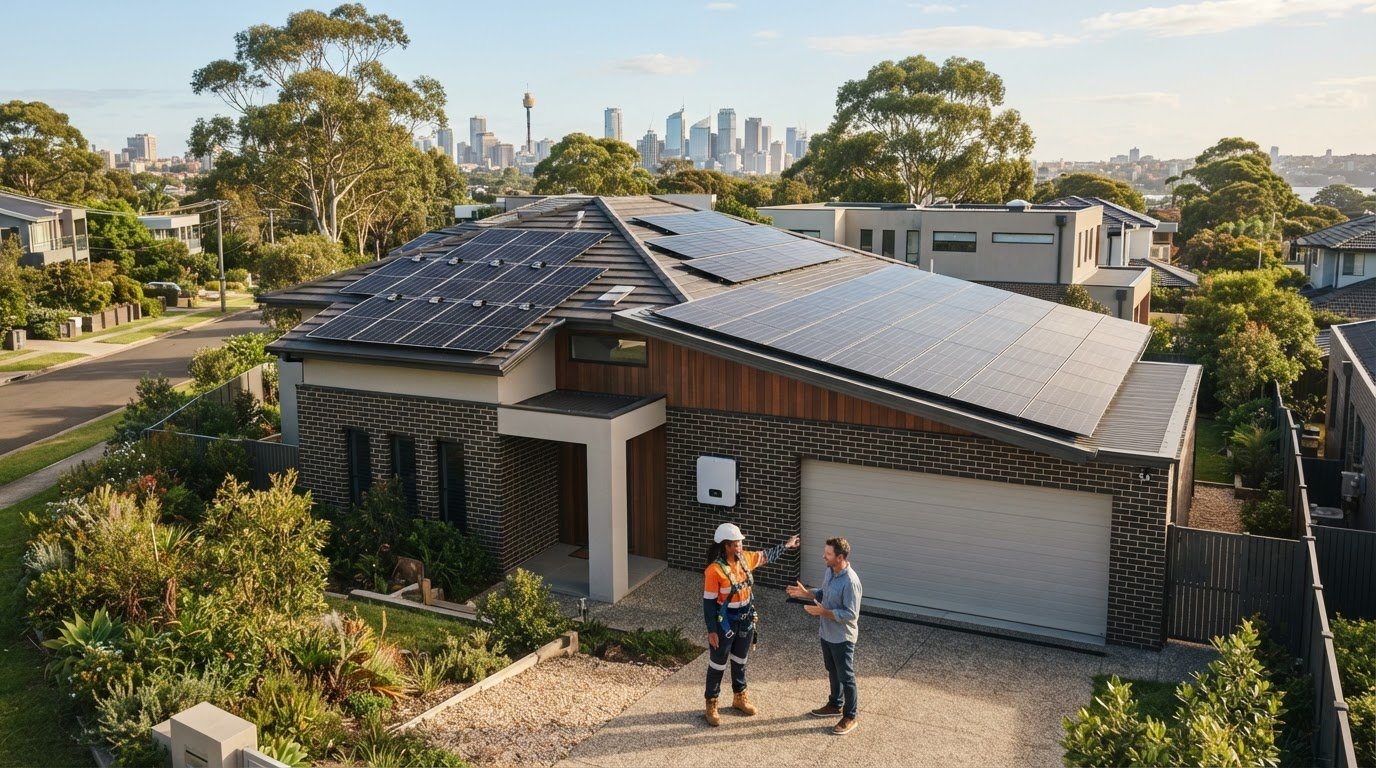
Generic online calculators cannot account for the unique shading of a Sydney gum tree or the specific pitch of your roofline. The most effective way to secure your solar panel return on investment NSW is through a professional site assessment. We simplify the transition by managing the entire journey, from navigating the green loan application process to the final commissioning of your SigenStor or Tesla system. This systematic approach removes the complexity, leaving you with a high-yield asset that begins delivering value from the moment it is switched on.
Ready to move beyond estimates and see the real-world numbers for your property? Get your personalised NSW ROI assessment from Sky High Solar and Electrical and start your journey toward a future-proofed home.
Secure Your Sydney Energy Future
Transitioning to renewable energy is a calculated move toward long-term financial sovereignty. By synthesising premium hardware with strategic financing, you transform an unavoidable monthly utility cost into a high-yield asset that builds equity in your home. As the 2026 energy landscape continues to evolve, the most successful households will be those that prioritise system longevity and grid intelligence over the lowest upfront price. Securing a reliable solar panel return on investment NSW depends on this balance of quality components and expert local execution.
As authorised Tesla and Enphase installers and expert licensed electricians, Sky High Solar and Electrical has provided a steady hand in the Sydney market since 2013. We are committed to removing the complexity from your transition, ensuring your system is future-proofed for EV charging and battery integration. Take the first step toward energy independence and see exactly how the numbers stack up for your property. Request a Personalised ROI & Financing Quote from Sky High Solar and Electrical today and move forward with the confidence that comes from a partnership rooted in technical excellence.
Frequently Asked Questions
What is the average solar payback period in NSW for 2026?
Most Sydney households see a payback period of three to five years for a high-quality 6.6kW system. This timeline is accelerated by high electricity rates, currently averaging 36.73 cents per kilowatt-hour. Your specific duration depends on your self-consumption levels and the orientation of your roof. By using more power during the day, you maximise your solar panel return on investment NSW, effectively shortening the time it takes for the system to pay for itself.
Is it better to pay for solar panels upfront or use financing?
Paying upfront offers the highest net-present value because you avoid interest costs entirely. However, modern green loans are often a superior strategic move if they allow you to install a higher-quality system like Enphase or Tesla earlier. Many of our clients find that the monthly electricity savings exceed the loan repayments, creating a cash-flow positive result from the first day. This approach preserves your capital while your roof generates wealth for your family.
How does the NSW battery rebate impact my return on investment?
The 2026 NSW incentives significantly improve your ROI by lowering the initial capital barrier. By combining the federal 30% battery discount with the NSW zero-interest loan program, you can install storage without a large upfront outlay. Batteries like the FOX ESS CQ7 allow you to avoid peak grid prices and bypass low feed-in tariffs. This shift ensures more of your generated energy stays in your home, protecting your long-term financial returns against market volatility.
Can I get solar financing if I am a pensioner or on a low income in NSW?
Specific government programs are designed to assist low-income households and concession card holders in Sydney. As of late 2026, targeted discounts of up to $4,000 are available for eligible residents to help reduce the cost of solar and battery installations. We recommend checking your eligibility for the NSW Home Energy Saver program, which offers accessible financing terms for those with a combined taxable income under $210,000. These initiatives ensure energy independence is achievable for more community members.
Do premium brands like Enphase really offer a better ROI than budget panels?
Yes, premium brands often deliver a superior solar panel return on investment NSW over the system’s 25-year lifespan. While budget gear has a lower entry price, it often suffers from higher failure rates and shorter warranties. Enphase microinverters maximise energy yield on complex roofs and eliminate the “single point of failure” risk associated with string inverters. Higher reliability and longer uptime mean your system continues to generate savings long after a cheaper alternative would have required expensive repairs.
How much does a 6.6kW solar system save on electricity bills in Sydney?
A 6.6kW system is the residential benchmark for Sydney and can save a typical family hundreds of dollars per quarter. Your actual savings depend on how much solar energy you consume during daylight hours rather than exporting to the grid. With Sydney electricity prices sitting at 36.73 cents per kWh, every unit of solar power used at home is incredibly valuable. Households that shift heavy appliance use to the middle of the day see the fastest financial payback.
What happens to my ROI if I move house before the system is paid off?
Solar is widely recognised as a value-add for NSW properties. If you sell your home, the remaining value of the system is typically recaptured in the higher sale price, often covering the outstanding cost. Buyers in the current Sydney market actively look for homes with premium hardware like Tesla Powerwalls or Enphase arrays to avoid rising energy costs. This makes your solar installation a portable financial benefit that increases your home’s overall market appeal and resale speed.
Are there specific solar financing options for Sydney businesses?
Sydney businesses have access to specialised financing such as Power Purchase Agreements (PPAs) and equipment leases. These options often require no upfront capital, allowing SMEs to install 10kW or larger systems and save on operational costs immediately. When combined with asset depreciation tax benefits, the ROI for commercial solar is exceptionally strong. Our team helps local businesses model these savings to ensure the transition to renewable energy supports their long-term growth and operational stability.