

 Sydney
 0452 243 240
Blog
Solar Panel Efficiency in Sydney Weather: The 2026 Homeowner’s Guide

Why does your solar system often underperform on a scorching 40-degree day in Western Sydney, right when your air conditioning is working its hardest? It is a counterintuitive reality that many homeowners face, leading to frustration when production dips during the peak of summer. While we enjoy abundant irradiance, the specific nuances of solar panel efficiency in Sydney weather are shaped by more than just clear skies. From the humid afternoons in Parramatta to the corrosive salt spray hitting rooftops in the Eastern Suburbs, our local climate demands a more sophisticated approach to energy generation.
You likely invested in solar to gain independence from rising electricity costs, which have now reached an average of 36.73 cents per kWh. We agree that your system should be a reliable, high-performance asset rather than a source of technical uncertainty. This guide provides a clear roadmap to optimising your setup for maximum savings in 2026. We will examine the impact of Sydney’s unique weather patterns on your monthly yield, the hardware that thrives in our humidity, and the practical maintenance steps required to ensure your system delivers dependable value for decades.
Key Takeaways
- Understand how Sydney’s specific latitude and light intensity dictate your system’s real-world power generation beyond simple “sunny day” assumptions.
- Discover why extreme heat can surprisingly lower your yield and how to track solar panel efficiency in Sydney weather by focusing on the temperature coefficient.
- Learn the “Sydney Clean” technique to safeguard your panels against coastal salt spray and urban pollutants, ensuring better long-term durability for coastal homes.
- Identify why premium hardware like Enphase microinverters and SigenStor integrated systems are essential for managing the unique humidity and shade profiles of the Harbour City.
- Set realistic seasonal expectations by understanding the average sun hour shifts between the winter solstice and the summer peak to better manage your energy budget.
Understanding Sydney’s Climate and Your Solar Production
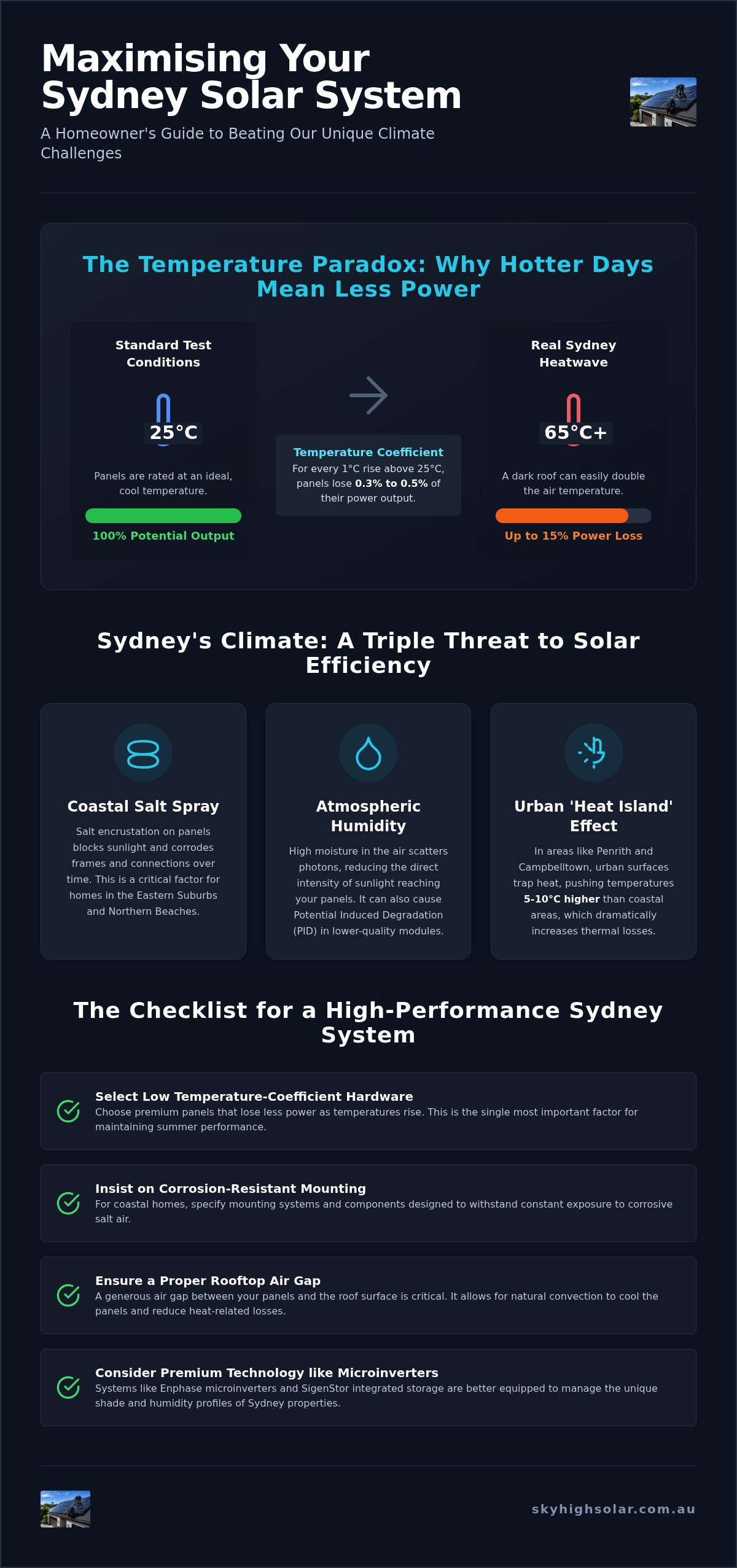
Sydney occupies a unique geographical position at approximately 33.8°S latitude. This location provides us with a high degree of solar potential, yet many homeowners are surprised when their production doesn’t match the clear blue sky outside. To understand this, we must look at solar panel efficiency in Sydney weather through a more technical lens. Simply put, solar efficiency is the ratio of energy harvested to the total energy available from the sun. In our city, there is a distinct difference between “bright sun” and “usable irradiance.”
Usable irradiance refers to the specific amount of light that actually reaches your solar cell efficiency threshold after filtering through the atmosphere. Sydney’s humidity plays a surprising role here. High moisture levels in the air can cause light refraction, scattering photons and reducing the direct intensity of the sun. This means that even on a day that looks clear, the atmospheric haze can subtly throttle your system’s output. It’s the reason why a crisp, dry day in September often produces more power than a muggy day in January.
The Impact of Sydney’s Maritime Humidity
Our coastal humidity affects the “clearness index” of the sky. While we enjoy the sea breeze, the moisture can lead to Potential Induced Degradation (PID) in budget-grade panels. This occurs when moisture facilitates a leakage of current between the solar cells and the panel frame, leading to a permanent loss in power generation over several years. However, Sydney’s climate offers a small silver lining. The heavy morning dew common in suburbs near the Parramatta River often acts as a natural cleaning agent. It softens light dust and urban soot, allowing it to wash away more effectively during the next rain shower.
Coastal Salt Spray: A Hidden Efficiency Killer
If you live in coastal hubs like Bondi, Manly, or Cronulla, salt air is a constant factor. Salt encrustation on the glass surface creates a physical barrier that prevents light from reaching the silicon. Over time, this salt can also compromise the electrical connections and the structural integrity of the aluminium frames. Optimising solar panel efficiency in Sydney weather requires selecting hardware specifically designed for maritime environments. We prioritise corrosion-resistant mounting systems and premium components that can withstand the intense pressure of East Coast Lows. These weather systems bring torrential rain and wind speeds that can exceed 100km/h, testing the structural integrity and long-term yield of your roof’s solar array.
The Temperature Paradox: Why Sydney’s Scorching Summers Can Lower Yield
It is a common misconception that the hottest days in Sydney result in the highest energy production. In reality, solar panels are electronic devices. Much like your laptop or smartphone, they function most effectively when kept cool. When rooftop temperatures soar during a January heatwave, the movement of electrons within the silicon cells becomes more chaotic, which increases internal resistance. This phenomenon directly impacts solar panel efficiency in Sydney weather, often causing a noticeable dip in output precisely when your household demand for air conditioning peaks.
Understanding how temperature affects solar panel performance requires looking at the “Temperature Coefficient” on a product’s data sheet. Most crystalline silicon panels are tested at a standard 25°C. For every degree the temperature rises above this benchmark, a typical panel loses between 0.3% and 0.5% of its power. On a 35°C Sydney day, a dark rooftop can easily reach 65°C; this can result in a 10% to 15% drop in real-world output. Choosing hardware with a lower coefficient ensures your system remains resilient when the mercury rises.
CBD vs. Western Sydney: A Tale of Two Microclimates
The performance of a 6.6kW solar system can vary significantly depending on your postcode. Residents in Pyrmont or Manly benefit from coastal breezes that provide natural cooling. In contrast, homeowners in Penrith or Campbelltown often face a “Heat Island” effect, where urban surfaces trap heat and push temperatures 5 to 10 degrees higher than the CBD. This thermal stress makes system design critical. We ensure a generous air gap between the roof and the panels to promote passive cooling, which helps mitigate the efficiency losses caused by stagnant, hot air trapped behind the modules.
Choosing Panels with Low Temperature Coefficients
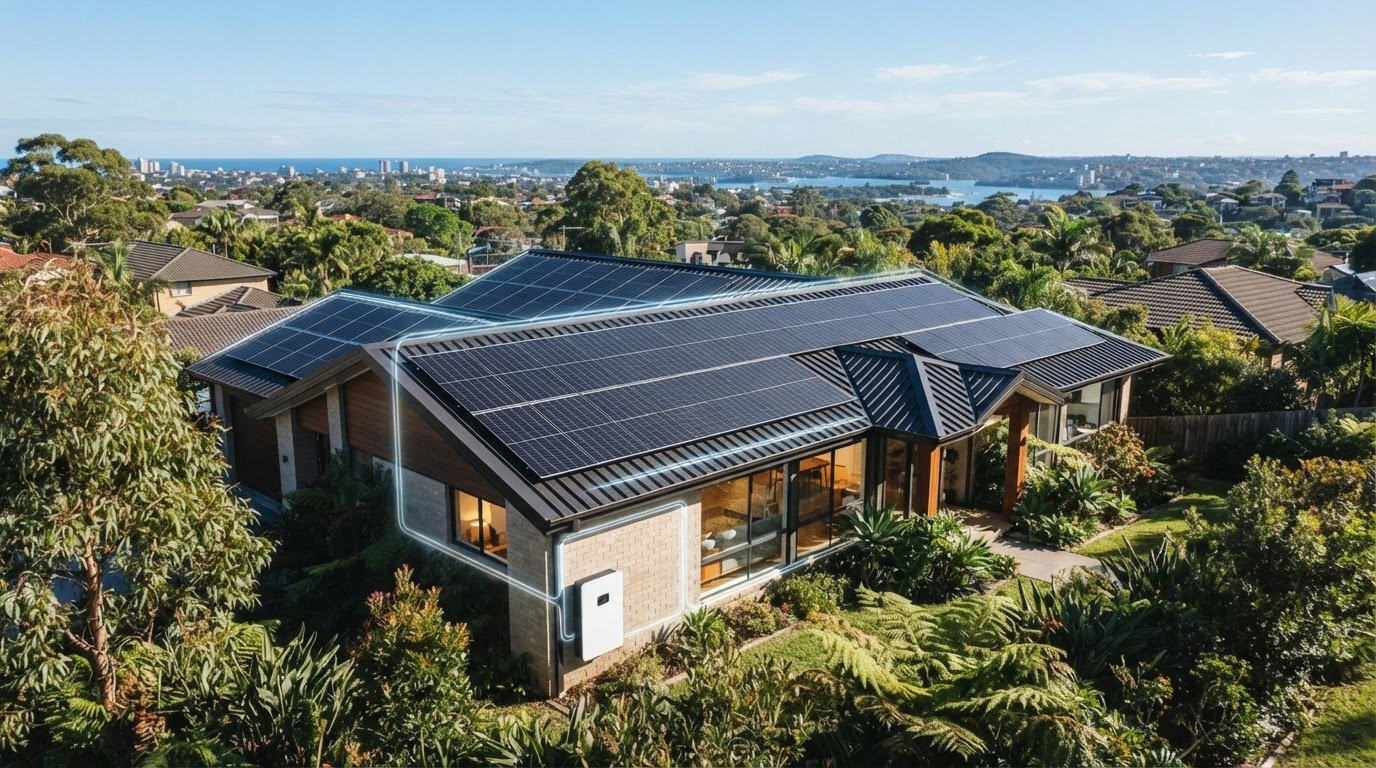
To future-proof your investment, we recommend N-type solar cells, such as TOPCon or HJT technology. These modern cells offer superior thermal stability compared to older P-type PERC models. Choosing premium glass-glass modules also assists with heat dissipation, as the dual-glass structure is more resilient to thermal expansion. If you are concerned about your current summer performance, investing in a professional system service can ensure your airflow remains unobstructed. Additionally, Enphase microinverters manage heat more effectively than traditional string inverters by processing power at the individual panel level, preventing a single hot module from dragging down the performance of your entire array.
Seasonal Performance: Winter Solstice to Summer Peak
Managing your expectations throughout the year is key to a rewarding solar journey. While Sydney averages approximately 5.2 peak sun hours per day annually, this figure is a mathematical average that masks significant seasonal swings. During the summer peak, you might see seven hours of high-intensity light, whereas the winter solstice brings this down to roughly three. A rainy week in March doesn’t mean your system is broken. It’s simply a natural part of the local climate cycle. For households with high daytime energy needs, consulting our Ultimate Guide to 10kW Solar Systems can help you understand how to build enough headroom into your array to cover these lower-light periods.
Sydney’s Winter Solar Advantage
Surprisingly, solar panel efficiency in Sydney weather often reaches its peak during the crisp, clear days of June and July. Solar panels are semiconductors that generate higher voltage when the ambient temperature is low. This “Winter Bonus” means that while the sun is up for fewer hours, each hour of production is remarkably efficient. Unlike the overcast winters in Melbourne or Hobart, Sydney often enjoys bright, cloudless winter skies. To capitalise on this, we ensure your panels are installed at an optimal tilt to catch the sun as it sits lower in the northern sky, ensuring your winter yield remains robust compared to southern states.
East Coast Lows and Cloudy Spells
Sydney is prone to East Coast Lows that can bring several days of thick cloud cover and persistent rain. You might worry that your production will drop to zero, but modern technology has solved many of these issues. We utilise “Half-Cut” cell technology, which allows the panel to continue harvesting energy even when portions are shaded or light levels are low. These panels are adept at capturing diffuse light, which consists of the scattered photons that penetrate cloud cover. Even when you can’t see your shadow on the ground, your system is still generating power, typically between 10% and 25% of its rated capacity. To bridge these multi-day weather events without relying on the grid, integrating a battery solution like the SigenStor energy hub ensures you have a reliable reservoir of power regardless of the forecast.
Maximising Your Yield: Local Strategies for Sydney Roofs
Achieving peak performance from your array involves more than just a high-quality installation. It requires an ongoing strategy tailored to our local environment. To maintain solar panel efficiency in Sydney weather, you must account for the “Sydney Clean.” This isn’t just about dust. In urban areas near the M4 or M5 corridors, panels accumulate a fine layer of oily soot from traffic. For those in the leafy Inner West or North Shore, eucalyptus sap and bat droppings can create stubborn residues that rain alone cannot shift. These biological and industrial pollutants create “hot spots” that reduce output and can eventually damage the cells.
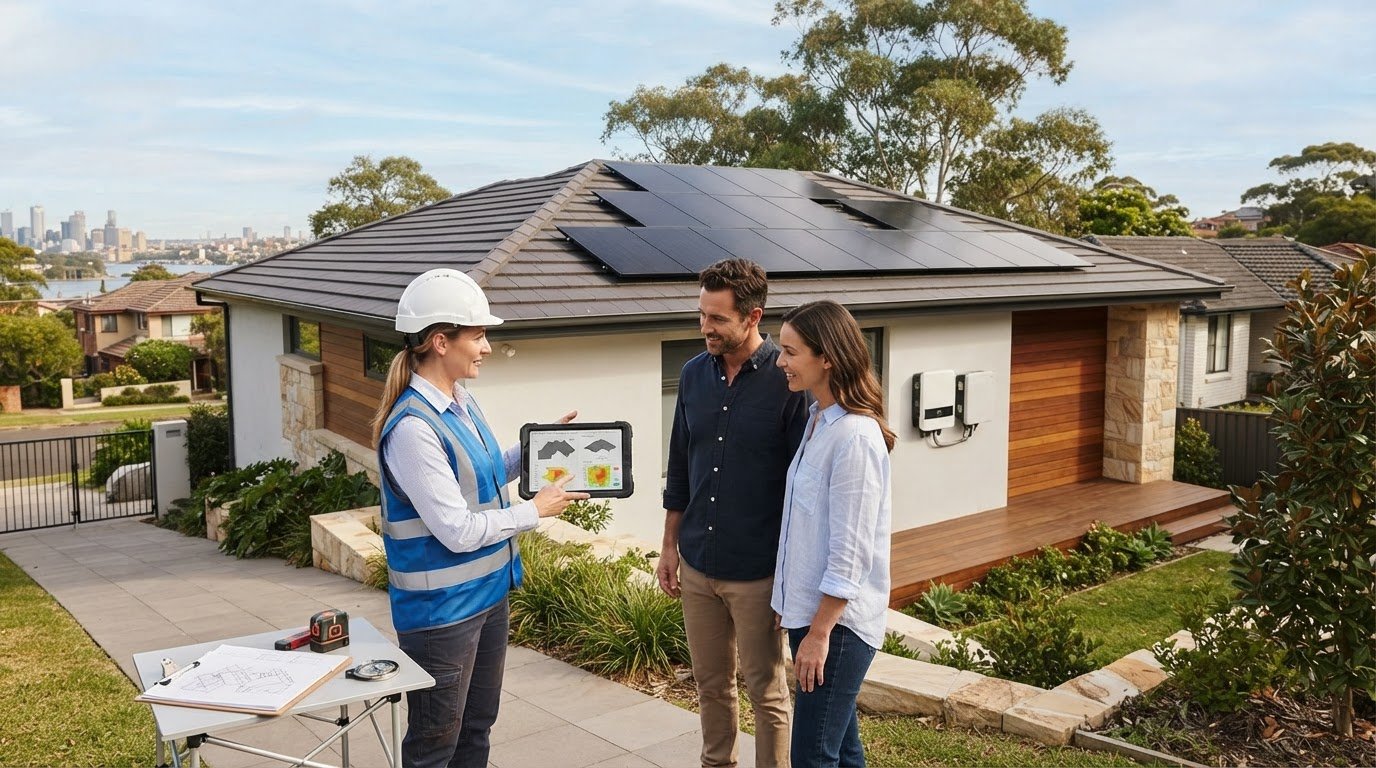
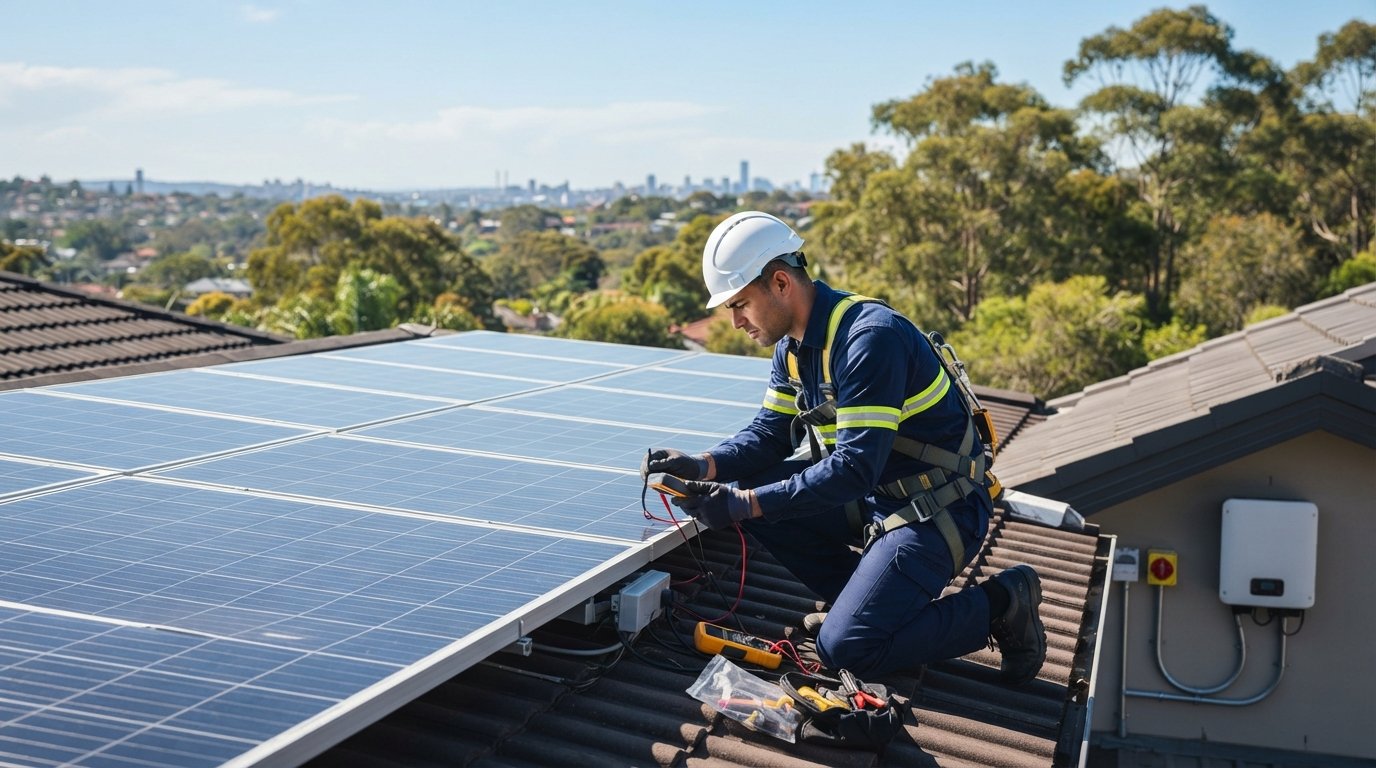
Regular monitoring is your first line of defence. Modern apps allow you to distinguish between a weather-related dip, such as a week of smoke haze or heavy cloud, and a genuine fault. If you notice a persistent drop in production that doesn’t align with the Bureau of Meteorology reports, it’s time for action. We recommend a professional solar system servicing after major storm events or prolonged dry spells to ensure your system remains safe and efficient. For a comprehensive health check of your array, book a professional solar performance audit with our licensed team.
Dealing with “Sydney Shade”: Frangipanis and Gum Trees
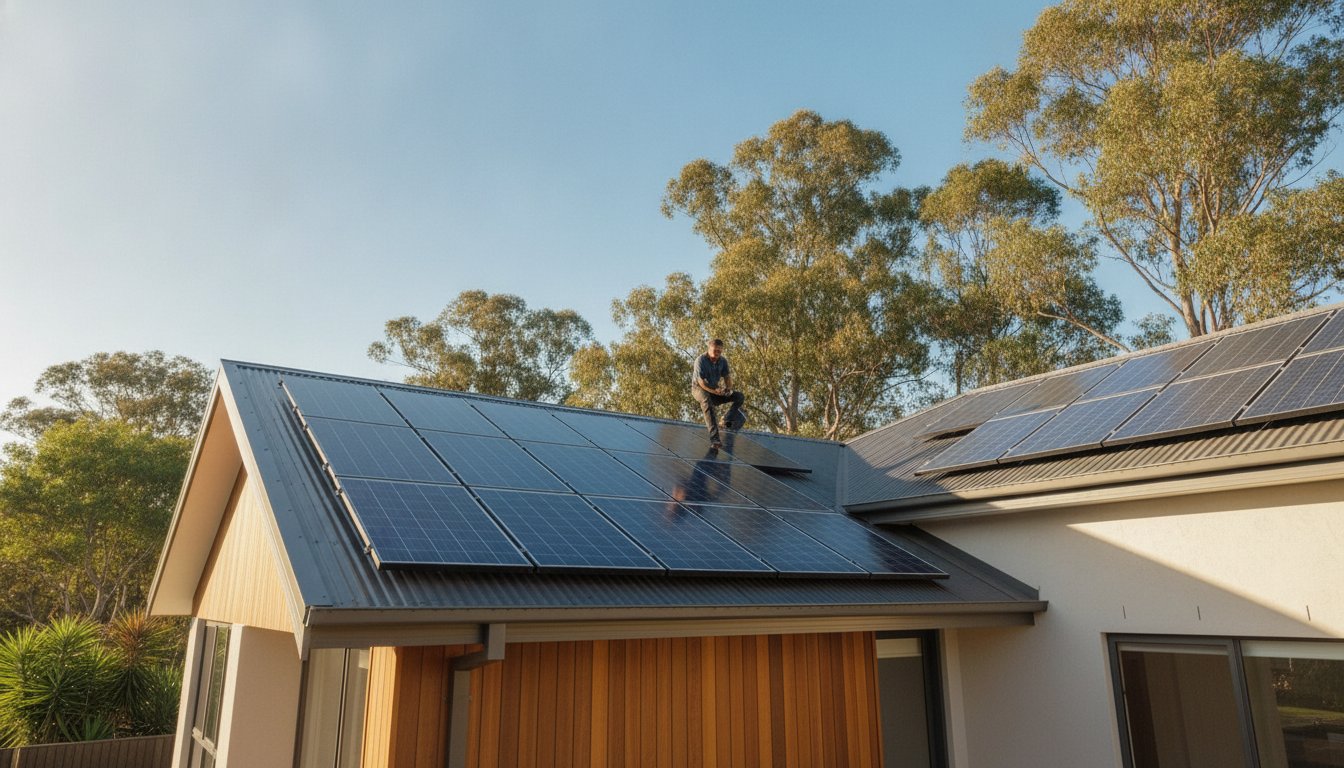
Sydney’s leafy suburbs are beautiful, but they present a challenge for traditional solar setups. Even partial shade from a neighbour’s overhanging gum tree or a fast-growing frangipani can tank the production of a standard string inverter system. In these scenarios, the Enphase microinverter solution is a must. By allowing each panel to operate independently, a single shaded module won’t drag down the performance of the entire roof. This technology allows you to keep your prized garden while still enjoying maximum energy independence.
The Best Tilt and Angle for the Harbour City
The “sweet spot” for Sydney’s latitude of 33.8° S is generally a 30-degree tilt facing North. However, North isn’t always the only answer for modern Sydney families. Many workers aren’t home during the middle of the day, making East/West splits an increasingly popular choice. This configuration captures the “Golden Hours” of the early morning and late afternoon, aligning production with the times you actually use your appliances. Furthermore, maintaining a tilt of at least 10 degrees is vital for self-cleaning. This angle ensures that Sydney’s frequent rain showers can effectively wash away salt spray and dust, naturally preserving your solar panel efficiency in Sydney weather without constant manual intervention.
Future-Proofing with Premium Hardware for the Harbour City
Selecting the right components is the final piece of the puzzle for maintaining long-term solar panel efficiency in Sydney weather. While many installers focus on generic “Tier 1” ratings, we specialise in hardware specifically engineered to survive our coastal humidity and volatile storm seasons. Sydney is famous for its “southerly busters,” which can bring sudden wind gusts exceeding 100km/h. For this reason, we prioritise mounting systems and modules with high static load ratings. This ensures your investment remains physically secure on your roof while continuing to harvest energy reliably for its 25-year lifespan.
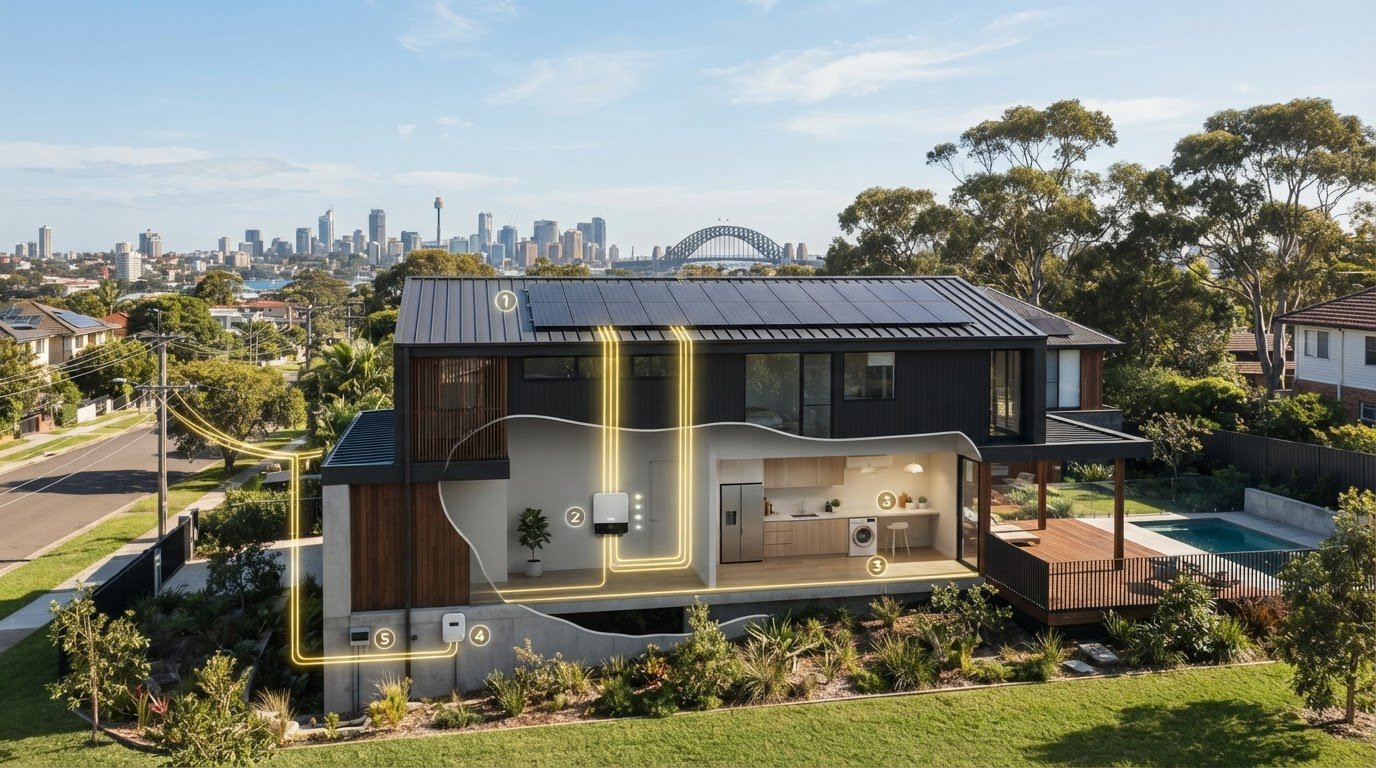
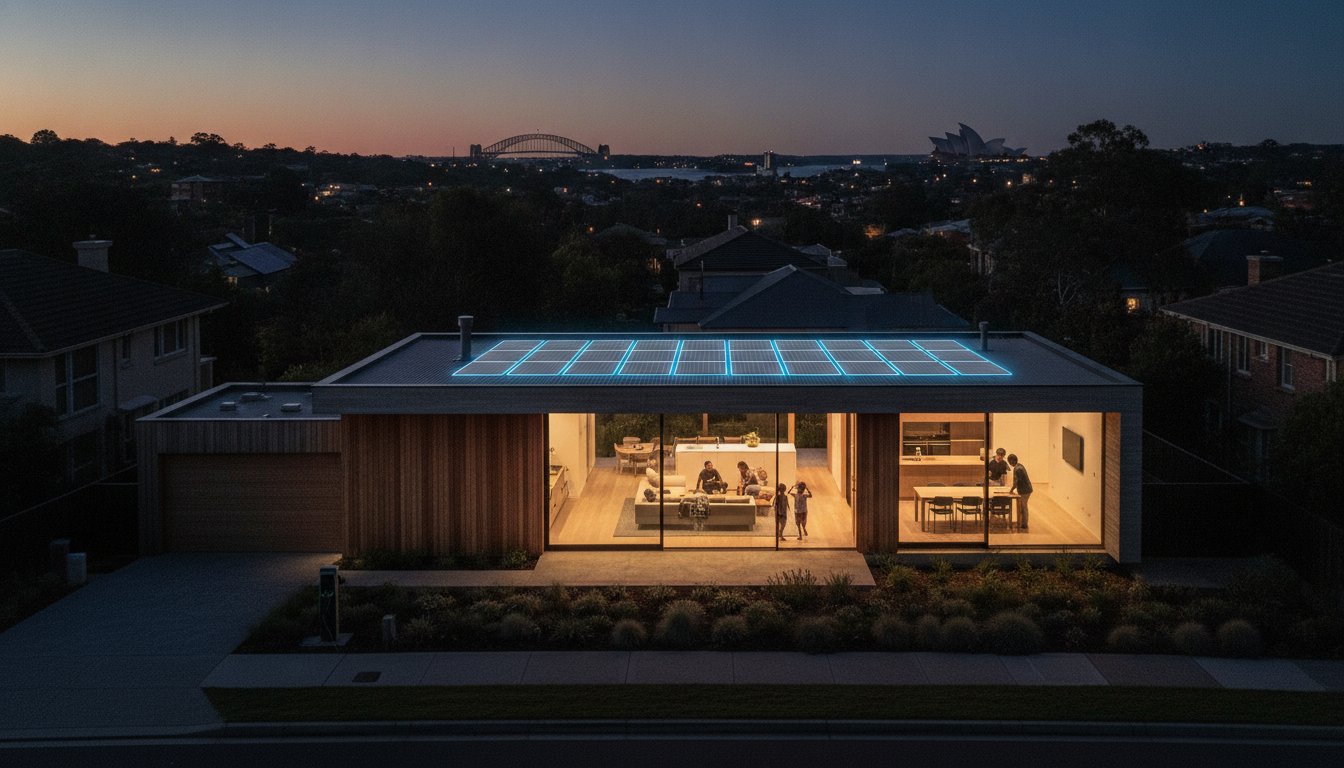
Beyond structural durability, modern systems must also be intelligent. Integrated solutions like the SigenStor allow you to use Sydney’s abundant sunshine to fuel more than just your appliances. By seamlessly integrating EV charging with your solar array, you can transform your rooftop into a private service station. This level of integration ensures that every kilowatt generated is utilised effectively, providing a stable energy foundation for your Sydney lifestyle as we move toward a more electrified future.
Why Microinverters Rule the Coast
In humid maritime environments, traditional string inverters can face challenges with high-voltage DC electricity running across the roof. We favour Enphase microinverters because they convert power to AC at the individual panel level, significantly reducing fire risks in damp conditions. This architecture also provides granular data; you can use a smartphone app to see exactly how a single shady branch or a layer of salt spray on one panel is affecting your overall ROI. For busy families, this “fail-safe” design provides peace of mind. If one microinverter encounters an issue, the rest of the array continues to produce power at maximum capacity.
Energy Independence with Smart Storage
The real value of solar in 2026 is found in self-consumption. Using solar battery storage allows you to beat the expensive evening peak prices, which is especially important during those humid summer nights when the air conditioning is non-negotiable. We utilise the FOX ESS advantage for high-demand homes, offering high-voltage storage that handles heavy loads with ease. Additionally, smart hybrid inverters from GoodWe manage the complex dance between the grid, your panels, and your battery. This ensures your home always draws from the most cost-effective power source automatically, protecting your hip pocket regardless of how the Sydney weather changes throughout the day.
Secure Your Energy Future in the Harbour City
Optimising your home for the next 25 years requires a deep understanding of how local environmental factors dictate performance. We have explored how high-quality N-type cells and microinverters mitigate the impact of heatwaves and salt spray, ensuring that solar panel efficiency in Sydney weather remains a dependable asset rather than a seasonal variable. By choosing hardware designed for maritime conditions and maintaining a proactive service schedule, you can transform Sydney’s intense irradiance into significant, long-term savings.
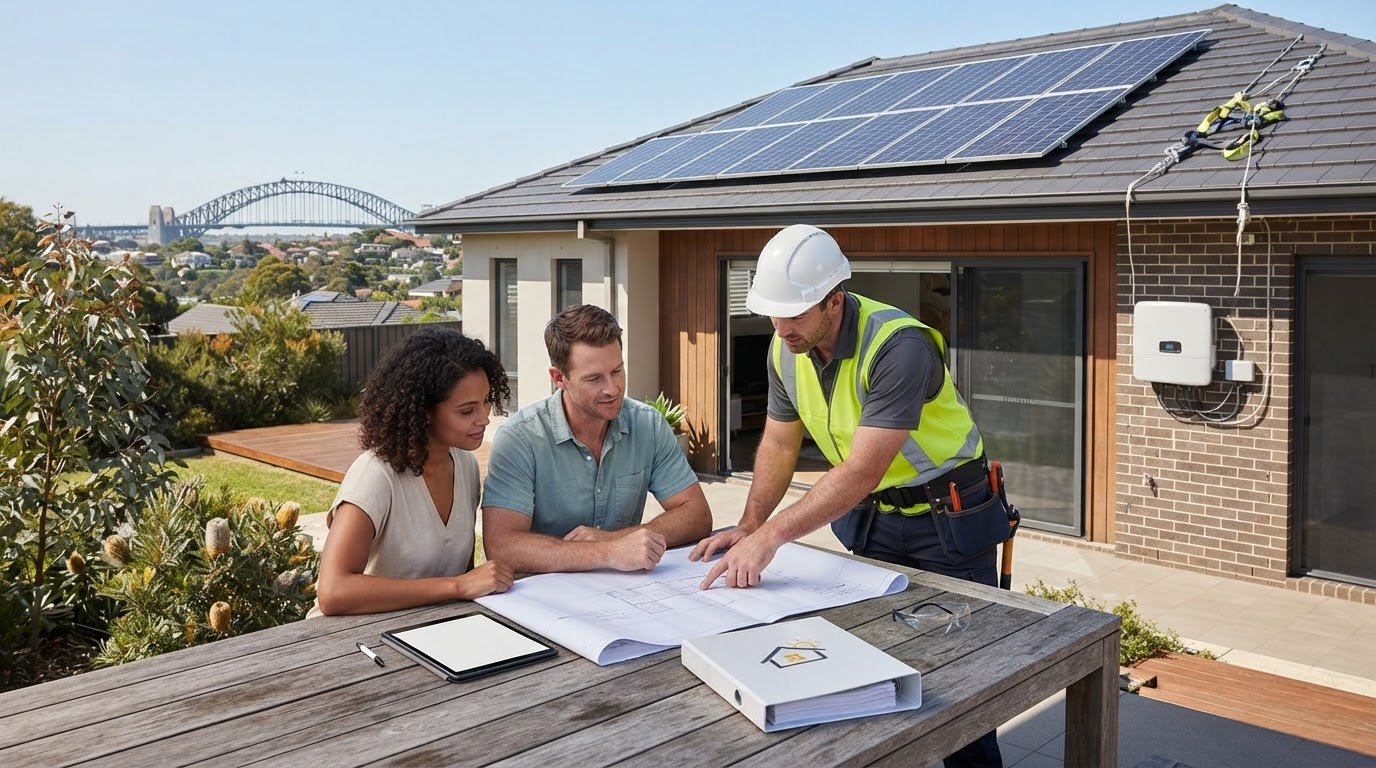
At Sky High Solar, we bring over 13 years of Sydney-specific electrical expertise to every installation. As premium Enphase and Tesla authorised installers, our team provides the technical precision needed to navigate our city’s unique microclimates. We are committed to providing local support and servicing for the life of your system, ensuring your transition to renewable energy is both seamless and rewarding. To take the first step toward energy independence, get a personalised Sydney solar performance estimate from Sky High Solar today. Your roof is one of your most valuable resources; it’s time to make it work for you.
Frequently Asked Questions
Do solar panels work on cloudy days in Sydney?
Yes, solar panels continue to generate power on cloudy days by capturing diffuse sunlight. While output typically drops to between 10% and 25% of their rated capacity, modern “Half-Cut” cells are designed to stay active in low-light conditions. Sydney’s frequent overcast spells don’t mean your system stops working. It simply produces at a reduced rate until the clouds clear. Pairing your system with a battery helps manage these fluctuations effectively.
How much efficiency do I lose during a Sydney heatwave?
You can expect a 10% to 15% drop in performance when rooftop temperatures exceed 65°C. This happens because solar panel efficiency in Sydney weather is tied to the temperature coefficient of the cells. For every degree above 25°C, most panels lose approximately 0.3% to 0.5% of their output. Choosing premium N-type cells or ensuring a proper air gap during installation helps mitigate these losses during extreme Western Sydney heatwaves.
Does salt air from the ocean damage solar panels?
Salt air can lead to salt encrustation and potential corrosion if you use budget-grade hardware. For homes in coastal suburbs like Manly or Cronulla, we install corrosion-resistant mounting and premium modules to prevent degradation. Regular maintenance is vital to wash away salt build-up that blocks sunlight. Our solar system servicing includes a thorough check of electrical connections to ensure the maritime environment isn’t compromising your long-term energy yield.
What is the best angle for solar panels in Sydney?
A 30-degree tilt facing North is the mathematical “sweet spot” for Sydney’s latitude. This angle maximises year-round exposure to the sun. However, many homeowners now opt for East/West orientations to better align production with morning and evening energy usage. This strategy increases self-consumption and reduces reliance on the grid when prices are highest. We assess your specific roof and lifestyle to determine the most profitable configuration for your home.
How often should I clean my solar panels to maintain efficiency?
We generally recommend a professional clean and inspection twice a year to maintain peak performance. In urban Sydney, panels often accumulate oily soot, bird droppings, or eucalyptus sap that rain cannot wash away. These pollutants can significantly impact solar panel efficiency in Sydney weather by creating shaded spots on the cells. Regular servicing ensures your system remains safe and continues to deliver the maximum possible ROI for its 25-year lifespan.
Is solar still worth it with Sydney’s rising electricity prices in 2026?
Solar remains an excellent investment as Sydney electricity prices have reached an average of 36.73 cents per kWh in July 2026. While feed-in tariffs have decreased, the value now lies in “self-consumption.” By using your own solar power and storing the excess in a FOX ESS or Tesla battery, you avoid buying expensive grid power. This shift makes modern systems more about energy independence than just selling power back to retailers.
Can Sydney storms and hail break my solar panels?
High-quality solar panels are engineered to withstand significant impacts, including hail and 100km/h wind gusts. All modules we install meet rigorous Australian Standards for structural integrity. While extreme weather events occur in Sydney, premium glass-glass modules offer superior durability against physical damage. We also ensure our licensed electrical contractors follow strict mounting guidelines to keep your array secure during the most intense summer storms or southerly busters.
Will my solar panels still make power during a Sydney East Coast Low?
Your system will still generate power during an East Coast Low, though production will be significantly lower due to heavy cloud and rain. These multi-day weather events highlight the importance of smart storage solutions like the SigenStor integrated battery. By storing energy during the sunny days leading up to a storm, you can bridge the production gap and maintain your Sydney lifestyle without relying on a stressed electrical grid during extreme weather.