

 Sydney
 0452 243 240
Blog
How Much Does a 10kW Solar System Produce in Sydney? (2026 Guide)

What if your home could act as its own power station, completely insulating you from the volatility of the NSW energy market? A 10kW solar system is no longer considered ‘oversized’ for the average family; instead, it’s become the essential foundation for households integrating electric vehicles and high-performance climate control. If you’re planning an installation, your primary concern is likely how much does a 10kw solar system produce in Sydney when you account for our specific coastal weather and seasonal shifts.
It’s understandable to feel skeptical about theoretical marketing figures, especially with electricity prices rising and feed-in tariffs continuing their downward trend. You want to know if those panels will actually cover your daily needs or just look good on the roof. This 2026 guide delivers the precise energy yields, financial returns, and rebate insights you need to make an informed decision. We’ll examine the 35 to 45 kWh daily average you can expect, how a 10kW array powers an EV, and the current status of NSW incentives to ensure your transition to clean energy is both seamless and rewarding.
Key Takeaways
- Understand exactly how much does a 10kw solar system produce in Sydney, with average daily yields typically ranging between 38kWh and 42kWh to power a modern household.
- Discover why a 10kW array is the ideal foundation for future-proofing, providing enough energy to cover a standard daily EV commute while maintaining your home’s essential loads.
- Learn how to maximise your financial returns by shifting focus toward self-consumption, which can lead to annual electricity bill savings exceeding $3,000 in the 2026 market.
- Identify the critical real-world factors, such as Sydney’s specific shading challenges and roof orientation, that dictate your actual energy output versus theoretical estimates.
- Explore the value of integrating premium components like the FOX ESS CQ7 battery or SigenStor EV chargers to ensure long-term reliability and seamless system performance.
Average Daily and Seasonal Energy Yield in Sydney
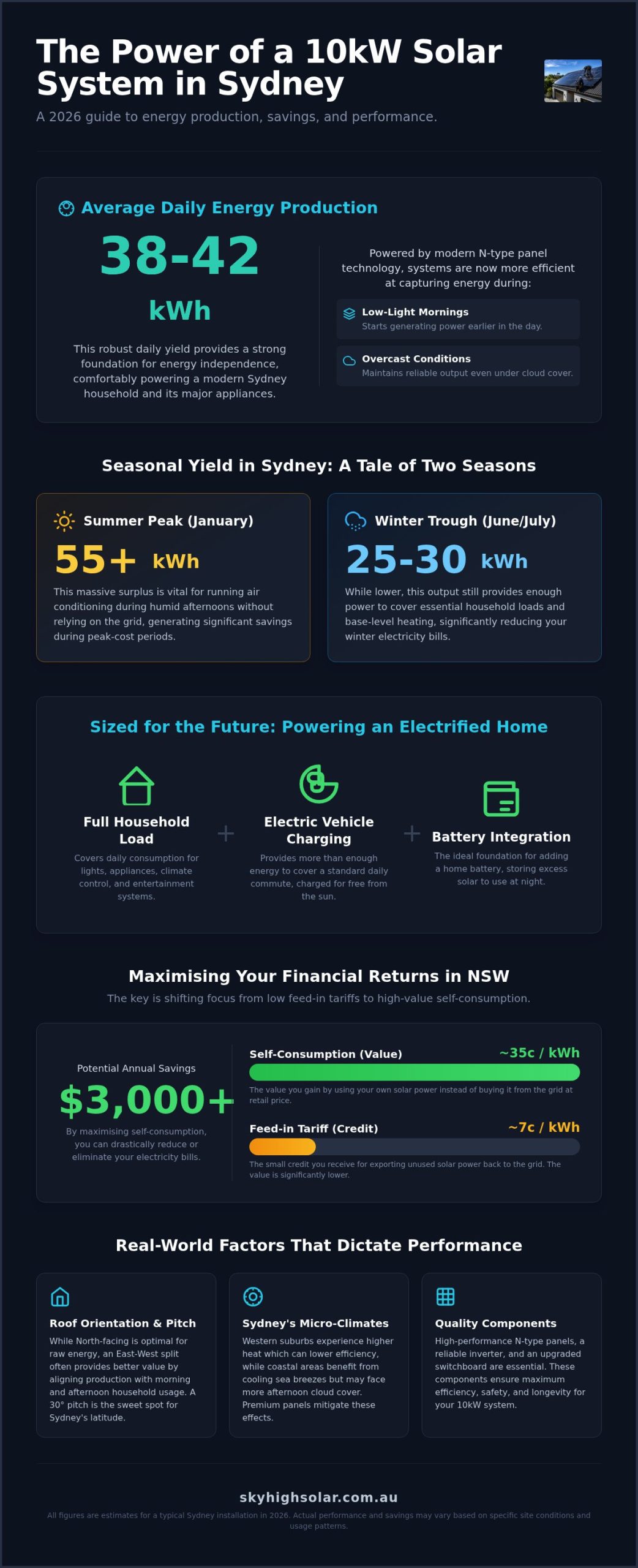
When homeowners ask how much does a 10kw solar system produce in Sydney, the answer is grounded in both local geography and the latest technological advancements. For a standard residential installation in 2026, you can expect an average daily yield of 38kWh to 42kWh. We define daily yield as the total energy produced across a 24-hour cycle within the specific constraints of Sydney’s temperate coastal climate. This output provides a robust foundation for families looking to offset significant portions of their grid reliance.
While older systems relied almost exclusively on peak sun hours, modern N-type panel technology has shifted the baseline for performance. These cells are significantly more efficient at capturing energy during low-light Sydney mornings or under the light cloud cover often seen in the Inner West. This technical advancement is particularly relevant given our latitude of 33.8° S. This specific position on the globe dictates our “sun-soaking window,” ensuring that even during the shorter days of the shoulder seasons, your array remains a reliable workhorse. The rapid growth of Solar power in Australia has been driven by these efficiency gains, making larger 10kW systems the new standard for genuine energy independence.
Summer vs Winter: What to Expect in NSW
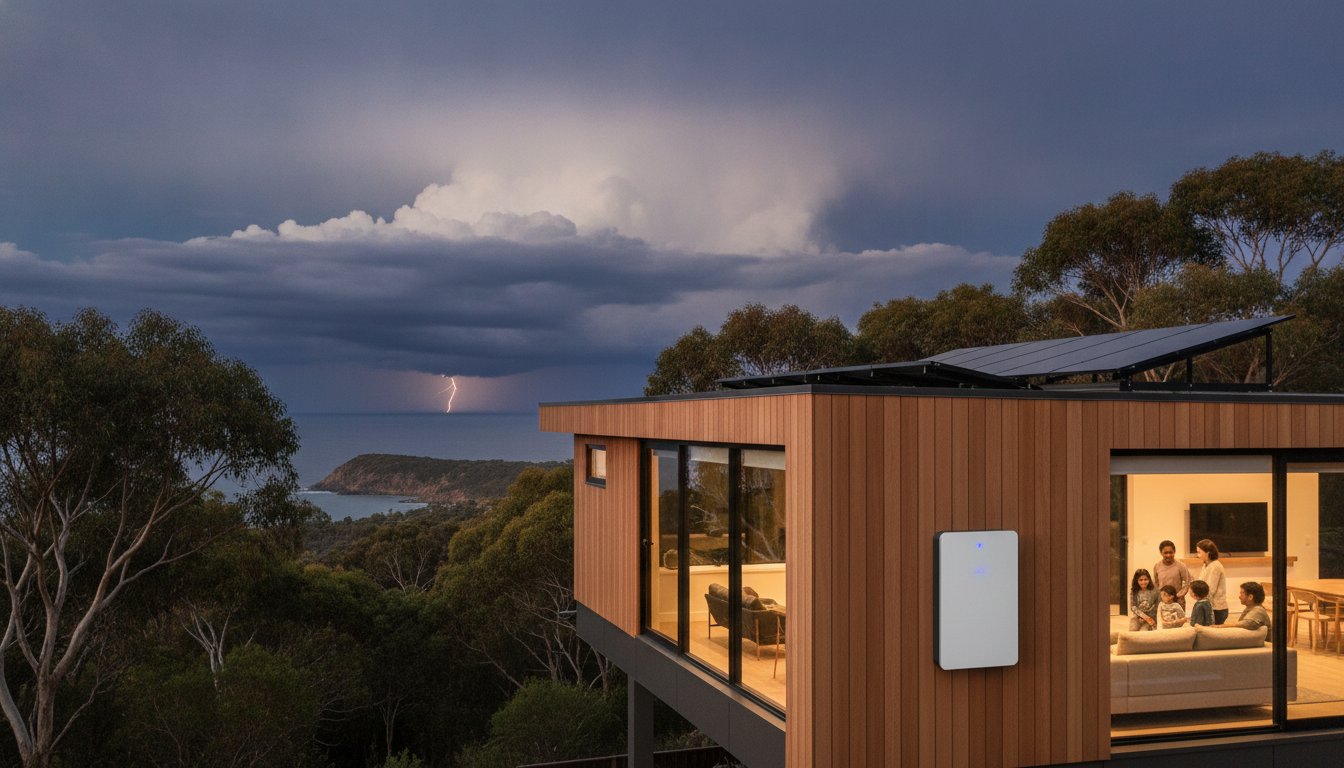
The gap between seasons is noticeable but manageable with a system of this scale. On clear January days, it’s common to see peaks reaching 55kWh or more. This massive surplus is vital for running air conditioning during Sydney’s humid summer afternoons without drawing from the grid. Conversely, winter troughs in June and July might see production dip to 25-30kWh. While this is lower, it still provides enough power for essential household loads and base-level heating. Sydney’s coastal humidity also plays a subtle role; while it can be stifling for residents, the moisture in the air can actually assist with panel cooling compared to the dry, stagnant heat found further inland.
The Impact of Sydney’s Micro-Climates
Sydney isn’t a monolith when it comes to weather, and your specific suburb can influence your total yield. If you’re located in the Western Suburbs, such as Penrith, you’ll often experience higher ambient temperatures which can slightly lower panel efficiency through heat stress. This is why we prioritise premium panels with high-temperature coefficients to maintain stability. In contrast, coastal areas like Cronulla or the Northern Beaches benefit from sea breezes that keep panels at an optimal operating temperature, though they must contend with sudden afternoon cloud cover and salt spray. Understanding these local nuances ensures your 10kW system is calibrated for your specific street, not just a general postcode.
Factors That Dictate Your Real-World Performance
Theoretical data provides a reliable starting point, but the actual performance of your array depends on several local variables. When calculating how much does a 10kw solar system produce in Sydney, we must look beyond the panel specifications and consider the physical environment of your property. Factors such as roof orientation, local shading, and the quality of your electrical infrastructure play a decisive role in whether you reach those peak yield targets.
A high-output 10kW system also places significant demand on your home’s electrical infrastructure. Ensuring you have a modern switchboard upgrade is essential for both safety and efficiency. This upgrade allows your system to handle high-current loads without bottlenecks, ensuring energy flows seamlessly from your roof to your appliances. If you aren’t sure if your current setup is ready for a large-scale array, our team can provide a professional residential solar assessment to identify any necessary improvements.
Roof Pitch and Orientation in Sydney
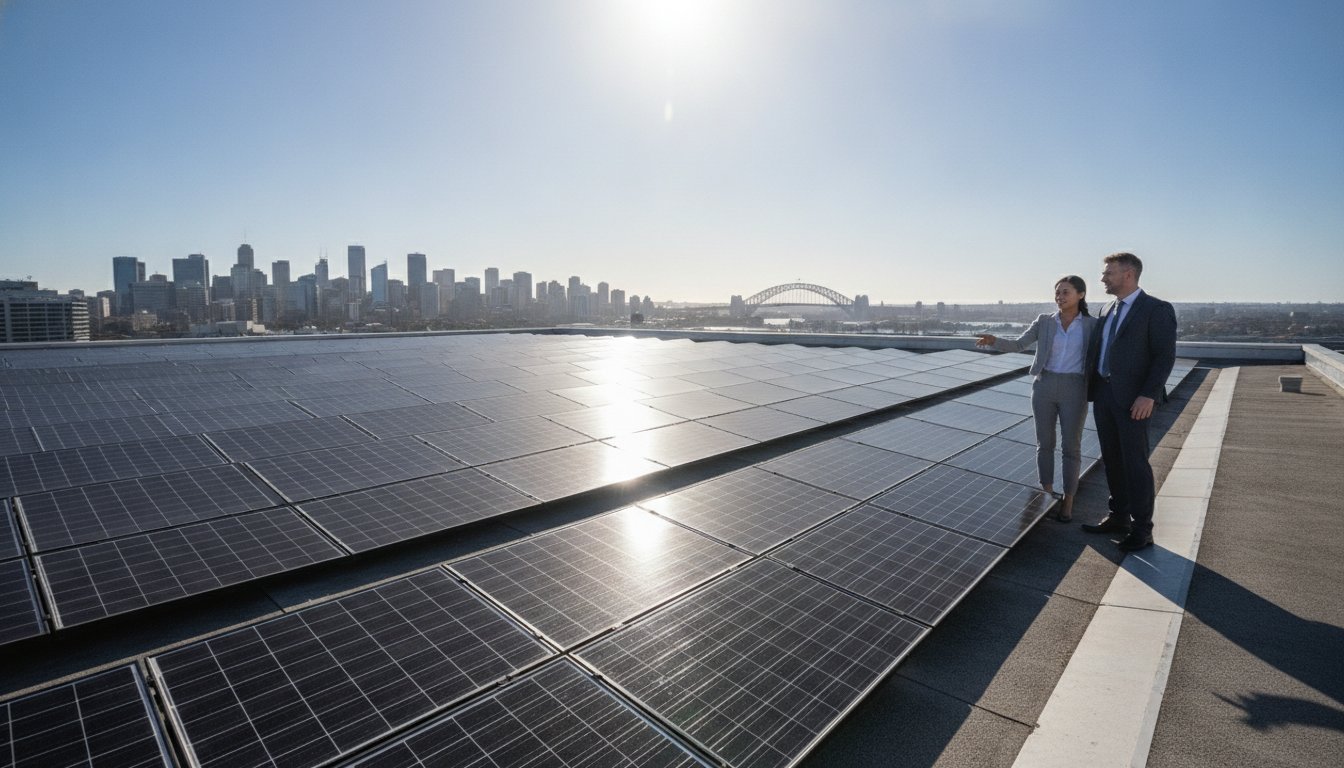
While North-facing roofs capture the most raw energy, an East-West split is often superior for modern Sydney families. This configuration extends the production window into the early morning and late arvo, aligning better with when households actually consume power. According to Australian Bureau of Statistics data, the economic value of solar is increasingly tied to this self-consumption model. For those with flat roofs, installing tilt-frames is a wise investment to achieve the 30-degree ‘sweet spot’ required for our latitude, ensuring your panels soak up the maximum amount of sun year-round.
String Inverters vs Microinverters: Yield Comparison
Shading remains a persistent challenge in Sydney’s leafy suburbs. Traditional string inverters can suffer from a ‘Christmas Lights’ effect; if one panel is shaded by a stray branch or a power line, the entire string’s output drops significantly. We mitigate this by using Enphase microinverters, which allow each panel to operate independently. This ensures that a single shaded module doesn’t compromise your total 10kW yield. These premium components also offer superior resistance to the salt-mist environment found along the Sydney coastline. This durability is vital for maintaining high performance over the system’s 25-year lifespan, providing peace of mind for homeowners in coastal postcodes.
Sizing for the Future: EVs, Batteries, and Electrification
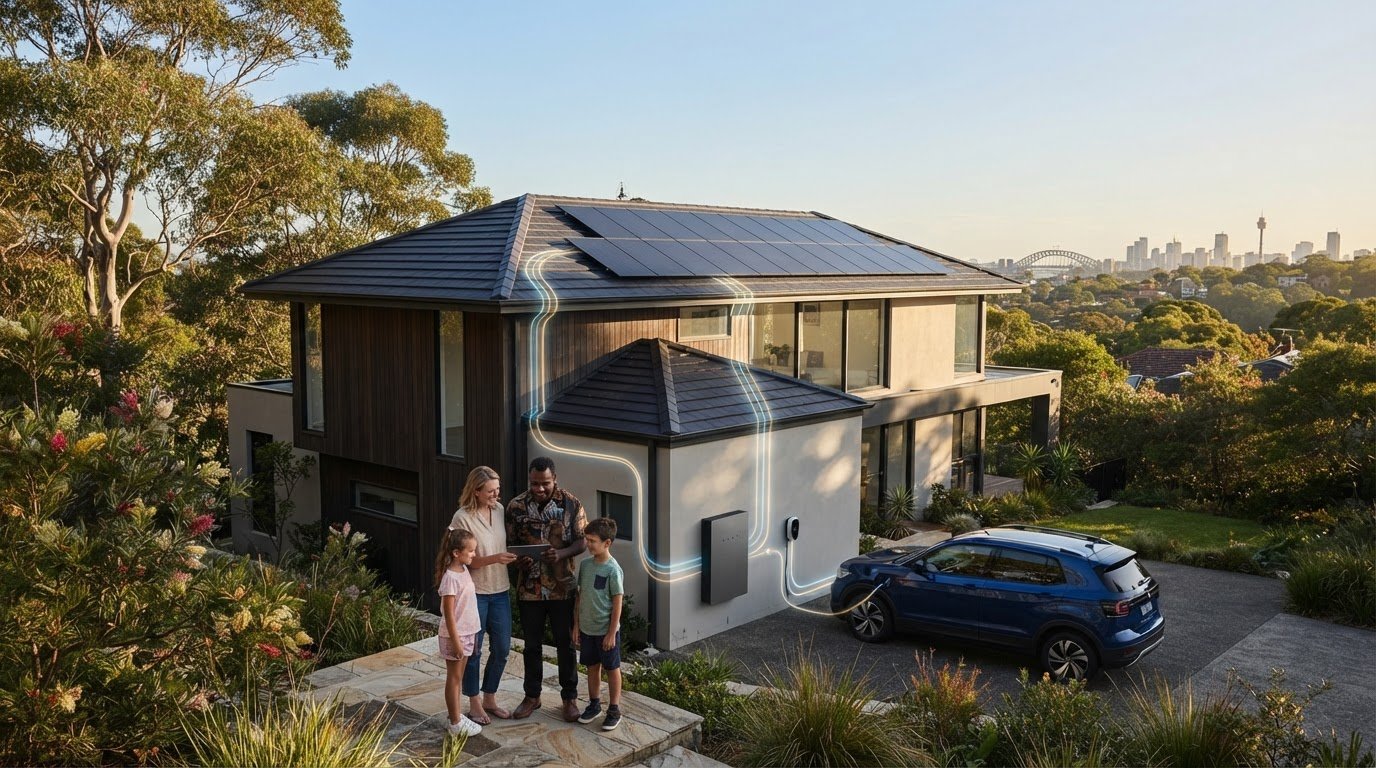
As Sydney moves toward a fully electric future, the role of rooftop solar has shifted from a simple bill-offsetting tool to a comprehensive home energy plant. For most modern households, a 10kW array represents the ‘Goldilocks’ size; it’s large enough to provide genuine energy independence without requiring the massive roof space of a commercial installation. When evaluating how much does a 10kw solar system produce in Sydney, the focus is now on how that energy is distributed across high-draw appliances and transport. On a typical day, 40kWh of daily production covers an average 40km Sydney commute and household loads, leaving a surplus for storage or additional electrification.
Managing this significant output requires intelligent hardware that can prioritise loads in real-time. This is where the SigenStor integrated solar inverter and EV DC charger becomes a critical component of the 10kW ecosystem. By combining the inverter and charger into a single unit, you can direct solar energy straight into your vehicle’s battery with minimal conversion losses. This level of integration ensures that your 10kW investment isn’t just pushing power back to the grid for a low feed-in tariff, but is instead displacing expensive petrol and grid-sourced electricity.
Charging Your EV with 10kW of Solar
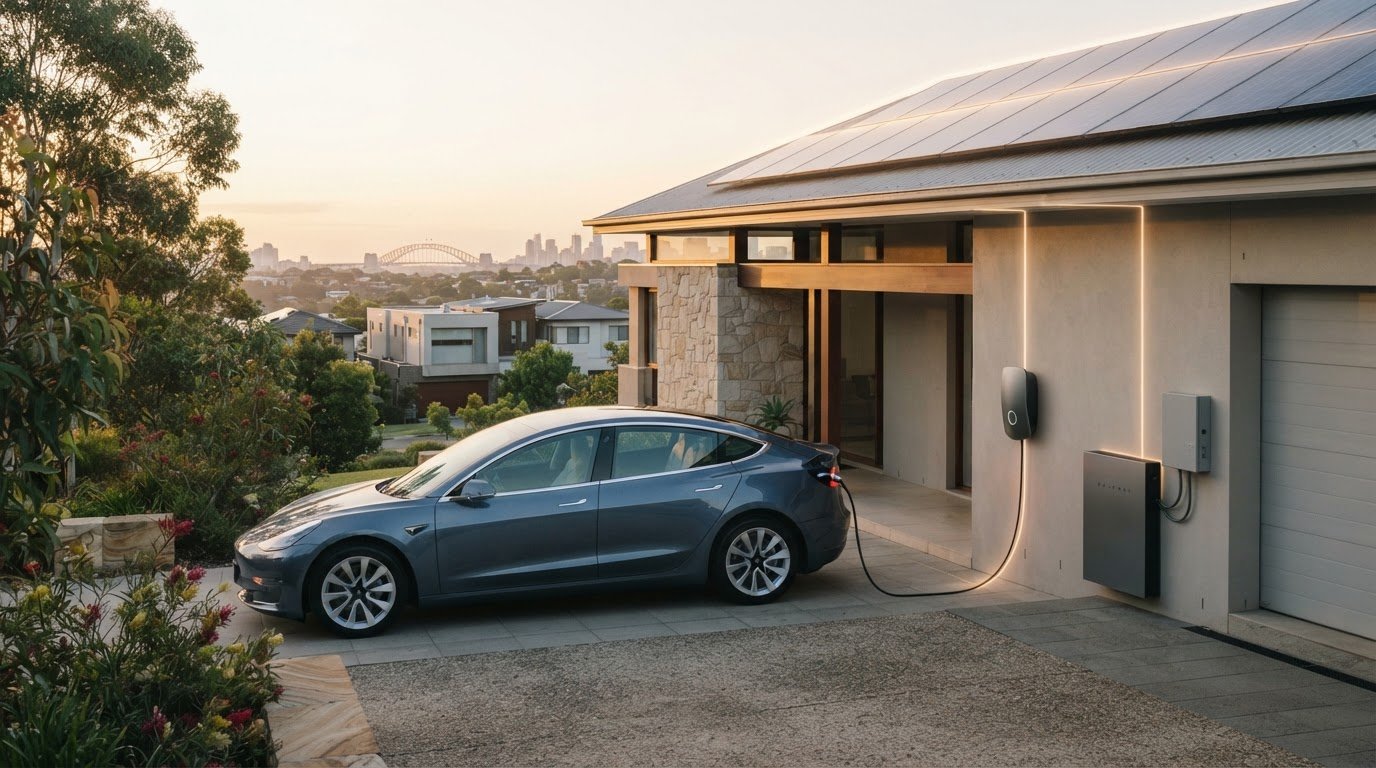
A 10kW system can add approximately 40 to 60 kilometres of range for every hour of peak Sydney sun, depending on the efficiency of your specific electric vehicle. This means a few hours of midday sun can easily replenish a standard daily commute. By using the SigenStor system, you can set smart charging profiles that prioritise solar energy over grid power, ensuring your car only ‘fills up’ when the sun is at its strongest. This setup also provides the necessary headroom for families planning to transition to a two-EV household, ensuring your energy infrastructure remains relevant for the next decade.
Maximising Self-Consumption with FOX ESS and Tesla
To truly capitalise on a 10kW array, you must have a way to capture the midday surplus. We generally recommend pairing these systems with at least 10 to 13kWh of solar battery storage to cover the evening peak. The FOX ESS CQ7 high voltage storage battery is a perfect match for 10kW systems, offering the rapid discharge rates needed to run heavy loads like induction cooktops and ducted air conditioning simultaneously.
Without adequate storage, homeowners often hit the ‘Solar Cliff’ at midday, where the battery is full and the household loads are low, forcing excess energy back to the grid for negligible returns. High-capacity storage ensures that the 38 to 42kWh your system produces isn’t wasted. By storing that energy for the 6 pm to 9 pm window, you avoid the most expensive peak rates in NSW and ensure your 10kW system delivers the maximum possible financial return.
Financial Returns: Savings and Payback Periods in NSW
The economic landscape for solar in New South Wales has undergone a fundamental transformation. In previous years, the goal was to export as much energy as possible to collect high feed-in tariffs. In 2026, the strategy has flipped. Because the average cost of electricity in Sydney sits around 35 to 37 cents per kWh while median feed-in tariffs have dropped to approximately 4 cents, the real value lies in self-consumption. When you consider how much does a 10kw solar system produce in Sydney, the financial return is no longer about the credit on your bill, but the expensive grid power you never have to buy.
A 10kW system provides a significantly better return on investment than the traditional 6.6kW standard. While the upfront cost is higher, many of the fixed expenses, such as scaffolding and basic electrical work, remain the same. This means you’re effectively buying your additional generating capacity at a wholesale rate. By utilising the 38kWh to 42kWh of daily production to cover heavy household loads, Sydney families have the potential to shave $3,000 or more off their annual electricity bills. Even with the scheduled reduction in federal STC rebates, the upfront ‘discount’ remains a substantial incentive that keeps the transition to large-scale solar affordable for NSW homeowners.
Understanding the NSW Feed-in Tariff Landscape
Exporting power to the grid is largely a losing game in the current market. Retailers have introduced ‘Solar Soak’ or ‘Time of Use’ tariffs where electricity is cheapest during the day when the sun is brightest. A 10kW array allows you to ‘load shift’ your most energy-intensive tasks, such as running pool pumps, dishwashers, and ducted cooling, to the middle of the day. By consuming your own 10kW output rather than selling it for 4 cents and buying it back later for 35 cents, you’re effectively locking in a massive 800% better return on every kilowatt-hour your roof generates.
Payback Timelines for Sydney Households
Most Sydney households find that a high-quality 10kW system reaches its break-even point within 4 to 6 years. This timeline can be even shorter for homes that successfully integrate an EV or a battery system like the FOX ESS CQ7, as these tools maximise the use of every generated unit. There’s also a significant ‘cost of delay’ to consider. Every year you spend ‘researching’ is another year of paying record-high NSW energy prices, which can often exceed the total cost of the system over a decade. If you’re deciding between sizes, see our 6.6kW vs 10kW comparison to see which ROI profile best fits your property. To get a precise breakdown of your potential savings, request a tailored solar performance report from our Sydney team today.
Maximising Your 10kW Investment with Sky High Solar
While understanding how much does a 10kw solar system produce in Sydney is the first step, the final performance of your array relies on the precision of the installation. A 10kW system is a sophisticated piece of electrical infrastructure that requires more than just mounting panels on a roof. At Sky High Solar, we’ve spent over 10 years refining our approach to large-scale residential arrays, ensuring that every kilowatt of potential is captured through meticulous design. As authorised installers for Enphase and Tesla, we provide the durability and intelligence our clients expect from a high-tier energy solution, alongside premium brands like GoodWe.
The Importance of Licensed Electrical Expertise
Installing a 10kW array involves managing significant electrical currents, making it a task that demands expert oversight. Our Sydney-based team consists of fully licensed professionals who handle the entire process in-house, including the critical switchboard upgrades required for modern high-output systems. We manage the complex grid connection applications with Ausgrid or Endeavour Energy on your behalf, ensuring your system is compliant and safe from the moment it’s switched on. By keeping our electrical services in-house, we maintain total control over the quality and safety of your installation, providing the peace of mind that comes from a seamless integration.
Custom Design for Sydney Roofs
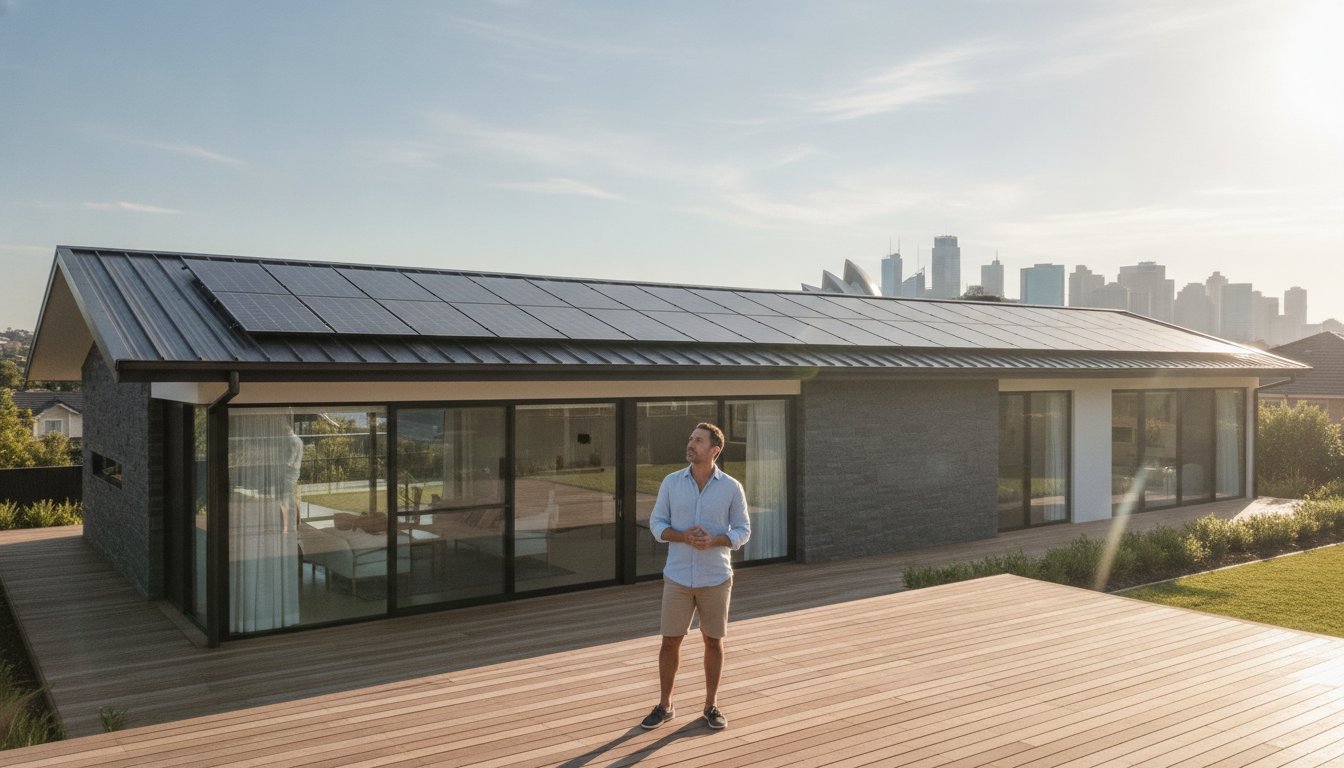
No two Sydney homes are identical, which is why we avoid generic solutions. We use high-resolution aerial imagery to map your roof’s unique geometry, identifying subtle shading patterns from neighbouring trees or multi-storey buildings that could impact your yield. This data-driven approach is particularly valuable for heritage homes or complex architectural builds where panel placement must be balanced with aesthetic considerations. Whether you’re in a terrace in Paddington or a modern home in the Hills District, our designs are tailored to your specific environment to ensure your 10kW system meets its performance targets throughout the year.
If you’re ready to move beyond theoretical averages and discover exactly how much does a 10kw solar system produce in Sydney for your specific address, our team is here to help. We provide a detailed analysis of your property’s unique solar potential, accounting for orientation, shading, and your future energy needs. Request a Sydney-specific 10kW solar quote from Sky High Solar today.
Securing Your Energy Independence in Sydney
Transitioning to a 10kW array is a strategic move toward long-term energy security. We’ve explored how 10kW serves as the ideal foundation for modern electrification, providing the 38kWh to 42kWh daily surplus needed to power both a household and an electric vehicle. By prioritising self-consumption and investing in high-tier components like Enphase microinverters or the FOX ESS CQ7 battery, you effectively insulate your home from rising grid costs. Understanding exactly how much does a 10kw solar system produce in Sydney allows you to move past theoretical estimates and build a system that delivers genuine financial returns.
As specialists in 10kW+ high-yield systems and authorised Enphase and Tesla installers, our Sydney-based licensed electricians ensure your array is engineered for maximum durability. We handle the technical complexities, from switchboard upgrades to custom roof mapping, so you can enjoy a seamless transition to clean power. Get a Free 10kW Solar Production Estimate for Your Sydney Home today and take the first step toward a more sustainable, self-sufficient future. It’s time to turn your roof into a high-performance asset that works as hard as you do.
Frequently Asked Questions
How much roof space do I need for a 10kW solar system in Sydney?
You generally need between 50 and 65 square metres of clear roof space for a system of this size. Modern 2026 panels are typically rated between 440W and 500W, meaning your array will consist of roughly 20 to 23 panels. The exact area depends on your roof’s layout and any obstacles like vents or chimneys. We also account for the mandatory walking paths required by Australian safety standards during the design phase.
Will a 10kW solar system completely eliminate my Sydney electricity bill?
It can significantly reduce or even zero out your usage charges, but you’ll still receive a bill for daily supply charges. To eliminate a bill entirely, your solar credits from exported energy must outweigh these fixed costs. While 10kW provides ample power, achieving a true $0 balance usually requires a battery to cover evening usage and a high level of self-consumption during daylight hours to avoid buying grid power.
Is a 10kW system too big for a standard Sydney residential connection?
No, a 10kW system is becoming the new standard for Sydney homes, though it requires approval from providers like Ausgrid or Endeavour Energy. Most single-phase homes are limited to a 5kW inverter export. We manage this by installing a 10kW array with export limiting. This allows you to use the full 10kW of power inside your home while ensuring you don’t send more than 5kW back to the grid.
How many panels are in a 10kW solar system using modern 2026 technology?
You can expect to have between 20 and 24 panels installed. With 2026 N-type technology, individual panel ratings often sit between 415W and 500W. This higher efficiency means you need fewer panels than in previous years to reach your target capacity. This is a major factor when calculating how much does a 10kw solar system produce in Sydney, as these high-efficiency modules perform better during the early morning and late arvo.
Can I add a battery to my 10kW system later if I install it now?
Yes, you can add storage later, but it’s easier if you choose a ‘battery-ready’ hybrid inverter from the start. Systems using the GoodWe ET G2 or FOXESS Three Phase hybrid inverters are designed for seamless battery integration down the track. If you install a standard string inverter now, you’ll need an AC-coupled battery solution later. This involves adding a separate battery inverter to your existing setup, which is a slightly more complex process.
What happens to my 10kW system’s production on a rainy Sydney day?
Production will drop to roughly 10% to 25% of its clear-sky potential. On a very dark, rainy day, your 10kW array might only produce 5kWh to 10kWh total. However, modern panels are designed to capture diffuse light, so they never stop generating entirely. This is why sizing up to 10kW is so beneficial. Even in poor weather, you’ll still generate more usable power than a smaller 6.6kW system would provide.
Do I need a three-phase power connection for a 10kW solar system in NSW?
It isn’t strictly mandatory, but it’s highly recommended for systems of this scale. Three-phase power allows for a larger inverter and better balance across your home’s electrical load. While we can install 10kW on a single-phase connection using export limiting, moving to three-phase provides more flexibility for future additions. This includes high-speed EV chargers or multiple batteries without hitting the grid-imposed capacity ceilings that often affect single-phase properties.
How much does a 10kW solar system typically save a Sydney family per year?
A typical Sydney family can save between $1,800 and $3,000 annually on their energy costs. These savings depend heavily on how much solar energy you consume at home versus how much you export. When you look at how much does a 10kw solar system produce in Sydney, the greatest financial wins come from running high-draw appliances like pool pumps and ducted air conditioning during the middle of the day when production peaks.