

 Sydney
 0452 243 240
Blog
Questions to Ask a Solar Installation Company: The 2026 Sydney Homeowner’s Checklist


If you think choosing a solar installer in 2026 is simply about finding the lowest price per kilowatt, you might be overlooking the risks that lead to long term technical frustration. Knowing the specific questions to ask a solar installation company is the only way to avoid being hit with unexpected costs for a switchboard upgrade that wasn’t mentioned in the first quote. With some Sydney suburbs seeing solar penetration rates over 70 per cent, the market is crowded, and you need a reliable way to filter the genuine specialists from the fly-by-night operators.
We understand that the technical jargon around VPP incentives and premium hardware like FOX ESS or SigenStor can feel like a minefield. This guide provides a strategic vetting process to ensure you’re partnering with a team that understands the specific requirements of the Sydney grid. We’ll show you how to confirm technical competence so you can secure a high performance system that delivers real value for your home or business.
You’ll gain a clear framework for evaluating hardware recommendations and identifying the hidden details in a contract. From navigating the 2026 federal battery incentives to ensuring your home is ready for integrated EV charging, this checklist prepares you for a seamless and rewarding transition to energy independence.
Key Takeaways
- Learn the critical questions to ask a solar installation company to distinguish licensed electrical contractors from ‘solar cowboys’ who might disappear before your warranty expires.
- Understand the technical differences between 6.6kW and 10kW arrays to ensure your system is properly sized for your household’s unique energy profile.
- Identify why a switchboard upgrade is a vital safety requirement for modern battery integration and how to secure your Certificate of Compliance for Electrical Work (CCEW).
- Clarify the distinction between product and performance warranties while ensuring your quote correctly applies the federal STC discount for an immediate upfront saving.
- Future-proof your investment by choosing ‘battery-ready’ hardware and exploring integrated EV charging solutions like SigenStor to simplify your home’s energy transition.
Vetting the Company: Credentials and Local Sydney Presence
Choosing the right partner for your energy transition requires more than a glance at a glossy brochure. To protect your investment, your list of questions to ask a solar installation company must begin with their credentials and commitment to the Sydney region. While many businesses operate as mere sales offices, a true specialist provides local accountability and technical depth. You need to know that the team you hire today will still be around to support your system in a decade.
Accreditation vs. Experience
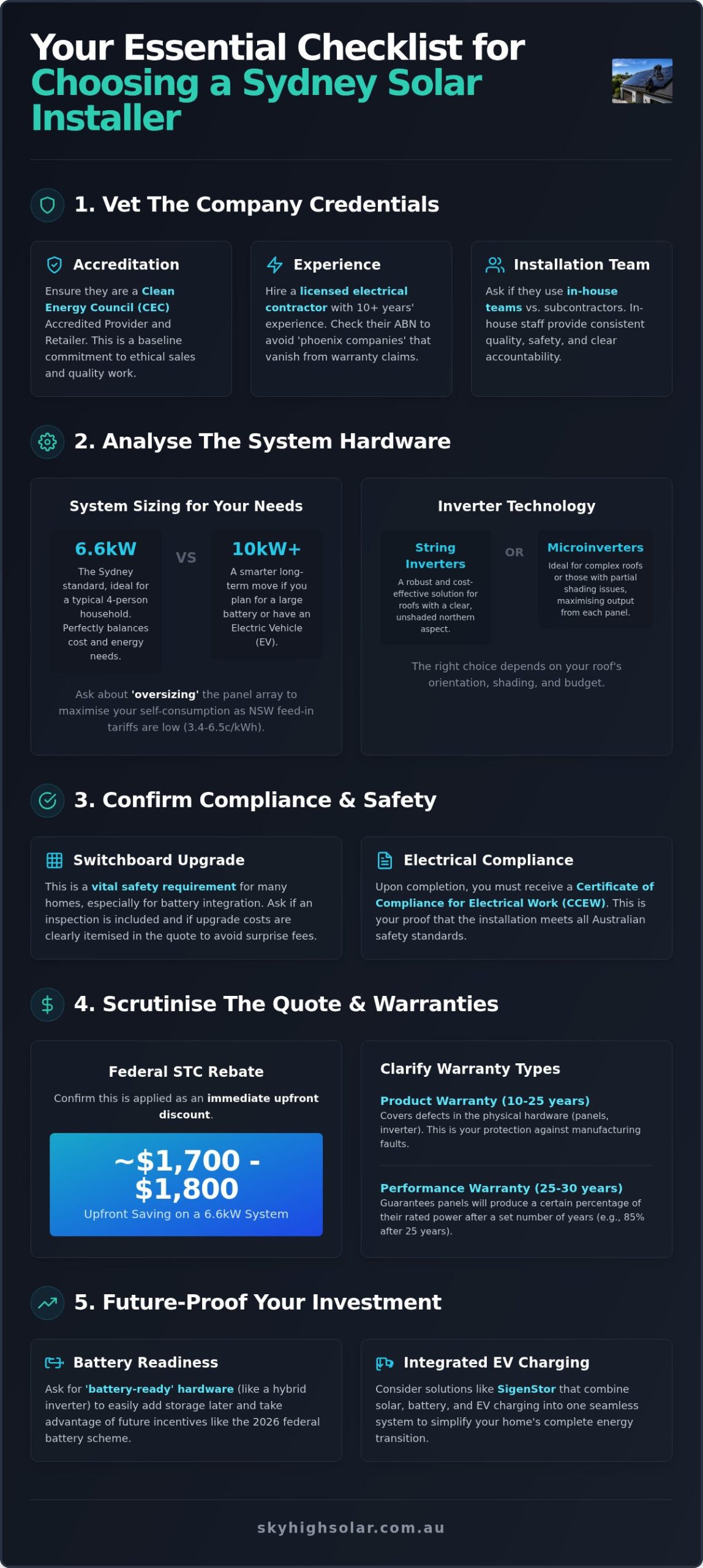
Ensure the business is a Clean Energy Council (CEC) Accredited Provider and Retailer. This isn’t just a badge; it’s a commitment to ethical sales and high-quality installations. However, you should look deeper than the basic certification. A ‘solar ticket’ is a baseline, but hiring a licensed electrical contractor with over a decade of experience ensures your system integrates safely with your home’s existing wiring. While understanding Solar panel technology is essential, knowing how to navigate the specific engineering requirements of the Ausgrid or Endeavour Energy networks is what prevents costly delays. Check how long they’ve traded under the same ABN. This helps you avoid ‘phoenix companies’ that disappear only to reappear under a new name when warranty claims start rolling in.
The ‘In-House’ Advantage
One of the most vital questions to ask a solar installation company is whether they use in-house teams or third-party subcontractors. Subcontracting is often where ‘solar cowboys’ thrive, cutting corners to meet tight profit margins. In-house teams, like those at Sky High Solar and Electrical, provide a consistent standard of safety and workmanship. When the same company that sells you the system also installs and services it, you gain a clear line of accountability. Ask for recent references from your specific Sydney suburb. Whether you’re in Schofields, where solar adoption is high, or in the Inner West, local examples prove the company understands your neighbourhood’s roof types and grid constraints.
Finally, confirm where their physical office and service centre is located. If a component fails three years from now, you need to know who to call for local servicing. A Sydney-based presence means they’re rooted in the community and ready to support your 6.6kW or 10kW system for the long haul. This proximity ensures that peace of mind isn’t just a promise, but a practical reality of your energy future.
System Specification: Choosing the Right Hardware for Your Roof
Hardware selection is the engine room of your energy independence. While many providers offer generic packages, the most important questions to ask a solar installation company involve the specific reasoning behind their hardware choices. Sydney’s coastal environment and sweltering summers demand components that offer more than just a low price tag; they require durability and intelligent design to ensure your system performs for decades.
Sizing for the Future
The 6.6kW solar system has become the residential standard across Sydney for good reason. It perfectly balances the upfront federal STC incentive, which provides approximately $1,700 to $1,800 in discounts, with the energy needs of a typical four-person household. However, if you’re planning to install a large storage battery like the FOX ESS CQ7 or you’ve recently transitioned to an electric vehicle, stepping up to a 10kW array is often the smarter long-term move.
Ask your installer about ‘oversizing’ your system. By installing a larger capacity of panels than your inverter’s nominal rating, you can ensure your system reaches peak production earlier in the morning and maintains it later into the afternoon. This approach maximizes self-consumption, which is vital since feed-in tariffs in NSW now sit between 3.4 and 6.5 cents per kilowatt-hour, making it far more profitable to use your own power than to sell it back to the grid.
Inverter Technology: String vs. Micro
Your inverter choice determines how your system handles challenges like shading or high heat. A traditional string inverter, such as the GoodWe ET G2, is a robust and cost-effective solution for roofs with clear, unshaded northern aspects. However, if your Sydney home suffers from partial shading from trees or neighbouring buildings, Enphase microinverters are often superior. Because they operate independently at the panel level, a single shaded panel won’t drag down the performance of the entire array.
When vetting hardware, consider the local climate. Sydney’s coastal suburbs require panels and mounting gear with high salt-mist corrosion resistance. High temperatures can also degrade panel efficiency. Seek out hardware with a low temperature coefficient to ensure production remains stable even when the mercury hits 40 degrees in the western suburbs. If you want to ensure your roof is equipped with the most resilient technology, you can request a technical hardware review from our specialist team. We focus on premium, fail-safe integration that prioritises long-term reliability over short-term savings.
Compliance and Safety: The Electrical Side of Solar
One of the most overlooked questions to ask a solar installation company involves the state of your existing electrical infrastructure. A solar system is not just a set of panels on a roof; it’s a significant power plant integrated into your home’s wiring. Ensuring that this integration is safe, compliant, and durable requires a level of expertise that goes beyond basic panel mounting. You need the certainty that your home can handle the new energy load without compromising safety.
The Hidden Cost of Switchboard Upgrades
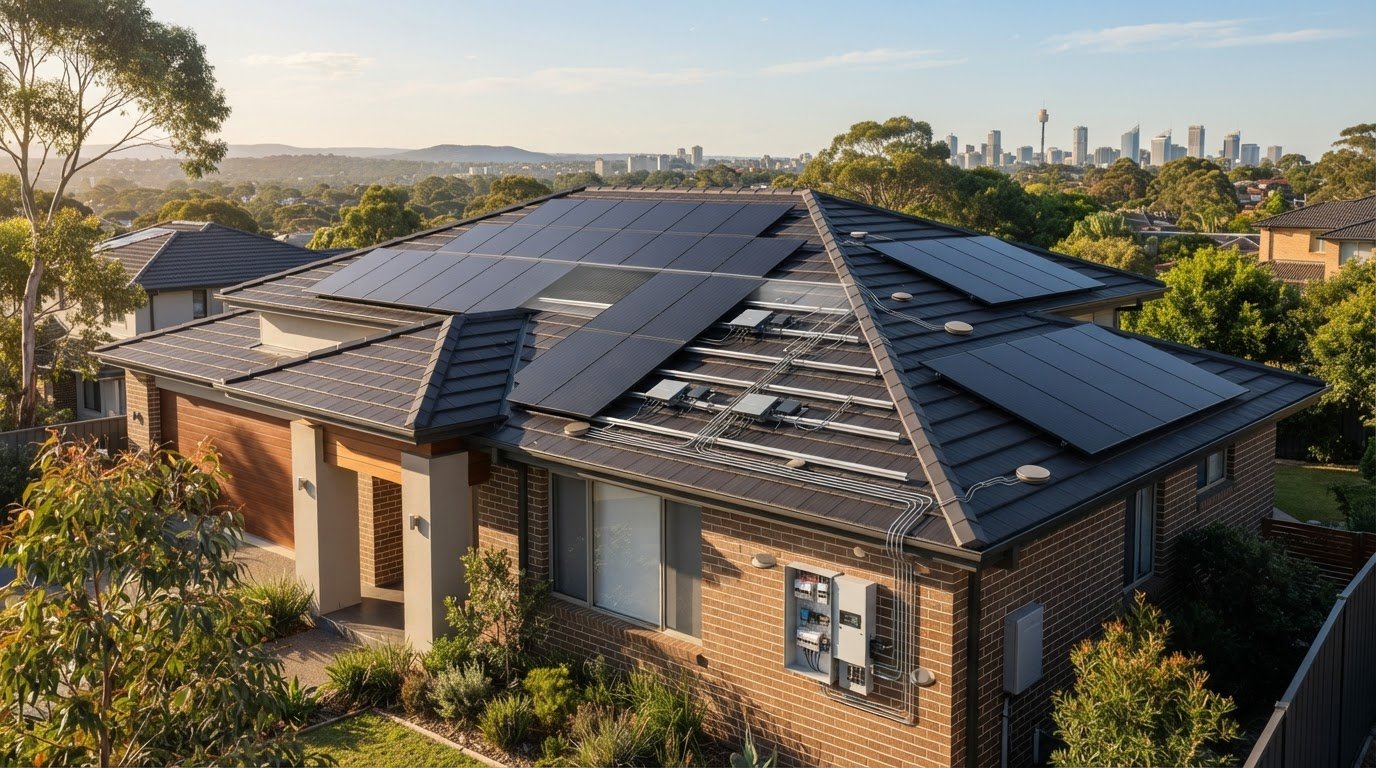
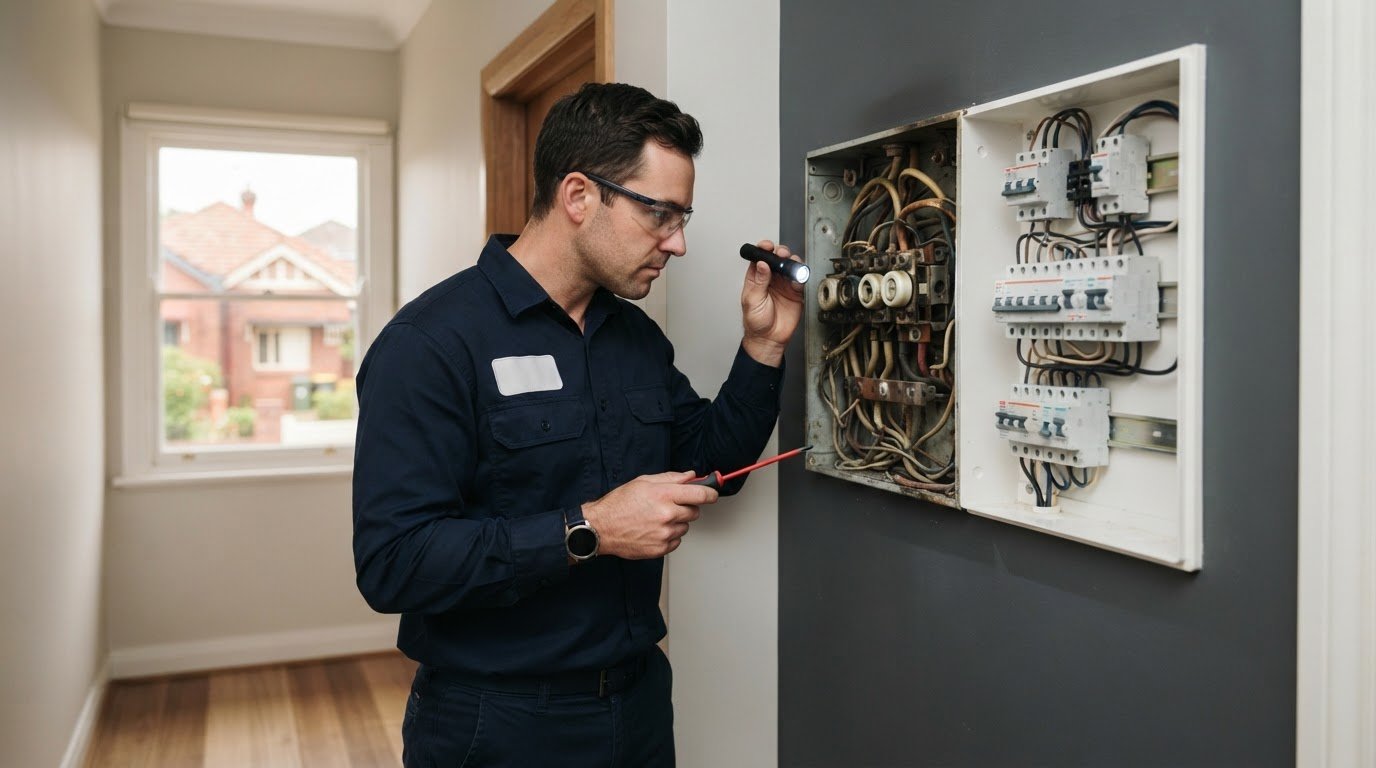
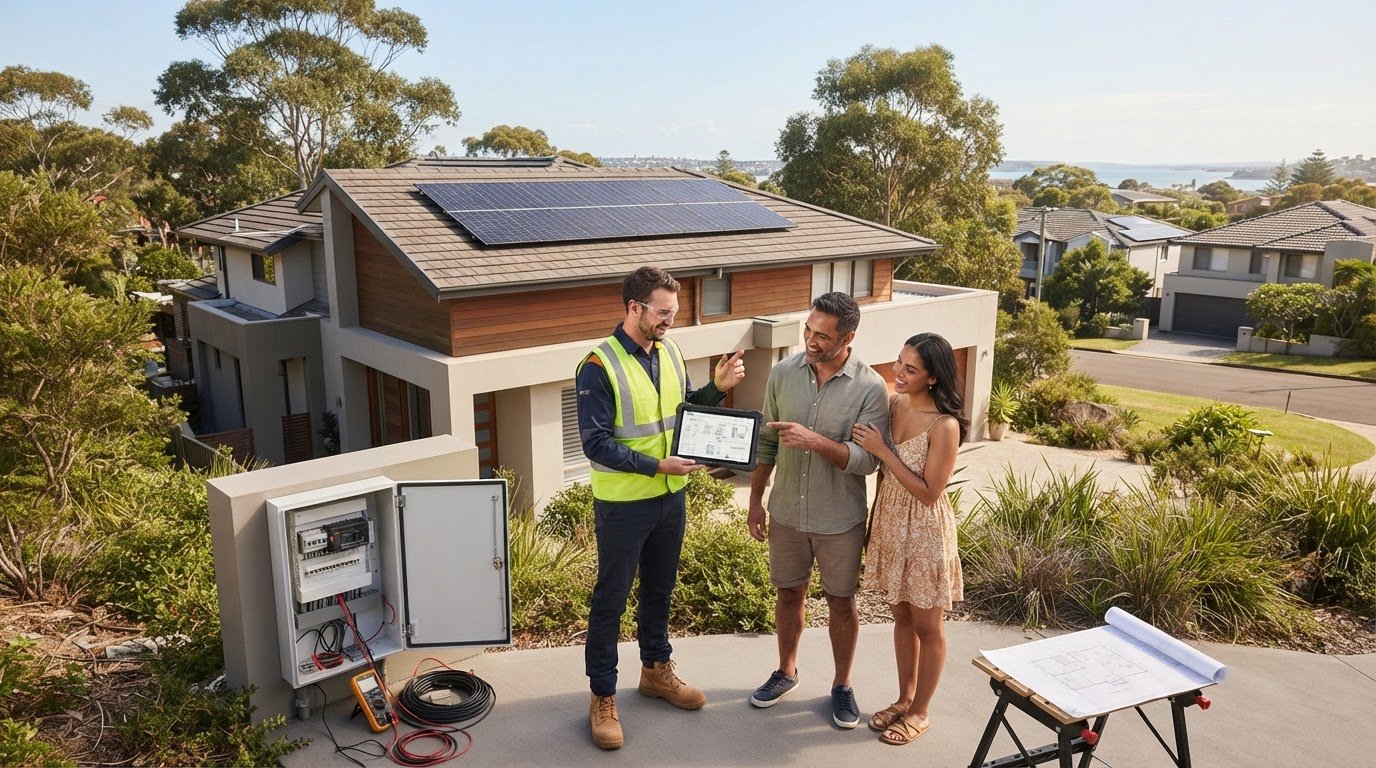
Many older Sydney homes, particularly those in established suburbs, feature original switchboards that are not equipped for modern energy demands. When you add a solar array or a high-voltage battery like the FOX ESS CQ7, your switchboard must be able to manage bidirectional power flow and provide modern circuit protection. Some installers might skip recommending a refresh to keep their initial quote low, but this often leads to safety risks or system failures later.
Integrated electrical services are a vital component of any high-quality installation. When preparing your list of questions to ask a solar installation company, specifically ask for their electrical contractor licence number. A qualified specialist will provide a Certificate of Compliance for Electrical Work (CCEW) once the job is finished. This document is your legal proof that the installation meets the latest Australian Standards, including AS/NZS 3000 and the updated inverter standards (AS/NZS 4777.2:2020).
Roof Integrity and Mounting
Sydney’s weather is famously unpredictable. From intense summer heatwaves to severe storms, your roof takes a beating. It’s essential to ask about the specific mounting gear being used. Low-quality racking can lead to corrosion or, worse, roof leaks. Professional installers use ‘flashing’ rather than simple ’tile grinding’ to ensure a watertight seal. Tile grinding, while faster, can often lead to cracked tiles during heavy rain, potentially voiding your existing roof warranty.
Using high-quality, corrosion-resistant racking systems is a non-negotiable requirement for Sydney’s coastal conditions. Ensure your installer follows AS/NZS 5033 for the installation of photovoltaic arrays. This standard governs everything from the spacing of the rails to the way the cables are secured. By focusing on these technical details, you ensure your system remains a stable and productive asset for decades to come.
Understanding the Numbers: Warranties, Rebates, and ROI
Navigating the financial side of a transition to renewables requires absolute transparency. One of the most critical questions to ask a solar installation company is how they apply the federal Small-scale Technology Certificate (STC) discount. For a standard 6.6kW system in Sydney, this provides an upfront discount of approximately $1,700 to $1,800. You should ensure this is clearly deducted from the quote rather than promised as a future rebate. With Sydney electricity costs averaging 36.73 cents per kilowatt-hour, a correctly sized system typically achieves a payback period of between 4.3 and 5.3 years.
Navigating 2026 NSW Rebates
The 2026 landscape for solar battery storage has evolved significantly. Homeowners can now access the federal Cheaper Home Batteries Program, which offers a discount of approximately $250 per usable kWh of storage. This can be coupled with the NSW Virtual Power Plant (VPP) incentive, providing up to $1,500 for connecting your battery to a participating network. Ask if your installer is an ‘Approved Seller’ for these government schemes. Without this status, you may find yourself ineligible for thousands of dollars in incentives. Keeping a clear paperwork trail of your Certificate of Compliance is essential for these claims.
Warranty Realities
Distinguishing between a ‘product warranty’ and a ‘performance warranty’ is vital for long term peace of mind. A performance warranty covers the energy output of the panels over 25 years, but the product warranty protects you against physical defects in the hardware itself. We recommend looking for an installation warranty of at least 10 years to cover the workmanship of the install. A 25-year panel guarantee offers little comfort if the installation company goes bust and has no local Sydney support. Always verify that warranties are backed by Australian-based offices to ensure a steady hand is available if you ever need a service call. If you’re ready to secure a system backed by a decade of local electrical expertise, you can request a detailed solar quote from our Sydney team today.
Future-Proofing Your Home: Batteries and EV Readiness
Solar isn’t a static product. It’s a dynamic energy ecosystem that should grow alongside your family’s needs. One of the most forward-thinking questions to ask a solar installation company is how their proposed system will handle future additions like a storage battery or an electric vehicle (EV). A system that’s ‘battery-ready’ today saves you from expensive hardware replacements tomorrow. You should also ensure your quote includes smart monitoring, allowing you to track production and household consumption in real-time via a smartphone app. This data is the key to maximising your return on investment.
The Rise of Integrated Energy Hubs
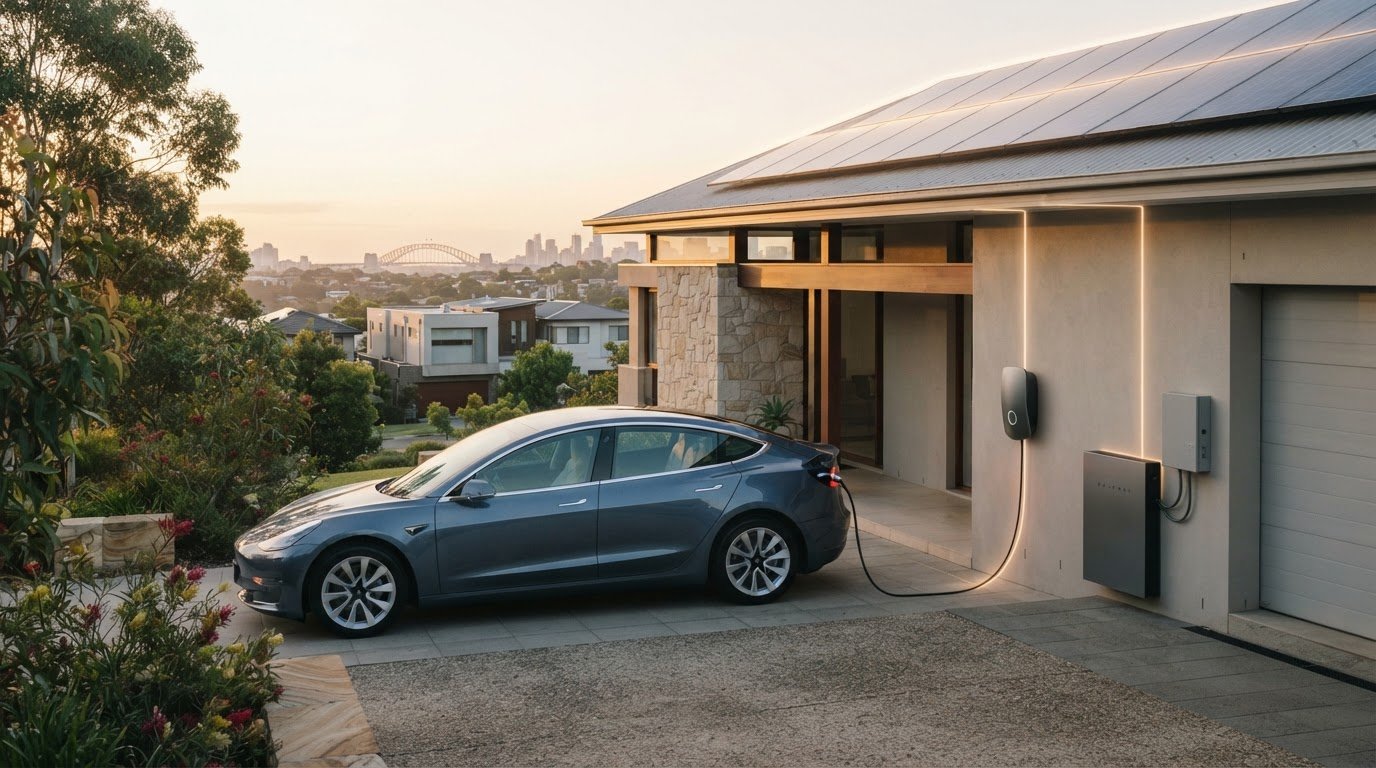
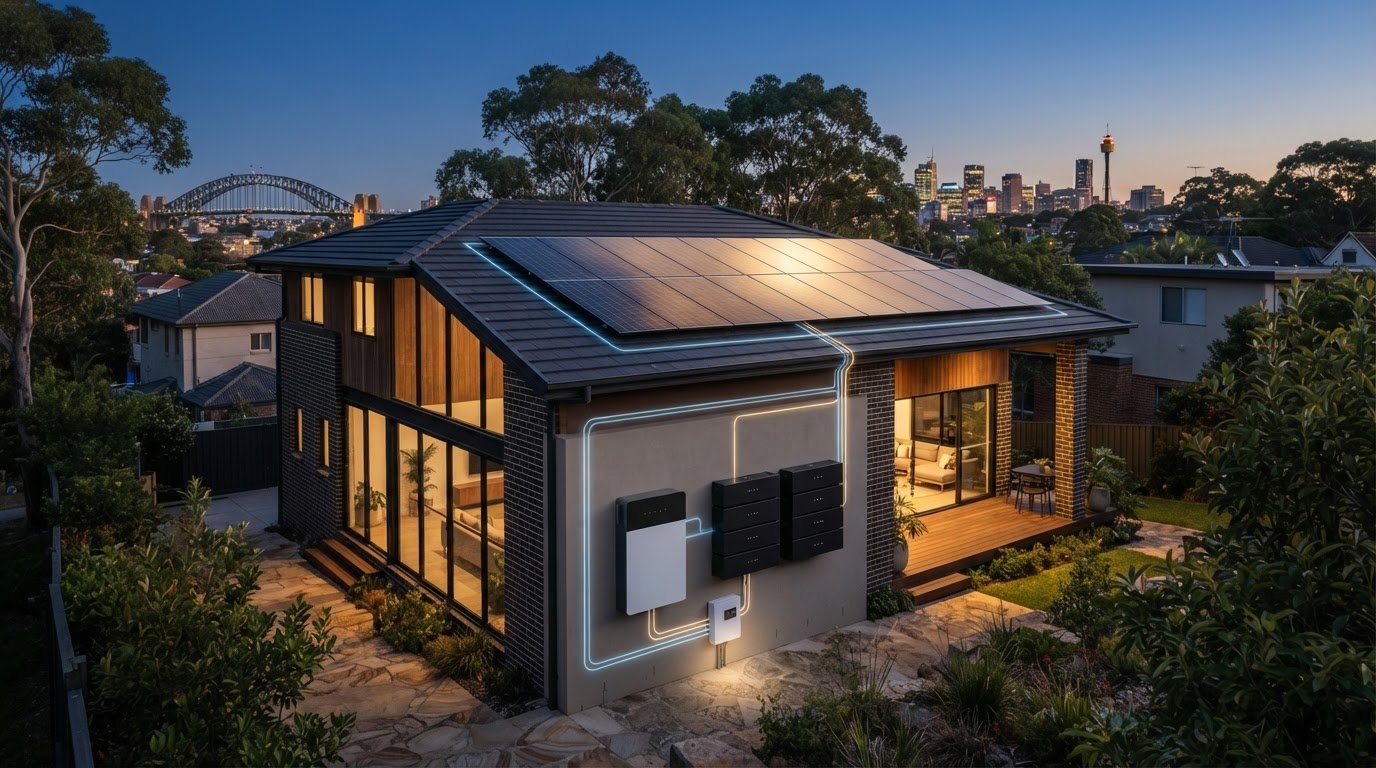
Traditional solar setups often treat the inverter and battery as separate, sometimes clunky components. However, the SigenStor integrated energy hub is revolutionising this approach by combining the inverter, battery storage, and EV charging into a single, modular stack. This ‘5-in-one’ solution is particularly effective for Sydney homeowners who want a clean, space-saving installation.
When discussing battery options like the FOX ESS CQ7 or Tesla Powerwall, ask about ‘Blackout Protection’. Many people don’t realise that standard solar systems shut down during a grid outage for safety reasons. To keep your lights on when the Sydney grid falters, you need a system with ‘islanding’ capabilities. Additionally, ask if the system is DC-coupled or AC-coupled. DC-coupled systems, like those featured in modern integrated hubs, are generally more efficient because they avoid multiple power conversions, ensuring more of your harvested sunlight actually makes it into your battery.
EV Charging Integration
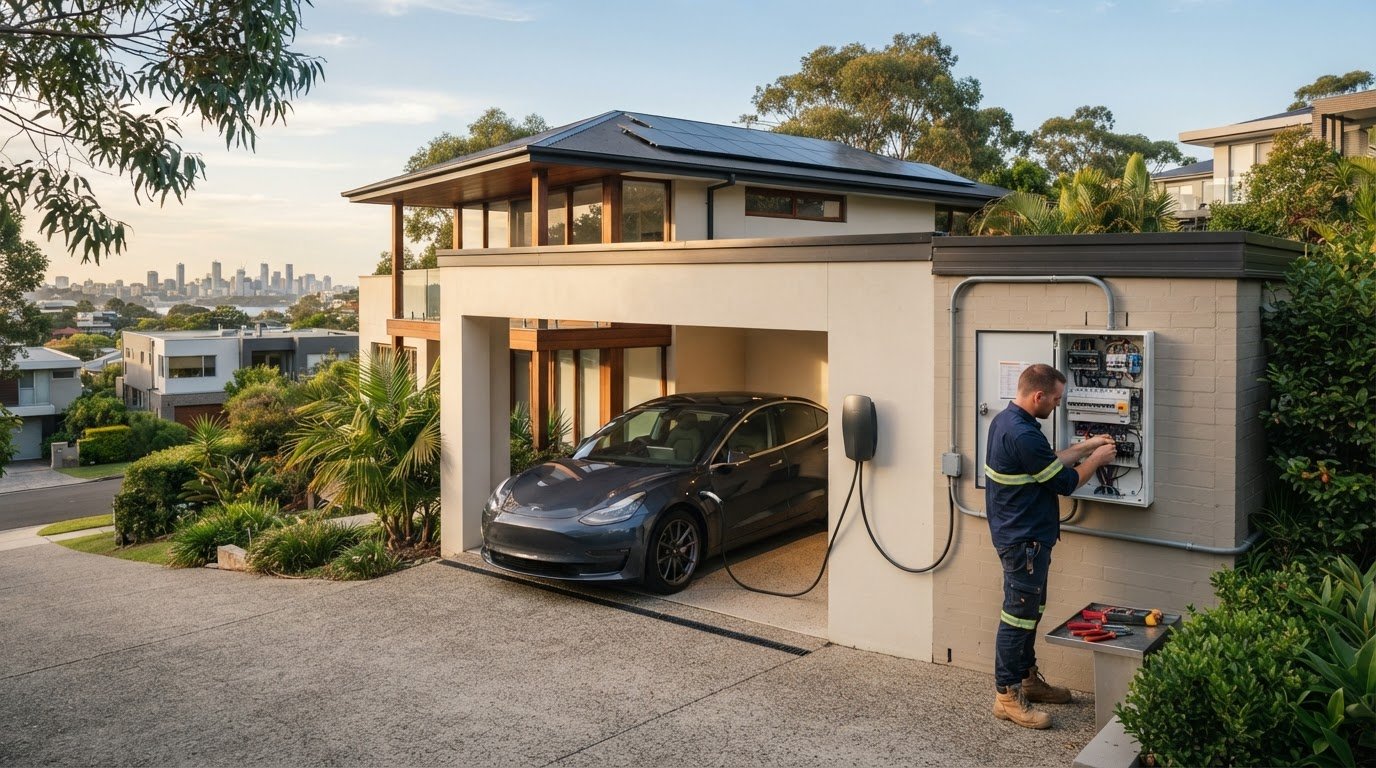
With electric vehicle adoption accelerating across NSW, integrating a charger now is a strategic move. Installing an EV charger at the same time as your solar panels can save you significant labour costs, as the electrical work and switchboard preparations can be handled in a single visit. Ask your installer if the system supports ‘Solar Only’ charging modes. This intelligent feature ensures your car only charges when you have excess solar production, effectively allowing you to drive on sunshine for free.
Because EV chargers draw significant current, having a licensed electrician manage the installation is non-negotiable. They will ensure your home’s total load is balanced and that your switchboard, which we discussed earlier, is capable of handling the sustained high-power demand. By addressing these technical details during the vetting process, you’re not just buying panels; you’re building a resilient, high-tier energy hub that’s ready for whatever the next decade brings.
Securing Your Energy Independence with Confidence
Transitioning to a smarter energy footprint is a long-term commitment that requires technical precision and local accountability. By focusing on licensed electrical expertise and hardware that prioritises longevity, you move beyond the risks of ‘solar cowboys’ toward a system that adds genuine value to your Sydney property. Armed with this comprehensive checklist of questions to ask a solar installation company, you now have the clarity to navigate the 2026 rebate landscape and secure a high-performance solution that integrates perfectly with your lifestyle.
Whether you’re looking for a robust 6.6kW residential array or a sophisticated energy hub for your business, professional guidance makes the journey simple. At Sky High Solar and Electrical, we combine over 10 years of local experience with our status as authorised SigenStor and FOX ESS partners to deliver systems that stand the test of time. We’re dedicated to removing complexity and providing the steady hand you need in a rapidly evolving industry.
Get a transparent, expert solar quote for your Sydney home from Sky High Solar and Electrical today and take control of your energy future. We look forward to helping you build a more resilient and efficient home.
Frequently Asked Questions
What is the most important question to ask a solar installer?
The most important question to ask is whether the company holds a full electrical contractor licence and employs their own in-house installers. This is a vital part of the questions to ask a solar installation company because it ensures your system meets strict Australian standards. Hiring a licensed electrician provides the technical expertise to handle complex tasks like switchboard upgrades, guaranteeing accountability and long term system safety for your home.
How do I know if a solar quote is too good to be true?
A solar quote is often too good to be true if it omits essential electrical work or uses low tier, generic components. If a price is significantly lower than the market average for premium brands like Enphase or Tesla, the installer might be cutting corners on mounting gear or skipping necessary safety certificates. Always check if the quote includes the federal STC discount upfront and accounts for your specific switchboard requirements.
Should I ask about the specific brand of solar panels?
You should definitely ask about the specific brands of panels and inverters being recommended. High performance hardware from partners like FOX ESS or GoodWe is designed to withstand Sydney’s high temperatures and coastal salt mist. Understanding the brand allows you to verify the manufacturer’s Australian presence and the validity of their performance warranties. Premium hardware often includes smarter monitoring features that help you track energy production more accurately via your phone.
Is a 6.6kW system still enough for a Sydney home in 2026?
A 6.6kW system remains the residential standard for many Sydney households, but its suitability depends on your future energy plans. If you intend to install a large storage battery or an EV charger, stepping up to a 10kW system is often more efficient. While a 6.6kW array covers typical daily usage, larger systems provide the excess energy needed to charge a FOX ESS battery or power an electric vehicle overnight.
Do I need to ask about my roof type before getting a quote?
You must mention your roof type, whether it’s terracotta tile, klip-lok, or corrugated iron, as this dictates the mounting equipment required. Different surfaces need specific racking systems to remain watertight during Sydney’s intense storms. Informing your installer about your roof material and pitch early on ensures your quote is accurate and that the team uses the correct flashing techniques to prevent leaks and protect your existing roof warranty.
What happens if my solar installation company goes out of business?
If your installer ceases trading, your hardware is still covered by the manufacturer’s product and performance warranties. This is why choosing established brands like Enphase or Tesla is vital; they have a strong Australian presence to handle claims directly. For physical repairs or maintenance, you can engage a specialist like Sky High Solar and Electrical for professional solar system servicing to ensure your array remains safe and productive even if the original installer is gone.
Can I add a battery to my solar system later?
You can add a battery later, provided your system is designed with future expansion in mind. Choosing a hybrid inverter, such as the GoodWe ET G2, makes adding a FOX ESS storage battery a straightforward process. If you have a standard string system, you may need an AC-coupled battery like the Tesla Powerwall. It’s often more cost effective to install an integrated solution like SigenStor from the beginning to save on future labour costs.
How do I verify a solar company’s CEC accreditation?
You can verify a company’s status by searching the Clean Energy Council (CEC) website for their list of Accredited Providers and Retailers. This certification is a core part of the questions to ask a solar installation company because it confirms their commitment to ethical sales and technical excellence. Always cross reference the company name and ABN to ensure you’re dealing with a legitimate, accredited firm that qualifies for federal incentives.