

 Sydney
 0452 243 240
Blog
Council Approval for Solar Panels in NSW: What Sydney Homeowners Need to Know

Could your rooftop solar project avoid a council development application but still need approval before it can operate? For many Sydney homeowners, council approval for solar panels NSW isn’t a simple yes-or-no question. A standard rooftop system may qualify as exempt development, but the answer depends on the installation and your property.
It’s understandable to be unsure, especially if your home is heritage-listed, in a conservation area or part of a strata scheme. Planning approval is also separate from electrical safety requirements and approval to connect your system to the local electricity network.
This guide explains the NSW planning pathways that may apply, the property details to check and how to prepare before work begins. You’ll also learn how planning, electrical and network requirements fit together, so you can plan an installation with clear professional support from Sky High Solar and Electrical in Sydney and surrounding areas.
Key Takeaways
- Whether council approval for solar panels NSW applies depends on your property, proposed system and current planning controls. Some installations may follow an exempt or complying pathway.
- Heritage status and conservation-area controls can affect planning checks. Strata approval is a separate owners corporation process.
- Before installation, identify your property, review current NSW planning guidance and local council information, then establish the relevant pathway.
- Once you understand the planning requirements, Sky High Solar and Electrical can support consultation, design, installation and after-care, drawing on licensed electrical experience since 2013.
Do solar panels need council approval in NSW?
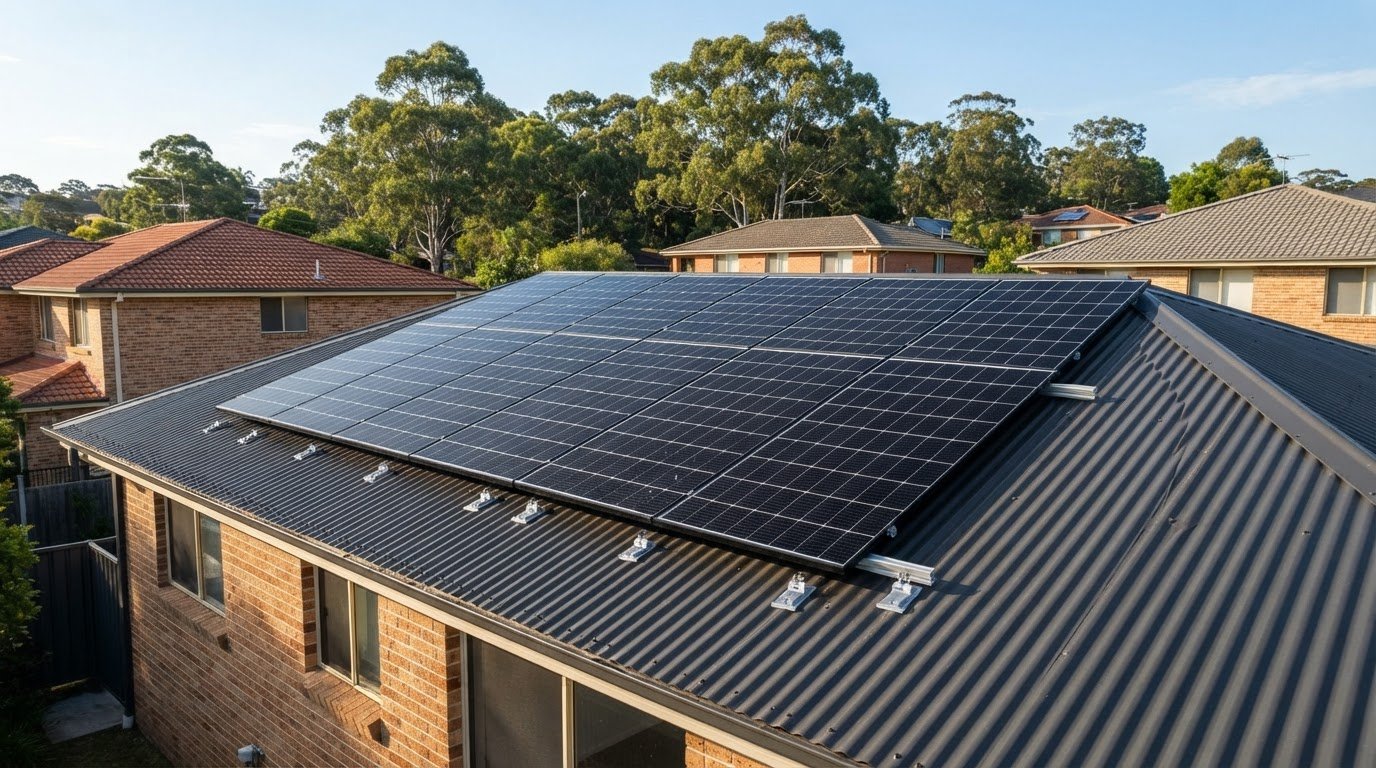
Sometimes, but there isn’t one approval rule for every Sydney home. A rooftop system may follow an exempt or complying development pathway when it meets the current requirements. If the property or proposed work falls outside those criteria, another planning assessment may be needed.
Solar planning approval depends on the property and proposal, not simply on whether you’re installing panels. The site, system design and applicable NSW planning controls all matter. A neighbour’s experience, or a general statement that rooftop solar is exempt, can’t confirm the pathway for your home.
Solar is now a familiar part of Australian homes, and the broader uptake of rooftop solar in Australia provides useful context. Its popularity doesn’t remove the need to check planning requirements for your specific site.
What do exempt and complying development mean?
Exempt development is work that can proceed without a development application when it meets the relevant planning criteria. It isn’t automatic permission for every property or installation. The applicable controls and site conditions still need to be considered.
Complying development is a formal planning pathway for proposals that satisfy defined criteria. It requires the relevant assessment and approval process, rather than relying on an assumption that the work is exempt. The criteria differ between pathways, so confirm the current NSW requirements before installation.
As a practical starting point, check whether your property has features that may affect its planning controls and whether the proposed system meets the conditions for the pathway you’re considering. The answer to “Do I need council approval for solar panels NSW?” should come from these checks, not a blanket yes or no.
Planning is only one part of a compliant project. Electrical safety and connection to the electricity network have separate requirements, which need to be addressed alongside the planning pathway before the system is installed and commissioned.
When can a Sydney solar installation need extra planning checks?
Some properties and system designs need closer review before you settle on a planning pathway. Heritage controls, strata arrangements, installation location and system scale can all affect what to investigate. These factors don’t automatically rule out solar, but they do mean a standard rooftop assumption may not fit your project.
How can heritage status change the planning pathway?
Check whether the property is a heritage item or falls within a heritage conservation area, and whether local planning controls affect the proposed panel location. Visibility from the street or changes to a significant roof may be relevant, but the outcome depends on the property and current requirements. Review current NSW planning guidance and relevant council information before work starts. Heritage status doesn’t automatically mean panels are prohibited or exempt.
What should strata owners check before installing panels?
For strata properties, separate the planning question from the owners corporation process. If the proposed work affects common property, review the scheme’s approval process, records and by-laws. Then check the planning requirements for the building and proposed system. Neither owners corporation approval nor a planning pathway replaces the other.
Installation type matters too. Panels on a home’s roof and a ground-mounted array are different proposals, so don’t assume the same criteria apply to both. Consider the array’s location, scale and relationship to the property, then check the rules that apply to that type of development.
Commercial projects need their own assessment. A larger system for a business or commercial site may involve different planning controls from a residential installation. Confirm the site’s land-use controls and the requirements for the proposed system rather than applying a household pathway by default. These checks help clarify what council approval for solar panels NSW may involve for your project.
Once the site and installation type are clear, professional solar project design can help align the proposed system with the property’s requirements.
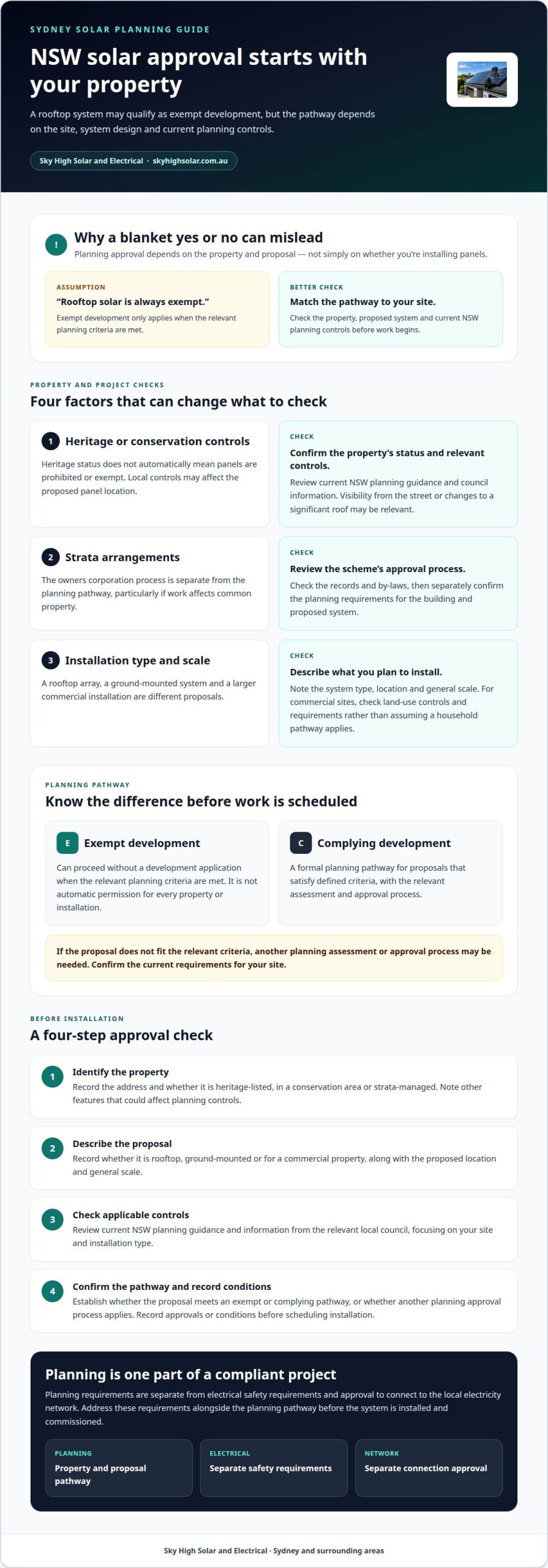
How to check your NSW solar approval pathway before installation
To work out whether council approval for solar panels NSW may apply to your project, follow a clear sequence. Keep notes as you go, so you can track the planning decision and next installation steps.
- Identify the property. Record the address and whether it’s heritage-listed, in a conservation area or strata-managed. Note any other property features that could affect planning controls.
- Describe the proposal. Record whether the system is rooftop, ground-mounted or for a commercial property, along with the proposed location and general scale.
- Check applicable controls. Review current NSW planning guidance and information from the relevant local council. Focus on requirements for your site and installation type.
- Confirm the pathway, then plan the work. Establish whether the proposal meets an exempt or complying pathway, or whether another planning approval process applies. Record any approvals or conditions before scheduling installation.
A pre-installation checklist for homeowners
Before moving ahead, make sure your notes cover the property’s heritage or conservation status, any strata process and the type of system proposed. Save copies or references to the current planning guidance and relevant council information you relied on. If the controls or pathway aren’t clear, resolve that uncertainty before work begins.
Planning approval is not the same as electrical compliance
Planning checks address whether and how the proposed development can proceed at that site. Electrical compliance concerns the safety and compliance of the electrical work, while network connection is a separate consideration for a system connected to the grid. The certificate of compliance electrical work (CCEW) documents that electrical work meets Australian safety standards and is legally compliant. It isn’t planning permission and doesn’t replace any planning approval your project requires.
Sky High Solar and Electrical supports projects from consultation and design through installation and after-care, with licensed electrical experience since 2013. Discuss your solar installation once you’ve identified the planning checks your property requires.
Plan a compliant solar installation with Sky High Solar and Electrical
Once you’ve identified the planning pathway that may apply, shape the solar project around your property and its requirements. Consultation, system design, installation and after-care all have a role. A considered design helps align the proposed system with the site, while professional installation and ongoing maintenance support safe, dependable operation.
What professional solar installation support can cover
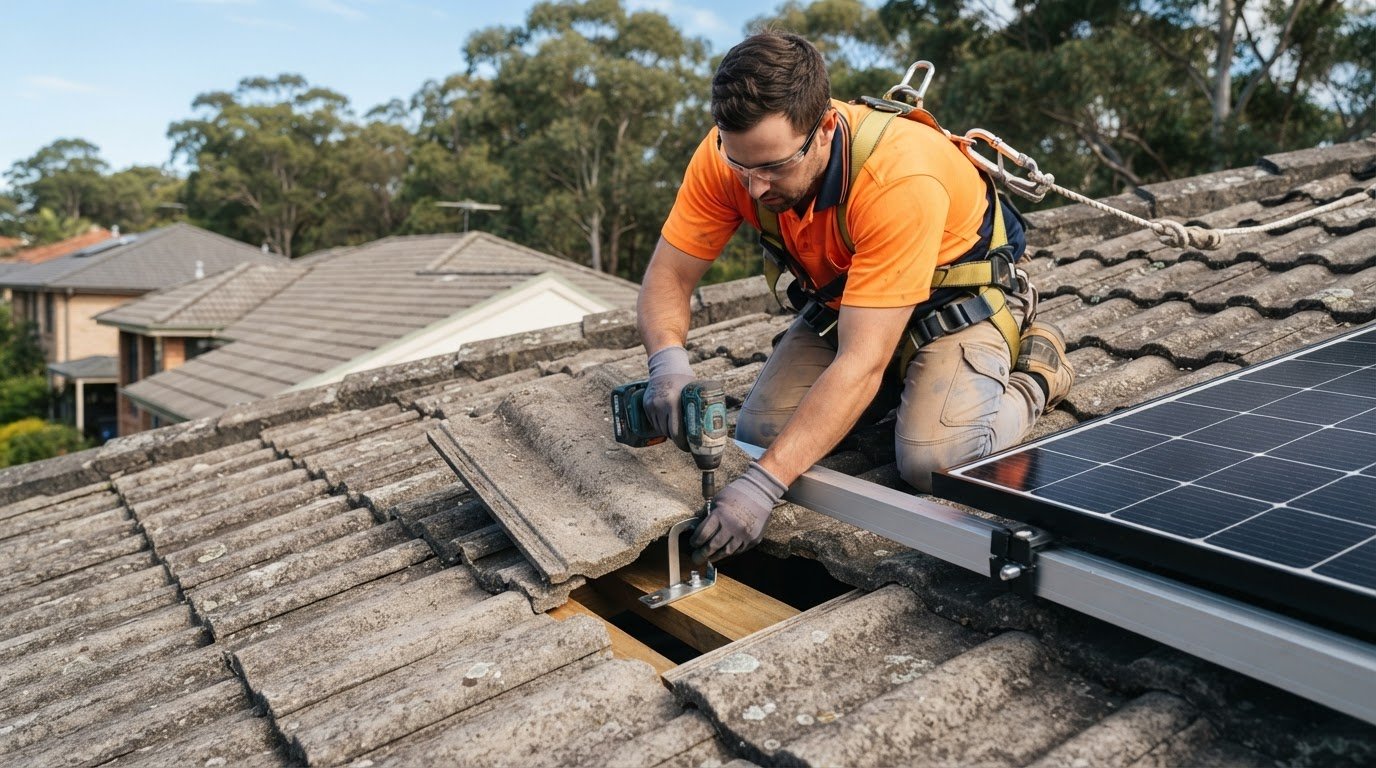
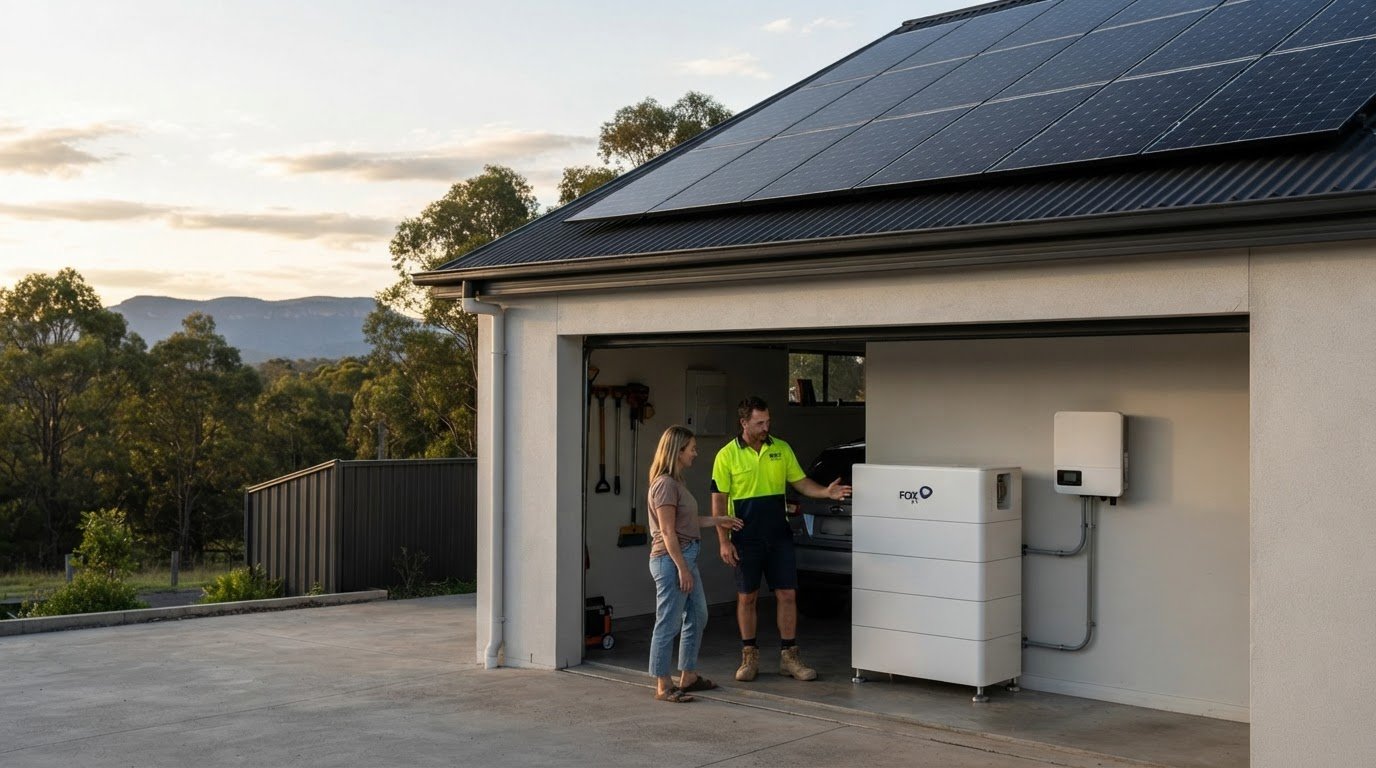
Sky High Solar and Electrical provides consultation, design, residential and commercial solar installation, after-care and professional maintenance. As licensed electrical contractors since 2013, the team brings local electrical experience to projects where planning checks and electrical compliance need to be considered together. Planning remains separate from installation work, and the project must meet the requirements that apply to the property.
Prepare for a solar project in Sydney
Before discussing system design, gather your property address, any planning information you’ve found and notes about heritage status, conservation controls or strata arrangements. Describe your roof or proposed array location and what you want the system to do. For a home, compare your needs with the 6.6kW Solar System Sydney guide when considering system size. For a business, the commercial solar installation guide is a relevant starting point.
Sky High Solar and Electrical serves Penrith, Parramatta, Blue Mountains, Richmond, Liverpool, Sydney Metro, Northern Beaches and surrounding regions. Clear property details make early project discussions more focused. Keep the applicable planning requirements central to the design, and account for electrical work and any required network arrangements as well. Council approval for solar panels NSW is one part of planning a successful installation.
Ready to plan a solar project for your home or business? Discuss your solar installation with Sky High Solar and Electrical and take the next step with practical, compliance-focused support.
Move from planning checks to a considered solar project
Treat your planning pathway as a starting point for project design, not the finish line. As your plans develop, keep the proposed system and your property’s requirements in view. If the design or installation location changes, revisit the relevant planning checks before work proceeds. A considered process can help reduce uncertainty and keep your solar project focused on safety, compliance and long-term value.
Understanding council approval for solar panels NSW gives you a clearer basis for discussing what comes next. Bring your property details and planning research into a practical conversation about a system suited to your home or business. Discuss your solar project with Sky High Solar and Electrical and take the next step with clarity and confidence.
Frequently Asked Questions
Do I need council approval for rooftop solar panels in NSW?
Not always. To check council approval for solar panels NSW for your address, search the NSW Planning Portal Spatial Viewer for planning layers and save the relevant property information. Keep a dated copy of what you reviewed, along with any written guidance from your council. These records give you a useful reference if the proposal or site details change.
Can I install solar panels on a heritage-listed home in NSW?
It may be possible. Before settling on a design, locate the property’s heritage listing entry and note the features identified as significant. Include the proposed panel layout when seeking guidance on the applicable heritage controls. A specific design gives the planning discussion more useful detail than a general description of the property.
Does a strata property need approval for solar panels?
It may. To prepare a useful proposal for your strata scheme, gather the strata plan and relevant by-laws, then document the panel layout, cable routes, inverter position and access needed for future maintenance. These details help the owners corporation assess the practical effects of the work on shared areas and building services as part of its decision-making process.
Is council approval the same as electrical compliance for solar panels?
No. Keep planning records and electrical records together but clearly labelled as separate project documents. Retain any planning correspondence or approval documents, plus the certificate of compliance electrical work (CCEW) issued for the electrical work. If the design changes during installation, update your project file to reflect the final system and retain the applicable documents for future reference.
Can ground-mounted solar panels use the same approval pathway as rooftop panels?
Not necessarily. Before checking the applicable controls, sketch the proposed array’s footprint and mark its position on a site plan, including nearby boundaries and buildings. Record the intended height and area as well. These design details help you compare the ground-mounted proposal with the relevant planning criteria, rather than assuming rooftop conditions apply.