

 Sydney
 0452 243 240
Blog
How Solar System Size Can Affect Sydney Home Value

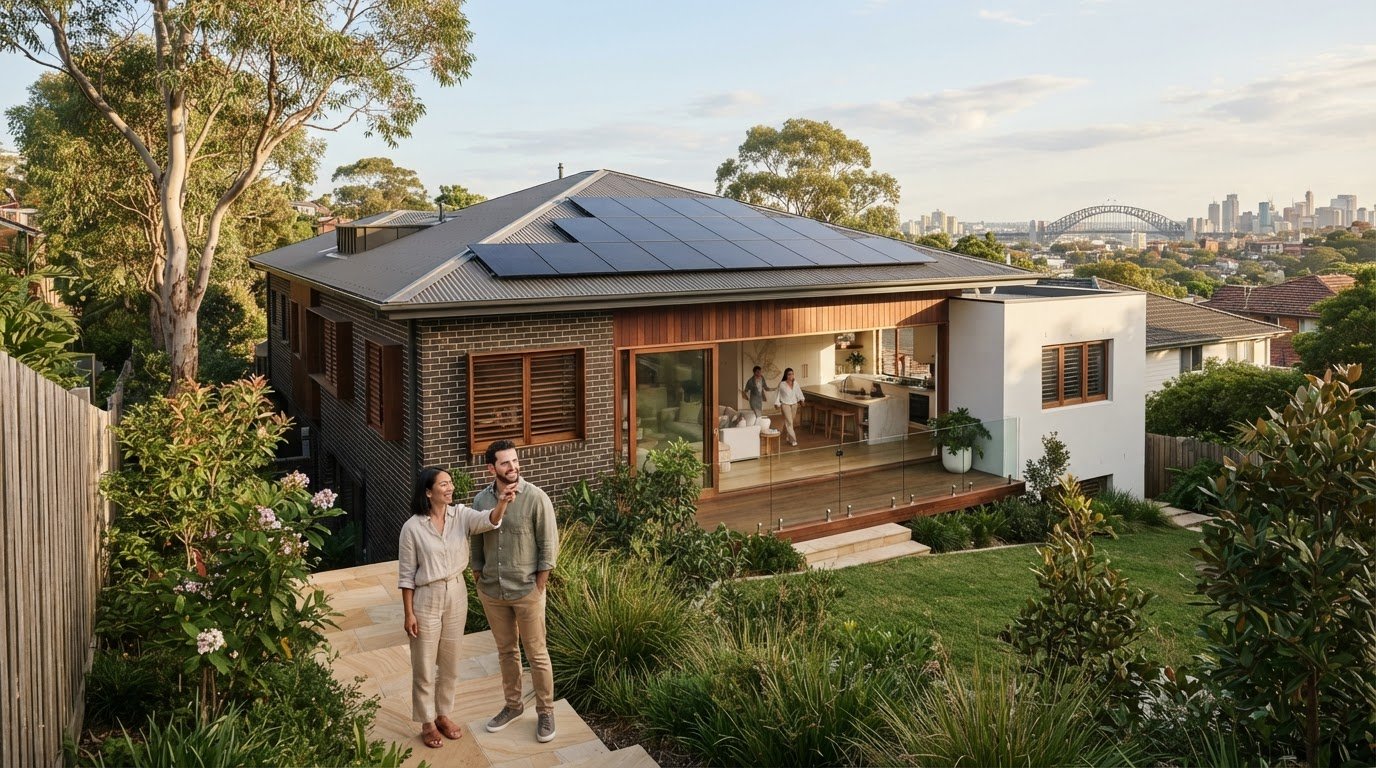
Solar is associated with a measurable property premium, but a larger system doesn’t automatically mean a higher sale price. Cotality and the Commonwealth Bank of Australia’s 2025 study found that Australian homes with solar commanded an average 2.7% premium, or A$23,100. For how solar panels increase a property’s value in Sydney, the key is how well the system’s size and energy output suit the home and its future occupants.
Look beyond the panels themselves: buyers may also consider the potential to use solar electricity and the home’s overall energy efficiency. A system suited to the household’s electricity needs makes its benefits easier to assess, while system size alone does not guarantee a particular property valuation.
This article explains how system capacity can affect a home’s appeal, what value estimates can and cannot tell you, and how other efficiency upgrades may contribute. You’ll have a clearer basis for considering solar as part of your Sydney home’s long-term value.
Key Takeaways
- See how solar and other energy-efficiency features can influence buyer appeal, and why broader home performance matters.
- Compare solar value estimates across Australian cities, including the reported premium for Sydney homes.
- Understand how estimated value gains for different system sizes can help frame your upgrade decision.
- Learn why matching solar capacity to household energy use is more useful than choosing a larger system by size alone.
How Much Value Do Energy Efficiency Upgrades Add?
Domain’s 2025 report associated energy-efficient Australian houses with a 14.5% premium. The uplift varies by location and the features buyers can use.
Ratings and property values
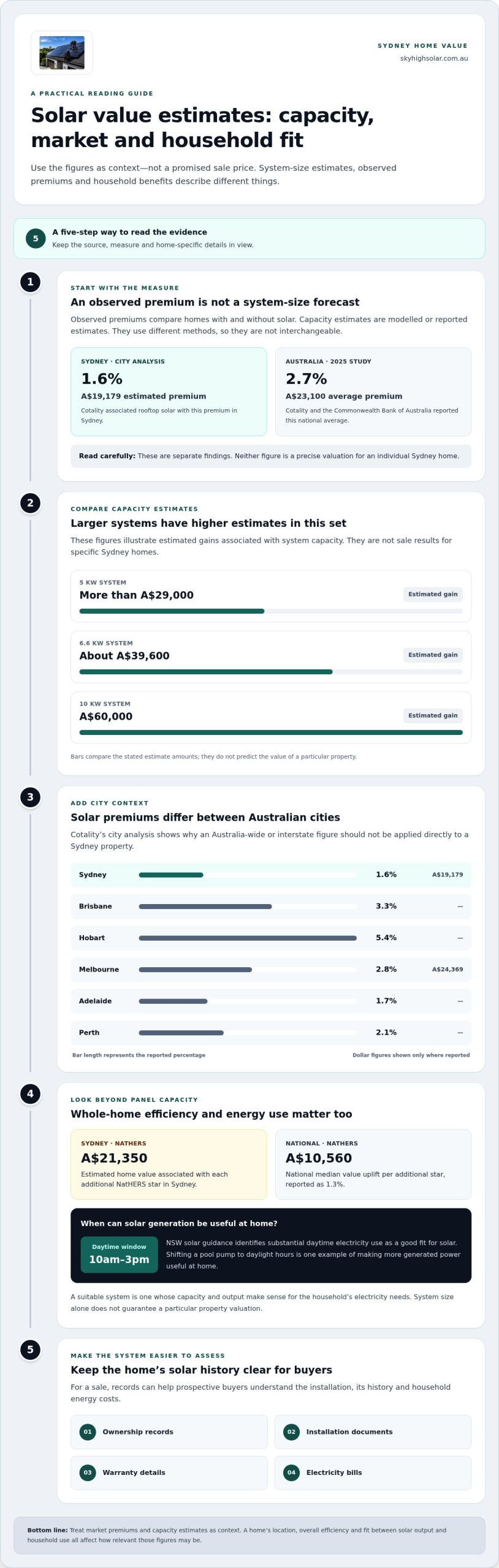
An energy-efficiency rating indicates how efficiently a home performs, while NatHERS stars measure thermal performance. In Sydney, each additional NatHERS star was associated with an estimated A$21,350 in home value. This helps explain why insulation and heating and cooling performance can matter alongside solar. Buyers may use a rating as one signal of likely comfort and energy demand.
Solar savings and buyer value
Solar savings are electricity costs avoided by using generated power instead of buying it from the grid. A 2023 study found rental properties with solar systems earned an average A$19 more per week than properties without solar. Buyers may consider how much electricity a system supplies for household use. For a sale, organise ownership records, installation documents, warranty details and electricity bills to help show the system’s history and household energy costs.
Location matters: Domain’s 2025 report found energy-efficient homes in Melbourne commanded a 23.8% premium, compared with 14.1% for eco homes in Brisbane. These figures describe different markets, not a Sydney valuation. They show why a premium in one city shouldn’t be applied directly to another.
In NSW, the Small-Scale Renewable Energy Scheme provides financial incentives to homeowners who install solar panels. The Peak Demand Reduction Scheme (PDRS) is a NSW government incentive that provides upfront payments to households installing battery storage capable of supporting the grid during peak demand.
Higher electricity costs alone do not establish a larger property premium in a Sydney suburb. Buyers may value potential bill savings, particularly when household electricity use aligns with solar generation.
NSW solar guidance identifies households using substantial electricity during the day, especially between 10am and 3pm, as suitable for solar. Shifting use, such as running a pool pump during daylight, can make more generated power useful at home.
How much value does solar add to your home?
Solar-associated home value premiums vary across Australian cities. Comparing local figures helps Sydney owners put national buyer interest into perspective.
Solar premiums across Australian cities
Cotality’s city analysis associated rooftop solar with a 1.6% premium in Sydney, estimated at A$19,179. The comparison reported 3.3% in Brisbane and 5.4% in Hobart. Melbourne’s reported premium was 2.8%, or A$24,369, while Adelaide and Perth recorded 1.7% and 2.1%. These differences show why a citywide figure offers context, not a precise estimate for every home.
For Sydney owners, local buyer demand and a property’s features matter as much as city-level comparisons. A well-presented solar system makes on-site electricity generation visible to buyers, but its relevance depends on the home and household needs.
Buyer demand for solar-powered homes
Buyer demand describes how strongly purchasers value features such as solar power when comparing homes. In an Origin Energy survey, 77% of 1,005 Australians believed a home with solar was more valuable. A separate RealEstate.com.au survey found 81% considered sustainability features, including solar, critical to their decisions.
Domain’s 2025 report found homes with sustainable features attracted 16.7% greater interest. That preference can help owners understand why an energy-efficient home may stand out when selling. Buyers also weigh practical details, including how solar generation could help manage an energy bill.
Solar resale premiums
A resale premium is the observed price difference between homes with solar and comparable homes without it. Cotality’s analysis compared homes while accounting for other attributes and excluded home batteries. This helps owners understand solar’s association with home value separately from storage or other upgrades.
Use city comparisons as market context, then present system records and electricity use clearly so prospective buyers can assess the installation. These practical solar system value considerations help frame a home’s features alongside wider resale-premium estimates. Government incentives can affect installation economics, but they are distinct from the resale premium.
Solar-system size and estimated property-value gains
Solar value estimates use different methods, so system capacity figures and observed sale comparisons are not interchangeable. Use them to assess how solar may fit a property’s energy needs and appeal to buyers.
Estimated value gains from solar
An estimated value gain is a modelled or observed difference associated with a home feature. One estimate puts the increase for a 5 kW installation at more than A$29,000. Other estimates place the gain at about A$39,600 for 6.6 kW and A$60,000 for 10 kW systems. These projections illustrate how capacity estimates are framed, rather than report sale results for specific Sydney homes.
For a separate efficiency measure, each additional NatHERS star was associated with a national median value uplift of A$10,560, or 1.3%. This shows that value estimates can relate to overall home performance, not only panel capacity.
System size and battery storage
System size describes solar capacity, while a battery stores surplus solar energy for later use. A suitable system can meet household demand and make its electricity benefits clear to prospective buyers. The Sydney comparison considers panels, not battery storage, so it does not quantify a separate resale uplift from adding a battery.
When selling, explain the system’s capacity in relation to household use and how any storage supports the home’s energy needs. Valuations, insurance assessments and council rates assessments each follow their own criteria; solar estimates alone do not determine their outcomes.
Estimated solar premiums for Sydney homes
A solar premium is the estimated difference between comparable homes with and without panels. The Sydney estimate discussed earlier is a local market reference based on sales comparisons, not a fixed addition to every home’s value.
System-size projections and observed city premiums use different methods. Keep them separate when considering upgrades, and relate each to the property’s features and electricity needs.
Solar panels and saleability
Saleability reflects how readily a property meets buyers’ expectations and due-diligence needs. Leased or financed panels may come with obligations a buyer needs to understand, so clear ownership and transfer records matter. Poorly maintained equipment can also raise questions about its condition and performance.
Before selling, organise system and maintenance records, warranty documents, ownership details and electricity information. These help buyers assess the installation and understand any ongoing commitments.
Potential property value increase per kilowatt of solar
An estimate of almost A$6,000 in retail value per kilowatt offers a simple way to compare solar capacity with potential home value. It is a market estimate, not a valuation formula: buyers assess the home, the system’s usefulness and its condition together.
That distinction matters: kilowatts describe a system’s capacity, while its electricity generation depends on factors such as roof orientation, shading and household use. A larger residential system may produce more solar energy, but its value to buyers depends on whether its capacity suits the property. Extra panels alone do not guarantee an equivalent increase in the sale price.
Treat the per-kilowatt estimate as a starting point for evaluating an investment, not a guaranteed return. Compare system capacity with daytime electricity use, potential bill savings and the home’s likely future demand. For example, a household using more electricity during daylight can use more solar generation directly. A household that consumes most of its electricity after sunset may value battery storage differently.
Sustainability can strengthen a home’s appeal, but buyers also look for practical evidence: system records, maintenance history, warranty documents and electricity bills. These details help show how the system performs and what ongoing benefits it may offer. They also distinguish a working, well-documented upgrade from panels whose condition or output is difficult to assess.
To assess a system’s contribution, consider its capacity alongside usable generation, household consumption, storage and the local market. An average estimate per kilowatt cannot account for every home’s roof, energy profile or buyer priorities. Treat it as one comparison point, then weigh the system’s practical function against other property features.
If you’re planning an upgrade, explore solar system options with your household’s energy use and roof layout in mind.
Sky High Solar and Electrical: 6.6kw Solar Panel Installation
Sky High Solar and Electrical installs 6.6kw and 10kw solar systems for Sydney homes, helping you match system capacity to household electricity use. If you’re weighing a solar upgrade for its day-to-day benefits as well as future resale appeal, start by considering when your home uses the most power and whether battery storage suits your needs.
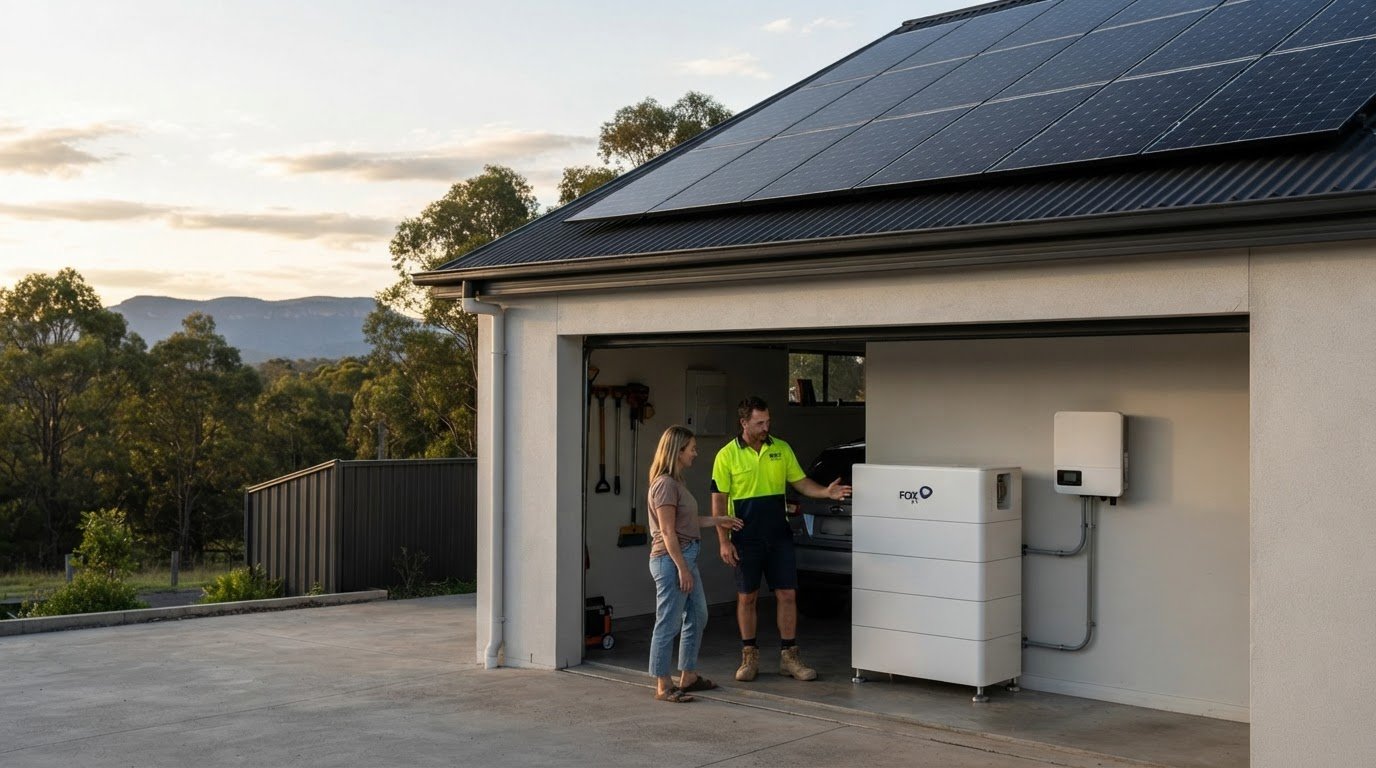
Available options include the FOX ESS CQ7 High Voltage Storage Battery and SigenStor Integrated Solar Inverter & EV DC Charger. These offerings let you consider solar alongside storage or EV charging as part of your home energy plans. The right configuration depends on your property and energy requirements, rather than system size alone.
Contact Sky High Solar and Electrical to discuss solar system options for your home.
Plan a solar upgrade around your home’s future
Understanding how solar panels increase property value in Sydney starts with a plan for your property, not a target system capacity. Consider how your household uses electricity now, whether that pattern may change, and what buyers may value in a well-presented home. A planned upgrade can support everyday energy needs while keeping future resale considerations in view.
Before deciding, gather recent electricity bills and note when major appliances are used. Consider planned changes, such as adding an electric vehicle or increasing daytime energy use. These details help guide a practical discussion about solar’s role in your home, rather than treating it as a standalone feature. Any resale effect depends on the property and market conditions.
For a considered next step, contact Sky High Solar and Electrical to discuss your home’s solar needs. A clear plan can help you make an informed choice and move forward with confidence.
Frequently Asked Questions
What about solar power?
Solar power lets a household generate electricity from sunlight and use it at home. Running appliances during daylight, such as a washing machine or dishwasher, can help use that electricity directly. Unused generation may be exported to the grid, depending on the system setup. Review your usage patterns and bills to see when solar generation could best support your household.
Do houses with solar sell faster?
Domain research found Australian houses and units with solar sold nearly 4% more quickly than comparable properties without it. That finding indicates a potential sales-market advantage, not a promised timeframe for a particular Sydney home. Clear system records and information about how the panels operate can help prospective buyers understand the feature while comparing properties.
Do solar systems earn their costs back?
Australian solar systems are estimated to have a payback period of 4 to 7 years. The time depends on factors such as the system’s installed cost, how much generated electricity the household uses, and electricity charges. For a practical assessment, compare bills before and after installation, and account for when appliances use power. Feed-in credits are only one part of the household’s overall value.
Does adding a battery increase value further?
A battery can store surplus solar electricity for use later, which may appeal to buyers who want to use more of their own generation. In an Origin Energy survey, 60% of respondents said they would pay more for a house with both solar and battery storage. That preference signals buyer interest, but it is not a measured resale premium for every property.
So, is solar a good investment in Australia?
Solar can be a worthwhile investment when the household uses enough generated electricity to make the system useful. The Clean Energy Council estimates rooftop solar can save Australian households up to A$1,500 per year on energy bills. Consider your daytime consumption, the system’s expected output and how long you plan to stay. These factors help assess value beyond a possible future sale price.
How much do solar panels increase property value in Sydney?
Rooftop solar was associated with a 1.6% property-value premium in Sydney, estimated at A$19,179, using sales data for the 12 months to 15 April 2025. This is a market comparison, not a set uplift for each home. How solar panels increase property value in Sydney depends on the property, system condition, buyer demand and how well the system suits household use.