

 Sydney
 0452 243 240
Blog
Local solar panel installers in Melbourne and system prices

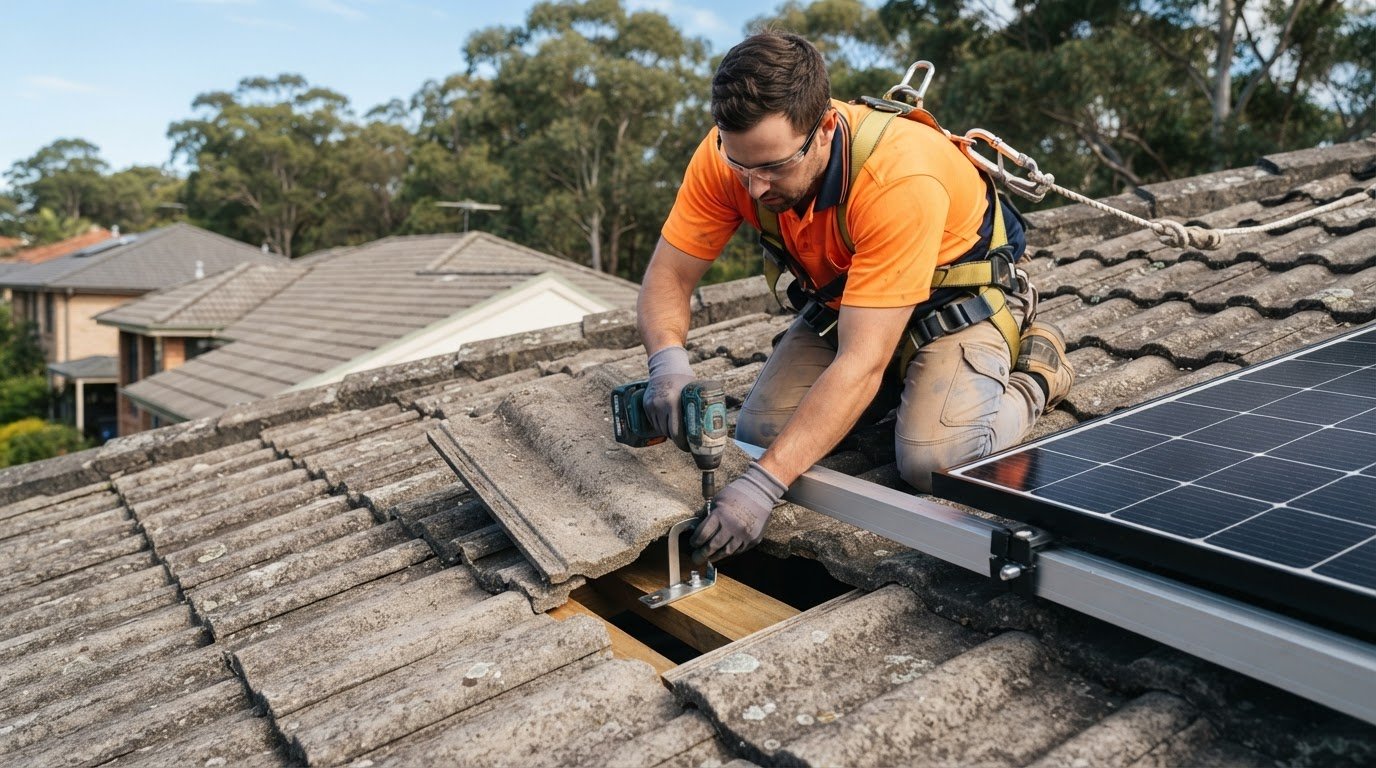
Most solar panel installations take 1 day; larger or more complex systems may take 2 days. If you’re comparing local solar panel installers near me in Sydney, remember that the installation timeline is only one part of choosing a system that suits your home.
Compare quotes carefully: system design, equipment, battery options and installation work all affect what is included and how long the job takes. The lowest quote may describe a different setup, so check the details before deciding.
This guide explains what affects installation time and system costs, how to compare quotes and reviews, and whether a battery may suit your energy use. It also covers practical checks when choosing a local installer, from system design to installation quality and safety.
Key Takeaways
- Most solar installations take 1 day, while larger or more complex jobs may take 2 days.
- Compare Melbourne quotes by system design, included equipment and installation work, not just the bottom-line price.
- Eligible Victorian households can receive a solar panel rebate of up to A$1,400, according to Solar Victoria.
- Use customer reviews to assess installation experience, then weigh battery options against your household’s energy use.
Battery storage and battery-ready inverters
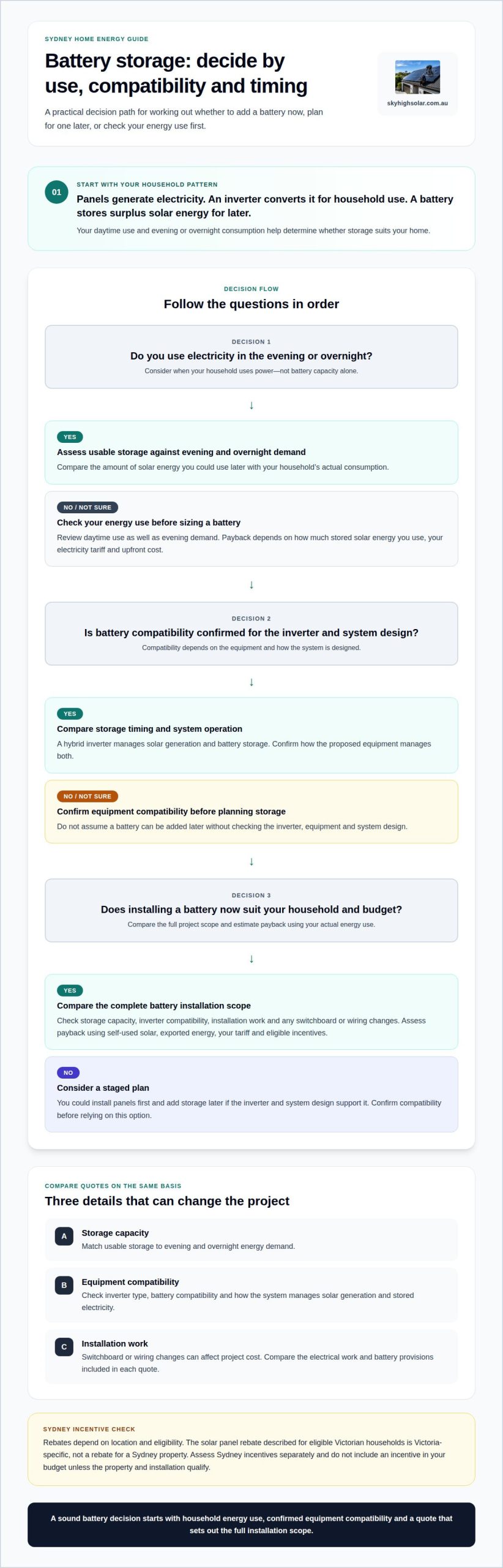
A solar system combines panels, an inverter and, if chosen, a battery. Panels generate electricity, while the inverter converts it for household use. A battery stores surplus energy for later, rather than sending all unused generation to the grid. Your evening consumption and daytime energy use help determine whether storage suits your Sydney home.
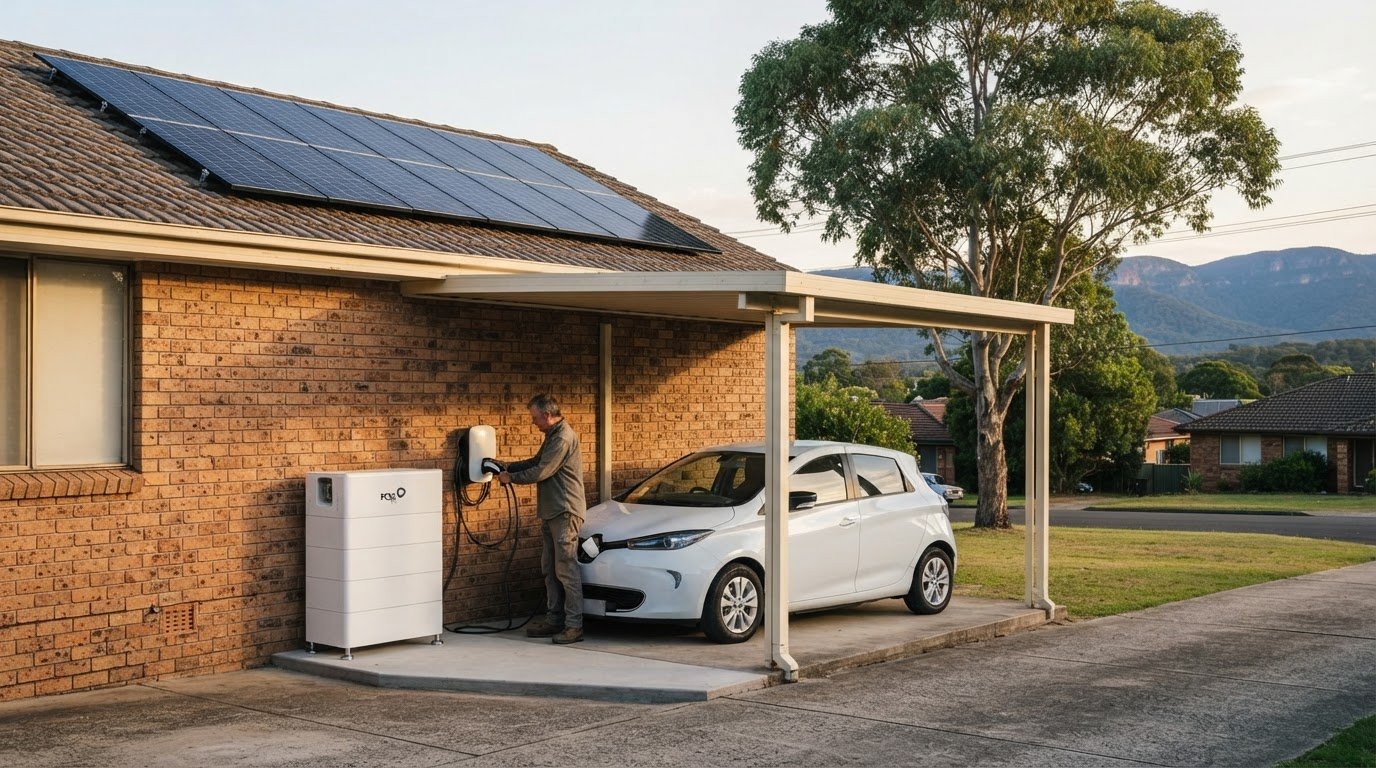
A battery-ready inverter may support a later battery installation, but compatibility depends on the equipment and system design. Compare inverter type, battery compatibility and how the system manages solar generation and stored electricity. A hybrid inverter manages both solar generation and battery storage, which can make a staged plan practical: install panels first, then add storage when it suits your household.
Rebates depend on where the property is located and whether the household meets the programme requirements. According to Solar Victoria, eligible Victorian households can receive a solar panel rebate of up to A$1,400. This is a Victoria-specific incentive, not a rebate for a Sydney property. For Sydney, assess any applicable incentives separately and avoid including a rebate in your budget unless the property and installation qualify.
Battery costs depend on storage capacity, inverter compatibility and installation work. Switchboard or wiring changes can affect the project cost. Payback depends on how much stored solar energy you use, your electricity tariff and the upfront cost after any eligible incentives. Assess your actual usage, not battery capacity alone, when considering how storage may affect the calculation.
- Match usable storage to evening and overnight energy demand.
- Compare installing storage now with adding it to a compatible system later.
- Assess payback using self-used solar, exported energy and incentives relevant to your property.
These steps help you compare panels, inverters and batteries as one system. For a Sydney installation, base your decision on household energy use, equipment compatibility and incentives that apply locally.
How much do solar panels cost in Sydney?
Sydney solar costs depend on system design, equipment, roof layout and electrical work. For residential or commercial projects, compare the proposed scope and expected generation, not just system size.
Residential and commercial installations
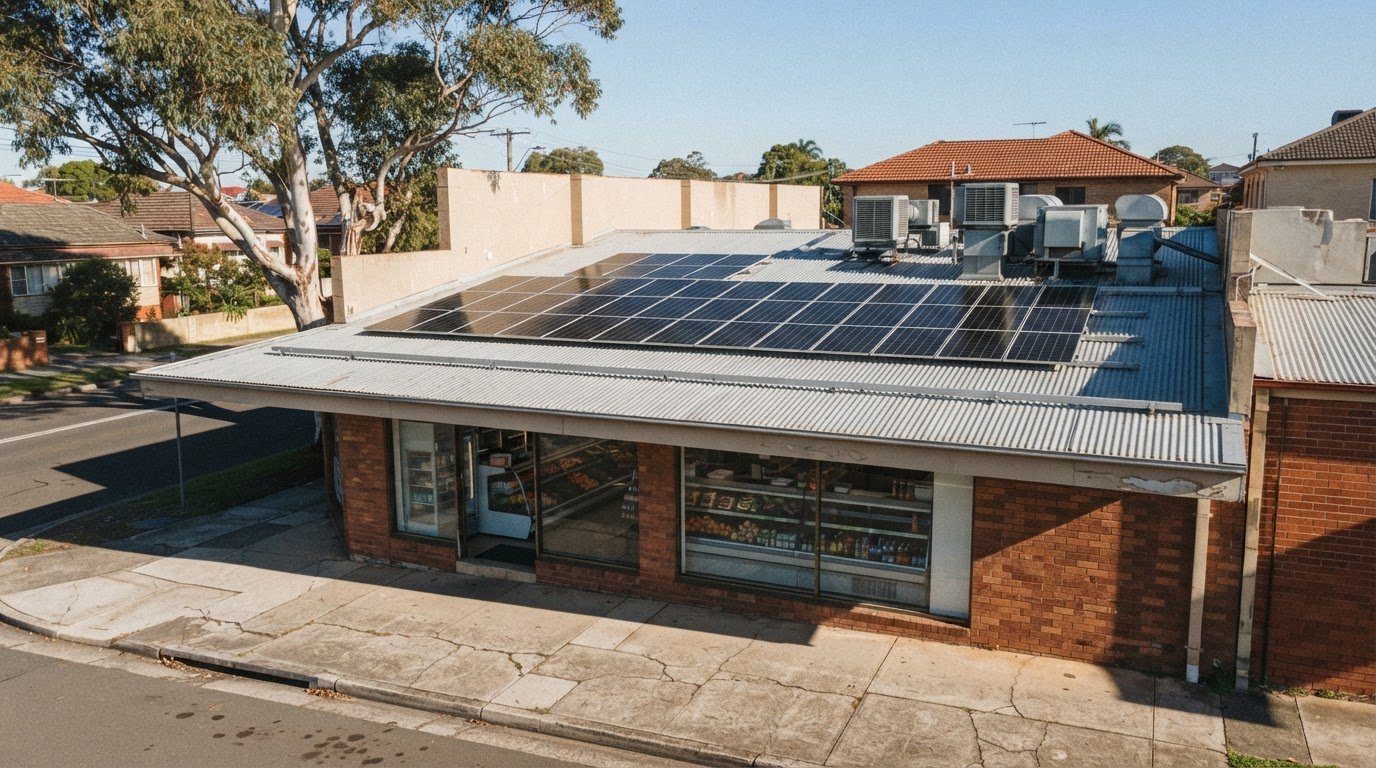
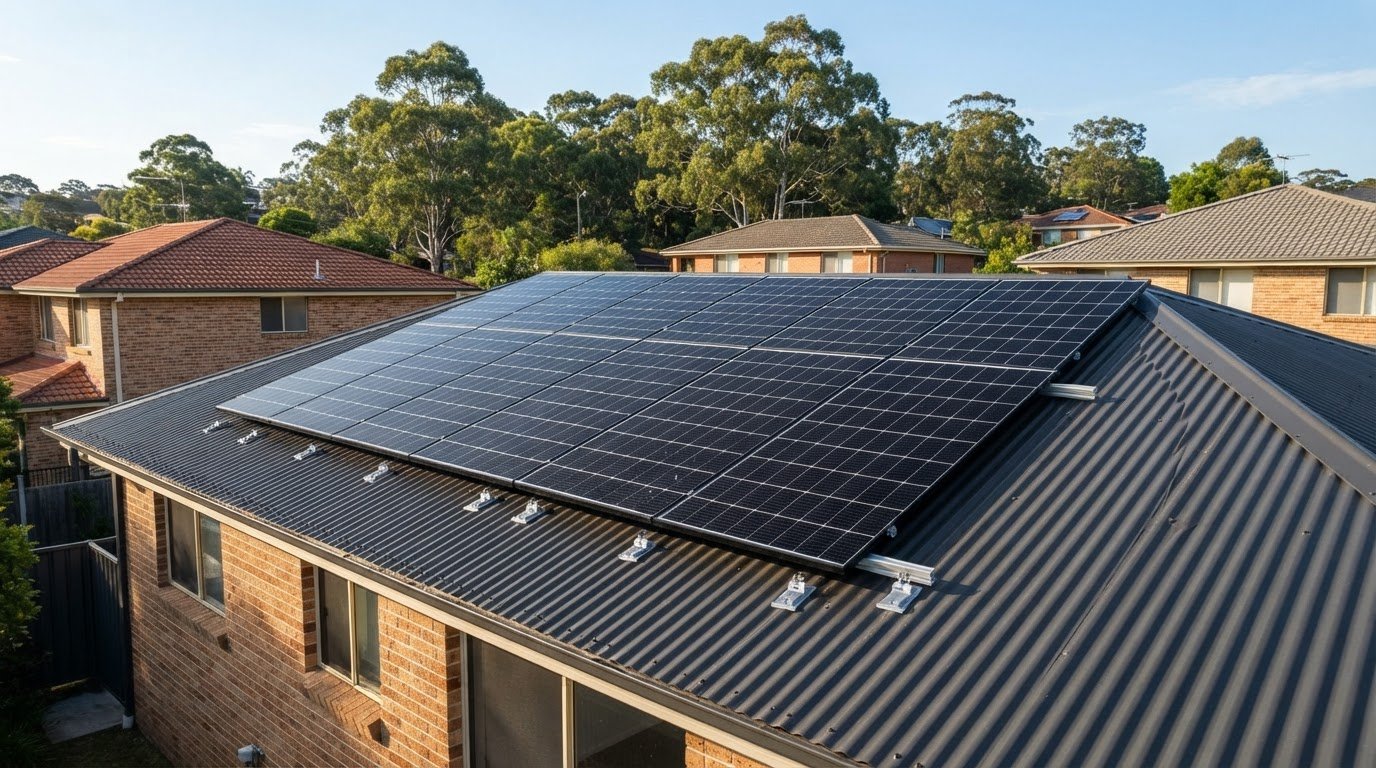
A residential PV system should reflect household electricity use, roof space and when appliances run. A 6.6 kW system is one size to consider alongside your consumption, roof orientation and plans for battery storage. Businesses should also assess daytime demand, roof area and how solar generation matches operating hours.
Which solar panel installers serve your suburb in Australia? Coverage varies across Sydney, so look for businesses whose service area includes your property. Compare designs for your site and intended use. Generation depends on panel placement and system components, not capacity alone.
Sydney solar installation costs
There’s no single price for every Sydney installation. Costs depend on panel and inverter choices, roof access, array layout, electrical work and whether the project includes battery storage. For a commercial property, energy demand and required connection work also shape the design and quote.
Compare quotes by checking equipment, installation scope, electrical work, battery provisions and applicable incentives. Australia’s Small-scale Renewable Energy Scheme may provide a benefit for eligible small-scale systems. The upfront benefit depends on eligibility and installation details, so compare quotes on the same basis.
Council, state and network approvals
What local council, state or network approval rules apply to rooftop solar installation? Requirements depend on the property, proposed system and grid connection. Council considerations, state requirements and network connection processes are separate, so one property’s approval pathway may not apply to another.
For a Sydney property, identify relevant council considerations and network requirements for the proposed connection. Include system size and connection scope when comparing quotes, and account for the steps required at that site. This clarifies the project without assuming every installation follows the same approval process.
Customer reviews and installation experiences
Customer reviews can show how an installer communicates before, during and after a solar installation. Look for specific details, such as whether the team explained the system, kept the customer informed and addressed concerns after handover. A testimonial describing a 23-panel installation gives more context than a brief rating alone, especially if it explains the customer’s experience from planning through to completion.
Which local solar installers are accredited by Solar Accreditation Australia? Use Solar Accreditation Australia’s directory to find accredited installers, then match the listed name to the business named on the quote. This distinguishes an installer’s accreditation from general claims about a company or its products.
Compare reviews across different dates and focus on detailed, repeated themes. One customer testimonial reports receiving a government rebate of A$2,250 for a solar installation. Treat that as the customer’s reported experience, not a standard rebate amount: eligibility and system details affect incentives. Reviews can help you assess service, but they cannot establish your household’s likely electricity savings.
Before choosing an installer, check that the quote identifies the panels, inverters, installation scope and warranty terms. Compare these details with reviews that mention workmanship, communication and follow-up support. If a reviewer describes a delay or service issue, note how the installer responded. Specific accounts are more useful than star ratings alone.
What are the risks of solar installation scams or misleading savings claims? A promise of 100% bill savings can mislead if it overlooks electricity use after sunset, export payments or the estimate’s assumptions. Watch for unclear equipment details, pressure to decide immediately, or rebate claims presented as guaranteed for every household.
Ask how the savings estimate was calculated and compare its assumptions with your electricity bills. Check that any advertised rebate reflects your eligibility and proposed system. Keep the written quote and installation documents together, including warranty information and notes from follow-up discussions. Clear records help you understand what was agreed and raise a specific issue if the installed system differs from the documented scope.
Comparing local solar installers and quotes
A useful comparison starts with what each solar system is designed to deliver, not its headline capacity. Assess the design, equipment, installation scope and assumptions behind projected electricity bills. For homeowners comparing local solar panel installers near me, a consistent checklist makes it easier to spot differences between proposals.
Comparing local installers
Compare installers on the detail they provide: system design, panel and inverter specifications, battery options, warranties and installation scope. A 5 kW solar PV system is a useful example for comparing like with like, but the same capacity can produce different results across properties. Check that each proposal explains how roof layout and household energy use shape expected solar power generation.
Review the savings assumptions, too. Solar savings depend on how much generated electricity the household uses directly, how much it exports, and the applicable electricity charges and feed-in tariff. A clear proposal connects its estimate to your consumption pattern instead of presenting a figure without context.
Comparing installer quotes
Place quotes side by side and check whether they cover the same work. Compare panels, inverter, mounting and electrical work, along with any battery provision or switchboard changes. Note exclusions as well as inclusions: a lower total may reflect a different system or installation scope. When comparing local solar panel installers near me, check that each quote describes a comparable setup.
Then compare warranty terms and the expected service process. Check that the warranty information specifies which equipment it covers. Ask how the proposed system is intended to supply energy to your home or business, including how it handles surplus generation.
Long-term value matters alongside upfront cost. A quality solar system may perform for 10 years longer than an inferior system, and may take 3 years longer to return its investment. Weigh equipment, installation scope and expected performance together, rather than choosing solely by payback timing.
Use this checklist before deciding:
- Match system capacity and equipment across each quote.
- Compare the same assumptions for energy use, exports and bill savings.
- Read warranty terms and identify what each covers.
- Review included work, exclusions and provisions for future battery storage.
Once you’ve compared the designs, request a solar quote that reflects your property’s energy needs and installation scope.
Sky High Solar and Electrical: 6.6kw Solar Panel Installation
Sky High Solar and Electrical installs 6.6kw and 10kw solar systems for residential and commercial properties. If you’re ready to move from comparing options to planning an installation, these system sizes provide a starting point for matching solar generation with your property’s needs.
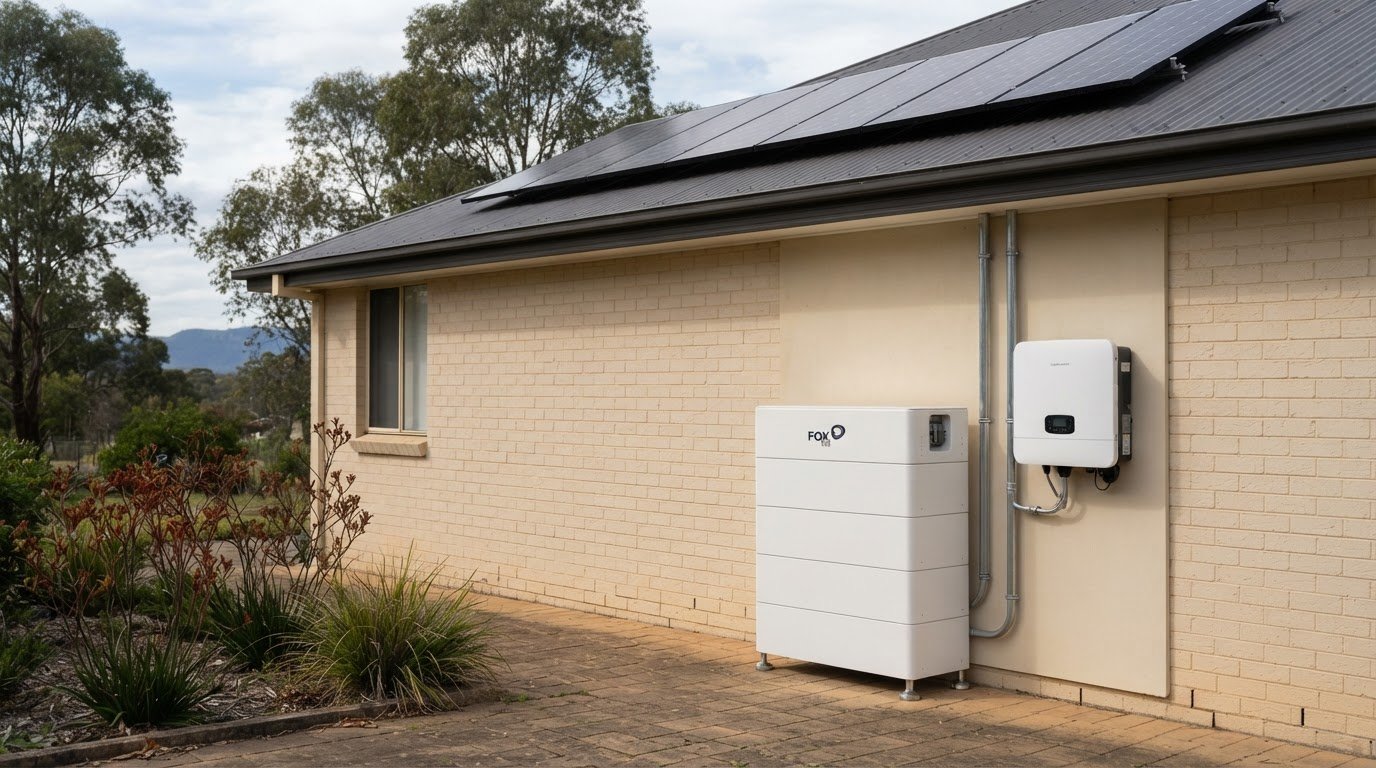
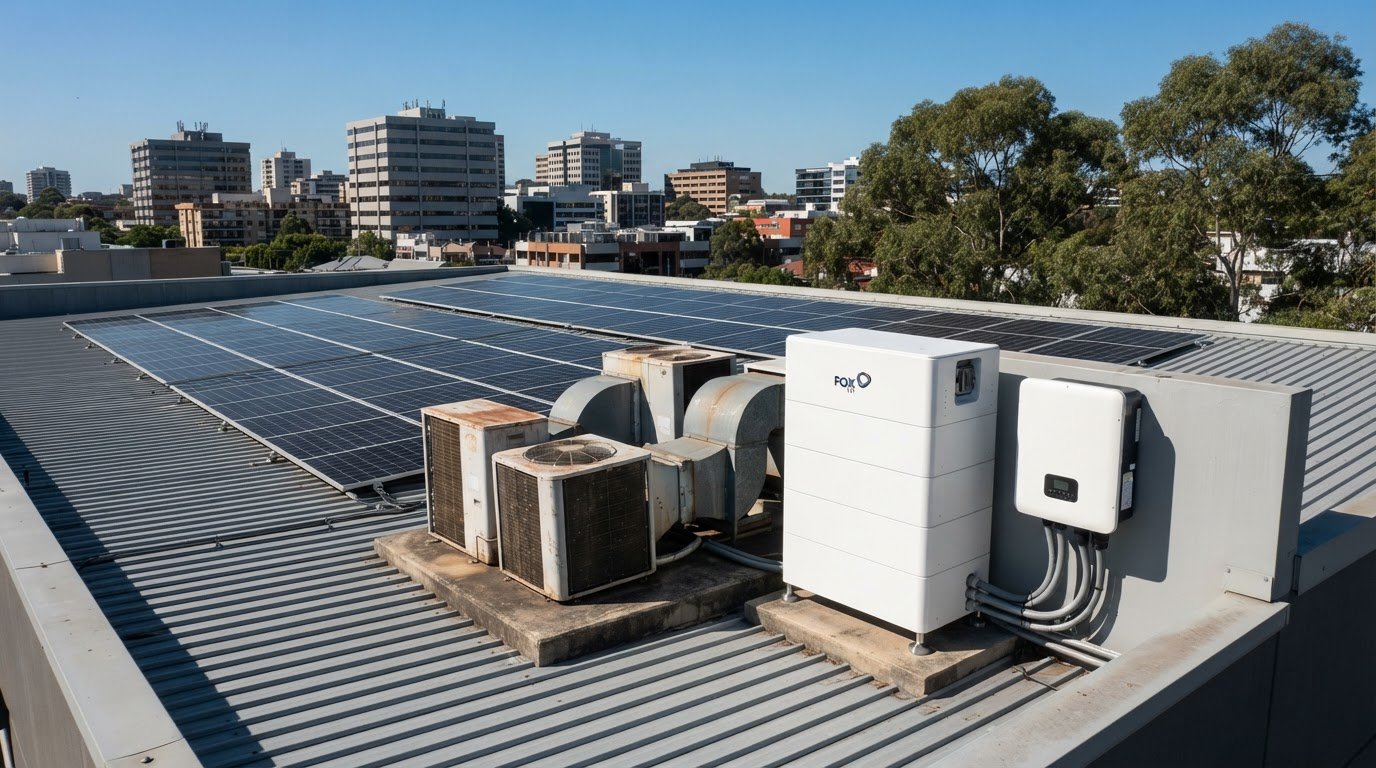
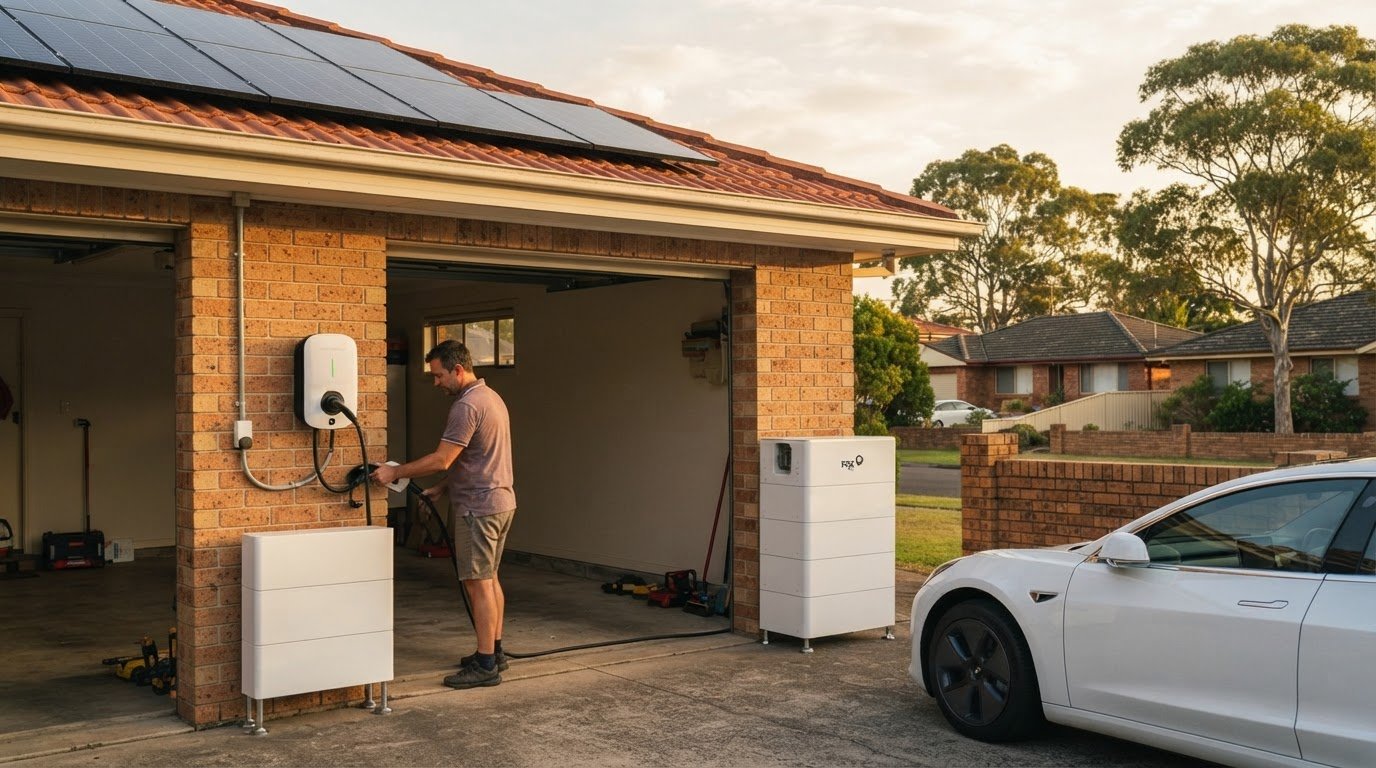
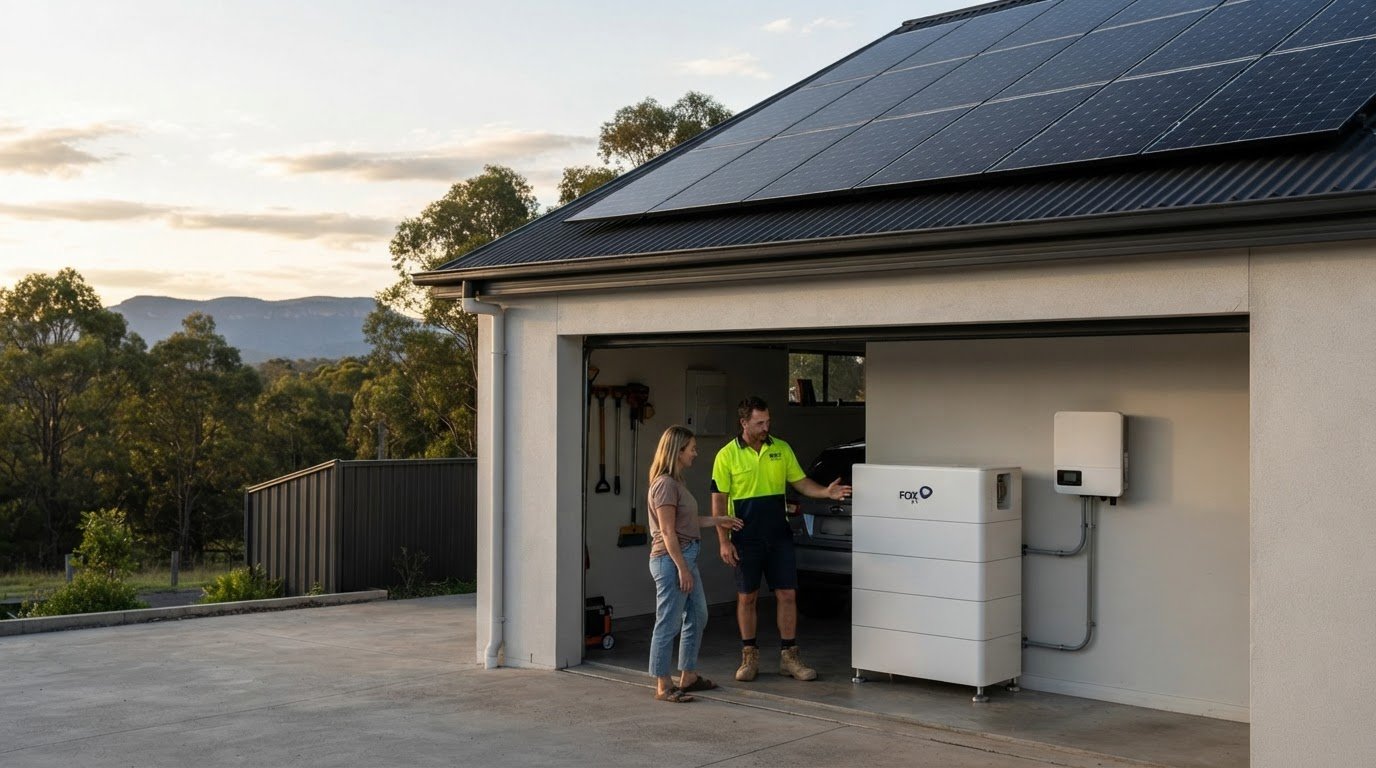
For a system with battery storage, the FOX ESS CQ7 High Voltage Storage Battery is one available option. The SigenStor Integrated Solar Inverter & EV DC Charger combines solar inverter and EV charging functions, making it relevant if you’re also considering an electric vehicle charger.
Compare your energy use, roof layout and future plans when deciding which system configuration to explore. Sky High Solar and Electrical can help you consider installation and equipment options for your project.
Visit skyhighsolar.com.au to discuss your solar installation with Sky High Solar and Electrical.
Make your next solar decision with confidence
Turn your priorities into a clear project brief. Note when your household uses the most electricity, whether you plan to add a battery or EV, and what matters most: lower grid reliance, bill savings or future flexibility. These details keep the system design discussion focused on how you use energy.
If you’re comparing local solar panel installers near me, use your brief to keep conversations grounded in your property and goals. Ask for a design that explains the recommended configuration and how it fits your plans, rather than relying on broad performance promises.
Sky High Solar and Electrical can discuss your solar installation requirements and relevant system options. Contact Sky High Solar and Electrical to take the next step towards a considered solar plan for your home or business.
Frequently Asked Questions
How long does it take to install a solar power system?
Installation time on site depends on the property and system design. Roof access, panel layout, switchboard work and weather can all affect the work sequence. Before installation, clarify what the project includes and which site conditions could change the plan. This helps you understand the work involved without assuming every Sydney home has the same roof or electrical setup.
How much can I save with solar power in Sydney?
In Sydney, solar savings depend on your electricity use, system generation, tariff and how much power you consume while panels are producing. Using more solar electricity at home can reduce purchases from your retailer; exported surplus may earn a feed-in tariff. Compare your bills with a Sydney-specific estimate that explains its assumptions, rather than relying on figures prepared for other cities.
Do you offer after-sales support and maintenance?
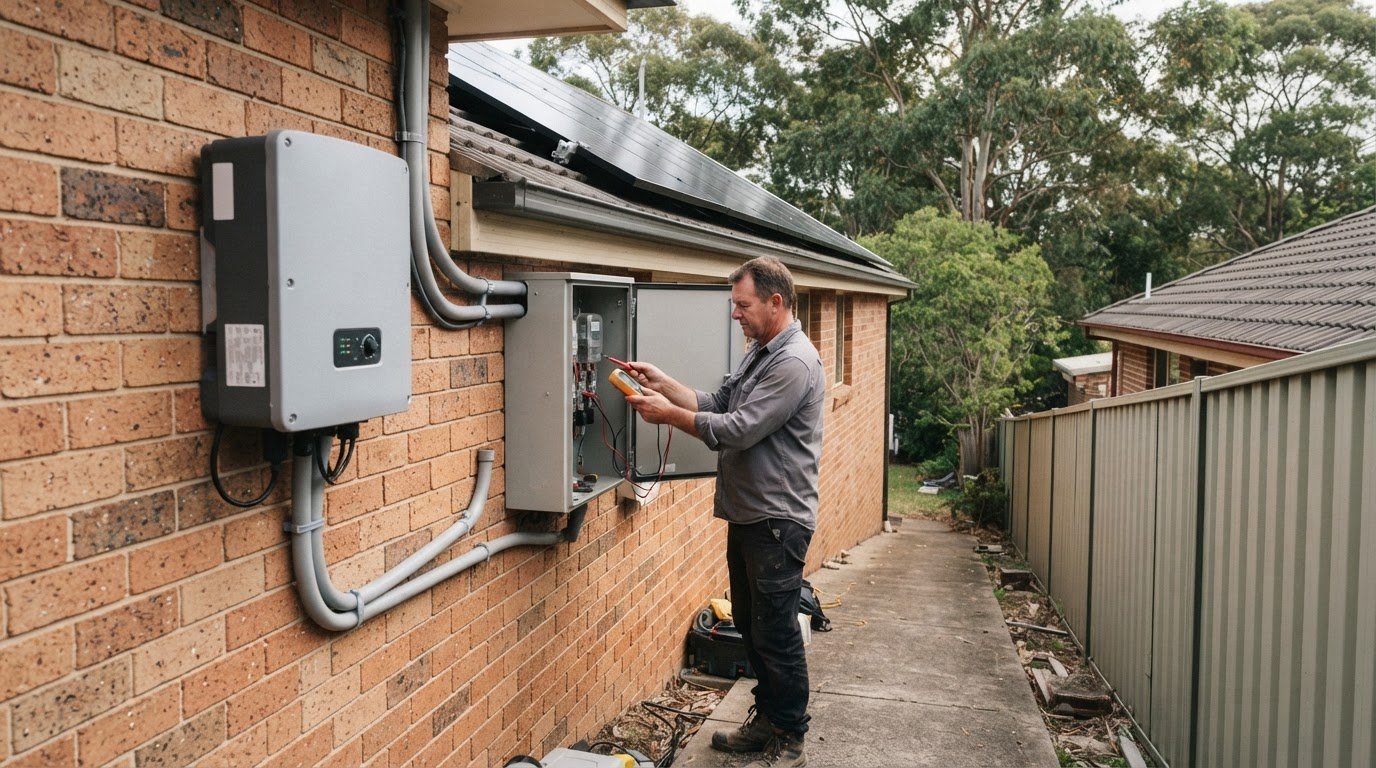
Yes, Sky High Solar and Electrical offers Solar System Servicing for Sydney customers. Servicing can help if you notice an unexpected change in system output, an inverter alert or visible panel damage. Keep your system documents and note when the issue began. These details help focus a maintenance assessment on your equipment and observed symptoms.
How can going solar benefit your family?
Solar can help your family use more electricity generated at home and reduce reliance on grid power during suitable daylight hours. This can support household budgeting and increase renewable energy use. For example, shifting a flexible appliance task to a sunny part of the day can make better use of generation. A battery may store surplus electricity for later use.
How do I choose the right size solar system?
Choose a system size by reviewing your household’s electricity consumption, when demand occurs and your usable roof space. Check bills across different seasons, then consider planned changes such as working from home or adding an electric vehicle. The design should balance expected generation with your ability to use or store that electricity, rather than relying on roof area alone.
How much can you save?
Estimate savings by comparing the electricity you expect to use directly from your system with the power you’ll still buy from the grid. Include exported energy and your retailer’s feed-in tariff, then account for the upfront cost and any eligible incentives. In Sydney, your consumption pattern and tariff shape the result, so assess savings against your own bills rather than a generic estimate.