

 Sydney
 0452 243 240
Blog
Sydney solar in winter: output and household power use

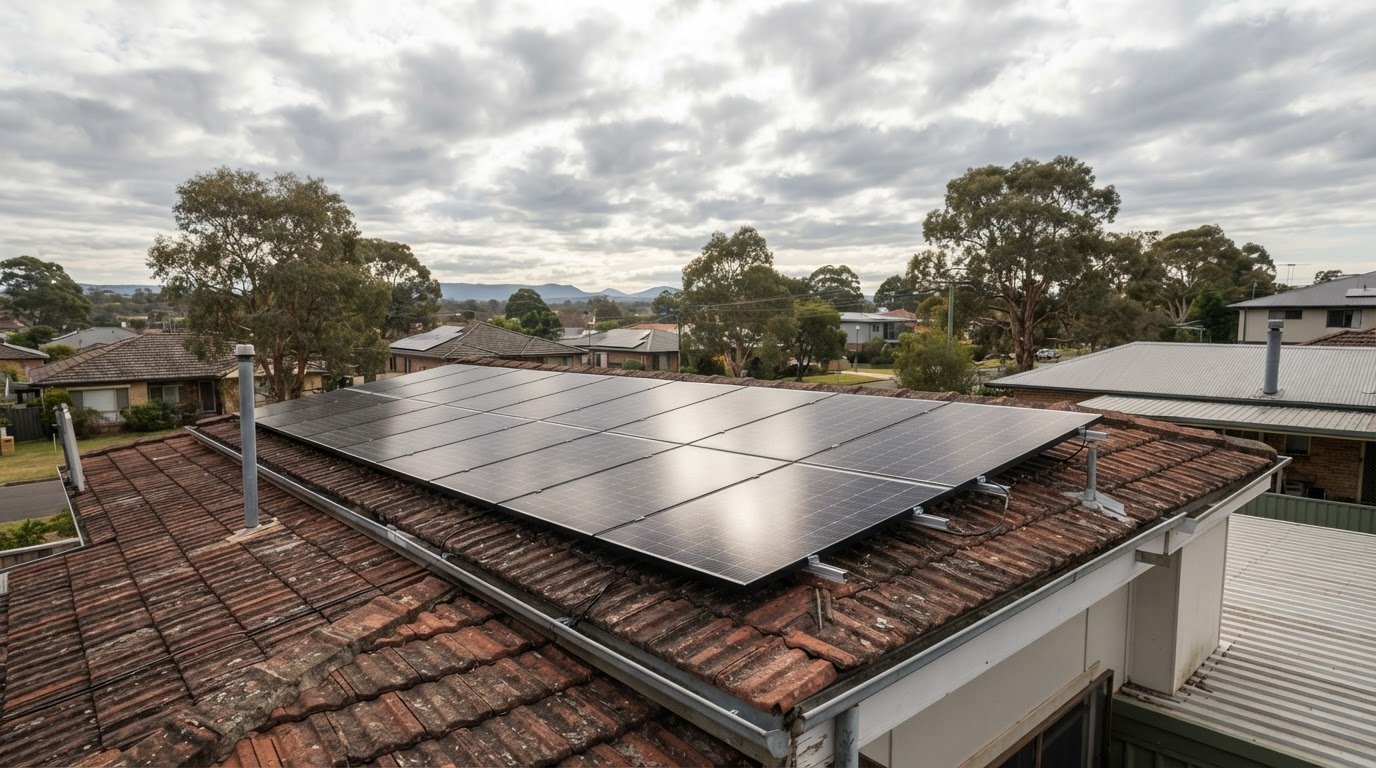
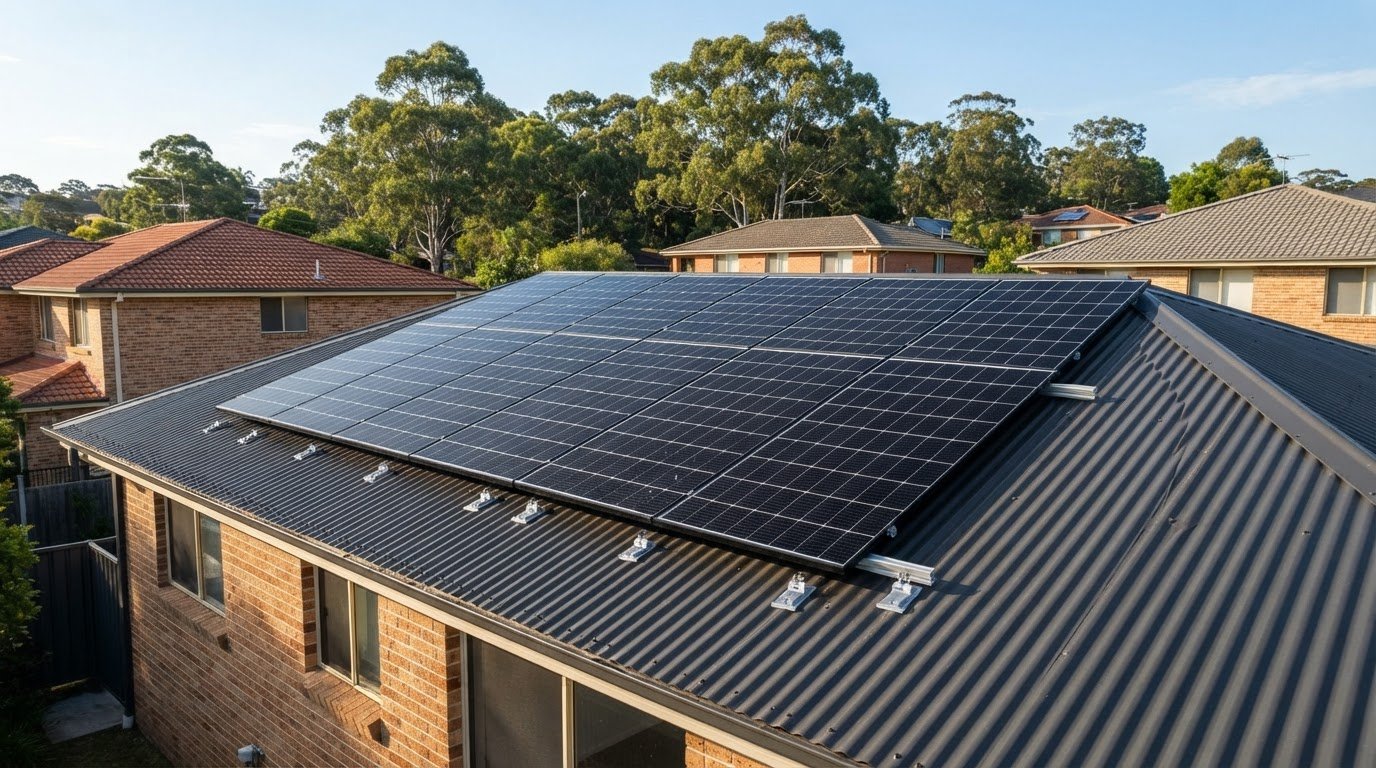
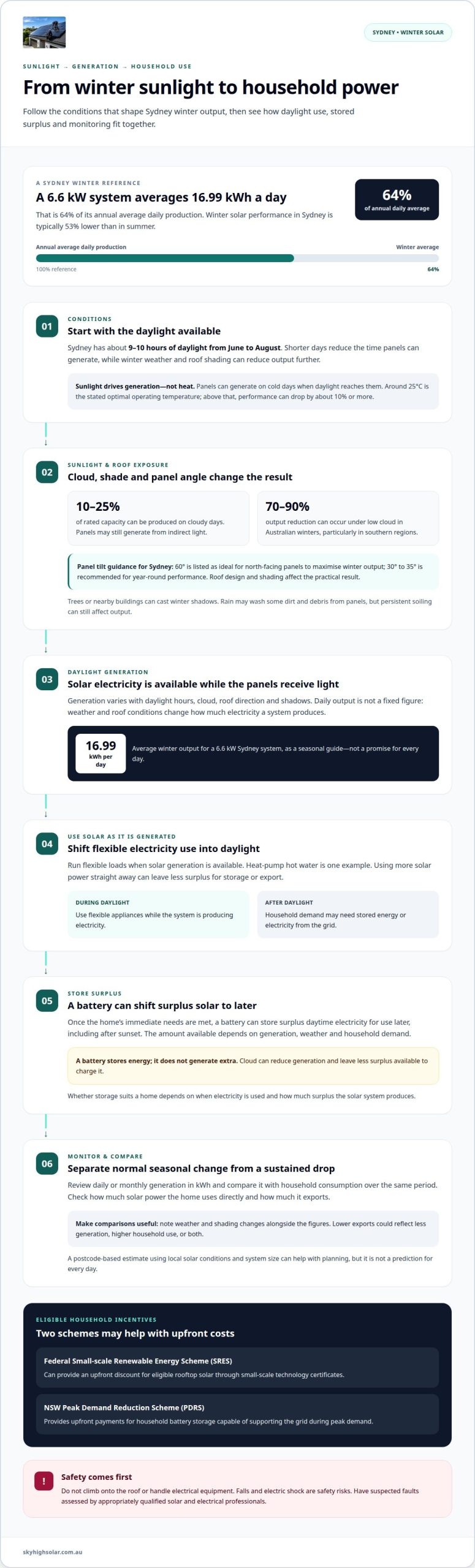
Solar panels still generate useful electricity through a Sydney winter, although output falls as daylight hours shorten. A 6.6 kW system averages 16.99 kWh a day in winter, around 64% of its annual average daily production. Solar panel performance in winter in Sydney is typically 53% lower than in summer.
It’s reasonable to expect lower solar panel performance in winter in Sydney, where shorter days and cloud can reduce the sunlight reaching panels. Cooler temperatures, however, can help panels operate efficiently: they generate electricity from sunlight, not heat.
This guide explains how sunlight and temperature affect winter generation, how seasonal output compares with household power use, and why summer production is higher. You’ll also learn how shifting flexible electricity use into daylight hours can help you make better use of the solar power your system produces.
Key Takeaways
- Run flexible loads, such as heat-pump hot water, during daylight to use more solar power as it is generated.
- A battery can store surplus daytime electricity for household use later, including after sunset.
- Cloud reduces direct sunlight, but panels can still generate electricity from indirect light.
- Winter shade from trees or nearby buildings can affect generation, so consider how roof conditions change through the season.
Do solar panels work in winter and cold weather?
Yes. Solar panels generate electricity from sunlight, not heat, so they work during cold Sydney days whenever daylight reaches them. A 6.6 kW system produces an average of 16.99 kWh per day in Sydney winter, equal to 64% of its annual average daily production. To understand solar panel performance in Sydney during winter, consider sunlight, roof exposure and when your household uses electricity.
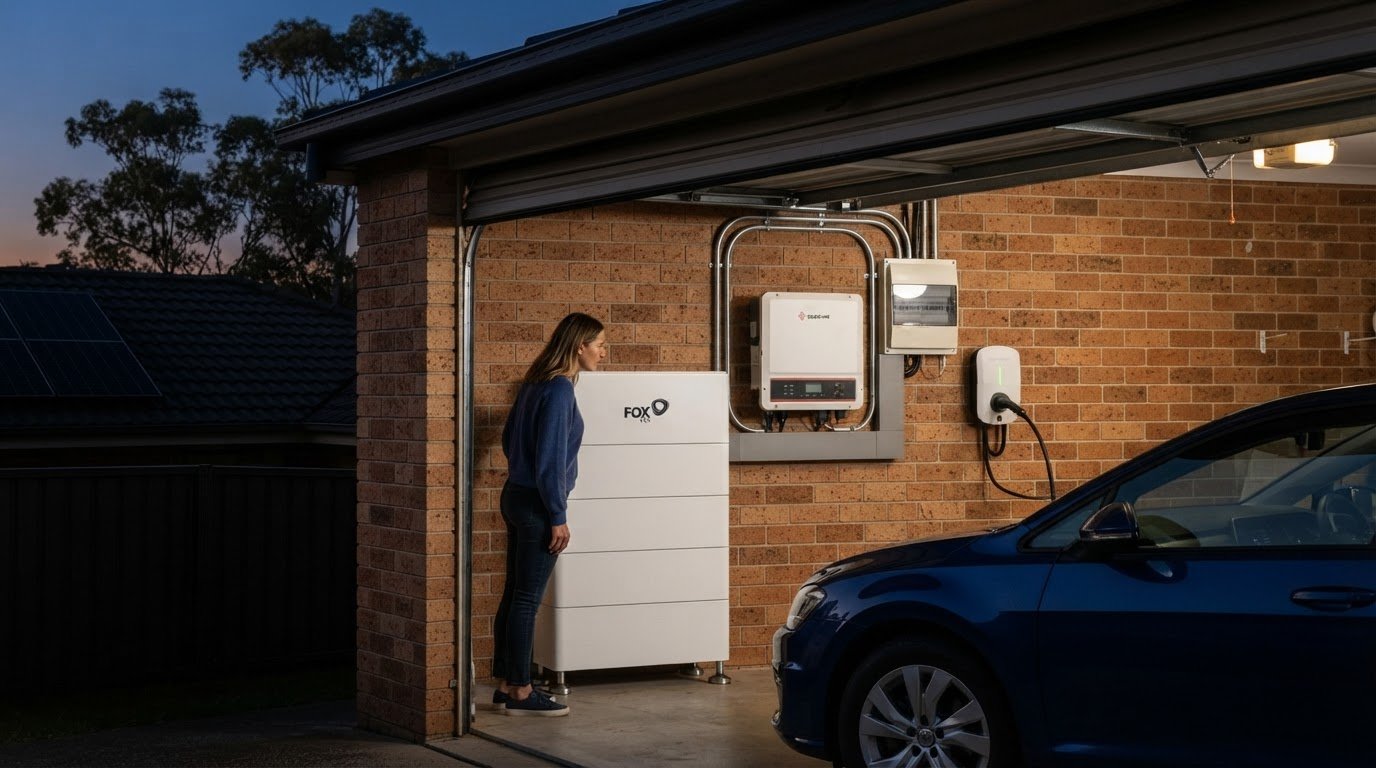
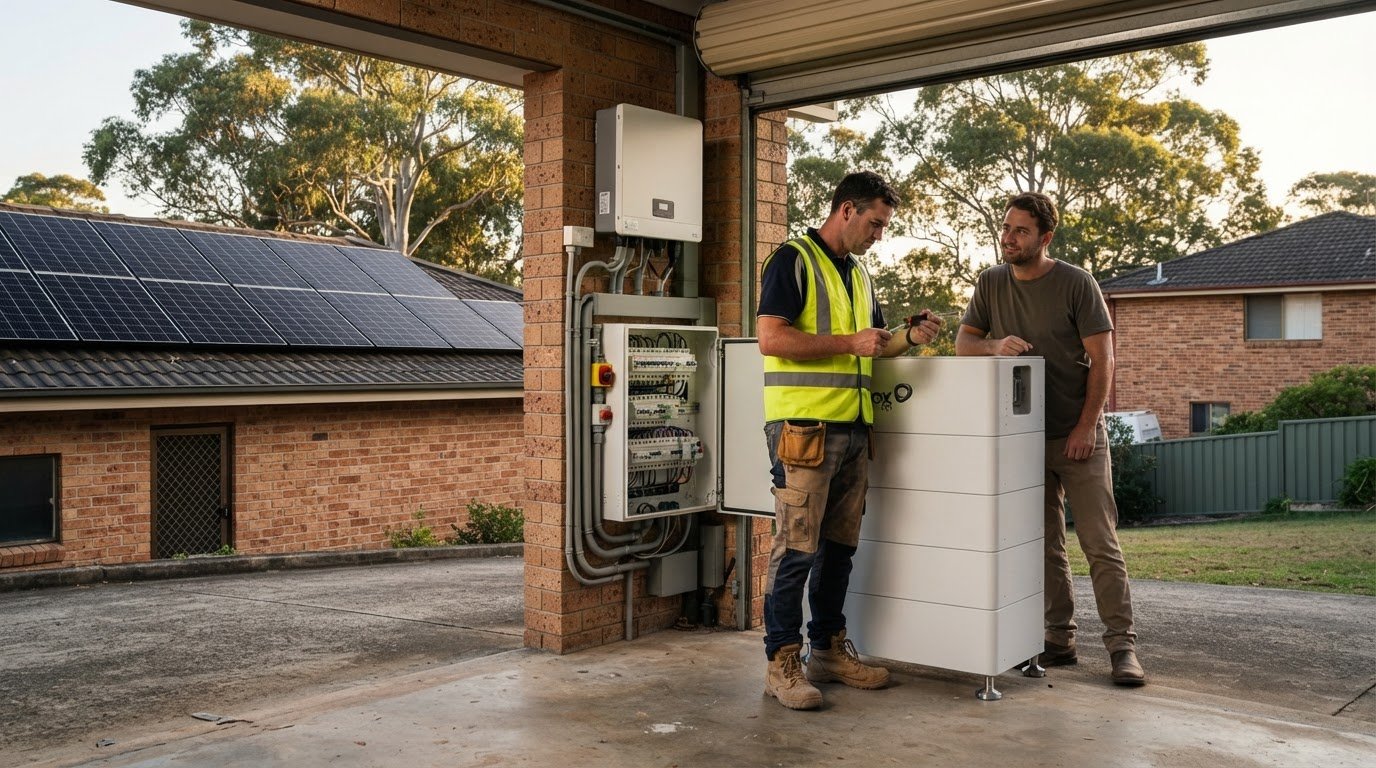
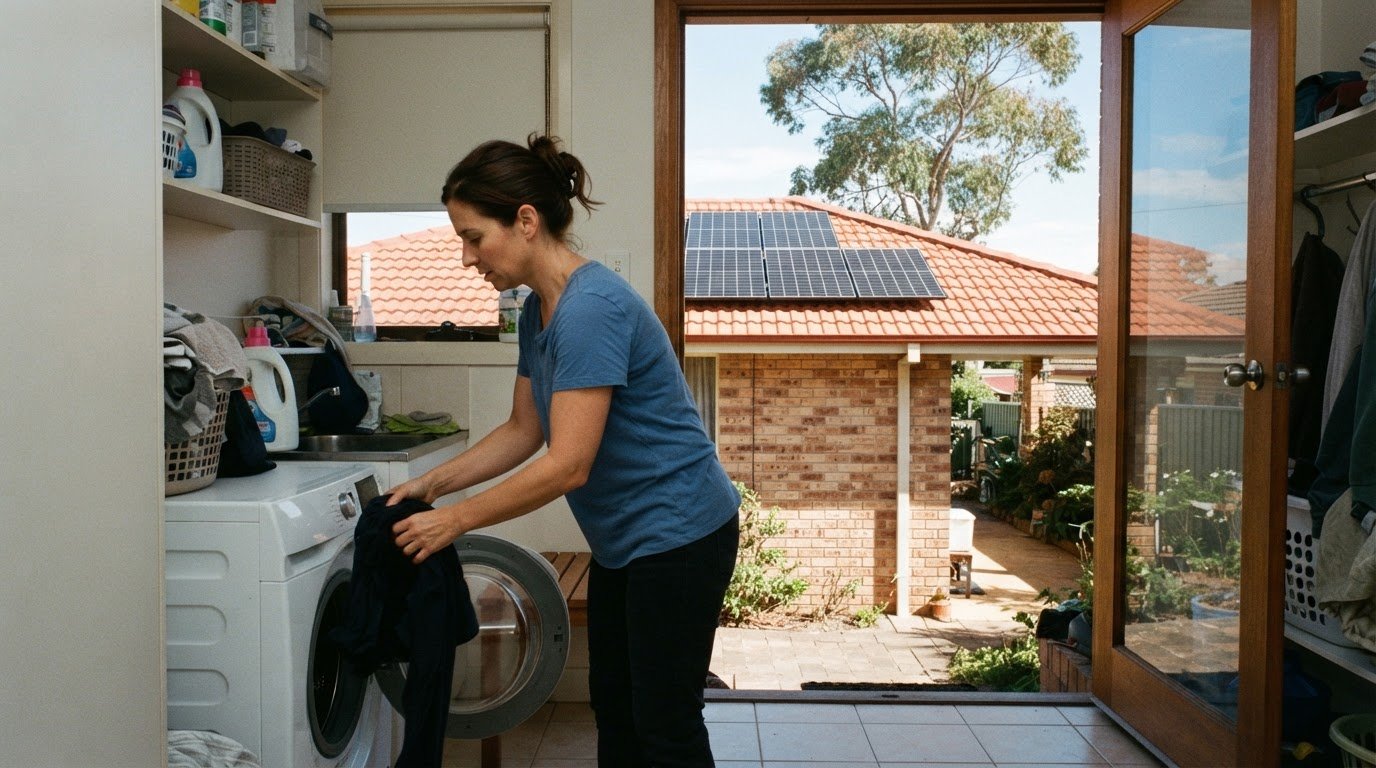
Timing matters. Run electricity-intensive appliances during daylight, when solar generation is available. A battery can store surplus energy after the home’s immediate needs are met, then supply power later, such as after sunset. Cloud can reduce generation and leave less surplus to charge a battery, so the energy available for evening use varies with weather and household demand.
Whether to add a battery depends on when your household uses power and how much surplus your system produces. If most electricity use happens after daylight, stored solar energy may help reduce grid use. If your home uses most of its solar power as it is generated, there may be less surplus to store. For Sydney households, consider winter solar panel performance alongside usage across the year. A battery stores energy; it doesn’t generate extra.
Two incentives may help eligible households. The federal Small-scale Renewable Energy Scheme (SRES) can provide an upfront discount for eligible rooftop solar through small-scale technology certificates. In NSW, the Peak Demand Reduction Scheme (PDRS) provides upfront payments for household battery storage capable of supporting the grid during peak demand.
Rain can wash dirt and debris from panels, but persistent soiling, a faulty inverter, damaged components or an electrical issue can reduce output. Don’t climb onto the roof or handle electrical equipment: falls and electric shock are safety risks. Have suspected faults assessed by appropriately qualified solar and electrical professionals.
How sunlight and temperature affect winter solar generation
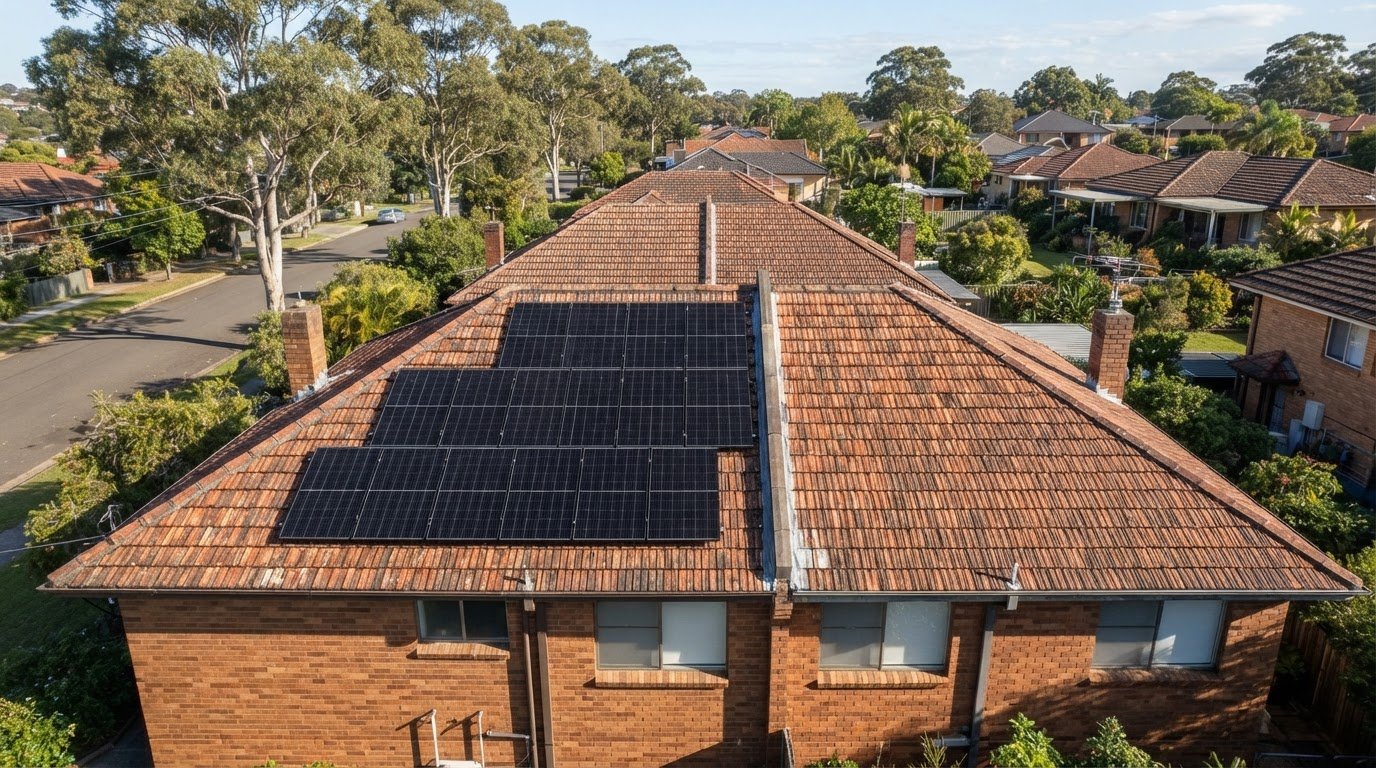
Winter solar production depends on the sunlight reaching your panels, daylight hours and roof exposure. Together, these conditions determine how much electricity a Sydney solar system can generate.
How Panels Generate Winter Electricity
Solar panels convert sunlight into electricity, so they can work in winter even when the air is cold. Temperature affects panel efficiency, but sunlight drives generation. Around 25 degrees Celsius is the stated optimal operating temperature; above that, performance can drop by about 10% or more. Cooler conditions can therefore support efficient operation, although shorter daylight hours still limit the total time available to generate.
Cloud cover reduces direct sunlight, but panels can still produce electricity from indirect light. On cloudy days, output can be around 10-25% of rated capacity. Low cloud in Australian winters, particularly in southern regions, can reduce output by 70-90%. Rain may clear some dirt from panels, while shadows from trees or nearby buildings can restrict sunlight even when surrounding skies are clear.
Panel Tilt and Sydney Winter Output
Panel tilt is the angle between a panel and the horizontal roof surface. A steeper tilt can favour winter sunlight, but a year-round installation balances seasonal conditions. For Sydney, 60 degrees is listed as the ideal tilt for north-facing panels to maximise winter output; 30° to 35° is recommended for year-round performance. Roof design and shading also affect the practical result.
There isn’t one fixed daily figure per kilowatt for both June and July, because cloud, roof direction and shadows change generation. A Sydney 6.6 kW system averages 16.99 kWh per day in winter. In the capital-city comparison for June, a north-facing 6.6 kilowatt system gives Sydney 71% of its annual-average production. Darwin records 112%, Brisbane 75%, Perth 66%, Canberra 60%, Adelaide and Melbourne 57%, and Hobart 49%.
To understand roof exposure through winter, a professional assessment of panel orientation and shading can help identify conditions that affect solar production.
Winter solar output compared with electricity consumption
Seasonal output and household consumption don’t always line up. In Sydney, compare generation with electricity use by time of day, not just monthly totals.
Seasonal Daylight and Sydney Solar Output
Seasonal daylight is the time available for panels to receive sunlight and generate solar power. Sydney has about 9-10 hours of daylight from June to August, and June is usually the month of least solar energy output across much of Australia. Shorter days limit generation time; winter weather and roof shading can reduce output further.
Capital-city comparisons show that winter production differs across Australia. Sydney’s results won’t represent Darwin or southern cities, where local conditions and daylight patterns differ. For a Sydney home, compare winter and summer output across equivalent periods, while noting weather and any new shadows from trees or nearby buildings.
Monitoring Winter Solar Output
Monitoring means tracking your system’s generation and your household’s electricity use. Review daily or monthly production in kilowatt-hours, then compare it with consumption over the same period. This helps distinguish normal seasonal changes from a sustained drop that may need investigation.
Also check how much solar power your home uses directly and how much it exports. For example, lower exports on a winter afternoon could reflect less generation, higher household consumption, or both. Record weather and shading changes alongside the figures to make comparisons more useful.
Estimating Output by Postcode and System Size
A postcode-based estimate uses local solar conditions and system capacity to approximate generation. Enter your Sydney postcode and system size in kilowatts, then compare the estimate with household consumption for the same period. Treat it as a planning guide, not a prediction for every day.
Output can vary between Sydney suburbs due to roof direction, tree growth, nearby buildings and local weather; there’s no single variation figure that applies across the city. To refine an estimate, account for winter shading and roof sun exposure, then compare actual generation with the estimate over time. Separate daytime use from evening consumption to see when grid electricity is still needed.
Summer and winter solar production
Sydney solar production is 53% lower in winter than in summer. The seasonal gap reflects changing sunlight, not a switch that stops panels working. Daylight hours vary by season, giving panels more time to generate in summer than in winter. Longer days give panels more time to generate electricity and can create more surplus for household use or export.
Winter’s shorter days concentrate generation into a narrower part of the day. Cloud and shadows can further affect output, so daily results vary with weather and roof conditions. A lower winter total is expected. Compare similar periods and consider these conditions before treating a seasonal dip as a fault.
Seasonal production also changes how well solar generation matches household consumption. In summer, longer daylight can increase opportunities to use solar power as it is generated. In winter, a household may draw more electricity when panels produce less, particularly outside daylight hours. The useful comparison is not just total generation, but how much production coincides with household demand.
When planning a solar system, assess the full year rather than sizing around summer’s strongest production alone. Consider winter output alongside daily consumption, roof orientation, shading and the inverter’s role in converting panel electricity for household use. This helps set realistic expectations for seasonal production and how much grid electricity you may still need.
For an existing system, compare seasonal production with its own past performance, taking weather and shading changes into account. For a new installation, discuss the balance between annual generation and winter household needs. A system designed around one summer peak may not reflect how your home uses energy across the year. Discuss a solar system designed for year-round use to make that seasonal balance part of the planning.
Sky High Solar and Electrical
Sky High Solar and Electrical can help you plan a solar system around Sydney’s seasonal generation and your household’s electricity use. If you’re considering a new installation, roof orientation, shading and when you use power all influence how well the system fits your needs.
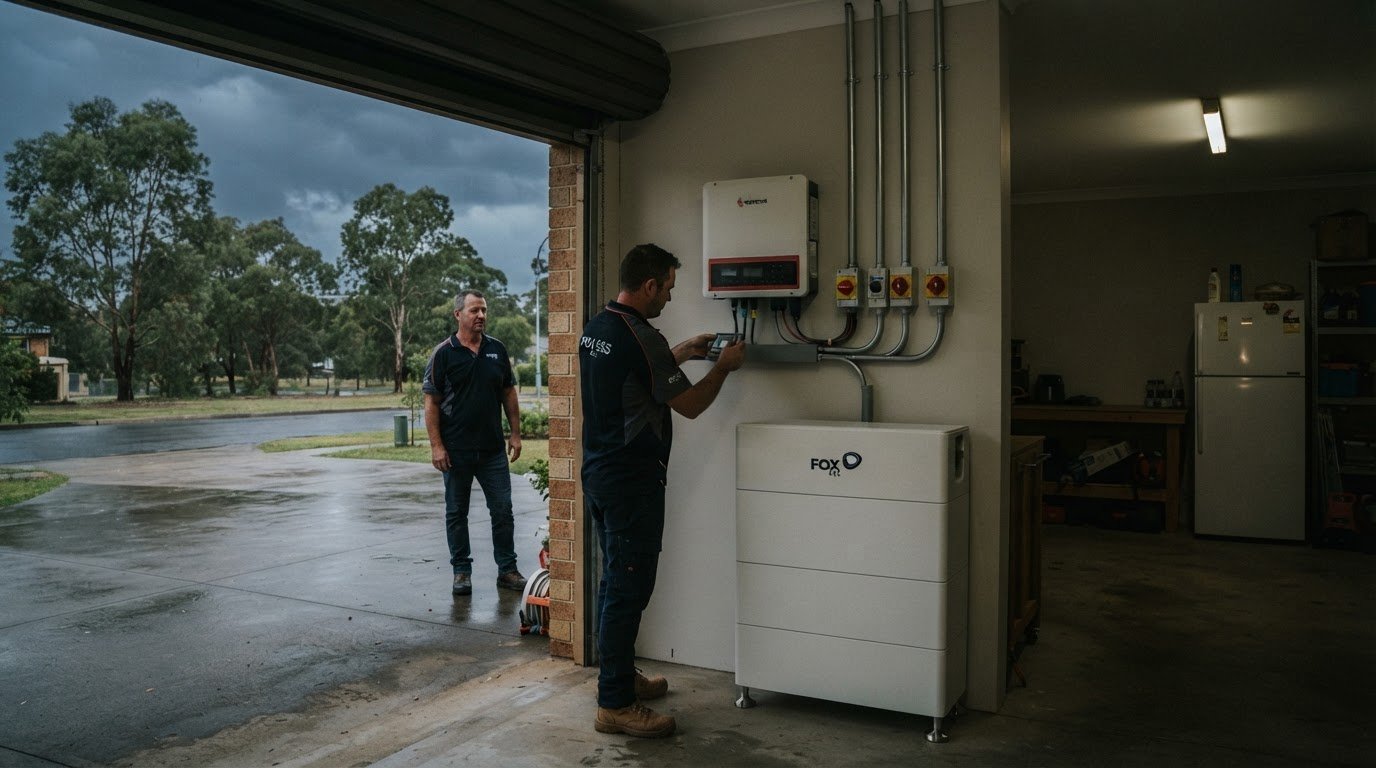
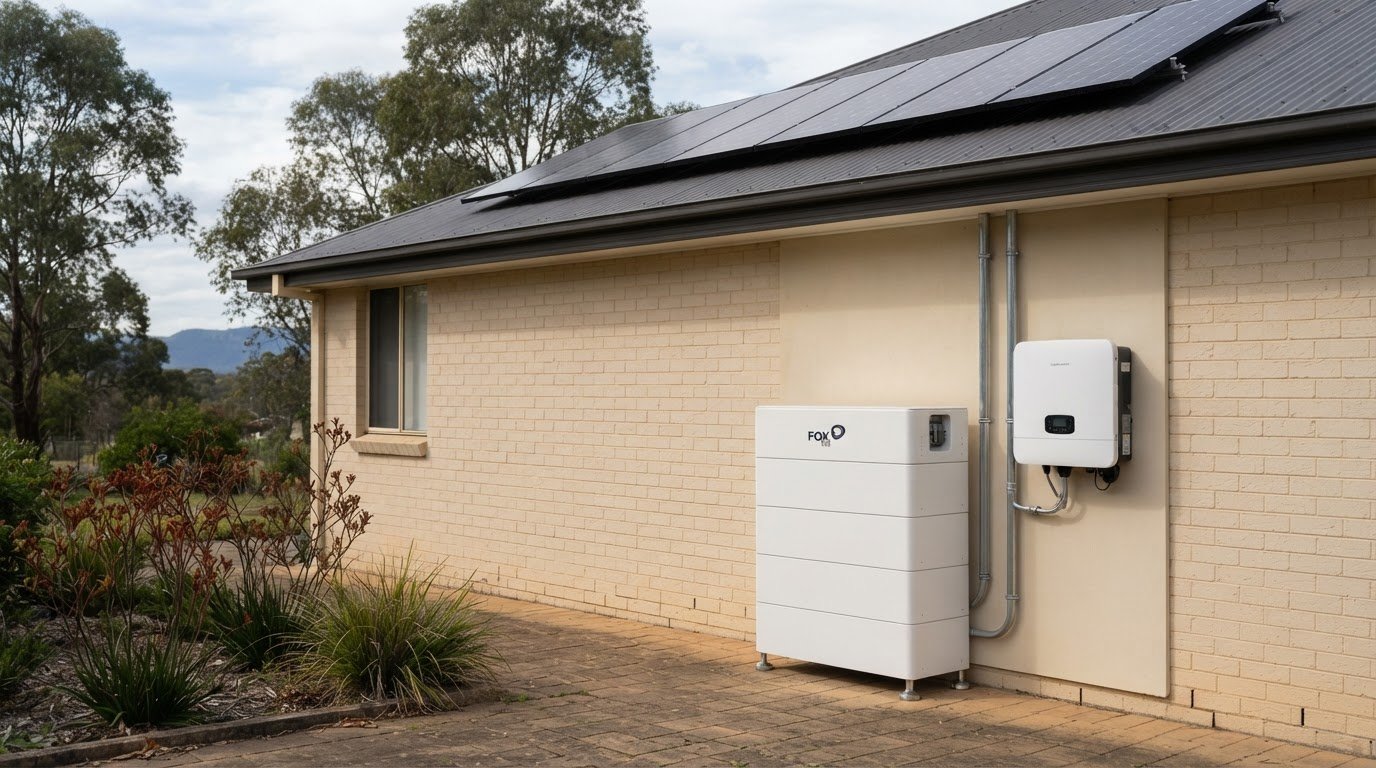
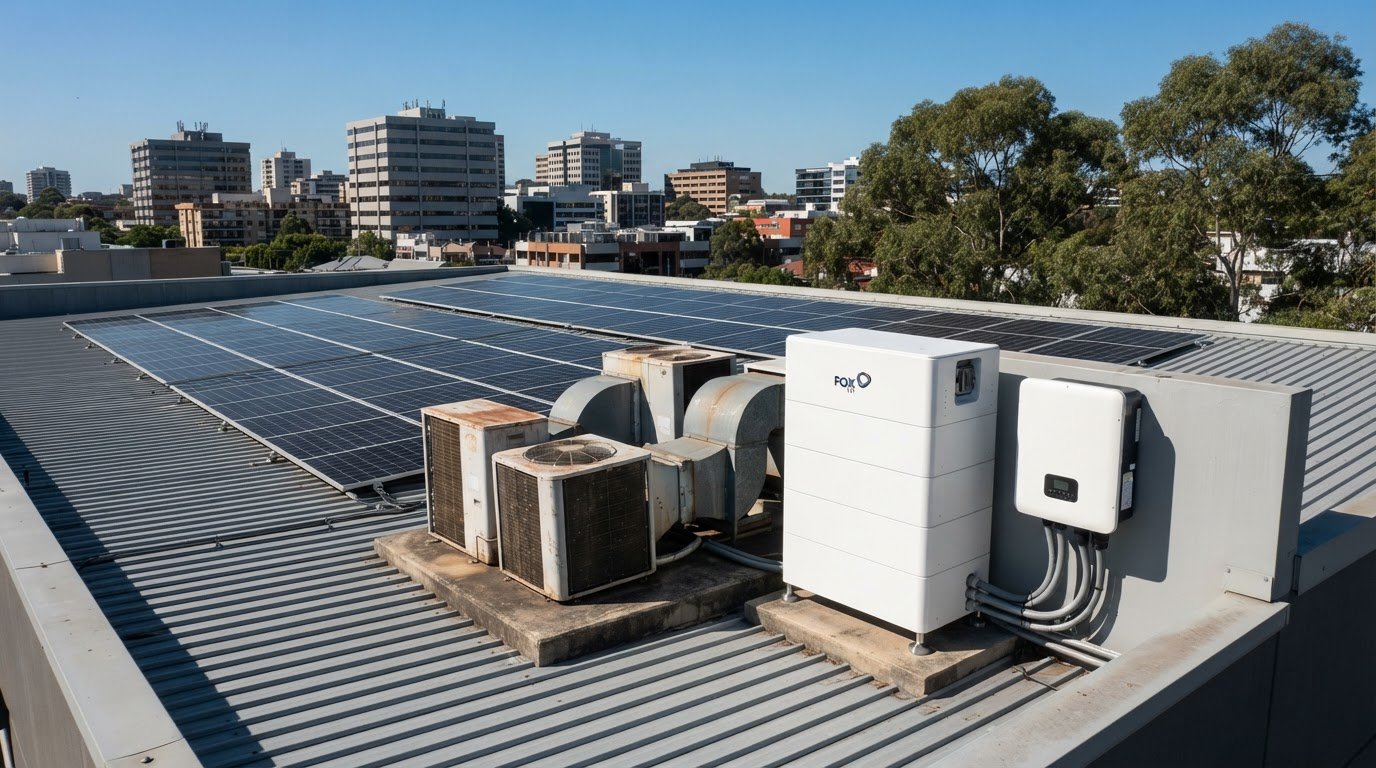
Its 6.6 kW and 10 kW Solar Panel Installation options provide different system capacities for residential and commercial properties. If you’re considering storing surplus generation for later use, the FOX ESS CQ7 High Voltage Storage Battery is another available option. The right setup depends on how your home uses electricity during daylight and after sunset, not just its summer output.
Discuss your winter generation concerns, household consumption patterns and plans for solar storage with Sky High Solar and Electrical. Contact Sky High Solar and Electrical to talk through your next step. A considered approach can help you make informed choices for a more energy-conscious home.
Plan your solar use around the seasons
A practical plan for solar panel performance in Sydney during winter starts with your household routine. Consider which activities can run during daylight, when electricity use shifts into the evening, and whether storing surplus energy suits your needs. Using solar electricity can reduce the amount of grid electricity your household needs to buy and lower emissions associated with electricity use. These choices help shape a system around how you live, rather than relying on summer output alone.
Before making changes, bring together your priorities: when you use the most power, whether you’re interested in battery storage, and any concerns about your roof’s winter sun exposure. This gives the conversation a clear focus and helps connect system design with everyday energy use. There’s no single seasonal setup for every home, so your priorities are a useful starting point.
Ready to discuss your household’s solar plans? Contact Sky High Solar and Electrical to talk through your next step. A considered approach can help you make informed choices for a more energy-conscious home.
Frequently Asked Questions
Do Solar Panels Affect Payback Differently in Winter?
Winter can influence payback, but assess a system’s financial contribution across the full year. Distinguish between solar electricity that replaces power you would otherwise buy and electricity exported to the grid; those uses can have different financial value. Reviewing your tariff alongside household energy habits helps show how seasonal generation fits your overall savings, rather than treating winter output as a standalone result.
How much electricity do solar panels produce in Sydney during winter compared with summer?
Winter production is lower than summer production in Sydney, but the amount for a particular home depends on its system and site. For a practical comparison, distinguish the system’s rated capacity, measured in kilowatts, from electricity generated, measured in kilowatt-hours. Check your system’s generation records across comparable seasonal periods; its rating alone doesn’t tell you its actual daily output.
Which roof orientation and tilt maximise winter solar generation in Sydney?
For a winter-focused configuration in Sydney, the described setup uses a north-facing roof with a steeper panel angle. Roofs rarely match an ideal angle perfectly, so the layout also needs to account for roof shape, usable area and obstructions. If a roof has more than one suitable plane, the design can balance winter exposure with generation across the year, rather than treating one winter setting as right for every household.
Can Sydney households reduce winter electricity bills with solar panels and battery storage?
Yes. Solar can supply household electricity as it is generated, and a battery can store surplus for later use. One practical option is setting a heat-pump hot-water timer to run during daylight, using solar energy to heat water. The benefit depends on matching flexible loads with generation and using stored energy when household demand continues after solar production ends.