

 Sydney
 0452 243 240
Blog
How many solar panels does your Australian home need?

For many Australian homes, a 6.6 kW solar system is a useful starting point, often made up of 13 to 15 panels. A calculator for what size solar system you need in Australia can help narrow the estimate, but the right capacity depends on how much electricity your household uses and when you use it.
It’s natural to start with your power bills, but a system that matches your average usage may not suit your roof, shading or plans to add an electric vehicle, pool or battery. Australian households use around 11-23 kWh of electricity per day, so there isn’t one panel count that fits every home.
This guide explains how to use a what size solar system do I need calculator in Australia to estimate system capacity and panel numbers, then account for Sydney conditions, roof space, shading, budget and network limits. You’ll see why daytime energy use matters, what affects a system’s output, and how to weigh a practical installation against future household needs.
Key Takeaways
- Use your household’s electricity use and the times you use it to estimate system size, rather than relying on household averages alone.
- Factor in future changes, such as adding an electric vehicle, pool or battery, before settling on a panel count.
- Compare usable roof area, orientation and shading with your preferred system size; these can affect how much solar your home generates.
- Include inverter and network export limits in your estimate, as a larger system may not be able to send all its excess power to the grid.
Solar Panel System Size Calculator | How Many Panels Do I Need?
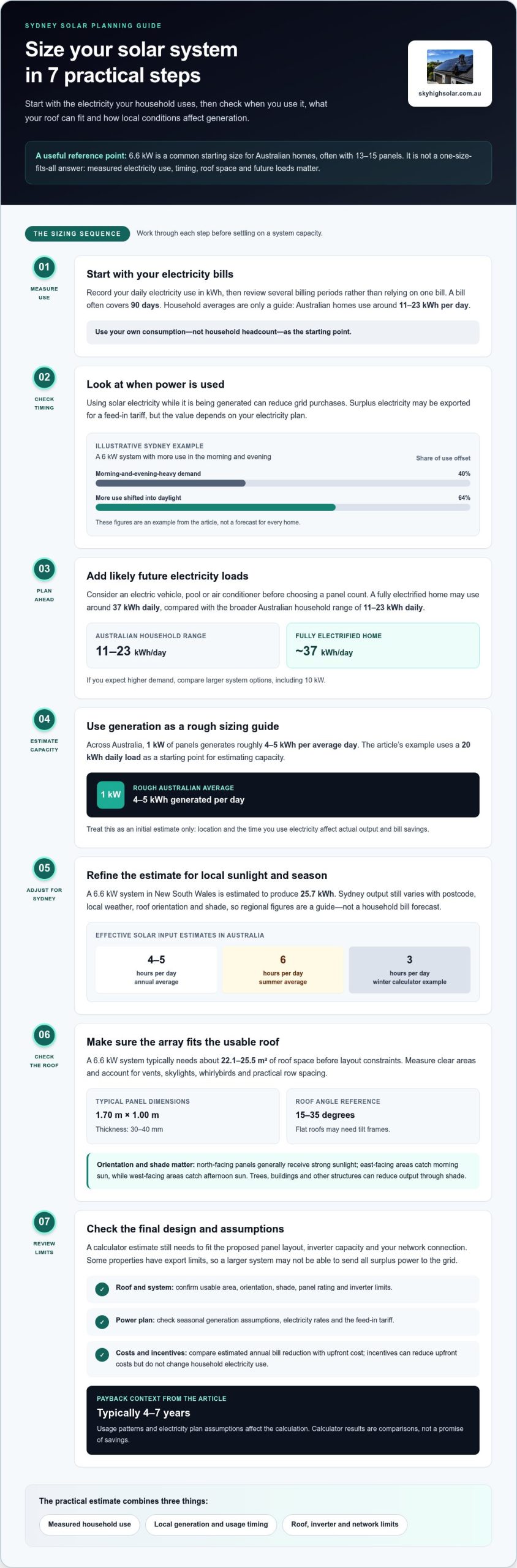
A 6.6 kW system is a common starting point for Australian homes, often using 13 to 15 panels. There’s no fixed size for households with 1-2, 3-4 or 5+ occupants: electricity use, timing and future loads matter more than headcount.
Planning for Future Electricity Needs
Future electricity needs are the household loads you expect to add or increase after installation. An electric vehicle, pool or air conditioner can raise consumption, so size estimates should account for those plans, not just current bills. A fully electrified home may use around 37 kWh daily, compared with the broader Australian household range of 11-23 kWh. If you expect more demand, compare larger options, including 10 kW.
Estimating Capacity from Household Consumption
Consumption-based sizing compares your electricity use with the energy a solar system can generate. Start with daily kWh on your bills, then review several billing periods; a bill often covers 90 days. As a rough illustration, 1 kW of panels generates 4-5 kWh per average day across Australia, so a 20 kWh daily load gives a starting estimate. Actual output and bill savings depend on location and when you use power.
Occupancy and Common System Sizes
Occupancy is a useful prompt to examine household routines, but it cannot determine system capacity by itself. A 1-2 person home may use more electricity than a 3-4 person home if it has energy-intensive appliances or electric heating. Australian homes commonly fall around 5-7 kW, with 6.6 kW a typical option. For 5+ occupants, check measured use rather than assuming a larger system is automatically needed.
Daytime occupancy affects self-consumption: using solar electricity as it’s generated reduces grid purchases, while surplus power can be exported for a feed-in tariff. For example, a Sydney 6 kW system may offset 40% of use with morning-and-evening-heavy demand; shifting more use into daylight can raise that example to 64%.
Estimating the right solar system size for an Australian home
Estimate solar capacity by comparing household electricity use with local solar generation, then factor in roof conditions and future loads. A postcode-based calculator can refine the estimate, but seasonal output and your electricity plan also affect potential bill savings.
Australian solar incentives can reduce upfront costs, but they don’t change how much electricity your household uses. The federal Small-scale Renewable Energy Scheme (SRES) provides an upfront discount. In NSW, the Peak Demand Reduction Scheme offers upfront payments for household battery storage that supports the grid during peak demand.
Location changes how much a system generates. A 6.6 kW system is estimated to produce 23.8 kWh in Victoria, 25.7 kWh in New South Wales, 27.7 kWh in Queensland, 29.0 kWh in Western Australia and 23.1 kWh in Tasmania. Sydney estimates also depend on the specific postcode and local weather, so use regional figures as a guide, not a household bill forecast.
Season matters too. Average effective solar input in Australia is estimated at 4 to 5 hours per day annually, with a summer average of 6 hours per day. A calculator using 3 hours per day for winter will produce a different seasonal estimate. Cloud, roof orientation and shading affect actual generation, while a postcode helps tailor the forecast to local conditions.
Cost and savings estimates depend on system capacity, installation requirements, electricity rates and how much solar power your household uses directly. Exported surplus earns the plan’s feed-in tariff, which can change over time; lower export rates make daytime self-consumption more valuable. Battery storage can shift solar energy for later use, but adds to the system investment. Compare the estimated annual bill reduction with the system’s upfront cost to assess payback. Solar payback periods are typically 4-7 years, though usage patterns and electricity plan assumptions affect the calculation.
Use calculator results to compare solar options, not as a promise of savings. Check that the postcode, seasonal generation, incentive and feed-in tariff assumptions match your home and electricity plan.
Roof space, shading, budget and network restrictions
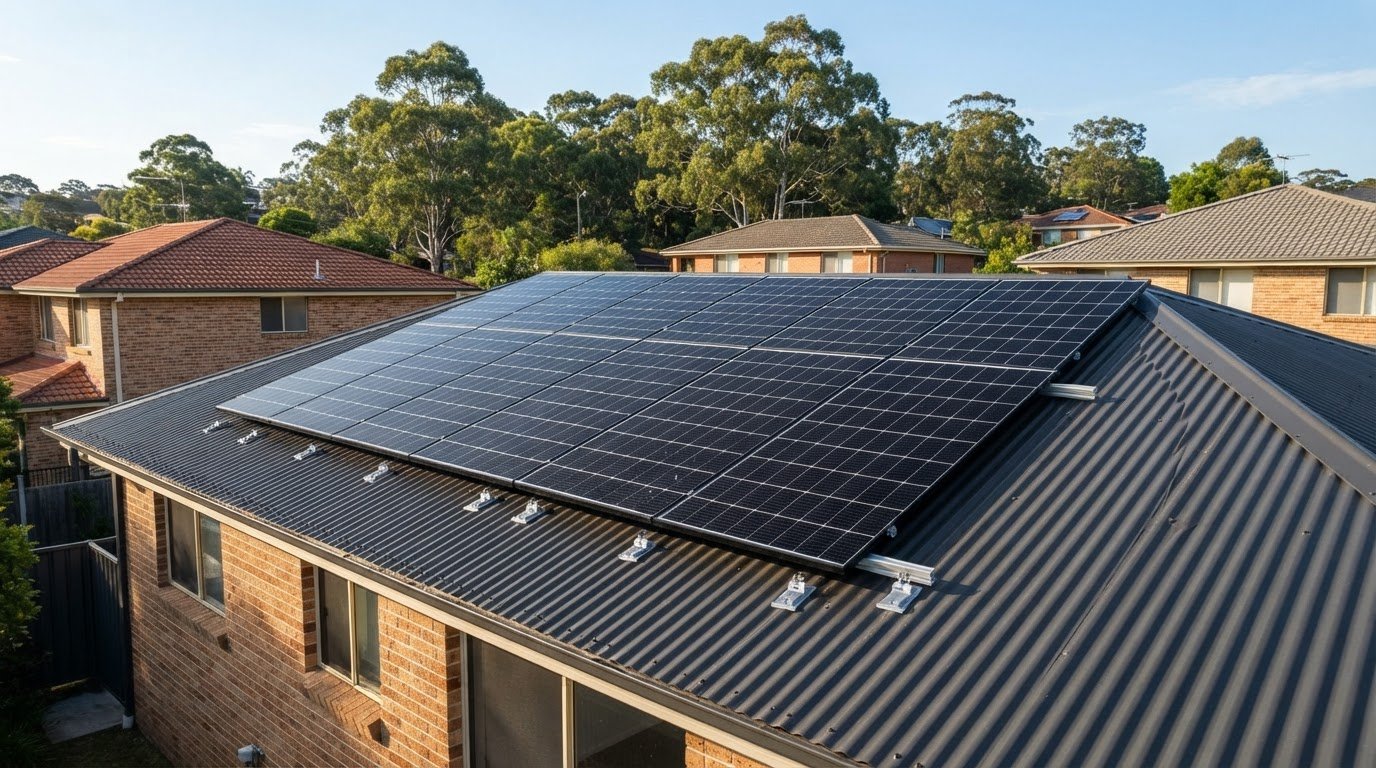
A calculator’s capacity estimate must fit the usable rooftop and your network connection. For a 6.6 kW system, typical roof space is about 22.1-25.5 m², before allowing for layout constraints.
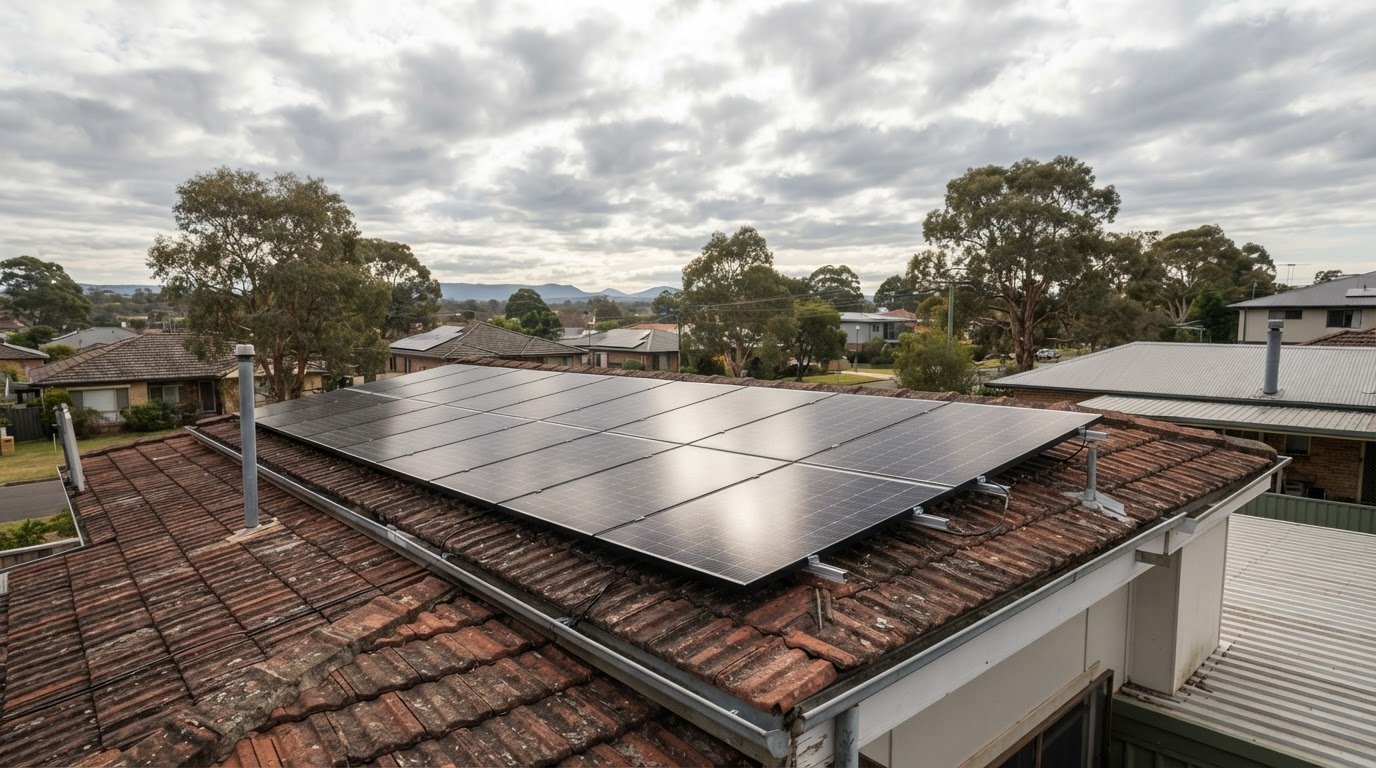
To estimate panel count, measure clear roof areas and note vents, skylights and whirlybirds. A typical panel measures 1.70 m by 1.00 m, with a thickness of 30-40 mm. Panel wattage affects the total count, so check both the proposed system capacity and each panel’s rating. Rows also need enough practical clearance for a workable layout.
Direction, tilt and shade shape annual generation. North-facing panels generally receive strong sunlight, while east-facing roof space captures morning sun and west-facing space catches afternoon sun. Roof angles between 15 and 35 degrees give panels a good chance of catching sunshine. Flat roofs may need tilt frames. Trees, taller buildings and other structures can cast shade that reduces output, so assess shadows across the roof before selecting a layout.
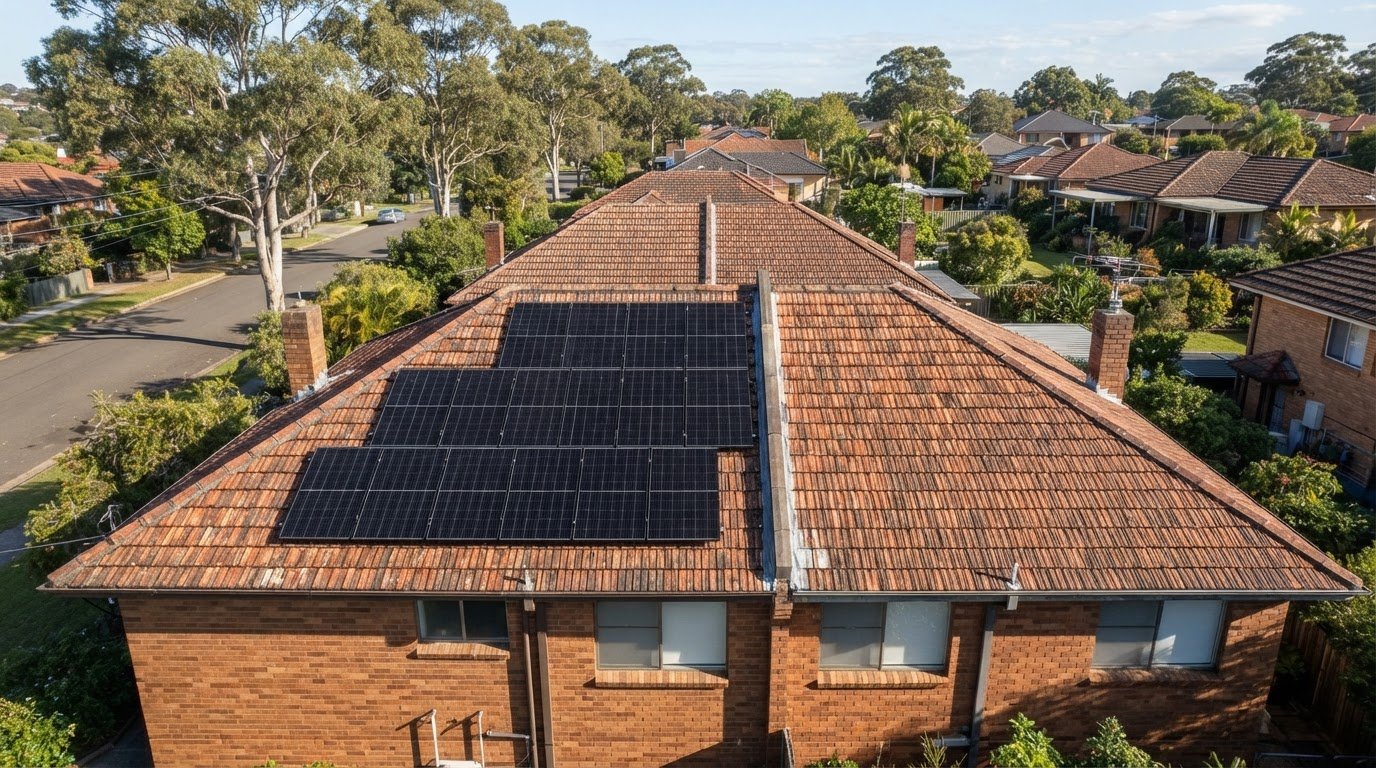
Higher-efficiency panels can produce the same or more electricity using less roof space. This can help when a Sydney home has limited clear rooftop area, but the final layout still depends on obstructions, orientation and shading. Compare the usable roof area with the panel count needed for your estimated capacity, rather than assuming the whole roof is available for installation.
Budget decisions involve balancing system capacity against likely generation and household use. A larger system can generate surplus electricity, while roof limits may require a smaller array or more efficient panels. Network export limits matter too: some Australian properties face limits as low as 5 kW. If generation exceeds the allowed export, excess output may be curtailed. That means the inverter, connection and export limit can affect how much of a system’s annual production reaches the grid.
In Sydney, compare system options using your electricity needs, roof measurements and shading. The right capacity must fit the usable rooftop and connection conditions, not just the calculator’s energy estimate.
Solar system size calculator
A solar calculator converts household electricity use into an initial estimate of panel capacity. Treat the result as a planning guide: the calculator models the information entered, while a roof assessment and network connection determine what can be installed.
Start with your postcode and electricity usage, then enter household demand and the calculator’s solar-generation assumptions. Some tools offer system sizes from 1.5 kW to 30 kW. The range helps compare a smaller array with options suited to higher loads, but capacity alone doesn’t show how much power your household will use directly.
Seasonal assumptions can shift the result. One calculator sets winter effective solar input in Australia at 3 hours per day by default. If a tool uses an annual average instead, it may not show winter generation clearly. Compare seasonal outputs where available, especially if hot water, heating or other appliances drive electricity usage during cooler months.
Meter data makes the estimate more specific. A smart meter records usage every 15 or 30 minutes, revealing when appliances draw power. Interval data can help show whether demand falls during solar production or peaks after sunset. That timing matters: a calculator based only on total daily consumption can miss the difference between daytime self-use and evening grid imports.
Check the calculator’s assumptions before relying on its savings estimate. Postcode, roof direction, shading, system capacity, electricity rates and export tariffs all affect projected generation and bills. The assumed feed-in tariff changes the value assigned to exported electricity, while a battery can affect how much surplus solar power is used later. Compare results with your current plan and realistic usage patterns.
Use the estimate to frame a discussion with an installer, not to select equipment by capacity alone. A practical assessment connects the calculator’s output with roof layout, household loads and network limits. For a tailored solar system assessment, discuss your solar requirements.
Sky High Solar and Electrical: 6.6kw Solar Panel Installation
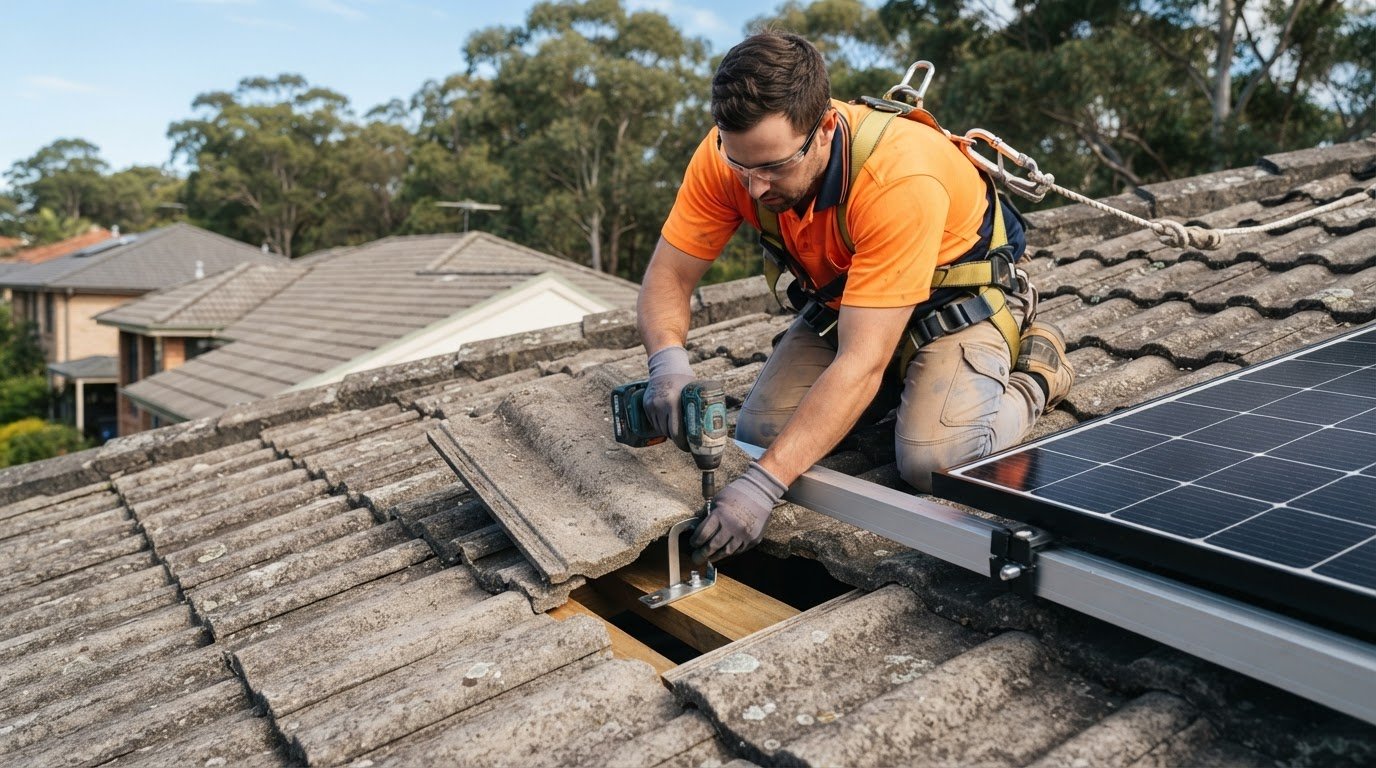
Sky High Solar and Electrical can help turn your household’s energy estimate into a suitable solar installation. Its 6.6kw Solar Panel Installation and 10kw Solar Panel Installation options provide two system sizes to consider against your electricity use, available roof space and future plans.
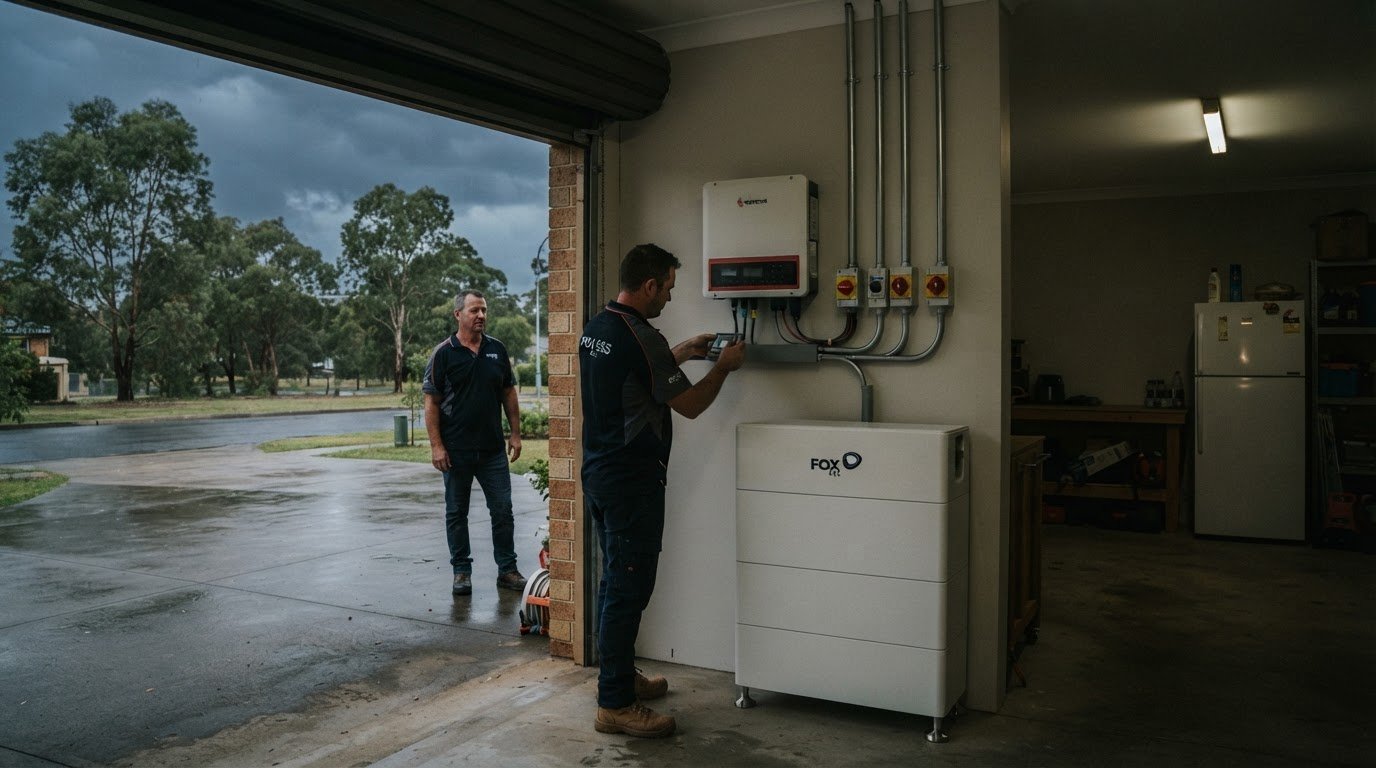
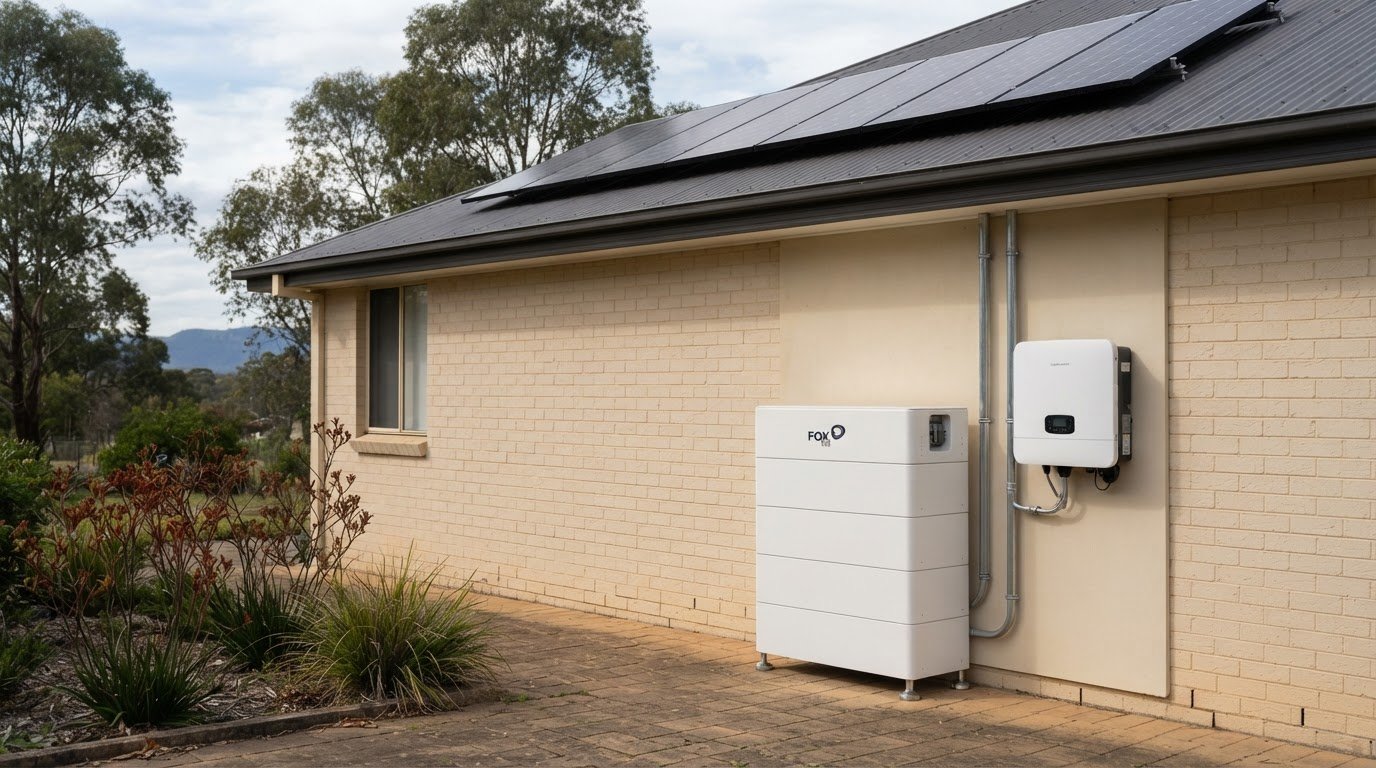
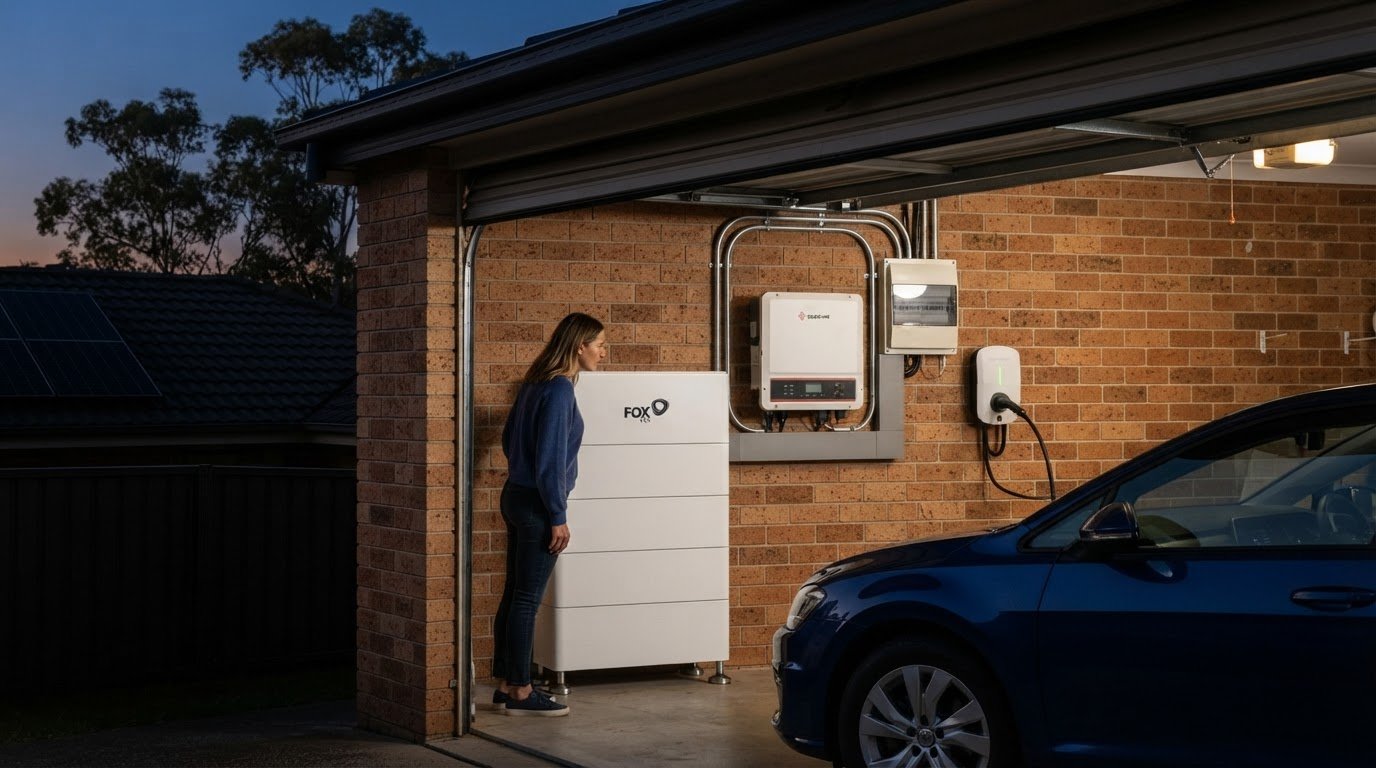
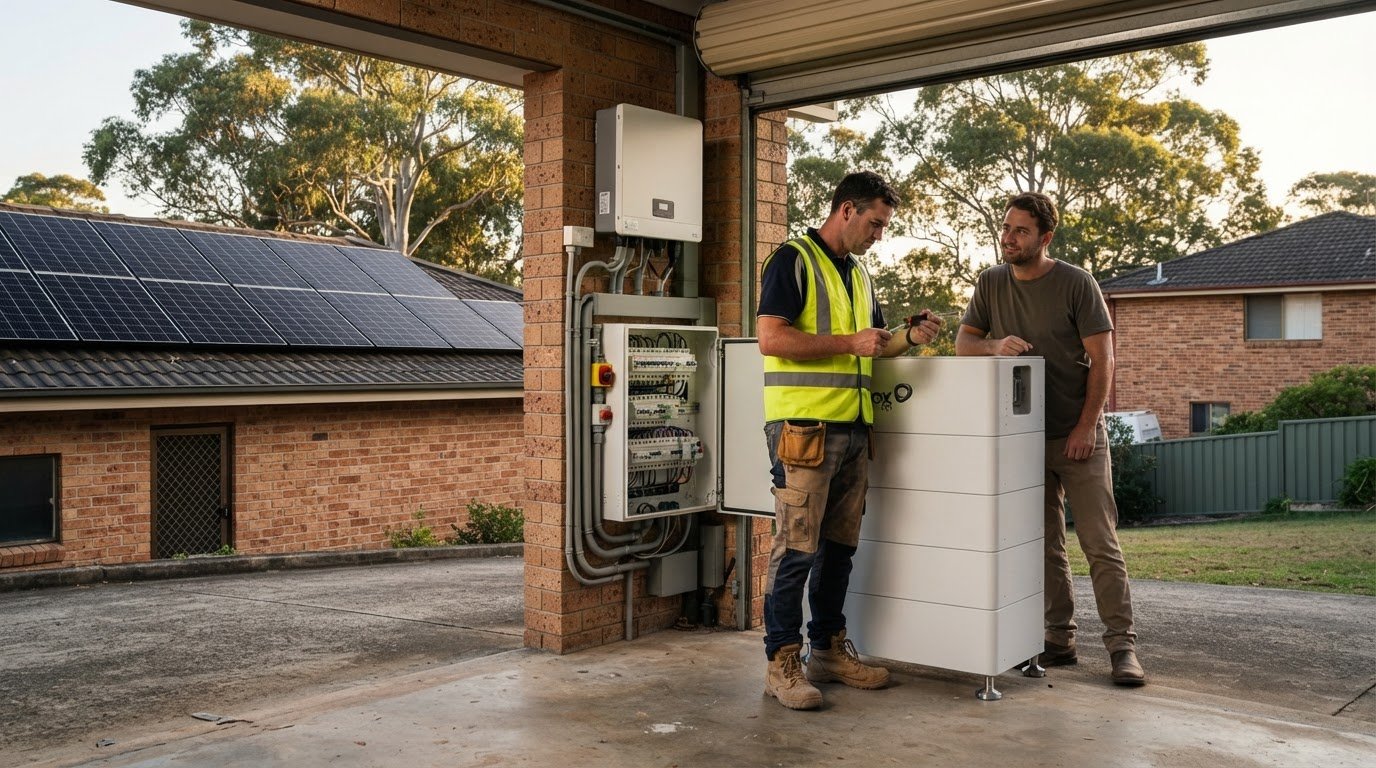
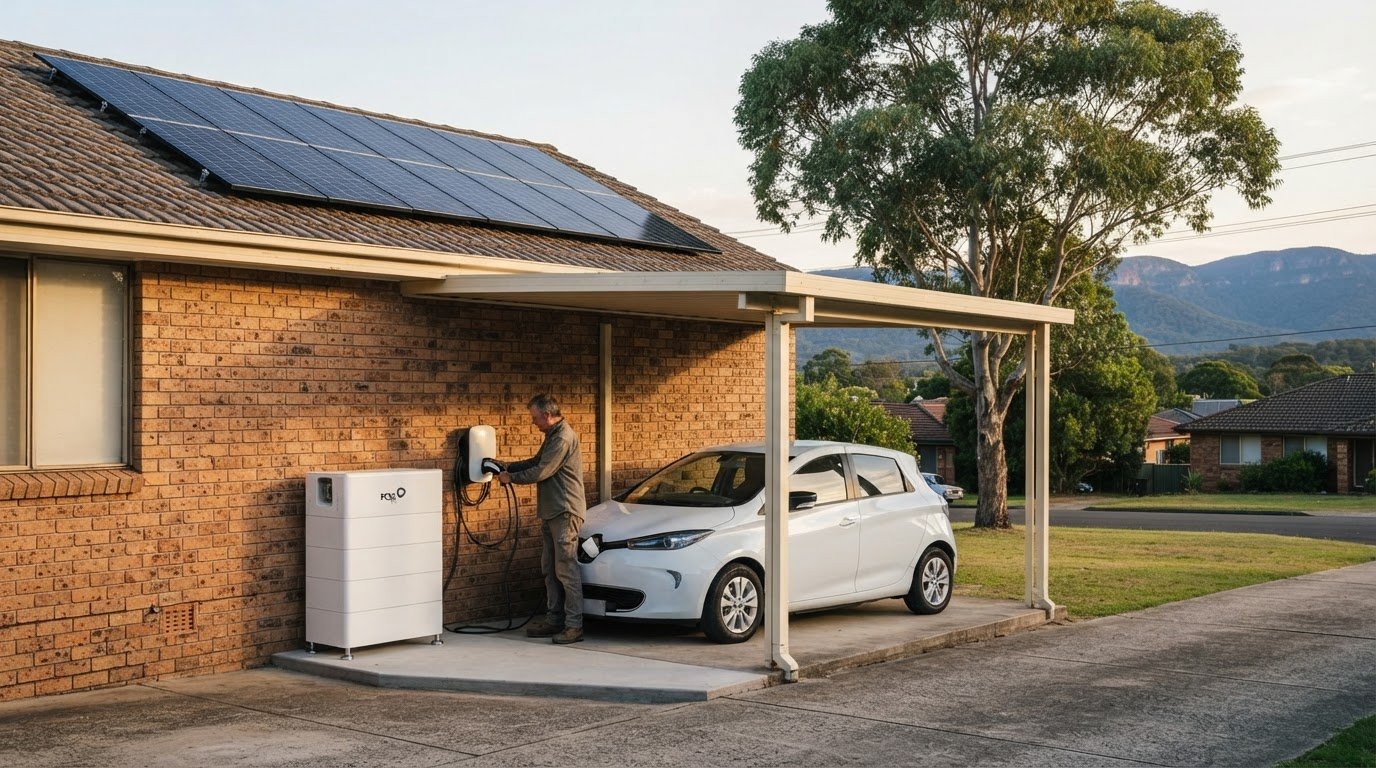
If you’re planning to store surplus solar energy, the FOX ESS CQ7 High Voltage Storage Battery is an available battery option. For households also considering EV charging, the SigenStor Integrated Solar Inverter & EV DC Charger combines solar, storage and charging functions in one named system. The right configuration depends on how your household uses electricity and what you want the system to support.
When you’re ready to discuss a system that fits your home, contact Sky High Solar and Electrical.
Turn your solar estimate into a practical next step
A calculator is a starting point, not a final design. Before deciding, turn its result into a clear brief: what you want the system to achieve, which household priorities matter most, and what you expect to change over time. This gives you a more useful basis for comparing proposals than panel count alone.
If you’re asking what size solar system you need in Australia, use the estimate to guide a conversation about the right configuration for your home. Ask for the design assumptions in plain language, including how the proposed system fits your goals and what the next steps involve. A considered decision can help you choose a system that suits your household, rather than simply selecting the largest option.
For guidance on a solar installation suited to your home, contact Sky High Solar and Electrical. Take the next step with a clearer understanding of what you want your solar system to do.
Frequently Asked Questions
How much roof space do solar panels need?
The roof space needed depends on panel size, system capacity and how panels can be arranged. For a useful estimate, sketch each clear roof section and mark obstructions, then consider whether panels will fit in practical rows. Several small usable areas may accommodate fewer panels than one broad, uninterrupted section, even if their combined area looks similar.
How much electricity will my system generate?
Solar generation varies with sunlight, season, roof direction and shading. A sunny-day estimate differs from an annual average, so check the period a calculator describes before comparing figures. Cloudy spells can reduce output, and shade over part of an array can affect its production. Treat a forecast as an estimate, not a fixed daily amount.
What do you want to know?
For a useful solar estimate, identify the decision you need to make: system capacity, battery use or how much electricity to export. If you have a smart meter, its interval records can show when household demand rises and falls. Reviewing a full year of usage patterns helps account for seasonal routines and gives a clearer picture than a single bill.
How do I calculate the solar system size I need in Australia from my electricity usage?
Start with your electricity consumption, then compare it with estimated solar generation for your location and the months that matter to your household. Check whether demand occurs during daylight or after sunset, because the same total consumption can lead to different grid imports. Include planned appliances or an electric vehicle so the estimate reflects likely future use.
How many kWh does a typical Australian household use per day?
A typical Australian household uses approximately 15.31 kWh of electricity per day. Your household’s figure may differ because heating, cooling, hot water and appliance use vary. Read the consumption section of your electricity bill to find your own usage, and compare multiple billing periods rather than treating one unusually hot or cold spell as typical.
How much electricity does a 1 kW solar system generate per day in different Australian locations?
Daily solar generation varies by location, so one national figure won’t describe every Australian home. A calculator should account for local solar conditions, including Sydney’s seasonal weather and roof exposure. For a meaningful comparison, keep the assumed panel direction, tilt, shading and season consistent between locations; otherwise, differences may come from the inputs rather than geography alone.