

 Sydney
 0452 243 240
Blog
Commercial Solar for Sydney Retail Stores and Bill Savings

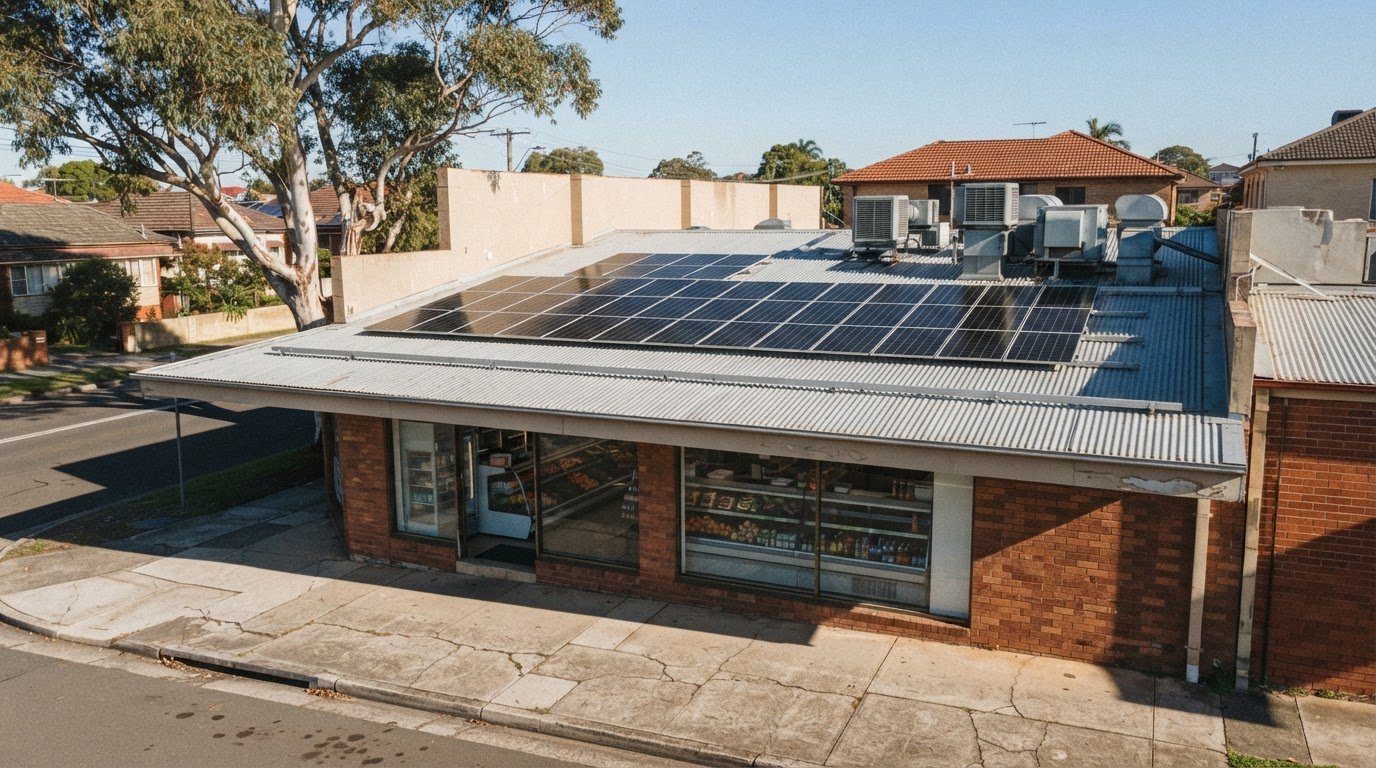
Daytime electricity use is where commercial solar can make the clearest difference to a Sydney retail store’s bill. Generating power on site can reduce the electricity a business draws from the grid during trading hours. The potential savings from commercial solar for retail stores in Sydney depend on daytime consumption and how closely solar generation matches that demand.
For retailers and office operators, electricity costs can be a significant ongoing expense, particularly where lighting, refrigeration, air conditioning or equipment runs through the day. It’s reasonable to want a clear view of what solar could deliver before investing. Roof space, panel orientation, shading, system capacity, operating hours and electricity tariffs all influence generation and bill savings.
This guide explains how solar can offset daytime electricity use, what affects generation at a Sydney site and when battery storage may help. It also outlines federal incentives that may apply, helping you assess the factors behind a suitable system and its potential value.
Key Takeaways
- Estimate bill-saving potential by matching your daytime electricity use with the solar power your site can generate.
- Roof space, orientation, shading, operating hours and tariffs all shape system output and the value of battery storage.
- Federal incentives differ by system size: systems larger than 100 kW may receive Large-scale Technology Certificates through 2030, according to the Clean Energy Regulator.
- Understand how a professional installation is planned around your site’s energy needs, available space and trading operations.
How Much Can a Commercial Solar System Save on My Electricity Costs?
Solar can lower electricity bills when daytime generation matches a store’s consumption. A retailer can use solar power directly for refrigeration, lighting and air conditioning during trading hours, reducing grid imports. The value depends on system size, the electricity tariff and how much generation the business uses on site rather than exports.
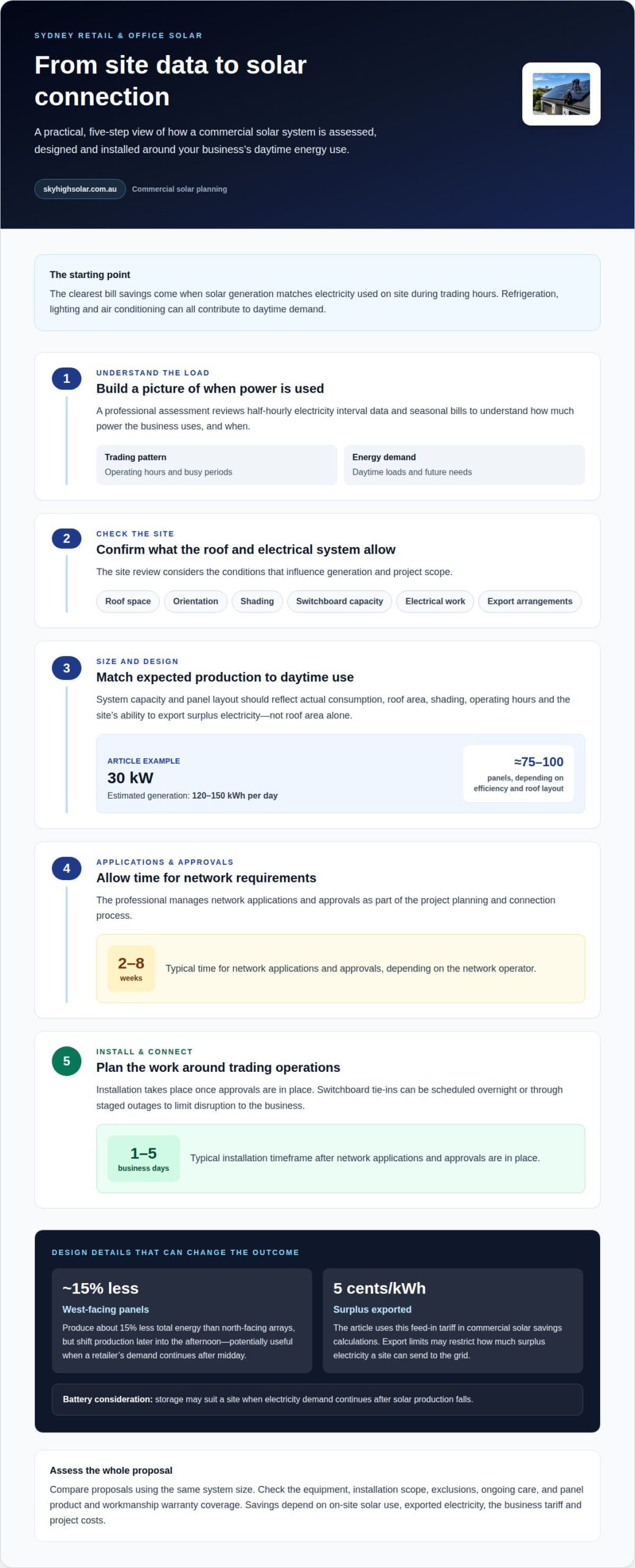
A professional assessment uses half-hourly electricity interval data and seasonal bills to understand when and how much power the store uses. The installer also considers operating hours, roof space, orientation, shading, switchboard capacity and future energy needs. Together, these details guide the proposed system size and show how generation may align with busy periods. Battery storage may suit sites with demand that continues after solar production falls.
Commercial solar installation prices in Sydney depend on system size, roof conditions, electrical work, equipment and project requirements. The price depends on the case and is provided after a quote request. A quote should make the proposed system, installation scope and relevant cost factors clear, so the business can assess the investment against its consumption and tariff.
When comparing commercial solar proposals, check that they use the same system size and clearly identify equipment, installation work, exclusions and ongoing care. Review panel product and workmanship warranty coverage, rather than relying on the headline price alone.
Leased retail sites and shopping centres may need to clarify who owns the system and receives the savings. With an embedded network, solar generation can be allocated and on-billed to tenants under applicable rules. Without one, savings accrue to the landlord’s meter and reduce recoverable outgoings.
The professional manages site assessment, system design, network applications, approvals, installation and connection. Network applications and approvals typically take 2-8 weeks, depending on the network operator; installation takes 1-5 business days once these are in place. To limit trading disruption, switchboard tie-ins can be scheduled overnight or through staged outages. Ongoing solar system servicing helps identify faults that may affect generation.
Commercial solar systems for retail businesses and offices
Retail premises and offices differ in roof layout, trading patterns and electrical loads. Commercial solar for retail stores in Sydney needs to match panel production with site demand and export arrangements.
Retail and office solar services
Commercial solar planning covers rooftop suitability, panel layout, system capacity and how the system connects with the property’s electrical infrastructure. For a supermarket, refrigeration and continuous cooling can shape the design; an office may have stronger daytime demand from computers, lighting and air conditioning. Review the proposed production profile against the site’s operating pattern. A commercial solar assessment can bring these factors into one site-specific design.
Business benefits of commercial solar
Solar can supply power for daytime lighting, refrigeration and air conditioning, helping businesses reduce grid purchases and their electricity bill. It can also support sustainability objectives by using on-site renewable generation. A feed-in tariff pays for surplus electricity exported to the grid; commercial solar savings calculations use 5 cents per kWh. Export limits can restrict how much surplus a site sends to the grid, making it valuable to use generation on-site when possible.
Panel orientation and electricity demand
Panel direction affects both total production and when electricity is generated. West-facing panels produce about 15% less total energy than north-facing arrays, but shift production later into the afternoon. That timing may suit a retailer whose demand continues after midday. For offices using the most power from 8 am to 5 pm, the designer can compare roof orientation with the building’s load profile.
Sizing systems to business electricity use
Size a commercial solar system for a Sydney retail store around actual consumption, available roof area, shading and future demand. A 30 kW commercial system typically uses around 75-100 panels, though panel efficiency and roof layout affect the final design. Retail and shopping-centre sites have different loads from smaller offices, so a single capacity won’t suit every property. Match expected production to daytime use and export capability, rather than sizing from roof area alone. Site-specific design helps Sydney retailers make commercial solar work with their energy use.
Federal renewable-energy incentives for solar systems
Federal incentives depend partly on system capacity. Solar systems up to 100 kW may receive an upfront incentive through Small-scale Technology Certificates (STCs). For solar systems larger than 100 kW, the Renewable Energy Target provides an ongoing incentive through Large-scale Technology Certificates until 2030, according to the Clean Energy Regulator. Eligible systems over 100 kW can earn one LGC per MWh of eligible renewable electricity generated.
For a Sydney retailer, incentives are one part of the financial assessment, not the full return. A commercial solar system’s savings depend on solar energy used on-site, exported electricity, the business tariff and project costs. Most Sydney businesses recover the cost of commercial solar in 3-5 years, but the actual payback calculation depends on the site’s consumption and system design.
For 20 kW, 30 kW and 50 kW systems, compare expected generation with the store’s daytime electricity use. A 30 kW system is estimated to generate 120-150 kWh per day. Savings are higher when the business consumes more of that generation rather than exporting it. A battery may store excess solar energy for later use, but its role depends on when the site uses power.
A professional assessment starts with interval consumption data, seasonal bills and the retailer’s operating hours. The designer reviews roof condition, usable area, shading and panel orientation. These factors affect system size and generation: shading can reduce output, while limited roof space may constrain panel capacity. The assessment also considers inverter selection, battery requirements and export arrangements.
For a useful design comparison, model the proposed system against actual electricity use, not capacity alone. Confirm which incentive applies to the system size and how it is reflected in the project’s financial assessment. This helps a Sydney retailer understand expected self-consumption, exported solar and potential savings before committing to commercial solar.
Sydney commercial solar generation and estimated savings
Sydney solar installations average 3.87 kWh of generation daily per installed kilowatt. A 100 kW system is estimated to produce 141,255 kWh annually and save A$19,917 per year. That estimate assumes 70% self-consumption, so actual savings depend on how much solar electricity the business uses on site.
Other Sydney estimates show how capacity and usage shape results. A 39 kW system is estimated to generate 55,089 kWh annually and save A$10,467 per year. A 70 kW system is estimated to generate 98,879 kWh annually and save A$16,018 per year. These examples also assume 70% self-consumption.
Commercial solar panels produce different amounts of electricity across sites and seasons. Roof direction, shading, panel layout and local conditions affect generation, while daytime demand determines how much electricity offsets grid purchases. To assess the likely effect on your energy bill, compare interval consumption with estimated production, then account for exported electricity and the applicable tariff.
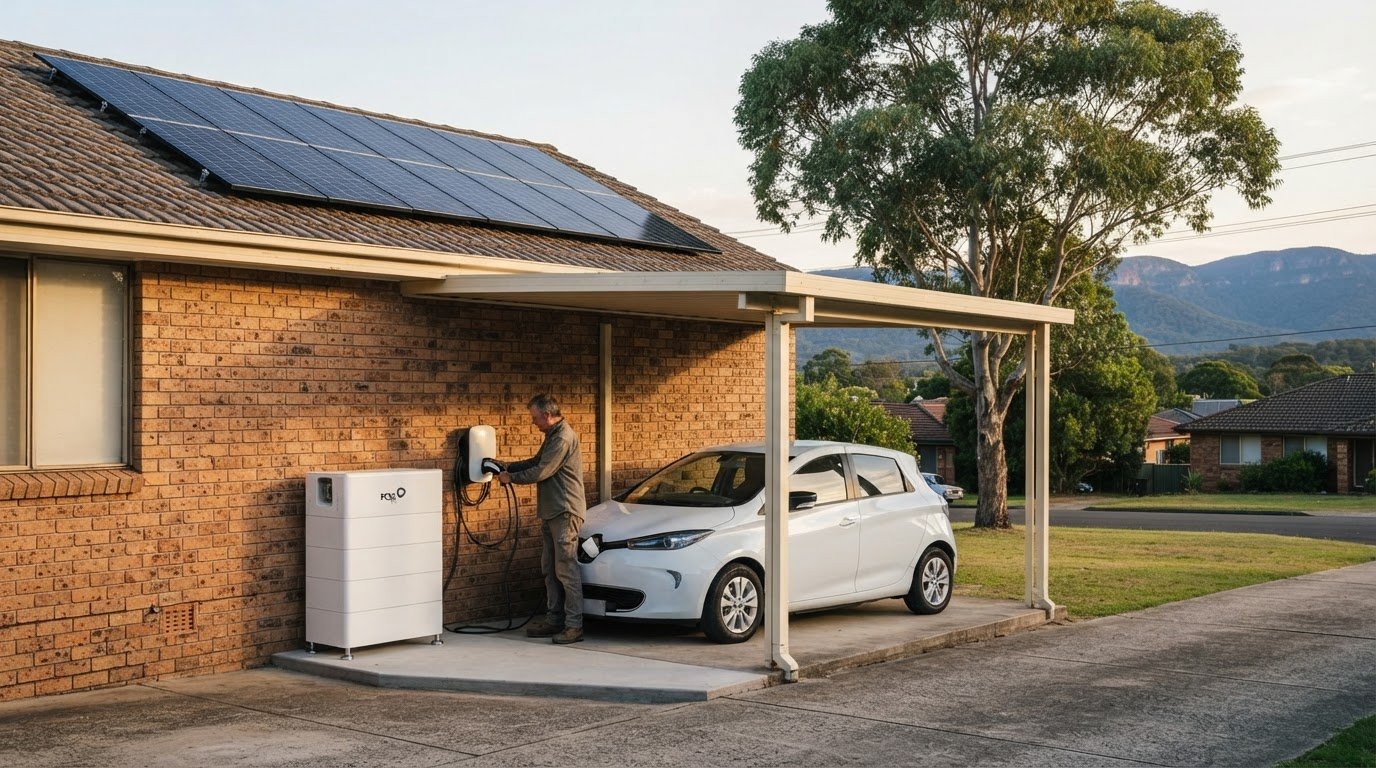
Roof-mounted systems use available building space. Car-park solar structures cost more per kilowatt than roof-mounted systems, but can provide shaded parking and a location for EV charging. Battery storage may hold excess solar electricity for use when generation is lower; its value depends on the site’s demand profile and operating hours. Federal rebates can also affect project economics, depending on system eligibility.
The practical takeaway is to assess generation and self-consumption together, rather than judging a system by capacity alone. A 500 kW system is estimated to generate 706,275 kWh annually and save A$84,753 per year, assuming 70% self-consumption. For a site-specific view of commercial solar generation, arrange a commercial solar assessment that considers roof space, electricity use, storage and EV charging needs.
Sky High Solar and Electrical: Commercial Solar Solutions
Sky High Solar and Electrical provides Commercial Solar Solutions for Sydney businesses assessing whether rooftop generation suits their site. After reviewing electricity use, roof conditions and potential savings, the next step is a professionally planned installation. System design can account for the business’s consumption and operating needs, rather than relying on roof area alone.
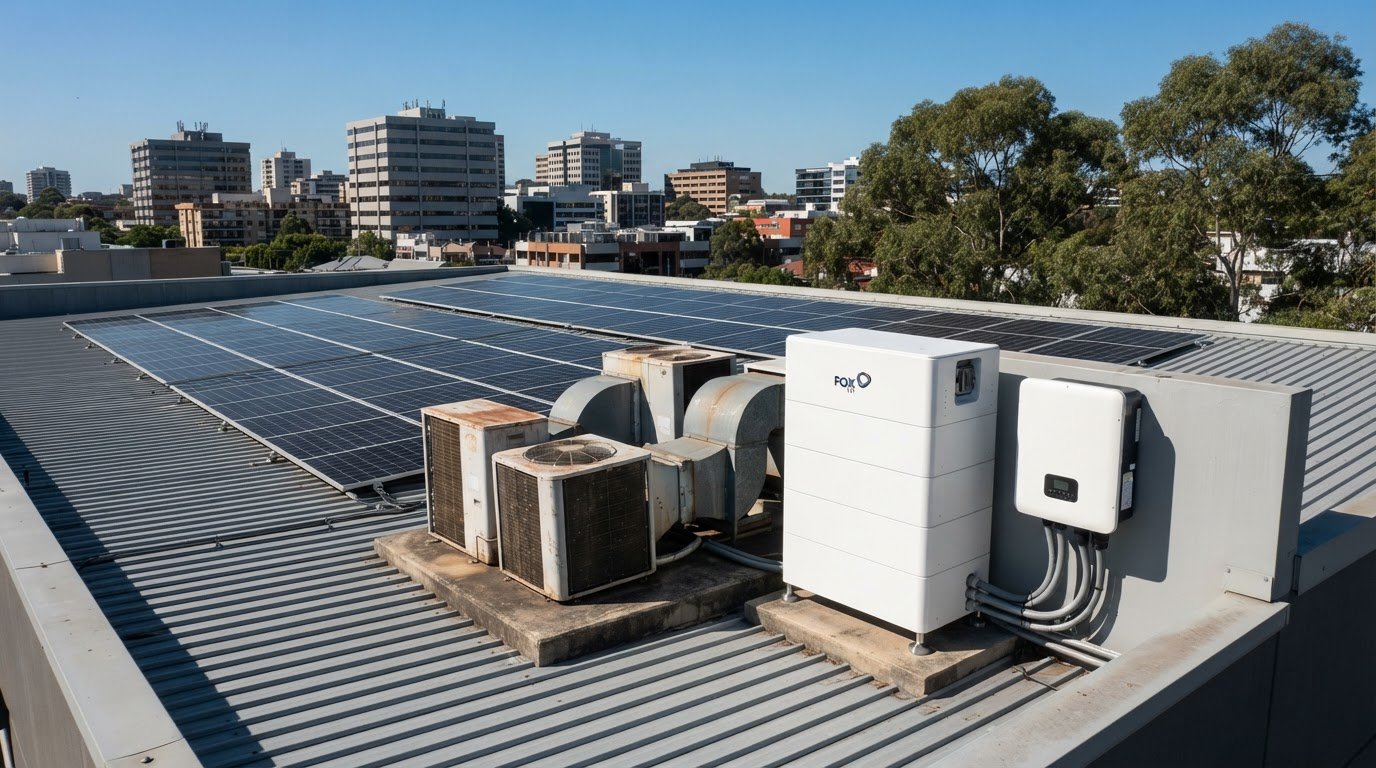
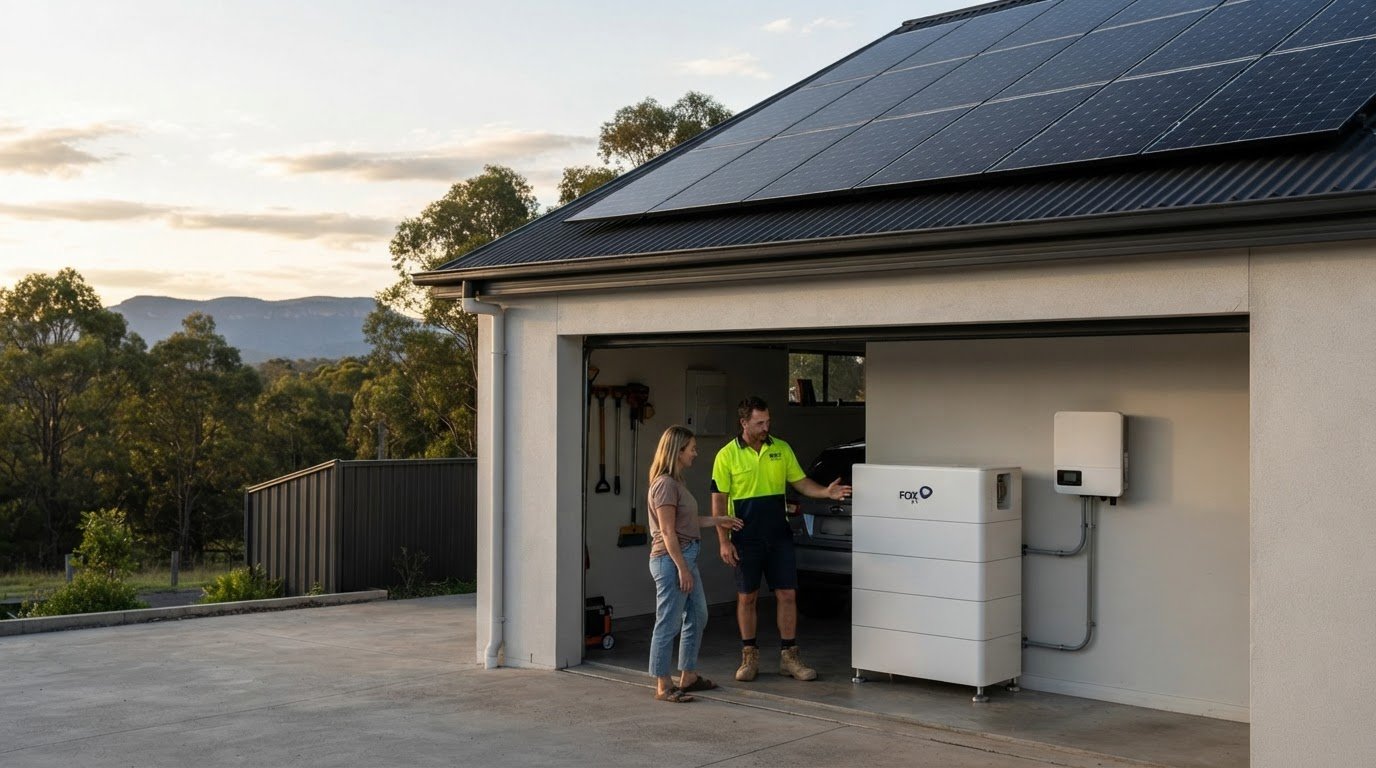
Available options include 6.6kw Solar Panel Installation and 10kw Solar Panel Installation. Where storing excess solar electricity suits the site’s usage pattern, the FOX ESS CQ7 High Voltage Storage Battery is another option. The right configuration depends on how the business uses electricity and when demand occurs.
Contact Sky High Solar and Electrical to discuss commercial solar for your retail store and your site’s energy needs.
Plan your next step with confidence
Choosing commercial solar for retail stores in Sydney means considering how your business wants to manage electricity over time. Frame the project around operational priorities: which loads matter most, how the site may change and whether energy storage is part of your plans. Clear priorities help shape a system around the way your business operates, rather than treating solar as a standalone purchase.
Bring those priorities into a discussion about your property and its energy needs. A considered conversation can help identify the information that should guide the next stage of planning, before a design is developed following a site assessment.
Contact Sky High Solar and Electrical to discuss your commercial solar plans. A practical next step can put your business on a clearer path towards using more locally generated energy.
Frequently Asked Questions
What is in it for us?
Commercial solar can help your business reduce grid electricity purchases and use more power generated on site. The benefit is most relevant when daytime demand aligns with solar production, such as when refrigeration runs through trading hours. Solar can also support sustainability goals. Assess the opportunity against your consumption pattern, export arrangements and future plans, rather than treating panel capacity alone as a measure of value.
What size commercial solar system does a typical retail store in Sydney need?
Retail and shopping-centre systems in Sydney are typically estimated at 80 kW to 1 MW, but a smaller store may need a different capacity. The right size depends on its electricity use, operating schedule, roof area, shading and electrical setup. For example, a store with continuous refrigeration has a different load profile from a showroom. A site assessment and interval consumption data help shape the design.
How much does commercial solar cost for retail stores in Sydney in 2026?
There isn’t one price that suits every Sydney retail property. The project price depends on system capacity, roof access and condition, electrical work, equipment choices and whether battery storage is included. For a useful estimate, the proposed design needs to reflect the site’s energy use and installation requirements. The cost is provided after a quote request, with the site conditions and project scope informing the assessment.
What NSW and federal rebates or incentives are available for commercial solar in 2026?
Federal support may include Small-scale Technology Certificates for eligible solar systems up to 100 kW. For systems larger than 100 kW, the Renewable Energy Target provides Large-scale Technology Certificates until 2030, according to the Clean Energy Regulator. NSW’s Peak Demand Reduction Scheme is described as a household battery incentive, so retailers shouldn’t assume it applies to a commercial installation. Eligibility depends on the system and program rules.
What are the NSW rules and approvals for installing rooftop solar on a commercial retail building?
Commercial rooftop projects involve electrical standards and network connection approvals. Commercial solar installations comply with AS/NZS 5033 and AS 4777, and the relevant distribution network may be Ausgrid, Endeavour Energy or Essential Energy. Network applications and approvals typically take 2-8 weeks, depending on the operator. For leased premises or shopping centres, property arrangements and who receives the solar benefits also need consideration before the project proceeds.