

 Sydney
 0452 243 240
Blog
Solar panel installation on a metal roof in Sydney: what to check first

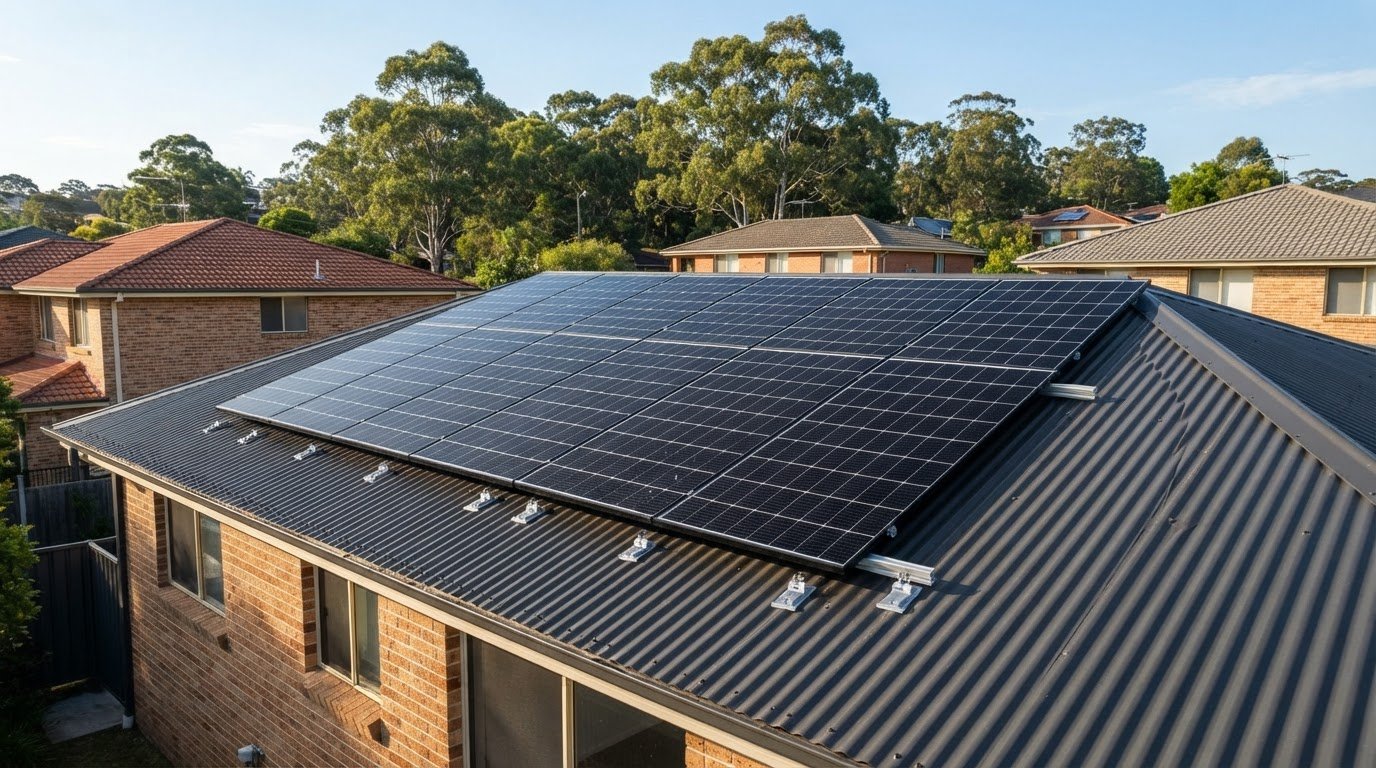
A metal roof can be a practical base for solar, not a reason to rule it out. For solar panel installation on a metal roof in Sydney, the mounting method needs to suit the roof profile and condition. Many Australian metal roofs allow brackets to use existing roof screws, avoiding new holes in the roof structure.
It’s reasonable to want confidence that solar can be installed without creating leak risks or compromising the roof. Material matters, but so do the roof’s age, sun exposure, available space, angle and shading from trees or nearby buildings.
This guide explains which roof types can suit solar, what to assess before installation and how mounting differs across metal roof profiles. It also covers what affects potential savings, including how much of your solar generation your household uses. Understanding these factors helps shape a system around your home rather than assumptions.
Key Takeaways
- Metal and tiled roofs can both suit solar when the mounting approach matches the roof and its condition.
- Assess roof repairs, shade, usable space and orientation to understand how much solar generation your home can support.
- Your bill savings depend on how your household uses solar power and the costs involved in installing the system.
- Metal roof profiles call for different fixing methods, with careful sealing and placement helping protect the roof.
Your roof and solar: what kind of roofing is most suited for solar panel installation?
Metal and tiled roofs can both support solar when the mounting method suits the surface. For a residential system, roof condition, usable area and installation timing all shape the design.
Solar on Colorbond and Metal Roofs
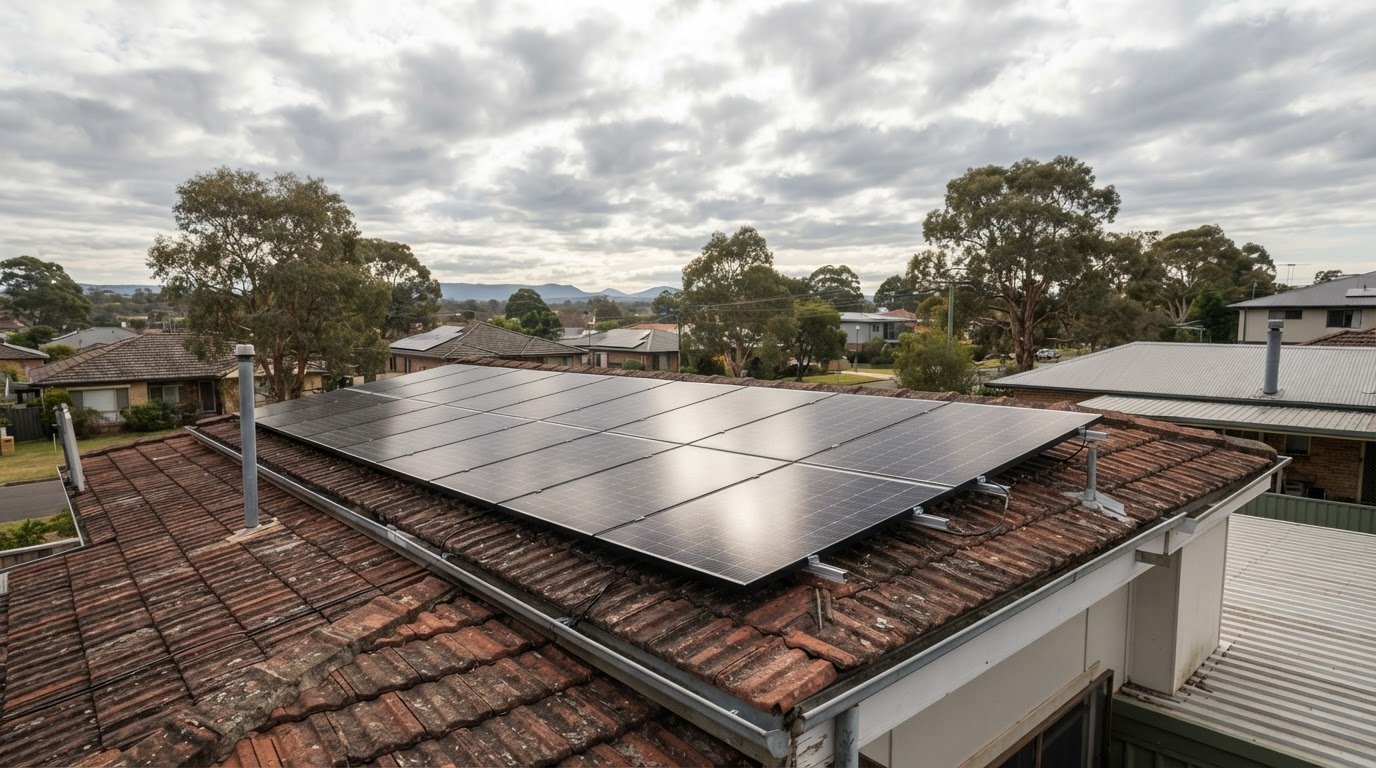
Solar compatibility means choosing mounting hardware suited to the roof profile and fixing points. Colorbond, standing-seam and corrugated metal roofs can all suit solar with appropriate mounting. Many Australian metal roofs allow brackets to reuse existing roof screws, avoiding new holes in the roof structure. Some standing-seam profiles use clamps that grip the seams. Matching the fixings correctly matters because unsuitable hardware can damage sheets or increase leak risk.
Roof Suitability and Site-Specific System Design
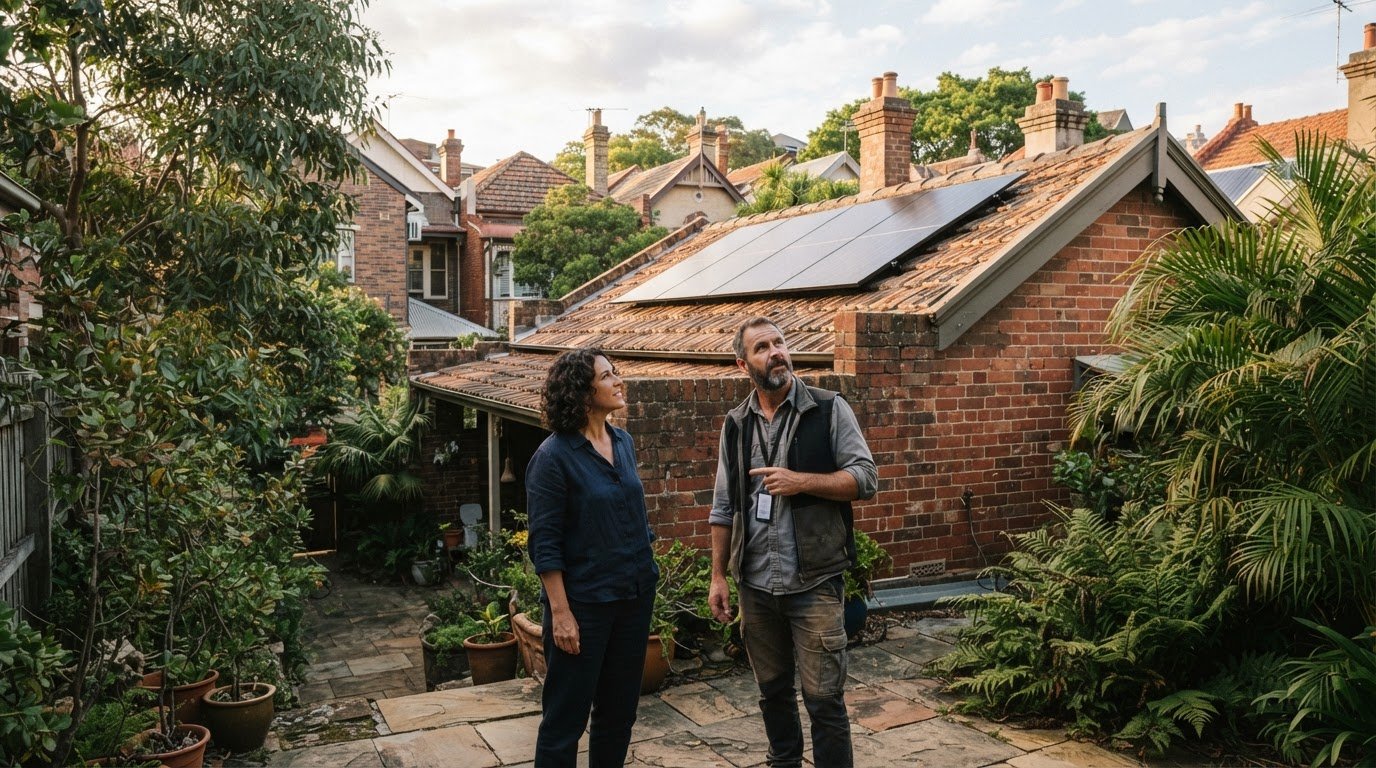
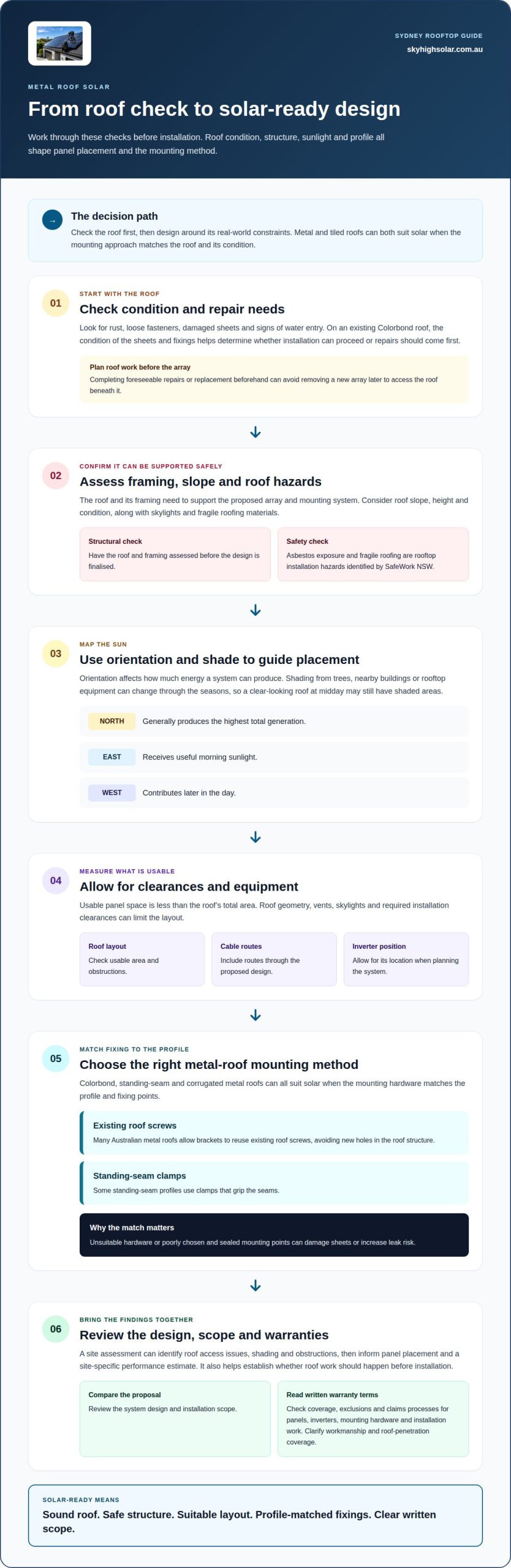
A suitability assessment considers roof age, condition, orientation, shading and clear space. These factors shape panel placement and site-specific performance estimates. If you’re building a new roof or re-roofing, planning solar beforehand helps coordinate the roof layout, cable routes and mounting positions. On an existing Colorbond roof, the condition of the sheets and fasteners helps determine whether installation can proceed or repairs should come first.
When choosing an installer, review the proposed system design, installation scope and warranty documents. A site assessment can identify vents, skylights, shading and roof-access issues before you approve the work.
Warranty terms differ across panels, inverters, mounting hardware and installation work. Review each written warranty for its coverage, exclusions and claims process. In particular, clarify how workmanship and roof penetrations are covered, since those terms are separate from equipment performance.
Metal roofs can be vulnerable to leaks if mounting points are poorly chosen or sealed. Roof age, loose screws and fragile surfaces also matter. SafeWork NSW identifies asbestos exposure and fragile roofing as rooftop installation hazards. After installation, inspections, cleaning and performance checks can help identify dirt, damage or changes in output.
Checking roof condition, sun exposure, angle, space and strength
Solar suitability depends on the roof’s condition, pitch, orientation and available area. In Australia, these checks help determine panel placement, system capacity and the installation timeline.
Start with the roof’s age and visible condition. Rust, loose fasteners, damaged sheets or signs of water entry can affect mounting decisions. Australian Government guidance recommends completing foreseeable roof repairs or replacement before installing solar panels. This can avoid removing a new array later to access the roof beneath it.
Structural strength matters too. The roof and its framing need to support the proposed array and mounting system, so their condition should be assessed before the design is finalised. SafeWork NSW advises considering roof slope, height and condition, along with skylights and fragile roofing materials. Asbestos exposure and fragile surfaces are also rooftop installation hazards.
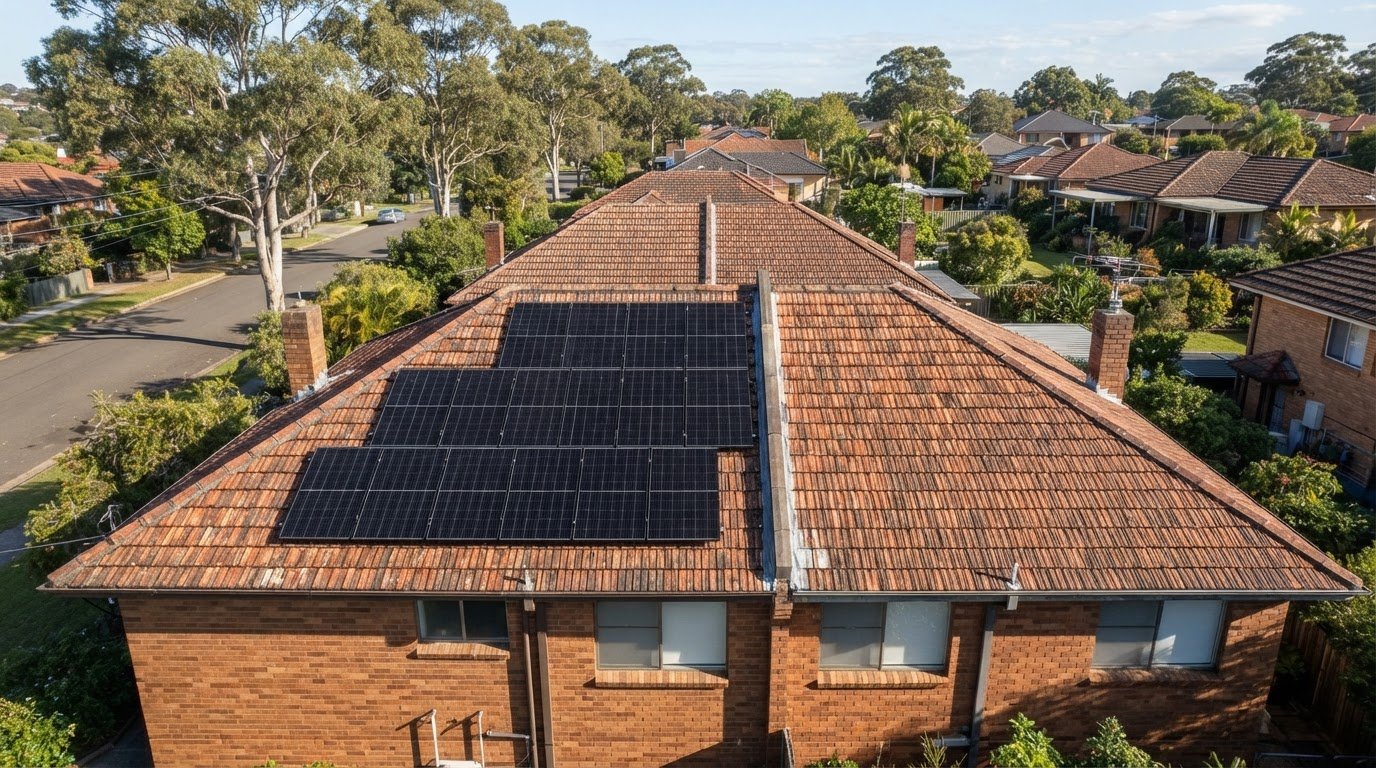
Orientation and shade influence how much energy a solar system can produce. North-facing panels generally produce the highest total generation. East-facing sections receive useful morning sunlight, while west-facing panels contribute later in the day. Trees, neighbouring buildings and rooftop equipment can cast changing shadows through the seasons, so a roof that looks clear at midday may still have shaded areas.
Usable space is not simply the roof’s total area. Vents, skylights, roof geometry and required installation clearances can reduce the space available for panels. The layout also needs to account for cable routes and inverter placement. A site visit can reveal these constraints and help you compare proposals, as Australian Government guidance recommends.
A practical assessment brings the details together: roof repairs, framing, pitch, shading, obstructions and the proposed inverter location. These findings guide panel placement and help establish a site-specific performance estimate. They also inform the installation timeline and whether additional roof work should happen first.
For a roof-specific assessment, solar system design and installation can bring roof condition, layout and performance planning into one discussion.
After the solar panel installation how soon will it be saving me money?
Installation timelines can vary depending on roof access, system size and switchboard requirements. Your system starts reducing grid electricity use once it’s installed, connected and generating power. The bill impact depends on when your household uses that energy and how much it exports.
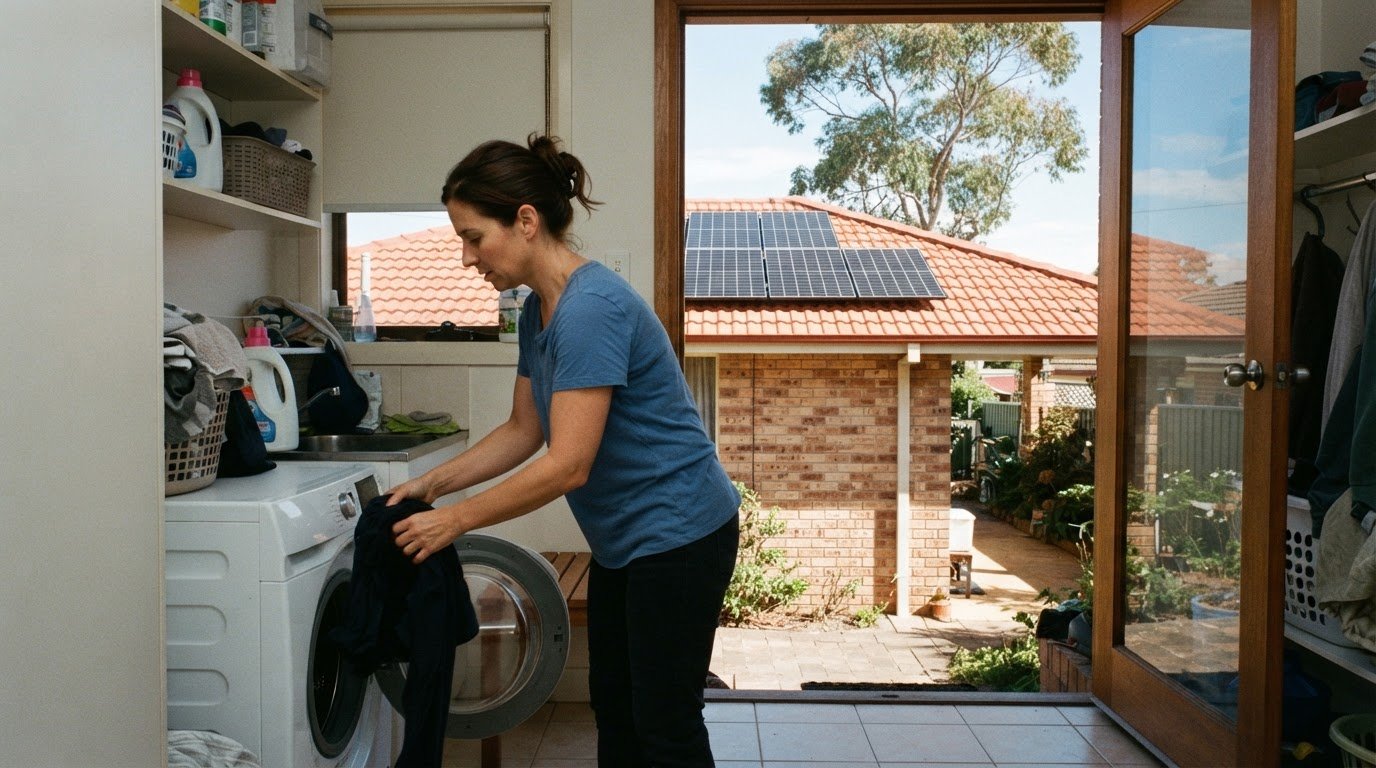
Daytime use is central to savings. Households using more electricity between 10am and 3pm can use solar generation directly, reducing the amount drawn from the grid. Running suitable appliances during sunny hours can increase self-consumption. Electricity used after sunset still comes from the grid unless stored in a battery.
Installation costs depend on system size, roof access, mounting requirements, cable routes and the condition of the switchboard. A metal roof that needs repairs or replacement presents a separate roofing decision. Completing foreseeable roof work before installing panels can avoid paying to remove and refit the array later. The final system design also affects the balance between upfront cost and potential bill reductions.
Ongoing costs can include monitoring, maintenance and repairs outside applicable warranty coverage. Monitoring helps track generation and spot unexpected drops in output. Cleaning may be needed if dirt or debris affects panel surfaces, while inspections can identify loose connections or visible damage. Keeping records of electricity bills and system production helps you assess performance over time.
Feed-in tariff credits may apply to surplus electricity exported to the grid, but their value depends on your retailer’s tariff. Exporting power is not always as valuable as using it at home, so system design should reflect household demand. Solar system servicing can review operating performance and help identify issues affecting generation.
For a useful savings estimate, compare your electricity use by time of day with the proposed system’s expected generation. Roof orientation, shading, system size, switchboard work and your electricity tariff all shape the result. Track bills and monitoring data after installation to see how the system performs as seasons change.
Solar installation on metal roofs
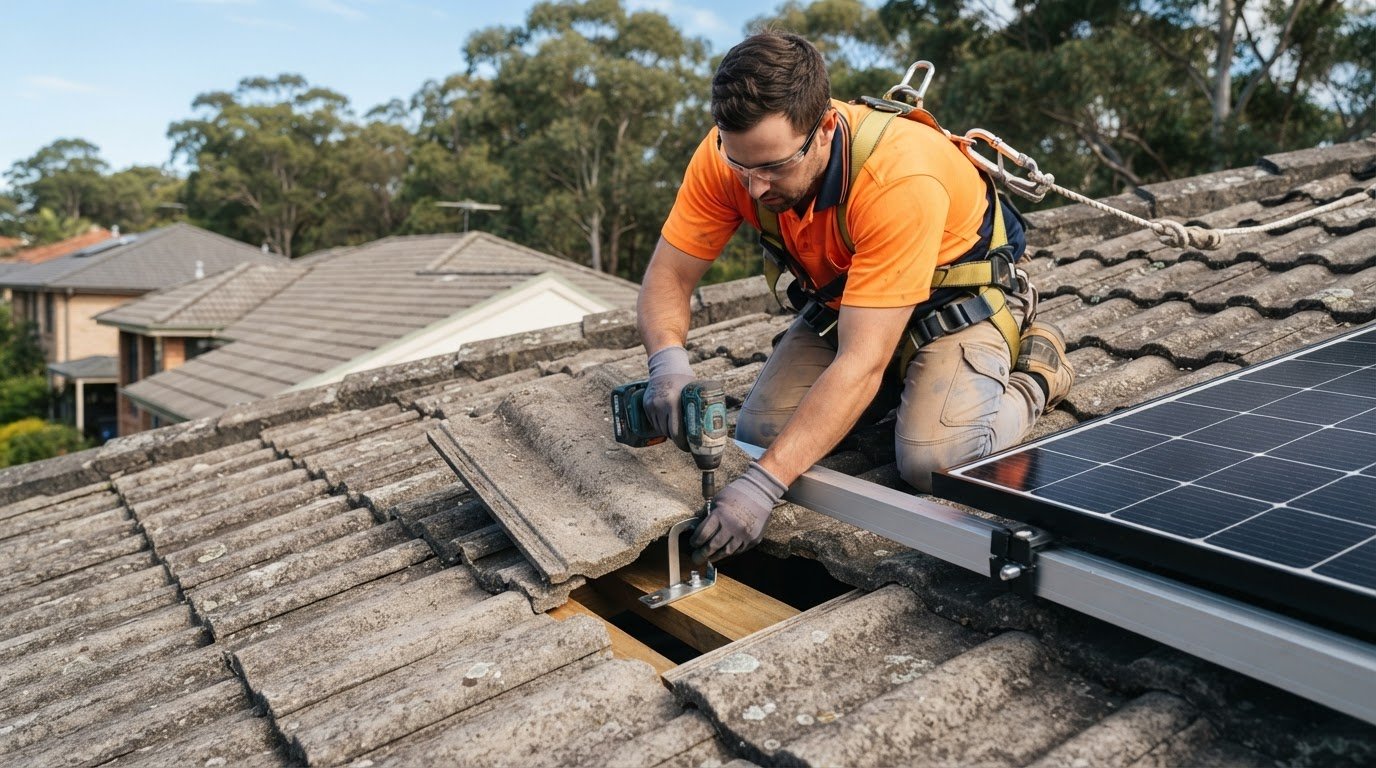
Metal roofs need mounting hardware matched to their sheet profile. The fixing method affects roof integrity, drainage and panel layout. For example, a Klip-lok roof can use brackets that grip the raised ribs without penetrating the sheets. Other profiles may use existing roof screws if their placement and condition suit the mounting system.
How do installers prevent leaks and corrosion when mounting solar panels on metal roofs? They select compatible brackets and fixings for the roof profile, then seal any penetrations to reduce leak risk. A non-penetrating clamp system can avoid new holes on suitable roofs, while penetrative fixings need careful placement and sealing.
Before installation, an inspection should consider sheet condition, fasteners, roof structure and water flow. Loose or corroded screws can affect how securely a bracket attaches. Installers also need to consider rainwater drainage and gutter access. Panels extending across a gutter can obstruct cleaning or alter where water falls, so array edges need careful positioning.
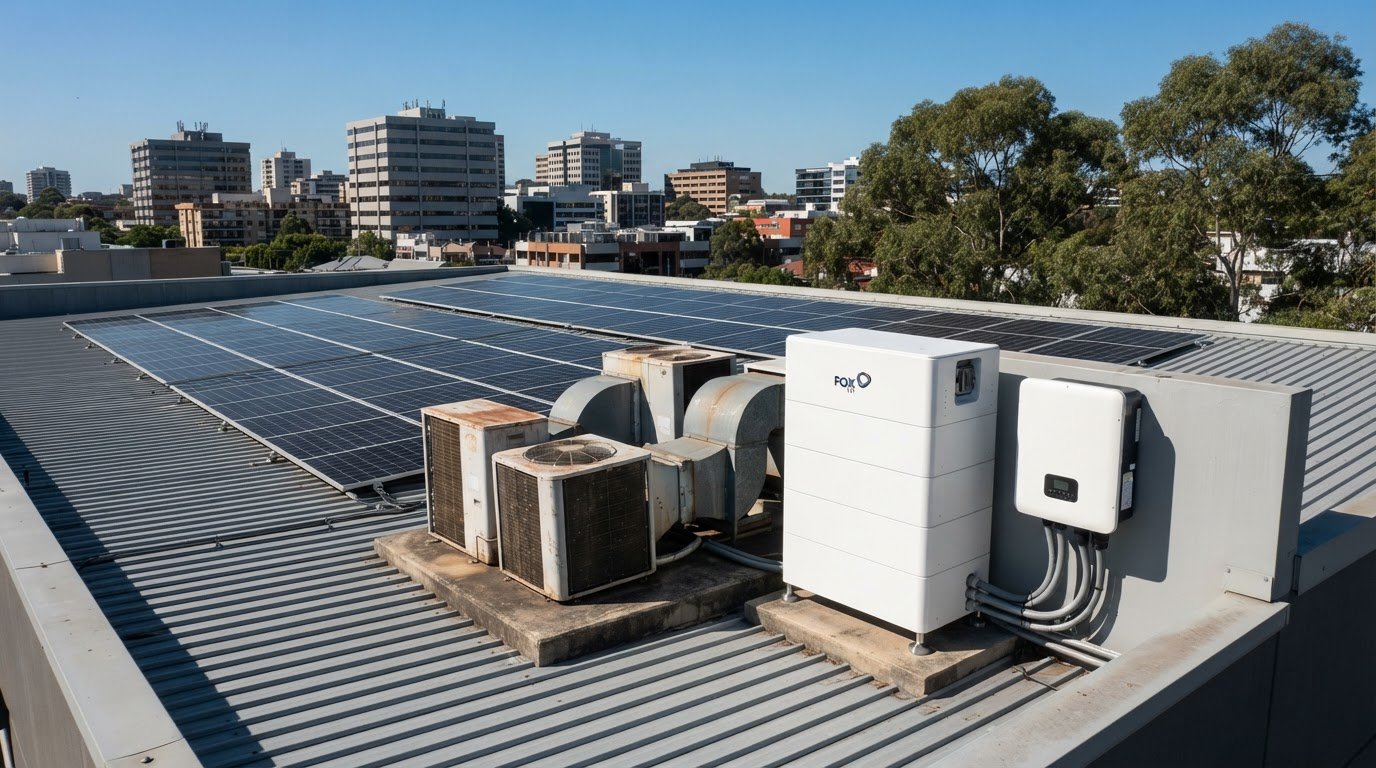
Efficient placement depends on more than fitting the largest possible array. Roof ribs, ridges, valleys and obstructions shape panel rows and cable routes. On some commercial Klip-lok roofs, tilted frames may improve solar performance, but the design must account for wind exposure and roof structure. A flat roof with a waterproof membrane needs particular care around fixings and sealing.
Roof suitability also involves safety and planning. SafeWork NSW identifies fragile roofing and asbestos exposure as hazards during rooftop solar installation. In NSW, solar installations may qualify as exempt or complying development when applicable requirements are met. A government planning assessment can help determine whether the property’s circumstances affect approval.
The takeaway: metal roofing is suitable for solar when the mounting system matches its profile, fixings are sealed correctly, and drainage remains clear. Professional installation and a post-installation inspection help assess the finished mounting and electrical work. For a roof-specific installation assessment, discuss metal roof solar installation and the mounting approach for your property.
Sky High Solar and Electrical
Sky High Solar and Electrical can turn your roof assessment into a considered solar plan. Its residential solar installation service takes your metal roof’s condition, profile and layout into account when designing a system for your home.
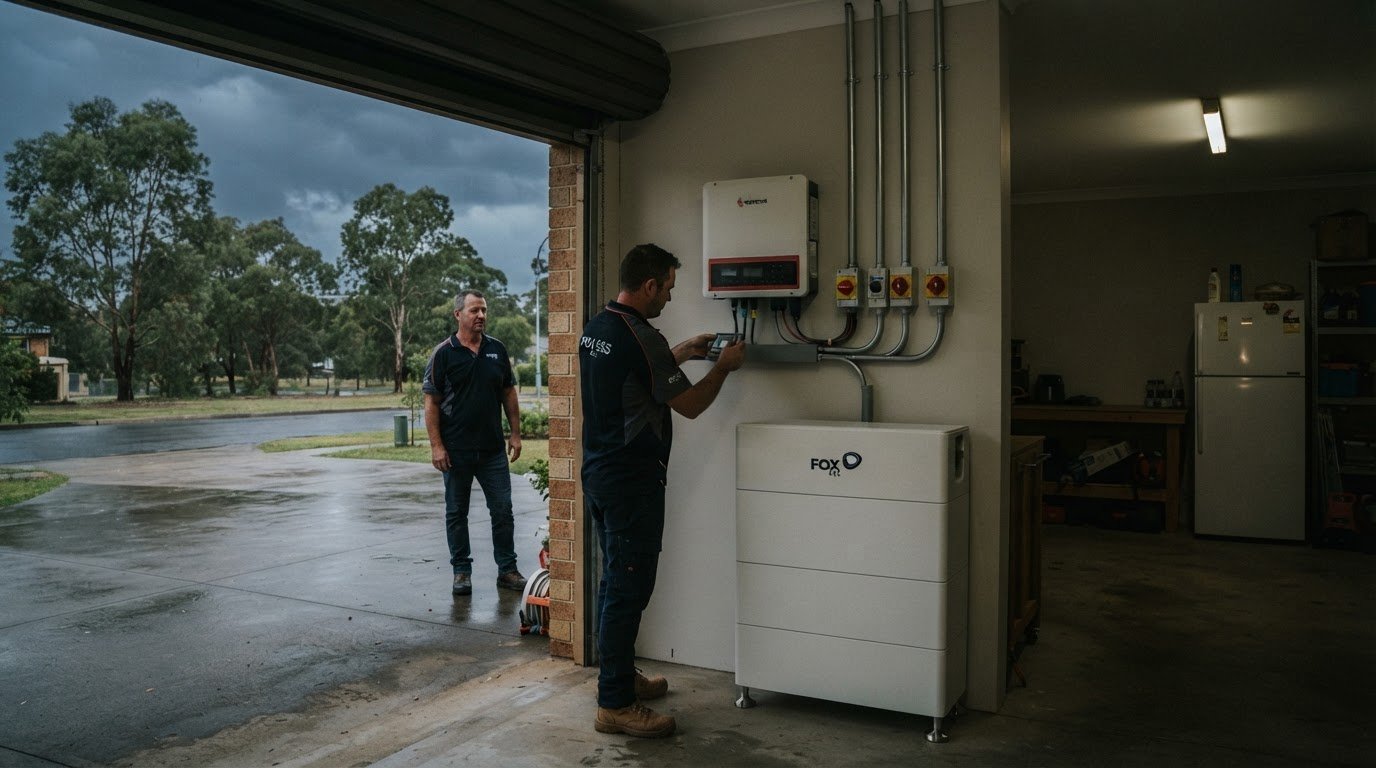
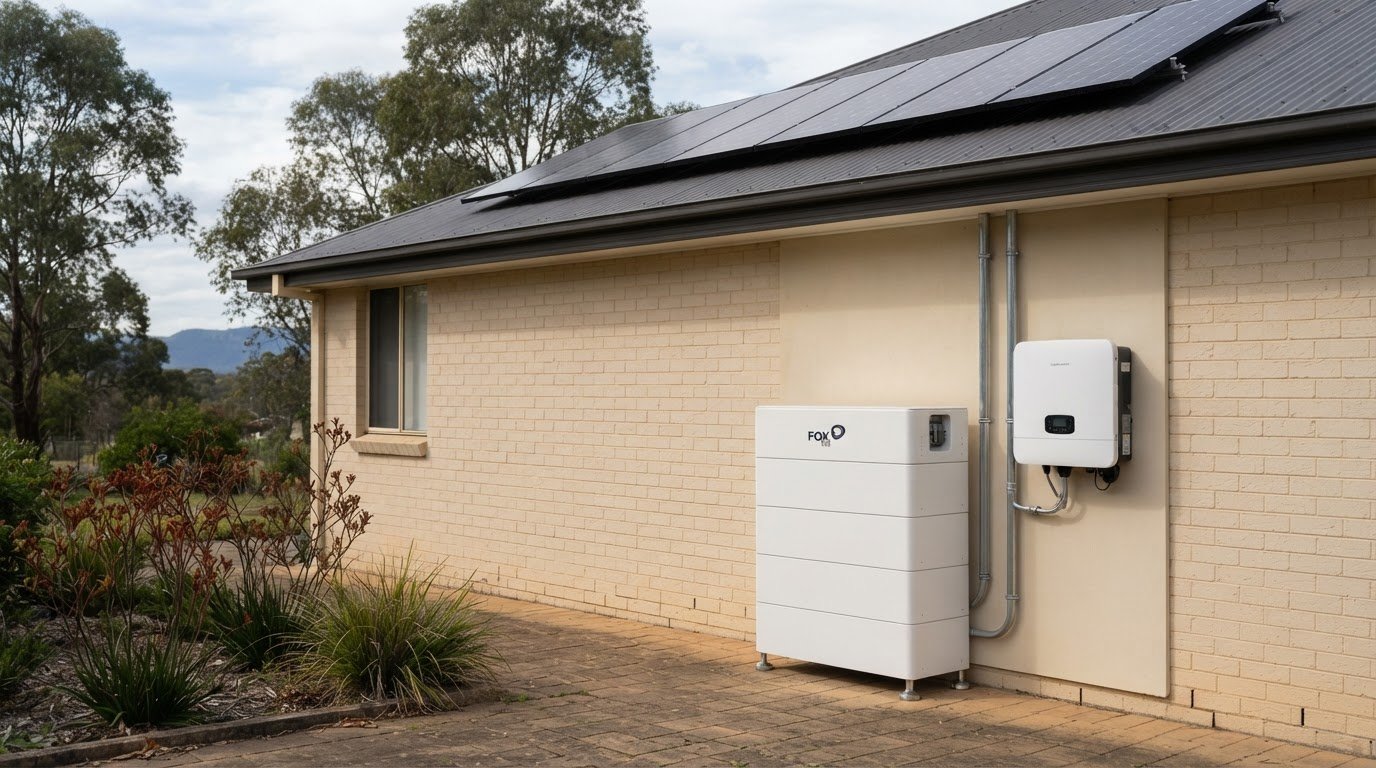
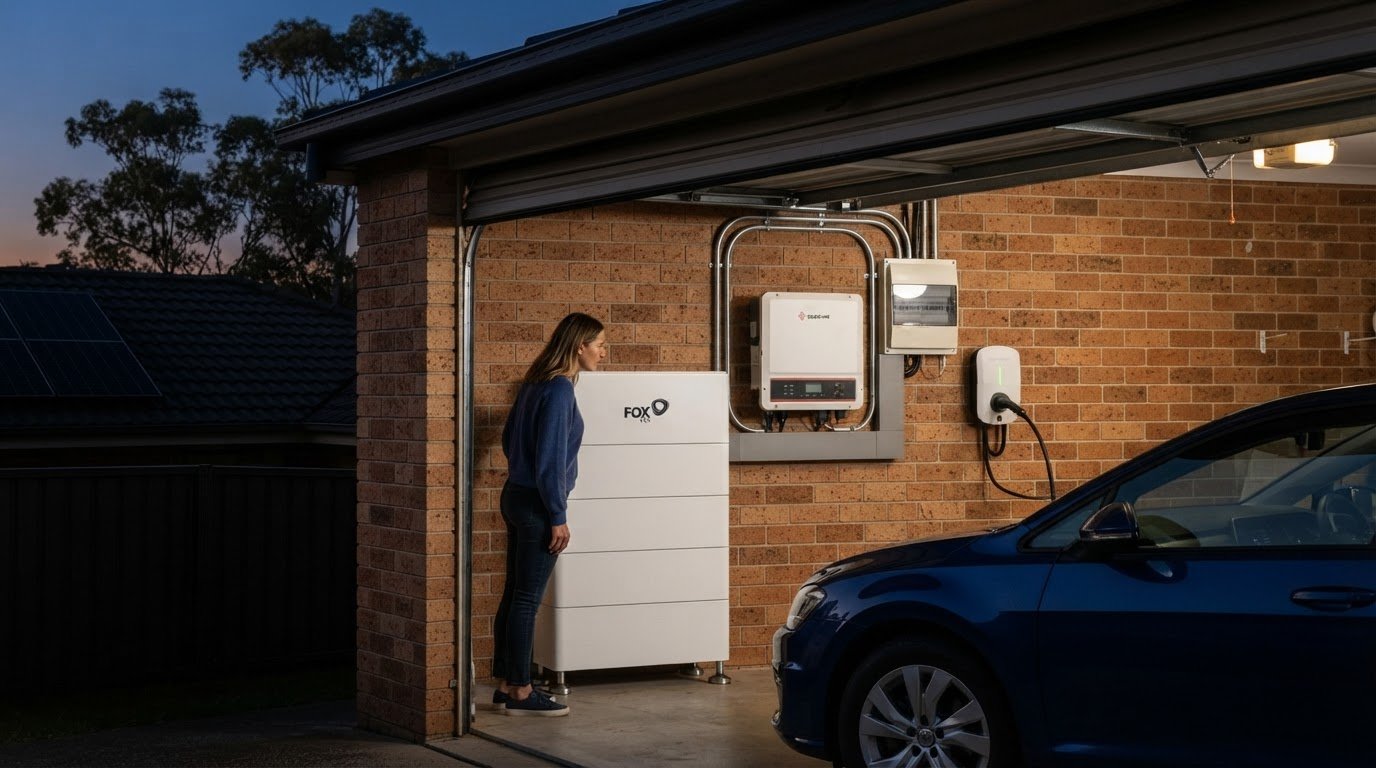
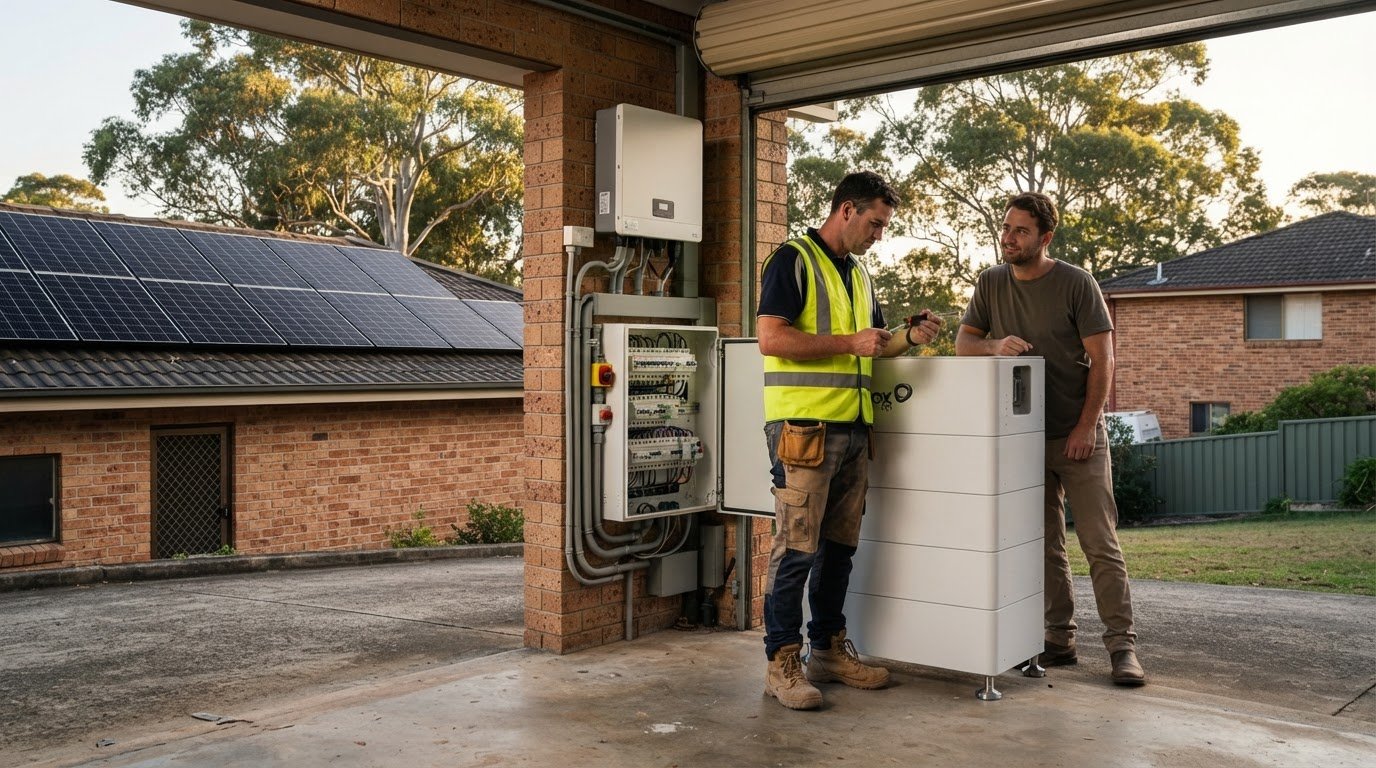
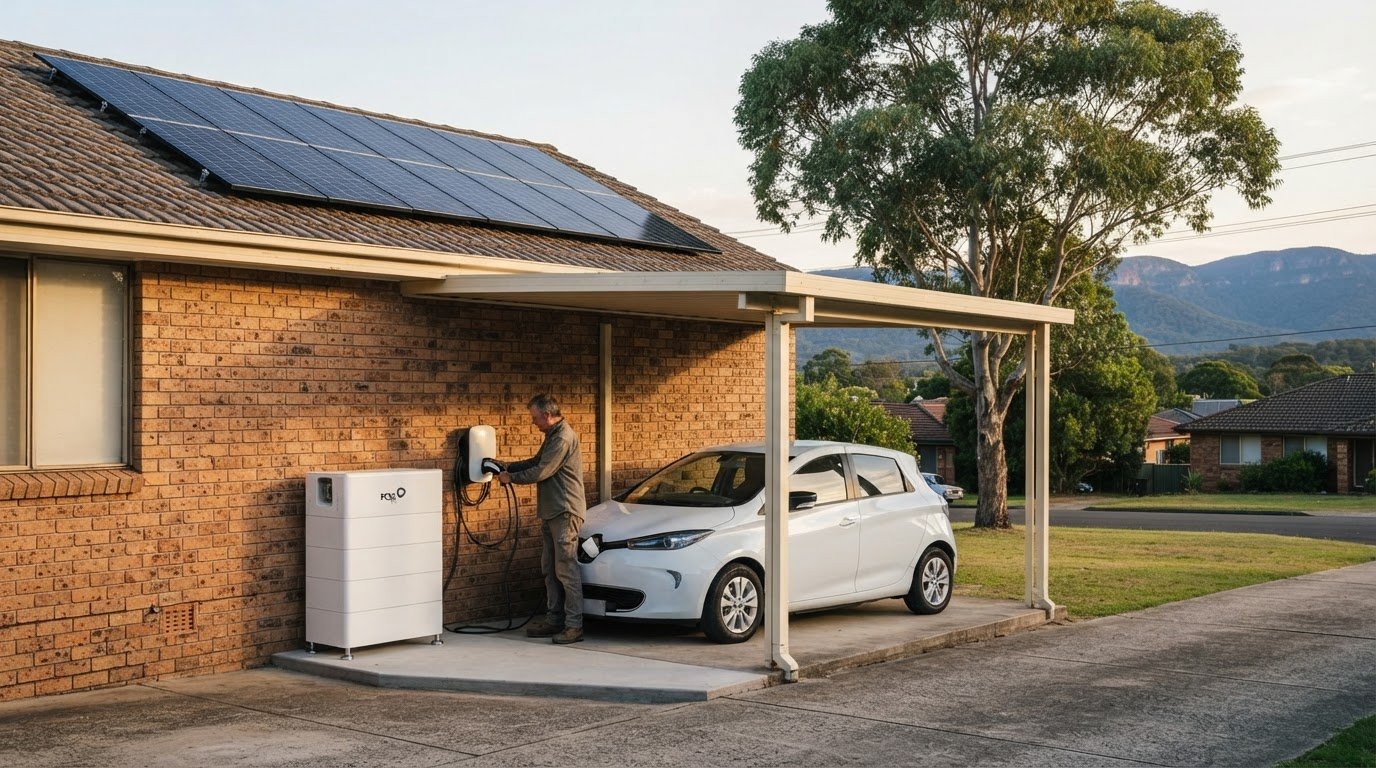
Available system options include 6.6kw Solar Panel Installation and 10kw Solar Panel Installation. If you’re also considering storage or EV charging, the design can include options such as the FOX ESS CQ7 High Voltage Storage Battery or SigenStor Integrated Solar Inverter & EV DC Charger. The right combination depends on your household’s energy needs and the system design.
Contact Sky High Solar and Electrical to discuss your metal roof and solar plans.
Turn your roof details into a clear solar plan
The next step is to connect your roof’s current state with your household’s energy goals. For a solar panel installation on a metal roof in Sydney, useful details include the roof profile, any planned roofing work and how your household uses electricity during the day. These help shape a discussion around layout and system priorities.
You don’t need to settle every technical decision before seeking advice. A conversation can clarify which details affect the design, what needs attention before installation and how to plan for future changes to your home’s energy use. If you’re weighing solar against roof work, raising both together can help keep project decisions aligned.
Sky High Solar and Electrical can discuss your property and the right next steps for its solar plans. Contact Sky High Solar and Electrical to start a practical conversation and move towards a system designed for your home.
Frequently Asked Questions
Are your solar systems compliant with Australian Standards?
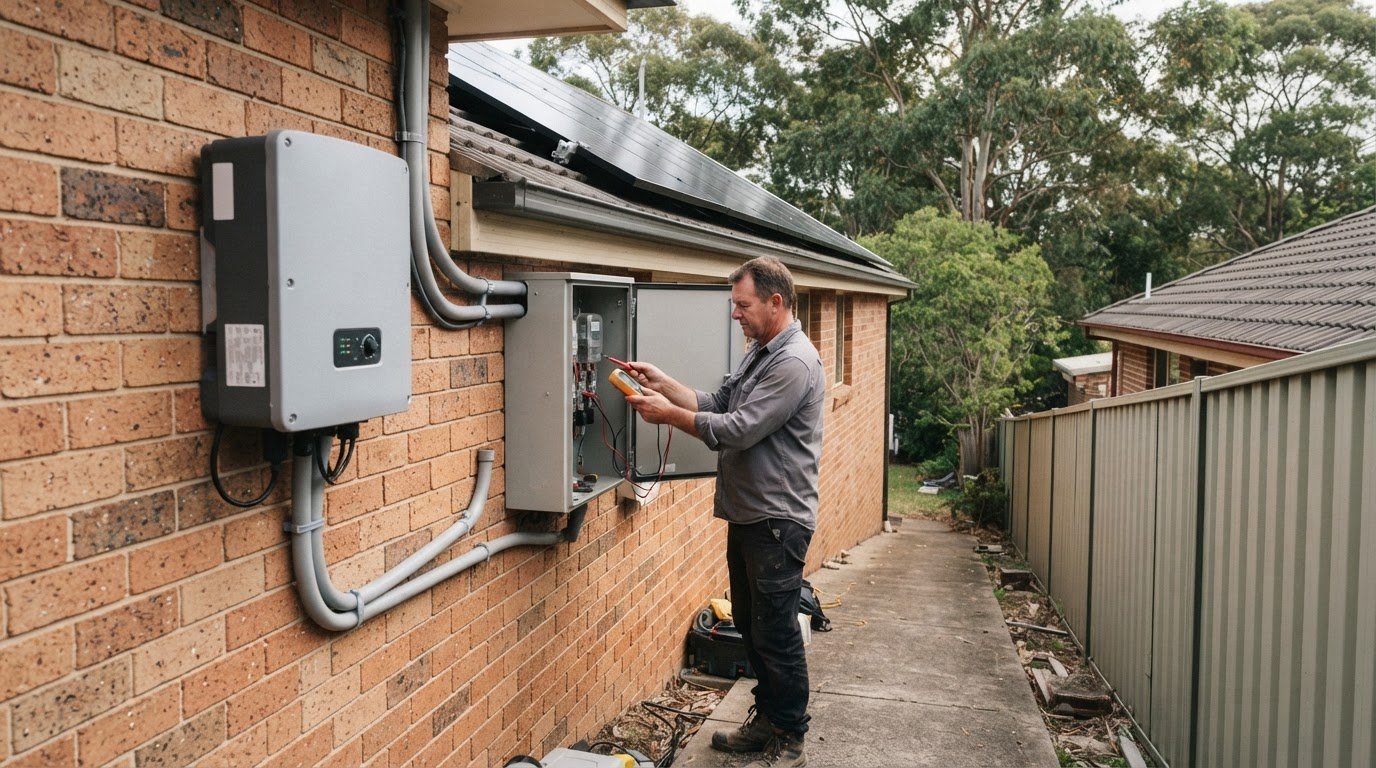
Electrical work should meet the Australian safety requirements that apply to the installation. Sky High Solar and Electrical provides a certificate of compliance electrical work (CCEW), documenting that the electrical work meets Australian safety standards and is legally compliant. Keep the certificate with your system handover records. It provides a useful reference if you later arrange electrical changes or need documentation about the completed work.
Can you install solar systems on new and existing roofs?
Yes, solar systems can be installed on new and existing roofs. For a new build, include solar in the home’s broader planning so the system can be considered alongside other electrical needs. For an existing home, the installation can be planned around its current setup. Keep the system design and handover documents with your home records for future servicing or electrical work.
How do I know what system size I need?
Use your electricity bills to understand how much energy your household consumes, then consider whether that pattern might change. For example, adding an electric vehicle or changing household occupancy can affect future demand. Consider system capacity alongside inverter selection and any plans for battery storage. The aim is to match generation to your needs, rather than choosing a system based only on panel count.
What happens on installation day?
The installation team completes the planned roof and electrical work, then provides information about the finished system. Make sure there’s a clear route to relevant work areas, including the switchboard, and ask who will explain the handover. Before the team leaves, note where the system documents are kept and how to access monitoring information, if monitoring is part of your setup.
What should your roof assessment produce?
A useful assessment should give you a clear written record of the proposed work and the decisions behind it. Look for a layout showing panel positions, the mounting approach and any relevant roof constraints. The proposal should also distinguish solar installation from separate roofing or electrical work. This makes the project scope easier to understand before you decide how to proceed.
What does solar panel installation cost on a metal roof in Sydney?
There isn’t one fixed price for every Sydney metal-roof installation. The price depends on the project and is provided after a quote request. Ask for the scope to distinguish solar installation from separate roof repairs or electrical work, so you can understand what each part covers. A tailored quote relates the proposed work to your property’s actual requirements.