

 Sydney
 0452 243 240
Blog
Sydney Solar Panel Payback Calculator: 2026 Homeowner’s ROI Guide


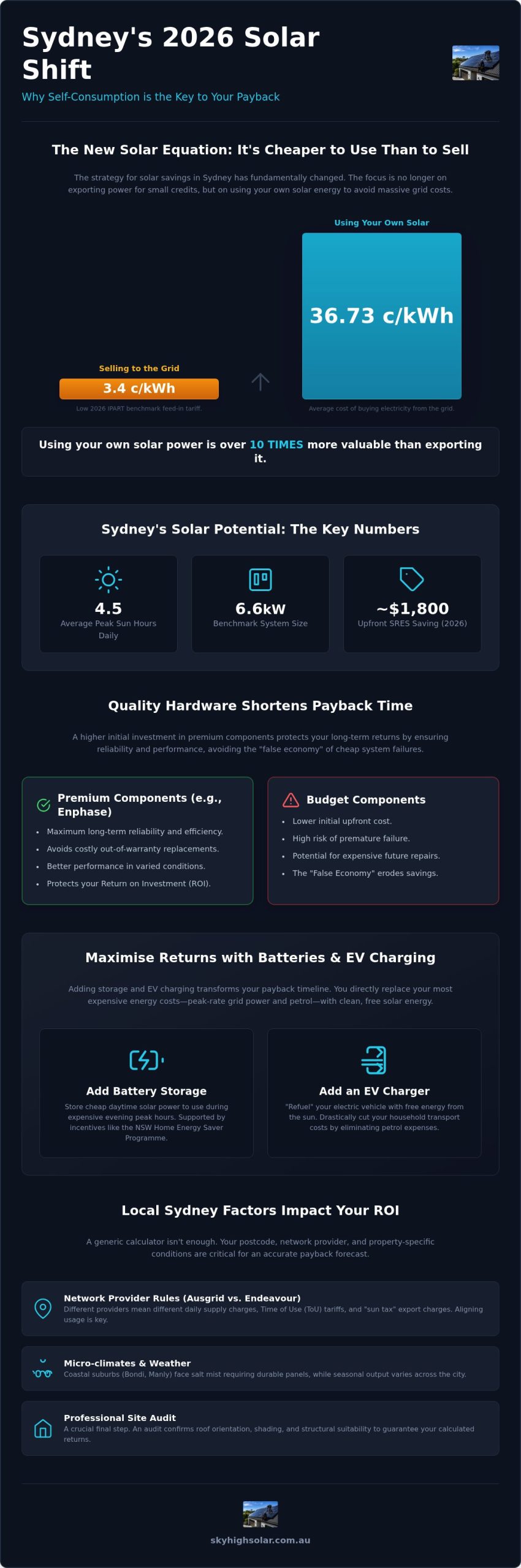
If you’re still waiting for a high feed-in tariff to justify your solar investment, you’re looking at a map of Sydney that no longer exists. With IPART benchmarks for 2026 dropping as low as 3.4 cents per kWh, the old strategy of exporting power for profit has been replaced by a focus on aggressive self-consumption. Most homeowners feel the frustration of rising grid prices, which now average a staggering 36.73c per kWh, while their solar credits continue to shrink. Using a precise Sydney solar panel payback calculator is no longer just a helpful step. It’s a necessity to ensure your investment actually delivers in this shifting energy landscape.
We understand that navigating NSW’s complex rebates and “sun taxes” feels like chasing a moving target. This guide promises to clear the air by showing you exactly how premium hardware, such as Enphase microinverters and FOX ESS storage, can drastically shorten your path to breaking even. You’ll discover how the 2026 Home Energy Saver Program affects your bottom line and why a strategic battery setup turns high electricity rates into your biggest financial advantage. We’re moving beyond simple estimates to provide a clear, data-driven roadmap for your home’s energy future.
Key Takeaways
- Learn why self-consumption has replaced feed-in tariffs as the primary driver of solar ROI in Sydney for 2026.
- Discover how to use a Sydney solar panel payback calculator to account for specific network variables between Ausgrid and Endeavour Energy.
- Understand why premium components like Enphase microinverters protect your long-term investment by avoiding the costly “false economy” of budget system failures.
- See how adding a FOX ESS battery or SigenStor EV charger can transform your payback timeline by replacing peak-rate grid power and petrol costs.
- Find out why a professional site audit is critical to ensure your roof’s orientation and shading don’t undermine your calculated returns.
Understanding the Sydney Solar Payback Equation in 2026
Solar payback is the point where the cumulative savings on your electricity bills equal the net cost of your installation. In the past, many homeowners relied on selling excess energy back to the grid to reach this point. However, the landscape in NSW has shifted. With IPART benchmarks for feed-in tariffs dropping to between 3.4 and 6.5 c/kWh, the goal is no longer to be an energy exporter. Instead, the most successful systems are designed for “self-consumption”, using your own clean energy to avoid buying grid power at the current average rate of 36.73c per kWh.
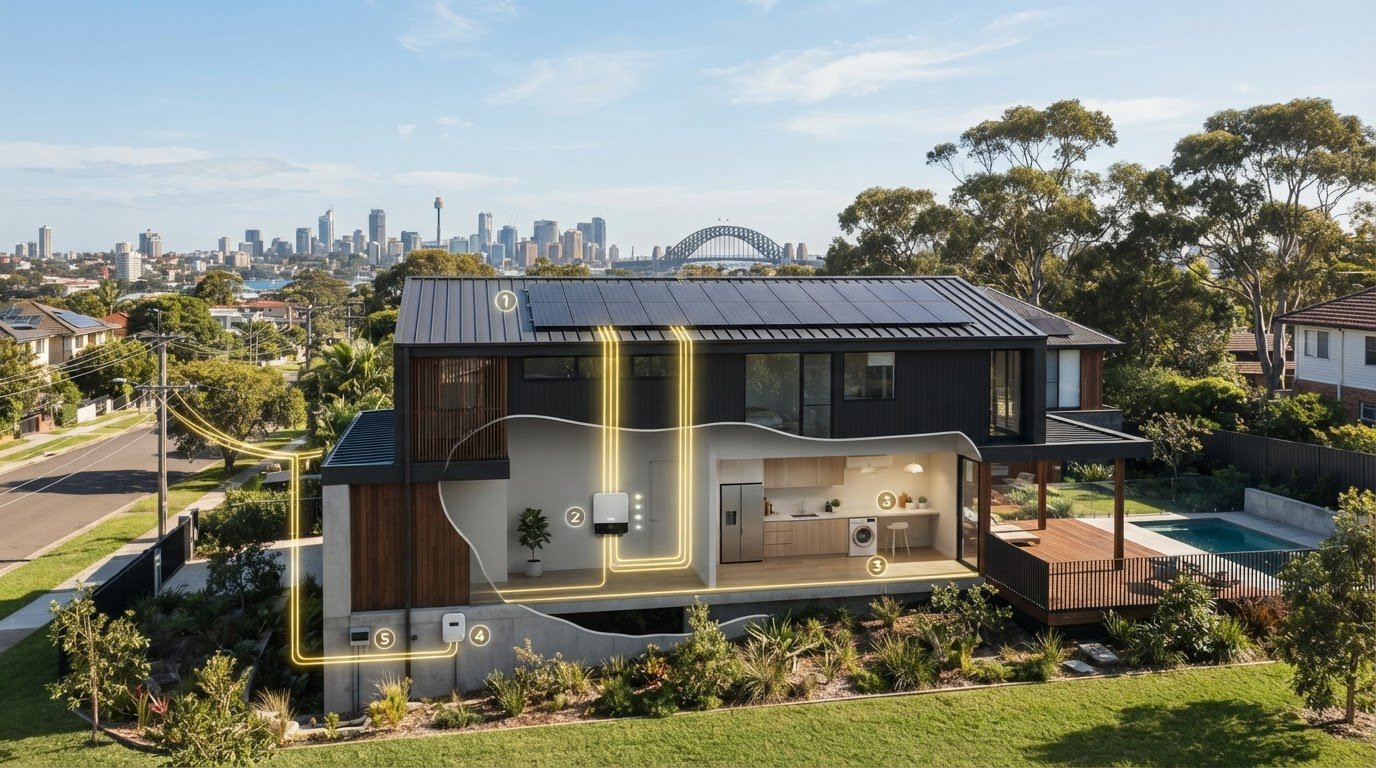
Sydney remains one of the premier locations in Australia for solar investment. We benefit from an average of 4.5 peak sun hours daily, providing a consistent energy harvest that fuels high-performance systems. For most residential properties, a 6.6kW system has become the benchmark. It provides the ideal balance between upfront cost and the federal Small-scale Renewable Energy Scheme (SRES) discount, which still offers approximately $1,800 in upfront savings for Sydney residents in 2026. Understanding how net metering works is essential here, as it’s the mechanism that ensures every kilowatt your panels produce is credited against your usage before you’re charged for grid power.
The Components of Your ROI
To get an accurate result from a Sydney solar panel payback calculator, you need to look at three primary figures. First is the net upfront cost, which is the total price of your system after the SRES discount is applied. Second is the “avoided cost”, the total amount of money you save each year by not purchasing expensive grid electricity. Finally, you must factor in long-term reliability. While premium hardware like Enphase microinverters might require a higher initial investment, they protect your ROI by avoiding the “false economy” of cheap components that fail and require out-of-warranty replacements.
Why 2026 is a Pivot Point for Sydney Solar
This year represents a significant evolution for energy independence in NSW. While grid prices remain high, new incentives like the Cheaper Home Batteries Program and the NSW Home Energy Saver Program have made storage more accessible. These schemes are designed to help you bypass the “sun tax” some distributors charge for exporting power during the day. By storing that energy for evening use, you’re effectively trading a 4-cent export credit for a 36-cent saving. For a modern homeowner, solar payback in 2026 is the strategic process of using high-efficiency hardware and battery storage to insulate your household from volatile grid prices and diminishing feed-in tariffs.
Local Factors: How Sydney Postcodes and Grid Rules Impact ROI
Location is everything. A Sydney solar panel payback calculator that ignores your specific postcode is only giving you half the story. While Sydney averages 4.5 peak sun hours daily, the reality on the ground in Blacktown differs from the conditions in Cronulla. These micro-climates, combined with varying network rules, mean your neighbour’s ROI might look quite different from yours. Understanding these local variables is the key to moving from a generic estimate to a guaranteed financial plan.
Sydney’s Solar Resource and Weather Patterns
Seasonal shifts are pronounced in the Harbour City. In a Sydney summer, a well-optimised 6.6kW system can produce over 30kWh a day, but this output can drop significantly during shorter winter days or prolonged East Coast Lows. Coastal humidity also plays a role. Suburbs like Bondi, Manly, or Maroubra face salt mist and high moisture levels, which can lead to panel degradation if you don’t invest in hardware with premium protective coatings. Modern payback tools now integrate this local weather data to provide a more realistic annual average than generic national estimates.
Network Provider Nuances (Ausgrid & Endeavour)
Your network provider dictates your daily supply charges and the structure of your Time of Use (ToU) tariffs. If you’re on the Ausgrid network in the Inner West or North Shore, your peak pricing windows and “sun tax” export charges might differ from those on the Endeavour Energy network in Western Sydney. Aligning your energy usage with these specific peak windows is the fastest way to achieve typical payback periods that make the investment worthwhile. To manage this effectively, many older Sydney homes require a switchboard upgrade to accommodate modern smart meters that track these nuances accurately.
Roof orientation is another critical local variable. While North-facing panels capture the most total energy, West-facing arrays are gaining popularity across Sydney. They produce more power during the late afternoon peak when electricity prices are at their highest. However, if you live in leafy suburbs like Mosman or Strathfield, shading from established trees can slash your output. Using a Sydney solar panel payback calculator that incorporates shading analysis ensures your ROI isn’t sabotaged by a neighbour’s gum tree. If you’re unsure how your specific roof layout affects your savings, requesting a detailed site assessment can provide the technical clarity you need.
The Cost of Quality: Why Premium Hardware Shortens Payback
Choosing hardware based solely on the lowest quote is a common trap that often extends your payback period rather than shortening it. While a generic Sydney solar panel payback calculator might suggest a budget system breaks even faster, it rarely accounts for the “false economy” of component failure. In the harsh Sydney heat, cheap string inverters often struggle to reach their tenth year, and a single out-of-warranty replacement can instantly erase five years of energy savings. Investing in premium hardware ensures your system remains a reliable asset, not a mounting liability.
Enphase vs. Traditional String Inverters
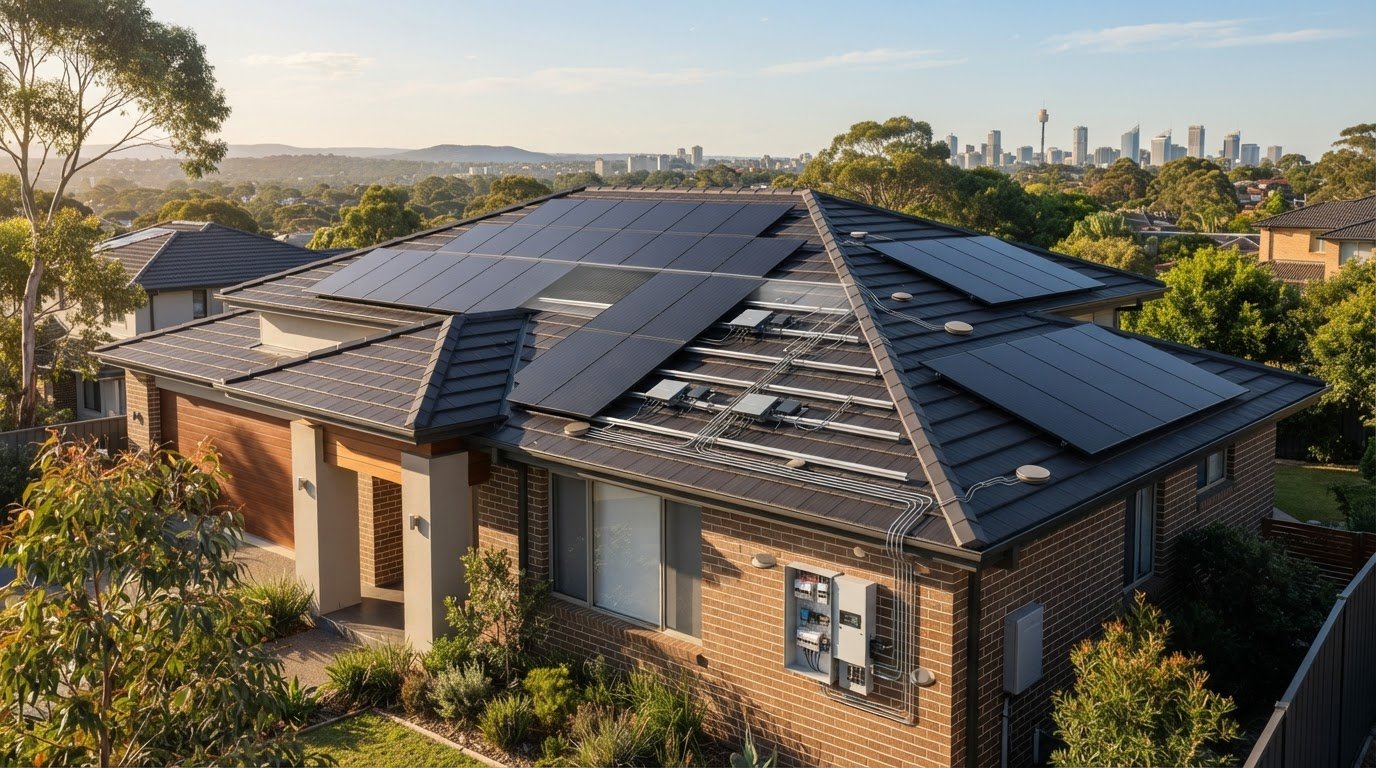
Enphase microinverters represent the gold standard for residential ROI because they offer panel-level optimisation. In a traditional string setup, one shaded panel from a neighbouring chimney or a passing cloud can drag down the performance of the entire array. With Enphase, each panel operates independently, ensuring that a single shadow doesn’t ruin your daily energy harvest. Enphase microinverters increase energy harvest by up to 15% in complex Sydney roof environments. This increased efficiency, combined with a 25-year product warranty, provides a level of financial security that budget alternatives simply can’t match.
GoodWe and FOX ESS: The High-Performance Middle Ground
For homeowners looking for a balance between upfront cost and long-term capability, brands like GoodWe and FOX ESS offer excellent hybrid solutions. These systems are designed to be battery-ready, allowing you to scale your investment as your budget allows. The FOX ESS CQ7 high-voltage storage battery is particularly efficient because it reduces conversion losses, ensuring more of your harvested sunlight actually powers your home. When you compare the 6.6kW solar system ROI across different hardware tiers, the durability of these components becomes the deciding factor.
To get a sense of how these hardware choices impact your specific property, the SunSPOT solar and battery calculator is a fantastic tool for initial modelling. However, the true value of premium hardware lies in its superior degradation rate. While budget panels might lose significant output every year, high-tier panels maintain a much higher percentage of their original capacity after a decade. This sustained performance ensures that your Sydney solar panel payback calculator results remain accurate well into the 2030s, providing a steady stream of savings long after the system has paid for itself.
Maximising Returns: Adding Batteries and EV Charging
While a standalone Sydney solar panel payback calculator often focuses on direct bill savings, the real financial revolution in 2026 is the integration of storage and transport. Adding a battery or an electric vehicle (EV) charger isn’t just about convenience; it’s a strategic move to insulate your household from the most expensive grid windows. By shifting your energy usage patterns, you can transform a system that merely offsets costs into a comprehensive energy asset that pays for itself significantly faster than previous models suggested.
The Battery Payback Shift
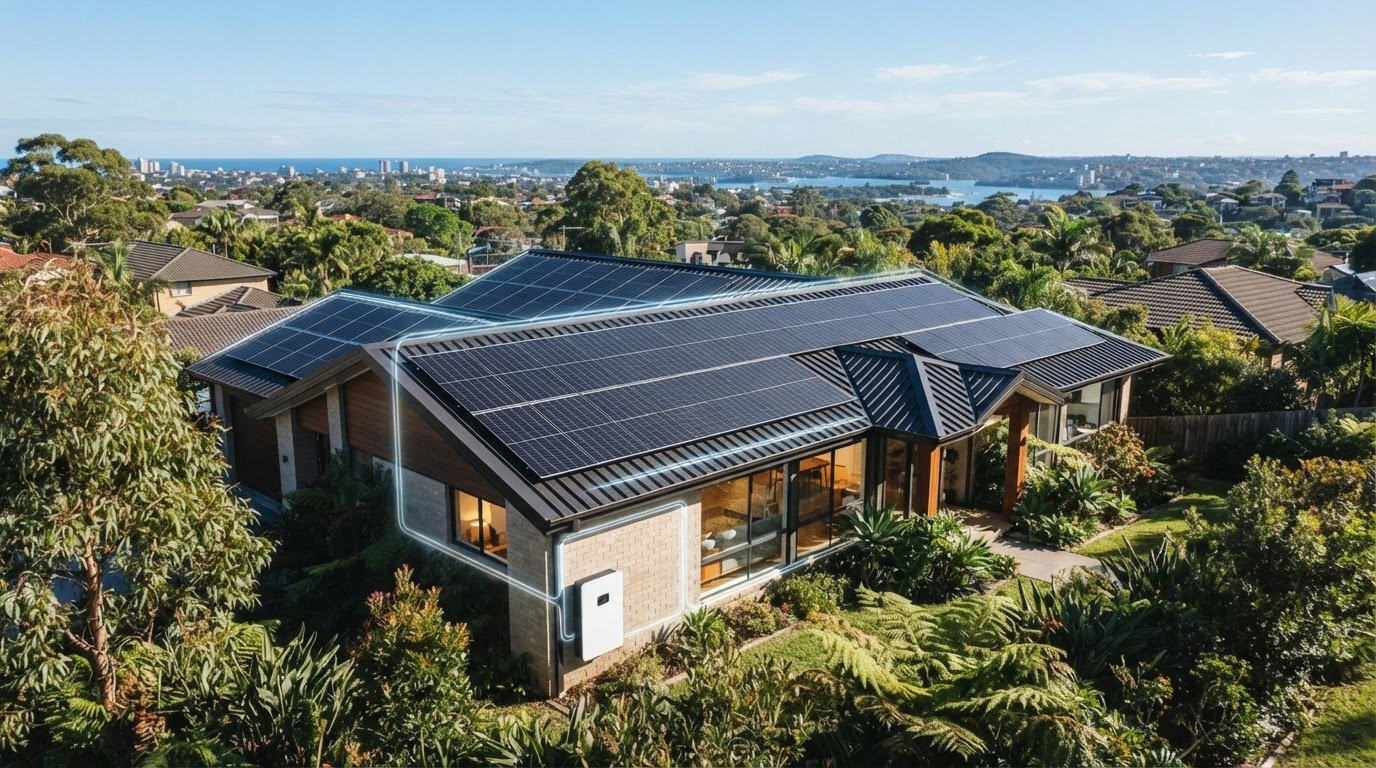
The 2026 battery math has changed dramatically thanks to the federal Cheaper Home Batteries Program, which offers a discount of approximately 30% on installation costs. This rebate, combined with the NSW Virtual Power Plant (VPP) incentive of $250 to $400, makes high-capacity storage like the Tesla Powerwall 3 or the FOX ESS CQ7 a viable ROI driver. These systems allow for aggressive load shifting, where you use stored solar power to bypass Sydney’s punishing 4 pm to 8 pm peak rates, which currently average over 36c per kWh. For a detailed breakdown of how these units compare, our solar battery storage Sydney guide provides the technical specs needed to make an informed choice.
SigenStor and the EV Advantage
The fastest way to achieve a total energy payback is by replacing your weekly petrol bill with self-generated solar power. If your household currently spends $100 a week on fuel, switching to an EV charged by your own panels can reduce that cost to roughly $10 of solar energy. This “ROI multiplier” is best captured by integrated systems like the SigenStor 5-in-One. This unit features an integrated DC charger that allows for DC-to-DC charging, which minimises the energy conversion losses typically found in standard AC chargers. By feeding solar energy directly into your vehicle, you maximise the range achieved per kilowatt-hour harvested.
Calculations for “Total Energy Payback” now include both household electricity and transport fuel, often resulting in a combined break-even point that is years ahead of a solar-only setup. When you consider that a 10kW system can easily provide enough surplus to fuel a daily commute, the argument for integrated storage becomes undeniable. If you are ready to see how these integrated solutions fit your property, you can book a comprehensive energy audit to get a customised ROI roadmap for your Sydney home.
An online Sydney solar panel payback calculator serves as a brilliant starting point, but it’s exactly that, a start. Real-world ROI depends on variables that a generic algorithm simply can’t see, such as the exact tilt of your roof tiles or the current state of your electrical switchboard. At Sky High Solar, we bridge the gap between digital estimates and physical reality. We ensure that the projections we provide are grounded in the specific structural and electrical profile of your home, providing a level of certainty that an automated tool cannot match.
A professional site audit is the cornerstone of our service. We don’t just rely on satellite imagery; our team assesses the structural integrity of your roof and uses precision tools to map shading from nearby structures or foliage that changes throughout the year. This commitment to transparency means you won’t face hidden costs or “surprises” on installation day. We also take the administrative burden off your shoulders by managing all NSW rebate and SRES paperwork. Our local team ensures you receive every cent of the financial support available in 2026 without the stress of navigating complex government portals.
Our Process: From Calculator to Commissioning
We move through a logical, three-step journey to ensure your system performs exactly as promised. First, we conduct a detailed bill analysis to determine your actual consumption profile. This helps us understand whether a 6.6kW or 10kW system is your best path to ROI. Second, we create a custom system design using premium Enphase or GoodWe components, tailored to your roof’s unique orientation. Finally, the installation is carried out by our licensed Sydney electrical team, ensuring a seamless integration that meets all local grid standards.
Commercial ROI: A Different Calculation
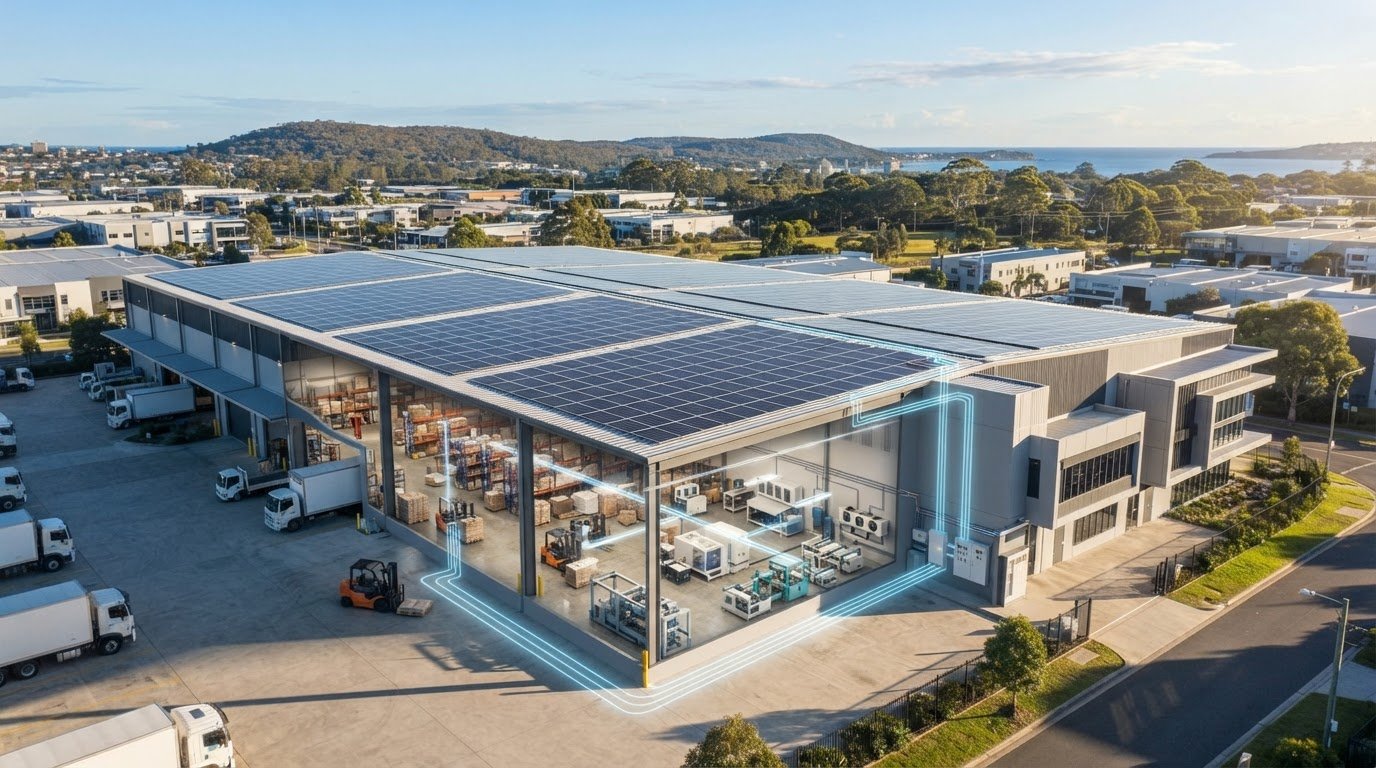
For Sydney SMEs, the path to energy independence often involves different financial levers than residential projects. A commercial solar installation can offer a rapid payback period when combined with federal tax depreciation and the Instant Asset Write-Off scheme. These incentives allow businesses to significantly reduce their taxable income while simultaneously slashing their daily operational costs. Whether you are looking to future-proof a family home or a local warehouse, we are here to provide the technical expertise and local experience required for a successful transition. Request a personalised Sydney solar payback analysis from Sky High Solar today to see the true potential of your roof.
Securing Your Energy Independence in 2026
Transitioning to solar in 2026 is a strategic choice to move away from grid dependency. As we’ve explored, the most successful installations in NSW prioritise self-consumption and storage to bypass peak rates. Using a Sydney solar panel payback calculator is the first step in visualising this financial transition, but the long-term success of your investment rests on the quality of the installation and the durability of the components chosen.
With over 10 years of local expertise, Sky High Solar and Electrical provides the professional guidance needed to navigate the evolving rebate landscape. Our team of certified Enphase, Tesla, and FOX ESS installers ensures your system is optimised for the unique conditions of your Sydney property. We handle the full NSW government rebate application process to ensure you capture every available incentive. Get Your Personalised Sydney Solar ROI Quote today and secure a reliable energy future for your home.
Frequently Asked Questions
How long is the average solar payback period in Sydney for 2026?
The average payback for a well-optimised 6.6kW system in Sydney is currently between three and five years. This timeline relies heavily on your ability to use the power you generate during the day rather than exporting it to the grid. While a Sydney solar panel payback calculator provides a helpful baseline, your specific electricity plan and daytime habits will ultimately determine the speed of your return. High grid prices in NSW continue to make this one of the fastest ROI locations in the country.
Does the NSW solar battery rebate apply to my existing system?
Yes, the federal Cheaper Home Batteries Program and NSW VPP incentives are designed to encourage battery adoption for both new and existing solar owners. If your current inverter is a hybrid model, such as a GoodWe ET G2, adding storage is a straightforward process. For older systems, an AC-coupled solution like the Tesla Powerwall 3 can be integrated to capture the 30% discount, provided your installation meets the 2026 eligibility criteria and technical standards.
Is a 6.6kW system enough for a 4-bedroom house in Sydney?
A 6.6kW system is often the minimum requirement for a standard four-bedroom Sydney home, but it may not be enough if you have high daytime loads. If your family uses duced air conditioning or plans to charge an electric vehicle, a 10kW system is usually a more robust choice. Larger systems allow you to harvest enough surplus energy to charge a battery, which is essential for avoiding peak-rate grid prices during the expensive evening windows.
How much does a 10kW solar system cost in Sydney after rebates?
While the total investment varies based on your choice of premium hardware, the federal SRES scheme provides a significant upfront discount of approximately $1,800 for a typical residential installation in Sydney. This rebate is applied at the point of sale, reducing the net cost you pay. When using a Sydney solar panel payback calculator, ensure you factor in this federal incentive alongside any applicable NSW state programs to get an accurate projection of your total out-of-pocket expenses.
Will adding an EV charger make my solar payback faster?
Adding an EV charger, particularly an integrated DC unit like the SigenStor, is one of the most effective ways to accelerate your ROI. By diverting surplus solar energy into your car’s battery, you replace expensive petrol costs with free, self-generated power. This shift turns “waste” energy that would have been exported for a small credit into a high-value transport fuel, often cutting years off your total energy system payback period by reducing your external transport spending.
What is the best solar feed-in tariff currently available in Sydney?
As of July 2026, the highest maximum solar feed-in tariff in NSW is 10c/kWh offered by GloBird Energy. However, most major retailers now offer between 3c and 7c/kWh, aligning with the IPART benchmark range of 3.4 to 6.5c/kWh. Because these rates are significantly lower than the cost of buying power, your financial strategy should focus on maximising self-consumption rather than searching for the highest export rate, which has a diminishing impact on your ROI.
Is it worth getting premium Enphase microinverters if I want a fast payback?
Absolutely. While Enphase microinverters carry a higher upfront cost, they protect your ROI by increasing energy harvest by up to 15% in complex environments. They also carry a 25-year warranty, whereas budget string inverters often fail around the five-year mark. Avoiding just one out-of-warranty inverter replacement ensures your long-term savings remain intact, making premium hardware the safer financial bet for those looking for a reliable, decades-long return on their initial investment.
How do Sydney electricity price rises in 2026 affect my ROI?
Rising electricity prices actually improve your solar ROI by increasing your avoided costs. With the average cost of electricity in Sydney reaching 36.73c/kWh in 2026, every kilowatt-hour you produce yourself saves you nearly 37 cents. As grid prices increase, the savings on your quarterly bill grow larger, which shortens the time it takes for the system to pay for itself. Solar acts as a hedge against inflation, locking in your energy costs for years.