

 Sydney
 0452 243 240
Blog
Government Solar Rebates NSW 2026: The Complete Homeowner’s Guide


What if the most effective way to lower your Sydney power bill in 2026 isn’t just installing solar panels, but “stacking” federal battery incentives with state-funded interest-free loans? Most homeowners feel the sting of rising electricity prices and want to switch, but the sheer volume of acronyms like STCs, VPPs, and the Home Energy Saver program often leads to more confusion than clarity. You aren’t alone if you feel overwhelmed by the high upfront cost of battery storage or the shifting rules of government solar rebates NSW 2026.
This guide simplifies the current landscape to ensure you don’t leave money on the table. Our mission is to help you slash your upfront costs and secure the most valuable incentives available right now. We’ll provide a clear list of eligible rebates and explain the crucial difference between a loan and a discount. From understanding the new 30 per cent federal battery discount to qualifying for a $15,000 interest-free loan, you’ll find a logical roadmap to future-proof your home with total peace of mind. We’ll even help you identify how to find a reliable installer to manage the complex paperwork on your behalf.
Key Takeaways
- Understand how the federal STC phase-down impacts the total value of government solar rebates NSW 2026 and why the timing of your installation is critical for maximising upfront savings.
- Learn how to secure the 30 per cent federal discount on battery storage to reduce the cost of high-performance systems like the FOX ESS CQ7.
- Identify if you meet the income thresholds for the NSW Home Energy Saver Program to access interest-free loans of up to $15,000 over a ten-year term.
- Discover how to stack multiple incentives, including Virtual Power Plant payments and strata-specific grants, to achieve the fastest possible return on your investment.
- Recognise the importance of professional switchboard upgrades and licensed electrical work to ensure your system meets all safety and rebate eligibility requirements.
Navigating the NSW Solar Incentive Landscape in 2026
The energy sector in 2026 has moved past simple cash-back offers. Today, the landscape of government solar rebates NSW 2026 is a sophisticated mix of federal discounts, state-funded interest-free loans, and ongoing incentives for grid stability. This evolution reflects the broader growth of Solar power in Australia, shifting from basic panel adoption to integrated home energy management. For Sydney households, 2026 is a pivotal year. The federal Small-scale Technology Certificate (STC) multiplier continues its scheduled annual reduction, meaning the upfront discount for panels is slightly lower than in previous years. Waiting another twelve months only increases the cost of entry.
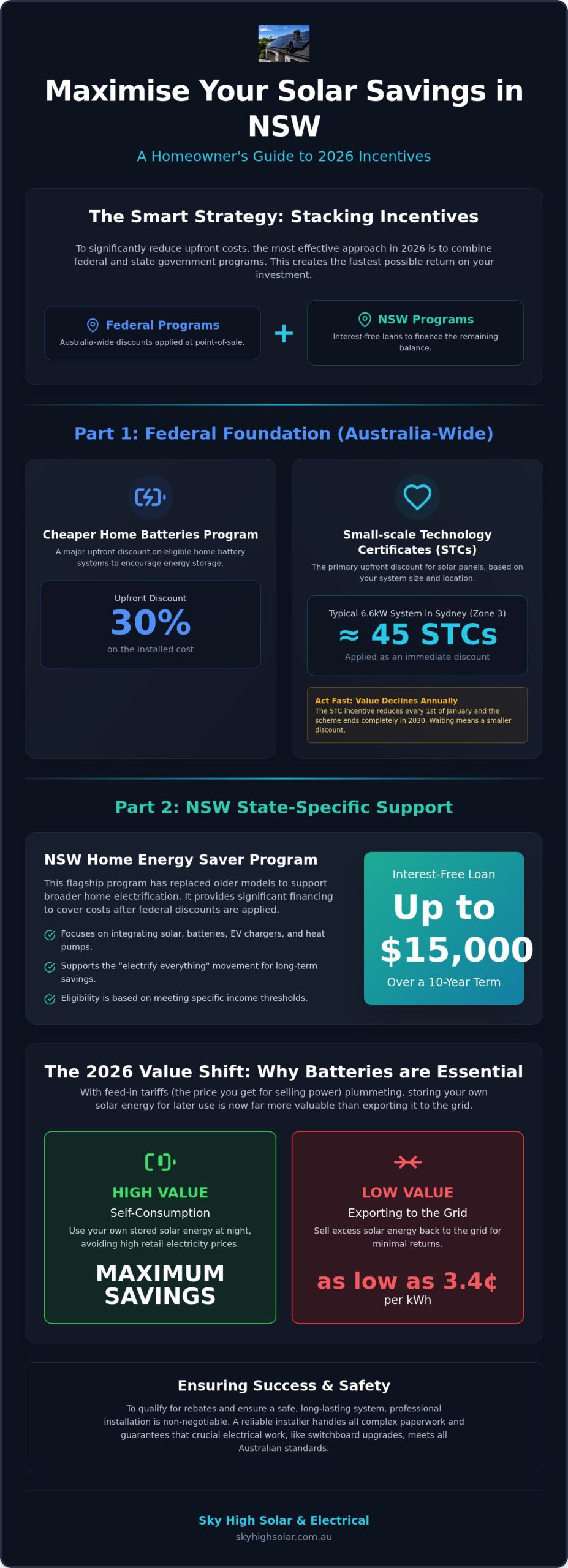
It helps to distinguish between the two tiers of support. Federal incentives, like STCs and the Cheaper Home Batteries Program, apply to all Australians and are usually handled by your installer as an upfront deduction. Conversely, state-based initiatives like the NSW Home Energy Saver Program are specific to New South Wales residents and often focus on financing the remaining balance through interest-free arrangements. Sydney homeowners are increasingly prioritising battery storage this year because feed-in tariffs have reached a voluntary benchmark as low as 3.4 cents per kWh, making self-consumption far more valuable than exporting power.
The Definition of a Solar Rebate in 2026
In the current market, a “rebate” rarely arrives as a cheque in the mail. Instead, most incentives function as tradeable certificates or upfront point-of-sale discounts that lower the initial capital required for a 6.6kW solar system. These mechanisms are designed to shorten the payback period, allowing you to reach the point of pure profit faster. The federal STC scheme remains the primary backbone of solar affordability, providing a predictable reduction in the price of every eligible installation.
Why NSW Incentives Have Changed
The NSW government has transitioned from the “Solar for Low Income Households” model to the more inclusive “Home Energy Saver” program. This shift aligns with a $557 million commitment from the Minns Labor Government to support the “electrify everything” movement. The goal isn’t just to install panels, but to integrate EV charging, heat pumps, and smart batteries into every home. This holistic approach ensures that modern energy transitions feel safe and rewarding for a broader range of income brackets. By focusing on total home electrification, the state is helping residents future-proof their properties against the long-term volatility of the traditional energy market.
The Federal Foundation: STCs and the Cheaper Home Batteries Program
At the heart of every residential installation lies the Small-scale Renewable Energy Scheme (SRES). This federal framework provides the primary financial offset for most homeowners looking into government solar rebates NSW 2026. Rather than a cash grant, this system generates Small-scale Technology Certificates (STCs) based on the expected clean energy production of your panels over a set timeframe. Because these certificates hold market value, they are traded to provide an immediate reduction in the price of your system. It’s a structured approach that ensures high-quality technology remains accessible while driving the nation toward a more sustainable future.
Small-scale Technology Certificates (STCs) Explained
Sydney resides within Zone 3, a classification that determines how many certificates your specific location can generate. A typical 6.6kW system in New South Wales currently receives approximately 45 STCs, which translates to a significant upfront discount. However, the deeming period for these certificates reduces on the 1st of January every year until the scheme concludes in 2030. This means waiting until 2027 will inherently result in a smaller discount for the exact same hardware. Sky High Solar and Electrical manages the entire certificate creation and trade-in process for you, ensuring the value is applied directly to your quote with zero administrative burden on your end.
The 2026 Federal Battery Rebate
The landscape changed significantly with the introduction of the federal Cheaper Home Batteries Program. This initiative provides an upfront discount of approximately 30 per cent on the installed cost of eligible storage systems. As of May 2026, the incentive rate sits at 6.8 STCs per usable kilowatt-hour, equating to roughly $250 per kWh of capacity. Pairing a high-performance solar battery with this discount is a logical move for Sydney residents facing high peak-time electricity rates. It allows you to store the energy captured during the day and deploy it when the grid is most expensive.
To qualify for this support, you must use hardware approved by the Clean Energy Council (CEC) and ensure the installation is performed by a licensed professional. We focus on premium, high-voltage storage solutions like the FOX ESS CQ7 to maximise this incentive. This specific hardware offers the durability and intelligence required to outlast the initial payback period, providing long-term reliability. If you’re looking to modernise your energy footprint, you can request a tailored assessment to see how these federal credits apply to your specific property and energy needs.
The NSW Home Energy Saver Program: Interest-Free Loans and Discounts
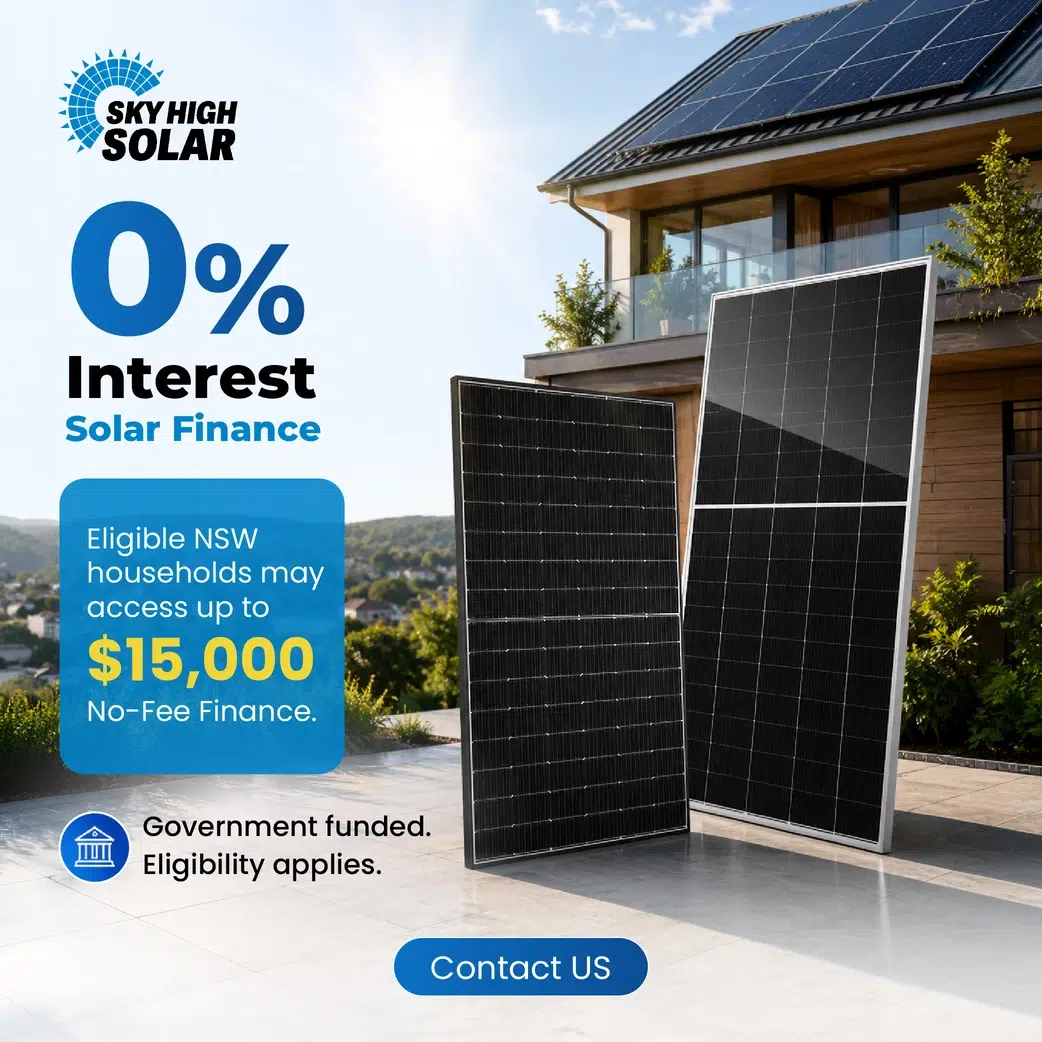
While federal discounts reduce the initial sticker price, the NSW Home Energy Saver Program addresses the remaining capital required for a full energy transition. This state-led initiative is a cornerstone of the government solar rebates NSW 2026 landscape, offering interest-free loans of up to $15,000 over a ten-year term. It’s designed for households with a combined taxable income under $210,000, making premium energy solutions accessible to a vast majority of Sydney residents. For those on lower incomes or holding eligible concession cards, the program goes a step further by providing upfront discounts of up to $4,000. These funds aren’t limited to panels alone; they cover batteries, heat pumps, and the critical electrical work needed to modernise your home’s infrastructure.
How to Apply for the $15,000 Interest-Free Loan
Securing this financing requires a methodical approach to ensure you don’t miss out on eligibility. First, you must obtain a formal quote from a participating NSW installer like Sky High Solar and Electrical. We ensure the quote meets all technical specifications required by the program, including the use of high-quality components that ensure longevity. Next, you verify your income and residency through the Service NSW portal. It’s vital to gain formal loan approval before any installation work commences on your property. This sequence guarantees that your investment is fully supported by the available government solar rebates NSW 2026 before you commit to the project. It’s a transparent process that removes complexity, allowing you to focus on the long-term value of your new energy system.
Switchboard Upgrades: The Hidden Requirement
Many older Sydney homes possess electrical infrastructure that wasn’t built for the demands of a modern 10kW solar system. A switchboard upgrade is often a non-negotiable safety requirement to handle increased loads and ensure compliance with current Australian Standards. The benefit of the Home Energy Saver loan is its flexibility; it can cover the costs of these essential electrical safety upgrades. This includes the installation of Residual Current Devices (RCDs) and smart metering, which are fundamental for a solar-ready home.
By addressing these hidden requirements through the loan program, you avoid the frustration of unexpected costs during the installation phase. We provide the licensed electrical work required for rebate eligibility, ensuring your switchboard is capable of integrating EV chargers or additional battery modules in the future. This grounded approach ensures your home isn’t just generating power, but doing so with the highest standards of safety and intelligence. Using the loan to fund these upgrades makes the transition to a sustainable lifestyle feel safe and rewarding.
Specialised Incentives: VPPs, Apartments, and Feed-in Tariffs
Beyond the mainstream discounts, the government solar rebates NSW 2026 framework includes targeted support for grid stability and urban living. One of the most compelling additions is the NSW Virtual Power Plant (VPP) incentive. This program provides an upfront payment of up to $1,500 for connecting a VPP-capable battery to a participating network. Crucially, you can stack this payment with the federal Cheaper Home Batteries Program mentioned earlier. This double-benefit approach significantly lowers the entry barrier for high-tier storage solutions, making the transition to a modern energy footprint more rewarding than ever.
Feed-in Tariffs (FiTs) also remain part of the conversation, though they function differently from upfront rebates. For the 2026-2027 period, the voluntary benchmark in NSW has shifted to between 3.4 and 6.5 cents per kWh. While this export value has decreased, it reinforces the importance of using your battery to maximise self-consumption rather than relying on grid exports. It’s a strategic shift that rewards those who invest in intelligent, high-capacity systems that keep power where it’s needed most: in your home.
Joining a Virtual Power Plant (VPP) in NSW
A VPP works by allowing the grid to “borrow” small amounts of energy from your battery during periods of extreme peak demand. In exchange for this support, you receive the upfront $1,500 incentive and, in many cases, ongoing credits on your energy bill. It’s a collaborative model that improves grid stability for the whole community while providing you with a faster return on investment. We prefer using premium brands like Tesla and FOX ESS for these integrations because their sophisticated software manages these grid interactions seamlessly. This ensures your home always has priority access to its own stored power when you need it.
Solar for Strata and Apartments
Living in a multi-dwelling unit no longer means missing out on renewable energy. The NSW government now offers specific grants for apartment buildings and strata schemes, providing up to 50 per cent of the funding for shared solar systems. These grants can reach as high as $150,000 for eligible buildings, focusing on reducing the energy costs of common areas like hallways, lifts, and car parks. While strata approvals can be complex, we specialise in providing the technical documentation and licensed electrical plans required to navigate the committee process. Reducing quarterly strata levies through shared solar is a practical, long-term solution for Sydney’s urban communities.
If you’re ready to explore how these specialised incentives can work for your property, you can book a professional consultation with our team to discuss your eligibility.
Maximising Your Rebate Value with Sky High Solar and Electrical
Choosing the right partner is the difference between a seamless transition and a paperwork nightmare. Most volume-driven sales companies focus on high-speed turnovers, often leaving homeowners to navigate the complexities of government solar rebates NSW 2026 without professional guidance. At Sky High Solar and Electrical, we position ourselves as visionary specialists who understand that a solar installation is a long-term investment in your property’s value. We provide the technical expertise and licensed electrical work required to ensure your application is successful from the first submission. Our comprehensive quotes include everything from the initial site assessment to the necessary switchboard upgrades, removing complexity for the end user and providing a steady hand in a rapidly evolving industry.
Pairing a high-quality 6.6kW solar system with the right incentives requires a deep understanding of hardware compatibility and energy intelligence. We don’t just install panels; we design integrated energy hubs that grow with your needs. This might involve future-proofing your home with the SigenStor integrated EV DC charger and battery system. By selecting premium hardware that’s designed to outlast the initial payback period, you secure long-term value and peace of mind. Our focus on durability and innovation ensures your system remains a high-performing asset for decades, not just years.
Why Local Sydney Expertise Matters
Our team has been licensed electrical contractors since 2013, giving us a grounded understanding of the specific grid requirements for Ausgrid and Endeavour Energy. This local knowledge is vital for faster turnaround times on Service NSW loan documentation and mandatory grid connection approvals. We never outsource our work to sub-contractors. You’ll deal directly with our specialists who understand the nuances of Sydney’s electrical infrastructure, ensuring your installation is safe, compliant, and perfectly optimised for every available incentive. This systematic approach builds trust incrementally, leading you toward a decision with total clarity.
Ready to Claim Your 2026 Solar Savings?
The 2026 landscape offers a unique opportunity to stack STC discounts, federal battery incentives, and interest-free loans. However, the federal deeming period reduction on January 1st means the window for maximum savings is always closing. Don’t let confusion lead to inaction or missed opportunities. We act as your professional guide, handling the administrative burden so you can enjoy the benefits of a sustainable, low-cost energy future. Get a rebate-optimised quote from Sky High Solar and Electrical today and secure your place in the modern energy transition with a partner you can depend on.
Future-Proof Your Home with Certainty
Securing the full value of government solar rebates NSW 2026 is about more than just claiming a discount; it’s about building a resilient, intelligent energy ecosystem. By stacking the 30 per cent federal battery incentive with the state’s interest-free loans, you can drastically reduce your initial capital while locking in long-term energy independence. We’ve explored how the right hardware and a strategic approach to timing can turn rising power prices into a thing of the past.
As the STC multiplier continues its annual reduction, the advantage of acting early is undeniable. We are licensed NSW electrical contractors and premium Enphase and Tesla installers who have been serving Sydney households since 2013. Our team manages every technical detail and administrative hurdle, ensuring your modern energy transition feels safe, simple, and rewarding. You don’t have to navigate these complexities alone when you have a steady hand to guide you through the process.
Request a Rebate-Ready Solar Quote from Our Sydney Experts
Take control of your energy future today and enjoy the peace of mind that comes with a high-tier, professionally installed system that’s built to last.
Frequently Asked Questions
Is there still a solar rebate in NSW for 2026?
Yes, although the structure of government solar rebates NSW 2026 has shifted toward a combination of federal discounts and state-based financing. Federal Small-scale Technology Certificates (STCs) remain the primary mechanism for lowering the upfront cost of panels. While the NSW government no longer offers a standalone panel rebate for detached homes, they provide significant support through the Home Energy Saver Program and Virtual Power Plant incentives to encourage integrated storage solutions.
How does the $15,000 interest-free loan work for solar?
The $15,000 interest-free loan is the centrepiece of the NSW Home Energy Saver Program, offering a ten-year term to help households manage the cost of solar and batteries. To access this, you must apply through the Service NSW portal after receiving a quote from a participating installer. The loan is paid directly to the contractor once the installation is complete and verified; this ensures a seamless financial transition for eligible Sydney homeowners.
Can I get a rebate for a solar battery in NSW?
You can access multiple incentives for battery storage in 2026. The federal government provides an upfront discount of approximately 30 per cent on the installed cost through the Cheaper Home Batteries Program. Additionally, the NSW government offers a Virtual Power Plant incentive of up to $1,500 for connecting your battery to a participating network. Stacking these incentives makes high-performance storage like the FOX ESS CQ7 far more accessible for residential properties.
What is the income limit for the NSW Home Energy Saver program?
To be eligible for the interest-free loan component of the NSW Home Energy Saver Program, your household must have a combined taxable income of less than $210,000. For households with an income at or below $80,000, or those holding a valid concession card, additional upfront discounts of up to $4,000 may also be available. This tiered approach ensures that support is directed where it provides the most significant impact on energy affordability.
Do I need to pay for a switchboard upgrade to get solar?
Many older Sydney properties require a switchboard upgrade to safely manage the increased electrical load of a modern solar system. While this is an additional requirement, the NSW interest-free loan can be used to cover these essential electrical safety works. Upgrading your infrastructure ensures compliance with current Australian Standards and prepares your home for future additions like EV charging or expanded battery storage; this provides long-term peace of mind for the homeowner.
Can businesses claim the NSW solar rebates in 2026?
NSW businesses can still benefit from federal STC discounts, which apply to systems up to 100kW in capacity. While the $15,000 interest-free loan is primarily targeted at residential properties, commercial operations can access different federal incentives for battery storage and energy efficiency upgrades. We specialise in both residential and commercial solar solutions, helping business owners navigate the specific eligibility criteria to maximise their return on investment through clean energy.
What happens to the solar rebate if I move house?
Government solar rebates NSW 2026 are typically applied at the point of sale, meaning the financial benefit stays with the property in the form of reduced system costs. If you’ve taken out an interest-free loan through the state government, you’ll generally need to settle the remaining balance or follow specific transfer protocols outlined in your loan agreement. The system itself adds immediate value to your home’s market appeal for future buyers.
How long does it take to get approval for the NSW solar loan?
Approval times for the NSW interest-free loan typically range from a few days to several weeks, depending on the volume of applications and the clarity of your documentation. Using a specialist installer ensures that your technical quote and electrical plans are accurate from the start, which prevents unnecessary delays in the Service NSW portal. Once approved, you can proceed with the installation knowing your financing is secure and ready for disbursement.