

 Sydney
 0452 243 240
Blog
Solar Battery Storage Sydney: The Ultimate 2026 Homeowner’s Guide

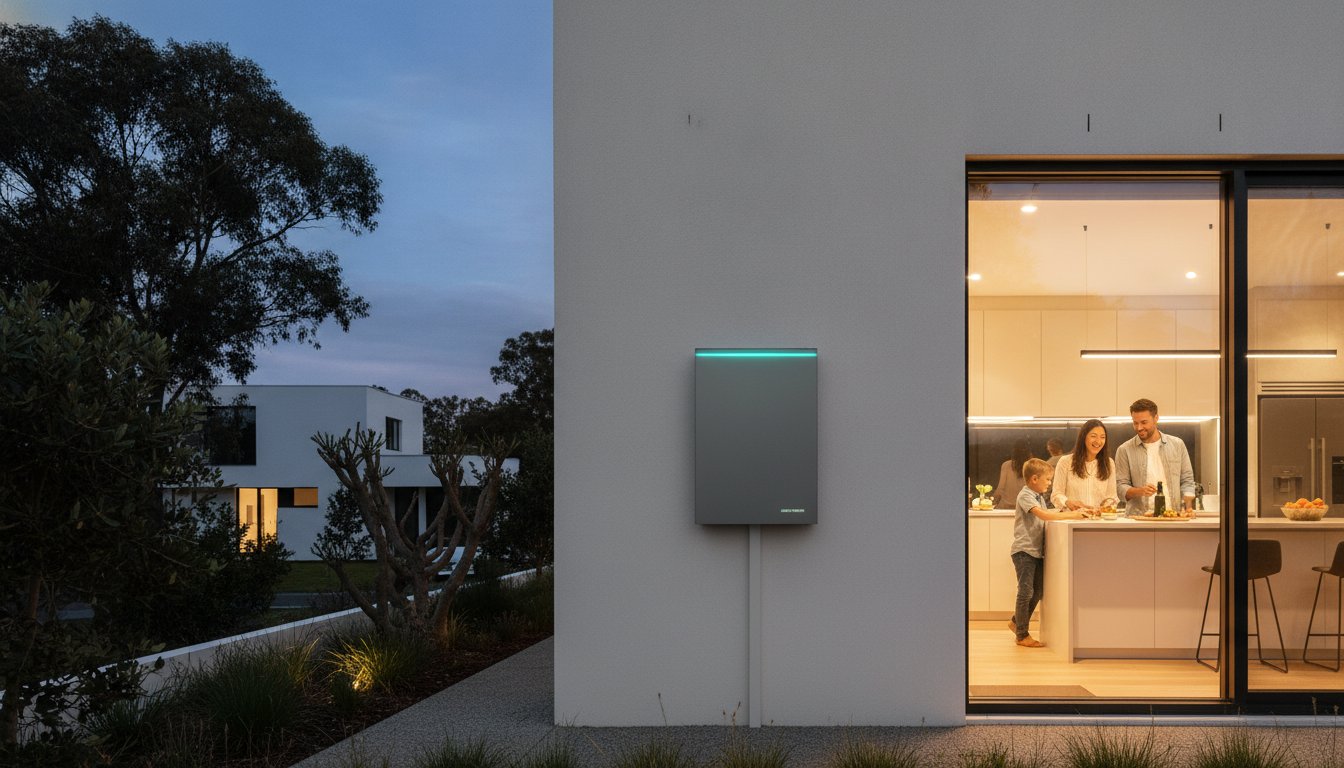
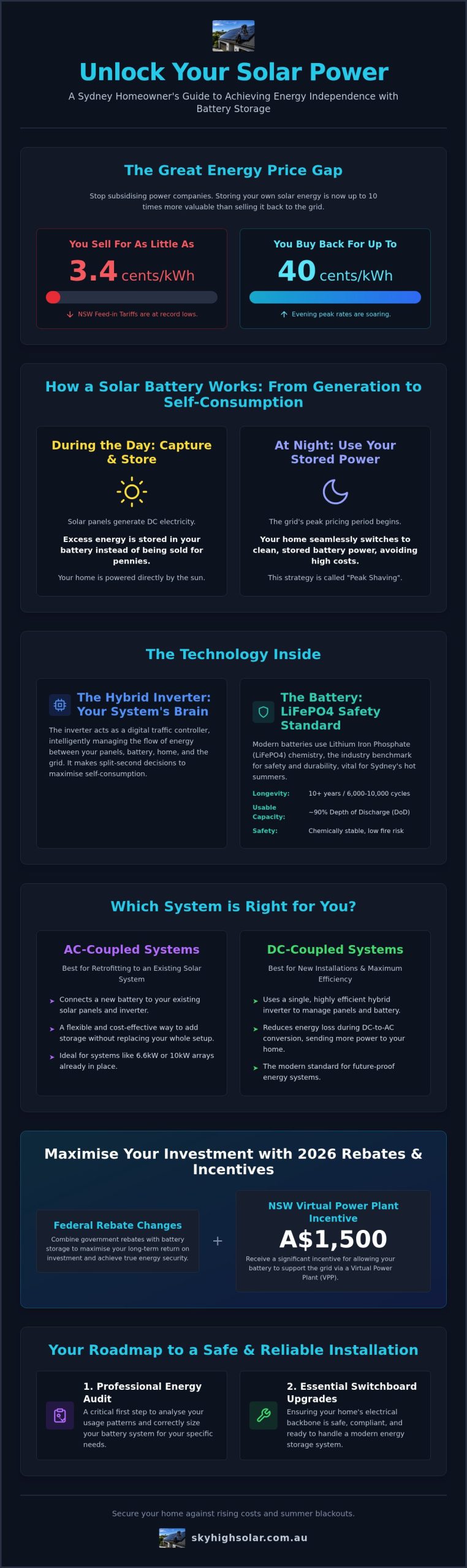
Why are you still sending your excess solar power back to the grid for as little as 3.4 cents per kilowatt-hour while buying it back at 40 cents during the evening peak? You aren’t just losing money; you’re essentially subsidising the power companies because you haven’t yet installed a solar battery. With NSW feed-in tariffs hitting record lows in 2026, the financial logic of exporting has collapsed. You likely feel the frustration of seeing your 6.6kW or 10kW system produce plenty of power during the day, only to face a high bill because you cooked dinner after sunset.
It’s a common struggle for Sydney homeowners who want to maximise their investment but feel trapped by shifting regulations. This guide promises to clear the complexity and show you exactly how to choose the right storage solution to achieve energy independence and push those quarterly bills toward zero. We’ll break down the 2026 federal rebate changes, the A$1,500 NSW incentive for Virtual Power Plants, and the technical specs of premium systems like the FOX ESS CQ7. By the end, you’ll have a clear roadmap to securing your home against both rising costs and summer blackouts.
Key Takeaways
- Discover how “peak shaving” strategies can eliminate your reliance on the grid during Sydney’s most expensive evening windows, keeping your power costs at a minimum.
- Learn why the hybrid inverter acts as the intelligent traffic controller for your solar battery, ensuring seamless and efficient energy delivery throughout your home.
- Evaluate leading 2026 storage technologies, including the high-voltage FOX ESS CQ7 and integrated SigenStor, to find the perfect balance of capacity and modularity for your needs.
- Understand why a professional energy audit and essential switchboard upgrades are the critical first steps for a safe and reliable battery integration.
- Explore how to combine the 2026 federal rebate with NSW Virtual Power Plant incentives to maximise your long-term return on investment and achieve energy security.
What is a Solar Battery and Why Does Your Sydney Home Need One?
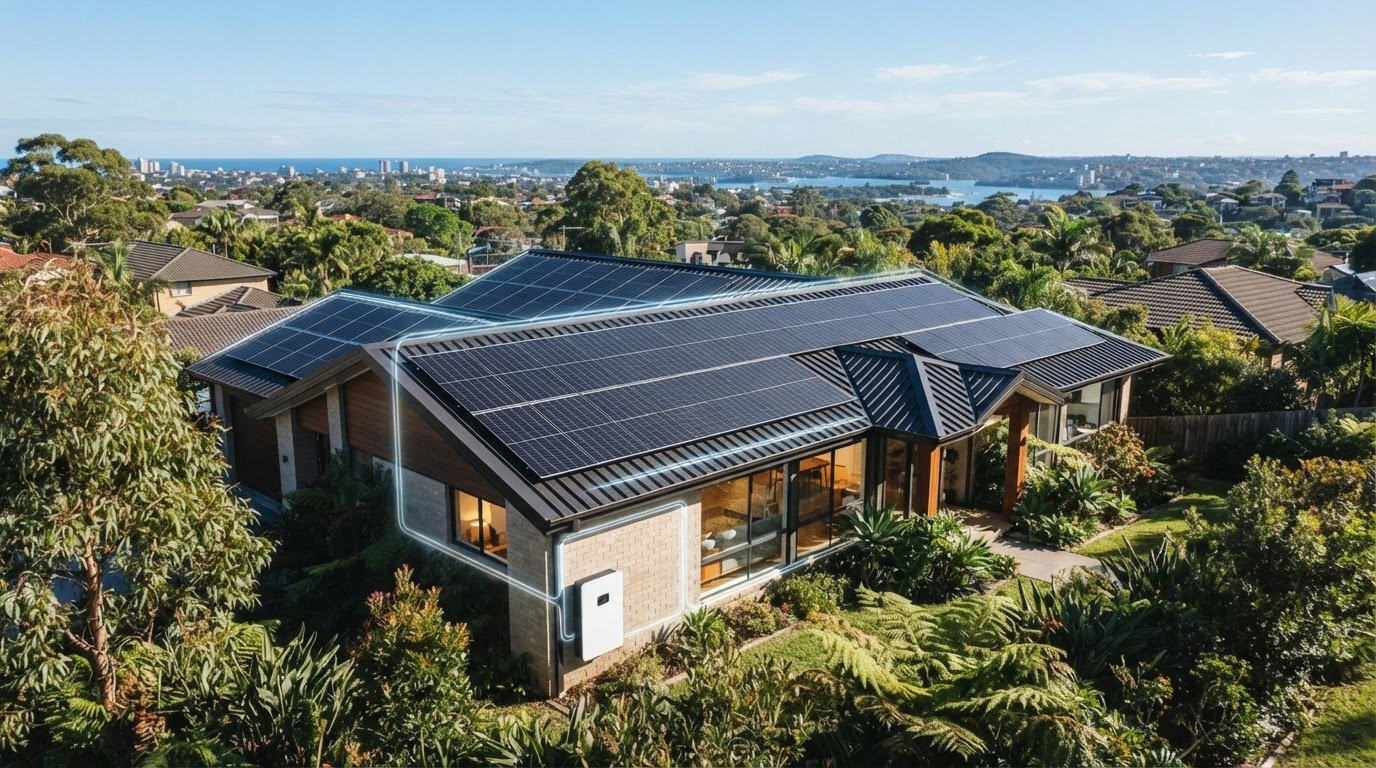
Think of a solar battery as a sophisticated chemical energy reservoir for your household. While your solar panels act as the generator, the battery serves as the vault, capturing the DC electricity produced during the day so you can use it whenever you choose. Understanding how battery energy storage systems work is the first step toward reclaiming control over your utility costs. In Sydney’s current climate, this technology has transitioned from a luxury addition to a fundamental component of a modern energy ecosystem. True energy independence isn’t just about generating power; it’s about the intelligence to keep it for yourself.
The Shift from Feed-in Tariffs to Self-Consumption
The days of profiting from high feed-in tariffs in New South Wales are long gone. With IPART benchmarks for 2026-2027 dropping as low as 3.4 cents per kWh, exporting your clean energy is no longer a sound financial strategy. Simultaneously, evening peak rates in Sydney often hover between 30 and 40 cents per kWh. Self-consumption is the primary goal for 2026 solar battery owners, focusing on using every watt of generated power within the home rather than sending it to the grid for a pittance. Every kilowatt-hour you store and use yourself is worth nearly ten times more than the credit you’d receive for exporting it. This shift makes the financial case for storage clearer than ever before.
AC-Coupled vs. DC-Coupled Systems
Choosing how your storage integrates with your panels depends largely on your current setup. AC-coupled systems are frequently the best choice for homeowners looking to retrofit a battery to an existing 6.6kW or 10kW solar array without replacing their original inverter. They connect directly to your home’s wiring, making them a flexible solution for older installations. They’re reliable and don’t require you to scrap perfectly good existing hardware.
For those installing a new system or upgrading entirely, high-voltage DC-coupled systems offer superior efficiency. Products like the FOX ESS CQ7 use a hybrid inverter to manage the flow of electricity directly between the panels and the cells. This reduces energy loss during conversion, ensuring more of the sun’s power actually reaches your appliances. Whether you’re modernising an established home in the Inner West or building a future-proof residence in the Hills, selecting the right coupling method is vital for long-term reliability. A well-planned installation ensures your system remains a high-performing asset for decades.
How Solar Battery Storage Works: The Technical Breakdown
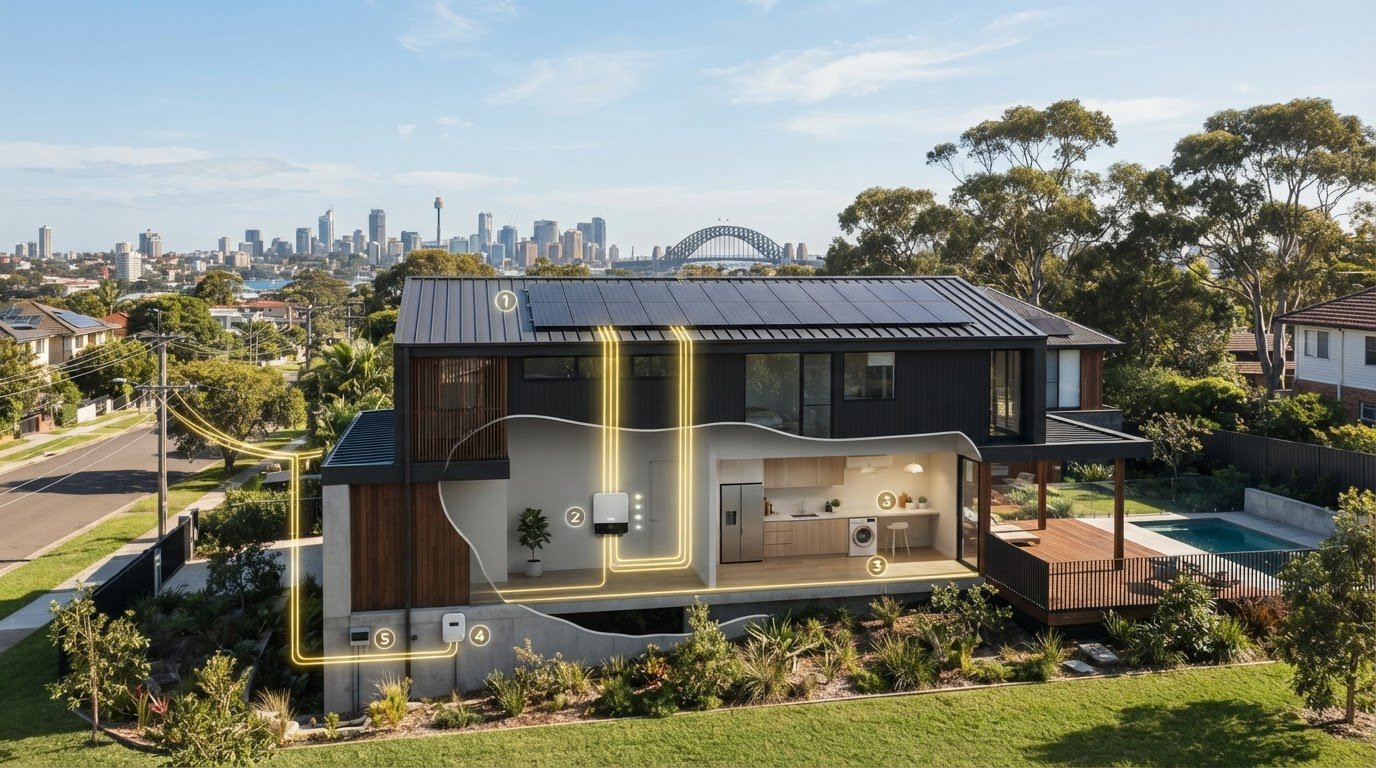
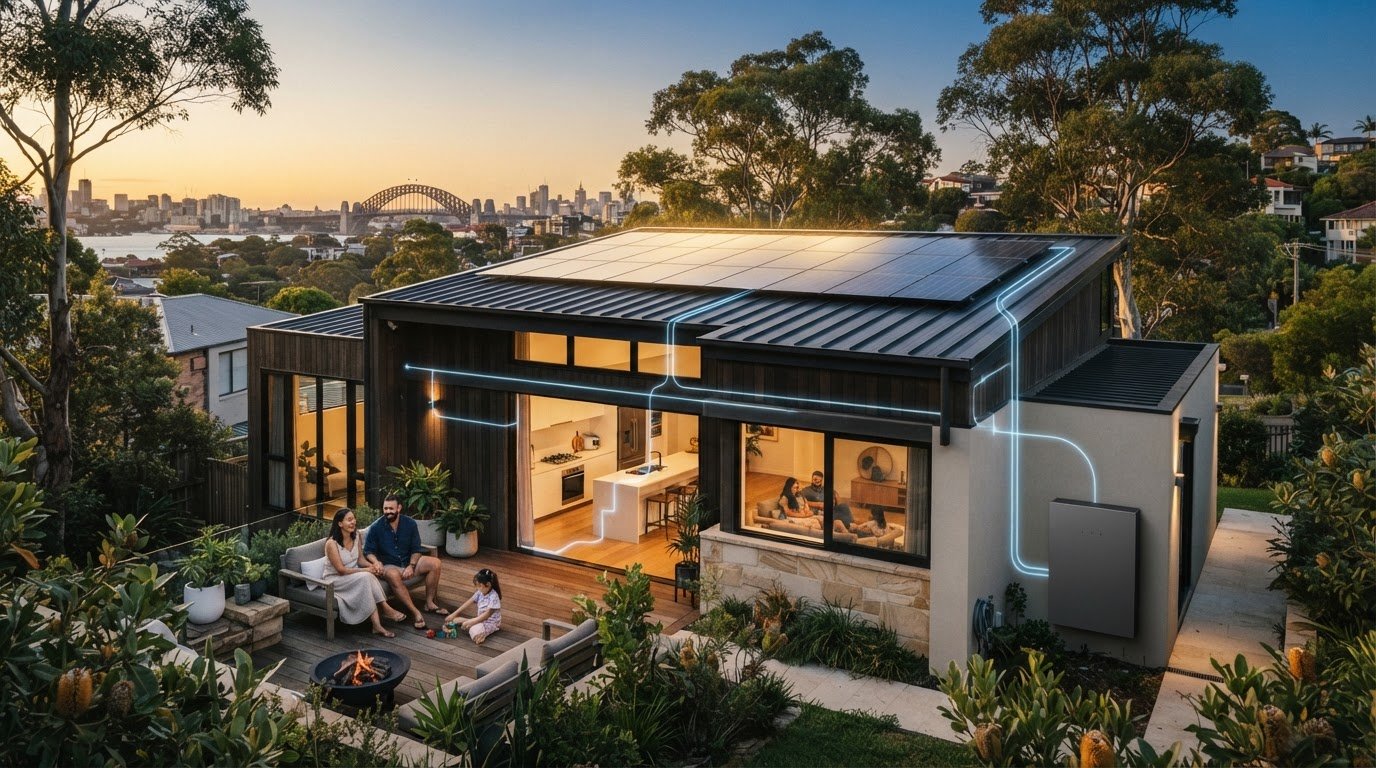
The process begins when sunlight hits your solar panels, knocking electrons loose to create direct current (DC) electricity. This energy travels to your inverter, which acts as the intelligent gateway. If your appliances are running, the inverter converts that DC into alternating current (AC) for immediate use. When your production exceeds your demand, the system directs that surplus into your solar battery for later. This journey ensures that a photon captured at midday can power your toaster or kettle at 7 PM, effectively shifting your solar generation to match your lifestyle.
The Intelligence of Hybrid Inverters
The GoodWe ET G2 Hybrid HV Inverter is a prime example of this technology in action. It functions as a digital traffic controller, constantly balancing three distinct energy streams. It monitors how much power your panels are making, how much your battery has in reserve, and exactly what your home is consuming. For larger Sydney residences, a three-phase hybrid inverter is often essential to manage higher loads across multiple circuits. The inverter makes split-second decisions to prioritise home use, then battery charging, and finally grid export as a last resort. This ensures not a single watt of your clean energy is wasted.
Understanding Battery Chemistry: LiFePO4 Standards
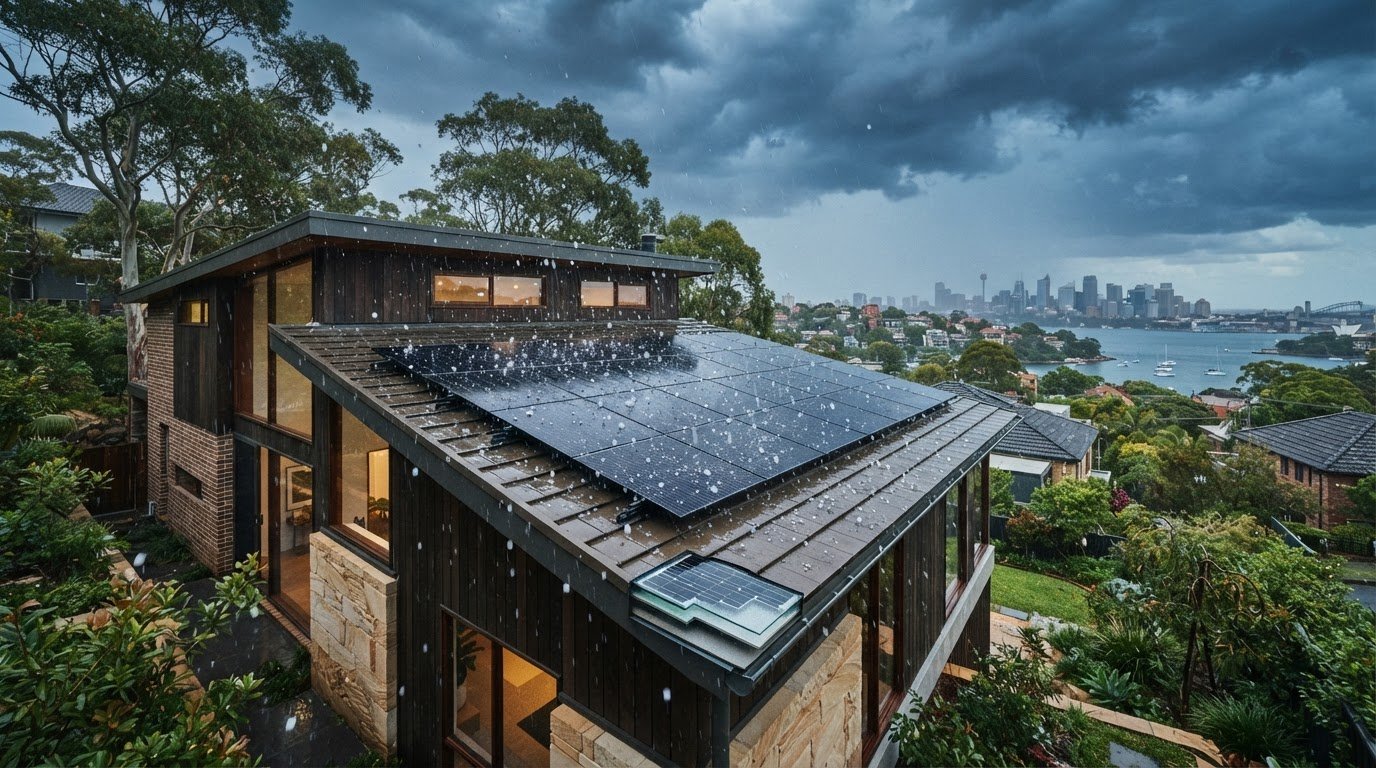
Modern storage relies on Lithium Iron Phosphate (LiFePO4) chemistry. It’s the industry benchmark for safety and durability. Unlike older lithium-ion variants, LiFePO4 is incredibly stable, which is a vital consideration during a scorching Sydney summer. This chemistry supports a high Depth of Discharge (DoD), typically allowing you to use up to 90% or more of the stored capacity without damaging the cells. You can expect a high-quality unit to maintain its performance for over 10 years, or roughly 6,000 to 10,000 cycles. This longevity is what transforms a solar battery from a short-term fix into a decade-long financial asset.
Efficiency is also measured by what we call ’round-trip efficiency’. This is the percentage of energy that remains available after the losses incurred during the charging and discharging process. Premium systems aim for 90% or higher, ensuring you don’t lose significant portions of your hard-earned solar power to heat. If you’re unsure if your current setup is ready for this integration, it’s worth getting a professional solar system assessment to ensure every component is working in harmony. A well-tuned system minimises conversion losses and maximises your daily savings.
Maximising ROI: Sydney-Specific Benefits in 2026
Sydney homeowners face a unique economic challenge. While the city enjoys abundant sunshine, the local grid is under immense pressure during the evening peak. This has led to a pricing structure where electricity is most expensive exactly when your family needs it most. By 2026, the financial incentive has shifted entirely away from exporting energy. Instead, the focus is on “peak shaving” using a solar battery. This strategy involves discharging your stored energy between 6 PM and 9 PM to avoid retail rates that frequently hit 40 cents per kWh, effectively insulating your household from the highest-tier tariffs.
Beating Sydney’s Time-of-Use Tariffs
A typical Sydney household with a 6.6kW solar system often generates its peak power while the home is empty. Without storage, this excess energy is exported for as little as 3.4 cents per kWh. When the family returns home at sunset, they immediately begin buying that same power back at ten times the price. A battery breaks this cycle. By storing that midday surplus, you can power high-drain appliances like air conditioners and induction cooktops using your own “free” energy. This transition can reduce a standard quarterly power bill to near-zero, provided the system is sized correctly for your specific evening load.
NSW Battery Rebates and Incentives in 2026
The 2026 incentive landscape remains supportive for those who choose high-quality, smart storage. The federal “Cheaper Home Batteries Program” continues to provide an upfront discount through Small-scale Technology Certificates (STCs), though the STC factor dropped to 6.8 in May 2026. To maximise your return, you should look toward the NSW government’s specific push for grid stability. The state currently offers an upfront incentive of up to A$1,500 for homeowners who connect a VPP-capable battery to a participating Virtual Power Plant. This payment stacks with federal incentives, significantly reducing the initial capital required. For a detailed breakdown of what you can expect to pay after all available discounts, see our complete guide to solar battery cost NSW in 2026, including prices, rebates, and ROI.
Joining a VPP doesn’t just provide an upfront boost; it offers ongoing value. By allowing the VPP to occasionally tap into your solar battery during extreme grid stress, you receive credits that further offset your remaining fixed daily charges. This collaborative approach to energy management ensures your system isn’t just a silent box on the wall. It becomes an active financial asset that supports the wider Sydney community while securing your own energy independence. Choosing a VPP-ready system like the FOX ESS CQ7 ensures you’re eligible for these modern incentives from day one.
Choosing the Best Solar Battery: Brand Comparison
Selecting the right storage solution requires more than just looking at the price tag. In 2026, the “Big Three” dominating the Sydney market are Tesla, FOX ESS, and SigenStor. Each offers distinct advantages depending on whether you are running a standard 6.6kW setup or a larger 10kW commercial-grade residential system. Your decision should be guided by usable capacity, peak power output, and modularity. High-quality systems should not only store energy but also integrate intelligently with your existing electrical infrastructure to ensure long-term dependability.
FOX ESS CQ7 vs. Tesla Powerwall 3
Tesla’s Powerwall 3 remains a popular all-in-one choice for those seeking simplicity and a sleek, recognisable aesthetic. However, the FOX ESS CQ7 review for 2026 reveals why this high-voltage system is gaining significant ground among Sydney homeowners due to its superior modularity. While the Powerwall is a fixed-capacity unit, the CQ7 allows you to stack modules. This means you can start with a smaller storage footprint and expand your solar battery capacity later as your family’s energy needs grow. For many suburban homes with limited wall space, the vertical, stackable footprint of the FOX ESS system offers a more flexible installation than the wider Tesla units.
SigenStor: The Integrated EV Charging Advantage
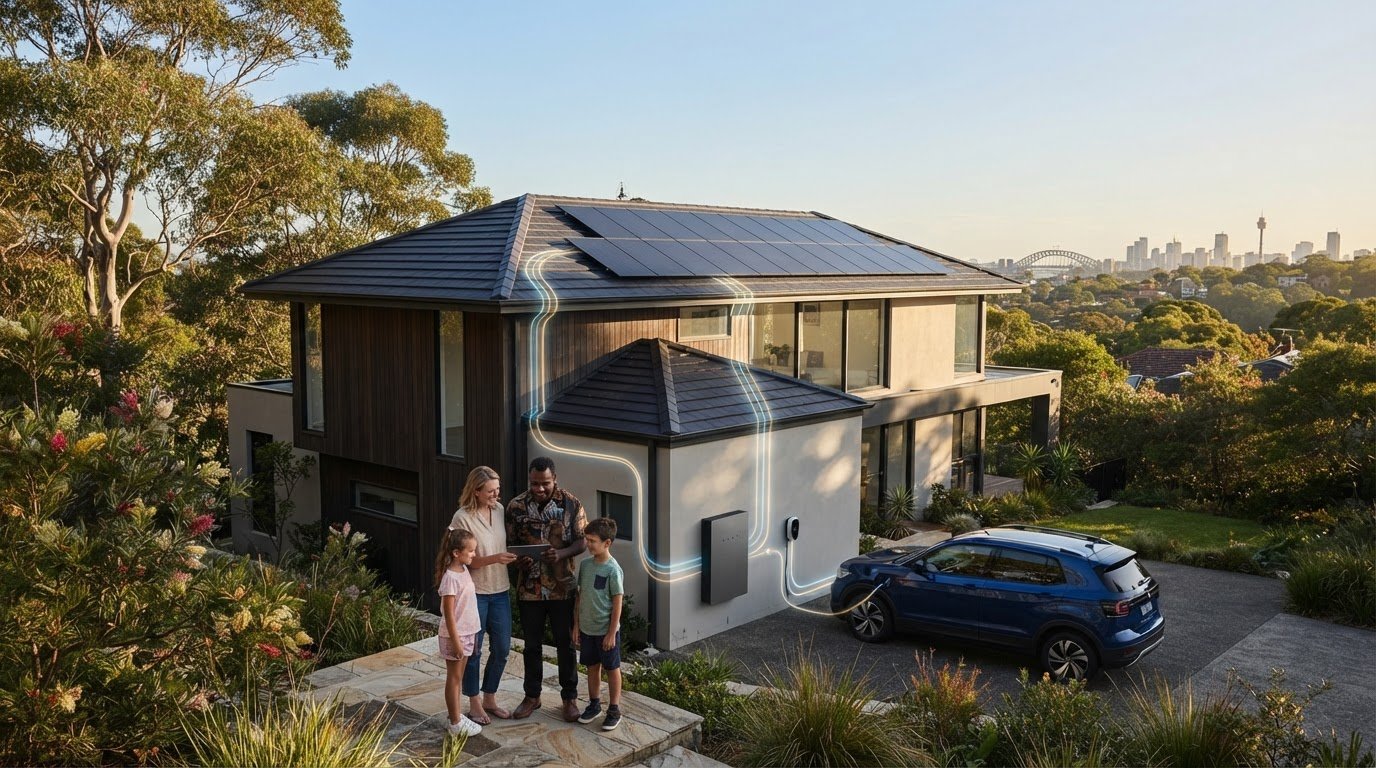
The SigenStor 5-in-one home energy hub represents the next step in home energy evolution. By 2026, many Sydney households are transitioning to electric vehicles, and SigenStor offers the only truly integrated DC-to-DC charging solution. This setup allows you to charge your car directly from your solar panels or battery without the efficiency losses typical of AC conversion. It is an intelligent, space-saving pillar that combines your inverter, battery storage, and EV charger into one unit. This future-proofs your garage and ensures your home is ready for the full electric transition.
Technical specifications are important, but local support is the factor that ensures peace of mind. Choosing a system with an Australian-based warranty means you have access to local technicians and parts if something goes wrong. Sydney’s coastal environment can be harsh on outdoor electronics, so having a specialist who understands local conditions is vital for maintaining the longevity of your investment. If you’re ready to see which of these premium systems fits your roofline and lifestyle, you can request a tailored battery comparison from Sky High Solar and Electrical today. Our team focuses on high-performance integrations that deliver the best possible return for your specific energy profile.
Planning Your Installation with Sky High Solar and Electrical
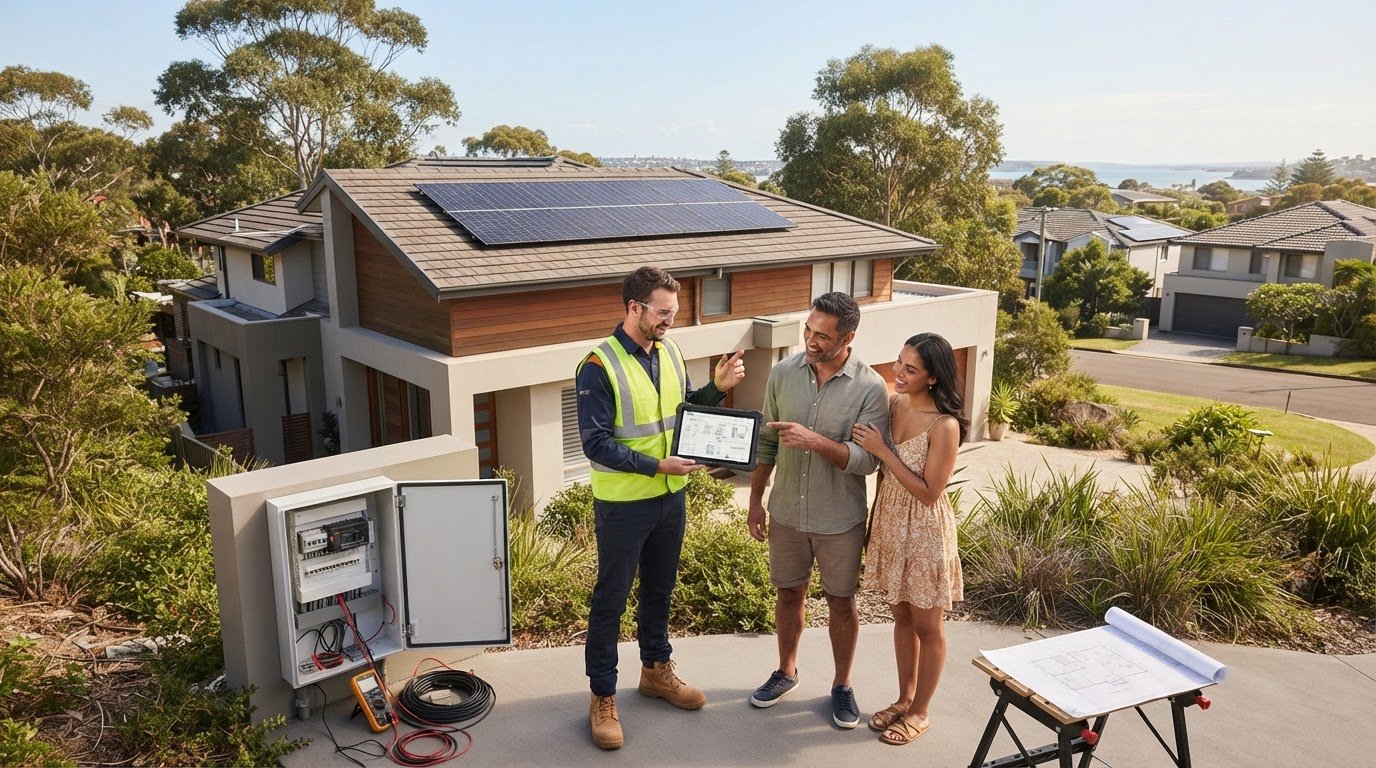
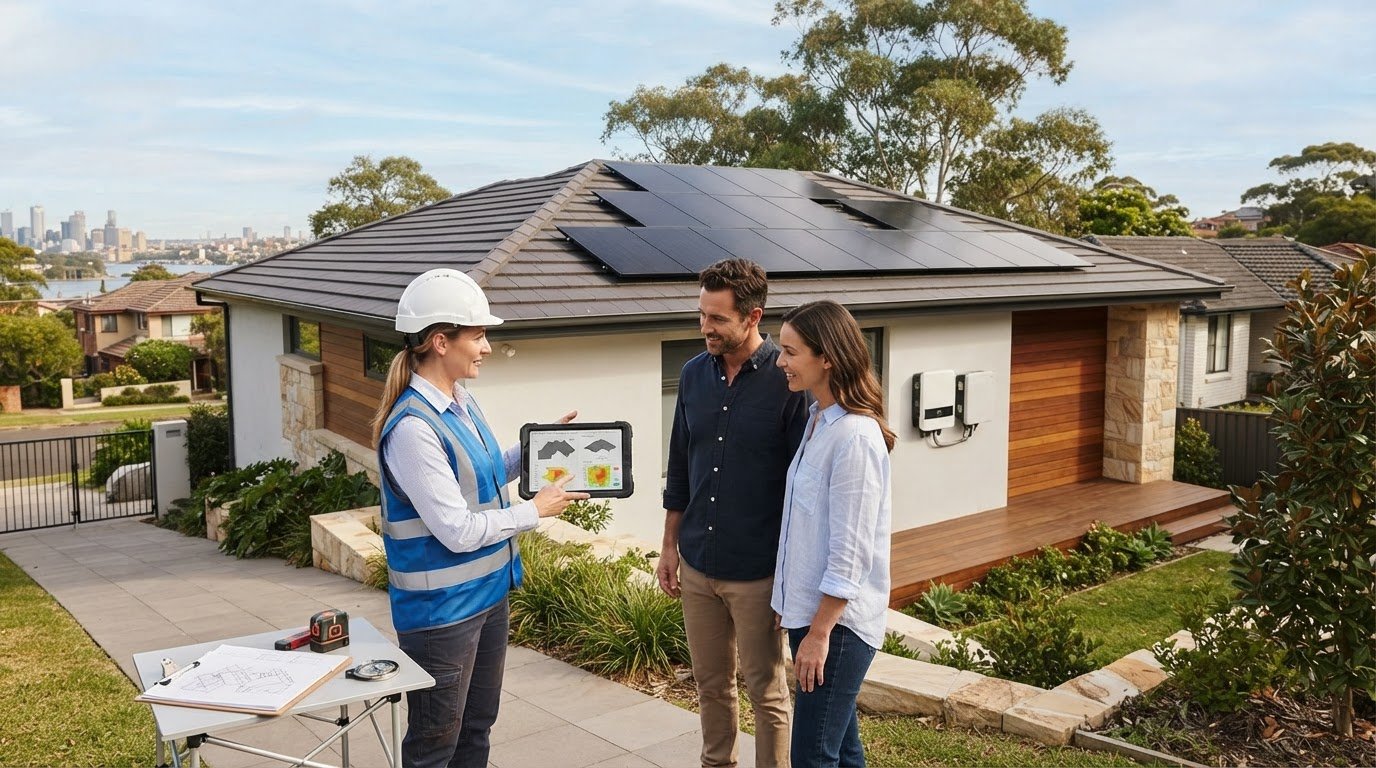
A successful solar battery integration begins long before the first bracket is fixed to your wall. It requires a meticulous, site-specific energy audit to ensure the storage capacity aligns perfectly with your household’s consumption patterns. At Sky High Solar, we approach every project as licensed electrical contractors first. This means we don’t just look at your roof; we examine the heart of your home’s electrical system to ensure it can handle the sophisticated demands of modern high-voltage storage. This grounded, technical approach removes the guesswork and ensures your investment delivers the performance you expect.
The Essential Switchboard Upgrade
Sydney’s older housing stock often features electrical boards that were never designed for bi-directional energy flow or high-capacity storage. By 2026, Australian installation standards require specific protection measures, such as fire-rated enclosures and updated circuit breakers, to house a battery safely and legally. We ensure your home is fully compliant with the latest AS/NZS 5139 regulations, providing a stable platform for your new technology. A smart switchboard is the foundation of energy storage, acting as the physical interface where your solar production meets your home’s demand with precision and safety.
Your Installation Journey: From Quote to Commissioning
We’ve refined our process to remove complexity for the homeowner, moving methodically through three key phases designed to build trust and ensure quality:
- Step 1: On-site Sydney assessment. We perform a comprehensive load profile analysis, looking at your historical usage and identifying peak demand periods to size your system accurately.
- Step 2: Custom system design. Whether you need a compact retrofit for an existing array or a full 10kW system with FOX ESS storage, we tailor the hardware to your home’s architecture.
- Step 3: Professional installation and grid connection. Our team handles all the NSW Ausgrid or Endeavour Energy paperwork, ensuring your system is commissioned and reporting to your monitoring app correctly from day one.
The relationship doesn’t end once the solar battery is active. Ongoing solar system servicing is vital to maintain the thermal health of your cells and the efficiency of your hybrid inverter. We provide clear, transparent monitoring tools so you can see your energy independence grow in real-time. By choosing a partner with deep roots in Sydney’s electrical industry since 2013, you’re investing in a system that remains safe, efficient, and reliable for the next decade of energy transitions. Our goal is to make the move to modern energy feel rewarding, secure, and entirely seamless.
Securing Your Sydney Energy Future
Transitioning to a modern energy ecosystem is no longer about simply adding panels to a roof; it’s about building an intelligent, resilient home. The 2026 landscape in Sydney rewards those who prioritised self-consumption over low-value grid exports. By choosing a high-performance solar battery, you aren’t just avoiding peak tariffs. You are securing your household against future price hikes and grid instability. Whether you opt for the modular flexibility of FOX ESS or the integrated EV charging power of SigenStor, the technical foundation of your system must be sound to deliver long-term value.
Sky High Solar is here to ensure that your transition is seamless. As licensed Sydney electricians, we specialise in complex integrations and the essential switchboard upgrades required for modern storage. Our local Sydney support and professional servicing ensure your investment remains a high-performing asset. We are specialists in FOX ESS and SigenStor systems, providing the technical expertise needed for a safe, high-voltage installation.
Ready to take control of your power bills? Get a Tailored Solar Battery Quote for Your Sydney Home today. It’s time to embrace energy independence with confidence and clarity.
Frequently Asked Questions
Is a solar battery worth it in Sydney with current electricity prices?
A solar battery is certainly worth the investment in 2026 due to the vast gap between export credits and import costs. With NSW feed-in tariffs averaging between 3.4 and 6.5 cents per kWh and peak retail rates reaching 40 cents, storing your own energy is the only way to avoid high bills. This “peak shaving” strategy ensures your 6.6kW or 10kW system delivers its maximum financial return by prioritising self-consumption over grid reliance.
How long does a typical solar battery last in the Sydney climate?
You can expect a high-quality solar battery using Lithium Iron Phosphate (LiFePO4) chemistry to last between 10 and 15 years. These systems are typically rated for 6,000 to 10,000 cycles before their capacity significantly degrades. Sydney’s hot summers make thermal stability crucial, which is why premium brands like FOX ESS and Tesla include sophisticated management systems to maintain cell health even during extreme weather conditions.
Can I add a battery to my existing 6.6kW solar system?
Yes, you can easily add storage to an existing 6.6kW solar system through a process called AC-coupling. This method allows the battery to work alongside your current solar inverter without needing to replace your existing panels or hardware. Alternatively, you might choose to upgrade to a hybrid inverter, such as the GoodWe ET G2, which provides a more integrated and efficient DC-coupled solution for older installations looking to modernise.
Do I need a switchboard upgrade to install a Tesla Powerwall or FOX ESS battery?
Most Sydney homes require a switchboard upgrade to meet the rigorous AS/NZS 5139 safety standards for battery installations. Modern systems like the Tesla Powerwall or FOX ESS CQ7 require specific electrical protection, such as fire-rated backing and updated circuit breakers. A smart switchboard acts as the essential foundation, ensuring your home can safely manage the high-voltage energy flow between your panels, storage, and the grid with total reliability.
What happens to my solar battery during a blackout?
Your system will continue to provide power during a blackout if it has been configured with backup capabilities. While standard solar systems shut down during a grid failure for safety, a battery with an integrated backup gateway or “island mode” can isolate your home from the grid. This allows you to run essential appliances like lights, refrigerators, and Wi-Fi using your stored energy until the main power is restored.
Are there still government rebates for solar batteries in NSW in 2026?
Incentives are still available in 2026, including the federal “Cheaper Home Batteries Program” which provides an upfront discount through Small-scale Technology Certificates (STCs). Additionally, the NSW government offers an incentive of up to A$1,500 for connecting a VPP-capable battery to a Virtual Power Plant. These schemes can be combined, significantly reducing the initial capital required to secure your energy independence and improve your system’s long-term return on investment.
How much space do I need for a solar battery installation?
Space requirements depend on the specific brand and modularity of the system you choose. A Tesla Powerwall 3 requires a flat wall space of approximately 1100mm by 750mm, whereas the FOX ESS CQ7 uses a stackable, vertical design that occupies a smaller floor footprint. Most installations also require a 600mm clearance from windows or doors to comply with NSW safety regulations, making a professional site assessment vital for proper placement.
Can a solar battery charge from the grid during off-peak times?
Most modern storage systems can be programmed to charge from the grid during off-peak windows when electricity is cheapest. This feature is particularly useful during cloudy periods when your panels aren’t producing enough power to fill the cells. By “topping up” your battery at 2 AM on a low off-peak rate, you can still avoid buying expensive electricity during the 6 PM peak, ensuring consistent savings regardless of the weather.