

 Sydney
 0452 243 240
Blog
Commercial Solar Installation Sydney: The 2026 Business Buying Guide

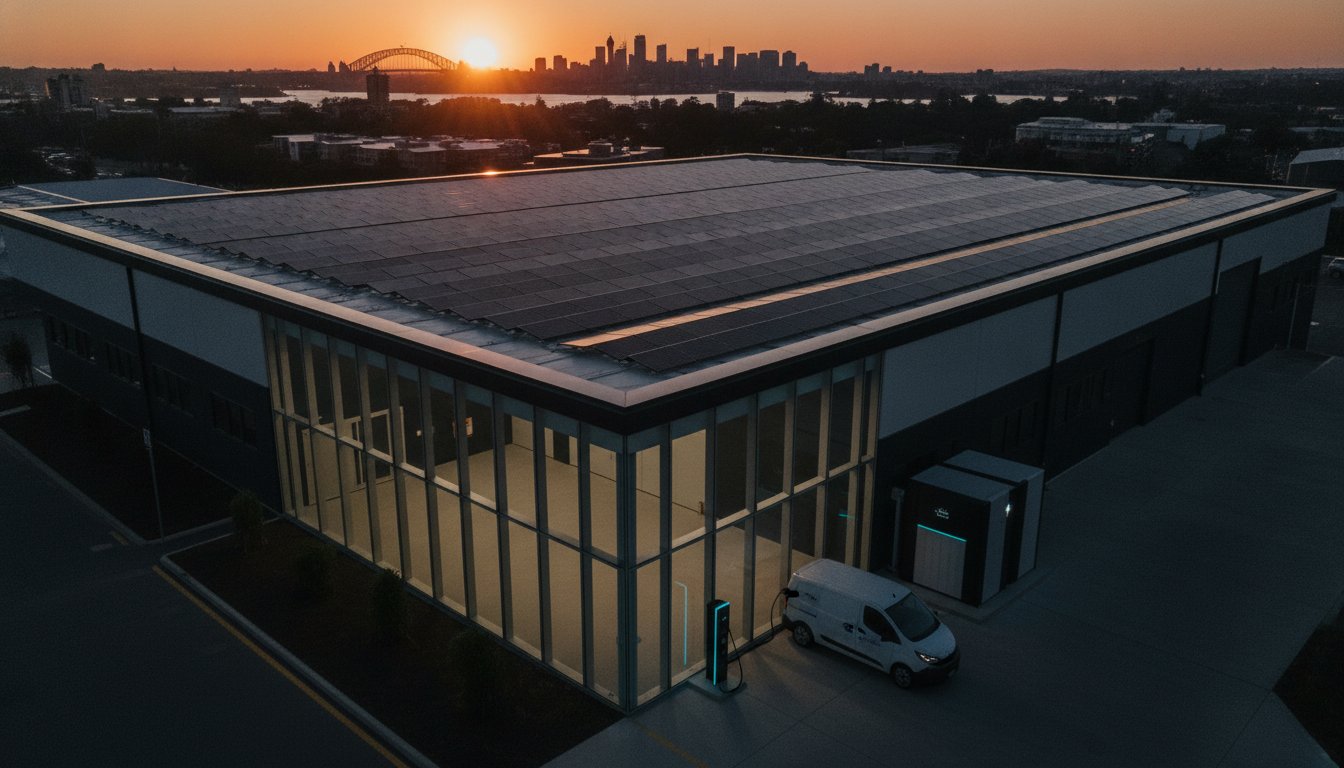
In 2026, the Sydney business that relies solely on the grid isn’t just paying for power; they’re subsidising a volatile market that no longer rewards traditional consumption. Most NSW directors are feeling the sting of retail rates climbing toward 45 cents per kWh, making a high-performance commercial solar installation a strategic necessity rather than an optional upgrade. You’ve likely seen your quarterly OPEX rise despite efforts to be efficient, while the prospect of navigating grid applications or avoiding unreliable “solar cowboys” feels like a significant risk to your operations.
This guide will show you how to transform your facility into a self-sustaining energy hub that slashes overheads and builds long-term resilience. By integrating intelligent storage and EV readiness, you can reclaim control over your energy footprint and future-proof your assets. We will explore how to leverage the $20,000 instant asset write-off, secure the latest NSW battery incentives, and choose the right technology to ensure your transition is both seamless and highly profitable.
Key Takeaways
- Understand why volatile NSW energy tariffs and peak-time grid instability are making self-generation a mandatory strategy for Sydney SMEs.
- Learn how to maximise your financial return by leveraging the 2026 Federal Instant Asset Write-off and the latest NSW Peak Demand Reduction Scheme incentives.
- Discover the technical essentials of a high-performance commercial solar installation, including how to select Tier 1 components and size systems for optimal durability.
- Identify how integrated battery storage and EV charging solutions future-proof your facility against export penalties while preparing you for electric fleet transitions.
- Gain clarity on the grid connection process within Ausgrid and Endeavour Energy territories to ensure your switchboard is ready for modern energy demands.
Why Sydney Businesses are Prioritising Commercial Solar Installation in 2026
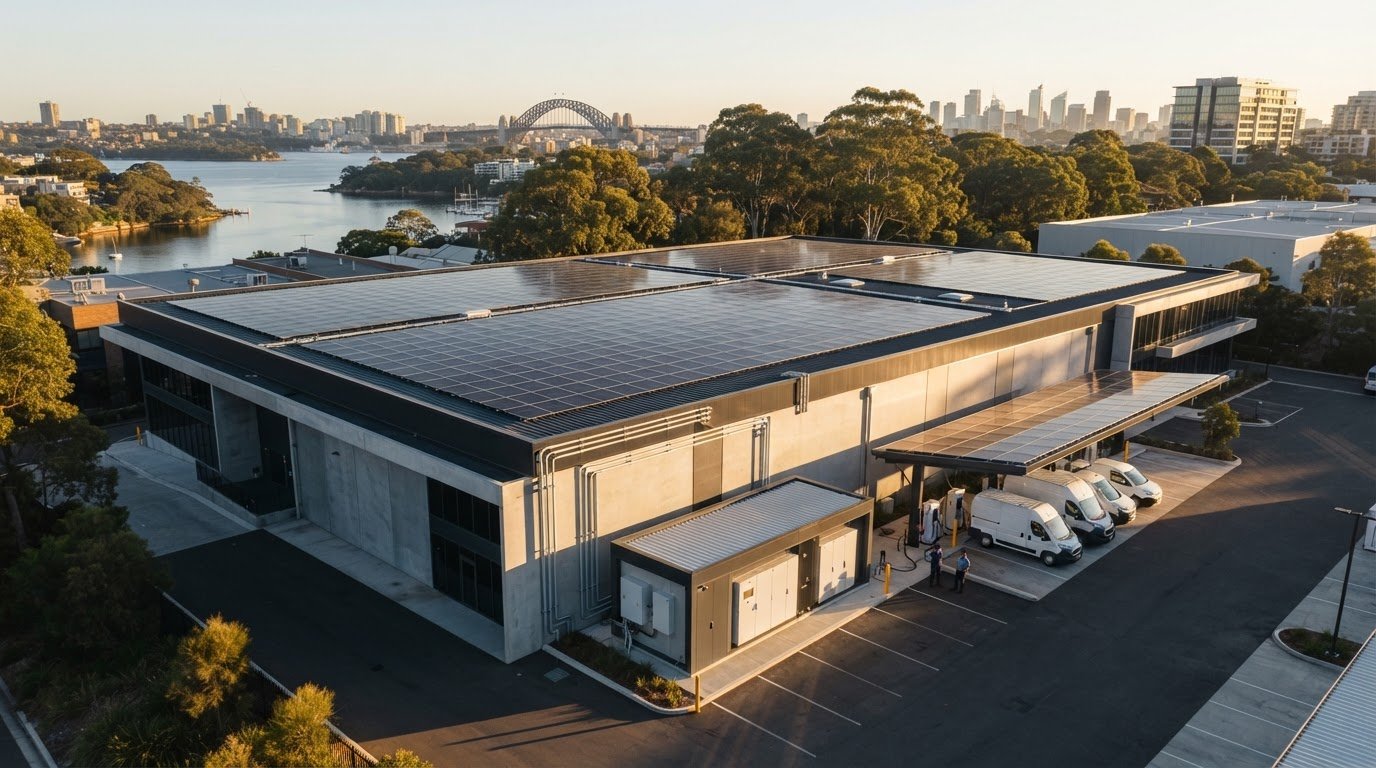
Sydney’s commercial landscape is undergoing a fundamental transformation. For years, electricity was viewed as a fixed overhead, a necessary cost of doing business that fluctuated within predictable margins. In 2026, that predictability has vanished. With retail electricity rates for local businesses now sitting between 30 and 45 cents per kWh, the financial pressure on SMEs has reached a tipping point. This economic reality is the primary driver behind the surge in commercial solar installation across the Greater Sydney region.
The shift isn’t merely about cost reduction; it’s about a change in identity. Sydney businesses are transitioning from passive consumers to active “prosumers.” By generating their own power, they’re insulating themselves from the volatility of the NSW energy market and the complexities of “two-way pricing” introduced by networks like Ausgrid and Endeavour Energy. Beyond the balance sheet, a robust solar strategy enhances a brand’s reputation. In a market where clients and partners increasingly scrutinise supply chain sustainability, a visible commitment to Solar power in Australia provides a distinct competitive advantage that resonates with the local community.
Rising Operational Costs and the Solar Solution
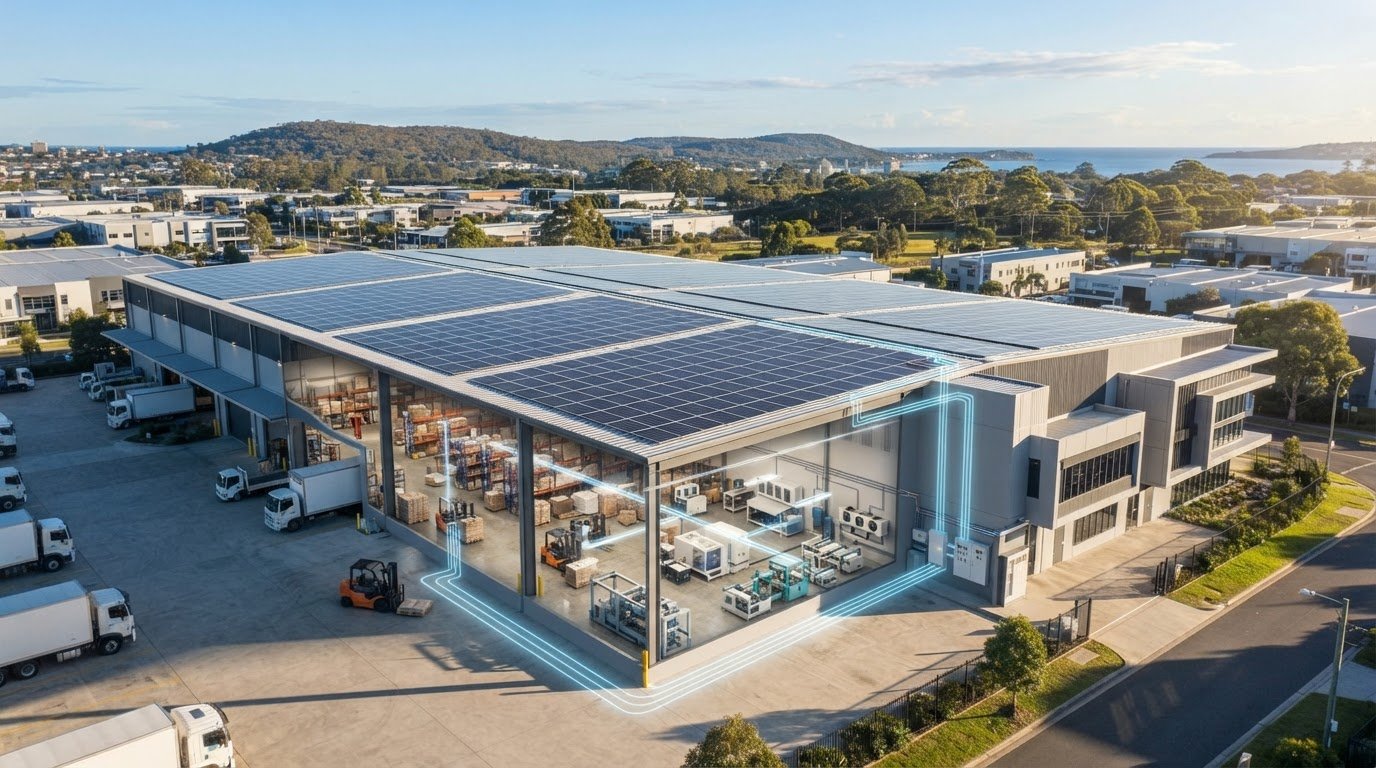
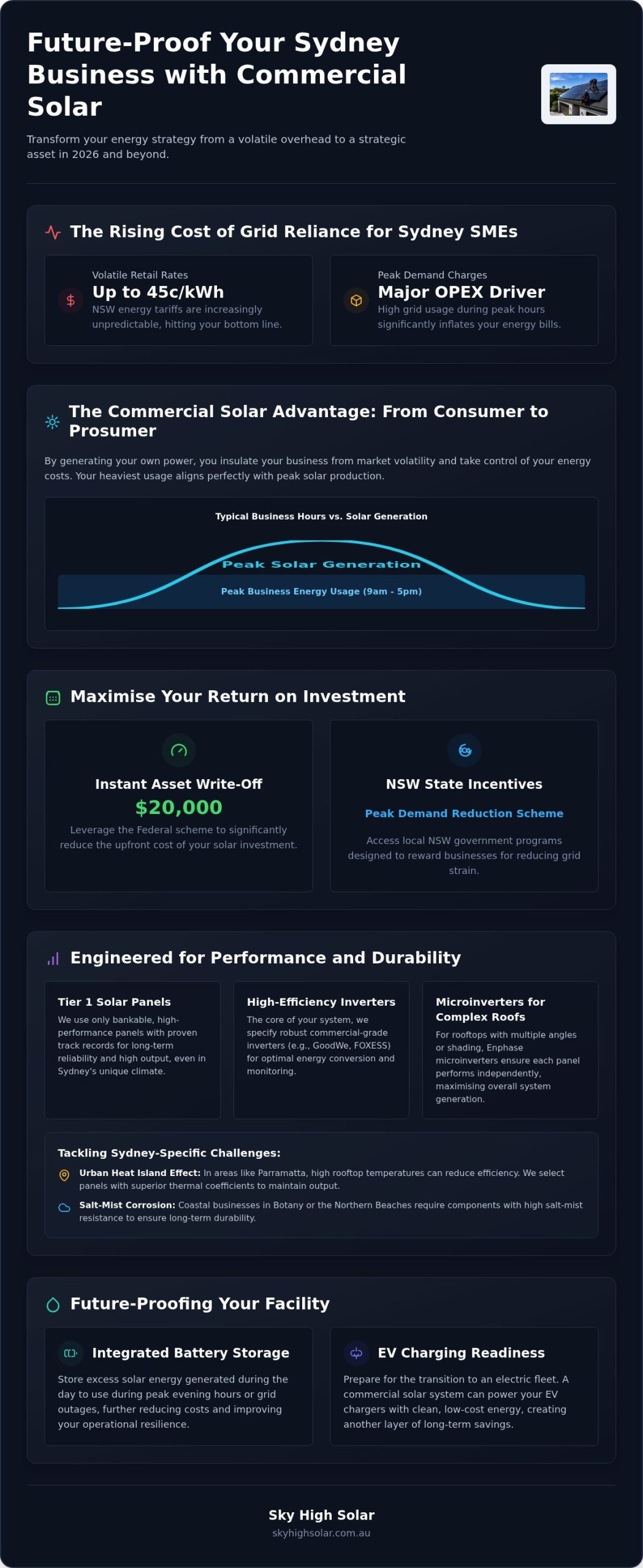
Most Sydney businesses, from warehouses in Arndell Park to retail centres in the CBD, share a common trait: their heaviest energy usage occurs between 9:00 am and 5:00 pm. This aligns perfectly with the peak generation window of a solar array. By using energy as it is produced, businesses avoid expensive retail tariffs and reduce their peak demand charges. These charges are often based on the highest level of electricity drawn from the grid during a single interval and can account for a massive portion of a quarterly bill. A well-engineered commercial solar installation acts as a strategic buffer, ensuring your facility draws less from the grid when prices are at their highest.
Sydney-Specific Climate Factors
Our city offers a unique environment for solar generation, but it requires a specialised approach to design. Sydney enjoys high solar irradiance, yet the “Urban Heat Island” effect in Western Sydney hubs like Parramatta can cause rooftop temperatures to soar, which can reduce panel efficiency if not managed correctly. Conversely, coastal businesses in areas like Botany or the Northern Beaches must contend with salt-mist corrosion. We prioritise Tier 1 components with high salt-mist resistance and superior thermal coefficients to ensure long-term durability. This level of technical foresight ensures that your investment remains productive against the specific environmental stressors of the Sydney basin.
Choosing the Right Commercial Solar System: Sizing and Components
Selecting the right hardware for a commercial solar installation is a decision that defines your facility’s operational efficiency for decades. It’s no longer sufficient to simply install a generic system; modern Sydney businesses require tailored engineering that accounts for specific consumption patterns and roof orientations. We prioritise Tier 1 solar panels because they offer the bankability and durability required for commercial assets. These panels are manufactured by companies with proven track records, ensuring that your long-term warranty is backed by a stable global entity.
The heart of your system lies in its inverter technology. For most Sydney facilities, we recommend high-efficiency units like the GoodWe ET G2 Hybrid HV Inverter or the FOXESS Three Phase 10.0kw Hybrid Inverter. These systems are designed for the rigours of commercial demand, offering excellent thermal management and sophisticated monitoring capabilities. On complex Sydney rooftops with multiple angles or shading from neighbouring buildings, Enphase microinverters often provide a superior outcome. By allowing each panel to operate independently, they prevent a single shaded module from reducing the output of the entire array.
Determining Your System Capacity
Sizing a system correctly requires a deep dive into your interval data. This data shows exactly when your business consumes power, allowing us to design an array that maximises self-consumption. While a 15kW or 30kW system might suit a small retail office, larger warehouses often require 100kW or more to make a meaningful dent in their quarterly bills. Most systems under 100kW are eligible for the Small-scale Renewable Energy Scheme, which provides an upfront discount that significantly reduces the initial capital investment.
Local Sydney Grid Connection Requirements
Navigating the specific requirements of Ausgrid and Endeavour Energy is a critical step in any commercial solar installation. Applications for systems over 30kW involve more stringent technical assessments and grid stability checks. As licenced electricians, we understand that many older Sydney facilities require comprehensive switchboard upgrades to safely handle increased current and meet modern grid standards. You should also be aware of export limiting policies; if the local grid is congested, the distributor may restrict how much power you can send back. This makes sizing for internal use even more vital for your return on investment. If you are unsure about your building’s current capacity, you can organise a professional site audit to review your existing electrical infrastructure.
Financial Analysis: ROI, Rebates, and Tax Incentives for NSW Businesses
The financial viability of a commercial solar installation in 2026 is underpinned by a typical payback period of three to five years for most Sydney facilities. This rapid return on investment is driven by the widening gap between the falling cost of high-performance components and the rising rates of grid-supplied energy. When calculating your projected savings, it’s essential to understand that solar is not just a utility expense; it’s a high-yield capital asset that provides immediate relief to your cash flow while enhancing the underlying value of your commercial property.
A critical distinction for any business owner is the choice between Small-scale Technology Certificates (STCs) and Large-scale Generation Certificates (LGCs). Systems under 100kW qualify for STCs, which function as an upfront discount on the system’s purchase price. For larger industrial operations requiring arrays over 100kW, LGCs provide an ongoing revenue stream based on the amount of renewable energy the system generates. Choosing the right certificate path depends on whether your priority is reducing initial capital expenditure or securing long-term operational income.
Financing your transition has also become more accessible through specialised products. Many Sydney SMEs opt for Green Loans, which often feature lower interest rates for energy-efficient upgrades, allowing the electricity savings to cover the loan repayments. Alternatively, a Power Purchase Agreement (PPA) can enable a commercial solar installation with zero upfront cost, where you simply pay for the solar energy produced at a rate significantly lower than your current retail tariff.
Government Incentives and Rebates
In 2026, the NSW government continues to support business electrification through the NSW Energy Savings Scheme, which incentivises the installation of energy-saving technologies. These incentives are often combined with federal rebates to significantly lower the barrier to entry. For businesses looking to manage peak demand charges, the NSW Solar Battery Rebate and the Peak Demand Reduction Scheme (PDRS) offer substantial upfront discounts on battery storage systems, particularly those between 20kWh and 30MWh installed after September 2026.
Tax Benefits and Depreciation
The Australian taxation system provides several levers to accelerate your solar ROI. For the 2025-2026 income year, businesses with an aggregated annual turnover of less than $10 million can utilise the $20,000 Instant Asset Write-off for eligible components installed by June 30, 2026. Beyond this immediate deduction, solar infrastructure qualifies for capital works deductions, allowing you to depreciate the system over its effective life. For a comprehensive breakdown of how to structure these deductions and maximise every available incentive, our guide to commercial solar tax benefits NSW provides a clear roadmap covering asset write-offs, SRES changes, and new battery incentives. By locking in your energy costs at today’s rates, a commercial solar system acts as a permanent hedge against future energy inflation and market volatility.
Future-Proofing Your Business: Integrated Batteries and EV Charging
In 2026, a solar-only commercial solar installation is no longer the gold standard for Sydney enterprises. With network distributors now implementing export charges during peak generation hours, the ability to store and use your own energy is the difference between a good investment and a great one. We focus on creating intelligent ecosystems that combine generation, high-voltage storage, and EV fleet readiness into a single, managed facility. Storage is now essential. This shift allows you to move away from being a victim of grid volatility toward becoming a truly energy-independent operation.
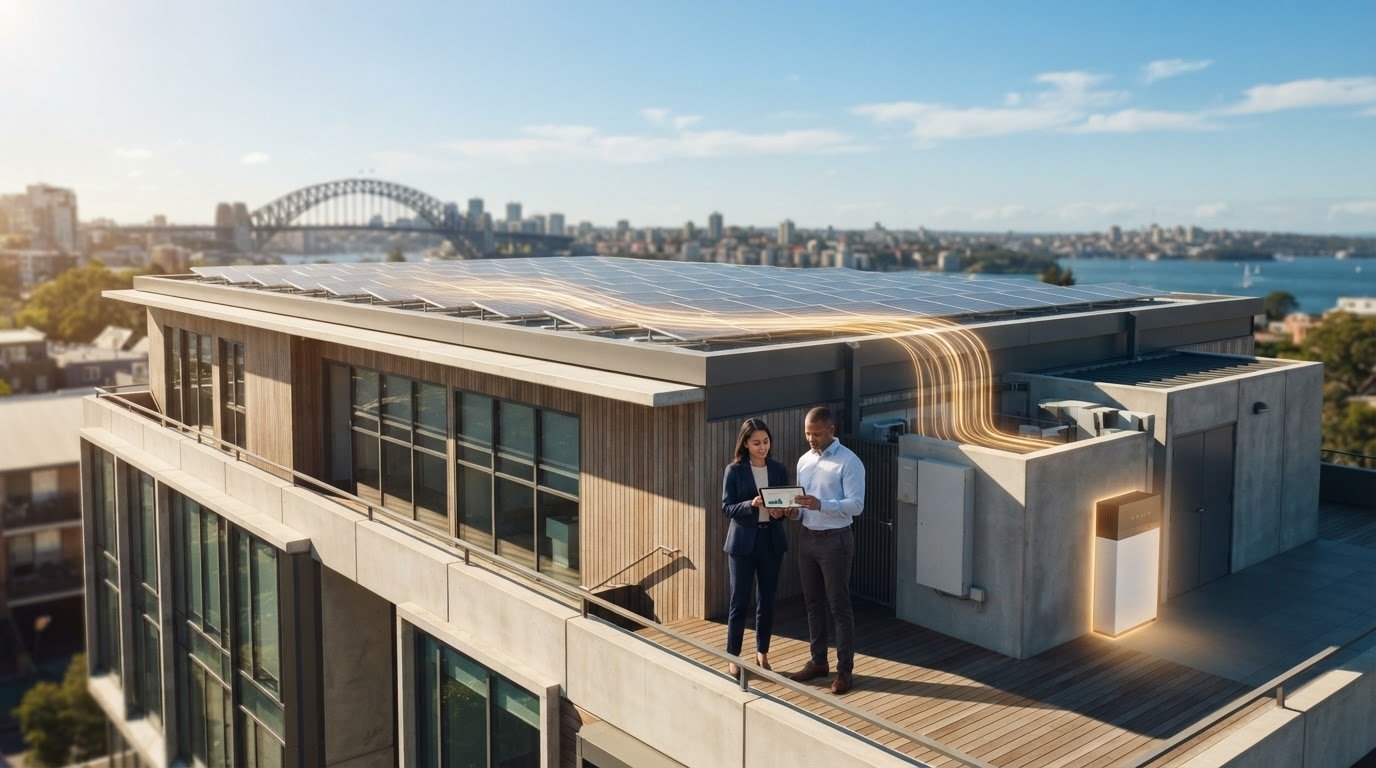
The SigenStor system represents a paradigm shift as the world’s first 5-in-1 integrated solution. It combines the solar inverter, battery storage, and an EV DC charger into one modular unit, removing the complexity of installing separate, often incompatible components. For businesses looking for a premium, streamlined transition, this technology provides the intelligence and longevity required to handle modern energy demands. It projects a forward-thinking image while delivering grounded, practical value to your bottom line.
Commercial Battery Storage Solutions
High-voltage storage is the key to eliminating peak demand charges. By utilising systems like the FOX ESS CQ7, your business can engage in active load shifting. This involves capturing excess solar energy at midday and discharging it during the expensive evening peak when grid tariffs are at their highest. Beyond the financial gains, these high-capacity systems provide essential back-up power. For Sydney businesses, this ensures continuity during grid instability or local outages, protecting sensitive data and critical machinery. We often recommend the FOXESS Three Phase 10.0kw Hybrid Inverter for these applications because it handles heavy commercial loads with exceptional reliability. To understand the full range of solar battery storage options available in Sydney and how to select the right capacity for your energy profile, our dedicated storage guide covers every key consideration for 2026.
Integrated EV Charging for the Modern Workplace
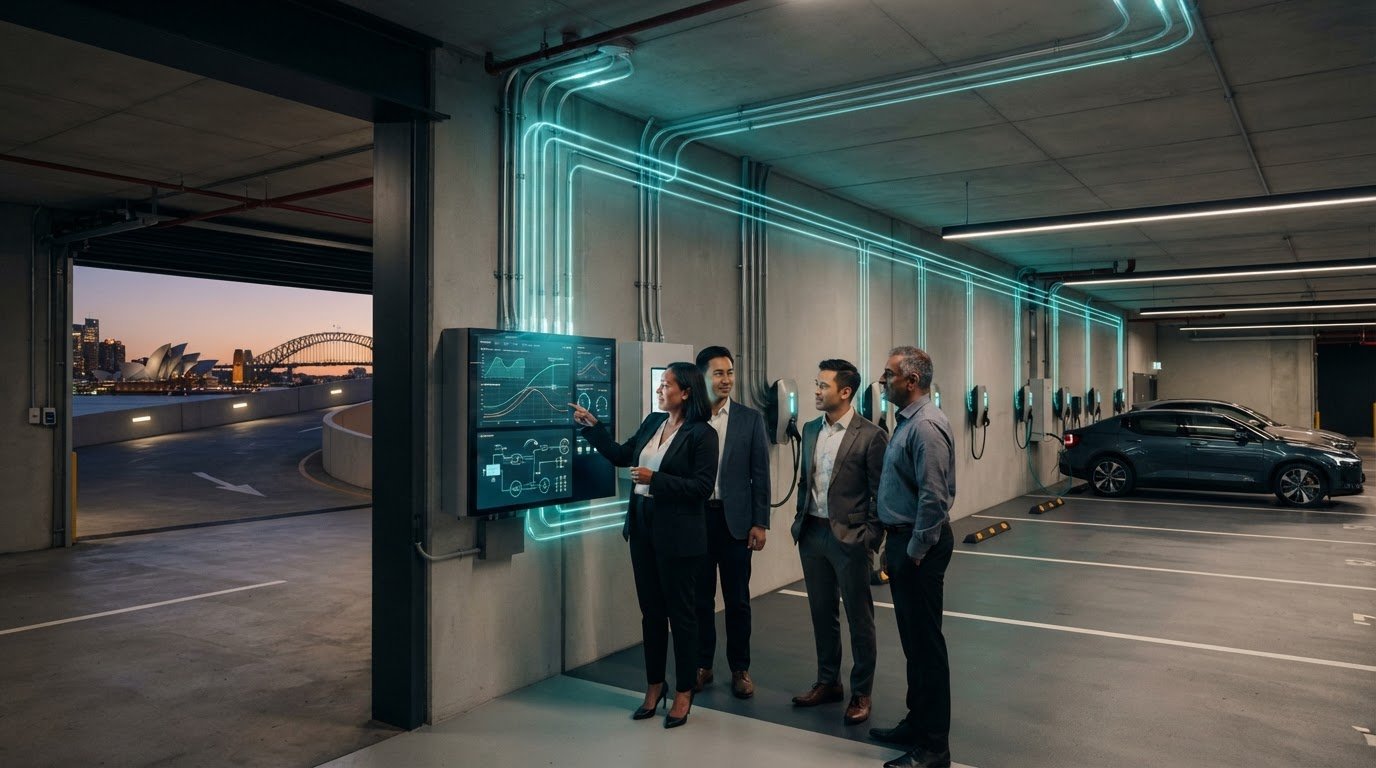
As Sydney transitions toward electric transport, providing charging infrastructure has become a powerful tool for employee retention and fleet management. The SigenStor Integrated EV DC Charger allows you to charge delivery vehicles or staff cars directly from your solar array, bypassing the grid entirely. This significantly increases the ROI of your commercial solar installation by converting surplus sunlight into transport kilometres. Smart energy management software allows you to monitor fleet charging costs in real-time, ensuring that your transition to an EV fleet is both organised and cost-effective. For a detailed look at how Sydney businesses are turning their car parks into revenue-generating power hubs, explore our commercial EV charging station installation Sydney case study. If you’re ready to modernise your energy footprint, you can request a future-proofing consultation with our specialist team.
The Sky High Solar Advantage: Professional Commercial Installation
Choosing a partner for a commercial solar installation is a decision that impacts your business’s operational stability for the next quarter-century. At Sky High Solar and Electrical, we distinguish ourselves by being licensed electrical contractors first. Since 2013, our team has managed the complex electrical infrastructure that sits behind the panels. This dual expertise is vital when navigating the technical requirements of Ausgrid and Endeavour Energy territories, where a standard install often requires sophisticated switchboard work or high-voltage battery integration that generic installers simply aren’t equipped to handle.
Our commitment to longevity is reflected in our choice of hardware. We exclusively partner with global leaders like Enphase, Tesla, and SigenStor to ensure your system remains a high-performing asset rather than a maintenance liability. By selecting premium components, we guarantee that your facility is equipped with the most intelligent monitoring and safety features available in 2026. We don’t just put glass on a roof; we engineer a reliable, integrated power plant tailored to the unique demands of your Sydney enterprise.
Our Commercial Installation Process
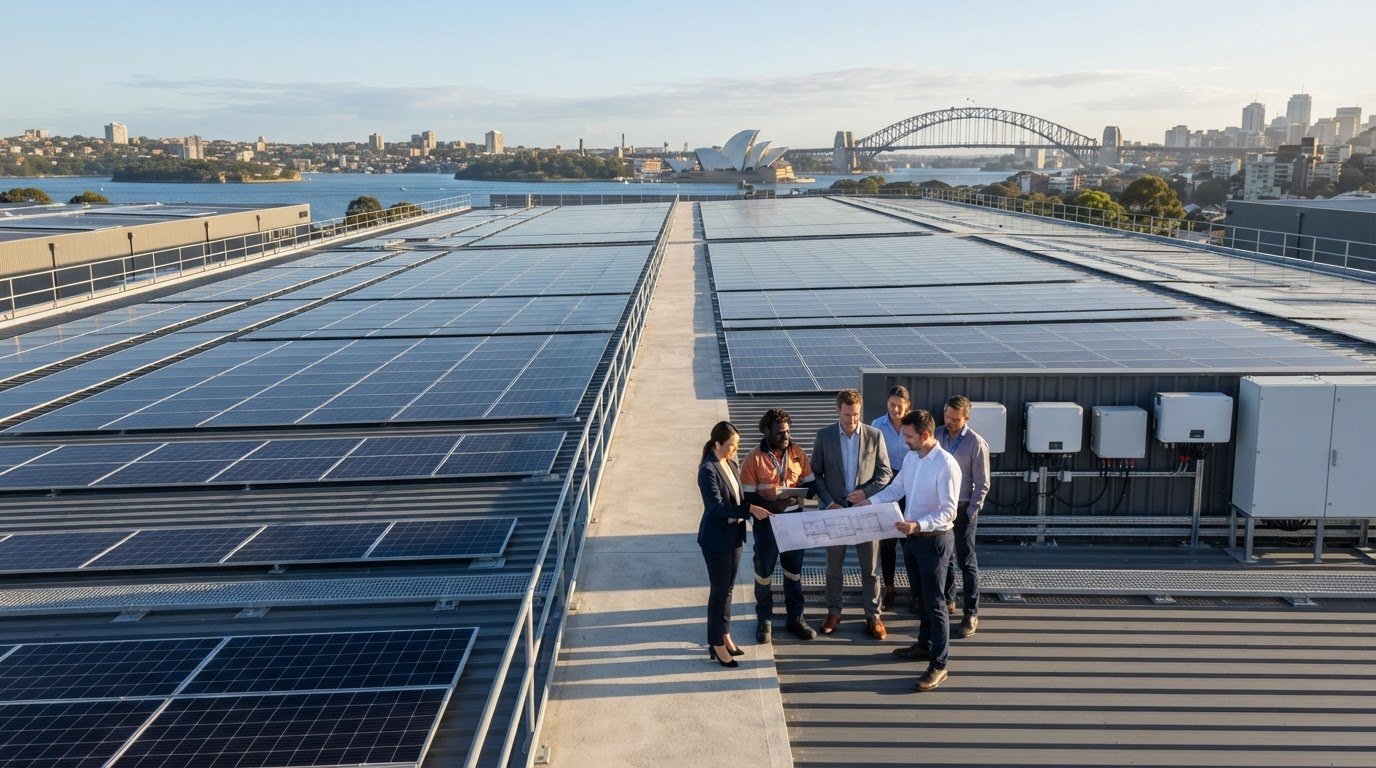
Success begins with a methodical approach to system design. We conduct exhaustive site audits that include structural roof assessments to ensure your building can safely support a large-scale array over its thirty-year lifespan. Unlike generic providers, we map your specific load profile to create a customised generation strategy that prioritises self-consumption. Our project management team prides itself on professional execution, coordinating every stage of the install to ensure zero downtime for your staff or production lines. We handle the entire grid connection and application process, managing the regulatory red tape so you can focus on your core operations.
Local Sydney Support and Maintenance
The value of a “solar near me” partner becomes clear long after the initial installation is complete. To maintain peak efficiency and satisfy warranty conditions, regular solar system servicing is essential to protect your ROI. We provide 24/7 monitoring services, allowing our Sydney-based team to identify and troubleshoot performance dips before they impact your quarterly savings. This proactive stance ensures your commercial array continues to perform at its design limit regardless of seasonal shifts. Ready to slash your overheads and secure your energy future? Contact Sky High Solar for a Commercial Energy Audit today.
Take Command of Your Business Energy Future
Transitioning to an integrated energy model is no longer just a sustainability goal; it’s a strategic move to stabilise operational costs against the volatile retail rates currently impacting the Sydney market. By leveraging the 2026 federal tax incentives and the latest NSW battery rebates, your business can secure a rapid return on investment while preparing for the inevitable transition to electric fleets. A high-performance commercial solar installation serves as the engine for this independence, turning your facility from a passive consumer into a resilient energy hub.
As licensed NSW electrical contractors and premium partners for SigenStor and FOX ESS, we provide the technical expertise and local Sydney-wide service needed to manage your project from audit to grid connection. We ensure your transition is seamless, professional, and engineered for long-term durability. Don’t let rising tariffs dictate your bottom line for another quarter. It’s time to future-proof your operations with a partner you can trust.
Get a Custom Commercial Solar Quote for Your Sydney Business
Frequently Asked Questions
How much can a typical Sydney business save with commercial solar installation?
Sydney businesses can typically reduce their annual electricity costs by $12,000 to $20,000 with a 20kW to 30kW commercial solar installation. Your exact savings depend on your daytime energy profile and the specific retail tariff you’re currently paying. By generating power during peak daylight hours, you avoid retail rates that can reach 45 cents per kWh in the current NSW market.
Do I need a switchboard upgrade for a commercial solar system in Sydney?
Most commercial properties in Sydney require a switchboard upgrade to safely handle increased current and meet modern Ausgrid or Endeavour Energy standards. This is common in older industrial hubs or when installing systems larger than 30kW. As licensed electrical contractors, we assess your existing infrastructure during the initial site audit to ensure your facility remains safe, compliant, and ready for high-voltage integration.
What is the difference between STCs and LGCs for commercial solar?
The primary difference lies in the system’s scale and how the financial benefit is delivered to your business. Small-scale Technology Certificates (STCs) apply to systems under 100kW and act as an upfront discount on your purchase price. Large-scale Generation Certificates (LGCs) are for systems over 100kW and create an ongoing revenue stream based on the actual renewable electricity your array produces over time.
Can I install solar on a leased commercial premises in NSW?
You can install solar on leased premises in NSW provided you have the landlord’s formal consent. Many businesses negotiate “Environmental Upgrade Agreements” where the system’s cost is shared or recovered through the lease. This arrangement often increases the property’s value for the landlord while providing the tenant with immediate reductions in quarterly operational expenditure and long-term energy security.
How long does a commercial solar installation take to complete?
A typical installation takes between three days and two weeks to physically complete, depending on the system’s size and complexity. However, the end-to-end process involves several weeks of planning, including structural assessments and grid connection applications with local distributors. We manage these administrative stages on your behalf to ensure the onsite work causes zero downtime for your daily business operations.
Is battery storage worth the investment for my Sydney business in 2026?
Battery storage is highly valuable in 2026 due to “two-way pricing” on midday exports and new NSW Peak Demand Reduction Scheme incentives. From September 2026, businesses can access significant upfront discounts for battery systems over 20kWh. Adding a high-voltage battery like the FOX ESS CQ7 allows you to store excess solar and avoid expensive peak demand charges during evening periods. For a comprehensive overview of how solar battery storage works in the Sydney context and which systems deliver the best return, our 2026 storage guide provides an in-depth breakdown.
What maintenance is required for a commercial solar system?
Commercial systems require an annual professional service to maintain peak efficiency and satisfy your warranty requirements. This includes cleaning the panels, testing electrical connections, and reviewing inverter performance data. We provide comprehensive monitoring services that identify potential issues before they impact your ROI, ensuring your high-performance array remains a reliable asset for its thirty-year lifespan.
How does EV charging integrate with my commercial solar panels?
EV charging integrates seamlessly through advanced technology like the SigenStor 5-in-1 system. This unit allows your solar array to power an integrated DC charger directly, bypassing the need for separate, complex hardware. It ensures your delivery vehicles or staff cars are charged using clean, self-generated energy, which significantly lowers your fleet’s total cost of ownership and improves employee retention. To see how this works in practice, read our in-depth guide on commercial EV charging station installation for Sydney businesses.