

 Sydney
 0452 243 240
Blog
Avoiding Solar Installation Horror Stories: A Sydney Homeowner’s Checklist

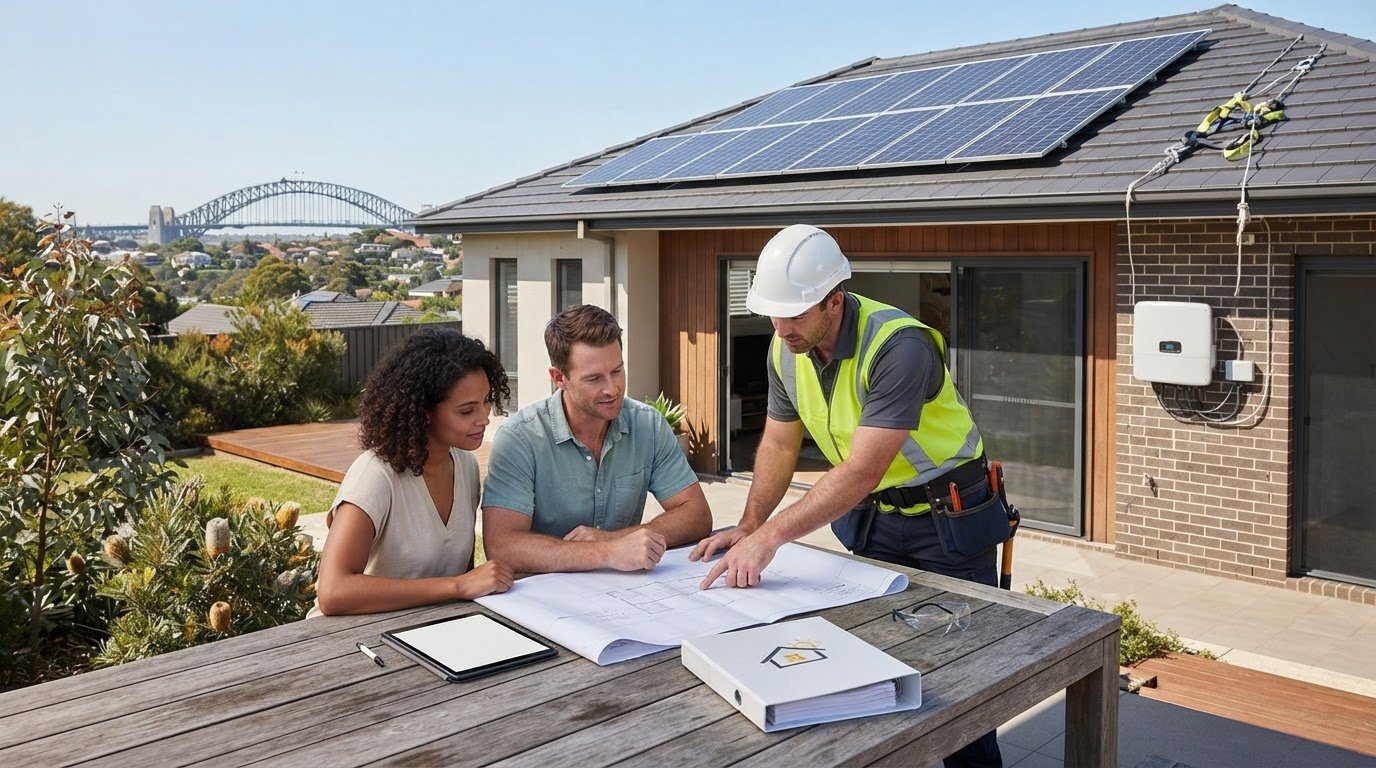
What if the biggest risk in a solar installation isn’t the panels, but the gap between what was quoted and what’s actually installed? For Sydney homeowners, avoiding solar installation horror stories means checking the design, paperwork and workmanship at every stage, not just comparing prices.
You want a system that matches the agreed proposal, electrical work that is safe and compliant, and clear records to refer to if an issue arises later. A practical checklist can help you protect your investment and make decisions without getting lost in technical detail.
This guide covers the key checks to make before accepting a proposal, during installation and at handover. You’ll learn what to look for in the system design and quote, why a certificate of compliance electrical work (CCEW) matters, and which documents to keep for future servicing or support. Sydney-owned and operated since 2013, Sky High Solar and Electrical provides solar design, installation, licensed electrical work and ongoing system care for local homes.
Key Takeaways
- A written project scope keeps the proposed system, electrical work and agreed expectations aligned.
- Compare proposals by the clarity of their design, equipment, electrical scope and handover documents, not price alone.
- To avoid solar installation horror stories, record any difference from the agreed plan and raise it promptly.
- Keep your handover documents, including the certificate of compliance electrical work (CCEW), for future reference and support.
- Solar servicing and health checks help you keep track of system condition after installation.
Avoiding solar installation horror stories starts with a clear project plan
A solar proposal can look straightforward until the installation details are unclear. Before work begins, make sure the scope is written down so you can compare the finished system with what you agreed to. This is a simple, practical first step towards avoiding solar installation horror stories.
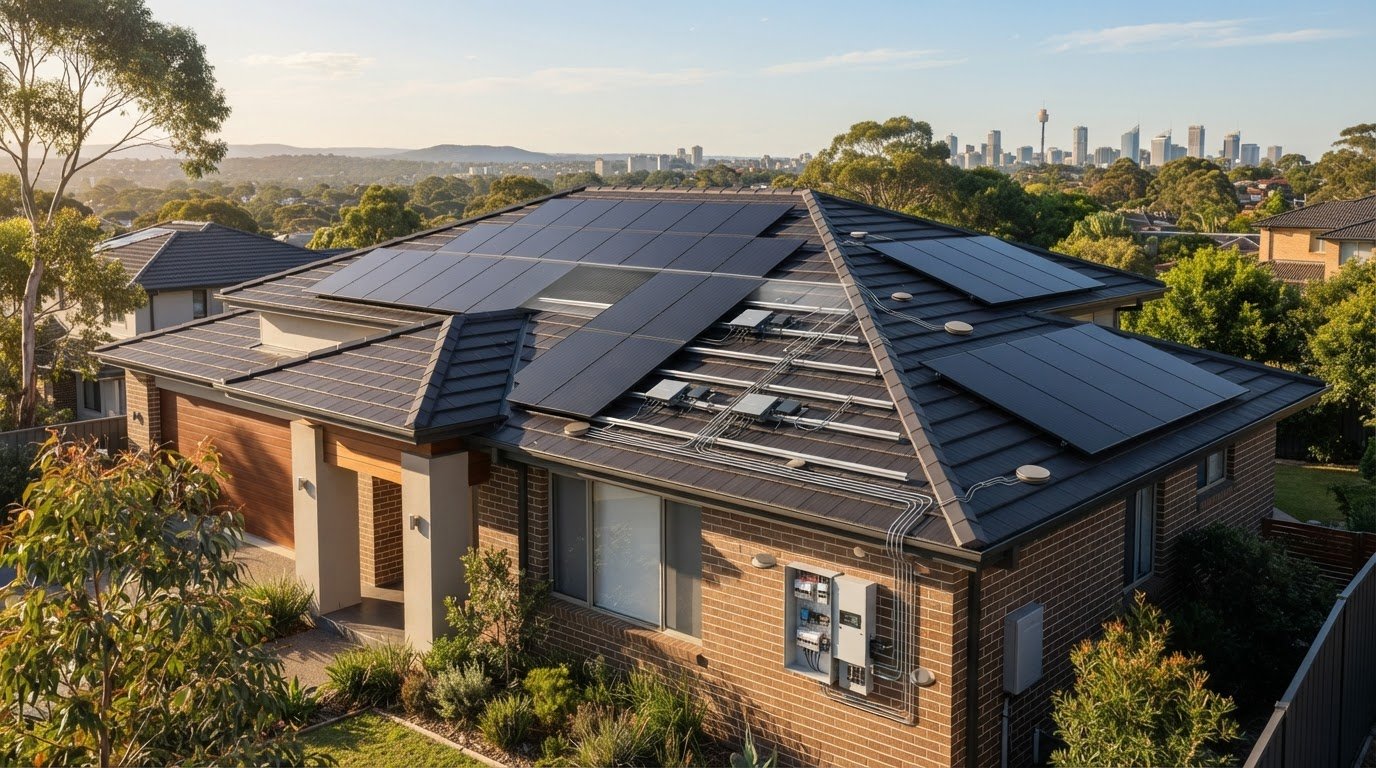
Compare proposals using the same details, not just headline system capacity or equipment names. A Rooftop solar power system brings together panels, an inverter, mounting and electrical connections. The written plan should identify what is proposed for your home and explain how those parts fit into the installation.
What a clear solar proposal should explain
Look for the proposed system capacity, identifiable major components and a description of the installation scope. The proposal should also state relevant exclusions, so you can distinguish included work from tasks outside the agreed project. For example, if electrical work or a switchboard upgrade is included, that should be clear in the documents.
Compare the written proposal with the discussions you’ve had. If they don’t match, have the discrepancy resolved in writing before proceeding. If the design or scope changes, make sure the revised documents identify what has changed from the original plan. A clear record gives you and the installation team the same reference point throughout the project.
Why Sydney site conditions belong in the design discussion
Your roof and electrical setup affect the design, so the proposal should reflect the property rather than rely on a generic layout. The design discussion should account for roof orientation, shading, roof condition and the existing electrical setup. These details help explain where panels are planned, whether the layout suits the site and whether electrical work is included.
Local exposure can matter too. Salt-mist exposure may be relevant for some coastal Sydney homes, while summer humidity is another site condition to consider when discussing materials and workmanship. Neither factor means one panel type or design suits every property. The key is to understand the design choices and why they suit your home.
A post-installation review is the final documented project check that records whether the completed installation matches the agreed scope and that handover information has been provided. Set expectations for this checkpoint when you review the proposal, so the project has a clear, accountable finish.
Check solar system design, equipment and electrical safety before work begins
Once the scope is clear, check that the design suits your home and that the equipment and electrical work are described precisely. Comparing these elements side by side can reveal gaps that a headline system size won’t show. For a closer look at one common residential system size, read our 6.6kW solar system guide.
Match the proposed system to the home
Roof layout, orientation and shading affect where panels can be placed. Household energy use helps inform system size, while plans such as adding an electric vehicle or battery may shape the design discussion. No single layout suits every Sydney property, so the proposal should connect its design choices to your home rather than rely on a generic recommendation.
Make sure the project documents identify each major component, including the panels and inverter. The equipment descriptions should be specific enough for you to match the proposed products to the final handover records. A broad label or verbal description alone isn’t a reliable reference. The Clean Energy Council’s guide to buying solar also offers consumer guidance on the purchase and installation process.
Treat electrical safety and paperwork as part of the installation
Your property’s existing electrical setup matters. The proposal should describe the electrical work included and explain how the switchboard has been considered in the design. A switchboard upgrade should be included where the property assessment identifies a need, not assumed to be part of every installation.
Relevant electrical work must be completed by a licensed electrical contractor. The certificate of compliance electrical work (CCEW) is documentation confirming that electrical work meets Australian safety requirements. Keep it with the final equipment details and any operating information provided at handover.
Before approving a proposal, compare these details across the documents:
- System design: proposed capacity, panel layout and relevant site considerations.
- Equipment: identifiable panel and inverter details that can be matched to the completed system.
- Electrical scope: included work and any switchboard work identified through the property assessment.
- Handover: CCEW and documents describing the installed equipment.
Resolve any unclear or inconsistent item before work starts. For a project plan tailored to your home, explore residential solar installation with Sky High Solar and Electrical.
Compare solar installers using evidence, scope and accountability
A quote is useful for comparison only when you can see what work it covers. To avoid solar installation horror stories, compare the written scope, electrical credentials, handover documents and aftercare arrangements alongside the proposed equipment. A lower headline price is difficult to assess if key work or customer responsibilities are left unclear.
What to compare beyond the headline quote
Use the same criteria for each proposal. Check for specific equipment descriptions, a clear installation scope, details of the electrical work, and written assumptions or exclusions. The proposal should explain how variations will be recorded if the work needs to change. Equipment and tasks discussed should match what’s recorded in the documents.
| Compare | What to look for in the written information |
|---|---|
| Project scope | Panel and inverter identification, proposed system design, installation tasks and any stated exclusions. |
| Electrical work | A clear description of the work included and how the property’s electrical setup is addressed. |
| Credentials | Evidence that relevant electrical work is handled by licensed electrical contractors. |
| Documentation | A clear handover plan, including the certificate of compliance electrical work (CCEW). |
| Aftercare | Information about ongoing support, such as solar servicing or a solar health check. |
Note who is responsible for any stated customer tasks and how proposed changes will be documented. If a key detail appears in a conversation but not in the proposal, have the written scope updated to reflect the agreed understanding before accepting it. This gives you a record to refer to as the project progresses.
How experience and compliance evidence build confidence
Licensed electrical contracting matters because solar installation involves electrical work as well as panel placement. The CCEW documents the electrical work completed. These records don’t guarantee a particular outcome, but they make the project easier to follow and provide useful information for future servicing.
Sky High Solar and Electrical has been a licensed electrical contractor and served Sydney homeowners since 2013. That local experience is useful context, but the practical test is whether the proposal, communication and handover are clear for your project. Timely answers and recorded decisions help you understand what’s happening and what has changed.
Use this framework to assess the quality and completeness of each proposal, not price alone. For details on Sky High Solar’s residential and electrical work, explore Sky High Solar’s services.
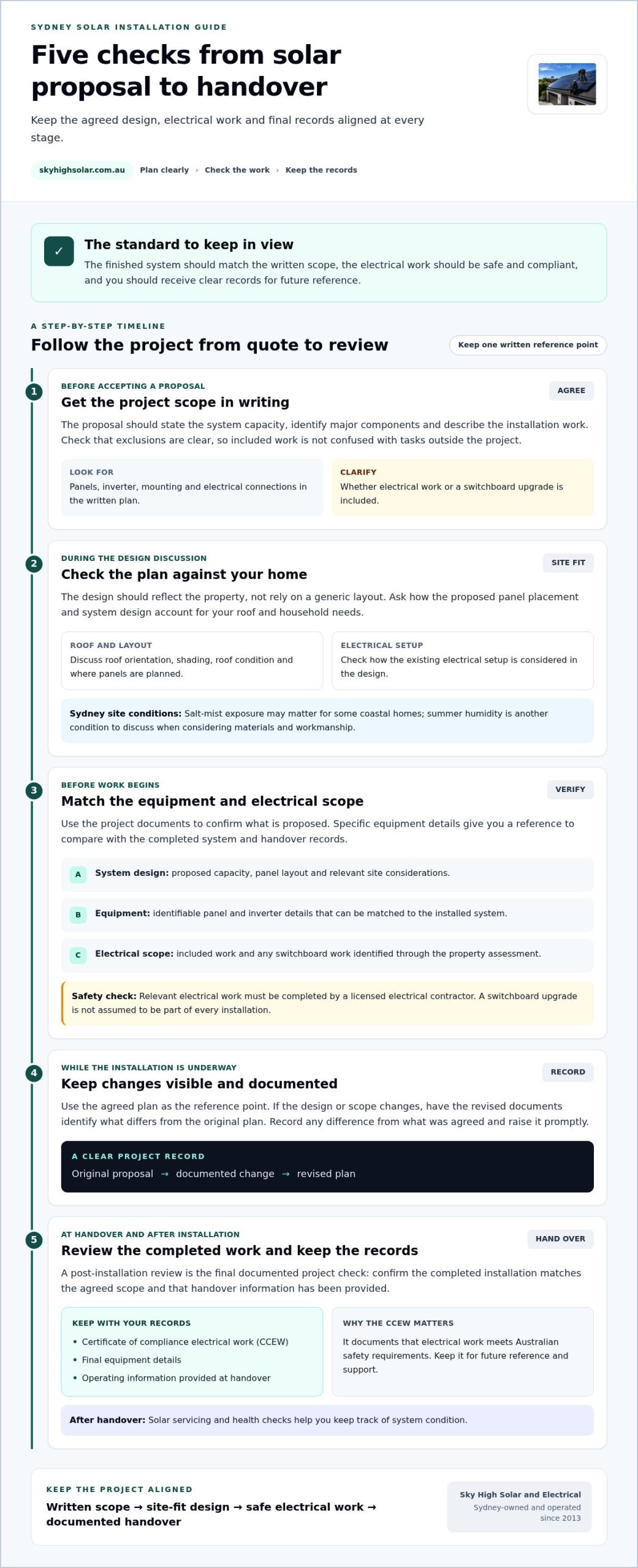
Use this installation-day and handover checklist to catch issues early
Keep the agreed proposal available on installation day. You don’t need to inspect electrical work or enter the work area. Your role is to compare project updates and handover information with the written scope, then raise any differences promptly. Good record-keeping is a practical part of avoiding solar installation horror stories.
During installation: keep the agreed scope visible
- Review the planned work. Use the proposal to follow the agreed system and installation scope. Make sure any changes are explained rather than assumed.
- Record differences or questions. Note what appears different, when you raised it and the response. If the plan changes, have the variation and its effect on the agreed work recorded in writing before it proceeds.
- Leave electrical checks to the professionals. Don’t touch, test or inspect live equipment. Raise safety or workmanship concerns with the installation team and keep the response with your project records.
If the agreed project includes battery storage, make sure the battery scope and handover information are clear too. Our solar battery storage guide can help you understand the role of storage within a home energy system.
At handover: review records, operation and next steps
Before treating the job as complete, review the information provided and note anything that still needs explaining. Your handover checks can include:
- Electrical compliance: confirm you receive the applicable certificate of compliance electrical work (CCEW) and understand which completed work it covers.
- System operation: review the operating guidance, including how to view system status and where to find support information.
- Project records: check that the equipment and completed work are described clearly enough for future reference and servicing.
- Applicable registrations: if an incentive or rebate is part of the project, keep written information about relevant registration steps and their status with your handover documents.
A post-installation review is the final documented check of the completed work against the agreed scope, handover records and any applicable registration details. Record unresolved questions and follow them up promptly, rather than relying on memory.
If performance concerns arise later, note what you’re observing and arrange a solar health check or servicing discussion. For support with a clearly documented solar installation, speak with Sky High Solar and Electrical.
How Sky High Solar helps Sydney customers reduce installation uncertainty
A well-planned solar project gives you clear information to refer to from design through handover. The checks in this guide can help you compare proposals and track agreed work. An experienced local team can put those principles into practice with a scope shaped around your home. For homeowners focused on avoiding solar installation horror stories, clear communication, qualified electrical work and useful project records are practical foundations for confidence.
A locally experienced team with electrical expertise
Sky High Solar and Electrical has operated in Sydney since 2013 and serves Sydney and surrounding areas, including Penrith, Parramatta, the Blue Mountains and Sydney Metro. As licensed electrical contractors since 2013, the team brings electrical expertise to residential solar projects, where the design needs to account for both the roof and the property’s electrical setup.
A clear project scope helps you understand the proposed system and included work. At handover, the certificate of compliance electrical work (CCEW) provides a record of relevant electrical work. Defined project details and compliance documentation make it easier to follow what was planned and completed. They support accountability, but no document or credential can guarantee a particular system outcome.
Support can continue after installation. Solar system servicing and solar health checks give you options for reviewing system condition if you have questions or notice a performance concern later. Keeping your project and handover records available can make those discussions more focused.
Make the next step clear and practical
A useful first conversation starts with your property, not a one-size-fits-all system. Be ready to discuss your roof layout and condition, any shading you’re aware of, household energy needs, future plans and the existing electrical setup. These details help shape a project scope around your home and make the proposed design choices easier to assess.
Raise questions about equipment, electrical work, documentation and ongoing servicing early in the process. Clear answers and written project details help you make decisions at each stage without relying on assumptions. The aim is a considered solar installation that suits your property, with the work and handover explained in a way you can refer back to.
For a practical discussion about your home, roof, energy needs and electrical setup, Discuss your Sydney solar installation with Sky High Solar and Electrical.
Take the next step towards a well-planned solar installation
A clear written scope, identifiable equipment and a property-specific design give you useful reference points before work begins. During installation and handover, record any differences, review the operating guidance and keep the applicable electrical documentation together. These simple checks make avoiding solar installation horror stories a practical process grounded in clarity and accountability.
Sky High Solar and Electrical is Sydney-owned and operated, serving local homes since 2013. As licensed electrical contractors since 2013, the team provides a certificate of compliance electrical work (CCEW) for relevant electrical work. Solar servicing and health checks also offer ongoing support if questions arise after installation.
Every home has its own roof, energy needs and electrical setup. A considered discussion can help shape a project scope around your property, without relying on assumptions. Discuss your Sydney solar installation with Sky High Solar and take your next step with greater confidence.
Frequently Asked Questions
How can I tell if a solar installation quote is missing important details?
Check that the quote explains the proposed system design, identifies the panels and inverter, and describes the installation and electrical work included. Look for stated exclusions, assumptions and any tasks you’re expected to handle. If discussions don’t match the written proposal, have the documents clarified before accepting. Comparing these details across proposals makes it easier to spot gaps than comparing system size alone.
What documents should I receive after a solar installation in NSW?
Your handover records should include the applicable certificate of compliance electrical work (CCEW), equipment details and operating guidance. Keep a copy of the final agreed scope and any recorded changes as well. If your project involves a rebate or registration, retain the relevant information about its status. The documents provided depend on the work completed, so keep all project and handover records somewhere easy to find.
Can a solar installation damage my roof?
Roof damage is a risk to consider, particularly if the roof’s condition or mounting approach hasn’t been properly assessed. Before work begins, make sure the proposal takes account of the roof type and condition, and explains how the panel layout and installation scope address them. Don’t climb onto the roof to inspect the work. If you notice a leak or damage, record what you can safely observe and raise it promptly.
What happens if my solar system does not work as expected after installation?
Start by noting what you’ve observed, when it began and any system status information available through the monitoring tools or operating guidance. Compare the installed equipment with your handover records, then raise the concern with Sky High Solar and Electrical and keep a record of the response. Avoid attempting electrical checks yourself. A solar health check or servicing visit can help assess system condition and identify appropriate follow-up.
How do I know whether an electrician is qualified for solar installation work?
Confirm that electrical work is carried out by a licensed electrical contractor, and make sure the relevant certificate of compliance electrical work (CCEW) is included at handover. If your project relies on federal Small-scale Technology Certificates (STCs), check that the individual installer holds Solar Accreditation Australia accreditation, which is relevant to STC eligibility. Electrical licensing and installer accreditation serve different purposes, so consider both when reviewing project credentials.
Should I be home during solar panel installation?
Whether you need to be home depends on access arrangements and the work planned at your property. Before installation day, agree on how the crew will access relevant areas and whether anyone needs to be available for questions or decisions. Keep your written scope accessible so you can refer to it if the plan changes. You don’t need to inspect electrical work; leave technical and safety checks to the qualified installation team.
How can Sydney weather and location affect a solar installation?
Sydney conditions can influence design choices. Roof orientation, shading and condition, along with the property’s electrical setup, help determine a suitable layout. For coastal homes, salt-mist exposure may also be relevant, and summer humidity is another site consideration. These factors don’t point to one design for every home. A property-specific assessment should explain how local exposure and roof conditions have been considered in the proposal, without promising a particular output.