

 Sydney
 0452 243 240
Blog
How to Choose a Solar Installer in Sydney: A Practical 2026 Guide

The lowest solar quote can be the wrong choice if it leaves gaps in system design, electrical safety or support after installation. Knowing how to choose a solar installer in Sydney means looking beyond the headline price to check what’s included and whether the system fits your home.
Quotes can be difficult to compare when they list different panels, inverters, warranties and installation work. Roof suitability and rebate eligibility add further details to consider. A well-planned system should account for your roof, household electricity use and local conditions, with compliant electrical work and a clear handover.
This guide explains how to assess installer credentials, compare proposals and review the installation scope, equipment and warranties. You’ll also learn what to look for in safety documentation, including a certificate of compliance electrical work (CCEW), and in after-installation support. Use the checklists to make a considered choice for your Sydney home.
Key Takeaways
- When considering how to choose a solar installer in Sydney, assess the system design, installation scope and handover, not just the headline quote.
- Compare proposals side by side, including system size, panel and inverter details, included work, exclusions and warranties.
- Review your roof layout, shading and switchboard capacity to see how well the proposed system fits your home.
- Check solar accreditation, electrical credentials and the details of any applicable rebate before deciding.
- A clear project plan should cover site assessment, electrical work, compliance documents and support after installation.
How to choose a solar installer in Sydney: start with outcomes, not headline claims
Choose an installer based on how well the proposed system suits your home, how safely the work will be completed and what you’ll receive at handover, not simply on the lowest quote. If you’re weighing up how to choose a solar installer in Sydney, consider every stage of the project, from the site assessment to ongoing servicing.
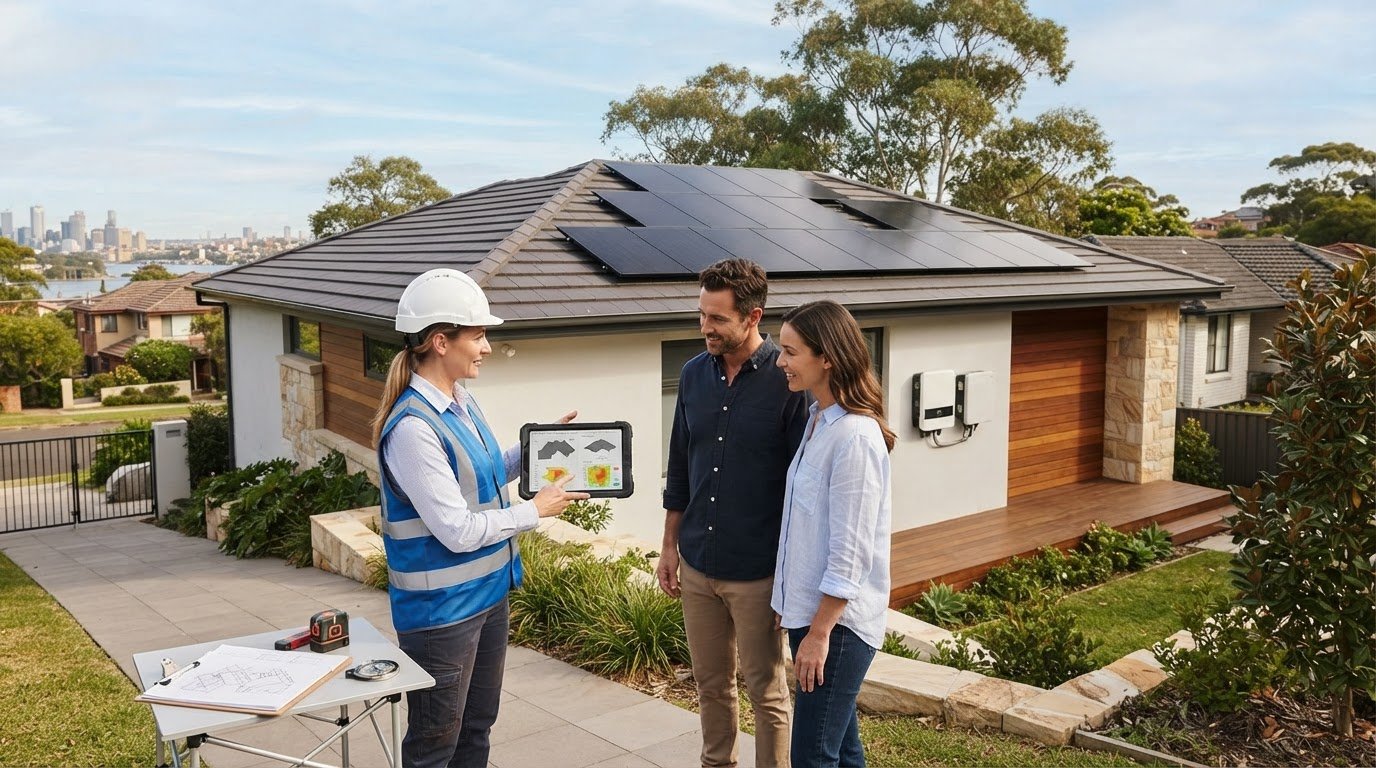
A solar project involves more than supplying panels. The installer needs to understand your electricity use and site conditions, design a system for your roof, coordinate the electrical work and explain how the finished system operates. A useful proposal spells out the equipment and work included, any exclusions, and the documents you’ll receive when installation is complete.
What a solar installer contributes beyond supplying panels
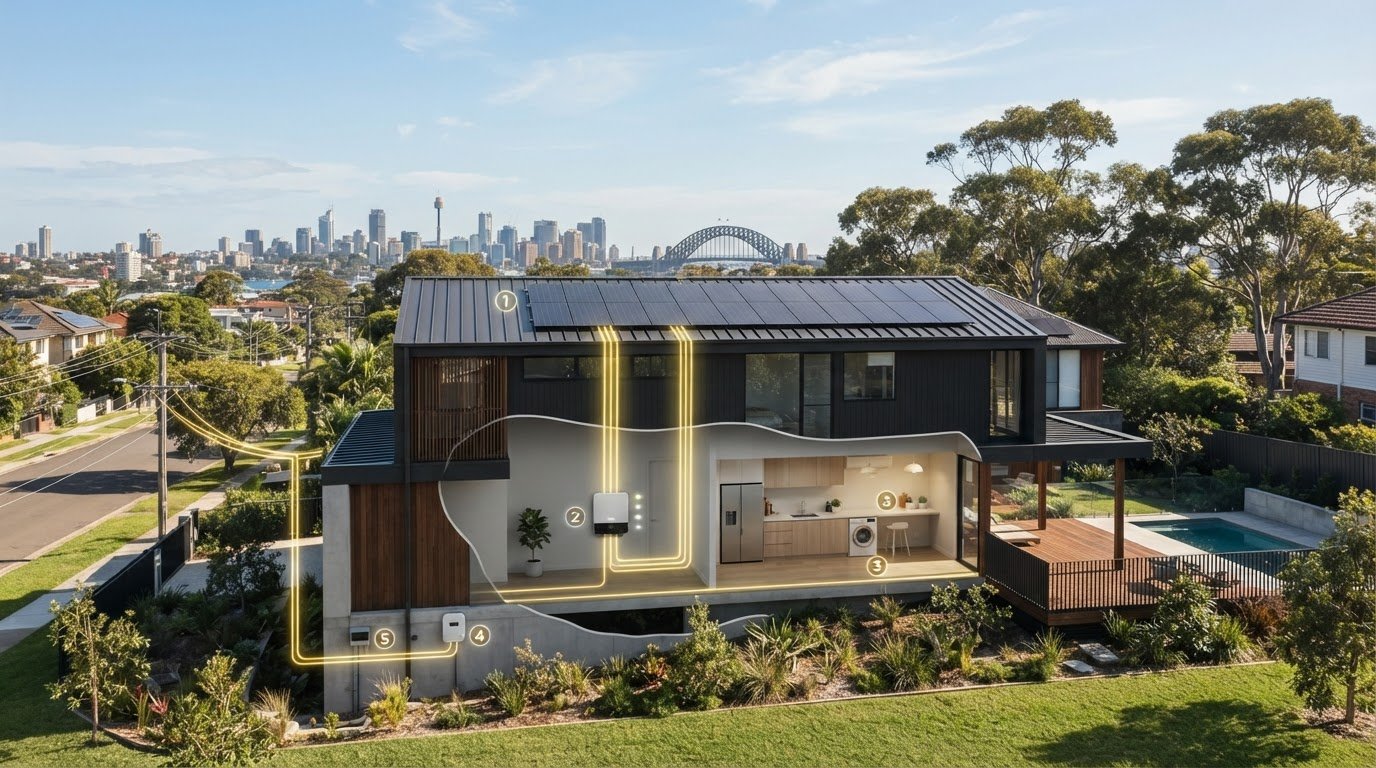
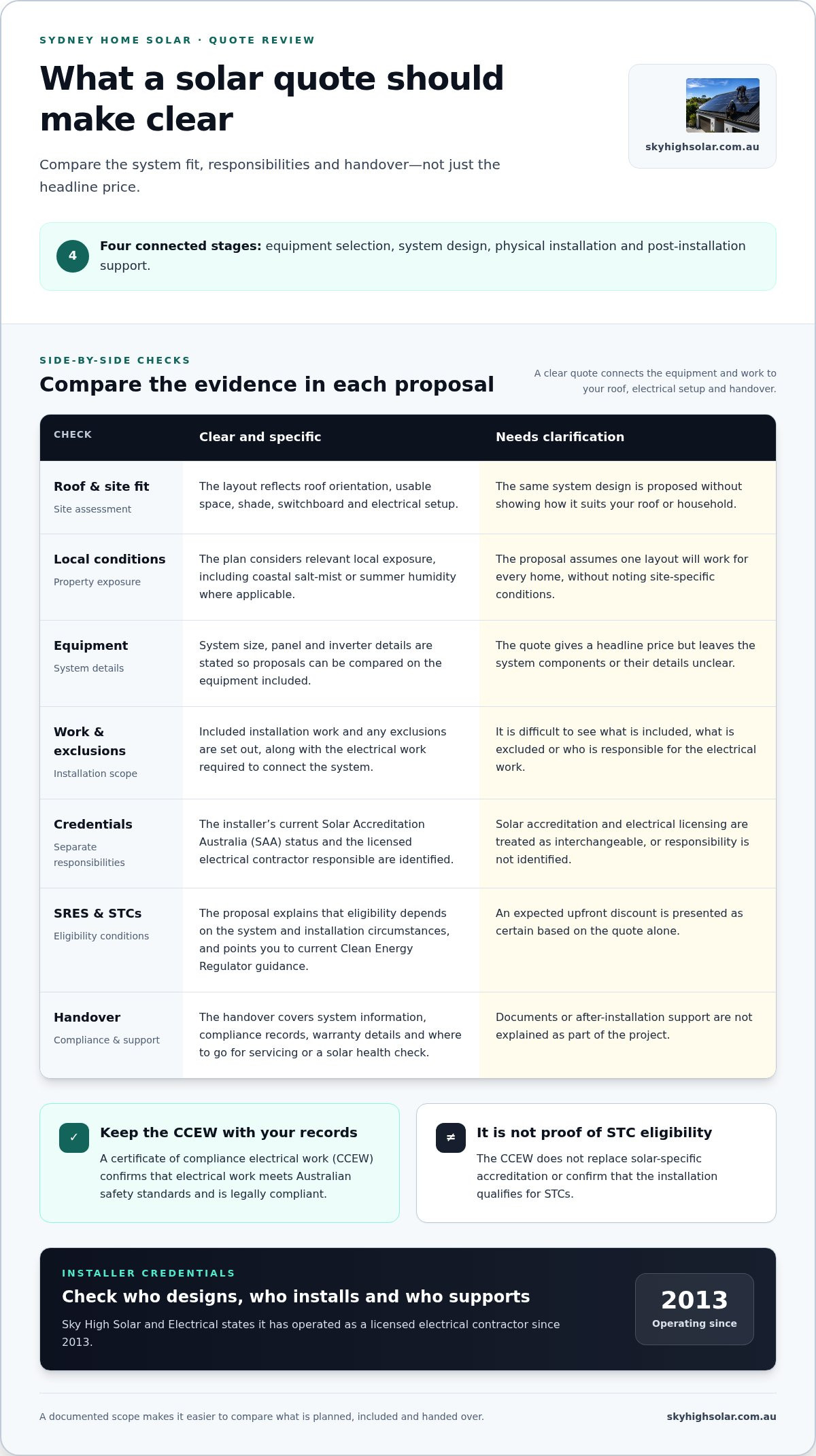
Assess the project in four connected stages: equipment selection, system design, physical installation and post-installation support. The design should connect the selected components to your roof and household needs, while the electrical work connects the system to your home. At handover, you should receive relevant system information and compliance records, along with details on where to go for servicing or a solar health check.
Why Sydney site conditions belong in the decision
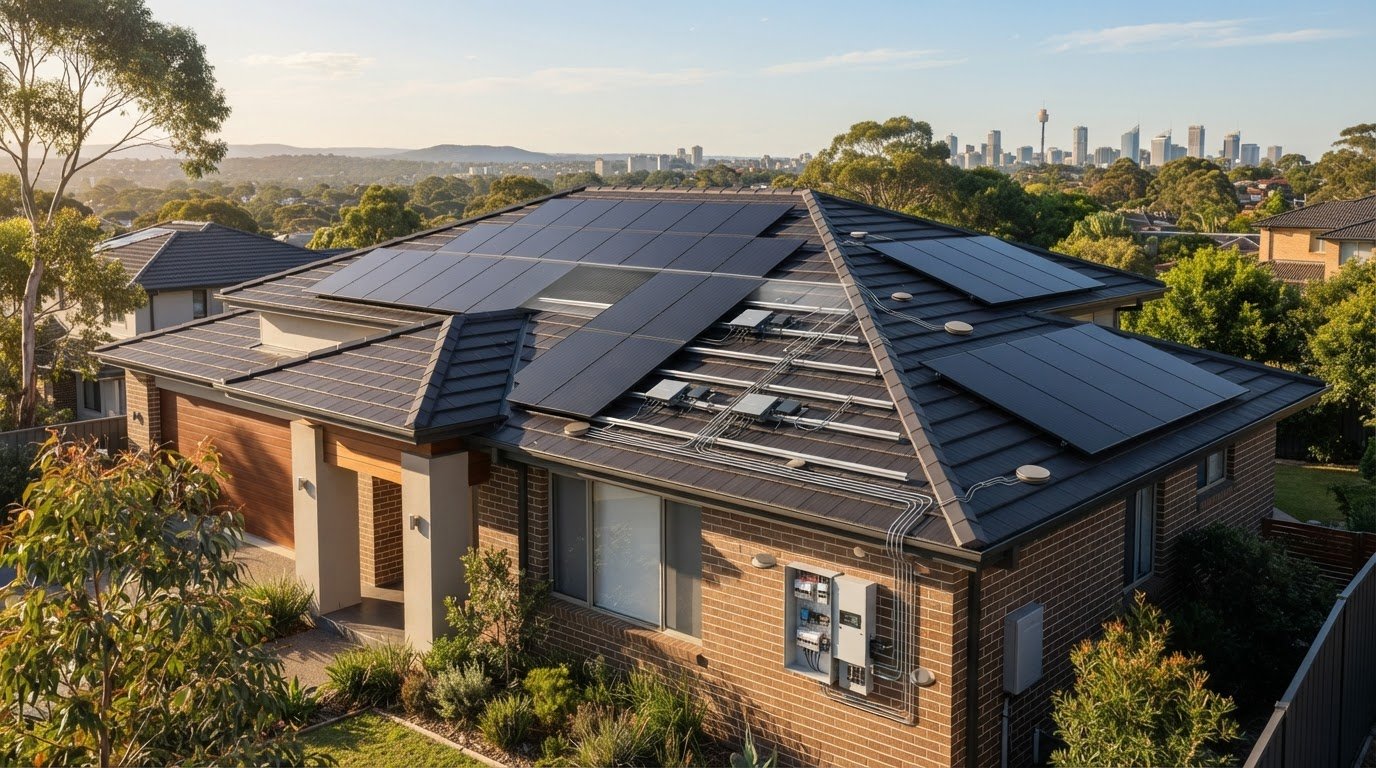
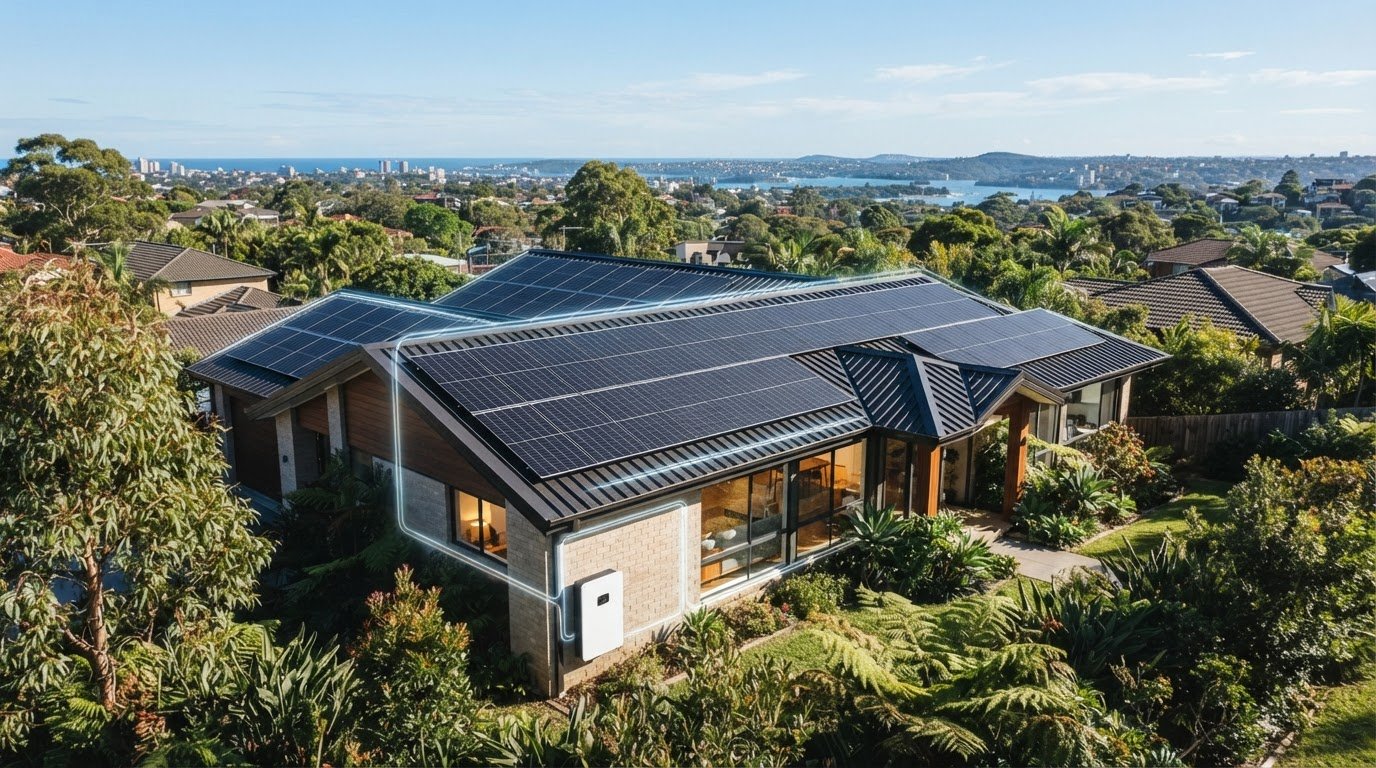
Sydney homes vary in roof orientation, available space, shade and electrical setup. A layout suited to one property may not suit a nearby home with a different roof shape or obstructions. Salt-mist exposure and summer humidity may also matter for some properties, particularly closer to the coast. Look for site-specific planning rather than an assumption that the same system design will work for every home.
Before comparing system recommendations, note the factors that could affect your roof:
- Orientation and usable space: Identify the available roof areas and consider whether their shape and layout suit the proposed array.
- Shade: Note trees, neighbouring buildings and other obstructions that may cast shade on the roof during the day.
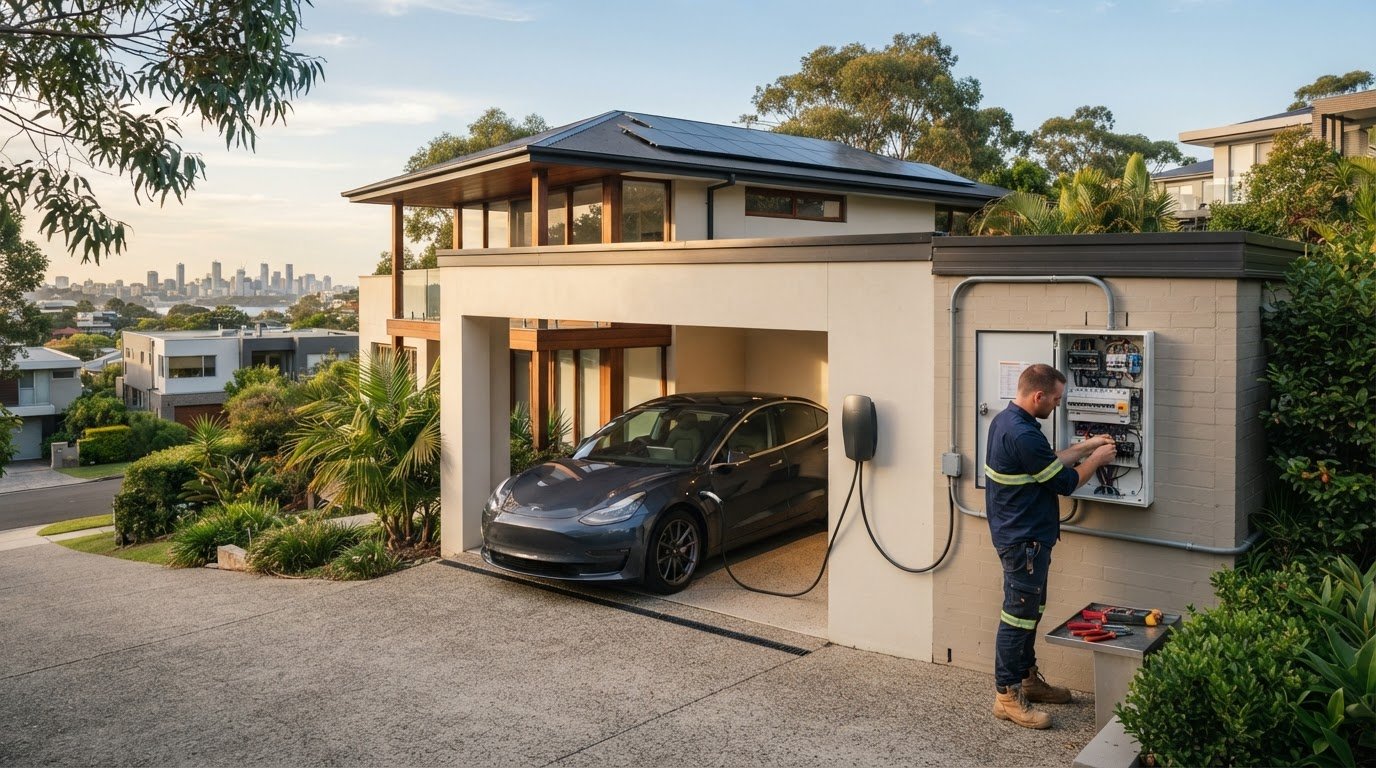
- Electrical setup: Include the switchboard and existing electrical arrangement in the installation plan.
- Local exposure: Record whether coastal conditions may be relevant to your property and equipment location.
For a general introduction to the technology behind a home system, the Solar energy overview explains how sunlight can be converted into electricity. Your installer’s proposal should then show how that technology applies to your roof, rather than relying on a generic package.
A documented scope and compliant electrical work make it easier to compare installers because you can see what’s planned, what’s included and how the work will be handed over. That gives you a better basis for judging the project than headline claims alone.
Check solar installer accreditation, licensing and rebate eligibility in NSW
Credentials help establish who is responsible for the solar design and who will carry out the electrical work. These are related but separate responsibilities. When deciding how to choose a solar installer in Sydney, review the solar-specific accreditation relevant to the project as well as the electrical credentials behind the installation.
Solar Accreditation Australia and SRES eligibility
Solar Accreditation Australia (SAA) is the current accreditation body for solar installers in Australia. Solar-specific accreditation relates to an installer’s training and competence in designing and installing rooftop solar systems. It is separate from an electrical contractor’s licence, which relates to carrying out electrical work.
The Small-scale Renewable Energy Scheme (SRES) can provide an upfront incentive through Small-scale Technology Certificates (STCs) when a system and installation meet the scheme’s eligibility conditions. SAA accreditation is relevant to STC eligibility, but a quote alone does not establish that a project qualifies. Requirements can depend on the system and installation circumstances, so use the current Clean Energy Regulator guidance to understand the conditions that apply before relying on an expected discount.
For broader information about renewable energy activity in Australia, the Australian Renewable Energy Agency (ARENA) provides context on national initiatives. Keep that broader information separate from the specific eligibility conditions for your household’s STC claim.
Electrical licensing, CCEW and a clear handover
Electrical contractor credentials cover a different part of the job: the electrical work required to connect and complete the system. Your proposal and handover should identify the licensed electrical contractor responsible for that work. Sky High Solar and Electrical has operated as a licensed electrical contractor since 2013, bringing solar and electrical work together within the project.
A certificate of compliance electrical work (CCEW) is official documentation confirming that electrical work meets Australian safety standards and is legally compliant. It is a useful handover record, but it does not replace solar-specific accreditation or prove that an installation qualifies for STCs. Keep it with your system documents, equipment details and warranty information.
Use this checklist to review credentials and responsibilities together:
- Solar accreditation: Confirm the installer’s current SAA status and how it relates to your project’s STC eligibility.
- Electrical responsibility: Identify the licensed electrical contractor responsible for the installation work.
- Rebate conditions: Review current SRES requirements and the information needed for an STC claim.
- Handover records: Confirm that the CCEW and relevant system documents are included in the handover.
This joined-up view helps you follow responsibility from design and installation through to compliance records. Sky High Solar and Electrical’s solar and electrical work connects these parts of a Sydney home project, with licensed electrical contracting and CCEW documentation forming part of the handover.
Compare Sydney solar quotes by system design, scope and warranty
A useful quote shows what system is proposed and how the work will be delivered. Compare proposals on the same basis before judging the total: panel and inverter choices, array layout, electrical work and exclusions can all differ. A lower figure may reflect a narrower scope rather than a better-value design.
Use this comparison framework to record what each proposal says. Mark missing details as unclear instead of assuming they are included.
Check whether each quote describes the same job
First, match the system capacity and equipment. Then compare how each proposal places the array on your roof and whether its design reflects your household’s electricity use. Read the scope for electrical work, assumptions and conditional items. If one proposal excludes work another includes, the totals are not directly comparable until you account for that difference.
Look for specific descriptions, not broad claims. The quote should connect the proposed design to the installation scope so you can tell what will be supplied, fitted and handed over.
Read warranty and support details as part of value
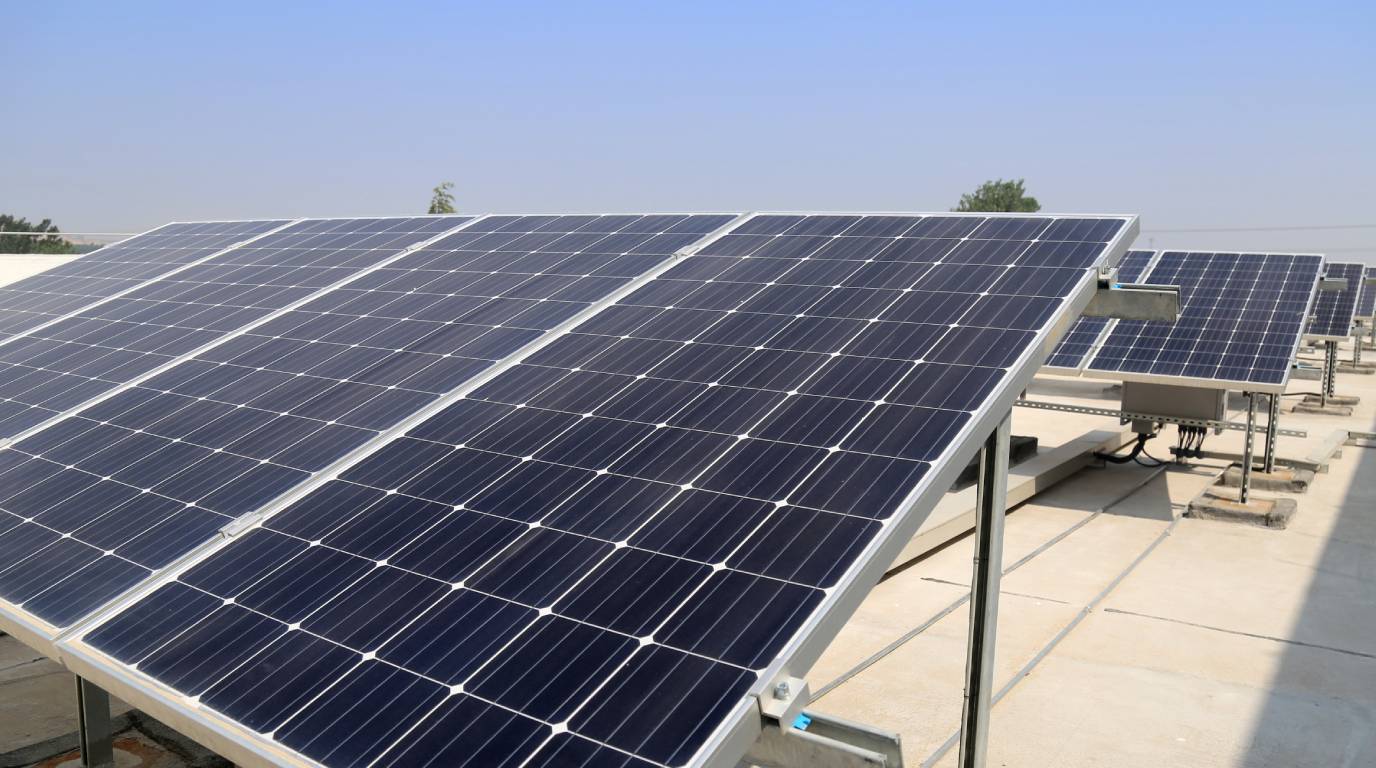
A solar panel warranty can cover manufacturing defects, performance output and installation workmanship. These are distinct types of cover, so read the written terms to see what applies to each component and who is responsible. Do not assume one warranty covers every part of the system or every type of issue.
Compare support arrangements in practical terms: what documentation you’ll receive, how to access system information and what servicing support is described. Keep the signed proposal, warranty terms and handover documents together for future reference.
- Equipment cover: Note the written terms for panels and the inverter separately.
- Workmanship: Identify the installation coverage and the party responsible for it.
- Ongoing support: Record the stated process for servicing or raising an issue.
Clear terms help you judge long-term value alongside equipment and installation scope. Comparing these details is a practical part of how to choose a solar installer in Sydney: it shows whether each proposal suits your home and sets out responsibility beyond the initial supply.
Assess your Sydney roof, switchboard and installation plan before signing
A proposal is useful only if it reflects the property, not just a standard system size. Before signing, review the site factors in order: roof layout, shade, electrical capacity and agreed installation scope. This helps you see how the design fits your home and which details need to be resolved.
Review roof layout and Sydney exposure
Start with the roof areas proposed for panels. Consider their orientation and available space, as well as obstructions such as trees or nearby buildings that could cast shade. Compare your observations with the panel arrangement in the quote. A layout that works on one roof may not suit another, even within the same Sydney suburb.
Local exposure can matter too. Coastal salt-mist and summer humidity are relevant considerations for some properties, but they do not affect every home in the same way. The installation plan should account for conditions at your site rather than assume a uniform impact or promise a particular energy yield without project-specific evidence.
Confirm electrical readiness and installation close-out
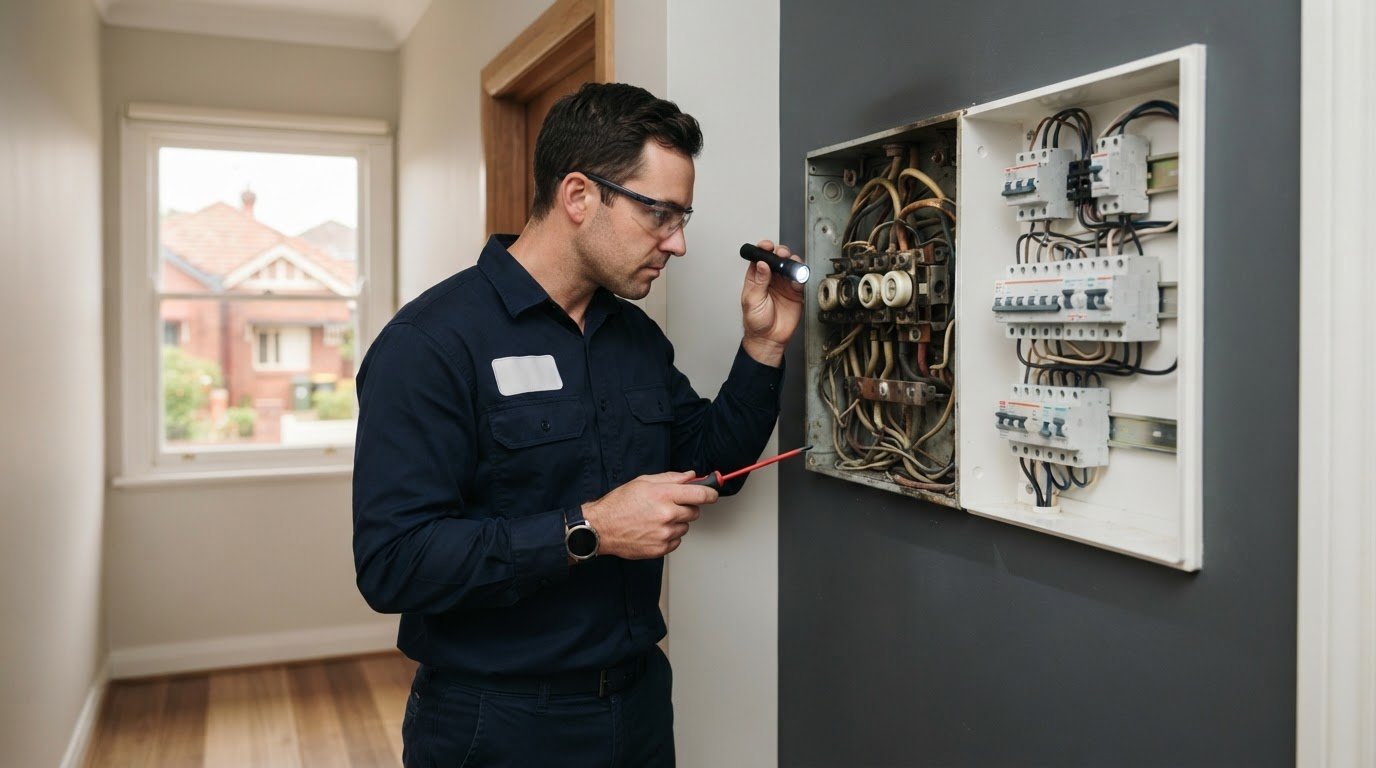
Include the electrical setup in the project scope. The condition and capacity of your switchboard, along with the planned system connection, can affect the electrical work required. A switchboard upgrade may be needed if the existing setup requires changes to accommodate the installation, but it is not automatically required for every home.
Once the work is complete, a post-installation review is a final check of compliance and rebate registration. Include the review and handover documents in your project plan. The certificate of compliance electrical work (CCEW) should also be among the records you receive for the electrical work. Together, these documents give you a clear record of what was installed and how the project was closed out.
Use this sequence before accepting a proposal:
- Map the roof: Note the usable areas, orientation, obstructions and proposed panel positions.
- Consider shade and exposure: Record likely shade sources and whether coastal salt-mist or summer humidity is relevant to your property.
- Review the electrical setup: Ensure the switchboard and required electrical work are addressed in the project scope.
- Confirm close-out: Check that the post-installation review, CCEW and rebate registration are accounted for in the handover plan.
Make sure conditional work is clearly identified so you can distinguish the agreed installation scope from possible additional electrical requirements. Sky High Solar and Electrical provides switchboard upgrades as part of its electrical services, keeping this consideration connected to your solar project.
For a site-specific solar installation plan that accounts for your roof and electrical setup, arrange your solar installation with Sky High Solar and Electrical.
Choosing Sky High Solar and Electrical for your Sydney solar project
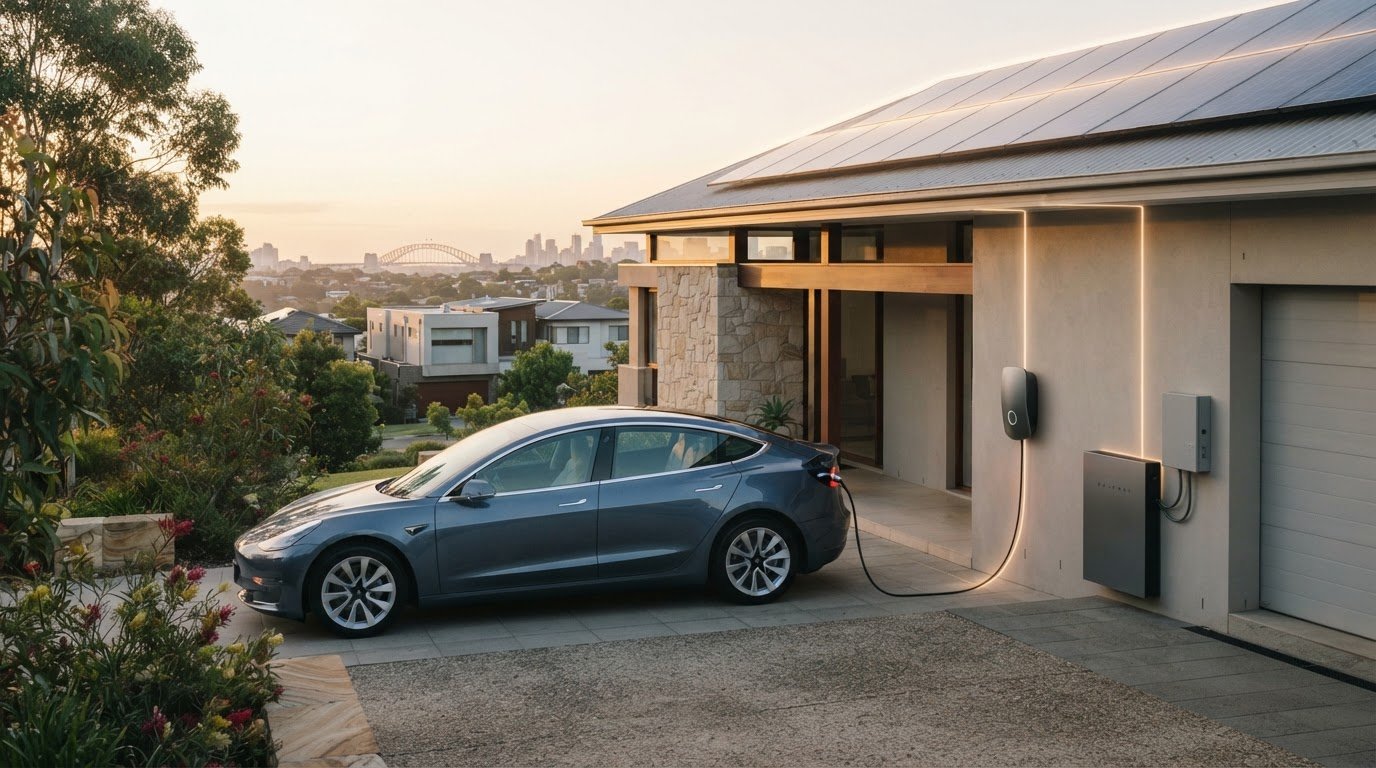
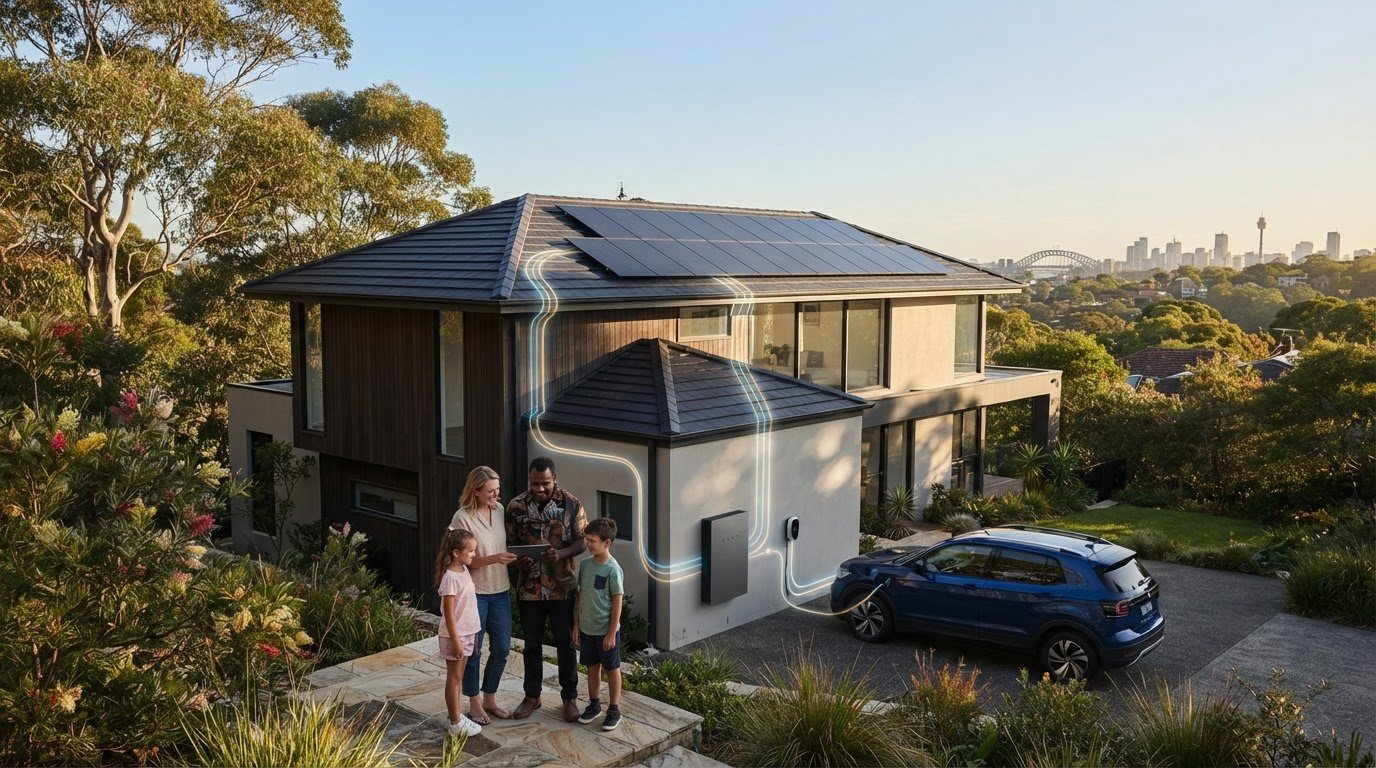
Start by connecting your solar plans with the way you use energy at home. Consider what you want the system to support now and what may change later, such as adding an electric vehicle or increasing household electricity use. These priorities help shape a project around your needs rather than a one-size-fits-all package.
Planning around your Sydney home
Sydney properties vary, so a suitable project starts with the details of your home and household. You might want to make better use of daytime solar electricity, plan for a future battery or prepare for changing energy needs. Sky High Solar and Electrical installs residential solar systems, so the discussion can focus on your goals and the options suited to them.
Note when your household uses the most electricity and whether that pattern may change. A household with high daytime use may have different priorities from one that uses most of its electricity in the evening. Sharing those details gives the project a practical starting point.
A clear next step for your solar project
You do not need to make every decision before planning begins. Start with the questions that matter most: how the proposed system fits your daily routine, what future additions you are considering, and what installation information you need. These priorities can guide a practical plan for your Sydney home.
Solar is a long-term addition to your home, so take the time to choose an approach that suits your household. Discuss your Sydney solar project with Sky High Solar and Electrical and take the next step towards a considered home energy plan.
Take the next step towards a solar-ready home
A solar decision can shape how your home uses energy for years. Choose a system that fits your priorities instead of rushing towards a headline offer. Consider what matters most to your household, such as using more of your own solar electricity, planning for future energy needs or understanding the installation work before it begins.
That perspective turns how to choose a solar installer in Sydney into a practical decision about the right project for your home. You do not need to have every technical detail settled before starting. A clear picture of your priorities is a useful place to begin.
Sky High Solar and Electrical brings solar and electrical services together, with solar system servicing available after installation. Use the comparison steps in this guide to prepare for a conversation about your property, energy use and installation requirements.
Start planning your Sydney solar installation with Sky High Solar and Electrical.
Frequently Asked Questions
How many solar quotes should I compare before choosing an installer?
Compare three quotes if you can, so you can spot differences in equipment, system layout and project scope. Give each installer the same information about your household electricity use and any plans to add an EV or battery. The lowest total may reflect a different system or excluded work. A side-by-side review makes how to choose a solar installer in Sydney a more informed decision.
Is the solar retailer always the company that installs the system?
No. A retailer may sell the system and arrange installation through a separate contractor, or one business may manage both roles. Check your agreement to identify the business responsible for the sale, who will carry out the electrical work, and who handles questions after installation. If a retailer coordinates a subcontractor, make sure the documents set out responsibility for scheduling, handover records and servicing enquiries.
Can I install solar panels on a strata property in Sydney?
Solar may be possible on a strata property, but shared ownership can make approval and system design more involved. Roofs are often common property, so raise the proposal with your owners corporation or strata manager before committing to equipment or installation dates. A townhouse with its own roof may have different considerations from an apartment block seeking a shared system. Clarify access, costs and ongoing responsibilities in writing.
Do I need council approval for rooftop solar in Sydney?
Not every rooftop solar installation has the same approval requirements. Whether separate council approval applies can depend on the property and relevant planning controls, including heritage considerations. Review current NSW planning guidance and your local council’s requirements for your address before work is scheduled. If you live in strata, also consider owners corporation approval, which is separate from planning approval.
Can I add a battery to my solar system later?
Often, a battery can be added later, but the existing inverter and system design affect what is practical. For instance, an older inverter may need changes or replacement to work with a chosen battery. If storage is a future goal, include it in solar planning so the proposal can account for compatibility, switchboard capacity and battery location. This does not commit you to buying a battery now; it helps you understand future options.
Will my solar system work during a blackout?
Usually, a standard grid-connected solar system shuts down during a blackout, even if the sun is shining. This is a safety measure for the electricity network. Backup power requires equipment designed and configured to supply selected circuits, and a battery alone does not necessarily mean the whole home will stay powered. Check which loads a proposed backup setup is intended to support, such as a fridge or essential lighting.
Do I need to be home while solar panels are being installed?
You may not need to stay home for the entire installation, but arrange access to the property and a way to discuss any site questions that arise. Before work is scheduled, confirm how the crew will access the roof, switchboard and equipment locations, and whether gates or pets need special arrangements. If you’ll be away, agree on access and a contact person in advance so work can proceed safely.