

 Sydney
 0452 243 240
Blog
Solar Benefits for Your Sydney Business: A Practical Guide

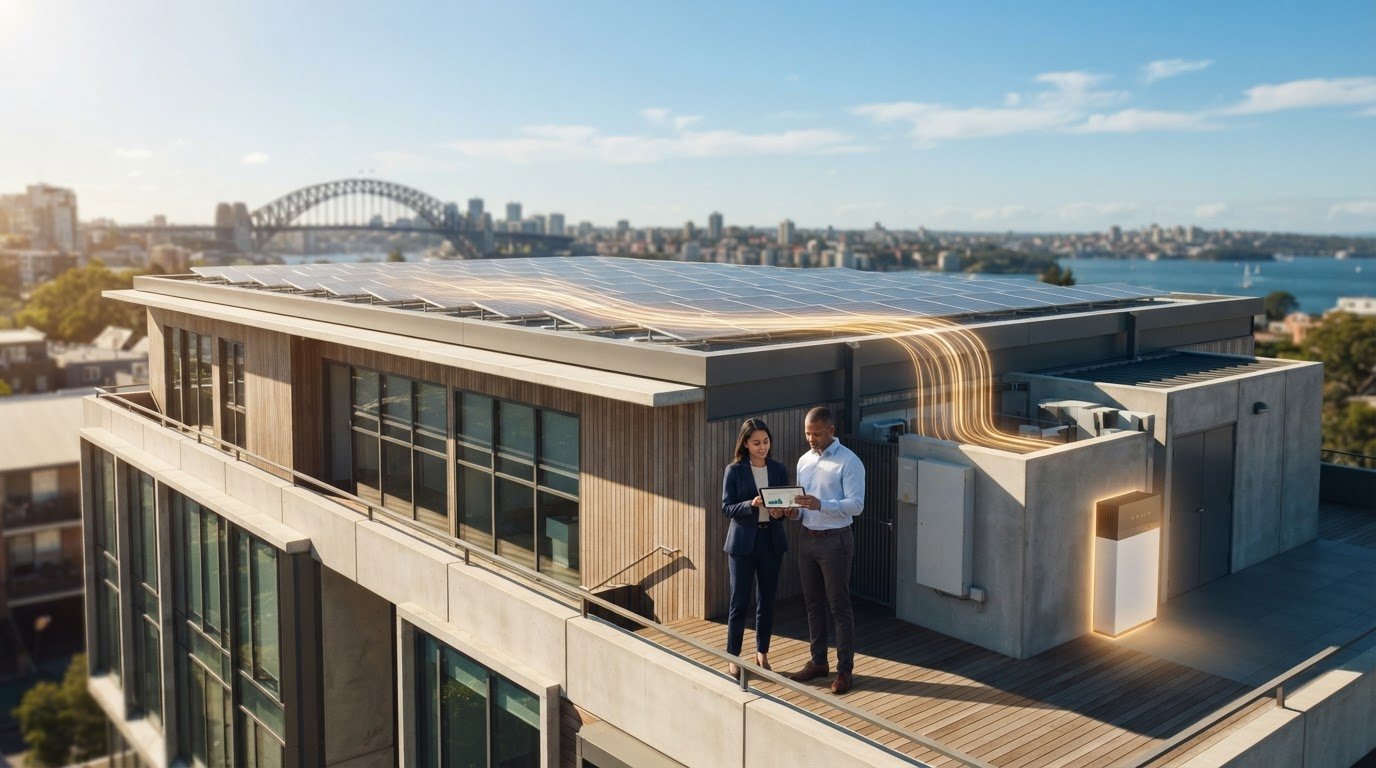
What if the benefits of solar for my Sydney business depended less on how many panels fit the roof and more on when the business uses electricity? Start by matching expected solar generation with your site’s daily demand.
Unpredictable electricity costs can make planning difficult, and the upfront investment deserves careful assessment. Solar can help manage grid electricity use and support sustainability goals, but the outcome depends on your operating hours, energy use and how much generation you can use on site. Any surplus exported to the grid is valued under your electricity plan, so panel capacity alone won’t tell you what a system could do for your business.
This guide explains how to assess financial and operational benefits, consider incentives and decide whether battery storage fits your needs. You’ll learn what to review, from electricity bills and roof conditions to system design, network requirements and electrical compliance. Sky High Solar and Electrical provides commercial solar installation, battery solutions, electrical work and servicing in Sydney, with planning based on your site and energy profile.
Key Takeaways
- Assess the benefits of solar for my Sydney business by comparing rooftop generation with the electricity your premises use during the day.
- Use operating hours and interval data to understand how much solar power your business may be able to consume on site.
- Compare solar-only and battery-supported systems against after-hours energy use, backup priorities and operational needs.
- Prepare recent electricity bills, interval data and details of planned changes to energy use before system design.
- Consider how a site-specific commercial solar design can account for your premises, energy profile and electrical requirements.
Why Sydney businesses are considering solar for more than lower bills
There’s no single solar profile for Sydney businesses. An office in Parramatta, a warehouse in western Sydney and a customer-facing premises near the coast can have different electricity demands, roof layouts and priorities. The opportunity is to generate electricity on site during daylight and use some of it in your business, rather than drawing all your power from the grid at those times.
Solar photovoltaic panels convert sunlight into electricity. For a general overview of the technology and its place among renewable energy sources, see Solar Power Explained. For a business, the value of rooftop generation depends on how closely it matches the site’s electricity use, as well as the roof and electrical setup.
Which Sydney businesses may benefit from on-site solar?
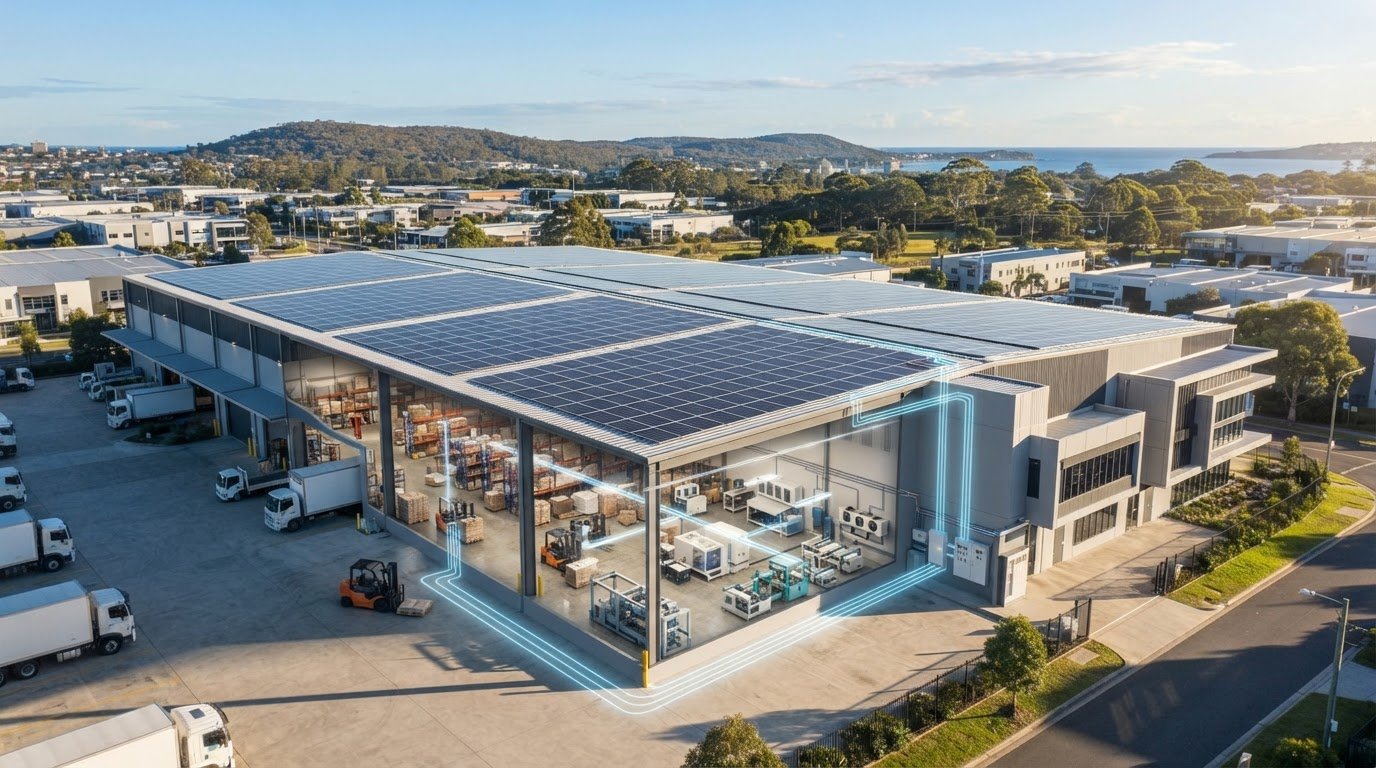
Businesses with daytime electricity use may have more opportunity to consume solar as it is generated. Offices use power for lighting, computers and cooling during business hours. Workshops may run equipment through the day, while warehouses can have lighting, refrigeration or material-handling loads. Customer-facing premises may use electricity for lighting, point-of-sale systems and other daily operations. These are examples, not guarantees: demand varies from site to site.
A business that operates mainly after dark may use less solar electricity directly during daylight. Its assessment should account for when the site is active and whether stored energy fits its priorities. A battery is worth considering where usage patterns support it, but it isn’t an automatic addition to every solar project.
Physical suitability matters too. Roof space, orientation, shading from nearby buildings or rooftop equipment, and the condition of the premises all affect what system design is practical. If your business leases its site, include roof access and permission for proposed changes in early planning. In built-up parts of Sydney, obstructions and limited usable roof area may shape the design as much as energy needs.
What solar can and cannot promise a business
Solar can offset some electricity drawn from the grid when the system is generating and the business is using power. This may support operating costs and sustainability objectives, but it doesn’t mean every kilowatt-hour produced will be used on site. Generation and demand vary by time of day, season, weather and business activity.
Bill impacts depend on the system design, the site’s energy use and the business’s electricity arrangements, including how exported electricity is treated under its plan. A system that produces more than the premises can use at certain times may deliver a different value from one sized around daytime demand. A site-specific assessment can compare those patterns with the proposed design.
Solar can’t promise a fixed bill reduction, payback period or complete energy independence for every Sydney business. Use your own site and energy information to assess these outcomes instead of assuming them in advance. That’s how to weigh the benefits of solar for my Sydney business realistically, including the potential environmental value of generating renewable electricity on site.
How commercial solar can change Sydney business energy costs and operations
The financial effect of a commercial solar system depends on how much it generates and how much your business can use while it is being produced. This is called self-consumption: using solar electricity on site as it is generated. The closer your electricity demand aligns with solar output, the more generation can serve your business directly.
Self-consumption is the solar electricity your business uses on site as it is generated, so its value depends on when your business draws power. If equipment, lighting or cooling runs during daylight, some of its demand may coincide with solar generation. If those loads run mainly outside those hours, less generated electricity may be used immediately.
Solar can reduce the amount of electricity your business draws from the grid when generation and demand overlap. It may also make some daytime energy use easier to plan for. But it doesn’t fix the price of all electricity your business buys, guarantee a particular bill outcome or remove exposure to tariff changes. Exported electricity and grid consumption are treated according to your electricity arrangements, so consider the full bill rather than generation alone.
Why business operating hours matter to solar benefits
A Sydney business operating through the day may have more opportunity to use solar as it is generated than one with its largest loads overnight. Compare the timing of major equipment, refrigeration, heating or cooling with your generation profile. Review bills and interval consumption data across representative periods, including weekends and seasonal changes. This can show when demand regularly falls and whether planned changes to operating hours could alter the pattern.
Compare electricity use by time of day, not just the total consumed over a billing period. A monthly bill shows overall consumption and charges, while interval data can reveal when demand rises and falls. Together, these records provide a stronger basis for assessing a proposed system than an estimate based on premises type alone.
Operating patterns can change. A warehouse may change its roster, an office may adjust occupancy, or a business may add equipment that draws power during the day. Weekend trading can also affect how closely demand follows weekday patterns. Include known changes in the design discussion so the proposed system reflects how the site is expected to run, not only how it runs today.
Environmental and business reputation benefits
On-site solar generation can support a business’s sustainability objectives, but environmental statements should be tied to documented generation and a clear reporting method. Keep system generation records and explain what they measure. This gives staff, customers and business partners a clearer basis for understanding your actions than broad claims about being “green”.
Avoid claiming that solar has eliminated emissions or made operations fully renewable unless the evidence and accounting method support that wording. A measured, carefully explained contribution is more dependable for internal targets and external communications. To explore system design for your operations and sustainability reporting, see commercial solar solutions.
Solar-only or battery-supported: which approach suits your Sydney business?
Choose between solar-only and solar-plus-battery by looking at when your site uses electricity and what you need the system to do. Solar-only may suit a business that can use much of its generation during daylight hours. Storage may be worth assessing if you have after-hours demand, specific backup priorities or surplus solar generation that could serve a later load.
Battery storage may complement a business’s solar load profile when surplus daytime generation can be stored for useful later demand. Whether it fits depends on actual consumption and system configuration, not simply on adding a battery to a solar design.
| Consideration | Solar-only | Solar plus battery |
|---|---|---|
| Daytime self-consumption | Can serve loads that coincide with solar generation. | Can serve daytime loads, with surplus generation available to store if the system is configured for it. |
| After-hours use | Doesn’t store daytime generation for later use. | May supply stored energy to selected later loads, subject to system design and available charge. |
| Backup priorities | Grid-connected solar alone shouldn’t be assumed to keep the business operating during an outage. | Backup depends on system configuration and the loads intended to be supported. It doesn’t guarantee uninterrupted business operations. |
| System considerations | Design focuses on solar generation, site suitability and business demand. | Storage must be integrated into the system design, adding another factor to assess. |
When solar-only may meet the business need
If your business operates mainly in daylight and can use much of its solar generation as it is produced, solar-only may fit your load profile. This could include regular daytime use by equipment or building services. Suitability still depends on the premises, available roof area and consumption patterns. A grid-connected system is not the same as an off-grid supply or guaranteed backup.
When battery storage deserves consideration
Consider storage if your records show meaningful electricity use after solar generation hours, or if keeping selected loads running during an outage is a priority. Review how much surplus generation may be available and when the business would need stored energy. Backup capability depends on system configuration and intended loads, so design it around operational priorities rather than assuming it will support the whole site.
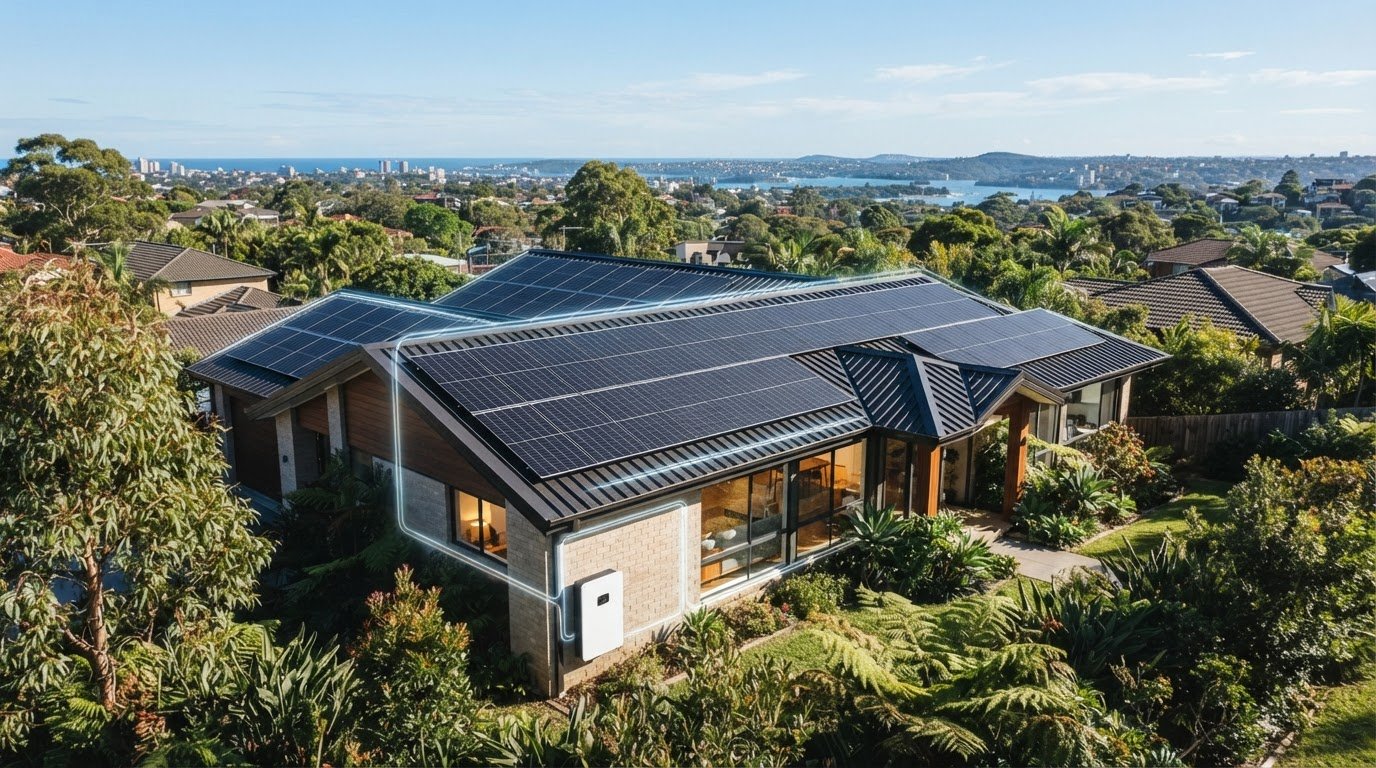
Battery storage adds design considerations, including how the battery, solar system and electrical setup work together. It may not suit every business, particularly if daytime demand already uses much of the solar generation or there’s little later load to serve. To assess the benefits of solar for my Sydney business, compare the load profile, after-hours needs and backup priorities before choosing an approach. Sky High Solar and Electrical provides commercial solar and battery solutions designed around business requirements. For more on storage planning and matching a system to later demand, read the Sydney solar battery storage guide.
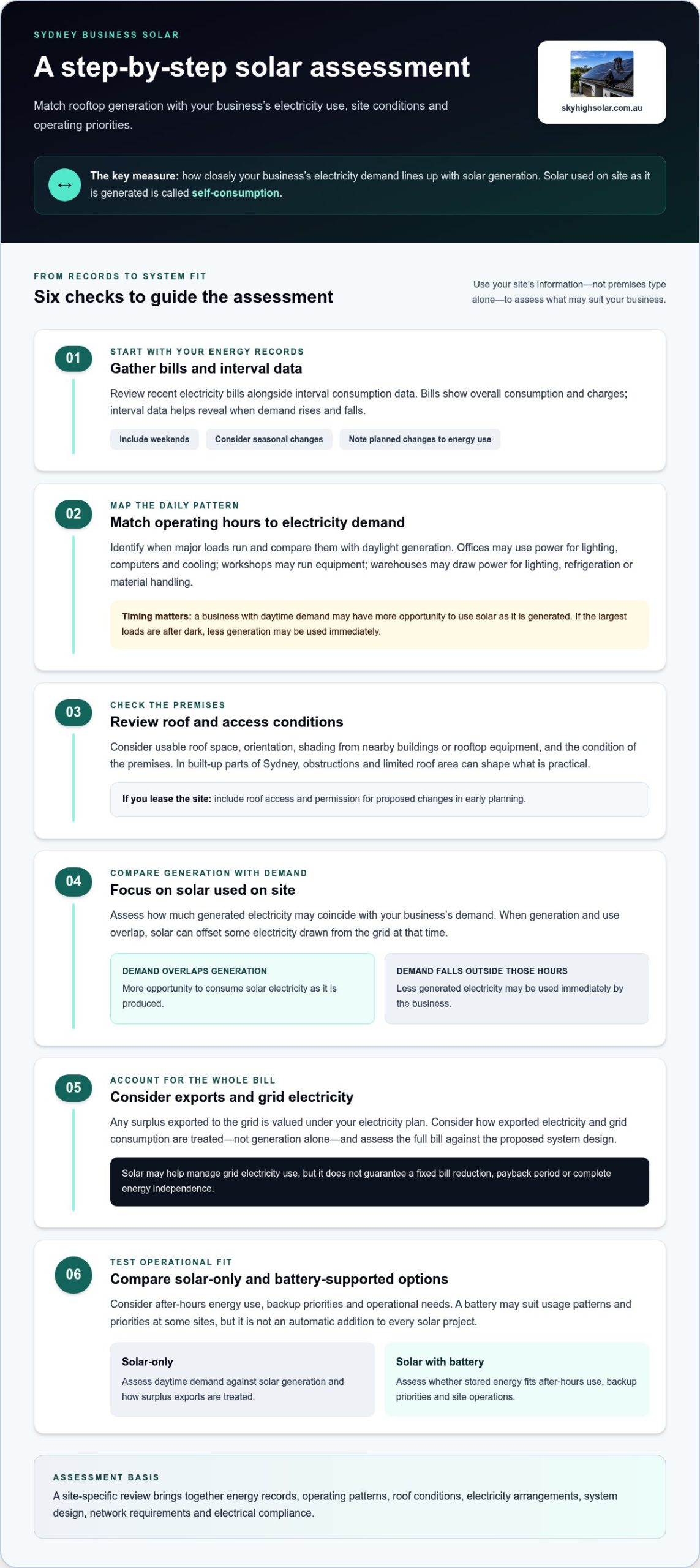
A practical Sydney business checklist for assessing solar benefits
Prepare information about your electricity use, premises and planned changes before system design begins. If you’re asking, “What are the benefits of solar for my Sydney business?”, these steps turn the question into a site-specific assessment rather than a guess based on business type.
Gather the energy and site information first
Start with your records, then add the practical details of your premises. Work through this checklist:
- Collect electricity bills and tariff details. Recent bills show consumption, charges and the electricity plan applying to your business. Keep tariff information with them, as import and export arrangements affect how solar generation relates to your bill.
- Request interval consumption data. This shows when electricity is used, not just the total over a billing period. Compare it with operating schedules, including weekends and seasonal changes, to identify regular daytime and after-hours demand.
- Record operating hours and load changes. Note when the premises are occupied and when equipment runs. Include planned changes such as longer trading hours, new machinery, refrigeration or EV charging, as these may change the site’s future electricity profile.
- Document roof and access conditions. Note usable roof area, shading, access arrangements and planned roof or building work. If you lease the premises, clarify ownership and lease arrangements for rooftop works before moving towards a design.
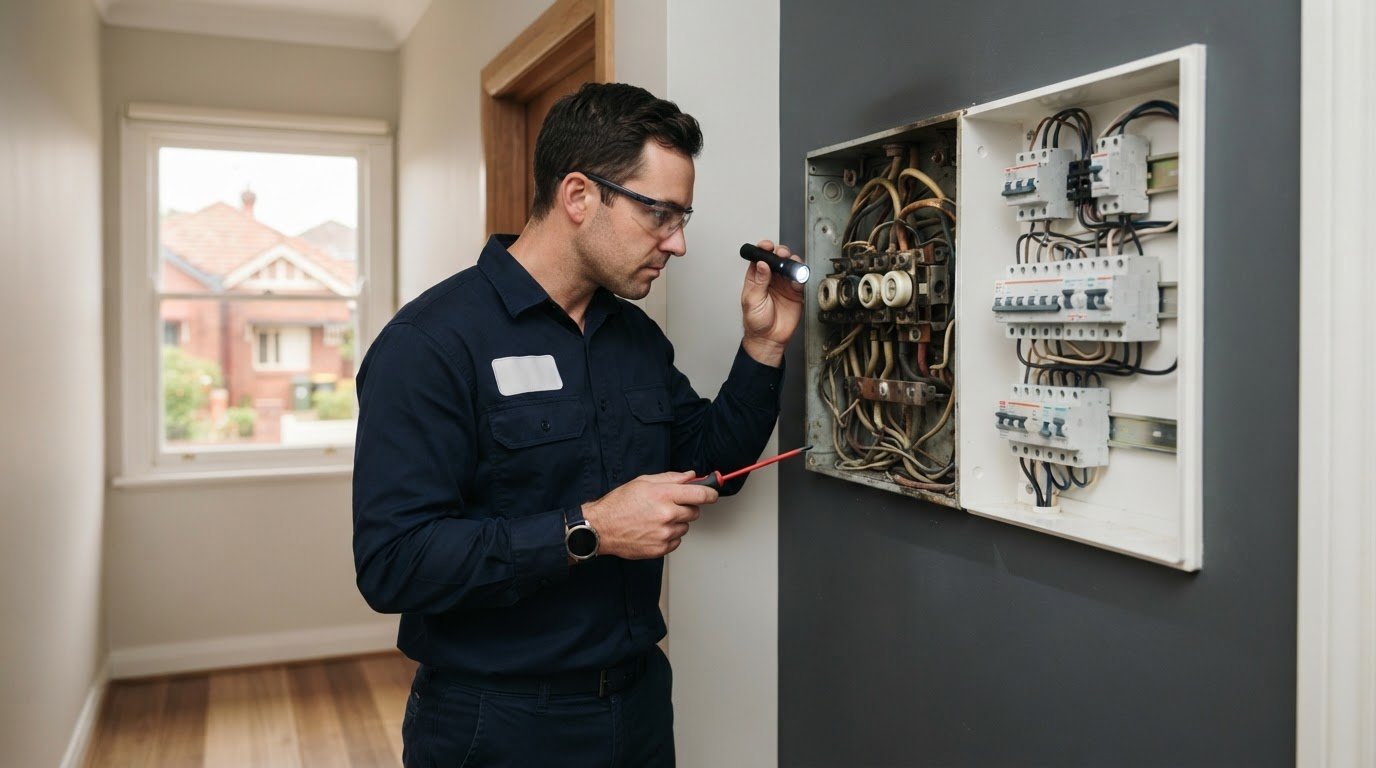
- Include the electrical setup. Record known switchboard concerns or upgrades, and include the site’s electrical requirements in project planning. A suitable design needs to account for both the premises and the proposed system.
Check incentives, safety and compliance before proceeding
Incentive rules can change, and eligibility depends on the project. Check current federal Small-scale Renewable Energy Scheme (SRES) requirements and applicable NSW incentives against your system design, installation timing and business circumstances. The Peak Demand Reduction Scheme (PDRS) relates to battery storage eligibility, so assess it if a battery is part of the project. Don’t build a financial case around an incentive until you’ve checked its current terms and your eligibility.
Plan for safe, compliant electrical work as well as generation. A post-installation review is a final check after solar panels are installed to confirm compliance with standards and registration for rebates. Sky High Solar and Electrical can provide a certificate of compliance electrical work (CCEW), official documentation confirming that electrical work meets Australian safety standards and is legally compliant.
Your bills, site conditions and electrical requirements all inform system design. The commercial solar installation guide explains how these details fit into the wider project. When your bills, site details and priorities are ready, start planning your commercial solar project around your business’s actual requirements.
How Sky High Solar and Electrical supports Sydney businesses considering solar
Commercial solar works best when the design reflects how a business operates. Sky High Solar and Electrical is Sydney-owned and operated, serving local businesses since 2013 with commercial solar, battery and electrical services. The team considers the site, energy profile and project priorities so you can assess the opportunity using your own information rather than generic savings estimates.
Local installation and electrical expertise
Sky High Solar and Electrical provides licensed electrical contracting for commercial solar projects. Site assessment and installation planning consider how a system fits the premises and existing electrical setup. Project-specific design also accounts for safety and compliance, rather than treating panel capacity as the only consideration.
For electrical work, Sky High Solar and Electrical can provide a certificate of compliance electrical work (CCEW) as part of the project documentation. If the existing switchboard needs attention to support the project, a switchboard upgrade can be included in the wider electrical scope. Solar system servicing is also available after installation.
Plan a solar solution around the business
System design needs to account for usable roof area, shading, operating hours, electricity demand and planned changes to the site. A business with substantial daytime loads may have different priorities from one that uses more power after hours. Battery storage can be considered where energy use and project priorities make it relevant, but it isn’t required for every commercial solar project.
Sky High Solar and Electrical provides commercial solar and battery solutions, with system choices shaped by project needs. Available brands include FOX ESS, Enphase, Tesla and GoodWe. The right configuration depends on the site and the intended role of the system, not a brand name alone. Reviewing energy information and site conditions first makes the design discussion more useful.
- Energy profile: Match system design to when and how the business uses electricity.
- Premises: Consider roof conditions, access and existing electrical infrastructure.
- Project priorities: Weigh daytime generation, future loads and whether storage suits operational needs.
If you’re weighing the benefits of solar for my Sydney business, a project-specific assessment can connect these considerations to your premises and operating patterns. Share your business priorities and site details with Sky High Solar and Electrical to discuss a Sydney commercial solar project and explore a design suited to your requirements.
Take the next step towards a better energy fit
Turn your business’s energy records and site details into a clear project brief. Decide which outcomes matter most, such as using more electricity during daylight, planning for future demand or assessing whether battery storage fits your operating needs. This gives system design a practical starting point and keeps the decision grounded in your priorities.
Don’t assume the benefits of solar for my Sydney business will match another company’s results. A considered design can show how generation may align with your operations, what electrical work the site may require and which project details need attention before you commit.
Sky High Solar and Electrical brings commercial solar installation, servicing and electrical work together, with licensed electrical contracting and project-specific planning. If you’re ready to explore how solar could suit your premises and energy use, discuss a commercial solar solution for your Sydney business.
A well-informed first step can make planning a more sustainable energy system clearer. Use your site details and energy records to assess the opportunity and decide what makes sense for your business.
Frequently Asked Questions
How much can solar reduce my Sydney business electricity bill?
There isn’t a reliable single figure for every Sydney business. To assess the benefits of solar for my Sydney business, compare interval data with the hours the system is expected to generate, then review the tariff and export arrangements on your electricity plan. Use bills from different seasons and note changes in trading hours or equipment use. Treat any estimate as project-specific and check its assumptions against your records.
Are there solar rebates for Sydney businesses in 2026?
Potential incentives may be available, but eligibility depends on current program rules and the proposed system. Check the latest federal Small-scale Renewable Energy Scheme (SRES) guidance and relevant NSW program information before including a discount in your business case. Confirm eligibility, timing and required documentation using official guidance. An advertised incentive doesn’t guarantee that your business or system qualifies, so base financial planning on confirmed terms.
Can my business install solar if it rents its premises?
It may be possible, but resolve property and lease questions before proceeding. Discuss the proposal with the owner and review who can approve roof works, who controls access for installation and servicing, and what happens to the equipment when the tenancy ends. Clarify responsibility for changes to the premises too. Once these arrangements are understood, a site assessment can consider the roof, electrical infrastructure and your business’s energy use.
Will a solar battery keep my business operating during a blackout?
Not necessarily. Backup depends on system configuration and which business loads it is designed to support. List essential equipment, such as security systems, refrigeration or selected IT equipment, and include those loads in the backup design. Consider how the business would operate if non-essential equipment remained off. A battery by itself doesn’t guarantee uninterrupted power, so understand the designed backup function and its limits before relying on it.
Does a Sydney business need a switchboard upgrade for solar?
Not every business needs one. It depends on the existing switchboard, its condition and capacity, the proposed system and applicable safety requirements. An electrical assessment can identify whether changes are needed and whether other site work should be coordinated with installation. If electrical work is completed, retain the relevant certificate of compliance electrical work (CCEW) with your project records to document the work carried out at the premises.
Is commercial solar worthwhile if my business closes during the day?
It may still be worth assessing, but closing during daylight can mean less opportunity to use generation directly. Check whether the site has regular loads outside trading hours, such as refrigeration, ventilation or security equipment, and compare weekday use with weekends. Assess the system’s generation profile, electricity arrangements and any battery option together. Don’t assume storage will make the project worthwhile; base the decision on actual demand and operational priorities.