

 Sydney
 0452 243 240
Blog
Hail-Proof Solar Panels: Australia’s 2026 Buyer’s Guide

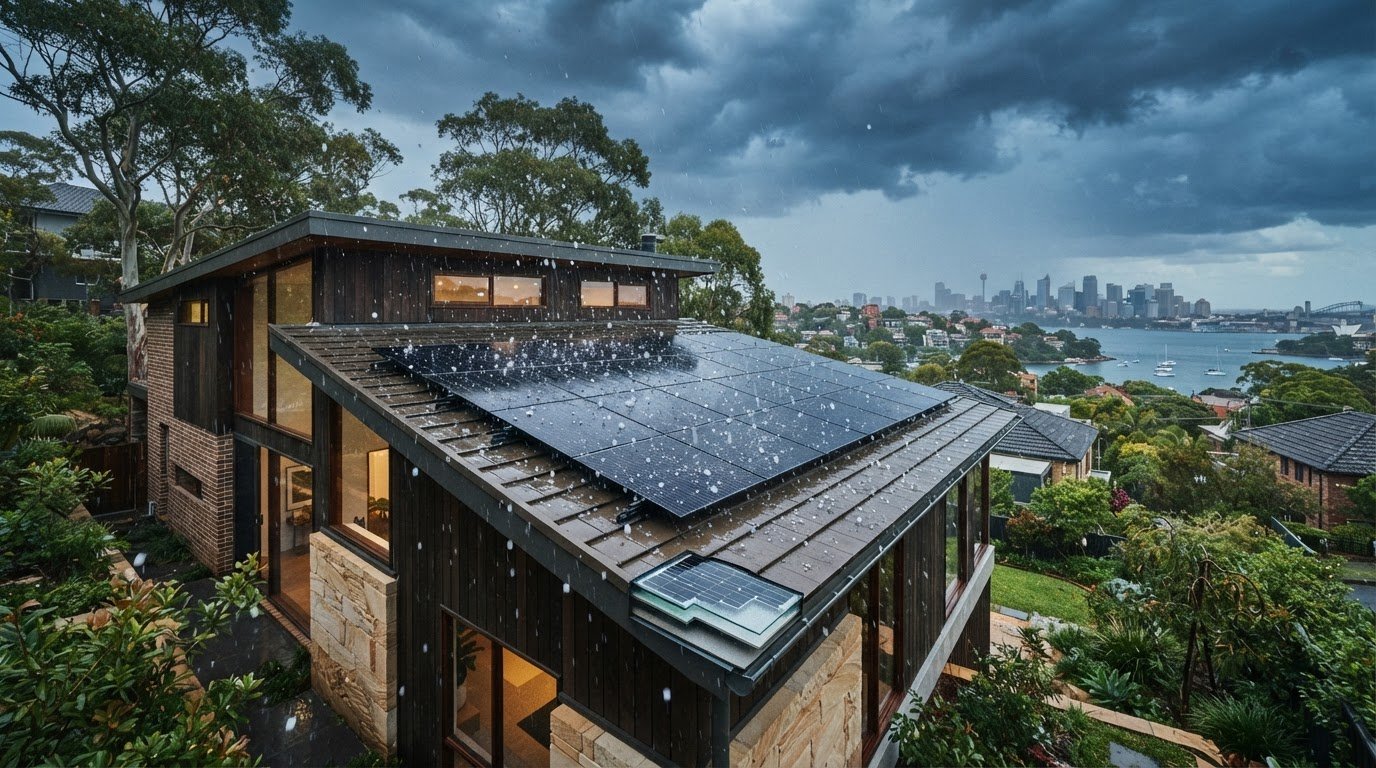
A “hail-proof” label can sound reassuring, but it doesn’t mean a solar panel is immune to damage in severe weather. When comparing hail proof solar panels Australia homeowners can install, focus on what the test evidence demonstrates and where its limits lie.
Before choosing panels for your home, check whether the hail-resistance claim applies to the exact model in your proposal. Manufacturer claims and independent test results can be difficult to compare, so this guide explains what the tests show, how to review the evidence and what to consider for a solar installation in Sydney. You’ll also find practical checks for your roof and panel layout, steps to take after a hail event, and ways to keep warranty and insurance records organised. No test can promise a panel will withstand every storm, but clear evidence can help you make a more informed choice.
Key Takeaways
- For hail proof solar panels Australia, treat “hail-resistant” as evidence from testing, not a guarantee against every storm.
- Compare test results by panel model, hailstone size and evidence source. A certification, independent test and manufacturer-run test are not the same thing.
- Consider your roof’s condition, layout and exposure when planning a Sydney solar installation.
- Keep panel and system details on record so you can refer to them when reviewing your choices or responding after a hail event.
- Professional installation brings panel evidence, roof conditions and electrical work into the system plan. Solar servicing can help assess a system after suspected hail impact.
Are hail-proof solar panels available in Australia, and what does hail resistance mean?
Hail resistance is evidence that a solar panel passed a defined test, not a promise that it will withstand every storm. For Australian households comparing panels, “hail-proof” is an absolute claim and should be treated cautiously. Hailstones vary in size and impact, and a real storm can expose a rooftop system to conditions that a controlled test doesn’t reproduce.
Panels sit outdoors, so hail may affect the module’s glass, cells or frame. Damage isn’t always obvious from the ground. Knowing what a rating does and doesn’t tell you can help you compare options before choosing a system. This solar panel technology and construction overview provides general context on how a module’s components work together.
Hail resistance is a solar module’s demonstrated ability to withstand specified ice-ball impacts under defined test conditions, assessed against the test’s stated criteria. The result applies to the tested conditions and particular model. It shouldn’t be read as protection against hail of any size or impacts from every direction. For homeowners searching for hail proof solar panels Australia, that distinction is more useful than a broad label.
What does a solar panel hail-resistance test measure?
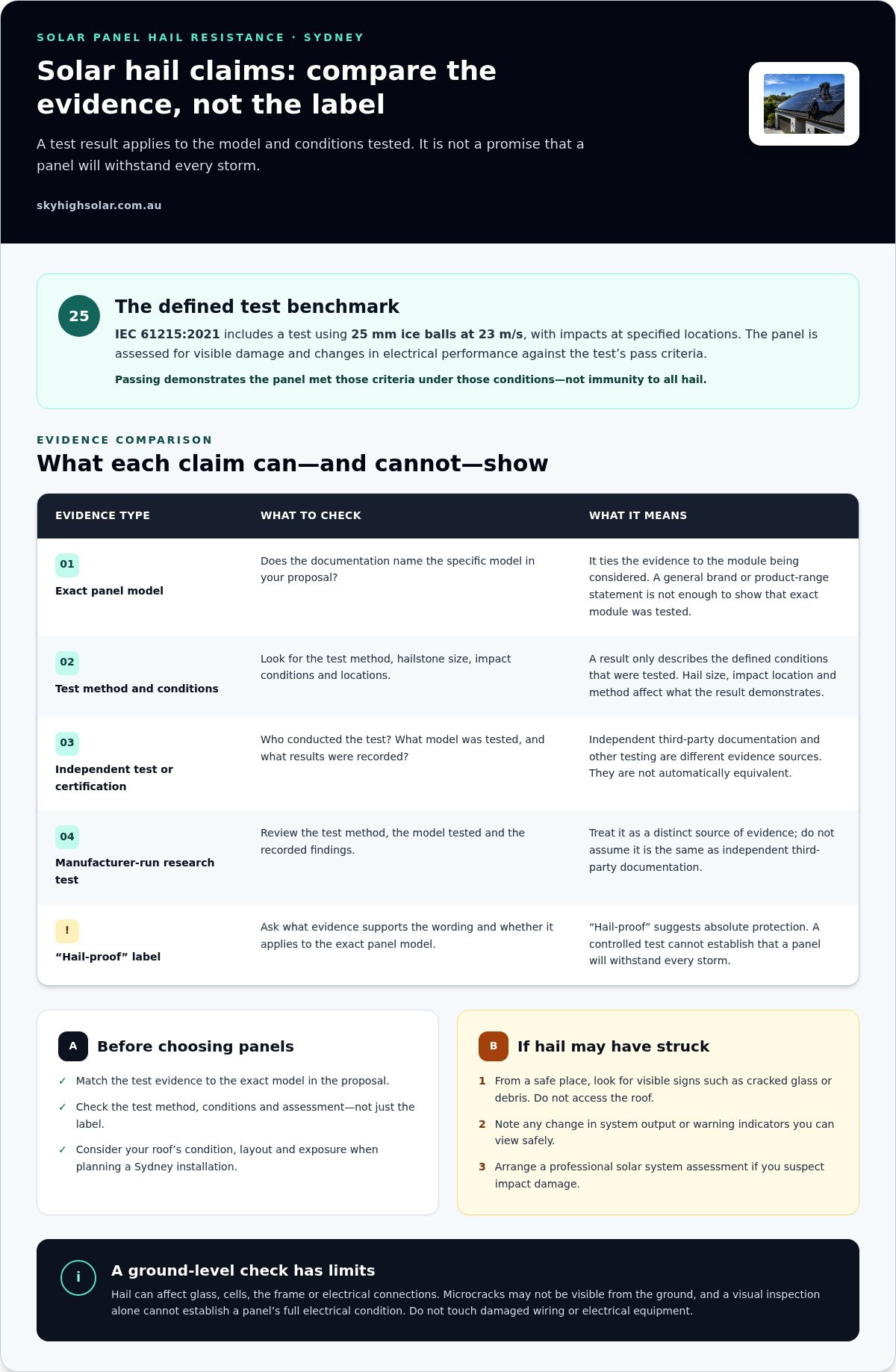
A hail test fires ice balls of a specified diameter at a panel under defined impact conditions. IEC 61215:2021 includes a test using 25 mm ice balls at 23 m/s, with impacts at specified locations. The panel is assessed for visible damage and changes in electrical performance against the test’s pass criteria. Passing this test shows that the panel met those criteria under those conditions. It doesn’t establish immunity to all hail.
When reviewing a claim, look for documentation that names the exact panel model and test method. A general statement about a brand or product range isn’t enough to show that the specific module in your proposal was tested. The result is most useful when you can identify what was tested, how it was tested and what the assessment found.
Why is “hail-proof” different from hail-resistant?
“Hail-proof” suggests an absolute level of protection that a controlled test can’t establish. Hailstone size, impact location and test method all affect what a result demonstrates. A claim involving a larger hailstone may describe a more demanding test, but its meaning still depends on the test conditions and supporting evidence.
Certification and other kinds of testing are also different. Independent third-party documentation and manufacturer-run research tests aren’t automatically equivalent, even if both describe impacts on a panel. Check who conducted the test, whether it applies to the model you’re considering and what results were recorded. Real storm conditions can differ from laboratory conditions, so even a passed test can’t promise that a panel will emerge undamaged from every hail event.
How do solar panels withstand hail, and what can still be damaged?
A solar panel’s front glass is its first line of defence against hail, but it isn’t unbreakable. The glass protects the solar cells beneath it, while the frame and electrical connections help the module function as a complete unit. When comparing hail proof solar panels Australia, look beyond the front surface. Different parts can be affected in different ways, and damage isn’t always easy to spot.
The result of an impact can depend on the hailstone’s size and speed, the angle it strikes at and where it lands. A hit near an edge, for example, may affect the frame or glass differently from one that lands over a cell. No single material or construction detail guarantees that a panel will survive every storm.
What parts of a solar panel can hail affect?
Hail may crack or chip the front glass, reducing the protection it provides to the cells. The cells convert sunlight into electricity and can be affected by impact even when damage isn’t obvious from the ground. A panel’s frame supports its edges and helps hold the module together, but a strong impact could bend or damage it. Electrical connections can also be affected, potentially disrupting how the module supplies power.
Panel designs differ, so don’t assume one construction feature tells the whole story. In Australia, the Clean Energy Council publishes information about solar energy and industry guidance. Its Clean Energy Council solar guidance can provide broader context, while the specific construction and condition of your modules remain central to assessing a system.
Can hail cause damage that is difficult to see?
Yes. SolarQuotes identifies microcracks in cells as a possible form of hidden hail damage. These small cracks may not be visible from ground level. If a panel’s output or system behaviour changes after a storm, suspected damage still deserves attention.
A visual inspection alone can’t establish a solar panel’s full electrical condition. A panel may look intact while its electrical performance has been affected, so appearance is only one part of an assessment. Don’t climb onto the roof to inspect modules or touch damaged wiring or electrical equipment.
If hail has struck your property, take these steps from a safe place:
- Look for obvious signs such as cracked glass or debris, without accessing the roof.
- Note any change in system output or warning indicators you can view safely.
- Arrange a professional solar system assessment if you suspect impact damage.
Sky High Solar and Electrical provides solar system servicing to assess systems after suspected hail impact. For a Sydney home, a professional can inspect the installation safely and consider both its visible condition and system operation. Arrange solar system servicing if you’re concerned about possible storm damage.
How to compare hail-resistant solar panels and their test evidence
A useful comparison goes beyond the biggest hailstone figure in a product brochure. Check the test method, who conducted it, what evidence is available and whether it applies to the exact panel model you’re considering. This gives you a clearer basis for comparing claims without treating every “hail-resistant” statement as equivalent.
What does IEC 61215 hail testing tell a buyer?
IEC 61215 provides a defined test framework for assessing module performance and durability, including hail impact. A result helps you compare panels against a common baseline, but it doesn’t predict how a module will perform in every real storm. Confirm that the documentation names the precise model rather than assuming a result for one model covers an entire product range.
| Evidence type | Hailstone example | Evidence source | Model-specific? |
|---|---|---|---|
| IEC 61215 test or certification | 25 mm baseline example | Certification or test documentation identifying the method and result | Check the named module model |
| Enhanced third-party test | 45 mm example reported in Risen Energy material | Independent test evidence, where the documentation identifies the testing organisation and conditions | Verify the model and report scope |
| Manufacturer-run research test | 35 mm example reported in Risen Energy material | Manufacturer’s own test or research record | Check which model was tested; don’t describe internal research as independent certification |
The examples above are not a current product recommendation. Manufacturer claims and model details can change, so review the relevant documentation before relying on a particular panel result. A headline diameter without a report or clear model reference doesn’t establish what was tested.
How should you assess enhanced hail-test claims?
Use this evidence check:
- Identify the panel model and the test standard or method.
- Find the test report, including the organisation that conducted the test and the impact conditions.
- Confirm the reported outcome and whether it applies to the module you’re comparing.
- If the claim comes from the manufacturer’s own research, treat it as manufacturer testing, not independent certification.
A larger hailstone figure alone doesn’t make two results directly comparable. Impact speed, test setup, locations struck, assessment criteria and reporting can differ. A 45 mm claim with limited detail may tell you less than a smaller-diameter result supported by a clear report. Look for evidence you can interpret, not just a bigger number.
Panel selection is one part of a household system decision. Roof layout, system size and panel arrangement also shape the design. For a Sydney-specific overview of those planning considerations, see this 6.6kW solar system guide for Sydney homes. Use the same careful approach to panel evidence, comparing documented performance rather than broad marketing language.
What should Sydney buyers check before choosing hail-resistant solar panels?
For a Sydney home, panel selection should be part of a site-specific solar design. Roof condition, shape, available space and panel layout all affect the installation, so a test result alone can’t determine whether a system suits your property. Use this sequence to compare evidence and keep useful records before work begins.
- Identify the exact panel model. Record the model name and make sure any hail-test claim refers to it, not just a product family or manufacturer.
- Review the test evidence. Note the test method, hailstone size, impact conditions and who conducted it. Distinguish certification, independent testing and manufacturer-run research.
- Assess the roof and proposed layout. Consider the roof’s condition, orientation, obstructions and how the array will fit. A professional site assessment can connect panel choice with the roof and wider system design.
- Keep the paperwork. Save the quote, panel model details, test documents, warranty terms and installation records together for future reference.
This process makes claims about hail proof solar panels Australia easier to assess. It also helps you avoid confusing a panel’s impact-test evidence with the suitability of the whole system. Consider roof design and electrical components alongside the module rather than treating hail resistance as the only buying factor.
Which questions help compare panels before purchase?
Check whether the test result applies to the exact model and configuration in your proposal, and whether the evidence is a certification, an independent test or manufacturer testing. Review the report’s conditions rather than comparing headline hailstone sizes alone. Record the solar panel warranty terms and installation documents so you can refer to the actual paperwork if you need to discuss damage or system performance later.
Use this pre-purchase checklist:
- Exact panel model and configuration recorded.
- Test method, conditions and evidence source documented.
- Roof condition and array layout considered in the design.
- Warranty and installation records stored together.
- Your property insurance policy reviewed for its terms on solar equipment and storm damage.
Insurance terms differ between policies, and coverage can depend on your circumstances. Review your policy documents and discuss any uncertainty with your insurer. Don’t assume a panel test or product warranty determines what insurance will cover.
What should you do after hail hits your roof?
From the ground, look for visible signs such as broken glass or debris, but don’t climb onto the roof or handle damaged electrical equipment. If panels appear damaged or system operation changes, arrange a professional assessment. Keep the installation paperwork and your safe observations of the event together, then review your insurer’s notification and claim requirements directly with them.
Ongoing care can help you keep track of system condition over time. Follow safe guidance in this solar panel maintenance guide for Sydney residents, and leave roof access and electrical checks to qualified professionals. For a solar installation planned around your home’s roof and system needs, discuss your Sydney solar installation.
How Sky High Solar and Electrical can support a Sydney solar installation
Choosing panels is only one part of planning a rooftop solar system. Sky High Solar and Electrical is a Sydney-owned and operated solar and electrical business operating since 2013. For local households comparing hail proof solar panels Australia options, a professional installation brings panel test evidence, roof conditions, system design and electrical work into one considered plan.
A site-specific design connects the panel choice with the property. Roof condition, available space and array layout all influence how a system can be planned. Keep clear records of the selected panel model and system design after installation, so you can refer to them later rather than relying on a product claim alone.
What does professional solar installation support cover?
Sky High Solar and Electrical installs residential solar systems and plans each project around the home. Panel evidence is considered alongside roof conditions and wider system requirements. Professional electrical work and attention to safety and workmanship are central to a quality installation. For relevant electrical work, Sky High Solar and Electrical can provide a certificate of compliance electrical work (CCEW).
Keep the quote, panel model details, test information supplied for that model and system records together. These documents help you refer back to the decisions behind your installation and provide relevant details if you need system servicing. Good records support informed follow-up, but they don’t change the limits of a panel’s test result or promise that it will avoid storm damage.
When is solar servicing useful after a hail event?
If hail has left visible signs of damage, your system’s operation has changed, or you’re concerned after severe weather, arrange a professional assessment rather than accessing the roof yourself. A solar health check can help assess a system when damage is suspected. A visual look from the ground may flag a concern, but it can’t confirm the full electrical condition of the panels or system.
Sky High Solar and Electrical provides solar system servicing to assess an installation after suspected impact. Keep your system and installation documents available, and review your own policy with your insurer if you’re considering a claim. Warranty and insurance terms depend on their documents, so retain those records as well.
Careful panel selection and professional installation can help you make an informed decision for your home without treating any panel as hail-proof. If you’re planning a system for a Sydney property, discuss your Sydney solar installation with Sky High Solar and Electrical.
Plan your next step with confidence
Choosing hail proof solar panels Australia homeowners can feel comfortable investing in is one part of planning for cleaner energy at home. Consider how solar fits your household’s longer-term energy needs, not only the day the panels are installed. A considered choice starts with clear priorities and evidence you can check.
You don’t need to settle every technical detail at once. Start by identifying what matters most to your household, then use it to guide your solar decisions. Compare panel test evidence with the roof, system design and records you’ll keep after installation.
Planning solar for a Sydney home? Discuss your solar installation with Sky High Solar and Electrical.
Frequently Asked Questions
Are hail-proof solar panels actually available in Australia?
Solar panels sold in Australia may be promoted with hail-resistance claims, but “hail-proof” shouldn’t be taken as a guarantee of surviving every storm. For a practical shortlist, record each panel’s exact model and compare the evidence supplied with its product information. Consider how the panel suits your household’s energy needs and proposed system rather than choosing on a durability label alone.
What size hailstone must solar panels withstand under IEC 61215?
The IEC 61215 hail test specifies 25 mm ice balls. When reviewing a proposal, check that the documentation refers to the applicable test and clearly identifies the module being supplied. Keep a copy with your system paperwork. The result describes performance under defined conditions, not how a panel will respond to every real-world storm.
Are panels tested with larger hailstones automatically better?
No. A larger test result isn’t a complete measure of a panel’s value or suitability. Consider how the evidence fits your priorities, then weigh it alongside the system’s expected energy production, product documentation and warranty terms. If two proposals differ, compare their overall specifications and inclusions rather than paying more based only on a larger hailstone figure or stronger-sounding label.
Can hail damage solar panels without cracking the glass?
Yes, impact can affect a panel’s cells even if the glass looks intact. Keep a record of your system’s normal production so you have a reference if its output changes later. If you use an inverter display or monitoring app, note unusual readings or alerts and when they appeared. Those details can help a technician understand the change during an assessment.
Does home insurance cover hail damage to solar panels in Australia?
There isn’t one answer for every household because cover depends on the terms of your policy. Review your policy schedule, exclusions, excess and requirements for notifying the insurer. Check whether your solar system is described in the policy details, particularly if it was added after the original policy began. Ask your insurer to explain any wording that’s unclear.
What should I do if hail hits my solar panels?
Don’t access the roof or touch panels, wiring or electrical equipment. From a safe place, record the storm date, visible signs and any changes shown on the inverter display. Keep the system paperwork available and arrange a professional solar assessment if you’re concerned or notice unusual operation. If you plan to make an insurance claim, follow your insurer’s instructions before arranging repairs or altering the system.
Should I choose a solar panel with enhanced hail testing for a Sydney home?
It may suit your priorities, but enhanced testing isn’t automatically the right choice for every Sydney household. Consider whether the documented result provides useful additional reassurance for your circumstances, and weigh it against the full system proposal and your budget. Avoid paying extra solely for a headline claim. A balanced decision considers the panel, the complete installation and the value you expect from the system over time.