

 Sydney
 0452 243 240
Blog
Residential solar panel financing options in NSW compared

Interest-free finance can still cost more than paying upfront. For homeowners comparing residential solar panel financing options in NSW, the main choices are a solar loan, lease, power purchase agreement (PPA), interest-free finance or an upfront purchase. A 0% interest offer may include other costs, while a loan’s interest adds to the total paid; leases and PPAs avoid buying the system upfront but involve ongoing payments.
It makes sense to focus on the monthly payment, but the total cost and how much solar electricity you use at home matter just as much. This guide explains how each option works, what affects the overall cost and how solar generation can reduce grid electricity use and bills. You’ll also see why an advertised interest-free deal deserves a close look: some buy now, pay later arrangements add a merchant fee of 15-25% to the total price. The comparison covers upfront cash, green personal loans, interest-free finance, leases and PPAs, with a practical decision guide for Sydney households.
Key Takeaways
- Compare a green loan’s interest rate, term and total repayments to understand its full cost.
- Check how a lease or power purchase agreement affects system ownership, maintenance and payments over time.
- Estimate potential bill savings by considering when your household uses electricity and how much solar power it can use directly.
- Match the finance structure to your budget and solar system needs before deciding how to proceed.
Green personal loans for solar
In Australia, residential solar panel financing options in NSW range from interest-free payment plans to longer green loans with interest. Compare the total repayment, not just the upfront amount or advertised rate.
Interest-free green loans
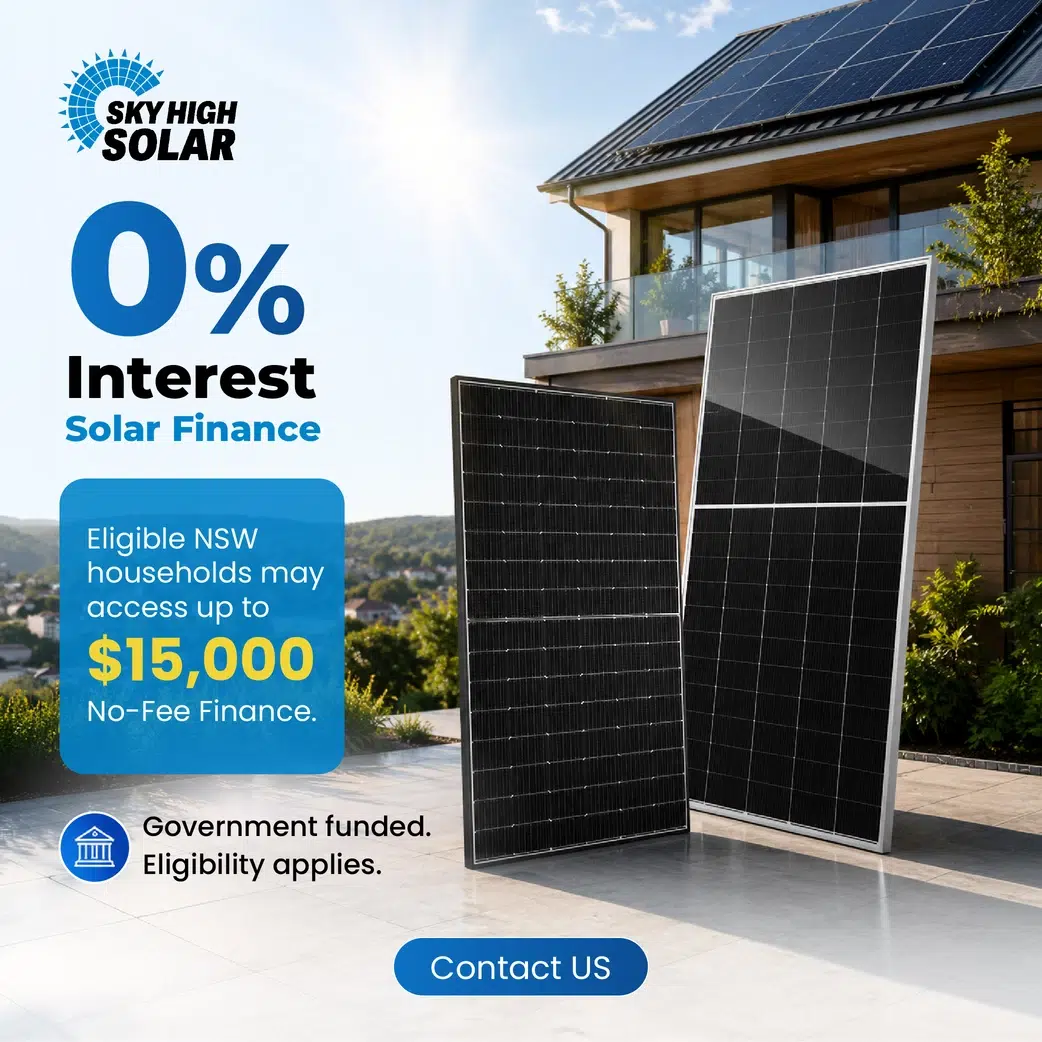
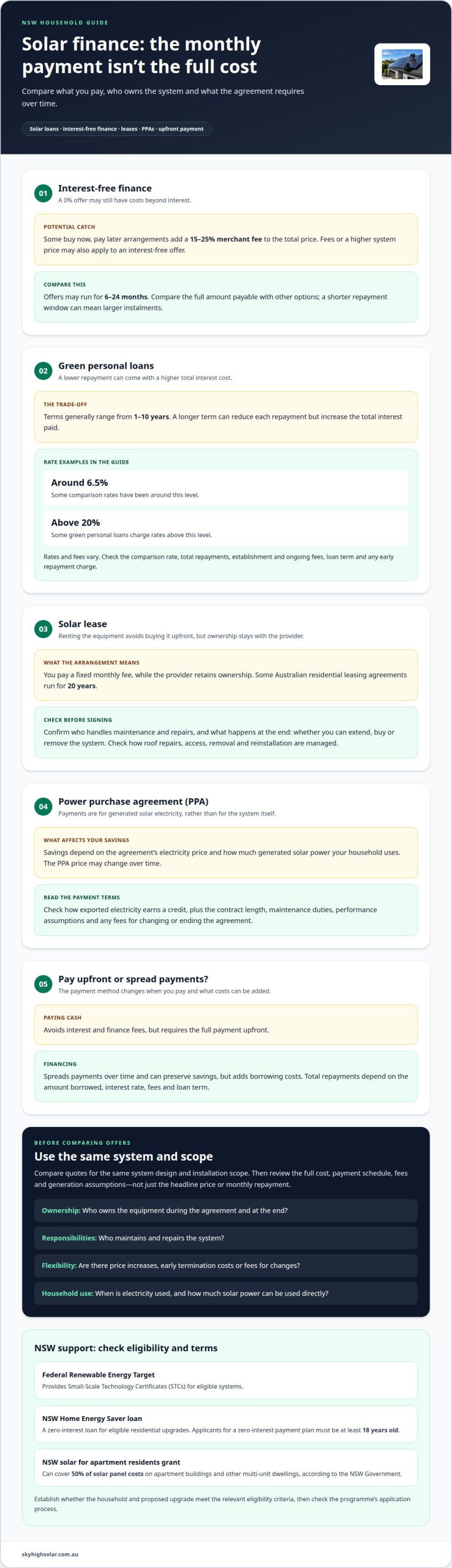
Some solar finance offers charge no interest for 6 to 24 months, giving eligible households time to spread payments without interest during that period. The offer may still include fees or a higher system price, so compare the full amount payable with other finance options. Buy now, pay later arrangements may add a merchant fee of 15-25% to the total price. A short repayment window can also mean larger instalments than a longer loan.
Personal loans for solar
A green personal loan is a loan used to pay for solar energy or other home upgrades. Green loans for solar systems are available from Australian banks and financial institutions, with terms generally ranging from 1 to 10 years. Some comparison rates have been around 6.5%, while some green personal loans charge rates above 20%. A longer term can reduce each repayment but increase the total interest paid.
Rates, fees, loan terms and early repayment charges vary. Compare the comparison rate, total repayments, establishment and ongoing fees, loan term, and any charge for paying the balance early.
An unsecured business loan may suit a business financing a solar installation without using property as security. Its repayment schedule and borrowing criteria differ from household green personal loans, so assess business cash flow and total repayments.
For NSW solar incentives, first establish whether the household and proposed upgrade meet the relevant eligibility criteria, then follow the program’s application process. Applicants for a zero-interest payment plan must be at least 18 years old.
Australian support includes the Federal Government’s Renewable Energy Target, which provides Small-Scale Technology Certificates (STCs) for eligible systems, and NSW’s zero-interest Home Energy Saver loan for eligible residential upgrades. The NSW solar for apartment residents grant can cover 50% of solar panel costs on apartment buildings and other multi-unit dwellings, according to the NSW Government.
| Option | Interest or fee | Term | Key comparison |
|---|---|---|---|
| Interest-free finance | May include fees | 6 to 24 months | Check total price |
| Green personal loan | Interest applies | 1 to 10 years | Compare total interest |
| Unsecured business loan | Terms vary | Terms vary | Consider cash flow |
Choose the option whose total repayments and schedule fit your household or business budget.
Power purchase agreements and solar leases
Solar and green loans let you purchase a system and repay the borrowed funds. A lease rents the equipment, while a power purchase agreement (PPA) charges for the solar electricity it generates. Payment plans spread payments over time, so compare the agreement’s full cost and who owns the system.
Under a solar lease, the provider retains ownership while you pay a fixed monthly fee. Some Australian residential leasing agreements run for 20 years, with the provider handling maintenance and repairs. This can avoid an upfront cost, but you don’t own the panels during the agreement. Check what happens at the end, including whether you can extend, buy or remove the system.
A PPA charges for the electricity the system produces, rather than for the system itself. Your savings depend on the agreement’s price and how much of the generated electricity your household uses. Check how the PPA price changes over time and how exported electricity earns a credit.
Pay-as-you-go arrangements also link payments to energy use or production, but their terms depend on the agreement. Before signing, compare the payment method, contract length, maintenance responsibilities, equipment ownership and any fees for changing or ending the agreement. If you plan roof repairs or future upgrades, establish how access, removal and reinstallation are handled.
In NSW, loans and green loans generally involve buying the system and repaying borrowed money; leases involve rent, while PPAs charge for the electricity generated. A payment plan’s cost depends on its fees, repayment schedule and purchase terms.
Review the full contract for early termination costs, price increases, performance assumptions, maintenance duties and end-of-term options. These terms affect savings and flexibility, particularly with a long agreement.
If you’re assessing how system design may fit your household’s electricity use, explore residential solar solutions alongside the agreement terms.
Solar system costs and bill savings in NSW
Your total cost depends on the system design, installation scope and payment method. In Sydney, bill savings also depend on when you use electricity and how much solar power you export.
Typical solar system installation costs
Installation costs vary with system size, equipment, roof layout and any electrical work required. A quote should itemise the solar system, installation inclusions and additional work. Compare those details, not just the headline price. To compare installers and finance offers, assess the same system design and scope, then compare payment terms, fees and generation assumptions.
Upfront costs and monthly repayments
Paying cash avoids interest and finance fees but requires the full payment upfront. Financing spreads payments over time, while total repayments depend on the amount borrowed, interest rate, fees and loan term. Upfront costs and monthly repayments vary with the system specifications and finance agreement, so a repayment amount alone doesn’t show the system’s full cost. Financing can preserve savings, but adds borrowing costs.
For a fair comparison, subtract expected bill savings from repayments and account for electricity still bought from the grid. A solar system can reduce electricity bills, but savings depend on household use, solar generation and the retail tariff.
STCs and solar system costs
Small-Scale Technology Certificates (STCs) provide an upfront discount on eligible solar system installation costs in Australia. The discount reduces the amount payable rather than changing the finance contract itself. Check that the quoted total shows the STC discount and the amount remaining to pay, so you can compare cash purchase and finance on the same basis.
In NSW, feed-in tariffs credit exported solar electricity. IPART’s all-day solar feed-in tariff benchmark is between 4.9 and 6.3 c/kWh. Your retailer’s tariff affects export credits, while any export limit can constrain how much surplus power earns credit. Compare the value of using solar at home with exporting it. Choose a system and payment method based on its full cost, expected bill reduction and your ability to use solar energy during the day.
Interest-free finance for residential solar
A 0% offer can reduce interest costs, but it doesn’t automatically make solar finance free. Check the full amount payable, repayment dates and fees before committing. For homeowners considering renewable energy upgrades, the payment schedule should suit household cash flow without relying on estimated bill savings.
Eligibility depends on the upgrade and program criteria, so establish whether the planned work qualifies before including the loan in your budget. Applicants for a zero-interest payment plan must be at least 18 years old.
Some solar finance repayments take 4 to 5 years. Divide the amount to be repaid across the schedule, then account for fees and instalment timing. Compare this commitment with electricity bills and other household expenses. Solar savings can help with costs, but depend on generation, electricity use and the tariff. For NSW households, options for financing residential solar panels should be assessed against a realistic repayment plan.
Read the agreement for the cash price, financed price, fees, missed-payment consequences and early repayment conditions. A 0% interest rate describes interest, not necessarily the total cost. Check whether the offer covers only solar panels or also batteries and other upgrades; don’t assume rebates are included in the quoted repayment.
Eligible Australian solar rebates can be combined with finance to reduce the amount borrowed. Confirm how an upfront incentive changes the balance and whether it affects scheduled repayments. Residential incentives differ from commercial programs, so businesses need to assess their own eligibility. Include the incentive when comparing finance options for residential solar in NSW.
Before signing, compare the total payable with the upfront price, then check instalment frequency and the final payment date. This shows whether interest-free finance fits your budget or shifts costs into future months.
Review your solar finance options alongside the system scope and payment terms.
Ask how the arrangement is funded and confirm that the amount you repay matches the written agreement.
Sky High Solar and Electrical: Residential Solar Solutions
Sky High Solar and Electrical provides Residential Solar Solutions for households planning a new system or weighing solar against their electricity use and budget. Its 6.6kw and 10kw Solar Panel Installation options give homeowners system sizes to consider alongside their roof, energy needs and preferred finance arrangement.
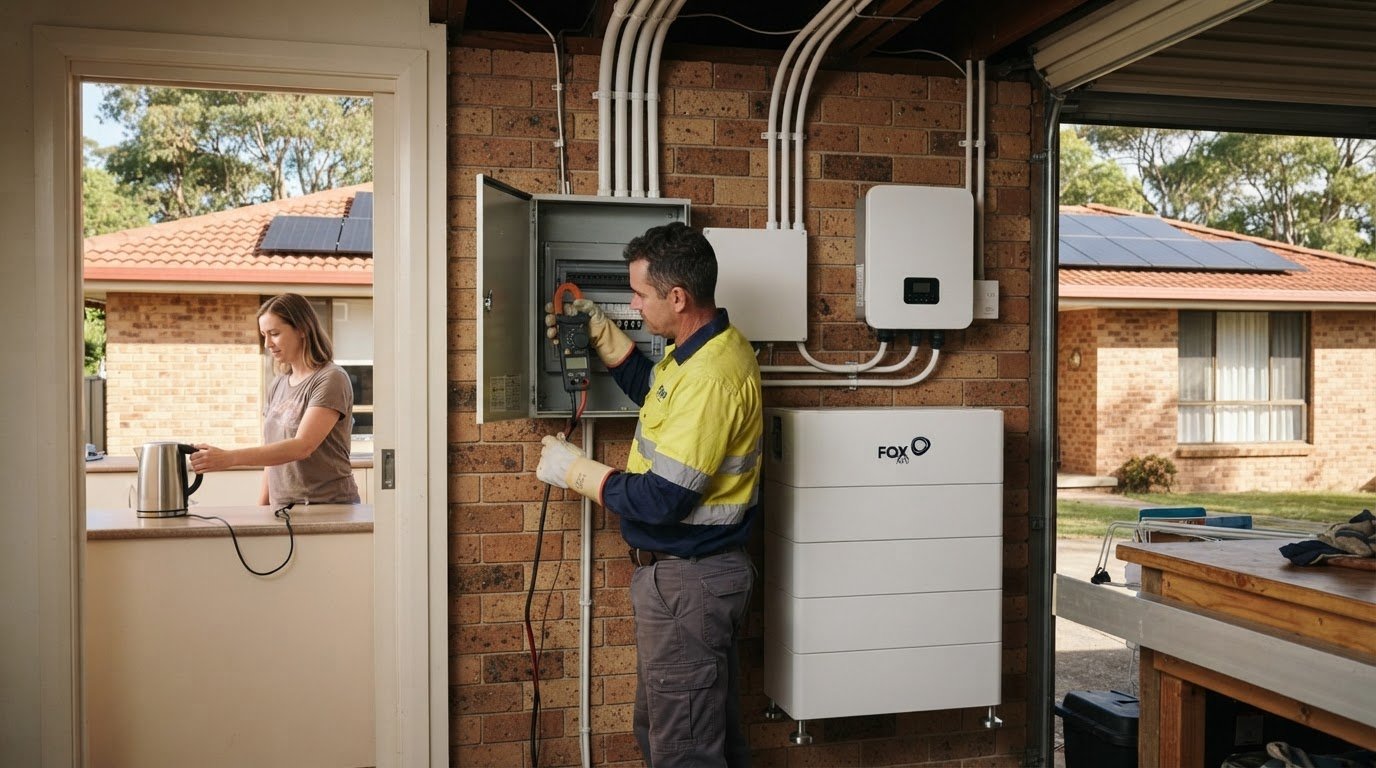
If you’re considering storage as part of your plan, the FOX ESS CQ7 High Voltage Storage Battery is another available option. Pairing a system decision with a clear view of upfront payments, repayments and expected bill savings can help you assess the whole household investment.
Discuss your residential solar requirements with Sky High Solar and Electrical.
Make your next solar decision with confidence
Before committing, consider how changes in your household’s plans could affect the value of a solar system over time. Changes to occupancy, daytime electricity use or future energy needs may influence which finance structure feels manageable. Set your priorities first: preserving savings, owning the system, keeping payments predictable or limiting the upfront commitment.
Use those priorities to guide your choice among residential solar panel financing options in NSW. A suitable arrangement should fit your budget and expected electricity use, not just an advertised repayment. Take time to read the agreement and understand the obligations that continue after installation.
For a practical discussion about a system suited to your home, contact Sky High Solar and Electrical. A considered decision can help you move towards solar with a clearer view of your next step.
Frequently Asked Questions
What residential solar financing options are available in NSW?
NSW homeowners can pay upfront, use a green personal loan or interest-free payment plan, or consider a solar lease or power purchase agreement. Eligible households may also consider the NSW Home Energy Saver loan. Each option suits different priorities: paying upfront means owning the system, while lease and PPA agreements provide solar without buying the equipment upfront. Start by deciding whether ownership or a lower initial outlay matters more.