

 Sydney
 0452 243 240
Blog
Solar power for a duplex in Sydney: panel count and roof space

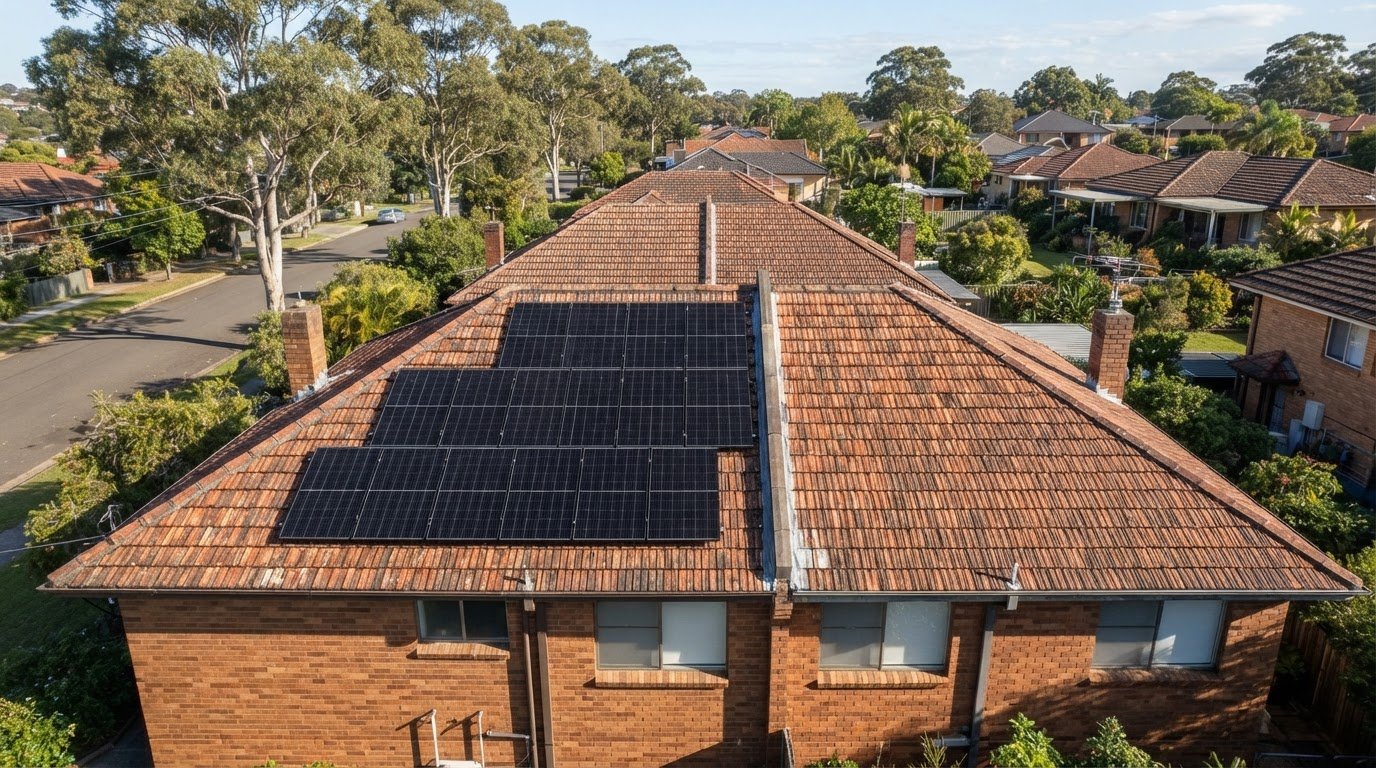
A 6.6 kW system is a practical starting point for solar power on a duplex in Sydney, typically using 16-20 panels. A 17-panel system needs about 30 m² of roof space. The right setup also depends on whether the two homes share an electricity meter or have separate meters.
Panel count is only part of the decision. Roof orientation, usable space and the household’s electricity use all affect system size, while separate meters usually mean each residence is treated as its own solar customer. Planning for an electric vehicle can also change the calculation: many Sydney EV owners choose an 8-10 kW system, typically with 20-27 panels.
This guide explains how to estimate panel numbers and roof area for solar power for a duplex in Sydney, compare common system sizes, and account for approvals and future EV charging. It also explains why meter arrangements matter when deciding how a duplex can use its solar generation.
Key Takeaways
- Measure the roof area that can actually take panels, accounting for shading, obstructions and the layout of each roof plane.
- Use daily electricity consumption and Sydney’s estimated sun hours to relate system output to household needs, including future EV charging.
- Compare common system sizes against the number of panels each may require, then consider how the two homes’ meters affect solar use.
- Include strata or heritage approval considerations in your plans, and weigh battery value against when the household uses electricity.
How much roof space do I need for solar panels?
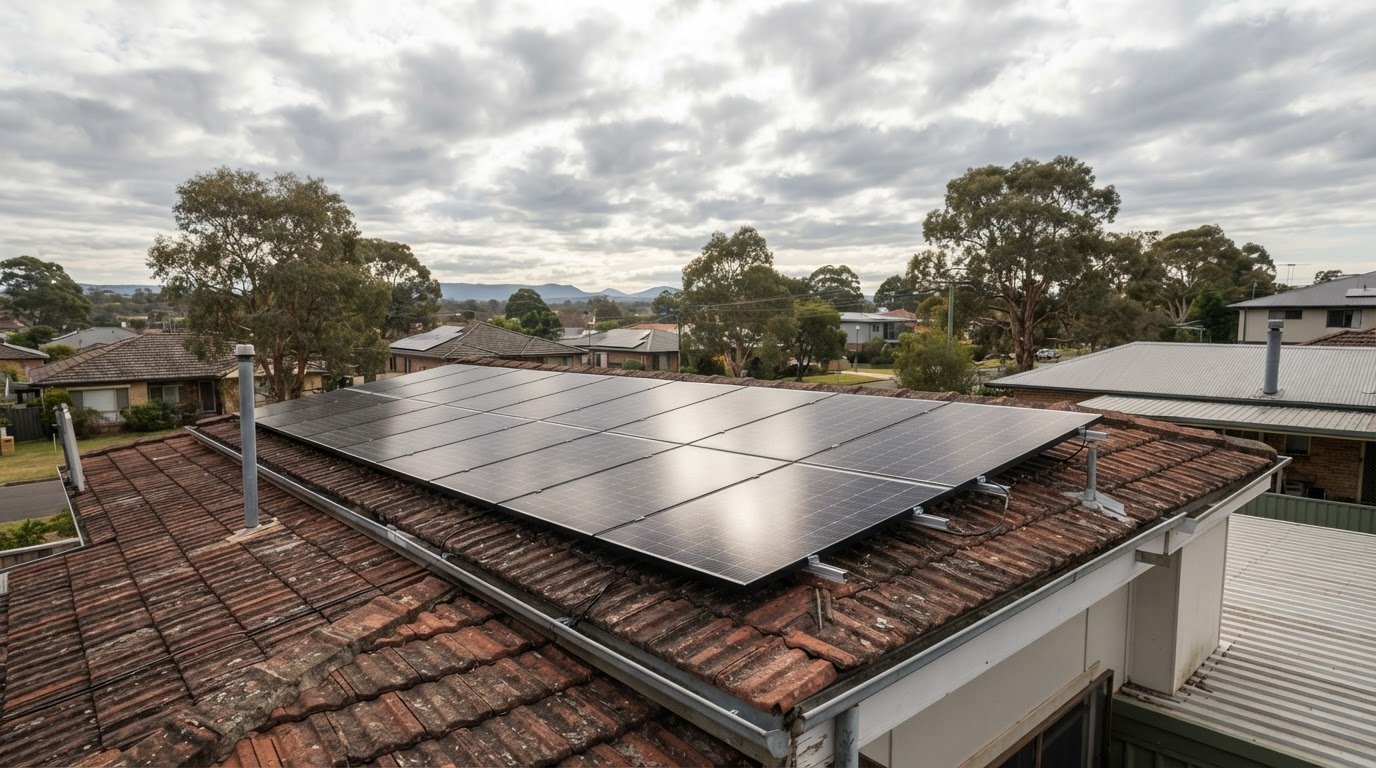
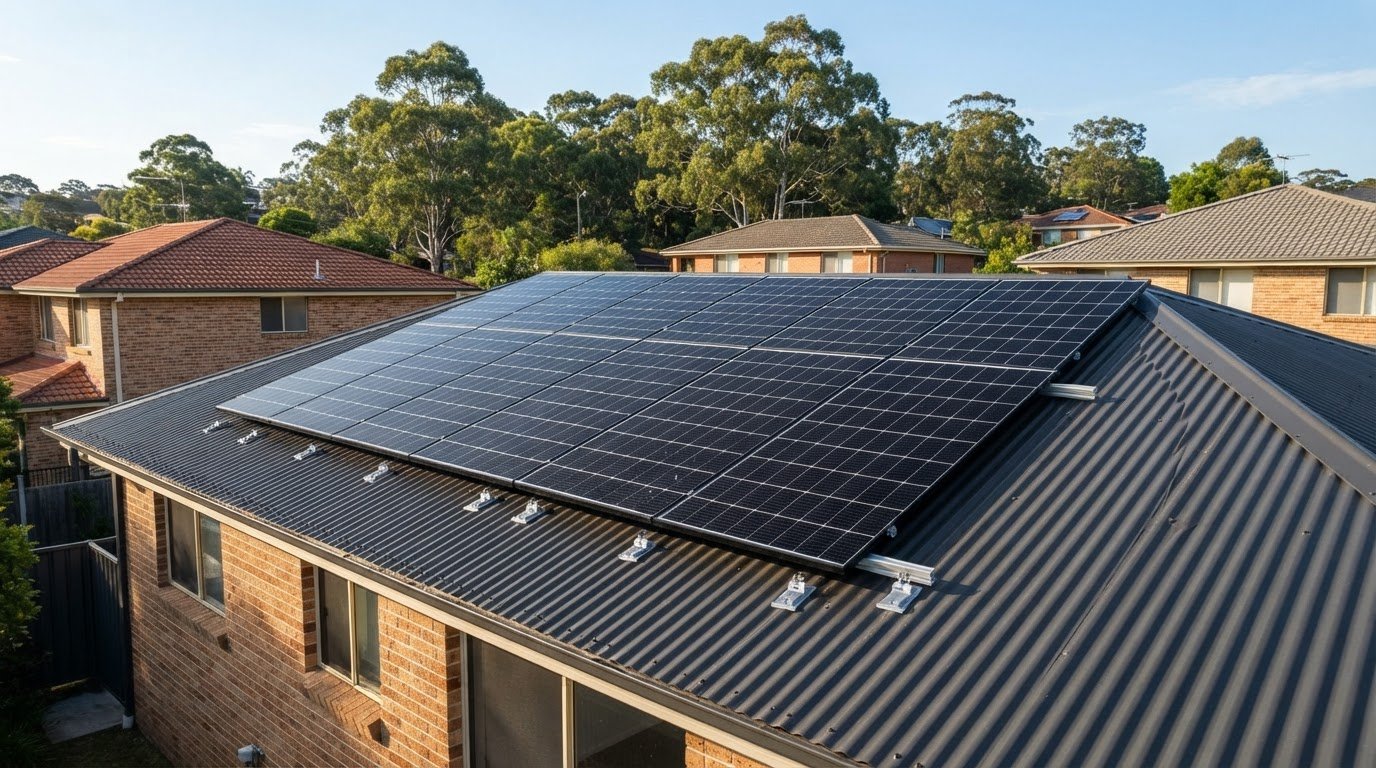
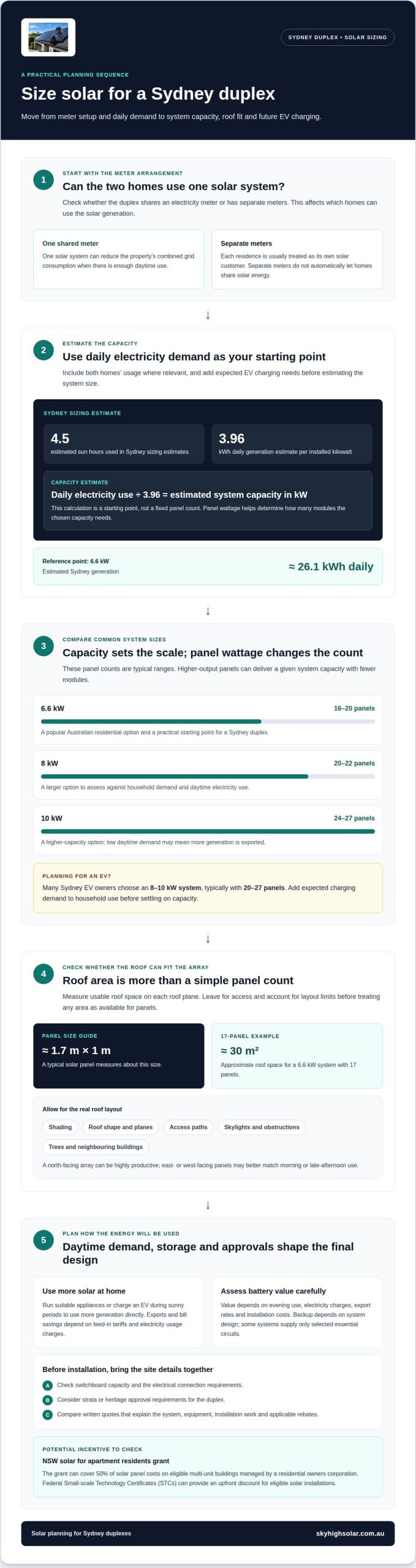
A typical solar panel measures about 1.7 m by 1 m. A 6.6 kW system with 17 panels needs roughly 30 m² of roof space. That is a planning estimate, not the total usable roof area. Roof shape, access paths, skylights and other obstructions affect how panels fit. On a duplex, assess each roof plane separately and account for shade from trees, chimneys or neighbouring buildings.
A battery adds storage, but its upfront cost affects the system’s payback. In Sydney, the value depends on how much solar energy the household uses after sunset, electricity charges, export rates and installation costs. A battery may suit homes with high evening use, but may be less useful when daytime solar already covers most consumption. Include storage in the system design rather than assuming a larger solar array automatically makes a battery worthwhile.
A battery does not necessarily provide blackout backup. Backup depends on the system design, and some systems supply only selected essential circuits. In a duplex, the meter arrangement matters too: one battery may support combined loads when both homes share a meter, while separate meters usually mean separate solar customers.
Eligible solar installations can receive an upfront discount through federal Small-scale Technology Certificates (STCs). The NSW solar for apartment residents grant can cover 50% of solar panel costs on eligible multi-unit buildings, according to the NSW Government; the program applies to buildings managed by a residential owners corporation.
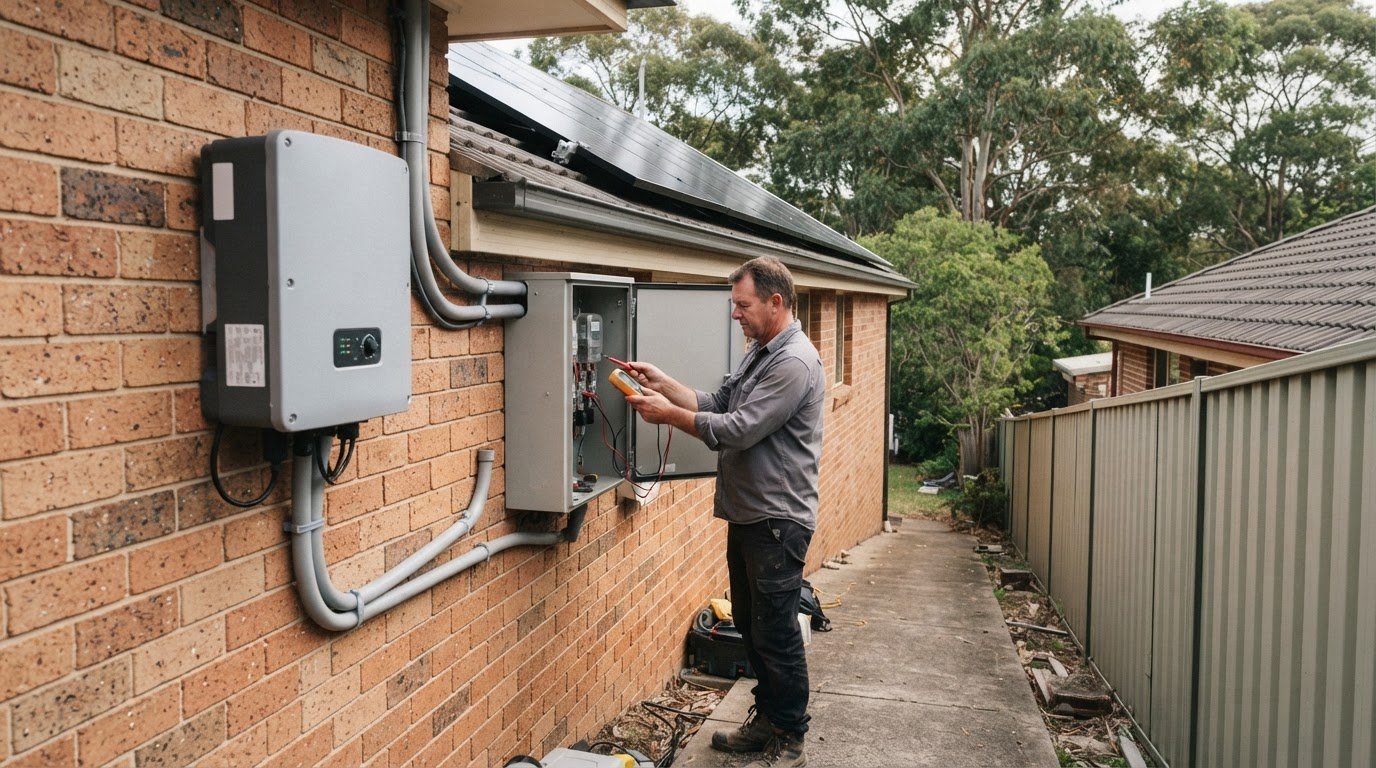
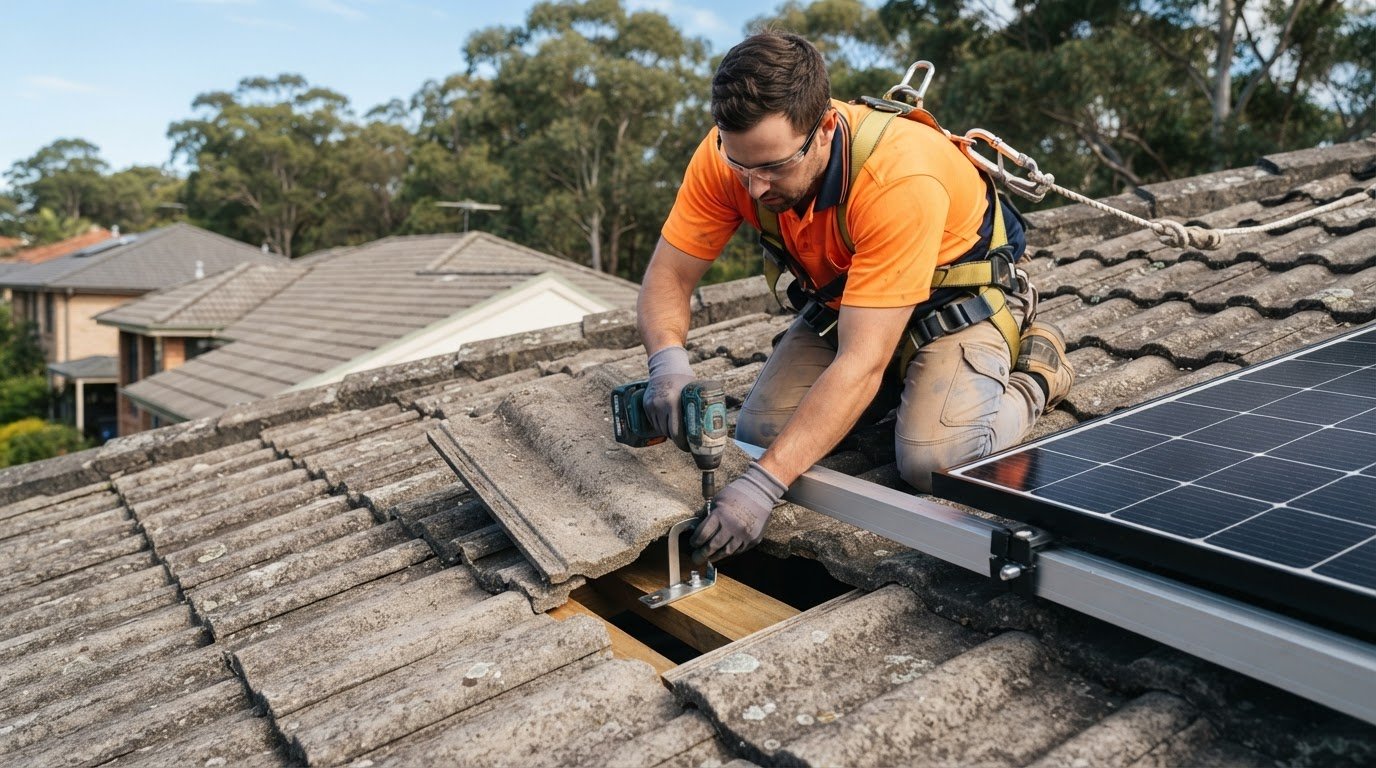
Roof orientation, shade, meter configuration and switchboard capacity all affect the installation design. A north-facing array can be highly productive, while east- or west-facing panels may better match morning or late-afternoon use. The switchboard’s condition affects how the system can connect safely. A site assessment brings these roof and electrical factors together.
To avoid solar scams, compare written quotes that clearly describe the proposed system, equipment, installation work and applicable rebates. Be cautious of high-pressure sales tactics and promises to eliminate your bills. Before committing, make sure the installer explains the design choices and provides clear documentation.
Renters without rooftop solar may also benefit from a community battery if eligible. These arrangements can provide a set amount of energy each day and a rebate on energy use, offering an alternative when roof access is limited.
Can I install solar panels if I plan to buy an electric vehicle (EV)?
Yes. Size the system around household consumption, daytime use and the extra electricity expected from EV charging. In a duplex, the meter arrangement determines which dwellings can use the solar generation.
Sizing panels from electricity use
Daily electricity use and Sydney’s sun hours help estimate the solar capacity needed to meet household demand. This calculation provides a starting point, not a fixed panel count.
Sydney sizing estimates use 4.5 sun hours, while estimated average generation is 3.96 kWh daily per installed kilowatt. Divide the household’s daily electricity use by 3.96 to estimate the system capacity in kilowatts. Then use the chosen panel wattage to estimate panel numbers. A 6.6 kW system is estimated to generate around 26.1 kWh daily in Sydney. For an EV, add its expected charging needs to the household total before sizing.
Solar self-consumption and bill savings
Self-consumption means using solar electricity in the home as it is generated instead of exporting it to the grid. It matters because solar power used directly can reduce the electricity you draw from your retailer.
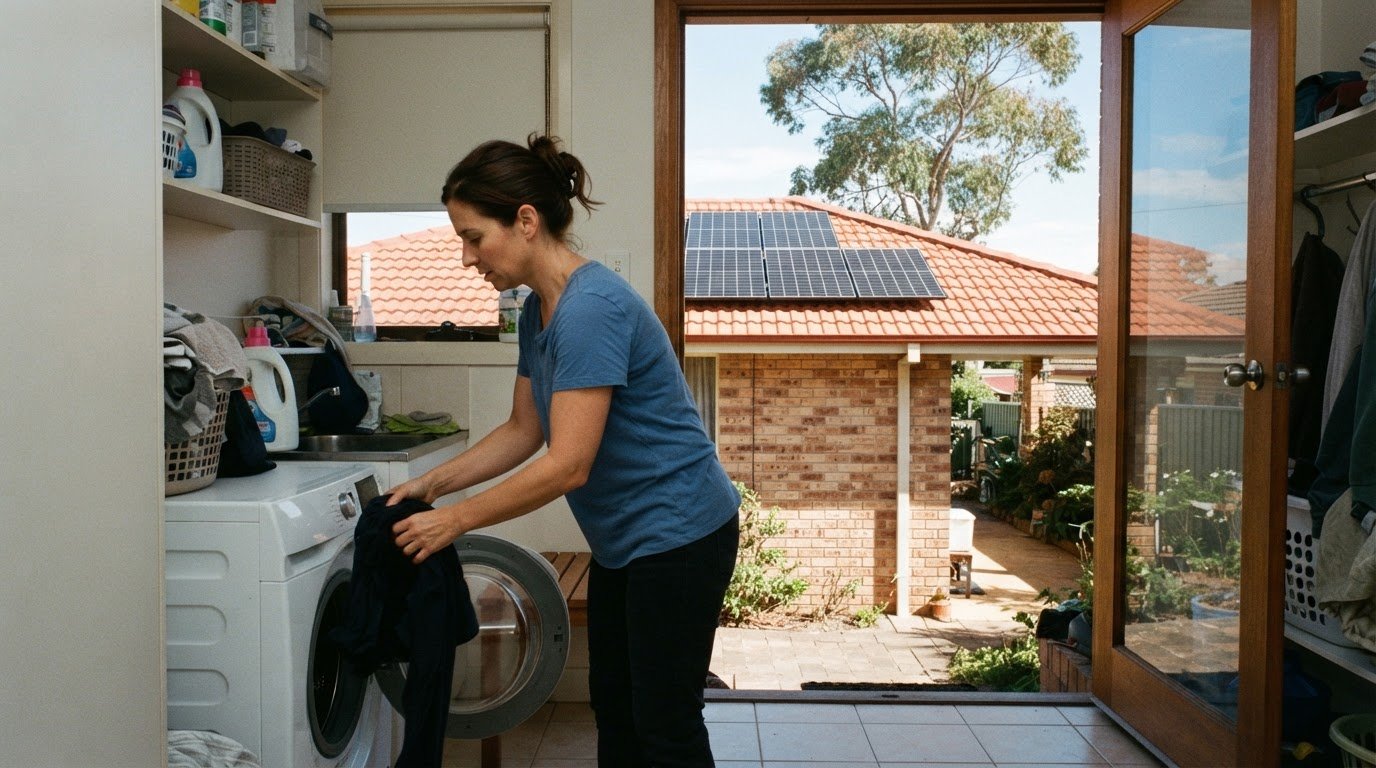
Run suitable appliances or charge an EV during sunny periods to use more of the system’s output at home. Unused generation can be exported, but both the feed-in tariff and your electricity usage charges affect bill savings. In a duplex with one shared meter, one solar system can reduce the property’s combined grid consumption when there is enough daytime use. Separate meters do not automatically allow homes to share solar energy.
Sizing for daytime use
Daytime electricity demand helps determine how much solar generation a household can use directly. This is important when choosing capacity for current appliances and future EV charging.
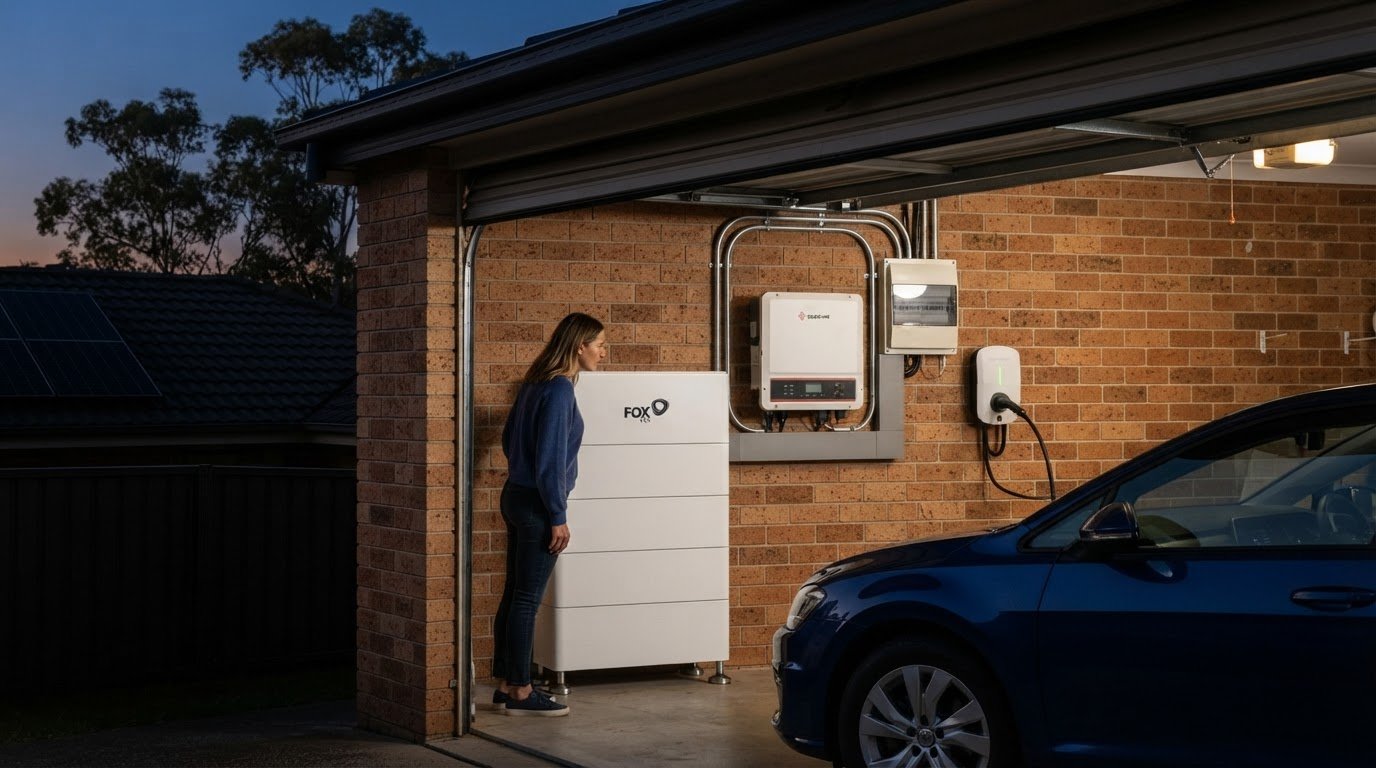
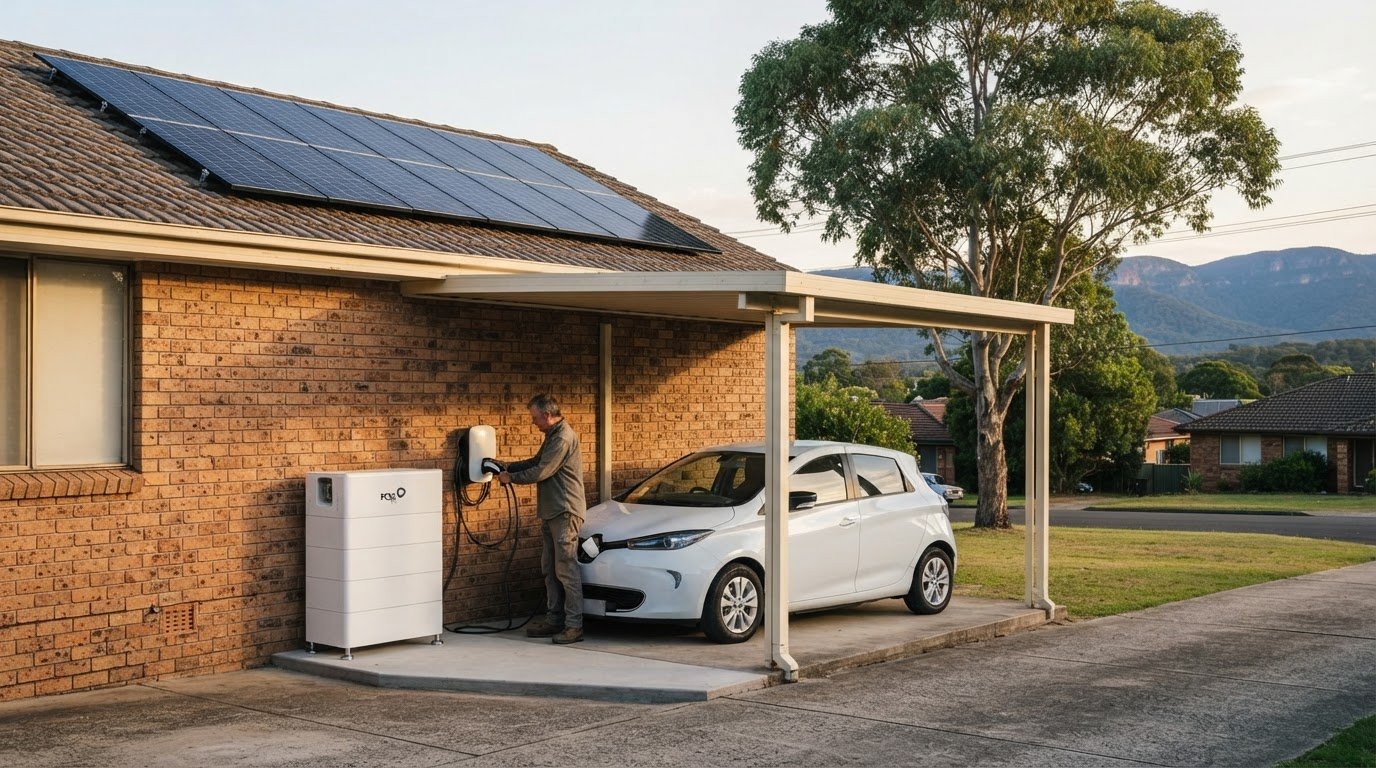
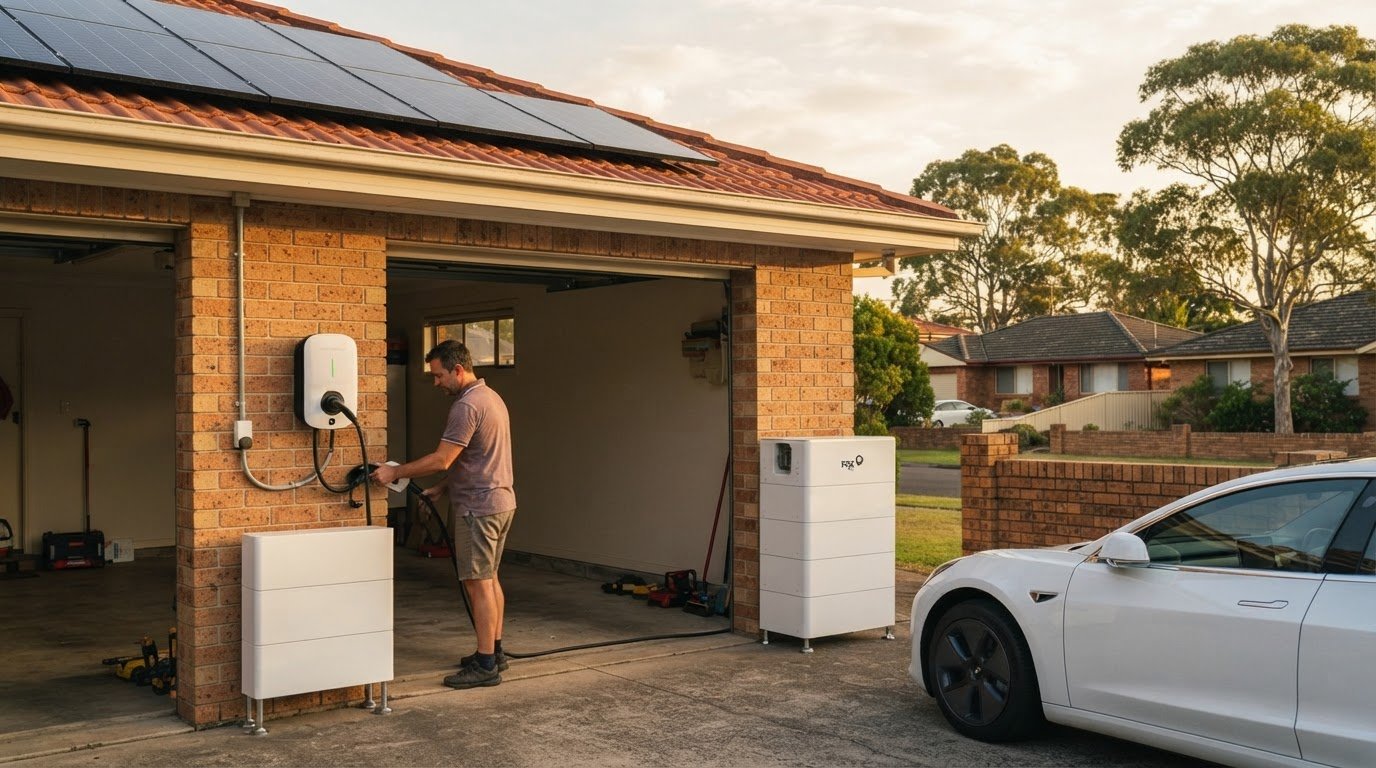
List regular daytime loads, such as working-from-home equipment, cooling and appliances, then factor in planned EV charging. Many Sydney EV owners choose an 8-10 kW system, typically with 20-27 panels, for home and charging needs. A larger system may export more if daytime demand is low. Planned electrical upgrades can also affect how the system and charger fit together. Explore EV charging solutions as part of that planning.
No retailer is best for every household; compare feed-in tariffs alongside usage charges and plan conditions. IPART’s NSW all-day solar feed-in tariff benchmark is 4.9 to 6.3 c/kWh at the time of publication.
Typical Sydney residential solar system sizes and panel counts
For Sydney households, panel count gives a useful first comparison between system sizes. The most popular Australian residential option is 6.6 kW, which generally needs 16-20 panels, depending on panel wattage. Smaller homes may need 14-16 panels, while larger households can require 20 or more. A duplex’s combined demand can differ from either dwelling’s usage alone.
Panel wattage affects the count: higher-output panels can deliver a given system capacity with fewer modules. For example, a 6.6 kW system needs fewer panels when each module has a higher rated output. The roof still needs enough suitable space, with layout shaped by roof planes, shade and obstructions. Installation design also considers where solar energy can be generated effectively.
An 8 kW system for a Sydney home typically uses 20-22 panels. A 10 kW system typically uses 24-27 panels. These ranges help frame an initial comparison, but household electricity use should guide the final size. A home with high daytime consumption may use more generation directly; a home with lower demand may export more to its retailer.
When planning solar power for a duplex in Sydney, first decide whether the system will serve one dwelling or both. With separate electricity meters, each residence is normally treated as its own solar customer, and generation connected to one meter does not automatically benefit the other. A shared meter changes the calculation because the system can serve the property’s combined loads. Metering matters as much as roof capacity.
Roof direction affects when an array produces solar energy. North-facing panels are highly productive, while east- and west-facing arrays can align generation with morning and late-afternoon demand. A split roof may allow panels across different orientations, although shade can reduce useful output. For solar power in a Sydney duplex, match the panel count to each dwelling’s demand, meter arrangement and usable roof areas.
What is the average electricity use and solar potential for a Sydney duplex?
A duplex has no standard electricity-use figure: consumption depends on occupants, appliances, cooling and time spent at home. Start with each dwelling’s meter data and compare daily usage across seasons. Include regular loads such as hot water, cooking and air conditioning, then account for planned EV charging. This helps determine whether the system should serve one residence or the combined household demand.
Metering shapes the property’s solar potential. With separate electricity meters, each residence is normally treated as its own solar customer, and solar connected to one meter won’t automatically supply the other home. Under NSW SIRNSW Clause 4.13, duplex units are an example of a multiple installation, with supply required to each separately metered portion of a site. A shared meter instead allows one system to serve combined loads.
Roof direction affects when solar energy is generated. North-facing panels are highly productive, while east- and west-facing arrays can align output with morning or late-afternoon demand. For example, an east-facing section may suit a household that uses appliances early, while west-facing panels may better match later activity. Shade and usable roof area also shape the practical system design.
A Sydney 10 kW system is estimated to save A$1,818 in its first year, with a 4.5-year payback period, based on an estimate updated March 2026. Treat this as a modelling reference, not a duplex-wide forecast: actual savings depend on each home’s demand, solar self-consumption and exported energy. The system’s value changes when the two residences have different usage patterns.
Solar potential also includes eligible Small-scale Technology Certificates (STCs). A typical 6.6 kW Sydney system is estimated to generate around 45 STCs in 2026. For a duplex, panel capacity and certificates relate to the installation, while separate meters keep each residence’s electricity use distinct. Compare both dwellings’ consumption before settling on a shared or individual system design.
Sky High Solar and Electrical: Power points
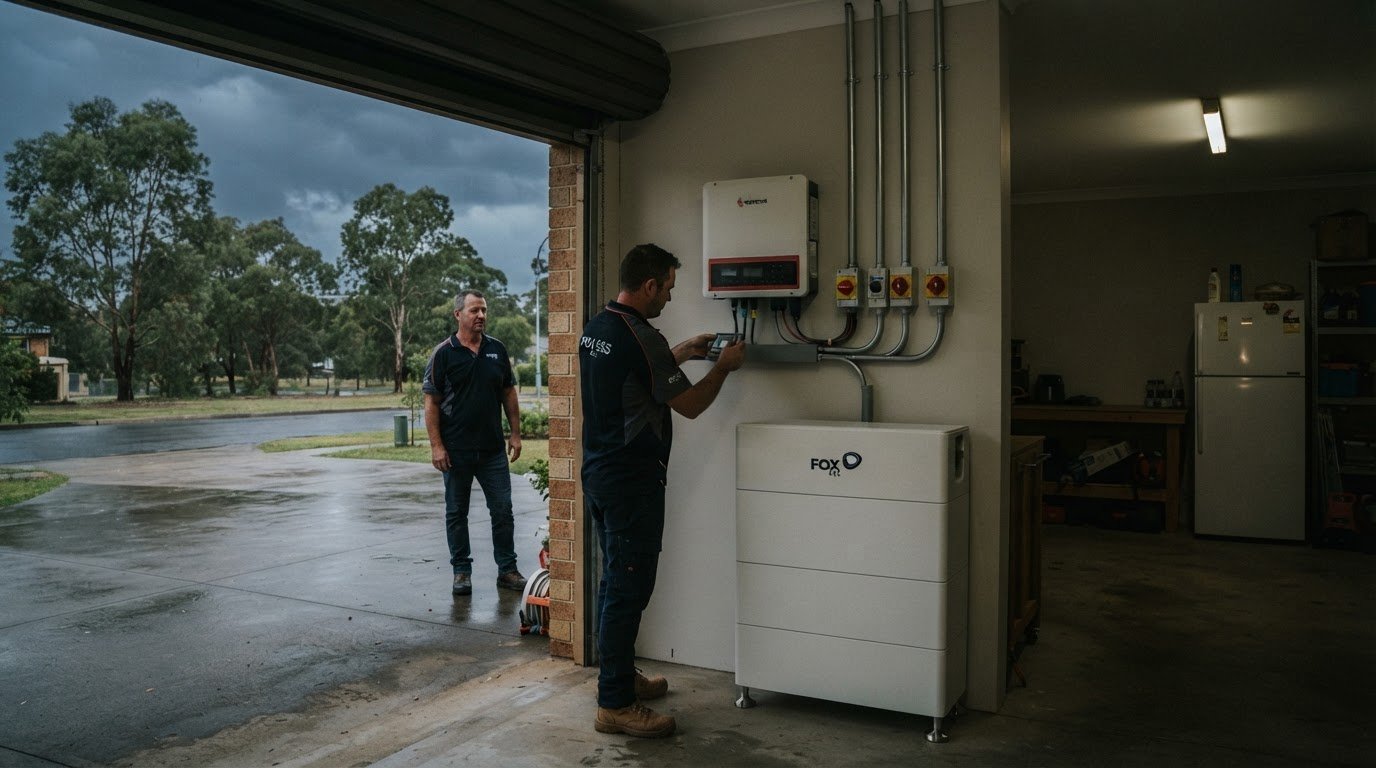
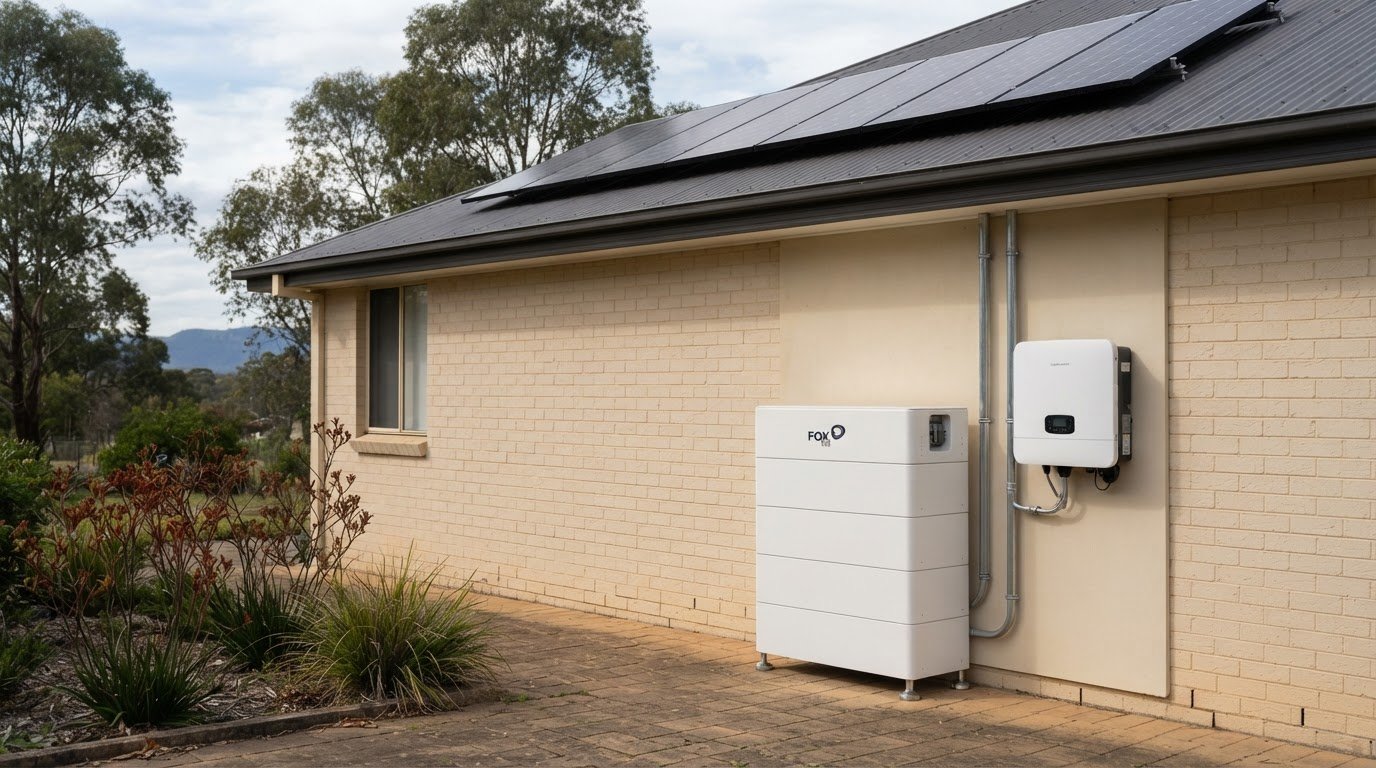
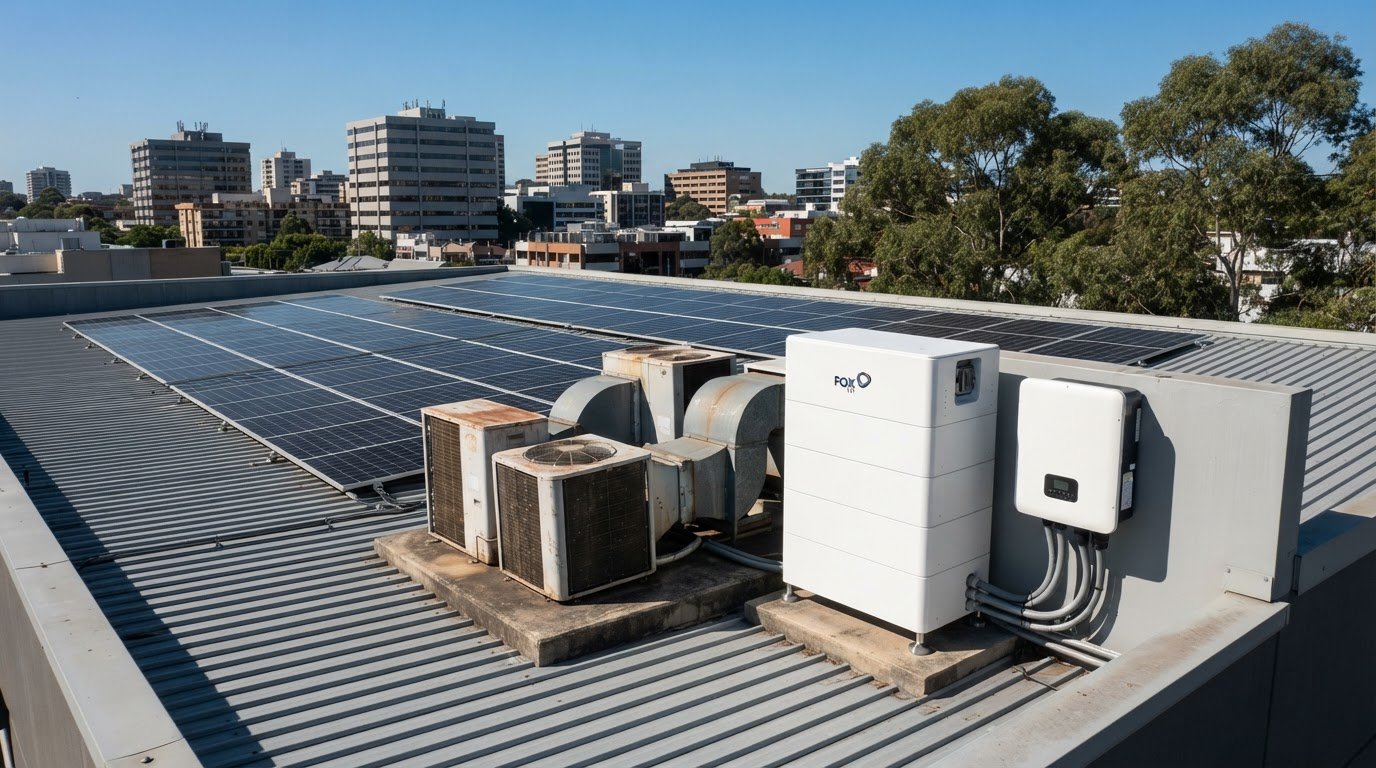
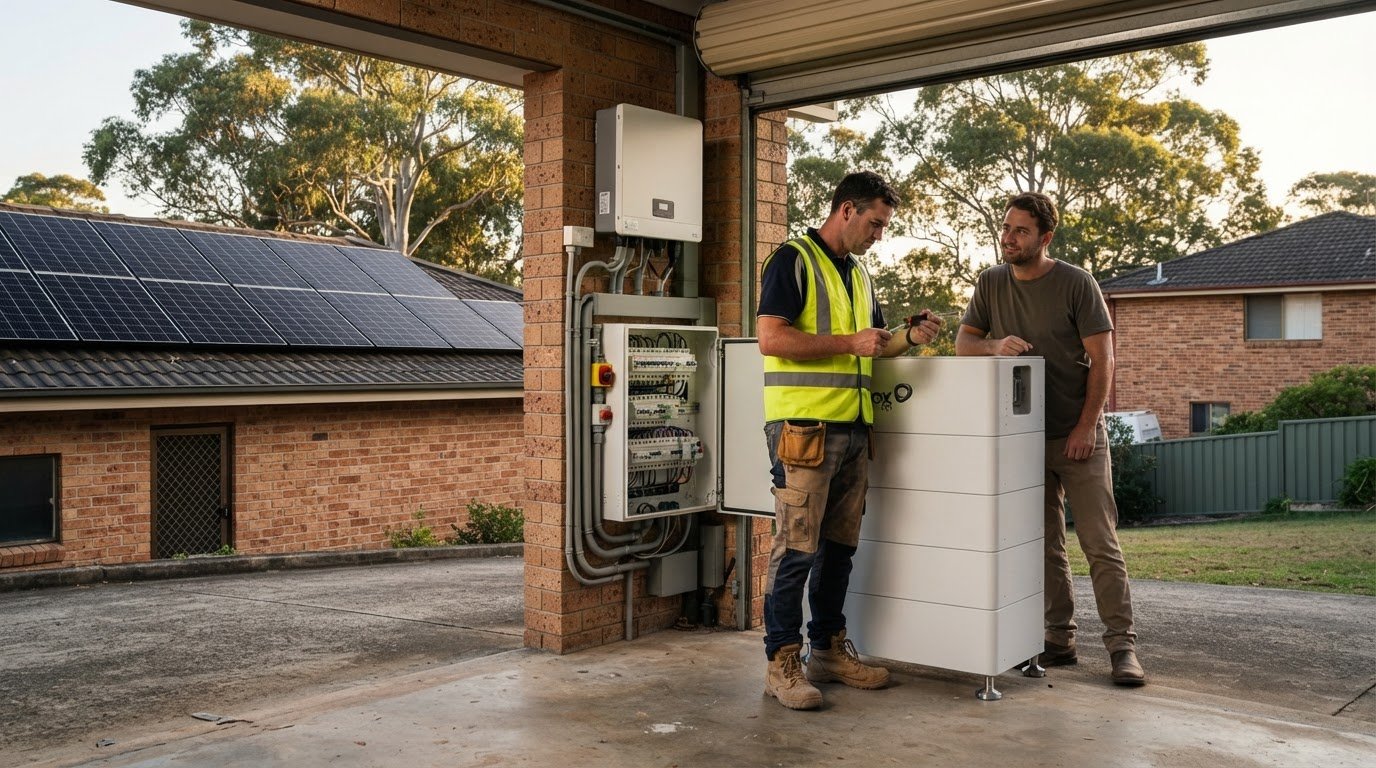
Sky High Solar and Electrical can help turn your duplex solar plan into a system matched to household use and available roof space. Its 6.6kw and 10kw Solar Panel Installation options suit different energy needs, while the FOX ESS CQ7 High Voltage Storage Battery can be considered when storing solar generation is part of your plan.
Power points can support practical changes around the home as you plan for new appliances or future EV charging. In a duplex, key decisions include which meter the solar system connects to, how each dwelling uses electricity and whether the roof can accommodate the intended panel layout. These details help shape a suitable installation without treating both homes as one customer by default.
If you’re planning solar, storage or power point work for your duplex, contact Sky High Solar and Electrical to discuss your project.
Plan the next step around both homes
Before moving from estimates to a design, bring both households into the planning conversation. Agree on priorities, such as reducing grid use, preparing for EV charging or adding storage, and note which needs belong to each residence. This gives the project a shared direction and helps prevent different expectations from complicating decisions later.
For solar power for a duplex in Sydney, turn those priorities into a simple brief: identify each household’s main energy goals, future changes and preferred approach to sharing benefits. A clear brief gives the next design discussion a practical starting point.
With both homes aligned, you can move forward with a plan that reflects how the duplex is actually used. It’s a considered first step towards making solar work for the property and its residents.
Frequently Asked Questions
What Is the Ideal Number of Solar Panels for a Home in Sydney?
There isn’t one ideal panel count for every Sydney home. Start with electricity bills from different seasons, then consider planned changes such as working from home or adding electric appliances. These details help distinguish a household with steady daytime demand from one that mainly uses power after sunset. The usable roof layout and chosen panel output then shape the practical design.
Is a battery worth considering for a duplex?
A battery may be worth considering if your priority is using more of your solar energy outside generation hours. Before choosing storage, identify which household pays the electricity bill and who would benefit from stored power. In a duplex, agreeing on ownership, use and cost-sharing matters if both households expect to benefit. These decisions help clarify whether storage fits your arrangement.
What about solar battery storage in Sydney?
NSW’s Peak Demand Reduction Scheme (PDRS) provides upfront payments to households installing battery storage capable of supporting the grid during peak demand. The incentive may affect the financial assessment, but eligibility and system suitability matter. Consider storage alongside your household’s energy priorities rather than treating an incentive as proof that a battery is the right choice.
What happens if my roof is shaded?
A shaded roof isn’t automatically unsuitable for solar. The key is identifying which panel locations receive shade and when. For example, shade over one roof area may leave another available for the array. An installation assessment can map shaded and clearer sections, helping the design account for obstructions instead of treating the whole roof as one uniform surface.
How many solar panels and what system size does a Sydney duplex need?
The required panel count and system capacity depend on whether the design serves one household or the duplex as a whole. Use each home’s consumption records to identify its demand, then include planned changes such as EV charging. Panel wattage affects how many modules make up the selected capacity. This approach avoids choosing a system solely because the building is a duplex.
Can a duplex in NSW install one shared solar system or does each dwelling need a separate system?
A duplex can be planned around a shared arrangement or separate household systems, but the site’s electrical configuration affects how solar is connected and used. For a strata scheme, the owners corporation manages the scheme under the Strata Schemes Management Act 2015. A strata managing agent may act on its behalf when authorised by the owners corporation, so scheme governance can affect project decisions.