

 Sydney
 0452 243 240
Blog
Benefits of a Hybrid Solar System: A 2026 Sydney Homeowner’s Guide

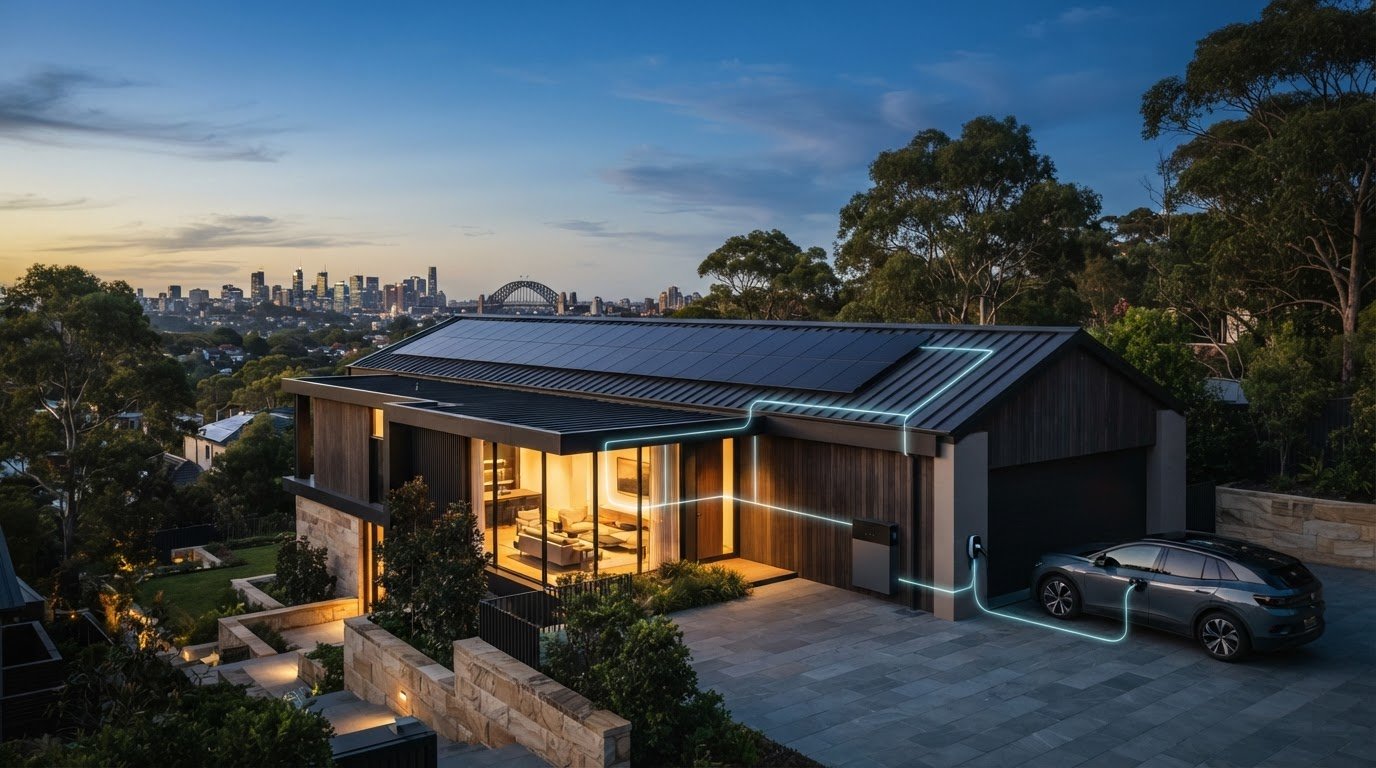
Did you know that in 2026, exporting your excess solar energy to the Sydney grid earns you as little as 3.4 cents per kilowatt-hour, while buying that same power back during the evening peak can cost you upwards of 55 cents? This staggering gap, often called the “feed-in tariff trap,” means many NSW homeowners are effectively giving away their clean energy for a fraction of its worth. Understanding the benefits of a hybrid solar system is now essential for anyone looking to reclaim their energy independence and avoid these rising network export charges.
We understand the desire for a home that is both sustainable and shielded from the volatility of the electricity market. It’s a common concern for families who want to ensure their power stays on during a storm and their bills remain predictable as they transition to electric vehicles. This guide provides a clear roadmap for securing your energy future, promising a path to near-zero power bills and a more resilient household. We’ll preview the latest 2026 NSW battery incentives, explore how integrated DC charging works, and show why a premium hybrid setup is the most dependable choice for the modern Sydney lifestyle.
Key Takeaways
- Learn how to bypass the “feed-in tariff trap” by prioritising self-consumption to keep your generated power where it’s most valuable.
- Understand how modern backup capabilities keep your home running during Sydney storms, providing genuine security when the grid fails.
- Explore the long-term benefits of a hybrid solar system as the essential bridge for seamless electric vehicle integration and total energy independence.
- Identify why choosing Tier 1 components and professional switchboard upgrades is critical for the safety and enduring performance of your system.
- Discover how to access the latest 2026 NSW battery incentives and maximise your system’s efficiency with advanced DC-coupled technology.
What is a Hybrid Solar System?
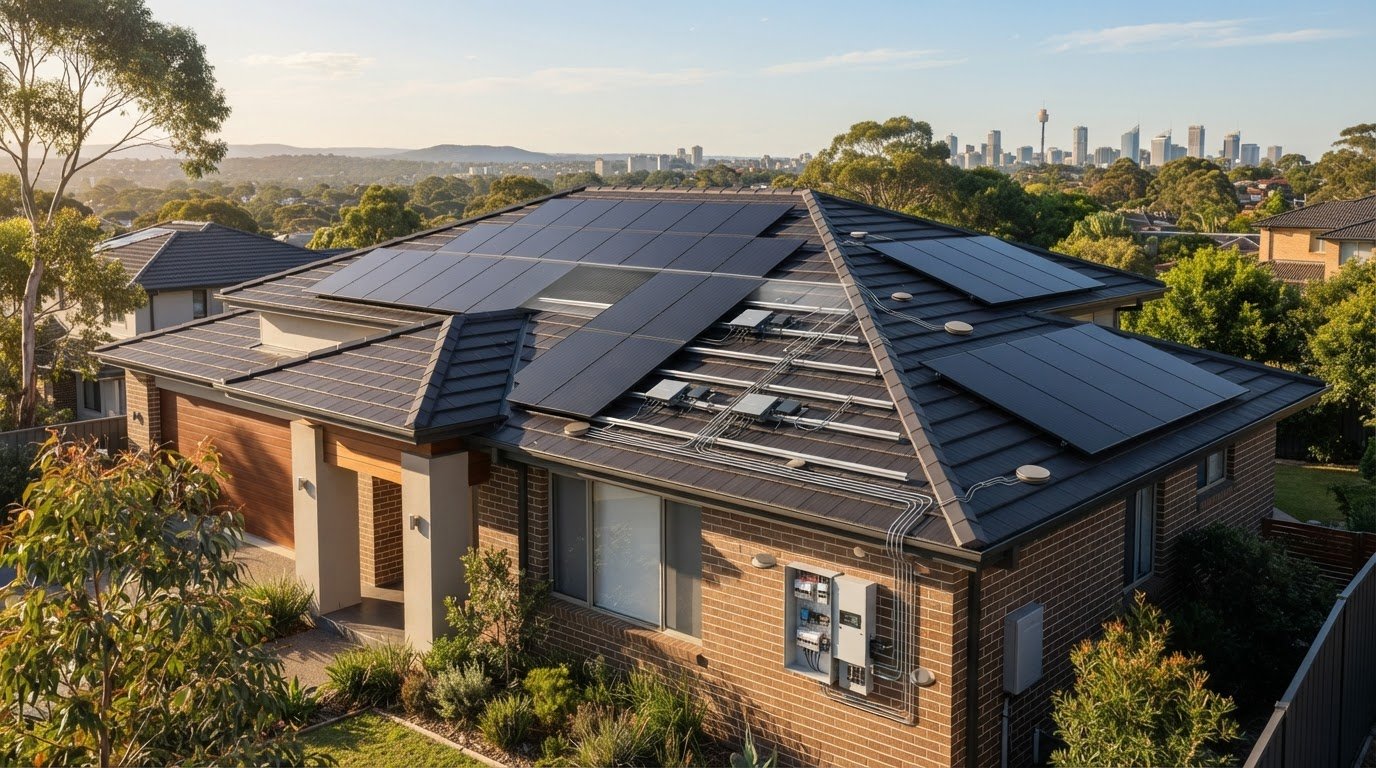
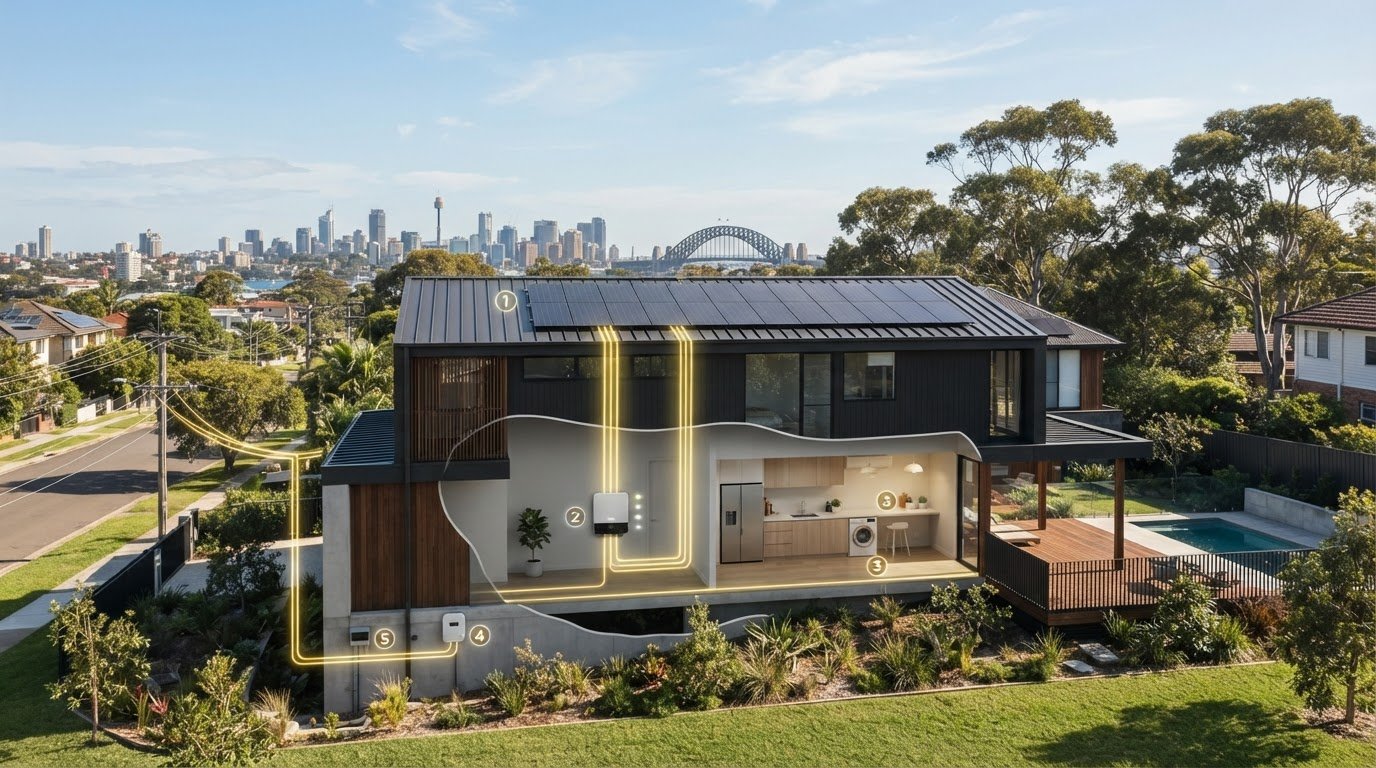
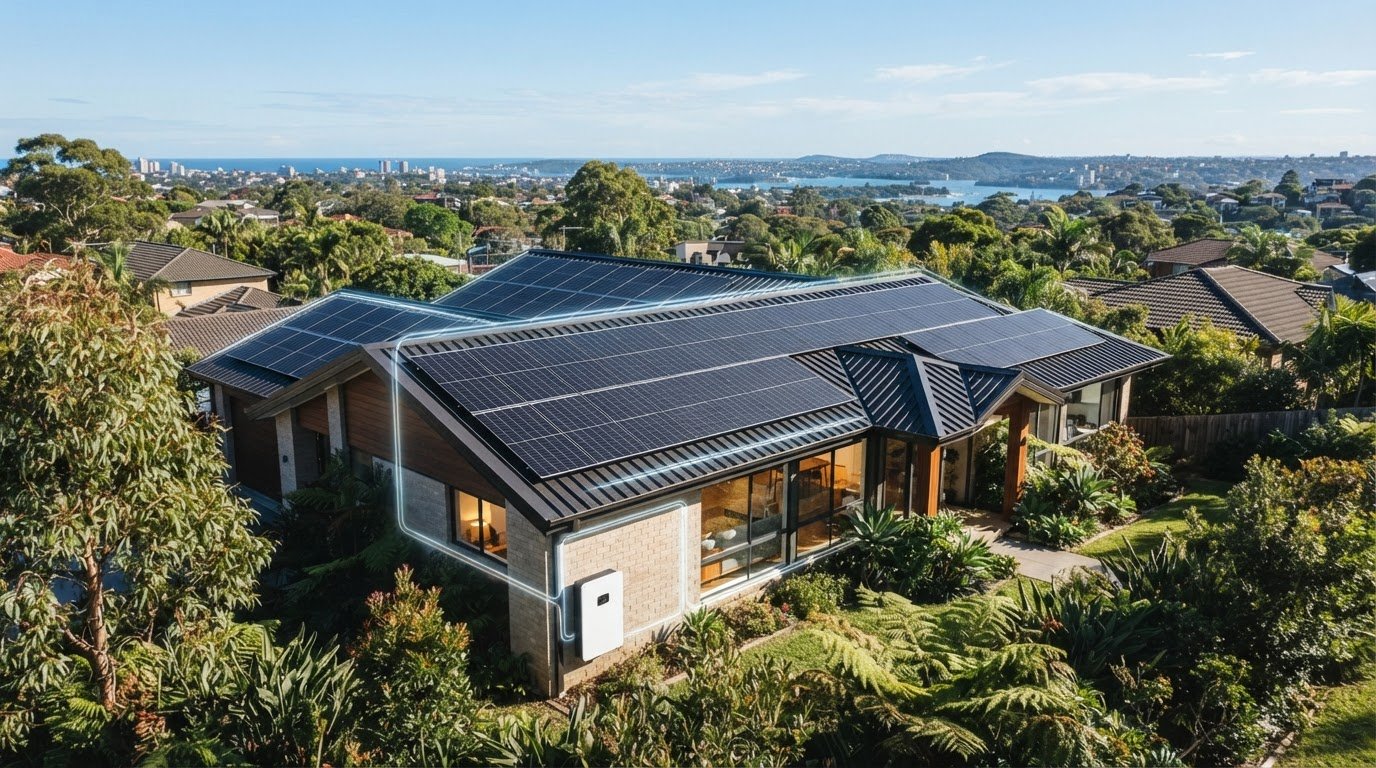
A hybrid solar system is a complete energy ecosystem that integrates solar panels, a dedicated hybrid inverter, and battery storage into a single, cohesive unit. This setup provides a level of control and flexibility that standard solar installations simply cannot match. A hybrid inverter is a sophisticated device that manages both solar generation and battery discharge simultaneously, acting as the intelligent brain of your home’s energy network. It decides in real-time whether to power your appliances, charge your battery, or interact with the grid.
While standard systems are designed to shut down during a blackout to protect the grid, a hybrid installation keeps your home running. It’s vital to distinguish between a “battery-ready” system and a fully functional hybrid installation. Many retailers offer battery-ready packages that are essentially just standard solar systems with an empty promise of future compatibility. A true hybrid installation includes the storage component from the start, allowing you to harvest the full benefits of a hybrid solar system immediately rather than waiting for a costly and complex upgrade later.
The Role of the Hybrid HV Inverter
The heart of any premium installation is the Hybrid High-Voltage (HV) inverter. Units like the GoodWe ET G2 are specifically designed to manage modern, high-capacity batteries with precision. By using high-voltage architecture, these systems reduce energy loss during the transfer of power, which results in significantly better round-trip efficiency compared to older low-voltage models. This means more of the energy you generate actually makes it into your home’s circuits.
This technology enables a seamless transition between power sources. When the sun sets or a cloud passes over, the inverter instantly draws from your stored reserves to maintain a steady supply. This intelligence ensures your household remains powered by the cleanest, most cost-effective energy available at all times, without any manual intervention required from you.
Hybrid vs Grid-Tie: Key Differences
Traditional grid-tied electrical systems follow a strict “use it or lose it” logic. Any solar energy not consumed the moment it’s generated is sent back to the grid. In 2026 Sydney, where feed-in tariffs are at historic lows, this model is no longer financially optimal for most families. You end up selling power for cents and buying it back for dollars during the evening peak.
Hybrid systems have become the standard for new Sydney builds because they prioritise self-consumption. They also allow homeowners to capitalise on the 133% oversizing rule. This regulation lets you install a solar array that is 33% larger than your inverter’s rated output. In a grid-tie system, this extra power is often lost during peak sun hours because the grid cannot accept it. In a hybrid configuration, that surplus energy is diverted straight into your battery, ensuring no kilowatt goes to waste and your evening energy is essentially free.
Financial Benefits: Beating the High FiT Trap
Many Sydney residents fall for what we call the “High FiT Trap.” Retailers often advertise high feed-in tariffs to attract customers, yet these offers frequently mask significantly higher daily supply charges. In 2026, the NSW benchmark for solar exports has settled between 3.4 and 6.5 cents per kWh. Compare this to the 45 to 55 cents per kWh you pay during the evening peak, and the financial logic shifts. The primary benefits of a hybrid solar system lie in self-consumption. By storing your midday production, you avoid buying power when it’s most expensive.
Storing power specifically for the 4:00 pm to 9:00 pm peak window provides the fastest path to a return on investment. This strategy, as detailed in the Your Home guide to home batteries, allows you to bypass the grid during the most volatile pricing events. While a long-term solar panel warranty ensures your generation remains stable for 25 years, pairing it with a high-quality hybrid inverter ensures that energy is actually accessible when you need it most. It’s about ensuring every kilowatt you produce delivers maximum value to your household budget.
NSW Rebates and Incentives in 2026
The financial landscape for Sydney households has improved through the Peak Demand Reduction Scheme (PDRS). Under the current BESS2 rules, installing an approved battery can secure cash-back incentives of approximately $36 per kWh of usable capacity. For a standard 13.5 kWh unit, this delivers nearly $500 in direct value. Additionally, the Small-scale Renewable Energy Scheme (SRES) still provides an upfront discount. In 2026, the deeming period has dropped to five years, making this the highest remaining federal subsidy year before it continues to phase out. Combined with the Federal Cheaper Home Batteries Program’s 30% subsidy, the barrier to entry for hybrid storage is lower than ever.
Virtual Power Plants (VPP) and Passive Income
A hybrid system transforms your home into a mini power station that can join a Virtual Power Plant. By participating in a VPP, you allow an orchestrator to briefly access your battery to stabilise the Sydney grid during extreme demand events. This usually comes with a significant sign-up bonus and ongoing credits on your bill. One of the most significant benefits of a hybrid solar system is this ability to generate passive income from your hardware. If you’re looking to modernise your setup, our team can help organise a site assessment to see which VPP offers provide the best value for your specific location.
Energy Independence and Reliability
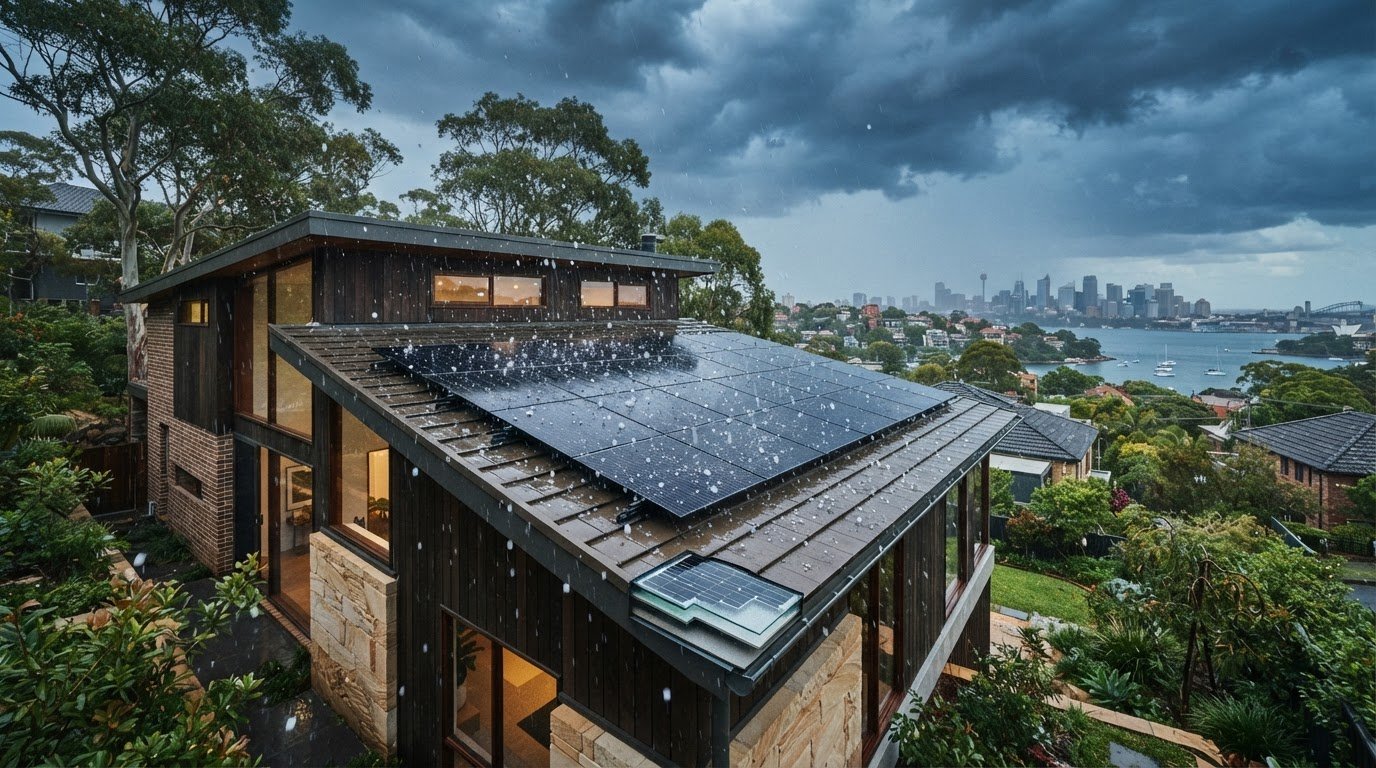
Sydney’s coastal climate brings both abundant sunshine and the occasional violent storm. While we’ve discussed the financial logic of self-consumption, true independence is measured by your home’s resilience when the local grid goes dark. One of the most significant benefits of a hybrid solar system is the ability to maintain power during local blackouts, effectively transforming your property into a self-sustaining sanctuary that operates independently of external failures.
According to the energy.gov.au solar and battery guide, energy storage is the most effective way for households to maximise their solar investment while ensuring a continuous supply. This reliability depends heavily on anti-islanding protection. This safety feature is a regulatory requirement that prevents your system from feeding electricity back into the grid during a blackout. It protects utility workers while allowing your hybrid inverter to safely create a “microgrid” for your own use, ensuring your home remains powered while your neighbours are in the dark.
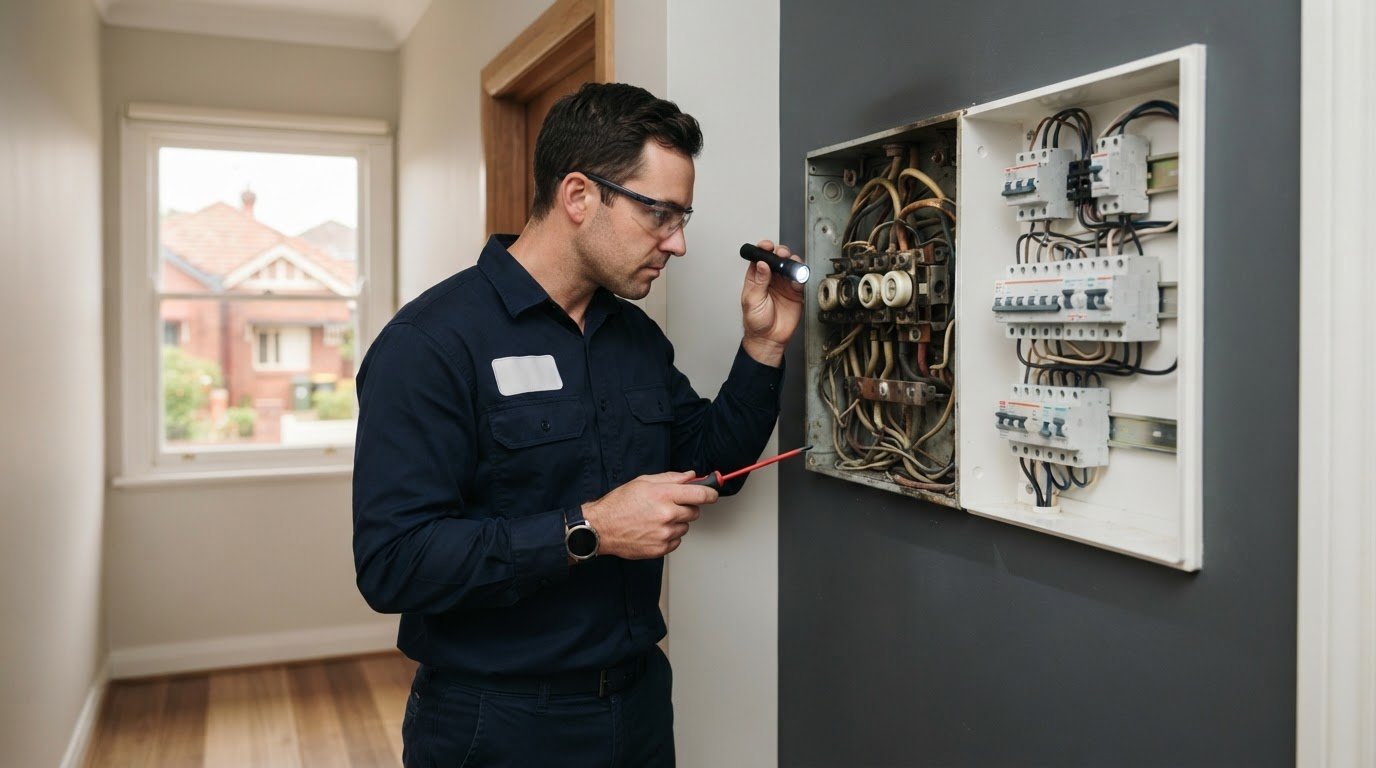
Achieving this level of reliability requires more than just panels and a battery. A professional switchboard upgrade is often the missing piece of the puzzle. This ensures your home’s electrical heart can handle the seamless transition between grid and battery power without tripping circuits or damaging sensitive electronics. It’s a foundational step that provides the peace of mind that comes with a truly grid-stable setup, knowing your hardware is configured for longevity and safety.
Blackout Protection and Critical Loads
When designing your backup strategy, you can choose between whole-home coverage or critical load backup. Whole-home systems, such as the Tesla Powerwall 3, are engineered to support high-draw appliances like air conditioners and ovens during an outage. Conversely, critical load setups focus on essentials like refrigeration, lighting, and Wi-Fi. Modern hybrid systems detect grid failure in less than 20 milliseconds. This transition is so fast that most digital clocks won’t even reset, providing an uninterruptible power supply for your home office and essential services.
Sydney-Specific Durability
Living between Penrith and the Northern Beaches exposes your equipment to unique environmental challenges. High humidity and salt-mist can quickly degrade inferior components. Premium systems are built with these corrosive conditions in mind, featuring high IP ratings and durable, weather-sealed enclosures. Because we’ve been operating in Sydney since 2013, we’ve seen first-hand that regular solar system servicing is vital for maintaining this durability over the long term.
Every installation must be accompanied by a Certificate of Compliance Electrical Work (CCEW). This document isn’t just a formality; it’s a non-negotiable requirement for your home insurance and grid connection. It proves the work meets strict Australian standards and was completed by licensed professionals, ensuring your investment is protected both technically and legally for years to come.
Future-Proofing with EV Integration
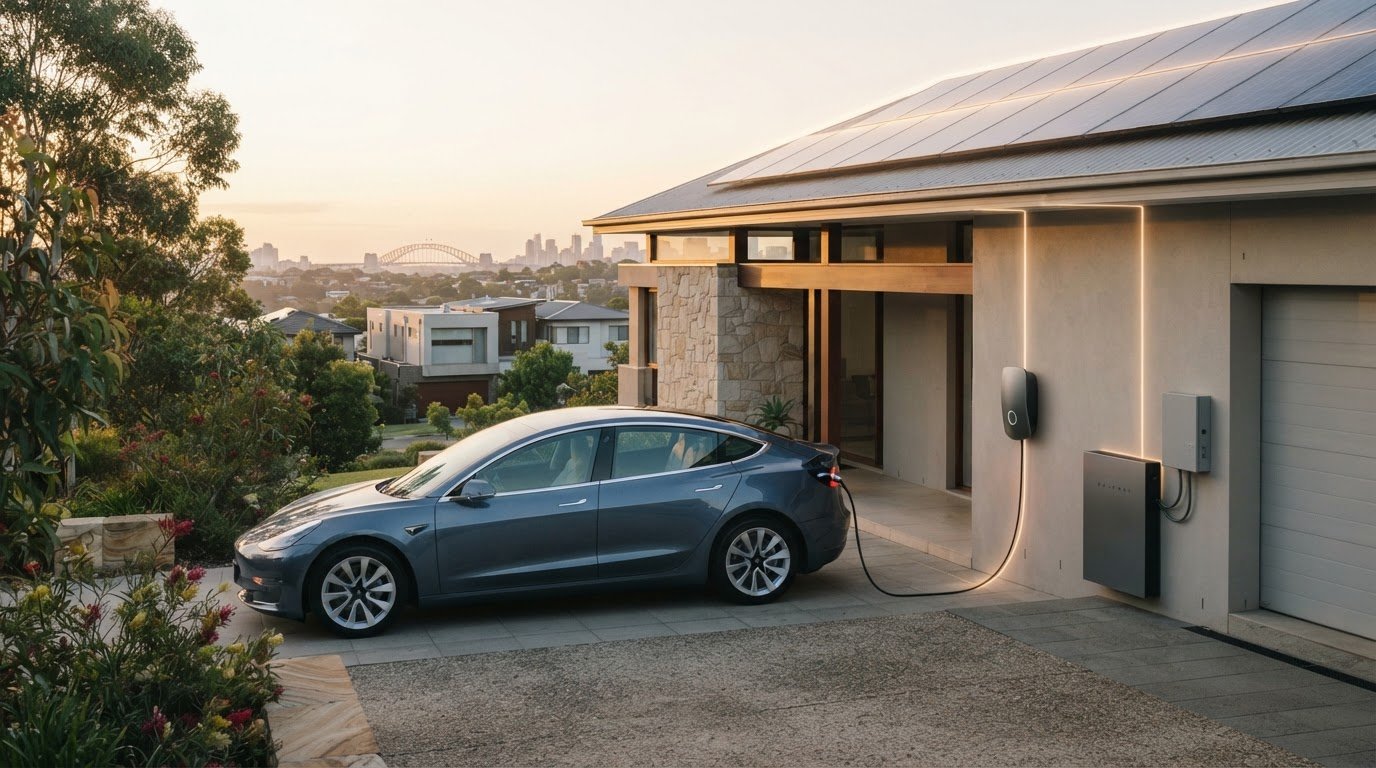
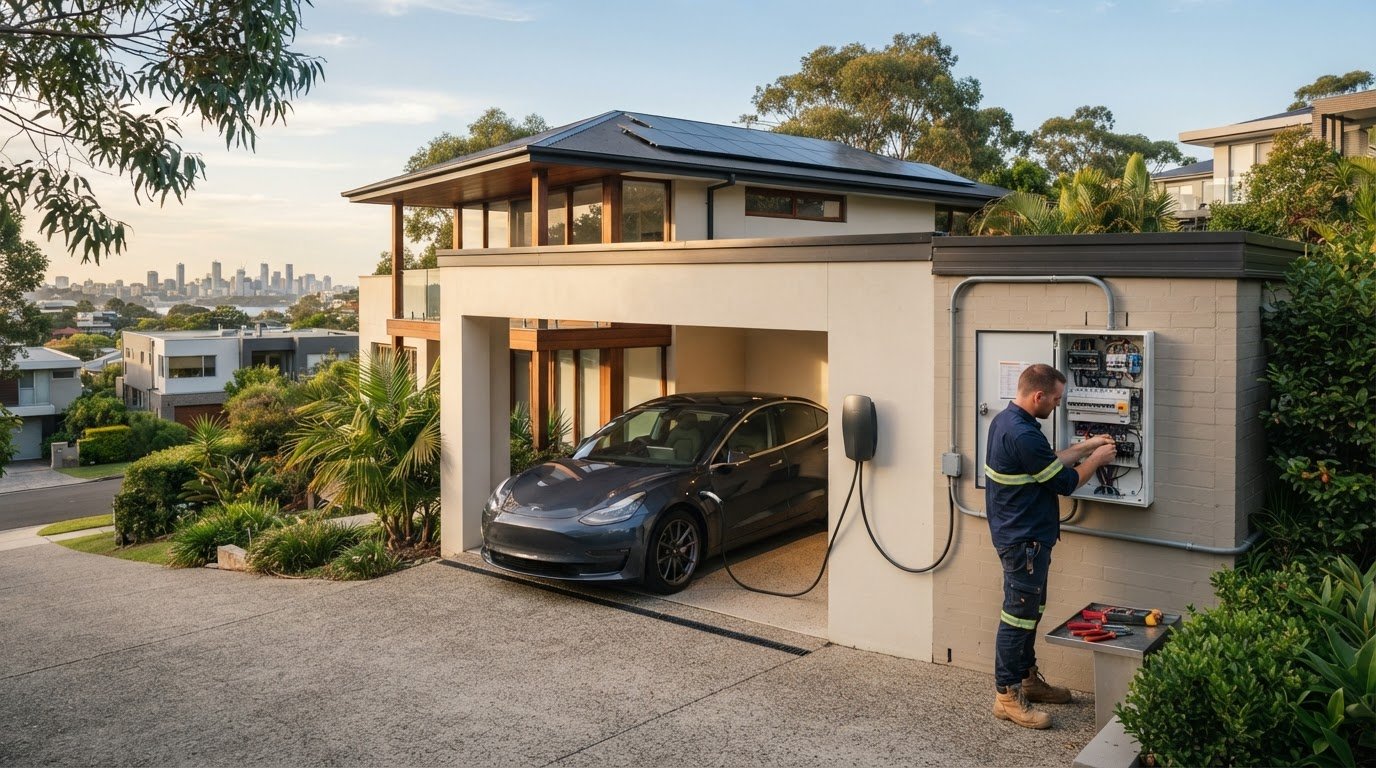
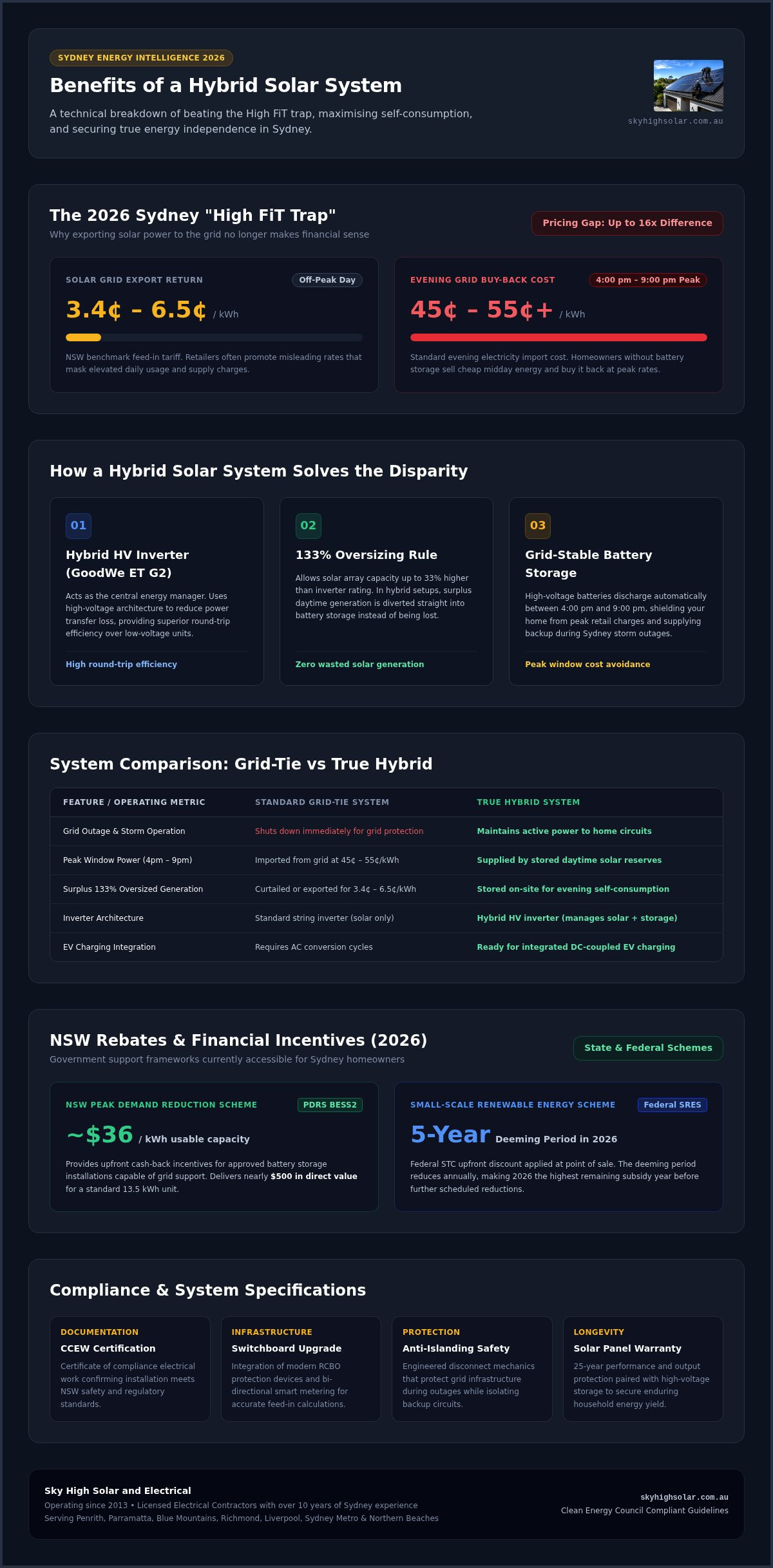
By 2026, the transition to electric vehicles has moved from a niche trend to a standard requirement for Sydney households. As petrol costs remain volatile, the ability to fuel your car directly from your roof becomes a powerful financial incentive. One of the most forward-thinking benefits of a hybrid solar system is its capacity to act as a high-speed bridge between your solar generation and your driveway. Unlike traditional setups that require separate, less efficient hardware, a hybrid system provides a unified platform for both home energy and transport needs.
Efficiency is the primary driver here. Standard AC charging involves multiple energy conversions, where power is changed from DC to AC and back to DC again. This process is inherently wasteful. In contrast, a hybrid system with integrated DC charging routes solar energy directly into the vehicle battery. Research indicates that DC-coupled hybrid systems achieve 95% to 98% round-trip efficiency, avoiding the 4% to 7% energy losses typical of older AC-coupled retrofits. For high-demand homes, we often recommend bifacial panels. These panels capture sunlight on both sides, significantly increasing energy yield to meet the heavy charging requirements of modern 60kWh to 80kWh EV battery packs.
SigenStor: The 5-in-One Solution
The SigenStor Integrated Solar Inverter and EV DC Charger represents the pinnacle of this integration. It combines five essential components, including the inverter and a bidirectional DC charger, into a single modular tower. This design reduces conversion losses and simplifies the installation process by removing the need for multiple wall boxes and complex wiring. You can find more technical details in our SigenStor Guide, which explains how this hub manages power flow with millisecond precision.
Scalability for Growing Families
Choosing a hybrid inverter today prevents the need for expensive hardware replacements as your family grows. If you start with a 6.6kW or 10kW solar installation, you can easily add more storage later without redesigning the entire system. Modular batteries, such as the FOX ESS CQ7 High Voltage Storage Battery, allow you to increase your capacity as your energy usage climbs. Following any installation, we provide a post-installation review to confirm your system is performing as expected and to help you plan for future expansions. If you are preparing for your first electric vehicle, you can request a future-readiness consultation to ensure your infrastructure is ready for the load.
Choosing the Right Hybrid System for Your Home
Selecting the right components is a decision that impacts your home for the next two decades. While the market is flooded with budget offers, the cheapest option often leads to higher maintenance costs and premature hardware failure. Investing in Tier 1 components with strong Australian support ensures that if a technical issue arises, you aren’t left waiting for parts from overseas. One of the key benefits of a hybrid solar system is the long-term reliability it offers when engineered correctly.
At Sky High Solar and Electrical, we bring over 13 years of experience to every project. Since 2013, we’ve focused on designing systems that withstand Sydney’s unique environmental stresses. A critical part of this design is the inclusion of a bi-directional smart meter. This device tracks your energy flow with high precision, allowing your inverter to decide exactly when to charge the battery and when to draw from the grid. Without this data, a hybrid system cannot operate at its peak efficiency.
Premium Hardware Options
Choosing between a GoodWe ET G2 and a FOXESS Three Phase 10.0kw Hybrid Inverter depends on your specific household load and phase connection. The GoodWe series is renowned for its high-voltage efficiency, while FOXESS offers robust performance for larger residential properties. For homes with complex roof shapes or significant shading, we integrate Enphase microinverters to ensure every panel performs at its maximum potential. For larger Sydney households, a 10kw Solar Panel Installation provides the necessary headroom to power multiple air conditioning units while simultaneously charging a high-capacity battery.
Next Steps: Your Solar Journey
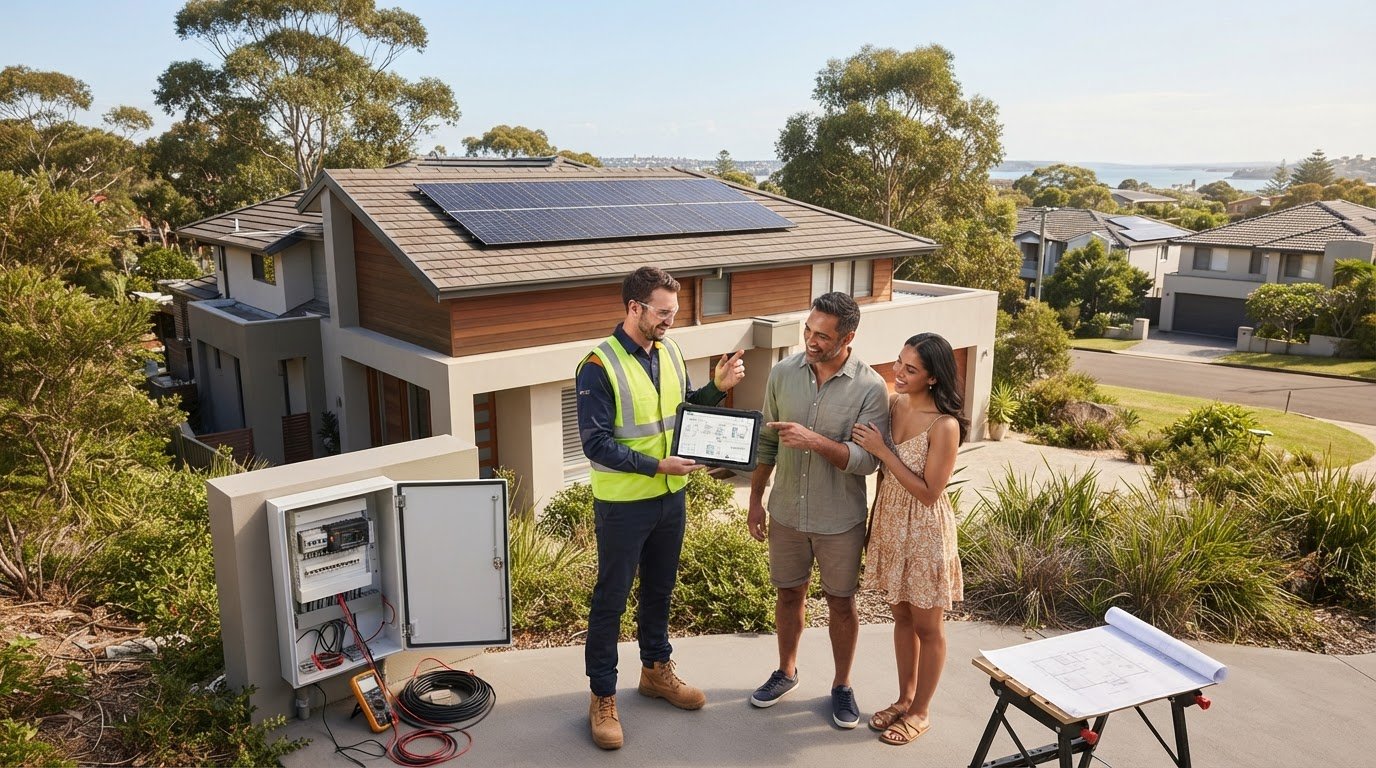
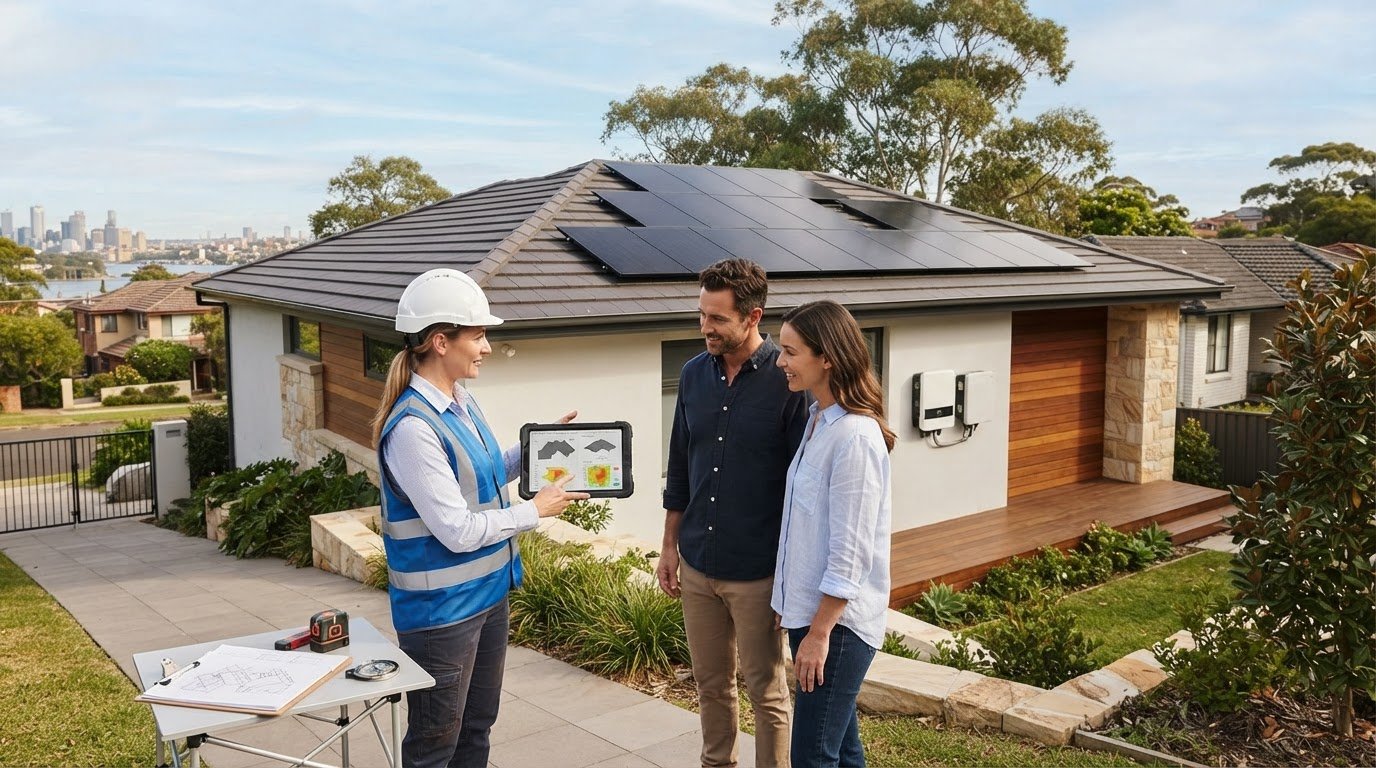
A successful transition to hybrid energy begins with a site-specific assessment by a licensed electrical contractor. We don’t believe in one-size-fits-all packages. A professional solar health check evaluates your existing switchboard, roof condition, and energy consumption patterns to ensure your new system is safe and effective. This thorough approach prevents the technical bottlenecks that often plague DIY or budget installations.
Ready to secure your energy future? Contact Sky High Solar for a Sydney-specific quote and take the first step toward true energy independence.
Empowering Your Sydney Energy Future
Transitioning to a hybrid model is the most effective way to protect your household from the rising costs and grid instability of 2026. By prioritising self-consumption and preparing for the arrival of an electric vehicle, you ensure that every kilowatt produced on your roof delivers genuine value. The benefits of a hybrid solar system extend far beyond simple bill savings; they offer the peace of mind that comes with knowing your home is powered through storms and price spikes alike.
Since 2013, Sky High Solar and Electrical has acted as a steady hand for homeowners across Sydney. As licensed electrical contractors with over 13 years of local expertise, we specialise in premium integrations with industry leaders like Tesla, Enphase, and FOX ESS. Our mission is to remove complexity and provide a transparent, professional path to total energy independence. If you’re ready to move away from the outdated solar model and embrace a more intelligent way to power your life, our team is ready to guide the way.
Request a Personalised Hybrid Solar Quote for Your Sydney Home
Frequently Asked Questions
Is a hybrid solar system worth it in Sydney in 2026?
A hybrid solar system is highly viable in 2026 due to the widening gap between retail electricity prices and low feed-in tariffs. With Sydney peak rates often exceeding 55 cents per kilowatt-hour, the financial benefits of a hybrid solar system come from avoiding these high costs. By storing your own energy, you reduce reliance on the grid during expensive evening windows. This typically leads to a much faster return on investment compared to traditional grid-tied setups.
Can a hybrid solar system work during a blackout?
Yes, a true hybrid system provides reliable backup power during a grid failure. While standard solar systems automatically shut down during blackouts to protect utility workers, a hybrid inverter with anti-islanding technology creates a secure microgrid for your home. This allows you to power essential circuits, such as refrigeration and lighting, or even high-load appliances if you have a high-capacity battery like the Tesla Powerwall 3 or the FOX ESS CQ7 series installed.
What is the difference between a hybrid inverter and a regular inverter?
A regular string inverter only converts DC power from your panels into AC power for your home. In contrast, a hybrid inverter is a multi-mode device that manages solar generation, battery storage, and grid interaction simultaneously. It acts as the central brain of your energy ecosystem. Because it is DC-coupled, it is significantly more efficient than using separate inverters for solar and storage, as it reduces the energy losses caused by multiple power conversions.
How much does a hybrid solar system cost after rebates?
The out-of-pocket expense for a hybrid system depends on your specific capacity needs and current government incentives. In 2026, homeowners can access the Federal Cheaper Home Batteries Program, which provides a 30% upfront subsidy on eligible hardware. One of the major benefits of a hybrid solar system is the ability to stack these federal discounts with NSW PDRS incentives. This combined approach reduces the total investment significantly, though a site assessment is required for an accurate figure.
Do I need a switchboard upgrade for a hybrid system?
Most Sydney homes, especially those built before the solar boom, require a switchboard upgrade to safely manage a hybrid installation. A modern switchboard ensures your electrical infrastructure can handle the bi-directional flow of energy between your battery, panels, and the street. It also allows for the installation of essential safety components like fire-rated enclosures and dedicated backup circuits. This upgrade is a foundational step that guarantees the long-term reliability and compliance of your entire system.
Can I add a battery to my existing solar system later?
You can add a battery to an existing system, but the method depends on your current hardware. If you have a standard string inverter, you might require an AC-coupled battery or a full inverter replacement to convert to a hybrid setup. While retrofitting is possible, starting with a hybrid-ready foundation is more cost-effective. It avoids the 4% to 7% energy losses associated with AC coupling and ensures all your components are designed to work together seamlessly.
What are the best hybrid inverters available in Australia?
Several premium brands lead the Australian market in 2026. The GoodWe ET G2 is a top-tier choice for high-voltage efficiency, while the FOXESS Three Phase hybrid series offers robust performance for larger households. For those seeking total integration, the SigenStor 5-in-one hub combines an inverter and EV DC charger into a single modular tower. These brands are favoured for their local Australian support networks and their ability to withstand Sydney’s humid and salt-mist conditions.
How does the NSW Peak Demand Reduction Scheme affect my savings?
The NSW Peak Demand Reduction Scheme (PDRS) provides direct financial incentives for installing VPP-ready battery storage. In 2026, the BESS2 rules offer a cash-back incentive valued at approximately $36 per kWh of usable battery capacity. This means a standard 13.5kWh battery could secure nearly $500 in additional savings. These incentives are designed to encourage homeowners to support the grid during peak events, turning your storage into an active asset that generates ongoing value for your household.