

 Sydney
 0452 243 240
Blog
Solar for Sydney Strata: A Practical Guide

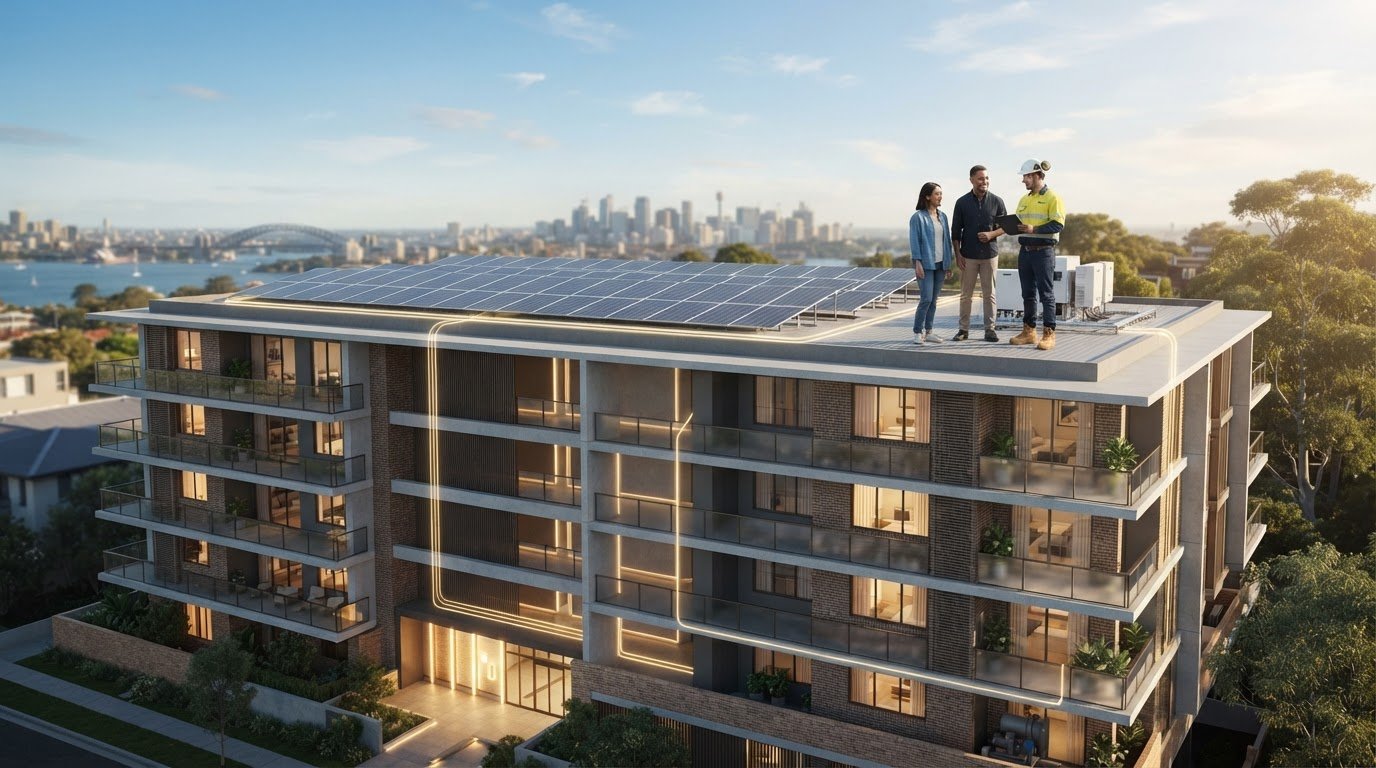
Can solar work for your strata building, and how should the benefits be shared? If you’ve been researching “solar for strata buildings Sydney”, you’re likely weighing up more than panel output. Roof condition, electrical capacity, shared-property decisions and the building’s metering setup all affect what’s practical.
It’s understandable to want clear answers before asking owners to consider an investment. A system might supply common-area loads such as lighting and pumps, or be designed around another way of sharing the power. The right option depends on the building, how electricity is used and what owners agree they need.
This guide explains the building details to assess, the information to gather and the questions to ask when comparing proposals. You’ll also learn how to approach approvals, benefit allocation, ongoing maintenance and incentives, whose availability and eligibility should be checked for your project. With a site-specific assessment from a qualified Sydney solar and electrical provider, your strata committee can take a considered next step towards a safe, suitable installation.
Key Takeaways
- Solar for strata buildings Sydney projects should start with the building’s electricity use and the owners’ priorities, then match the system design to those needs.
- Gather common-area electricity bills, meter details and building records before requesting a site-specific assessment.
- Compare who uses the solar generation, what metering and administration each option involves, and whether it fits the building’s load profile.
- Ask the strata manager or a qualified adviser to confirm current NSW approval steps, decision records and owner communications before proceeding.
- Assess written proposals for design assumptions, inclusions, connection steps, electrical work, commissioning and handover documentation.
Sydney Strata Solar: Benefits of Shared Rooftop Solar
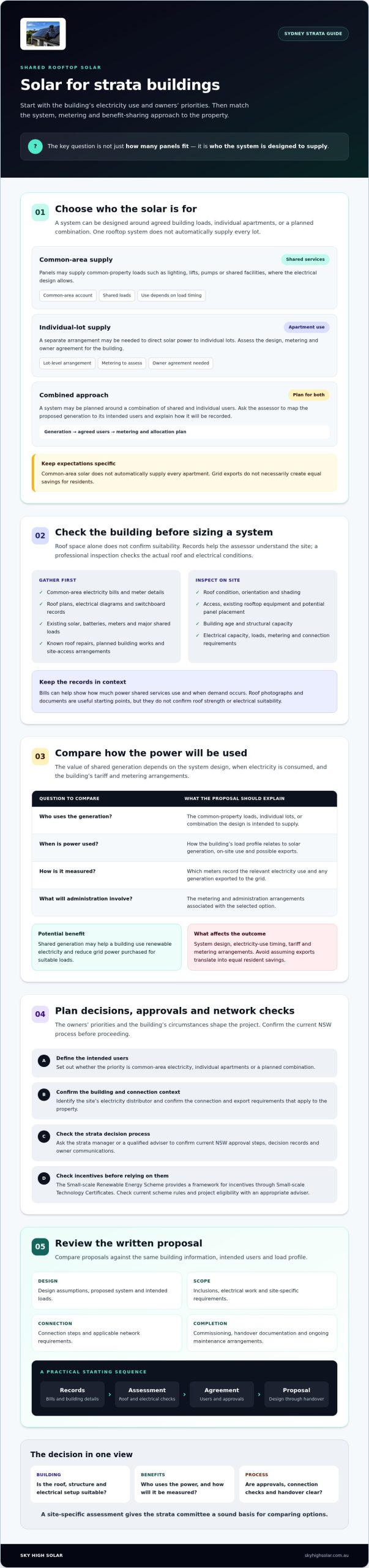
Strata solar is a rooftop system designed to supply agreed building loads, individual apartments, or a planned combination of both. For solar for strata buildings Sydney, the first decision is not simply how many panels fit on the roof. Owners need to agree who the system is intended to benefit, then assess whether the building’s roof, electrical setup and electricity use support that plan.
Shared generation can help a building use renewable electricity and may reduce the amount of grid power purchased for suitable loads. The outcome depends on system design, when electricity is consumed and the building’s tariff and metering arrangements. Common-property electricity is generally recorded separately from electricity used inside individually metered apartments. A system connected to common-area circuits won’t automatically supply every lot, and solar exports to the grid don’t necessarily translate into equal savings for residents.
Incentives may also affect project planning. The federal Small-scale Renewable Energy Scheme provides a framework for incentives through Small-scale Technology Certificates. Treat this as background information: check current scheme rules and project eligibility with an appropriate adviser before relying on any incentive in a proposal.
Which parts of a strata building could solar supply?
Where the electrical design allows, panels may supply common-area loads such as lighting, lifts or shared facilities. A separate arrangement may be needed to direct power to individual lots, with metering, design and owner agreement assessed for the specific building. Ask the assessor to map the proposed system to its intended users and explain how generation and any grid exports would be recorded. One roof system doesn’t automatically serve every apartment.
Why Sydney building conditions need a site assessment
Roof space alone doesn’t determine suitability. Ask the assessor to check orientation, shading, access, existing rooftop equipment, roof condition and any planned maintenance. The building’s age and structural capacity may also affect where panels can be placed, so installation needs professional assessment rather than assumptions from roof photographs.
Connection and export conditions also depend on the property and its electricity network. Confirm which distributor serves the site and what connection requirements apply before settling on a design. A practical initial checklist is:
- Note roof access constraints, shaded areas and existing equipment.
- Gather roof records and details of planned repair or maintenance work.
- Identify common-area electricity accounts and the loads they serve.
- Ask a qualified solar and electrical provider to assess the roof, electrical capacity and connection requirements on site.
This groundwork helps the owners corporation compare options on the building’s actual needs, rather than relying on generic output or savings estimates.
How to assess a Sydney strata building for solar readiness
A useful solar assessment starts with records, not a panel count. For solar for strata buildings Sydney, the committee can make a tailored design more useful by first documenting the building, then arranging a professional site inspection, defining which loads matter and requesting a proposal based on those findings.
Begin with common-area electricity accounts. Bills and meter details help show how much power shared services use and when demand occurs. That information can help an installer assess whether proposed solar generation is likely to be consumed on site, exported, or a mix of both. Keep apartment electricity accounts separate unless the project is specifically considering individual-lot supply.
What building information should the committee gather?
Collect what’s available rather than delaying because records are incomplete. Useful documents and notes include:
- Roof plans, electrical diagrams and switchboard records.
- Recent bills and meter information for relevant common-area accounts.
- Details of existing solar panels, batteries, meters and major shared loads, such as lifts or pumps.
- Known roof repairs, planned building works and arrangements for site access.
These records give the assessor a starting point, but they don’t confirm roof strength or electrical suitability. Those need to be checked for the specific property.
What should a professional site assessment check?
Ask the provider to inspect roof condition, shading, potential panel placement and safe installation access. The assessment should also review the switchboard, cabling routes and available electrical capacity. If the existing switchboard may need work, ask what’s required and how it affects the proposed design.
Request a clear explanation of the assumptions behind estimated generation and expected self-consumption. For example, ask which common-area loads the system is intended to supply, how meter arrangements affect the estimate, and what happens to generation when building demand is low. Estimates should reflect the site and available usage information, not a generic household profile.
Before comparing proposals, confirm what each assessment includes and whether network connection requirements still need to be checked for your property. Professional installation and electrical compliance checks are essential; ask what documentation will be provided for the work, including a certificate of compliance electrical work (CCEW) where applicable.
Once the committee has gathered its records and defined the loads it wants to consider, a local solar and electrical provider can assess the site and outline suitable next steps. You can discuss a strata solar assessment with Sky High Solar and Electrical.
Compare strata solar options by who uses the electricity
For solar for strata buildings Sydney, compare each option against the building’s electricity use and the people or services intended to benefit. The arrangement affects metering, wiring, administration and how the owners corporation explains costs and benefits. No single model suits every scheme.
| Option | Who uses the generation? | Metering and administration to assess |
|---|---|---|
| Common-area supply | Shared services, such as lighting, lifts or pumps, if the system can connect to those loads. | Review the common-area meter, circuits and load profile. Agree how the project and ongoing responsibilities will be managed. |
| Individual-lot arrangements | Participating apartments, subject to a site-specific design. | Check how generation would reach each lot, how consumption would be measured and how participation or allocation would be administered. |
| Staged or future-ready planning | Initially agreed building loads, with later stages considered only if suitable. | Ask the designer to identify any practical provisions for later work, and the technical or approval checks that would still be needed. |
Common-area solar or supply to individual apartments?
Common-area supply focuses on shared electricity accounts, while apartment-level use introduces separate questions about wiring, meters and allocating generation. Neither is automatically better. A building with substantial daytime common loads may assess those first; a scheme considering apartment supply needs a clear technical explanation of how each lot could be served and measured. The infrastructure involved may also mean different decision pathways, so confirm the process with the strata manager or a qualified adviser.
Complexity is easier to manage when owners define the intended users, how project costs are handled and who will look after the system before comparing designs. Ask providers to set out these assumptions plainly. That gives the committee a fair basis for comparing options without implying every resident will receive the same benefit.
When should a strata committee consider battery storage?
Compare solar production during the day with the building’s electricity demand later in the day using actual consumption data. A battery can store some solar energy for use at another time, but its effect depends on system design and how the building uses power. It doesn’t guarantee savings or backup supply.
Ask whether grid-stable battery storage fits the proposed arrangement, what loads it would serve, and whether any relevant incentives are available and applicable to the project. Household battery guidance can provide background, but strata metering, shared loads and benefit allocation need their own assessment. See the Sydney solar battery storage guide for household context.
Plan strata approvals, network checks and project responsibilities in NSW
A solar proposal needs more than a suitable roof and an agreed design. For solar for strata buildings Sydney, the owners corporation also needs a clear process for decisions, network checks, installation coordination and ongoing care. The steps below are a preparation checklist, not legal advice. Confirm the current NSW requirements for your scheme before committing to work.
Which NSW strata approval questions should owners confirm?
Start by asking the strata manager or a qualified adviser who can authorise an investigation, request quotes and approve work under the scheme’s current arrangements. Confirm the appropriate approval pathway and any owner communications by checking current NSW Fair Trading guidance and obtaining project-specific advice. Keep the proposal, relevant meeting records, decisions and follow-up correspondence together. Don’t rely on a voting threshold or an informal understanding without confirming it applies to your project.
Who manages installation, compliance and ongoing care?
Agree who will coordinate contractor access, roof logistics, resident notices and work scheduling. Ask the licensed electrical contractor which safety and compliance checks apply, and whether a certificate of compliance electrical work (CCEW) will be issued for the electrical work in scope. Before installation, also assign responsibility for monitoring the system, arranging solar system servicing and keeping handover records, equipment details and relevant documents accessible.
Connection requirements are property-specific. Confirm the electricity distributor for the building’s address and ask the proposed installer what connection steps and approvals apply to that site. Don’t assume every Sydney property follows the same network process. The design and connection arrangements should be checked before the committee treats a generation or export estimate as settled.
Check incentives separately from the technical proposal. Ask whether any Australian or NSW scheme applies to the project, who is eligible to apply, how any payment or discount is handled, and what conditions or timing apply. Confirm these details from current scheme information before including an incentive in the project budget. Eligibility and terms can depend on the project and system design.
Before moving ahead, the committee can record who will:
- Confirm the approval pathway and maintain decision records.
- Coordinate site access, resident communications and installation timing.
- Check network connection requirements and incentive eligibility.
- Manage compliance documents, system monitoring and future servicing.
Clear responsibilities make it easier to review proposals and plan the work without leaving key decisions until installation. Once the committee has defined the project scope, discuss a strata solar project assessment with a qualified solar and electrical provider.
Choose a Sydney strata solar installer and move from proposal to installation
A useful proposal should show how the system fits the building, not just list equipment. For solar for strata buildings Sydney, compare written offers against the same agreed objectives, such as supplying common-area loads or planning for a defined group of apartments. Check the estimated generation assumptions, proposed system design, inclusions, exclusions and ongoing support. If proposals use different assumptions, ask each provider to explain them before comparing projected results.
Questions to ask before accepting a strata solar proposal
Ask how the design accounts for roof constraints, shading, common-area demand, existing meters and the owners’ agreed use for the electricity. Request clear details of warranties, exclusions, maintenance arrangements and the proposed post-installation review. Check that the proposal identifies any required switchboard or other electrical work, network connection steps, commissioning and handover documents.
Before appointing a contractor, ask them to confirm relevant licences and insurance for the proposed work, and how completed electrical work will be documented. Confirm the project scope and whether a certificate of compliance electrical work (CCEW) applies. For larger or mixed-use sites, a commercial solar installation guide may help explain broader project considerations, but a strata building still needs its own assessment of shared property, metering and agreed users.
What happens after the owners approve a project?
Once the owners have approved the project through the confirmed process, the installer can progress the final design and relevant connection steps. Installation should then be followed by testing and commissioning, with a clear handover so the responsible people know how the system operates and where to find its records.
Before work starts, clarify arrangements for access, resident notices and scheduling. At handover, ask for operating instructions, monitoring access, equipment and warranty details, compliance documents where applicable, and a named contact for servicing or electrical issues. Agree who will retain these records and organise future solar system servicing.
A post-installation review can help confirm the completed system against the agreed scope. Ask whether any rebate registration or other follow-up applies to this project, and verify the current requirements rather than assuming eligibility. These checks help the owners corporation understand what has been installed and what responsibilities continue after the contractor leaves.
Gather the building records, common-area bills and any existing proposals before starting a site-specific discussion. Request a site-specific solar discussion with Sky High Solar and Electrical, a Sydney-owned and operated solar and electrical contractor operating since 2013.
Take the next step towards a suitable strata solar plan
A successful project starts by agreeing who should use the electricity, then checking that the roof, meters and electrical setup can support the chosen approach. For solar for strata buildings Sydney, a site-specific design and clear responsibilities give owners a more practical basis for comparing proposals and planning installation.
Before progressing, gather the building records and common-area bills, confirm the decision process with your strata manager or qualified adviser, and ask providers to explain their design assumptions, connection steps and handover arrangements. Check any incentive eligibility against current scheme requirements rather than relying on estimates alone.
Sky High Solar and Electrical is Sydney-owned and operated, with licensed electrical contractors since 2013. The business provides solar installation, electrical services and solar system servicing. Once your committee has outlined its priorities, request a site-specific solar discussion with Sky High Solar and Electrical and share the available building information to help shape the conversation. A considered first step can make the path ahead clearer, safer and better suited to your strata community.
Frequently Asked Questions
Can a strata building in Sydney install solar panels?
Yes, a Sydney strata building can install solar if the roof, structure, electrical setup and connection arrangements are suitable, and the scheme follows the applicable approval process. A qualified provider should assess roof condition, shading, switchboard capacity and potential panel placement before estimating generation. For solar for strata buildings Sydney, start by deciding which agreed building loads or apartments the system should serve, then request a site-specific design.
Who approves solar panels on a strata building in NSW?
The owners corporation makes decisions about common property through the applicable NSW strata process. Current NSW arrangements provide for a sustainability infrastructure resolution for sustainability installations, with a 50% majority of owners present and entitled to vote at a general meeting. Confirm the correct pathway, meeting records and any by-law requirements with your strata manager or a qualified adviser. The decision should also address who is responsible for ongoing maintenance, repair and replacement of the installation.
How does solar power benefit apartment owners in a strata building?
Solar can provide shared renewable electricity to agreed common-area loads, such as lighting or pumps, potentially reducing the grid electricity those services use. Apartment owners may benefit directly if the system is designed to supply participating lots and the metering and allocation arrangements support it. Benefits depend on the building’s demand, system design, tariffs and how electricity is shared. Ask for estimates based on the site’s actual usage rather than assuming equal savings for every owner.
Can strata solar panels power individual apartments as well as common areas?
Yes, a system may be designed for common areas, individual apartments or a planned combination, but one rooftop installation won’t automatically supply every lot. Apartment-level supply needs project-specific assessment of wiring, meters, allocation and how participating residents will be included. Ask the designer to show which loads the system serves and how generation is measured. The owners corporation should also clarify the decision process and ongoing responsibilities for any shared infrastructure.
Does a Sydney strata building need a battery with solar panels?
No, a battery isn’t essential for every strata solar project. Compare daytime solar generation with the building’s actual electricity use, including any evening demand, before deciding whether storage is worth assessing. A battery can shift some solar energy for use later, subject to design and operating arrangements, but it doesn’t guarantee lower bills or backup power. Ask a qualified provider to explain how storage would connect to the proposed system and which loads it could serve.
What should a strata committee check before requesting solar quotes?
Gather available roof plans, electrical diagrams, switchboard records and recent bills for common-area accounts. Note existing solar, batteries, meters, major shared loads, planned roof works and site access arrangements. Then define who should use the solar generation and ask a qualified provider to assess roof condition, shading, electrical capacity and connection requirements. Give each provider the same information and compare written proposals, including design assumptions, inclusions, exclusions and ongoing responsibilities.
Are rebates available for strata solar in NSW in 2026?
Potential incentives include the NSW Solar for Apartment Residents grant, federal Small-scale Renewable Energy Scheme incentives for eligible solar systems, and battery incentives that may apply to qualifying projects. The NSW grant can cover up to 50% of eligible costs, capped at A$150,000 per project, with applications open until 5 pm on 4 December 2026 or until funding is exhausted. The owners corporation applies. Check current availability, eligibility and conditions before budgeting.