

 Sydney
 0452 243 240
Blog
Energy Independence for Sydney Homeowners: 2026 Guide

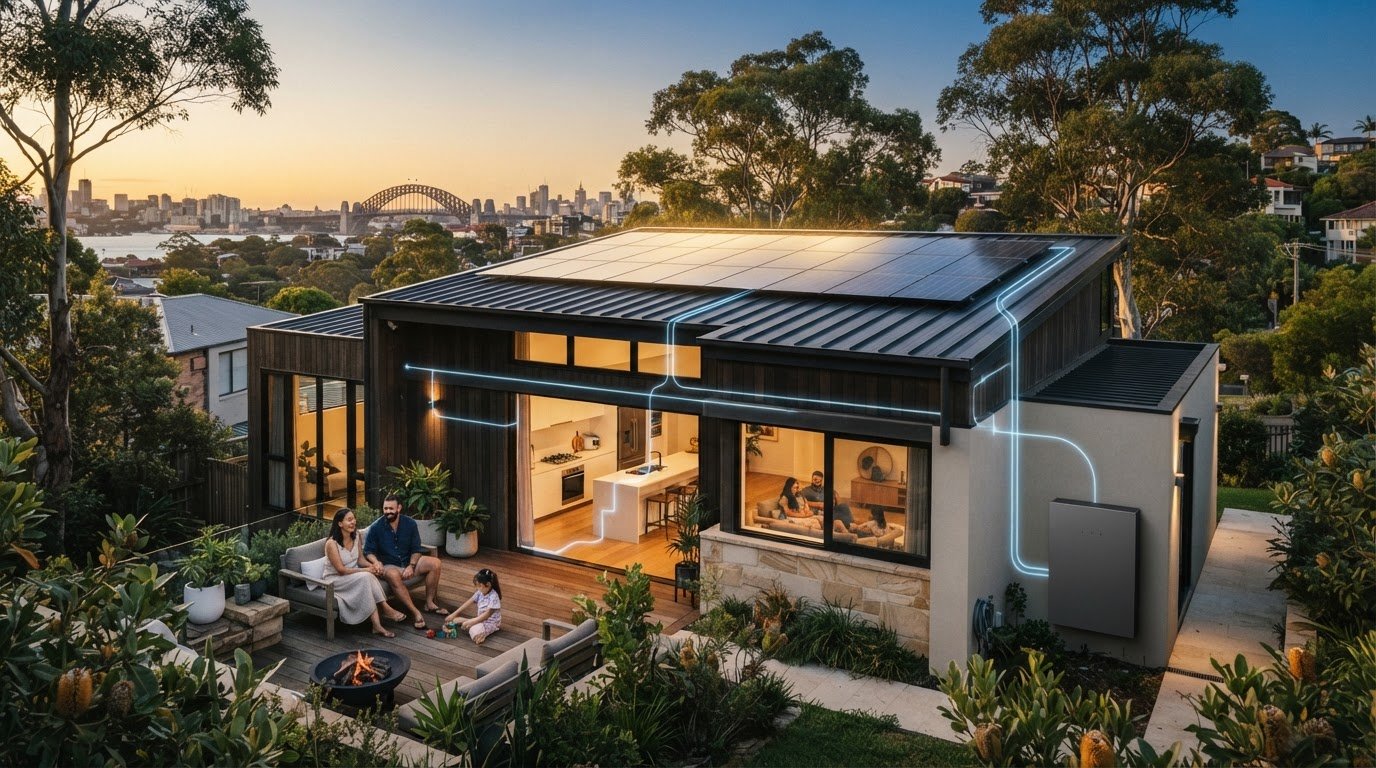
Energy independence for Sydney homeowners starts with matching your solar system to the times your household uses electricity. Adding more panels alone may not achieve that. The key is how much solar power you use as it is generated, and whether a battery can store surplus for later.
Energy independence doesn’t have to mean disconnecting from the grid. For a grid-connected home, it can mean using more of your own solar power and buying less electricity from the network, while keeping a practical setup for your home and routines.
This guide explains how solar generation, battery storage and energy use work together, and what can affect the results, from household demand to Sydney conditions and export limits. Compare solar-only, solar-plus-battery and integrated system options, learn how NSW incentives may fit into your plans, and find out what information to gather before installation. The goal is a considered system design, not a promise of complete independence or savings that may not reflect your home.
Key Takeaways
- Energy independence for Sydney homeowners means meeting more household demand with solar power, not necessarily disconnecting from the grid.
- Track when your home uses electricity to understand how daytime solar, battery storage and grid power could work together.
- Compare solar-only, solar-plus-battery and integrated systems based on evening use, backup priorities and system complexity.
- Review your bills, daytime occupancy, evening demand and major appliances before planning a system.
- Plan solar, storage and electrical work together around your home’s needs and priorities.
What energy independence means for Sydney homeowners
For a household, energy independence means meeting more electricity needs with power generated and stored at home. Solar panels produce electricity during daylight, while a battery can store some surplus for later use. The aim is to reduce reliance on grid electricity, not necessarily eliminate it. For a broader explanation of the concept, see What is energy independence?
For energy independence for Sydney homeowners, when you use electricity matters as much as how much your solar system generates. A home that uses more power while the sun is out can use more solar directly. A household with higher evening demand may draw more from a battery or the grid after solar generation falls. Start system planning by understanding your daily energy use rather than assuming a larger solar array will meet every need.
Does energy independence mean going off-grid?
No. A grid-connected home can use solar power when it’s available, store surplus energy in a battery and remain connected to the electricity network. The grid can supply power when household demand exceeds generation and stored energy, or when conditions limit solar production. Going fully off-grid is a different arrangement, with different system and household requirements. A battery can support selected backup needs, but it doesn’t guarantee uninterrupted power during every outage.
For many households, reducing grid reliance while keeping the network connection is a practical goal. You can use your own generated and stored power where possible, while retaining access to grid electricity when needed.
Why energy independence looks different from one Sydney home to another
Your household routines shape the role of a solar and battery system. Daytime occupancy can create more opportunity to use solar as it’s generated. Evening cooking, heating or other appliance use may increase the value of stored energy. Backup priorities also affect design. A household aiming to keep selected essential circuits running during an outage has different considerations from one focused mainly on using more solar after sunset.
Roof space, orientation and shading affect how panels can be arranged and how much sunlight reaches them. Sydney conditions also matter: coastal salt-mist and summer humidity are relevant when considering equipment, installation and ongoing care. These factors don’t point to one standard system. They help shape a design around your home, energy use and priorities, with realistic expectations about when you may still need the grid.
How solar panels and battery storage reduce grid reliance
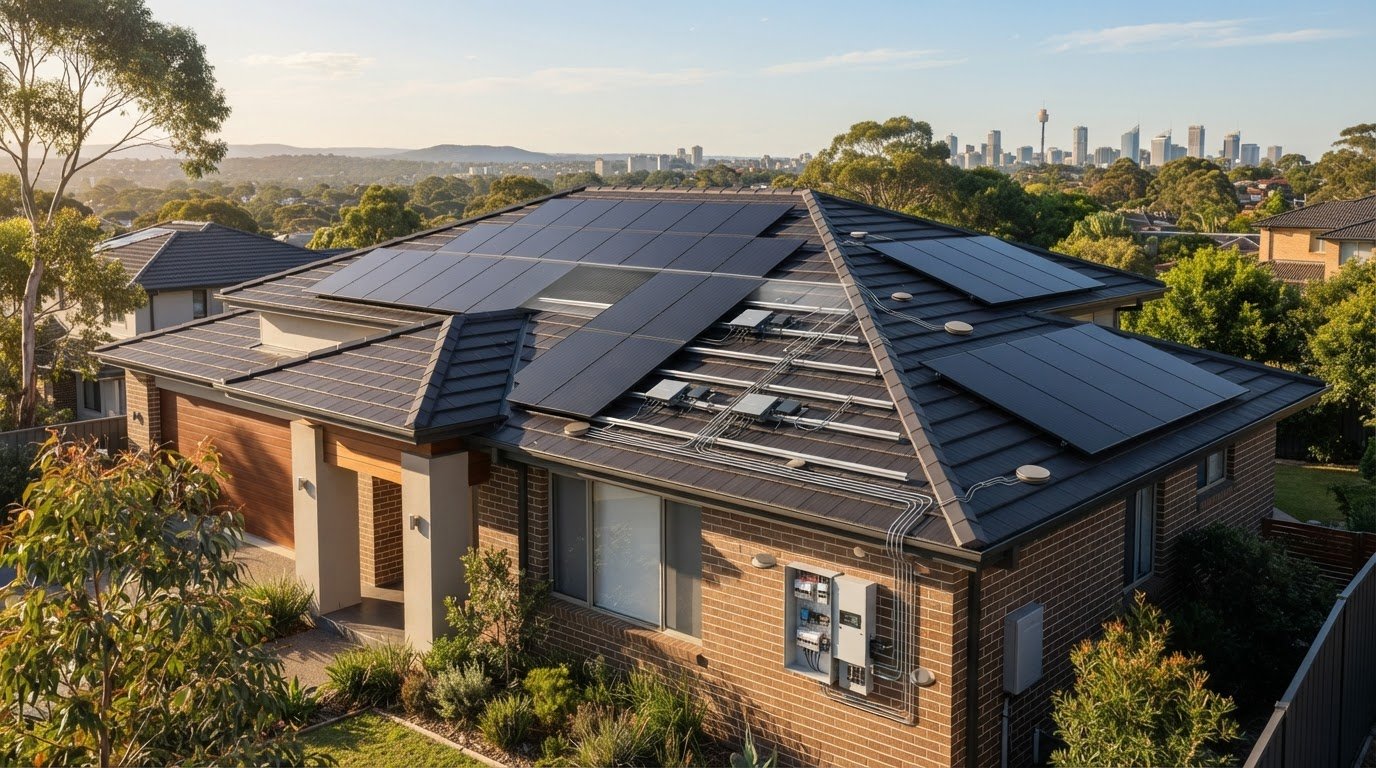
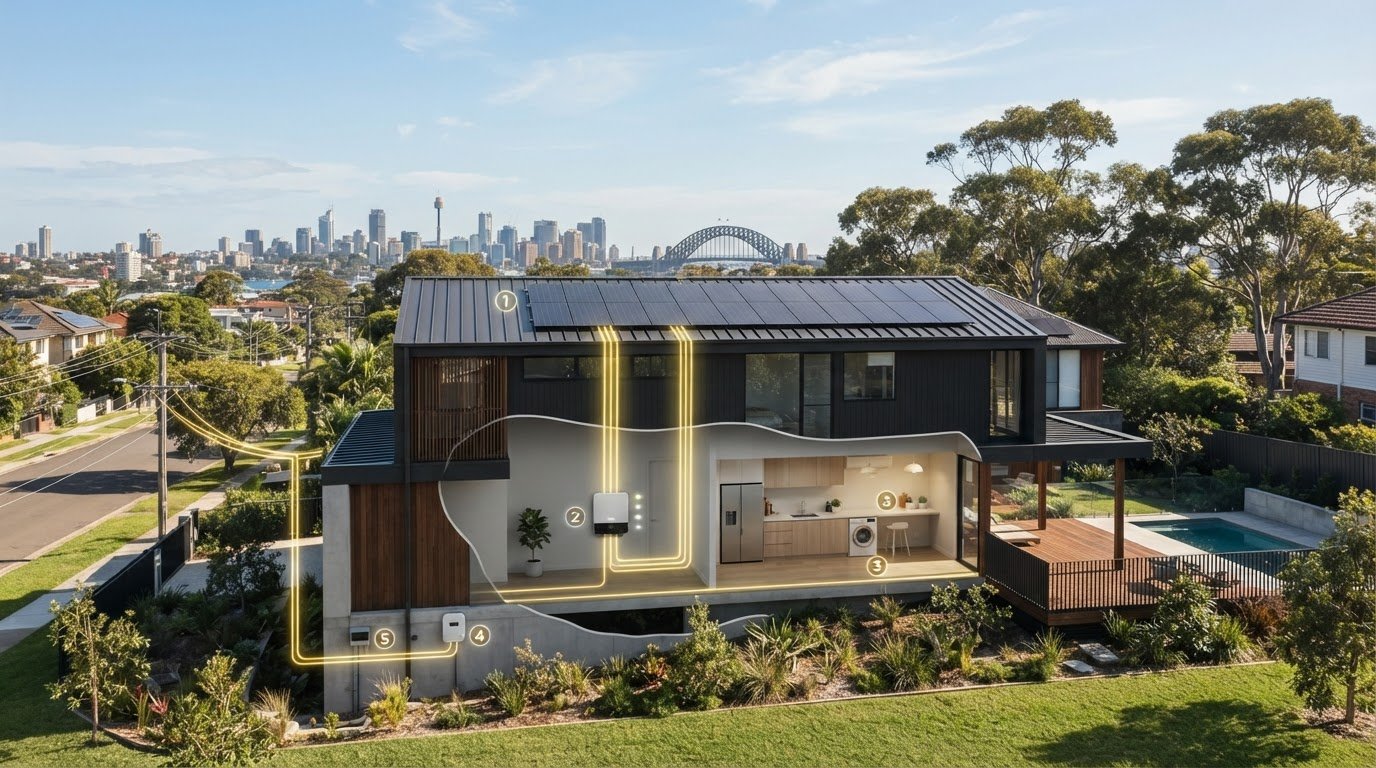
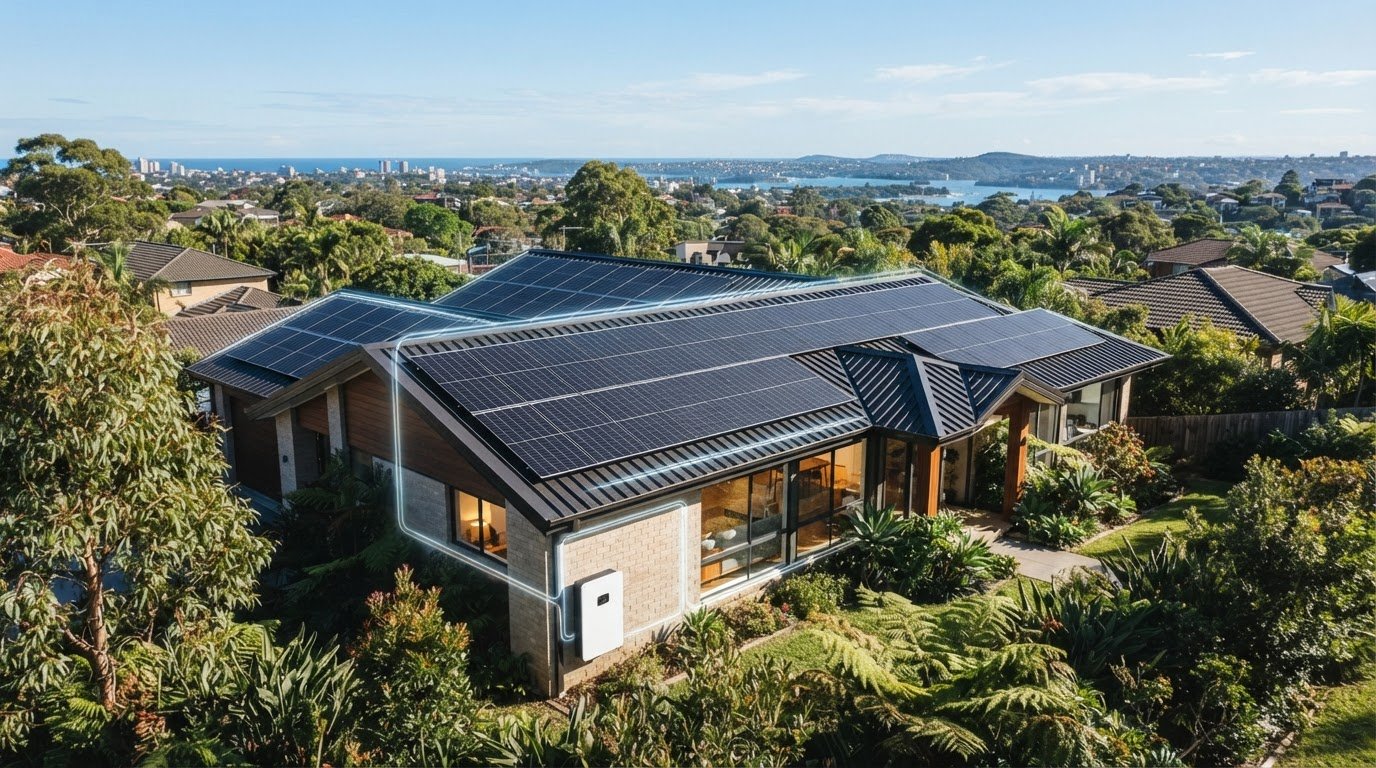
A solar and battery system manages electricity as household demand changes. During daylight, panels generate power that appliances can use as it’s produced. If generation exceeds what the home is using, surplus electricity may charge a battery or be exported to the grid, depending on the system setup. If demand exceeds available solar generation and battery discharge, the home can import electricity from the grid.
A hybrid inverter can manage solar generation and battery storage together, directing electricity according to the system design. A bi-directional smart meter records electricity flowing into the home from the grid and electricity exported from it. This records both consumption and export, but the meter itself doesn’t determine how much solar power the household uses.
What happens to solar electricity during the day?
Solar electricity can supply appliances while the panels are generating. For example, running a washing machine or another suitable appliance during daylight may let your home use some solar power directly. The amount available depends on generation at that time and what else the household is using.
When generation exceeds immediate demand, surplus electricity may be directed to battery charging or exported. The order and control depend on the equipment and system configuration. A home without storage may export surplus electricity, while a system with a battery may store some for later use. Neither arrangement guarantees that solar will meet a fixed share of daily demand.
How grid-stable battery storage supports evening use
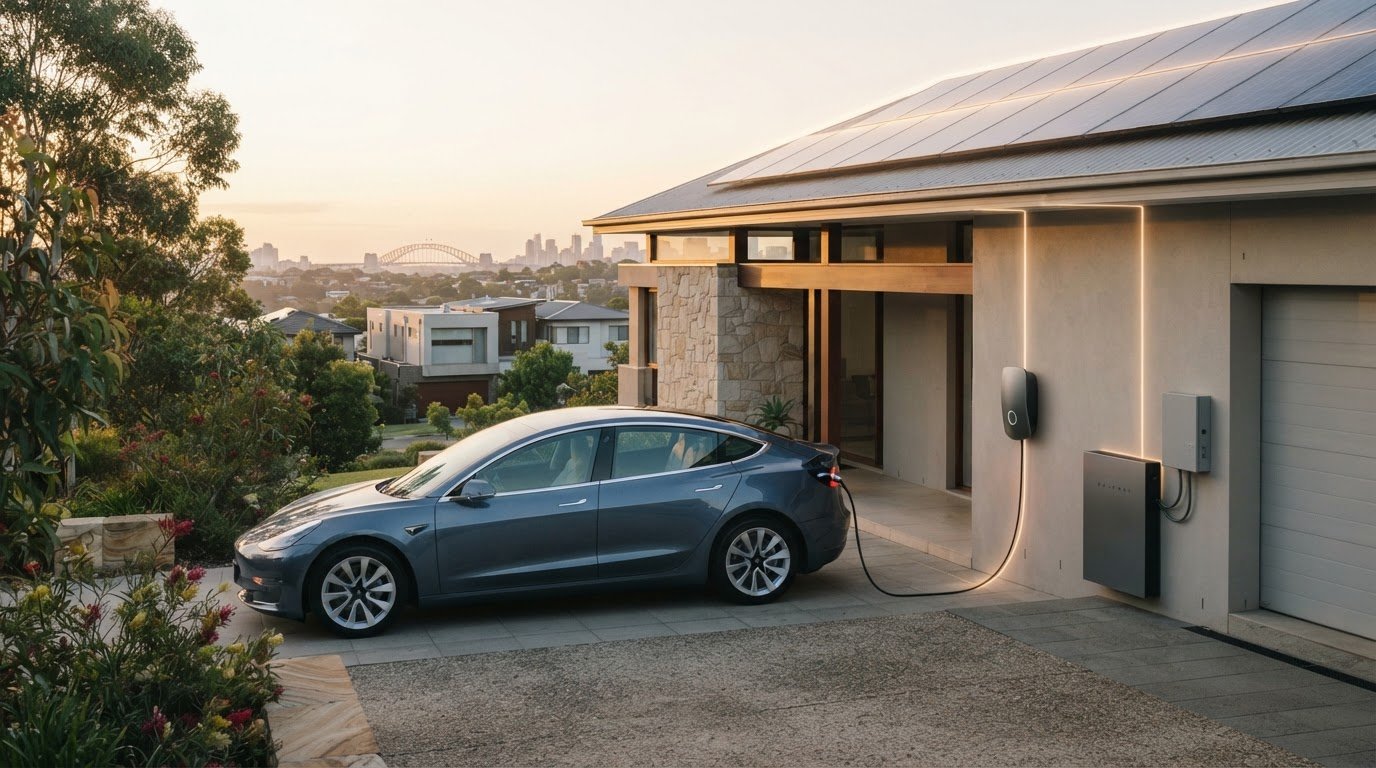
With grid-stable battery storage, surplus solar generation can charge the battery when available. Later, as household demand rises and solar production falls, stored electricity can supply some of that demand. The outcome depends on how much energy was stored, current household use and the system’s settings. Backup capability also depends on the installation design and the circuits included.
Stored solar electricity can reduce later grid imports by supplying some household demand after solar generation falls. A battery shifts generated electricity to another time; it doesn’t create additional energy. If the battery has limited charge, or demand exceeds the stored energy available, the home may still draw power from the grid.
For a system planned around your household’s energy flows, explore residential solar solutions from Sky High Solar and Electrical.
Solar-only, battery storage or an integrated system: compare your options
There’s no single system pathway that suits every household. The right choice depends on when you use electricity, how much surplus solar may be available, whether backup is a priority and how you want the system designed. Using more solar electricity at home can reduce the amount you buy from the grid and may lower bills, depending on your usage, tariff and system costs. It can also reduce reliance on grid-supplied electricity, though the environmental benefit depends on how much your system generates and the electricity it replaces.
| System pathway | Daytime self-consumption | Evening use | Backup considerations | System complexity |
|---|---|---|---|---|
| Solar-only | Household appliances can use solar while it’s being generated. | Without storage, the system can’t supply stored daytime solar after generation falls. | Backup shouldn’t be assumed; it depends on the system design. | Solar generation is the main focus. |
| Solar with battery storage | Solar can supply current demand, with surplus available for charging or export depending on setup. | Stored energy may supply some later household demand. | Backup depends on the battery system, installation design and circuits included. | Solar and storage need to be configured to work together. |
| Integrated solar-and-battery system | Generation, household use and storage are considered as parts of one system plan. | Stored solar may support later use, subject to available charge and demand. | Backup priorities can inform the overall design, but uninterrupted supply isn’t guaranteed. | Components and household requirements are planned together. |
When might solar-only be a sensible first stage?
Solar-only may suit a household that can use a meaningful share of its generation during daylight. Consider daytime occupancy and whether appliances can run while the panels are producing. You can also plan the initial system with future storage in mind, then assess a battery separately. For a closer look at system planning, read the Sydney 6.6kW solar system guide.
When might a battery or integrated system suit the household?
A battery may be worth considering if evening demand is a priority or you want to use more surplus solar later. Include backup needs in system design, since capability depends on the installation and selected circuits. Sky High Solar and Electrical installs Tesla Powerwall 3, FOX ESS battery storage and SigenStor integrated systems. Explore the Sydney solar battery storage guide for more detail.
For energy independence for Sydney homeowners, compare options using your actual electricity bills and usage patterns. Any estimate of savings or grid reliance should be based on household data and clearly stated assumptions, not a general promise.
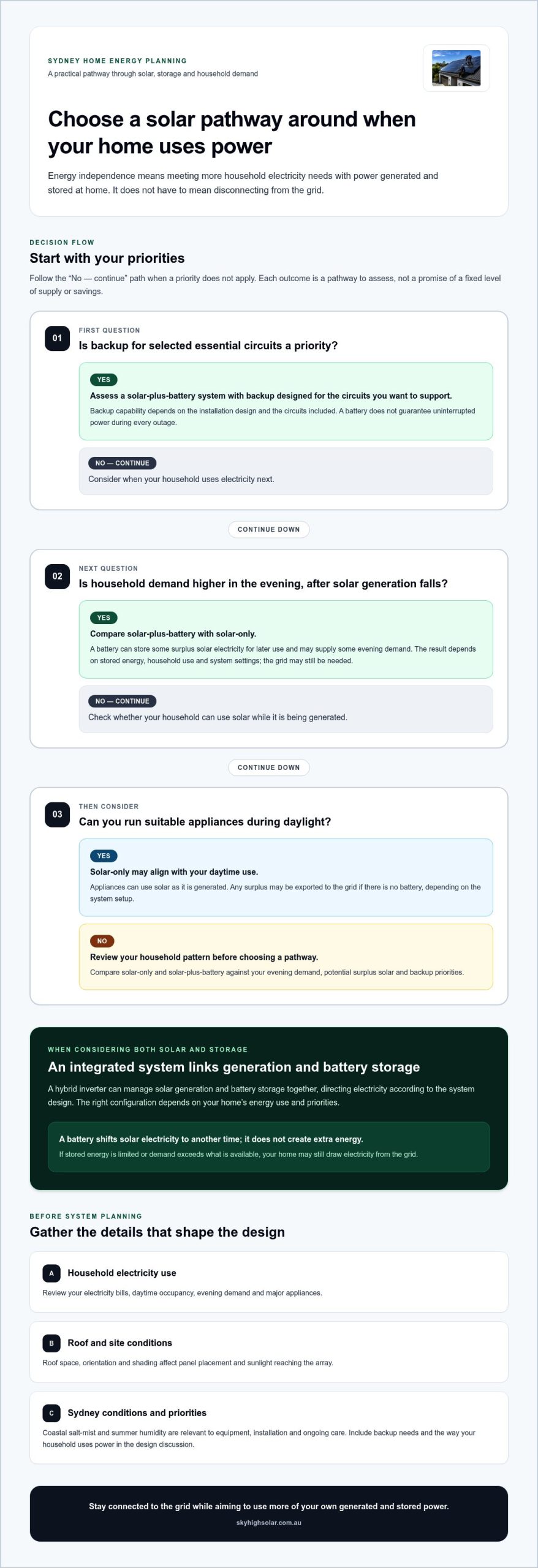
How to plan for greater energy independence in a Sydney home
A sound plan starts with your household, not a standard system size. Use these steps to turn your energy independence goals into practical design requirements, then have the installation and electrical work professionally planned for your home.
Step 1: Map household electricity use and priorities
Review recent electricity bills and available meter data to understand how much power you use and when. Note daytime occupancy, evening demand and major appliances, such as cooking equipment, heating or cooling, and an electric vehicle if you have one. Separate essential backup needs from the broader goal of reducing grid imports. Consider likely changes, such as working from home or adding appliances, without assuming future usage will follow a fixed pattern.
Step 2: Assess the roof, existing equipment and incentives
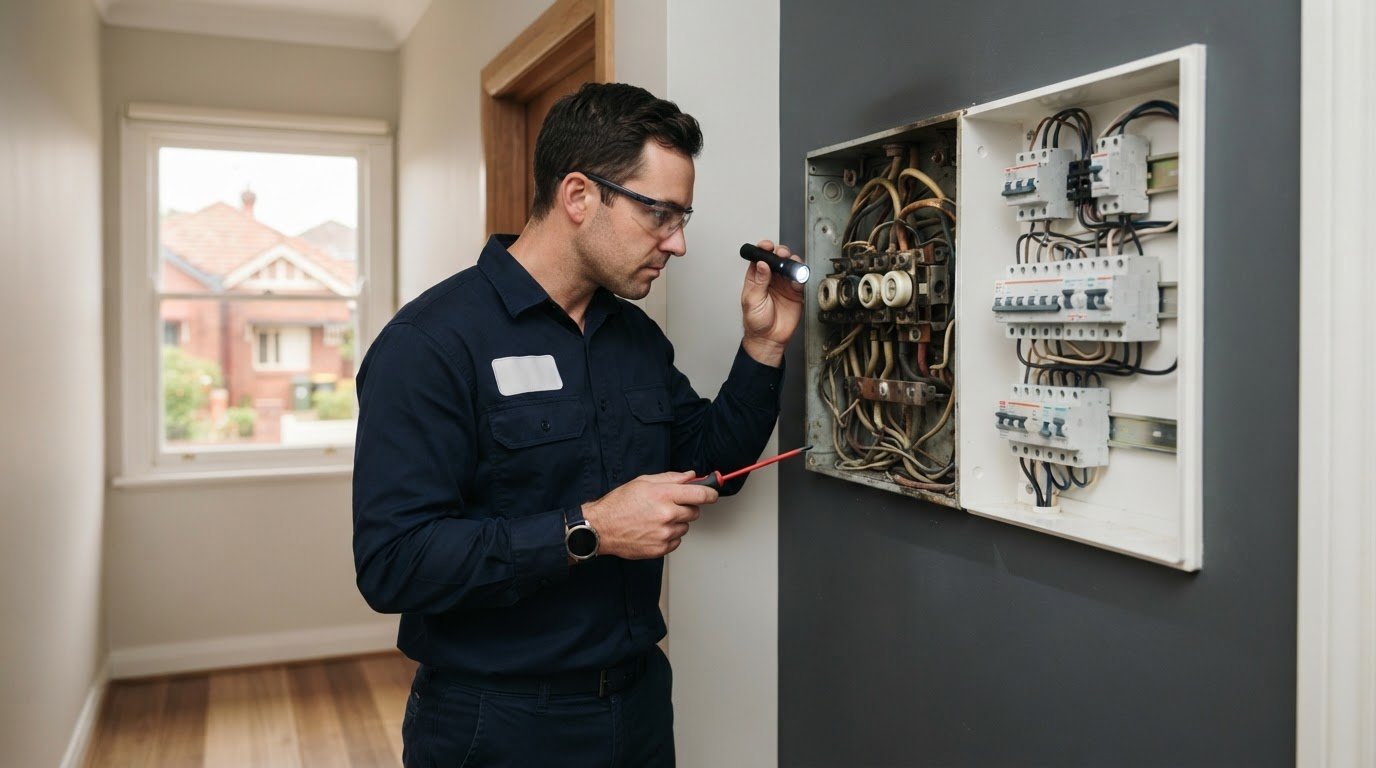
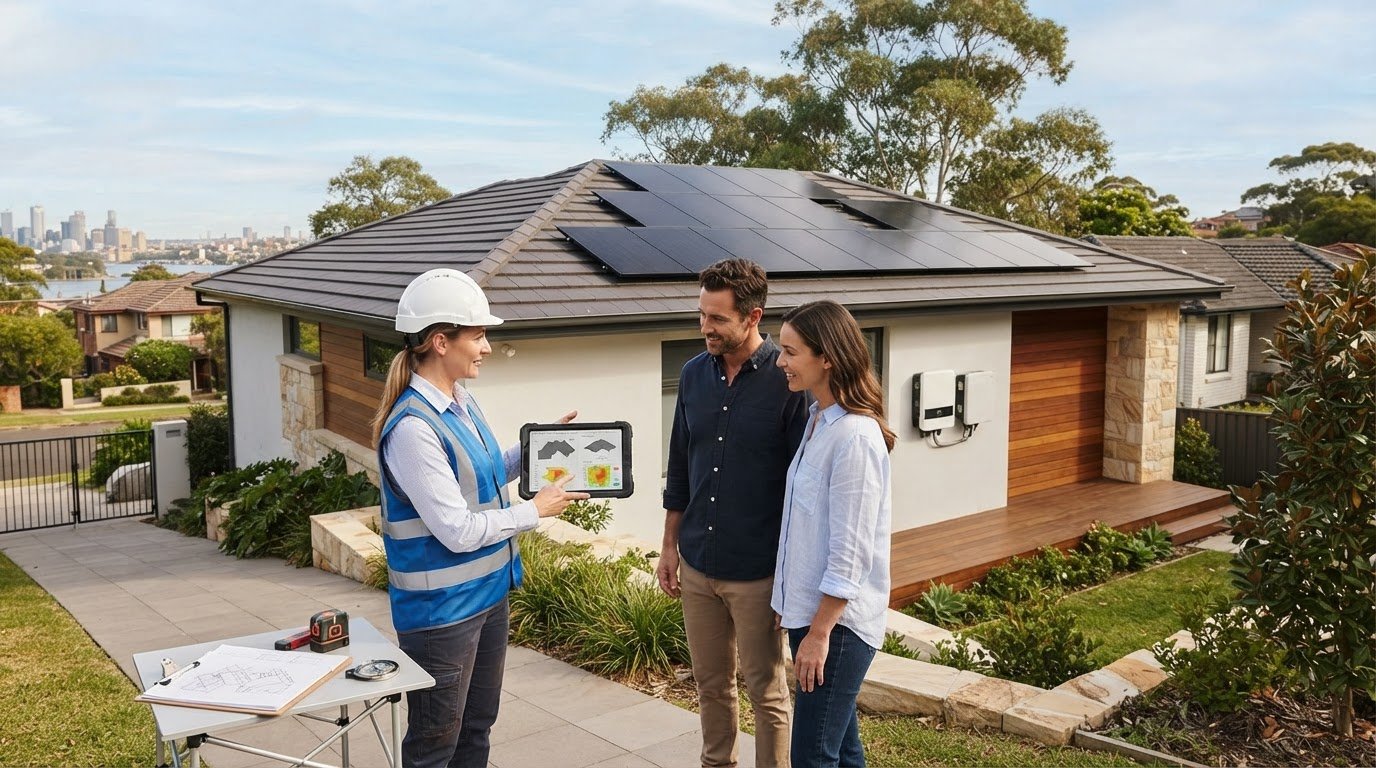
Record existing solar panels and inverter details, along with roof space, orientation and shading. Note any visible switchboard limitations for professional assessment. Before including support in your budget, verify the current eligibility, payment structure and application steps for the NSW Peak Demand Reduction Scheme (PDRS) and any applicable federal incentives. Program terms can change, so don’t base a system decision on an assumed payment. For an overview of an integrated option, read the SigenStor home energy hub guide.
Step 3: Match system design to daily use
Use your notes to consider how solar generation, storage and household demand could work together. Daytime use may favour direct solar consumption, while higher evening demand can make battery storage worth assessing. If backup is a priority, identify the essential loads that matter most. This informs the design but doesn’t guarantee uninterrupted power. A coordinated plan should account for available roof area, existing equipment and your plans for future energy use.
Step 4: Plan installation and compliance checks
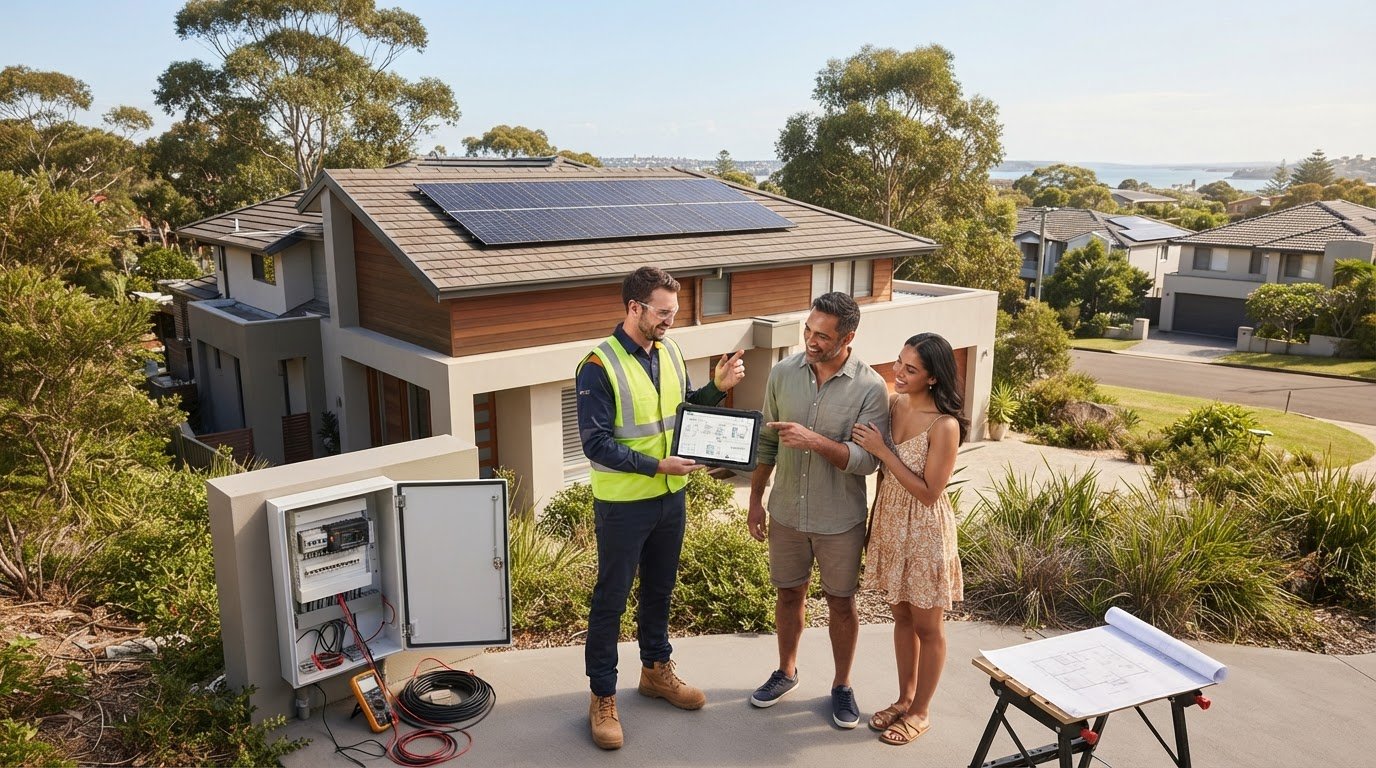
Have a professional installation plan address the solar and battery equipment, electrical work and any switchboard requirements as one project. Licensed electrical contractors can assess the installation and applicable compliance requirements for your home. Confirm that completed work is documented, including a certificate of compliance electrical work (CCEW) where applicable. Careful planning helps align the system with your priorities and supports safe, dependable operation over time.
For energy independence for Sydney homeowners, the practical next step is to bring your bills, roof details and backup priorities together in a site-specific plan. Explore solar and battery installation around how your household uses power.
How a Sydney solar and battery installation can support your next step
Once you’ve reviewed your electricity use and priorities, a site-specific design can clarify the next decisions. Rather than treating solar panels, battery storage and electrical work as separate purchases, consider how they need to operate together as a home energy system. The design should reflect your energy use, existing equipment, roof conditions and backup priorities, while setting realistic expectations about grid reliance.
What to expect from a coordinated home energy assessment
An assessment connects the details of your home with the system pathway you want to consider. Have this information ready:
- Recent electricity bills and available meter data
- Existing solar panels, inverter and battery equipment, if installed
- Roof space, orientation and any visible shading or limitations
- Daytime and evening usage, major appliances and future plans
- Any essential circuits or appliances you’d prioritise for backup
These details help shape a design around your household rather than a generic estimate of how much power you need. The electrical assessment can also consider the switchboard and the work needed to connect the system safely. Installation should be professionally planned, with applicable compliance checks addressed. Where relevant to electrical work, a certificate of compliance electrical work (CCEW) documents the completed work.
Sky High Solar and Electrical has served Sydney households since 2013, bringing local solar and electrical experience to residential system planning. Your home’s equipment, roof and electrical setup all influence how a proposed system can fit together.
Turn your energy independence plan into practical next steps
Before discussing a design, summarise the outcomes you want. You might prioritise using more solar during the day, storing surplus for evening demand, assessing backup for selected needs or planning for future household changes. Then compare a solar-only, solar-plus-battery or integrated pathway against those priorities.
For energy independence for Sydney homeowners, a well-matched system can help reduce grid reliance, but it can’t guarantee lower bills, uninterrupted power in every outage or complete independence from the network. A considered plan clarifies the likely role of solar, storage and grid electricity before installation begins.
If you’re ready to discuss a solar and battery plan shaped around your home, talk with Sky High Solar and Electrical about your priorities and system options.
Take the next step towards greater energy independence
Energy independence for Sydney homeowners is a practical goal shaped by how your household uses power. Solar can supply daytime demand, while battery storage may help shift some solar energy to evening use. The right pathway depends on your bills, daily routines, roof conditions and backup priorities. Staying connected to the grid can remain part of a well-planned system.
Start with your household’s energy use, then compare solar-only, solar-plus-battery or an integrated system. A site-specific design can bring solar, storage and electrical work together, with realistic expectations about grid reliance, bills and backup. Incentives may also affect your plans, so check current eligibility and conditions before factoring them in.
Sky High Solar and Electrical is Sydney-owned and operated, with licensed electrical contractors serving local homes since 2013. To discuss a plan shaped around your home, talk with Sky High Solar and Electrical about a solar and battery plan for your Sydney home.
Frequently Asked Questions
What does energy independence mean for a Sydney home?
For a Sydney home, energy independence means meeting more household electricity needs with solar power generated and stored at home. It usually means reducing grid reliance, not disconnecting from the electricity network. How much energy you use during daylight, how much you use in the evening and whether you have battery storage all affect the result. Your roof, existing equipment and household routines help shape a suitable system.
Can solar panels alone make a home energy independent?
Solar panels alone can reduce grid imports when the home uses electricity while the panels are generating, but they can’t store surplus for later use. After generation falls, a home without a battery may need to draw electricity from the grid. The contribution depends on generation and household demand at each time, so solar alone won’t guarantee energy independence. Reviewing bills and usage patterns helps set realistic expectations for your home.
Do I need a battery to reduce my reliance on the grid?
No. Solar panels can reduce grid reliance by supplying appliances during daylight, particularly if household demand aligns with solar generation. A battery may help you use some surplus solar later, such as in the evening, but whether it suits you depends on usage patterns, system design and priorities. Compare your daytime demand and evening use before deciding. A battery doesn’t guarantee complete independence from the network or uninterrupted power during outages.
How much battery storage does a Sydney home need?
There isn’t one battery size that suits every Sydney home. The amount of storage to assess depends on how much surplus solar is available to charge it, your evening electricity use and any backup priorities. Review bills and available meter data, then identify the appliances or circuits you may want to support. A site-specific assessment can match battery storage to your existing equipment and household demand instead of relying on a generic estimate.
Can a solar battery keep my home running during a blackout?
A solar battery may provide backup during an outage if the system is designed and installed for that purpose, but it doesn’t guarantee that the whole home will keep running through every blackout. Backup depends on the equipment, installation design, selected circuits and energy available in the battery. Consider which essential appliances matter most and how they may be supplied. Treat outage support as a design priority, not an assumed feature of every battery.
Are there NSW incentives for home battery storage in 2026?
Yes. As of October 2026, the federal Cheaper Home Batteries Program provides an upfront discount through STCs for eligible batteries. The full rebate applies to the first 14 kWh of usable capacity, with reductions for larger systems. NSW’s Peak Demand Reduction Scheme (PDRS) offers an upfront incentive for eligible batteries connected to a Virtual Power Plant (VPP); the incentive is calculated on up to 28 kWh. General household standalone battery incentives remain suspended. Check current eligibility and terms before budgeting.
Can I add a battery to an existing solar system?
A battery can often be considered for an existing solar system, but compatibility and installation requirements depend on the current panels, inverter and electrical setup. A professional assessment can review the equipment and how a battery could operate with it, including any switchboard work required. If you’re planning a future battery, raise that during solar system design. This helps assess the options as one home energy plan rather than assuming every system can be expanded the same way.
How do I start planning energy independence for my home?
Start by gathering recent electricity bills and available meter data, then note when your household uses power, major appliances and any essential backup priorities. Record existing solar and inverter details, along with roof space, orientation and shading. This gives a Sydney installer practical information to assess solar-only, solar-plus-battery or integrated options. Sky High Solar and Electrical plans solar, battery storage and electrical work around your home and usage patterns.