

 Sydney
 0452 243 240
Blog
EV Charging for Sydney Apartments: 2026 Strata Guide

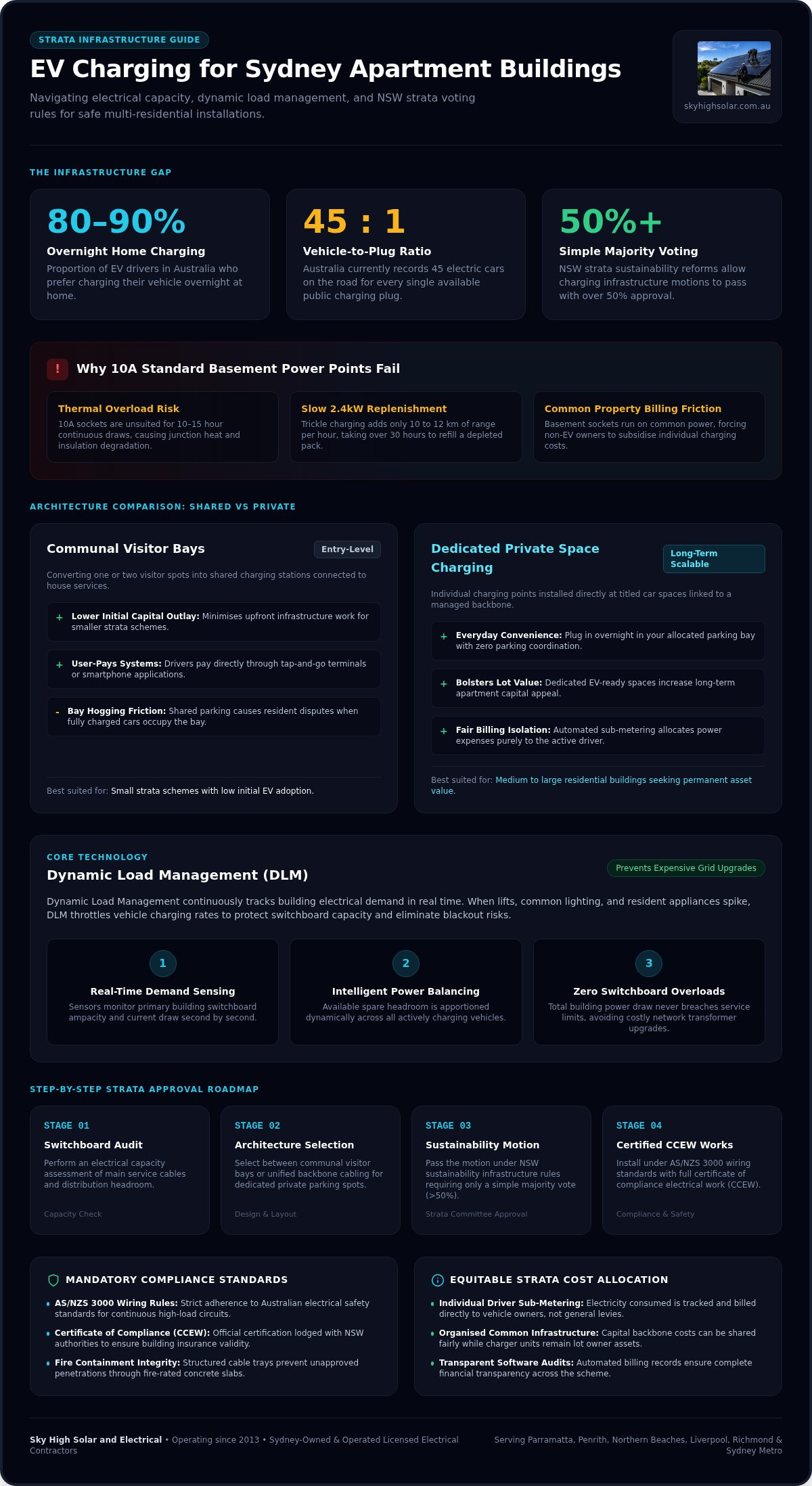
Roughly 80 to 90 percent of electric vehicle drivers prefer charging at home overnight, yet Australia currently records 45 electric cars for every public plug. For strata committees and lot owners, identifying viable EV charging solutions for apartment buildings Sydney residents can rely on often feels like an impossible task.
You’re likely worried about switchboard capacity limits, basement fire safety compliance, and bitter disputes over who pays for common property electricity. It’s understandable why many schemes stall, dreading substantial infrastructure quotes or contentious annual general meetings.
You don’t need to drain your capital works fund or risk building blackouts to modernise your carpark. With intelligent dynamic load management, Sydney strata schemes can install reliable, fair, and scalable charging systems that protect switchboard capacity and bill individual drivers accurately.
This guide walks you through the latest NSW strata voting rules, electrical safety standards, and the exact steps to secure committee approval with complete confidence.
Key Takeaways
- Discover how tailored EV charging solutions for apartment buildings Sydney strata schemes adopt can prevent switchboard overloads and avoid costly grid supply upgrades.
- Compare shared communal bays against dedicated private space infrastructure to find the right balance between upfront capital outlay and long-term convenience.
- Learn how Dynamic Load Management monitors building power demand in real time to charge multiple vehicles safely without risking blackouts.
- Navigate NSW strata voting rules with a practical roadmap for passing sustainability infrastructure motions by a simple majority vote.
- Understand vital compliance requirements under AS/NZS 3000 wiring rules and why certified CCEW documentation protects your building’s insurance validity.
Understanding EV Charging Challenges in Sydney Strata Schemes
Installing an EV charger in a suburban freestanding garage is straightforward. A licensed technician runs a single dedicated circuit from the domestic board, tests the isolator, and powers up the unit. Multi-residential properties require a completely different approach. Implementing EV charging solutions for apartment buildings Sydney schemes require demands balancing shared physical assets, restricted supply headrooms, and strict collective governance.
Most mid-century walk-ups and late-nineties developments across Parramatta, the Inner West, and Sydney Metro were engineered solely for basic communal lighting, lifts, and small ventilation systems. Their main service cables simply do not have the spare ampacity to handle dozens of electric cars drawing continuous high-current loads at night. The legislative framework is evolving rapidly. As detailed in broader Australian electric vehicle policies, NSW strata law has introduced sustainability infrastructure reforms to prevent small groups of owners from blocking essential upgrades. Overcoming physical capacity barriers still requires thorough engineering and clear financial separation.
The Problem with Standard Power Points in Basement Carparks
Plugging an EV into an existing 10A general-purpose outlet in the basement creates severe technical hazards. Standard power points were never built to endure continuous high-amperage draws for ten to fifteen hours at a stretch. This continuous load generates elevated heat at terminal junctions, degrading wiring insulation and creating dangerous thermal overload conditions.
Beyond safety hazards, standard outlets present severe operational drawbacks:
- Glacial replenishment: Standard 2.4kW trickle charging adds only 10 to 12 kilometres of range per hour, meaning a depleted pack can take over thirty hours to refill.
- Billing friction: Basement outlets feed directly from common property distribution boards. Non-EV owners end up subsidising individual fuel costs through general strata levies, sparking bitter resident disputes.
- Lack of monitoring: Unmetered sockets offer zero accountability, software control, or automated sub-circuit protection.
Balancing Resident Demands with Common Property Realities
When early adopters push for EV access, committees frequently make the mistake of approving piecemeal, private installations. Allowing individual residents to run personal wiring from their private sub-boards down into parking basements quickly causes chaos. Cable trays become hopelessly congested within months, secondary penetrations compromise fire-rated concrete barriers, and switchboard capacity is claimed on an unfair first-come, first-served basis.
Deploying sensible EV charging solutions for apartment buildings Sydney communities can live with requires collective planning. A unified infrastructure framework protects common assets, maintains building fire containment integrity, and establishes fair, auditable billing systems that allocate electricity expenses purely to the drivers consuming the power.
Comparing Strata EV Charging Models: Shared Bays vs Private Spaces
Every apartment complex across Sydney features a distinct structural layout, parking deed configuration, and electrical distribution network. Choosing between shared communal bays and private car space charging determines not only your initial outlay, but also how smoothly the system runs over the next decade. While communal bays minimise initial expenditure for modest communities, dedicated space charging delivers unmatched day-to-day convenience and directly bolsters individual property values.
Strata committees must assess their scheme’s long-term profile carefully. As highlighted in the EVC’s guide to fair EV charging, establishing an equitable arrangement ensures non-owners never shoulder the running costs of vehicle owners. Striking that balance starts with selecting the right infrastructure architecture.
Communal Visitor Bay EV Charging Stations
Converting one or two visitor spots into communal charging bays offers the lowest entry barrier for smaller schemes. Power is drawn from the house services board, and drivers pay via tap-and-go credit card terminals or smartphone applications. The challenge lies in daily logistics. “Bay hogging” frequently triggers friction when drivers fail to relocate fully charged cars, effectively locking neighbours out of the plug overnight.
Private Allocated Car Space Charging
Installing dedicated hardware directly inside an owner’s titled parking spot provides the gold standard in convenience. Cabling directly back to an individual apartment’s retail meter is rarely viable in large basements due to distance and physical riser limits. Instead, private wallboxes connect to a common distribution sub-board fitted with smart sub-metering. This model eliminates parking disputes entirely and provides a clear boost to resale appeal for Sydney apartments.
The Backbone Infrastructure Approach
Modern schemes increasingly choose a staged backbone approach to deploy EV charging solutions for apartment buildings Sydney schemes require. Rather than wiring individual car parks haphazardly, the owners corporation installs a high-capacity electrical highway consisting of cable trays, distribution sub-boards, and busduct systems throughout the basement.
- Modular expansion: Individual lot owners pay to tap into the busduct with a personal wallbox only when they purchase an electric vehicle.
- Asset protection: Installing the main containment pathway upfront eliminates repeated drilling through concrete slabs and preserves structural fire seals.
- Equitable funding: The owners corporation covers the shared backbone infrastructure, while individual owners fund their specific charging hardware and connection taps.
If your scheme is weighing up communal bays against a modular backbone, consulting an experienced electrical team like Sky High Solar and Electrical helps clarify your building’s physical capacity before committing funds.
Electrical Infrastructure, Switchboards, and Dynamic Load Management
Every apartment building has a strict maximum demand rating assigned by local distribution network service providers like Ausgrid or Endeavour Energy. If twenty residents plug in 7kW single-phase wallboxes at 6:00 pm while air conditioners, lifts, and induction cooktops are running, the sudden load will easily exceed main service limits. Implementing viable EV charging solutions for apartment buildings Sydney schemes require demands intelligent load balancing rather than relying solely on raw electrical headroom.
Safe multi-residential retrofits balance physical circuit protection with active energy steering. Every individual vehicle supply sub-circuit must feature dedicated RCBO protection to isolate faults without interrupting adjoining bays, paired with documented electrical testing to verify network compliance.
How Dynamic Load Management Prevents Blackouts
Dynamic Load Management (DLM) acts as the central brain of an apartment charging network. Current transformers (CTs) installed at the main switchboard measure the building’s total real-time consumption every second. When essential services like water pumps or HVAC systems ramp up during the evening peak, the DLM controller instantly instructs vehicle chargers to reduce their draw or pause momentarily. As residents turn off appliances late at night, the system ramps charging speeds back up to full output. This automated throttling eliminates the risk of tripping the main circuit breaker and completely avoids six-figure network substation upgrade fees.
Switchboard Upgrades and Network Operator Compliance
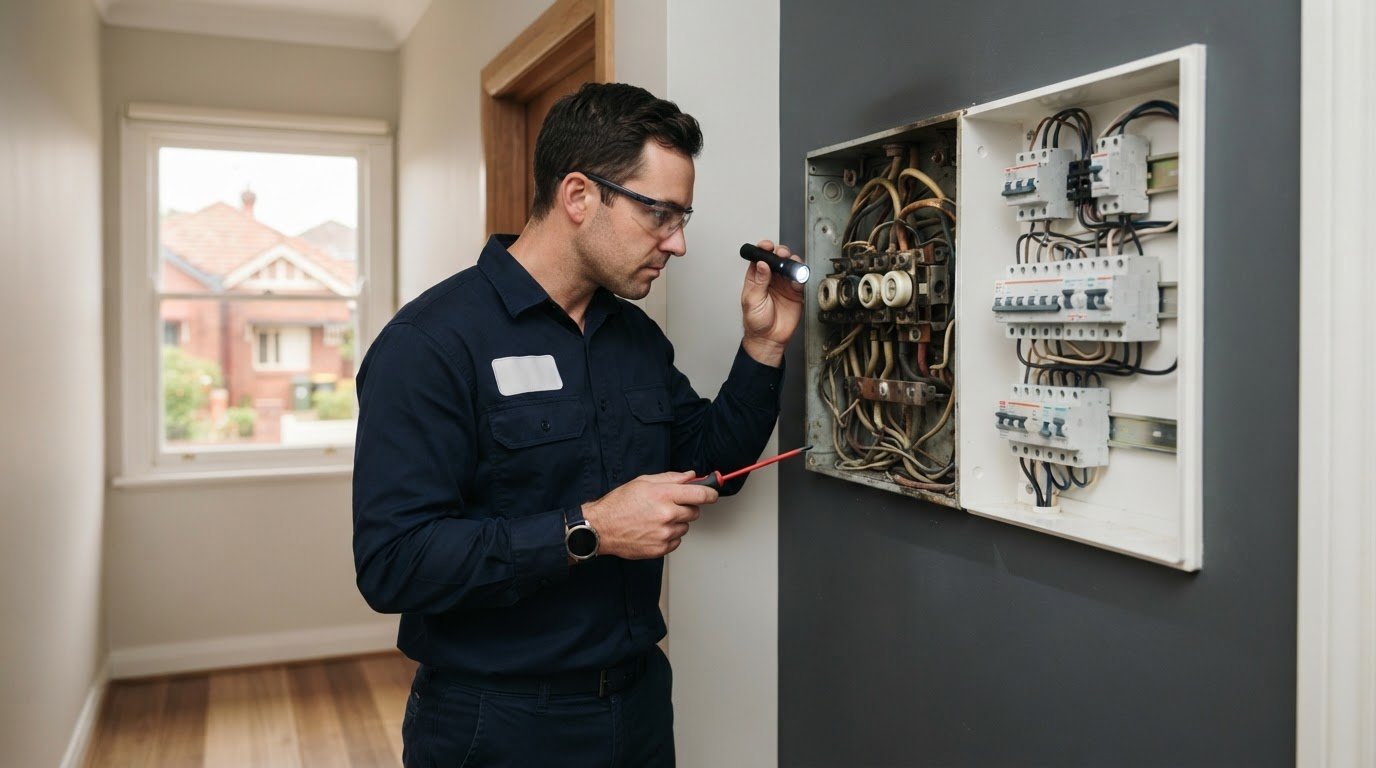
Connecting vehicle charging hardware to an original electrical panel from the 1970s or 1980s presents major structural compliance hurdles. An older communal panel often contains ageing ceramic fuses, degraded copper busbars, and inadequate physical space for sub-metering. Delivering compliant EV charging solutions for apartment buildings Sydney properties require often starts with a detailed commercial solar installation assessment or switchboard upgrade to bring the distribution system in line with AS/NZS 3000 wiring standards.
Integrating Battery Storage and Solar Carport Arrays
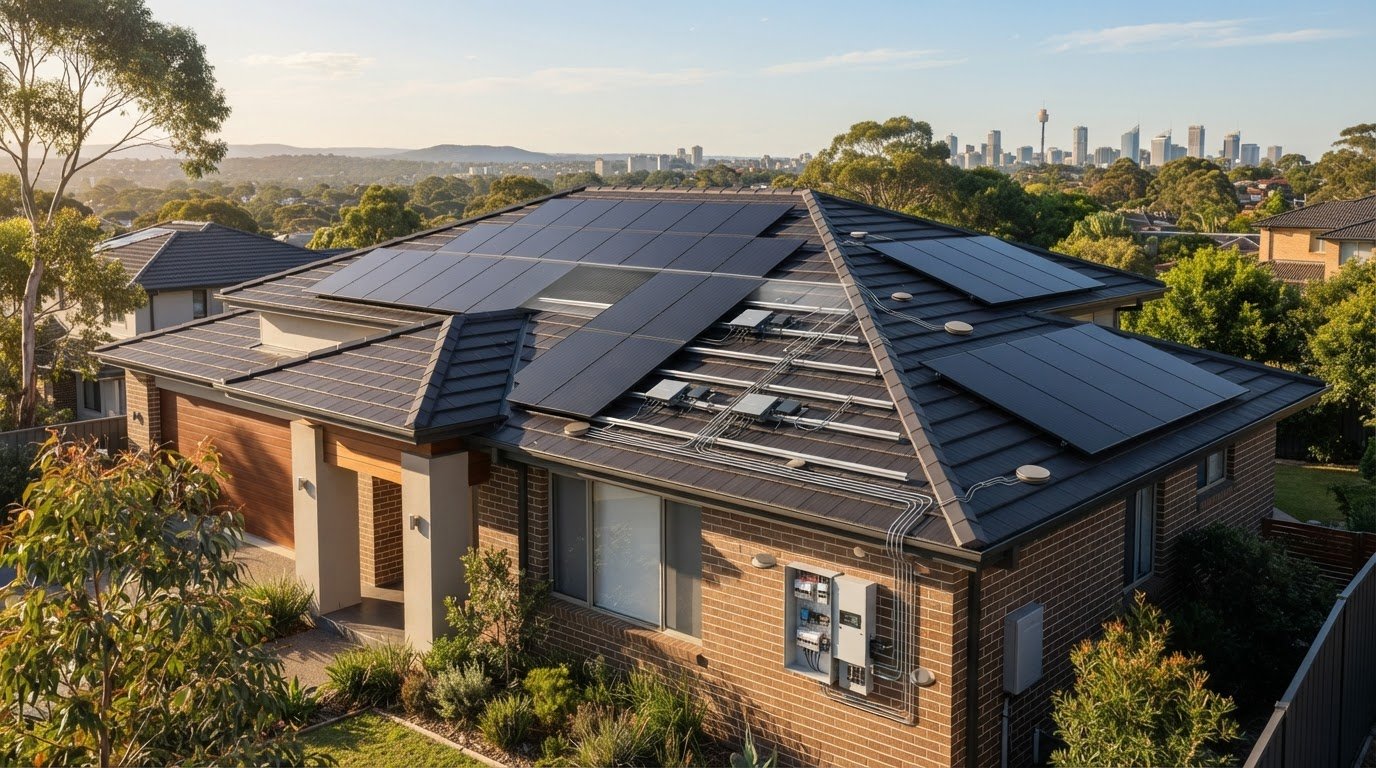
Savvy strata committees pair their charging infrastructure with rooftop generation and grid-stable battery storage to minimise long-term operating costs. Drawing massive power blocks from the grid during high peak network pricing heavily inflates communal bills. Deploying onsite commercial solar allows shared systems to capture clean daytime energy for residents parked during business hours.
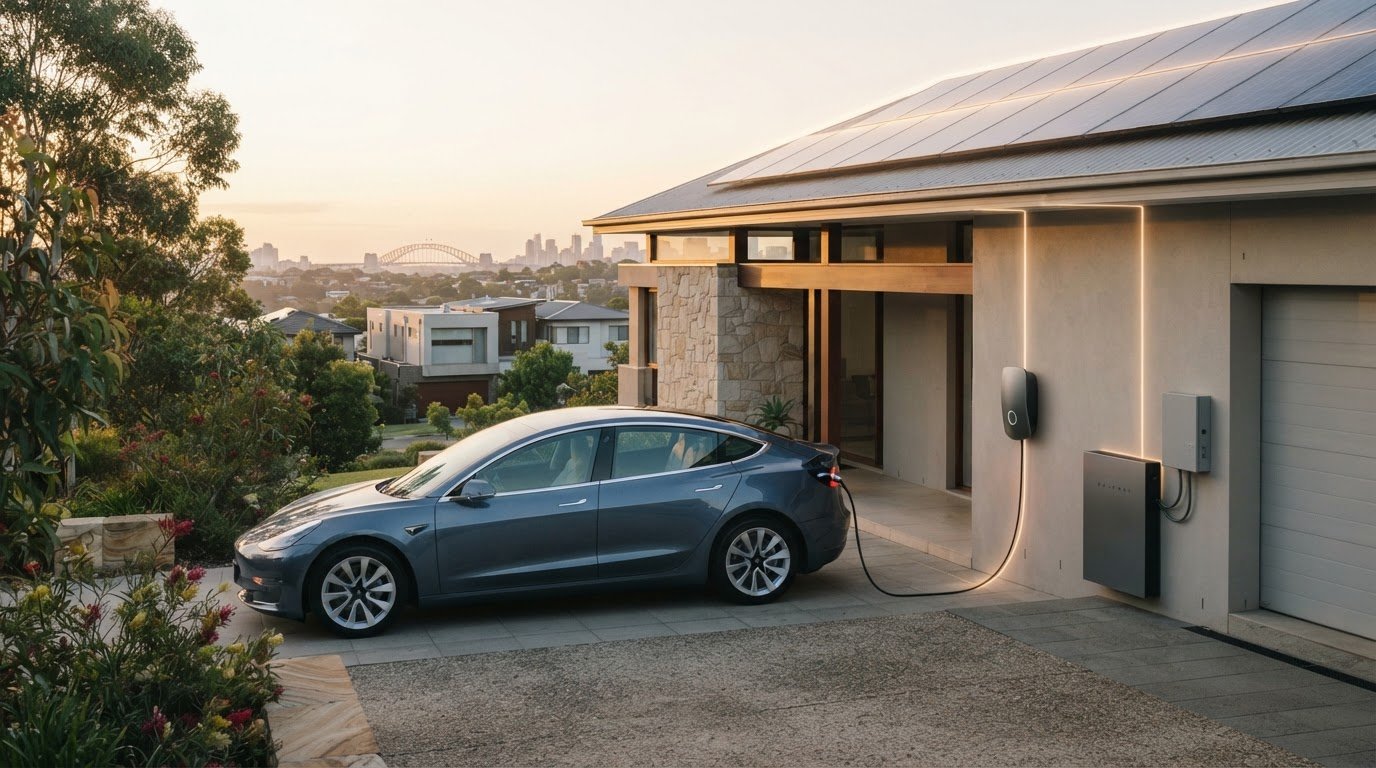
High-voltage batteries buffer this workflow by storing surplus daylight electricity and discharging during peak evening demand. Advanced modular hardware like the SigenStor system integrates solar generation, storage, and direct EV charging into an all-in-one stack. This setup shields your owners corporation from volatile peak network tariffs, lowers running expenses, and future-proofs the building’s energy ecosystem for incoming waves of electric car owners.
The Strata Approval Roadmap: Passing Sustainability Infrastructure Motions
Securing committee and owner support requires a structured, transparent process. Implementing EV charging solutions for apartment buildings Sydney strata schemes approve runs smoothest when following a clear five-step roadmap:
- Step 1: Electrical audit and survey: Survey residents to determine current and upcoming demand, then engage a licensed electrician to audit spare switchboard capacity.
- Step 2: Model and bylaw planning: Select a scalable backbone design and draft clear operational rules.
- Step 3: Table the AGM motion: Submit a formal sustainability infrastructure motion accompanied by technical quotes.
- Step 4: Professional installation: Engage licensed commercial electricians to install containment trays, isolators, and distribution boards.
- Step 5: Commissioning: Test all hardware, configure the user billing platform, and lodge compliance documentation.
NSW Strata Legislation and Voting Thresholds
Securing approval once required a 75 percent special resolution under Section 108 common property rules, allowing a minority of owners to block projects. Under current NSW strata legislation, EV charging qualifies as sustainability infrastructure. These motions now pass with a simple majority of over 50 percent of votes cast. Strata schemes must also place sustainability infrastructure on the agenda for every AGM, providing a direct legal avenue to table your plan.
Drafting Clear and Fair EV By-laws
A well-drafted bylaw protects the owners corporation against future disputes. Your motion must establish clear electricity recovery tariffs, state that charger maintenance remains the lot owner’s responsibility, and set strict rules requiring all private connections to use designated basement cable pathways. Setting these guidelines early prevents disputes over running costs.
Managing Billing, Metering, and User Access
Eliminating friction between drivers and non-drivers relies on transparent metering. While simple schemes can use bi-directional smart meters, larger buildings benefit from automated software platforms that bill drivers directly via credit card. Access is locked behind encrypted RFID swipe cards or mobile apps, ensuring unauthorised parkers cannot draw electricity from common property circuits.
Ready to present a clear, compliant proposal to your executive committee? Contact Sky High Solar and Electrical to arrange an onsite strata switchboard audit and prepare detailed engineering documentation for your next meeting.
Choosing a Sydney Commercial Electrical Partner: Safety and Compliance
Multi-residential developments contain complex high-voltage networks that domestic trade experience cannot properly address. Designing EV charging solutions for apartment buildings Sydney strata managers oversee involves three-phase commercial distribution boards, sub-main fault calculations, and strict basement fire compartmentation. Partnering with seasoned commercial contractors protects property safety and safeguards your scheme’s legal obligations.
Mandatory Certifications and Australian Standards
Every phase of an installation must adhere strictly to AS/NZS 3000 electrical installation wiring rules. Upon completing the installation, your electrical contractor must test the circuits and submit an official Certificate of Compliance Electrical Work (CCEW) to NSW Fair Trading and the relevant network distributor. Cutting corners by hiring residential handymen risks severe consequences. Installing non-compliant basement sub-boards or uncertified cable paths can invalidate your strata complex’s building insurance policy in the event of an electrical fire.
Long-Term Servicing, Support, and Energy Synergy
An effective charging network requires ongoing care, including scheduled thermal switchboard imaging, safety switch trip tests, and firmware maintenance for dynamic load management controllers. Working with a versatile commercial team also simplifies adding future upgrades, such as commercial generation or solar battery storage solutions to lower shared common property bills.
Operating as licensed electrical contractors across Sydney Metro, Parramatta, and Penrith since 2013, Sky High Solar and Electrical delivers the technical know-how needed to modernise communal electrical systems cleanly and safely.
Getting Started with Your Building Assessment
Modernising your building starts with an onsite basement carpark evaluation. During this preliminary inspection, qualified commercial technicians assess:
- Current incoming supply headrooms and main switchboard physical clearances.
- Existing cable tray routes and core penetration fire-stopping integrity.
- Cellular and Wi-Fi signal strength in the basement to ensure smooth smart billing communication.
- Lot owner demand patterns to recommend either communal bays or a scalable backbone.
This technical audit equips your strata committee with clear, documented evidence and a compliant scope of works ready for discussion at your next general meeting, delivering EV charging solutions for apartment buildings Sydney owners can trust for years to come.
Powering the Next Chapter of Sydney Strata Living
Upgrading your carpark for electric transport doesn’t require budget blowouts or building-wide power outages. By deploying intelligent dynamic load balancing and establishing clear, usage-based bylaws, your owners corporation can protect switchboard capacity while giving every resident a fair pathway to charge. NSW strata voting reforms have removed previous roadblocks, putting sustainable upgrades well within reach at your next annual general meeting.
Navigating technical compliance and network approvals runs smoothly with the right trade specialists on your side. Implementing dependable EV charging solutions for apartment buildings Sydney schemes trust begins with thorough groundwork, from physical capacity audits to certified installation.
As licensed electrical contractors serving Sydney communities since 2013, Sky High Solar and Electrical brings deep expertise in commercial switchboard upgrades, solar integration, and multi-residential infrastructure. Every project is backed by a certified Certificate of Compliance Electrical Work (CCEW) to keep your building fully protected and legally compliant. Take the first step today and request an on-site strata EV charging assessment with Sky High Solar and Electrical.
Frequently Asked Questions
Can an individual apartment owner install an EV charger in their allocated car space?
Yes, but you must obtain strata committee approval before beginning any physical electrical work. Because parking bays sit within common property boundaries, owners must table a proposal detailing cable pathways, load impact, and insurance coverage. Under NSW strata law, an owners corporation cannot unreasonably refuse sustainability infrastructure installations, provided the connection meets safety standards and your private hardware taps into compliant common containment pathways.
How does an owners corporation fairly bill residents for electricity consumed during charging?
Strata schemes use dedicated sub-metering or automated cloud billing software to track exact kilowatt-hour consumption. In modern EV charging solutions for apartment buildings Sydney schemes adopt, each charger links to an individual RFID card or app account. The user pays their metered usage directly through the software gateway, which reimburses the owners corporation for common property electricity costs without committee members needing to calculate spreadsheets manually.
What voting majority does an NSW strata committee need to approve EV charging infrastructure?
Sustainability infrastructure motions require a simple majority vote of more than 50 percent of votes cast at a general meeting. This threshold replaced the former 75 percent special resolution rule, preventing a minority of dissenting owners from blocking building-wide upgrades. Schemes must also place the formal review of sustainability infrastructure and clean transport planning onto the agenda for every Annual General Meeting.
Will our Sydney apartment building need an expensive electricity supply upgrade to support EVs?
Most apartment buildings do not require costly supply upgrades from energy network distributors like Ausgrid or Endeavour Energy. While older properties often need an internal switchboard upgrade to accommodate sub-meters and circuit protection, smart load management coordinates charging cycles within existing grid headrooms. This avoids expensive substation transformations by automatically shifting heavy vehicle charging loads away from evening household peaks into early morning hours.
What is Dynamic Load Management and why is it essential for strata carparks?
Dynamic Load Management is a smart control system that measures overall building power consumption in real time and adjusts charger output accordingly. When residential power demand spikes during dinner hours, the controller automatically reduces vehicle charging rates to protect main switchgear. As domestic usage drops overnight, the system ramps charging back up to full capacity, making practical EV charging solutions for apartment buildings Sydney residents depend on both scalable and safe.
Are basement EV chargers safe from electrical fires and water ingress?
Yes, certified commercial EV chargers are built to meet rigorous Australian safety standards, including IP54 or higher weather and dust ratings. Every individual circuit incorporates dedicated RCBO safety switches to isolate electrical faults instantly. Professional installations run all cabling through fire-rated containment and restore structural seals at every concrete penetration, ensuring the building retains complete fire containment integrity under AS/NZS 3000 wiring rules.
Can our strata scheme integrate rooftop solar panels with our shared EV charging stations?
Yes, linking commercial solar arrays and grid-stable battery storage with communal chargers is an exceptional way to slash ongoing running costs. Daytime solar generation directly powers parked vehicles or charges high-voltage storage batteries for later use. This integrated setup buffers your owners corporation against volatile peak utility rates, supplying clean local power directly to common property car bays while cutting communal electricity expenses.