

 Sydney
 0452 243 240
Blog
Residential EV Charger Installation Sydney: Home Charging Guide

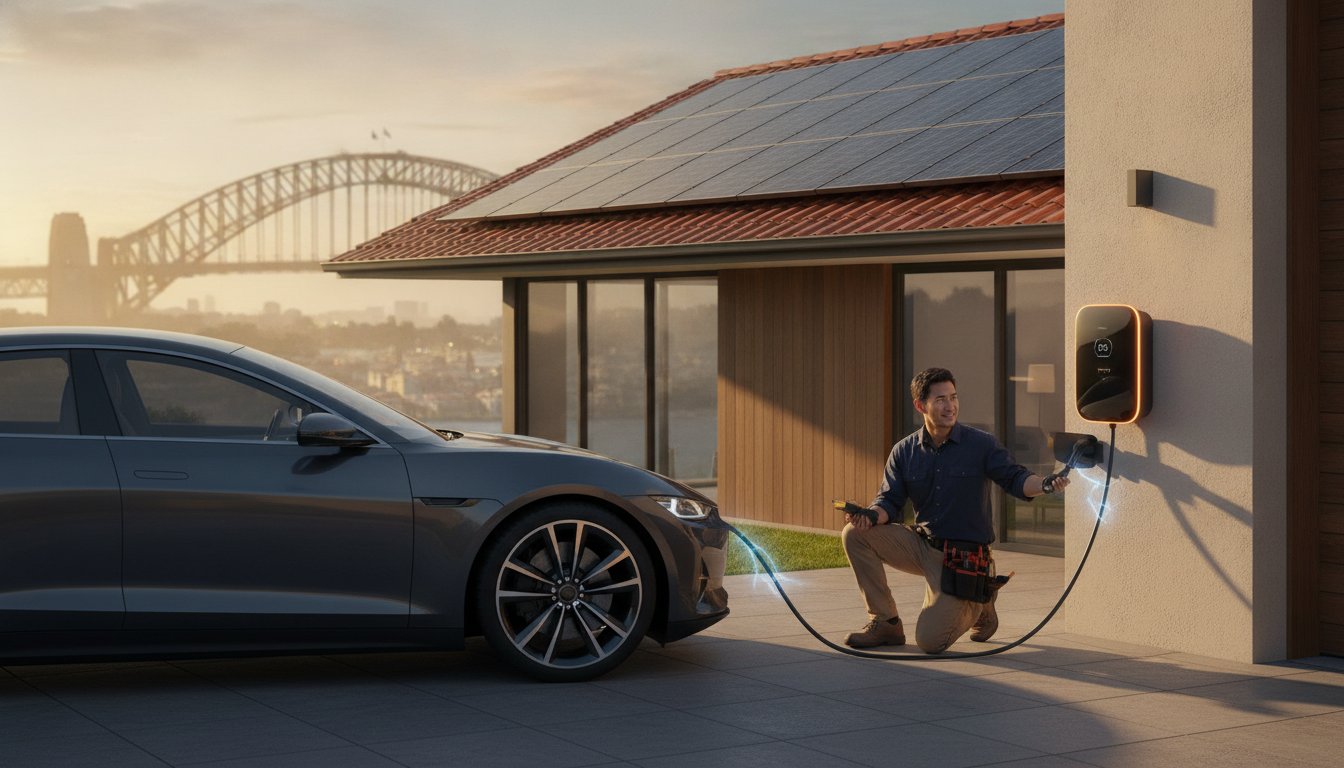
Installing a home EV charger in Sydney requires a licensed electrician to evaluate your property’s electrical capacity. Total project costs depend heavily on whether your switchboard requires a safety switch (RCBO) upgrade or a three-phase power supply expansion. Your core decisions are speed versus board capacity, solar pairing versus grid-only charging, and a fixed wall unit versus a portable cable if you rent. Contact us directly to get a personalised quote tailored to your local Sydney property requirements.
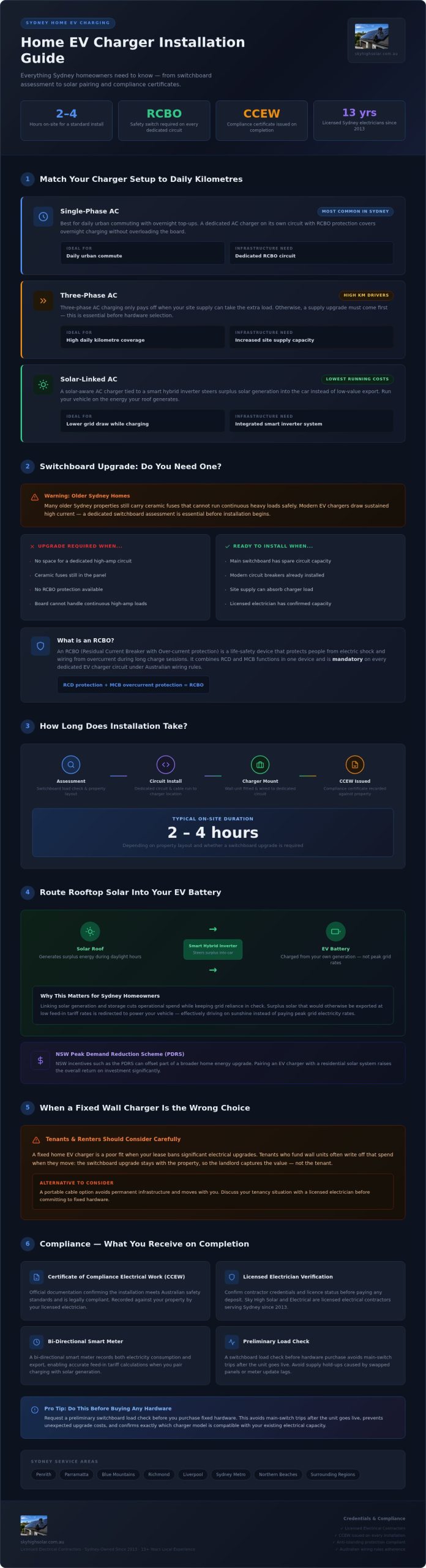
Key Takeaways: Residential EV charger installation in Sydney requires a licensed electrician to install a dedicated circuit with a safety switch (RCBO) and provide a compliance certificate.
- Standard installations typically take 2 to 4 hours on-site depending on your property layout.
- Older Sydney homes require a switchboard upgrade unless the existing panel can safely handle continuous high-amp loads.
- Single-phase setups suit most urban commutes while three-phase is best for high daily kilometer drivers.
- Sky High Solar and Electrical provides the mandatory CCEW document to verify your installation meets Australian safety standards.
Match your charger setup to daily kilometres and board capacity
Your daily driving range and household electrical capacity decide which home EV charger fits. Existing supply limits often dictate hardware choices before brand preference does.
Typical situations we see on Sydney jobs:
- Urban commute on single-phase: a dedicated AC charger on its own circuit with RCBO protection covers overnight top-ups without overloading the board.
- High daily kilometres: three-phase AC charging only pays off when your site supply can take the extra load; otherwise you plan a supply upgrade first.
- Solar-heavy household: a solar-aware AC charger tied to a smart hybrid inverter steers surplus generation into the car instead of low-value export.
| Setup Type | Ideal Usage | Key Infrastructure Need |
|---|---|---|
| Single-Phase AC | Daily urban commuting | Dedicated safety switch (RCBO) protection |
| Three-Phase AC | High daily kilometre coverage | Increased site supply capacity |
| Solar-linked AC | Lower grid draw while charging | Integrated smart inverter system |
For long-term running costs, read about solar and battery pairing so you can power the vehicle from energy you generate on site. Linking generation and storage cuts operational spend while you keep grid reliance in check.
Fit a safety switch (RCBO) on the dedicated circuit so the installation meets Australian wiring rules and life-safety requirements. Ask local specialists who know Sydney boards to assess your switchboard capacity before you buy fixed hardware.
How much does an EV charger install cost in Sydney?
The total investment depends on your property layout, home EV charger model, and existing electrical capacity.
Adding a dedicated circuit is closer to running a new high-flow water line through an older house than to plugging in a portable lead. Standard jobs stay straightforward when your main switchboard already carries the extra load without modification.
Older Sydney homes often need a switchboard upgrade to manage the increased current safely, and you must fit a modern safety switch (RCBO) to comply with Australian standards. Pairing the charger with a residential solar system raises the return by running the vehicle on daylight energy rather than peak grid rates.
Licensed installers issue a valid certificate of compliance electrical work (CCEW) so the work is recorded against the property. NSW incentives such as the Peak Demand Reduction Scheme (PDRS) can also offset part of a broader home energy upgrade.
Is your current board ready for high-power vehicle charging?
Over on the forum.cleanenergyreviews.info discussion titled "Melbourne South East & Mornington solar installers", one user asks:
"Is that after STC rebates? $6200 seems a little dear for that system if so, and I’d say $9k for Seraphim and Enphase ~4.75kW seems high too." (source)
That thread shows how easily hardware prices and rebate timing get mixed together. A written, personalised quote for your Sydney board and cable run removes that guesswork before you commit.
Request a personalised quote for precise costs on your property layout.
Do You Need a Switchboard Upgrade for an EV Charger?
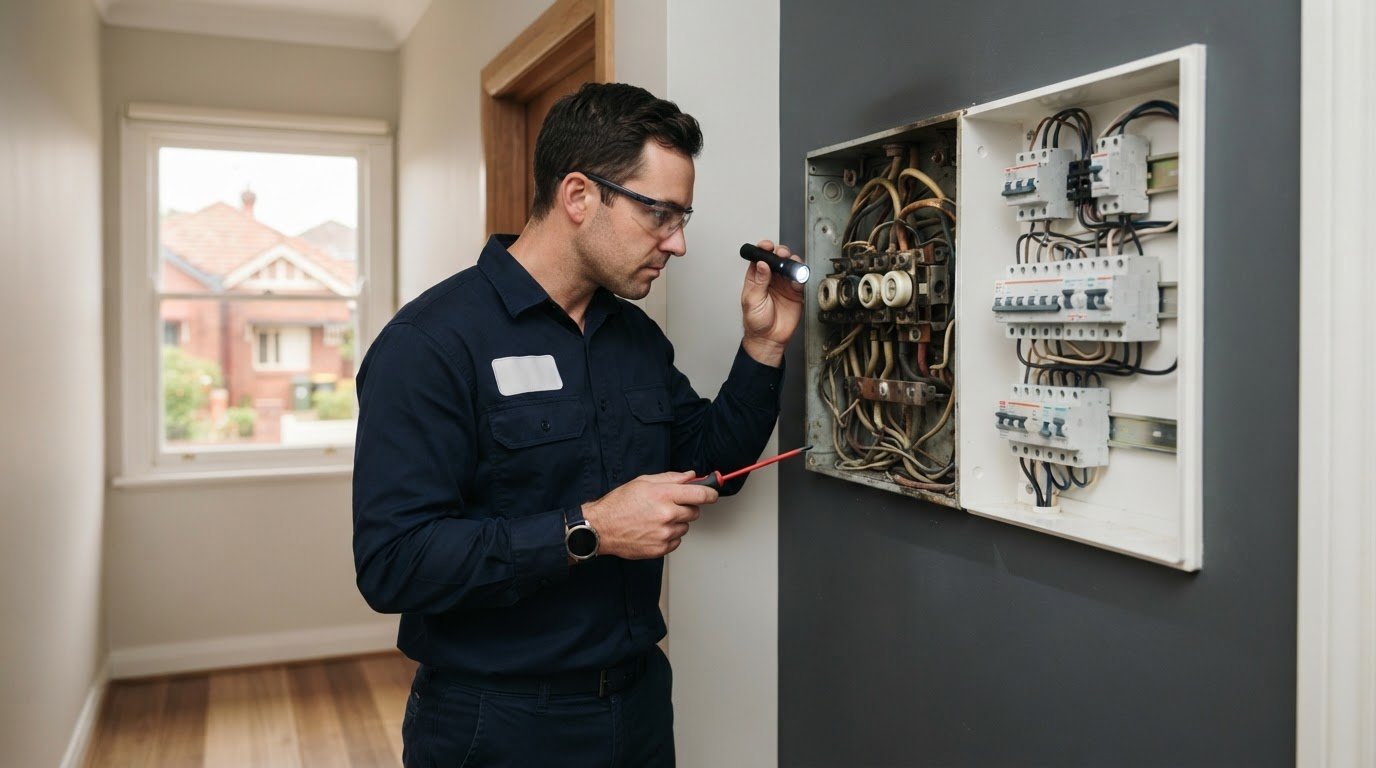
You need a switchboard upgrade when the existing panel lacks space or protection for a dedicated high-amp circuit. Older Sydney homes still carry ceramic fuses that cannot run continuous heavy loads safely. Modern chargers need a dedicated safety switch (RCBO): an RCBO is a life-safety device that protects people from electric shock and wiring from overcurrent during long charge sessions.
Supply hold-ups and swapped panels can quietly push your date out. Homeowners lose time when ordered parts change without notice or when the bi-directional smart meter update lags behind the physical install. Confirm your contractor’s credentials and licence status before you pay a deposit.
Upgrading the panel widens capacity the way extra lanes clear a bottleneck at peak hour. On completion, certified electricians hand over a formal certificate of compliance electrical work (CCEW) so the work sits on record. Review full EV charging options if you want the safety hardware scoped with the charger in one visit.
Tip: Request a preliminary switchboard load check before you purchase fixed hardware so you avoid main-switch trips after the unit goes live.
When a dedicated wall charger is the wrong call
A fixed home EV charger is a poor fit when your lease bans significant electrical upgrades.
Tenants who fund wall units often write off that spend when they move: the switchboard upgrade stays with the property, so the landlord captures the value. Home charging also adds little if you already rely on public fast chargers or drive only short daily distances.
Renters are usually better served by a standard portable cable that travels with the vehicle. Buyers have been left frustrated when promised panels or refunds failed to appear from unreliable providers, so treat vague upfront promises with caution.
Work with a documented solar power provider in Sydney when you do combine generation and charging, and demand a clear certificate of compliance electrical work (CCEW) on every major job. Choose portable gear if you move yearly; dedicated hardware suits long-term homeowners who will keep the board upgrade.
How long does it take to install an EV charger?
Standard home EV charger installations in Sydney usually take between two and four hours on site.
A competent team handles the administrative steps so you are not chasing the electricity provider or living with half-finished work.
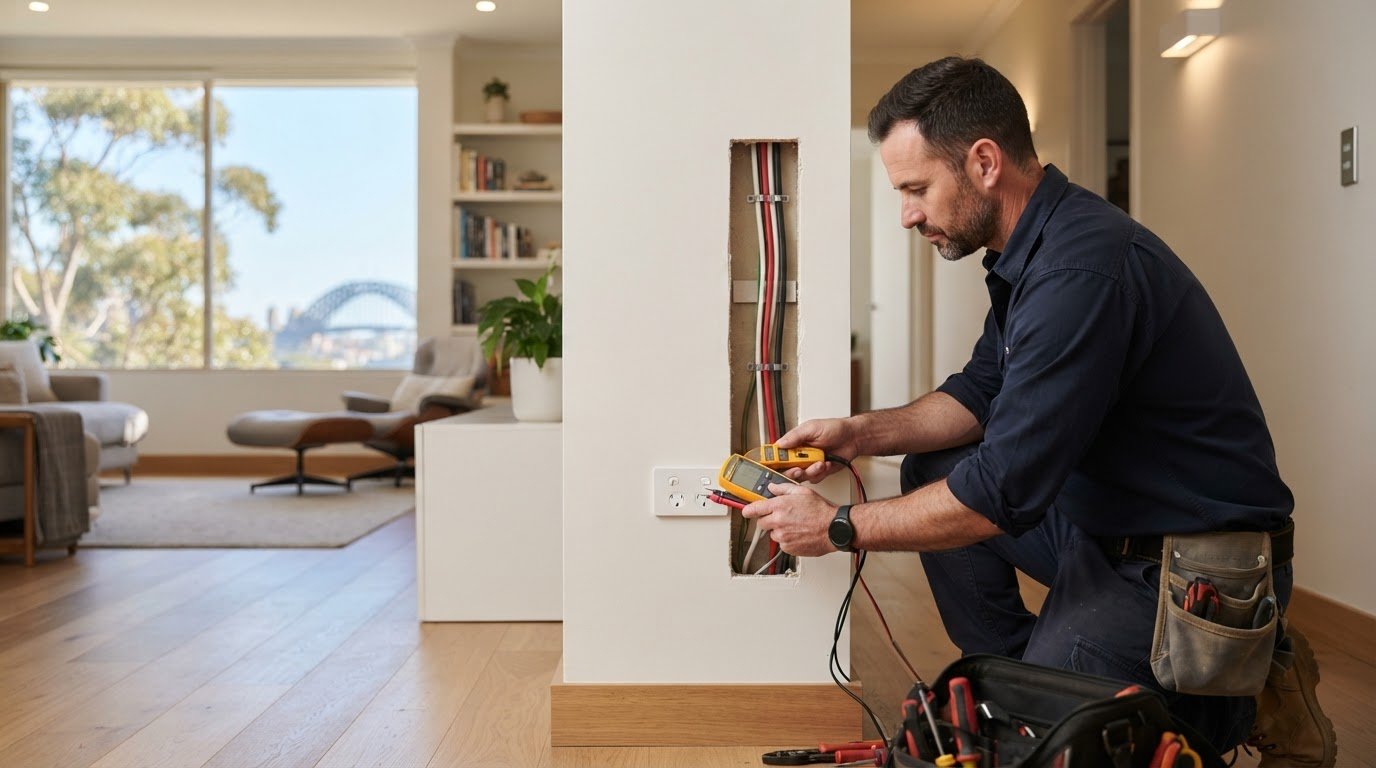
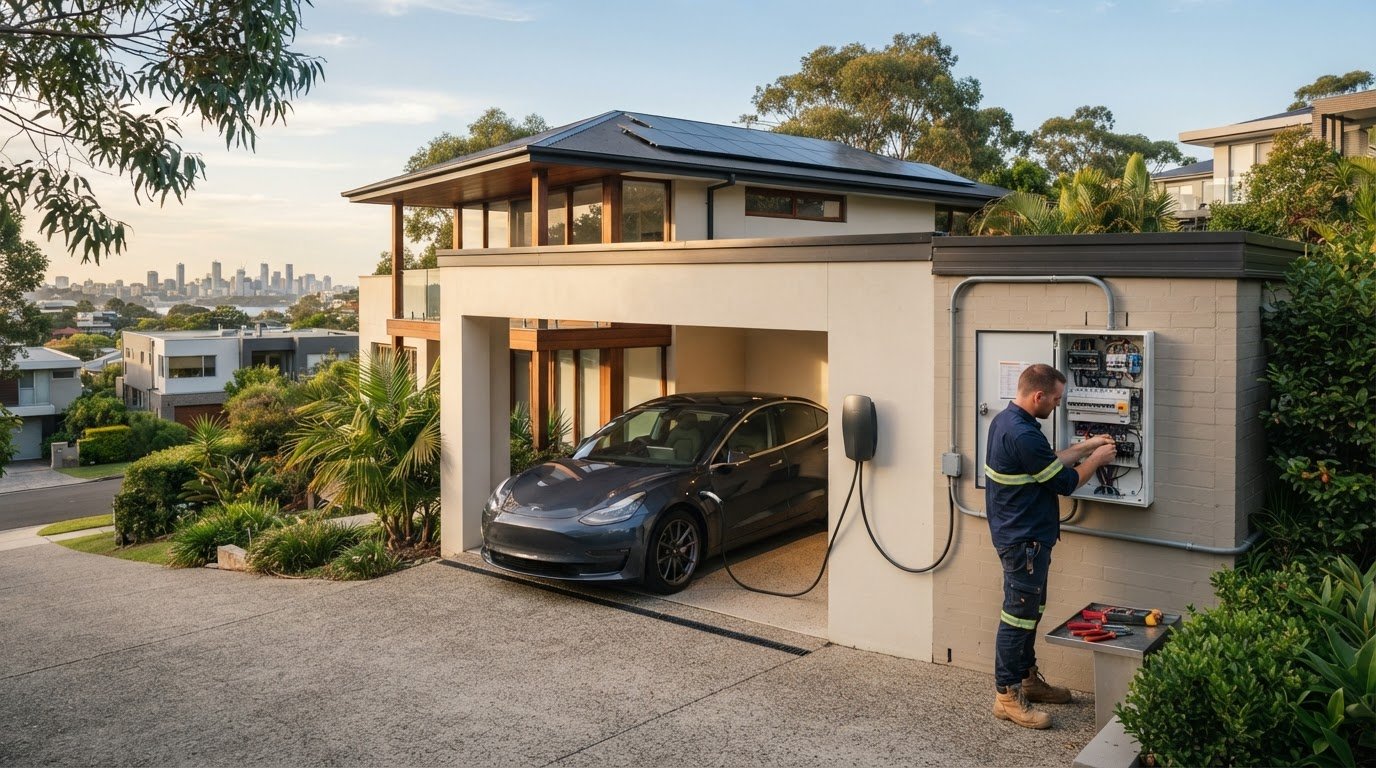
- Assess the panel: inspect the existing board to decide whether a switchboard upgrade is required for safety.
- Mount the hardware: fix the unit on the wall with heavy-duty conduit back to the main supply.
- Safety testing: fit a dedicated safety switch (RCBO) and verify the circuit against current Australian wiring rules.
- Final compliance: issue a certificate of compliance electrical work (CCEW) to close the job on the record.
Fully licensed installers lodge network notifications on the day, which prevents the paperwork delays that often appear after the tools leave site.
A commenter in the forum.cleanenergyreviews.info thread "Melbourne South East & Mornington solar installers":
"The building is only 1 year old and the builder has installed an A/C cable from the roof to the switchboard in preparation for solar. The whole install with micro inverters should be relatively easy." (source)
Pre-wiring shortens physical mounting, yet certified electricians still verify that the full circuit meets today’s safety standards before sign-off.
Route rooftop solar straight into your EV battery
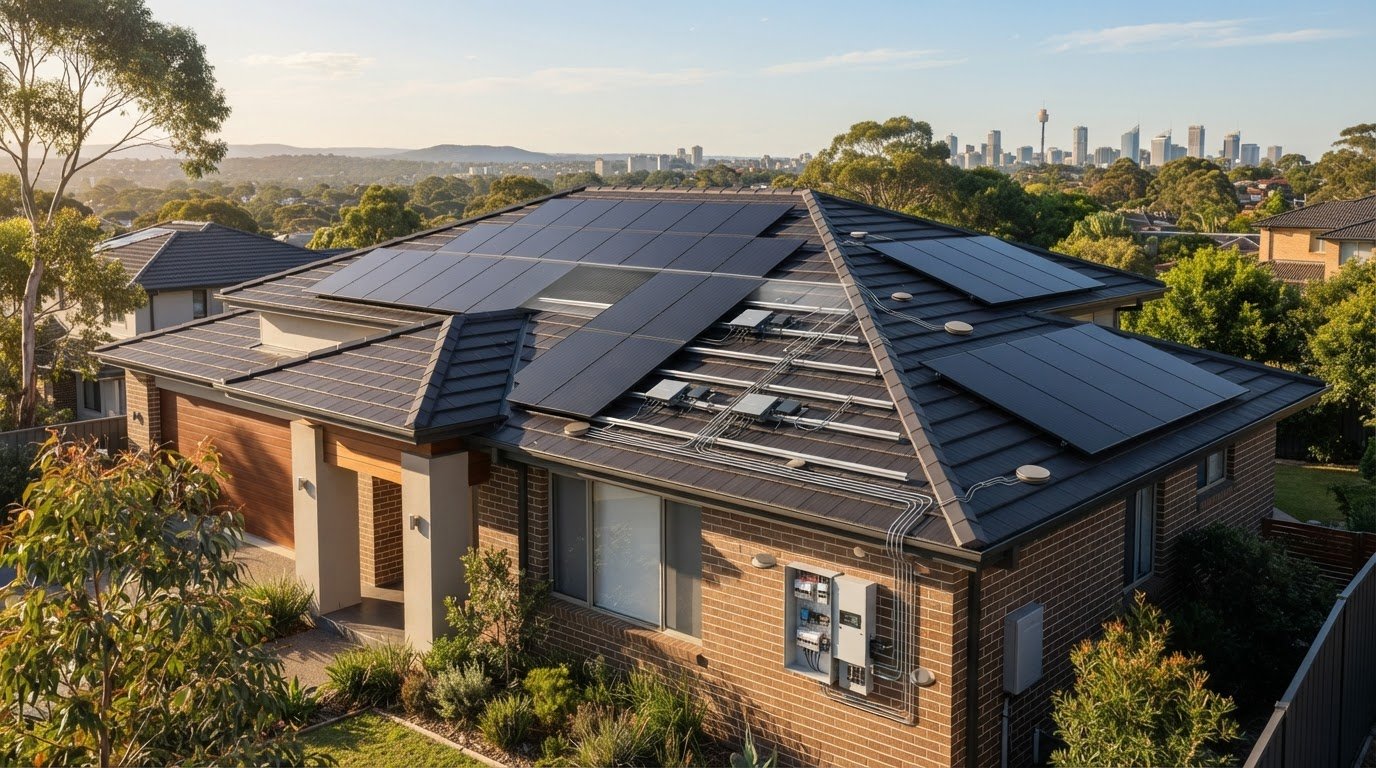
Match your home EV charger to your solar inverter capacity so the vehicle draws from free sunshine first.
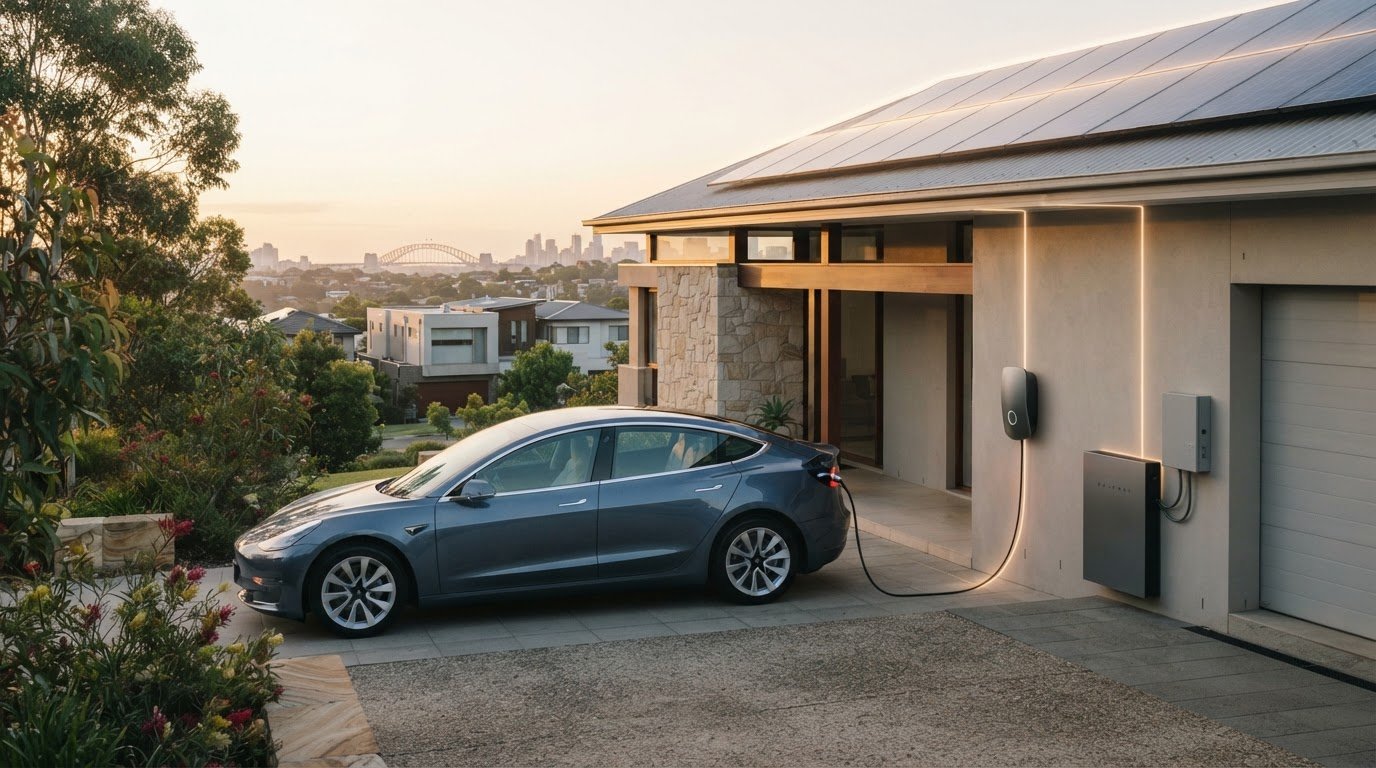
On client jobs, a smart hybrid inverter (GoodWe ET G2) lets rooftop panels, home storage, and the vehicle share live data. Running generation and battery storage together holds driving costs down and buffers the house against grid price spikes.
An integrated solar-aware charger also stops the main board from overloading when the array peaks: surplus power moves into the car battery instead of exporting for a weak feed-in return.
Pick a basic solar-aware charger if your daily distances stay short. Move to an advanced smart system with dynamic load balancing when you run more than one vehicle or want tighter control of self-consumption.
Sky High Solar and Electrical can assess your current array and board so the finished install meets local safety rules. Reach out when you want a personalised scope for solar-linked charging at home.
Secure brand warranties and rebate timelines before stock slips
Order home EV charger hardware early enough to clear NSW rebate application windows before they close.
Buyers lose incentives when supply chains push final sign-off past the deadline. Confirmed stock is the practical defence against that slip. Standard hardware lead times in Sydney run two to four weeks; faster turnarounds are possible when the unit is already on hand.
A licensed team runs the full process and includes a valid certificate of compliance electrical work (CCEW) with the job. That document records electrical safety compliance for the work performed. According to the EESS RCM compliance guide 2026, electrical equipment must carry the Regulatory Compliance Mark to certify Australian safety standards.
High-power units often need a switchboard upgrade fitted with a modern safety switch (RCBO) so the board can carry the continuous current. Sky High Solar and Electrical coordinates the sequencing so the install stays on the planned date.
Speak with the Sydney team when you are ready to lock compliant hardware and keep your rebate path intact.
Frequently asked questions
How much does an EV charger install cost in Sydney?
Installation expenses depend on cable distance, hardware brand, and panel capacity. Local market rates for supply and setup vary with property layout, so a personalised quote is the reliable way to pin a figure to your home.
Will my switchboard need to be upgraded for an EV charger?
Older electrical panels often need a switchboard upgrade to carry the continuous high-current load of dedicated charging hardware. A dedicated safety switch (RCBO) protects people and wiring from shock and Overcurrent during long charge sessions. Licensed electricians evaluate mains capacity before any unit is mounted.
Do I need three-phase power for a home EV charger?
Single-phase power covers daily top-ups for most suburban commutes on a dedicated home EV charger. Three-phase simply raises maximum charge speed, which helps drivers with high daily mileage. You can charge effectively on standard single-phase wiring when your kilometres stay moderate.
Can I add an EV charger to my existing solar and battery system?
Modern EV units connect with existing rooftop solar and storage systems such as the Tesla Powerwall 3 to lift self-consumption. Smart controls route excess solar generation into the vehicle battery and cut mains draw while you charge.
Is the installation safe and compliant?
Every residential EV charger installation in Sydney must comply with Australian wiring rules and local utility regulations. Your installer provides an official certificate of compliance electrical work (CCEW) once testing concludes. That document shows the system meets statutory safety standards.
Ready for Your Sydney EV Charger Installation in 2026?
The same three decisions you started with still apply: charger speed versus board capacity, solar pairing versus grid-only charging, and a fixed wall unit versus a portable cable if you rent. A residential EV charger installation on a Sydney property must meet Australian standards, with safety as the non-negotiable baseline. The Sky High Solar and Electrical team fits your home EV charger with a dedicated safety switch (RCBO) and lodges the certificate of compliance electrical work (CCEW) with the relevant authorities.
Older switchboards often need a modern switchboard upgrade before they can carry the extra load. Request your personalised quote at skyhighsolar.com.au to scope a system that matches your board, your kilometres, and your solar plans. More on this: Solar Products Sydney.