

 Sydney
 0452 243 240
Blog
Solar Battery Price Sydney 2026: The Complete Cost vs Value Guide


What if the most expensive solar battery you buy in 2026 isn’t the one with the highest invoice total, but the one that fails to qualify for the latest NSW grid incentives? You’ve likely noticed that while energy independence is more achievable than ever, finding a transparent solar battery price in Sydney has become difficult amidst shifting federal rebates and complex VPP contracts. At Sky High Solar and Electrical, we understand that you want to move away from confusing retail jargon and toward a solution that offers genuine, long-term dependability for your home.
This guide provides the technical clarity you need to invest with absolute confidence. We’ll break down the real-world costs and value of premium storage solutions, from the modular intelligence of Fox ESS to the integrated power of the Tesla Powerwall 3. You’ll discover how the new Home Energy Saver Program affects your ROI, the specific tiers of the federal point-of-sale discount, and exactly what it takes to achieve a shorter payback period in the current Sydney market.
Key Takeaways
- Understand how modular technology and federal point-of-sale discounts impact the final solar battery price for Sydney households in 2026.
- Compare the performance and long-term value of premium storage solutions like the Fox ESS CQ7 against the Tesla Powerwall 3 and integrated SigenStor systems.
- Learn how to stack the 2026 NSW Home Energy Saver Program incentives with federal rebates to maximise your upfront savings and lower the barrier to entry.
- Discover why rising electricity costs and increased self-consumption are significantly shortening payback periods for modern Sydney installations.
- Identify the critical technical factors, including switchboard compliance and VPP readiness, that protect your energy investment from becoming obsolete.
How Much Does a Solar Battery Cost in Sydney in 2026?
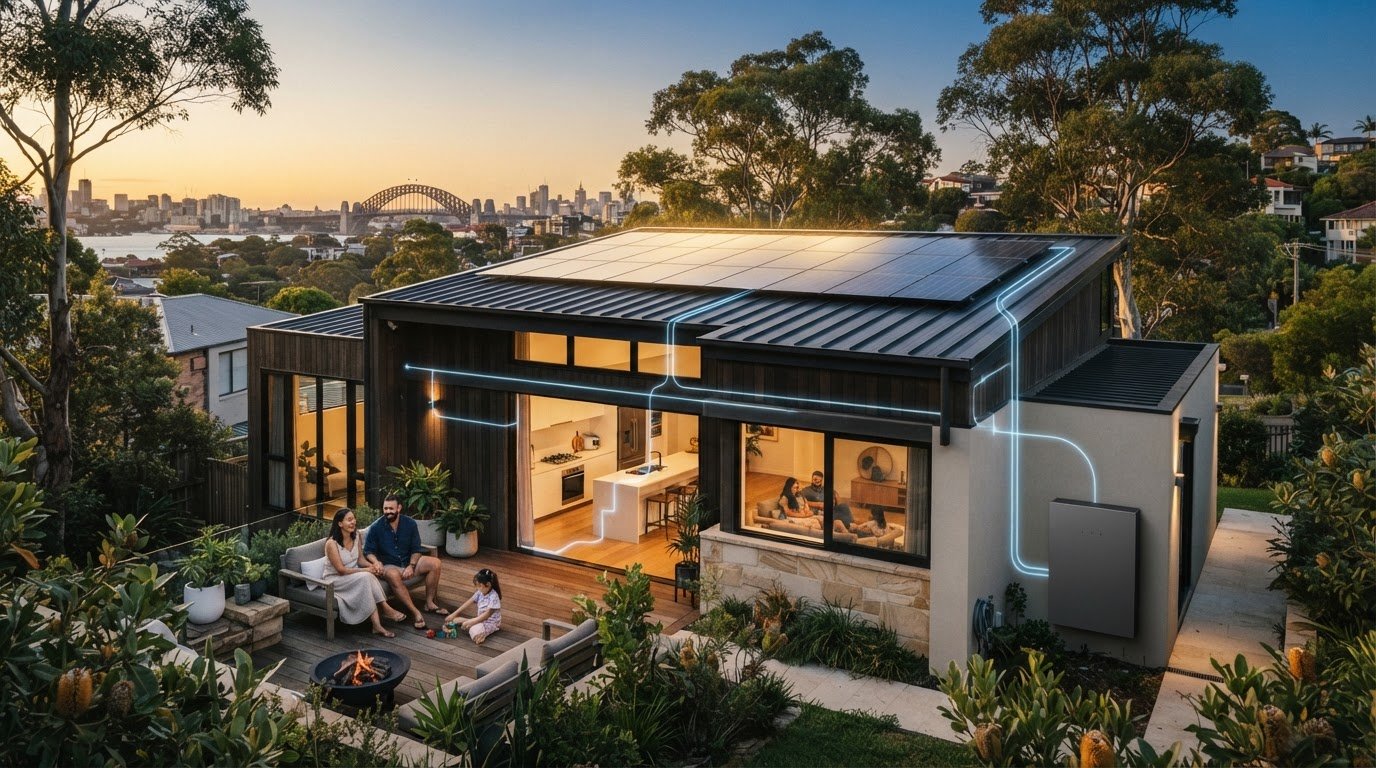
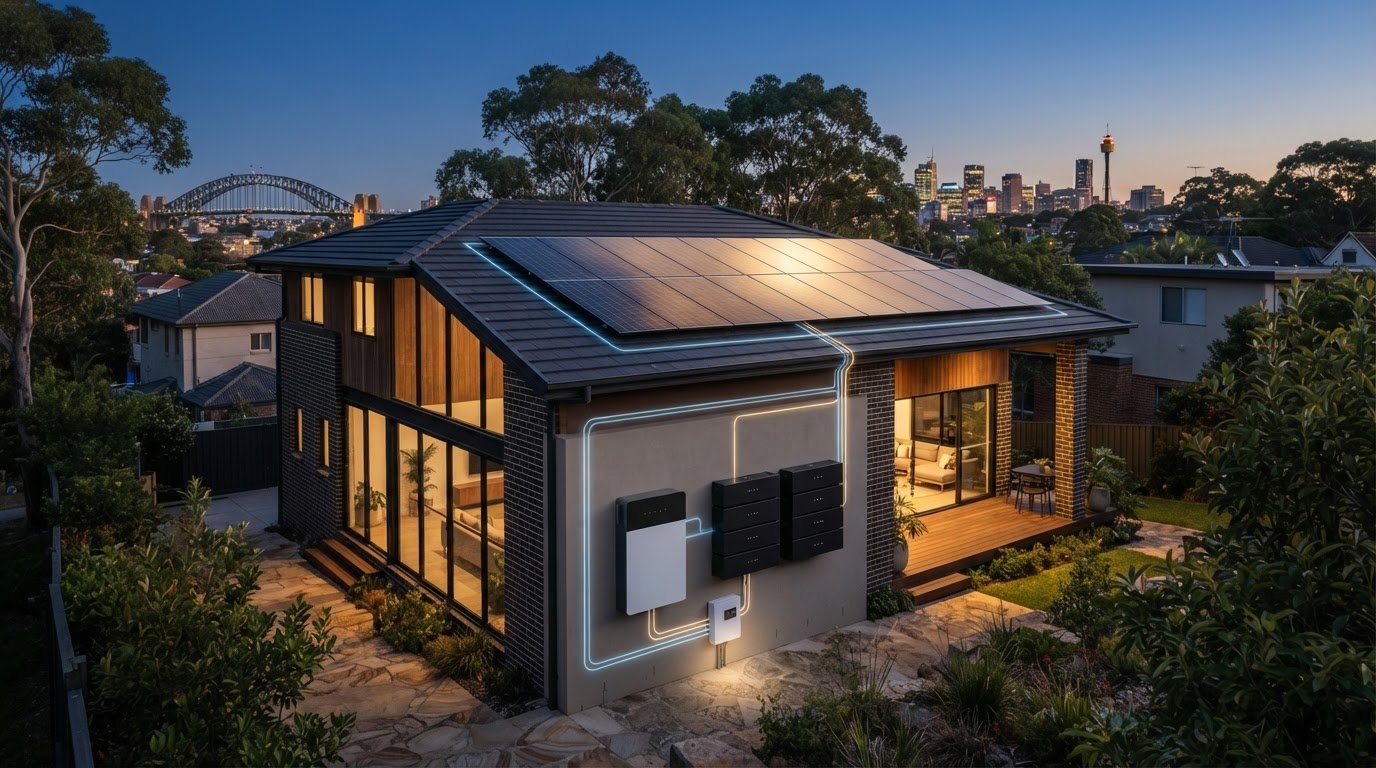
Sydney’s energy market has reached a definitive turning point. As of mid-2026, the combination of the new NSW Home Energy Saver Program and adjusted federal point-of-sale discounts has fundamentally changed the financial equation for residential storage. While earlier years were defined by high entry costs, the current solar battery price landscape is driven by high-voltage efficiency and modular scalability. For most Sydney households, a 5kWh system now serves as an entry point for evening self-consumption, while 10kWh to 15kWh systems have become the standard for those seeking true energy independence or backup security during grid outages.
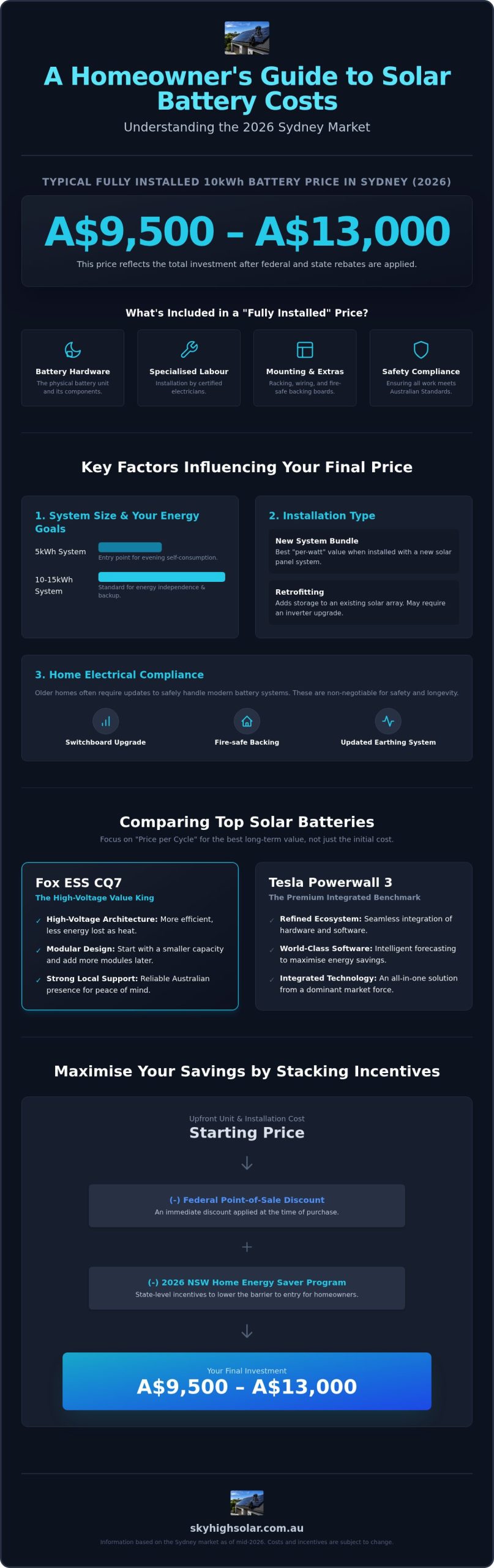
In 2026, the average installed cost for a high-quality 10kWh solar battery in Sydney typically ranges between A$9,500 and A$13,000 once federal and state rebates are applied. This figure represents the “fully installed” price, which is far more relevant than the “unit price” often advertised online. A unit price usually covers just the hardware, whereas a professional installation includes the specialised labour, mounting equipment, and electrical safety components required to meet Australian standards. The hardware itself is only one part of the solar battery price equation, as the specific layout of your home and its electrical infrastructure can influence the final investment.
The Components of Your Final Quote
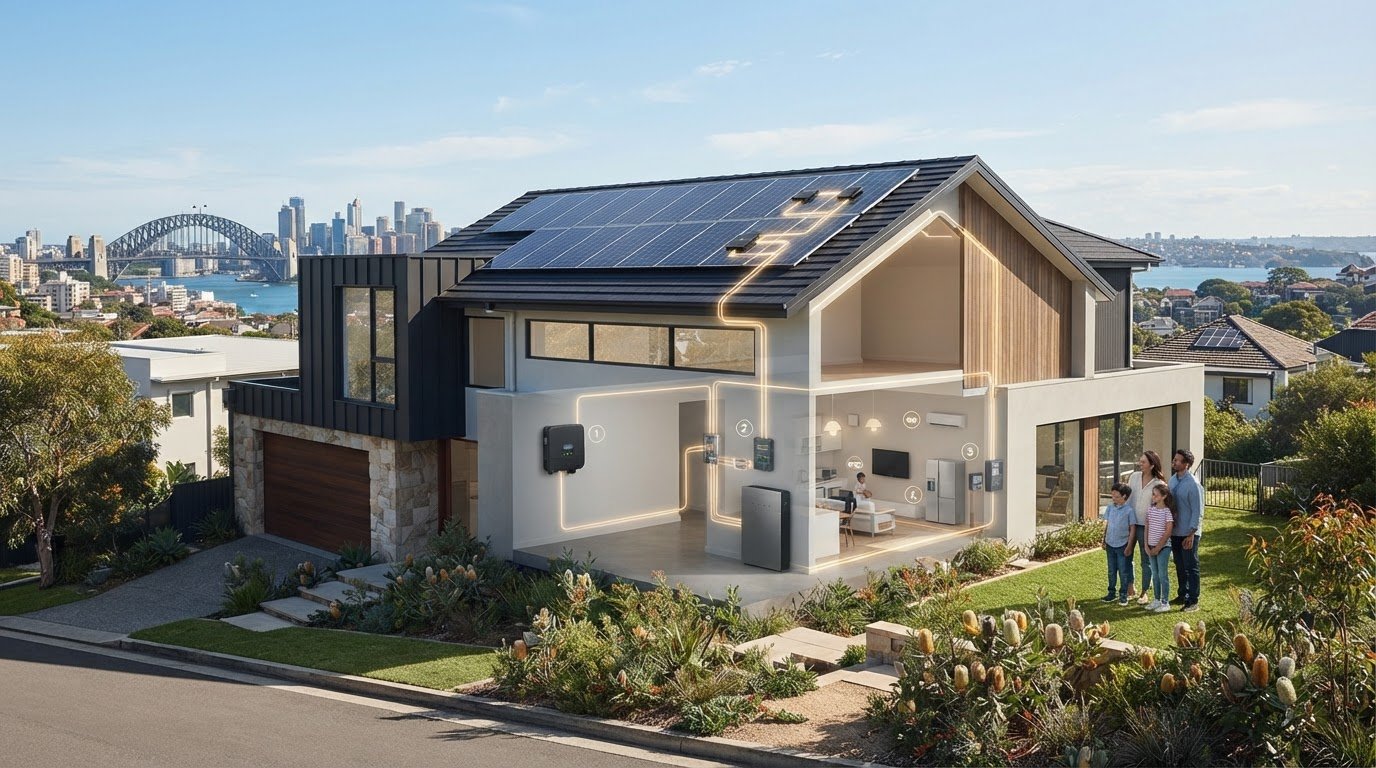
Your final investment is determined by more than just the brand name on the casing. Hardware costs vary between modular systems like the Fox ESS CQ7 and integrated “all-in-one” units. Beyond the box, Sydney-specific factors play a major role. Older homes in suburbs like Marrickville or Ashfield often require switchboard upgrades to handle the bidirectional power flow of modern home energy storage systems. Compliance is non-negotiable; this includes installing fire-safe backing boards and ensuring your home’s earthing system is up to current regulations. These essential extras ensure the longevity and safety of your system, protecting your home while providing peace of mind.
Retrofitting vs. New System Bundles
If you’re adding storage to an existing 6.6kW solar array, the process is slightly different than installing a brand-new bundle. Retrofitting often involves an AC-coupled battery, which comes with its own internal inverter, or replacing your existing string inverter with a hybrid model like the GoodWe ET G2. Many homeowners are surprised to learn that the “solar ready” label on older inverters was often a marketing myth; most require a significant upgrade to actually manage a battery. While a new 10kW solar and battery bundle offers the best “per-watt” value, retrofitting remains a powerful way to stop exporting your valuable excess energy to the grid for minimal returns. Choosing between AC and DC coupling will depend on your existing hardware’s age and your specific goals for system efficiency.
Comparing the Best Solar Batteries: Fox ESS, Tesla, and SigenStor
Selecting the right storage system involves more than comparing the initial solar battery price. To find the true value, savvy Sydney homeowners look at the “Price per Cycle”. This metric accounts for the total investment divided by the battery’s expected lifespan and energy throughput. While a budget-focused unit might seem appealing today, a premium high-voltage system often delivers a lower cost over its ten or fifteen-year service life due to superior efficiency and slower degradation. Choosing the right architecture now prevents the need for costly upgrades as your household energy demands evolve.
Fox ESS CQ7: The High-Voltage Value King
The FOX ESS CQ7 High Voltage Storage Battery has quickly become a favourite for those seeking high performance without the brand tax of more famous names. Its high-voltage (HV) architecture is inherently more efficient than traditional low-voltage alternatives, meaning less energy is lost as heat during the charging and discharging process. The modular design is a significant advantage for budget management; you can start with a smaller capacity and simply add more modules as your needs grow. This flexibility, combined with a strong local support presence in Australia, makes it a reliable, future-proof choice for modern homes.
Tesla Powerwall 3: The Premium Benchmark
Tesla remains a dominant force in the Sydney market, and the Powerwall 3 represents a significant leap in integrated technology. When you invest in a Tesla system, you’re paying for a refined ecosystem and a world-class software interface that maximises energy savings through intelligent forecasting. The Powerwall 3 features an integrated solar inverter, which simplifies the installation process but does create a single point of failure for both your panels and storage. Despite a higher entry point, its software superiority and seamless VPP integration often justify the cost for users who value a set and forget energy solution.
SigenStor: Integrated Solar and EV DC Charging
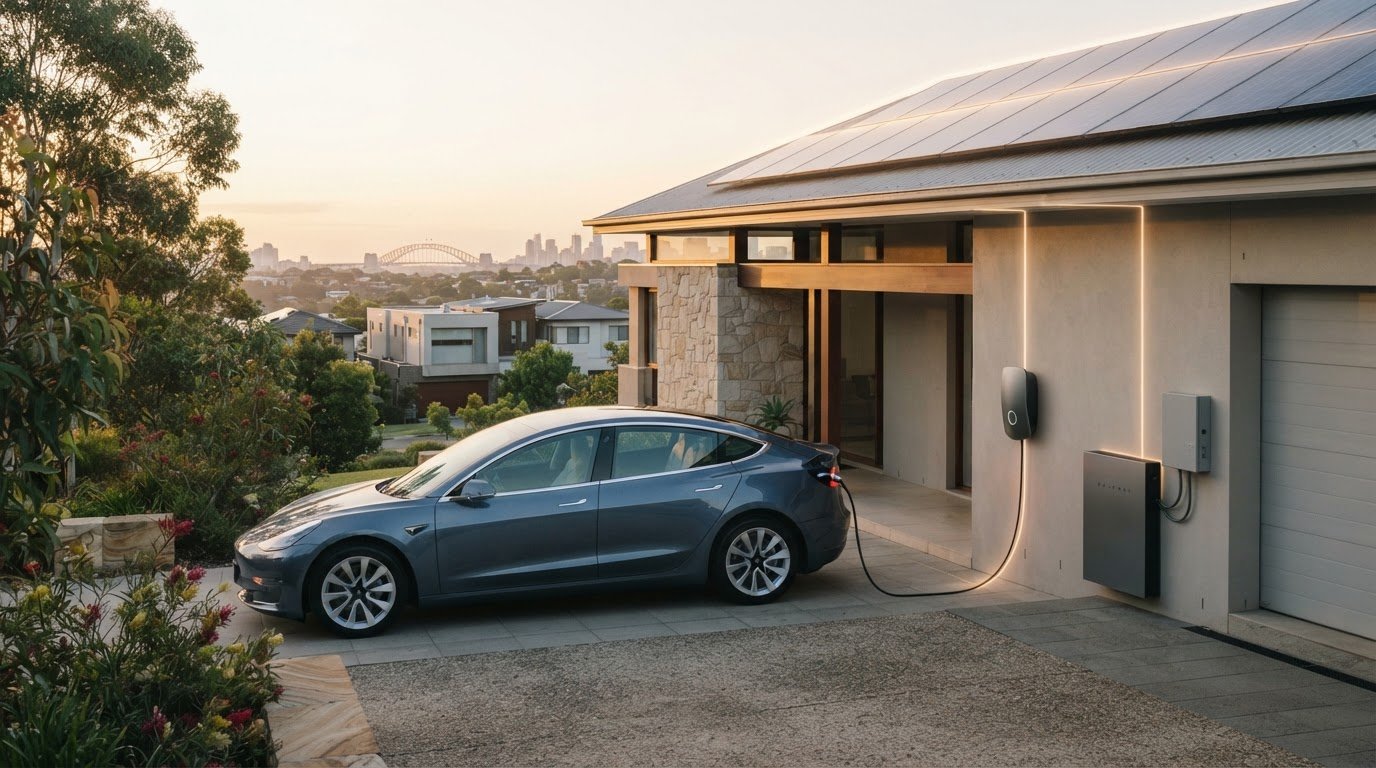
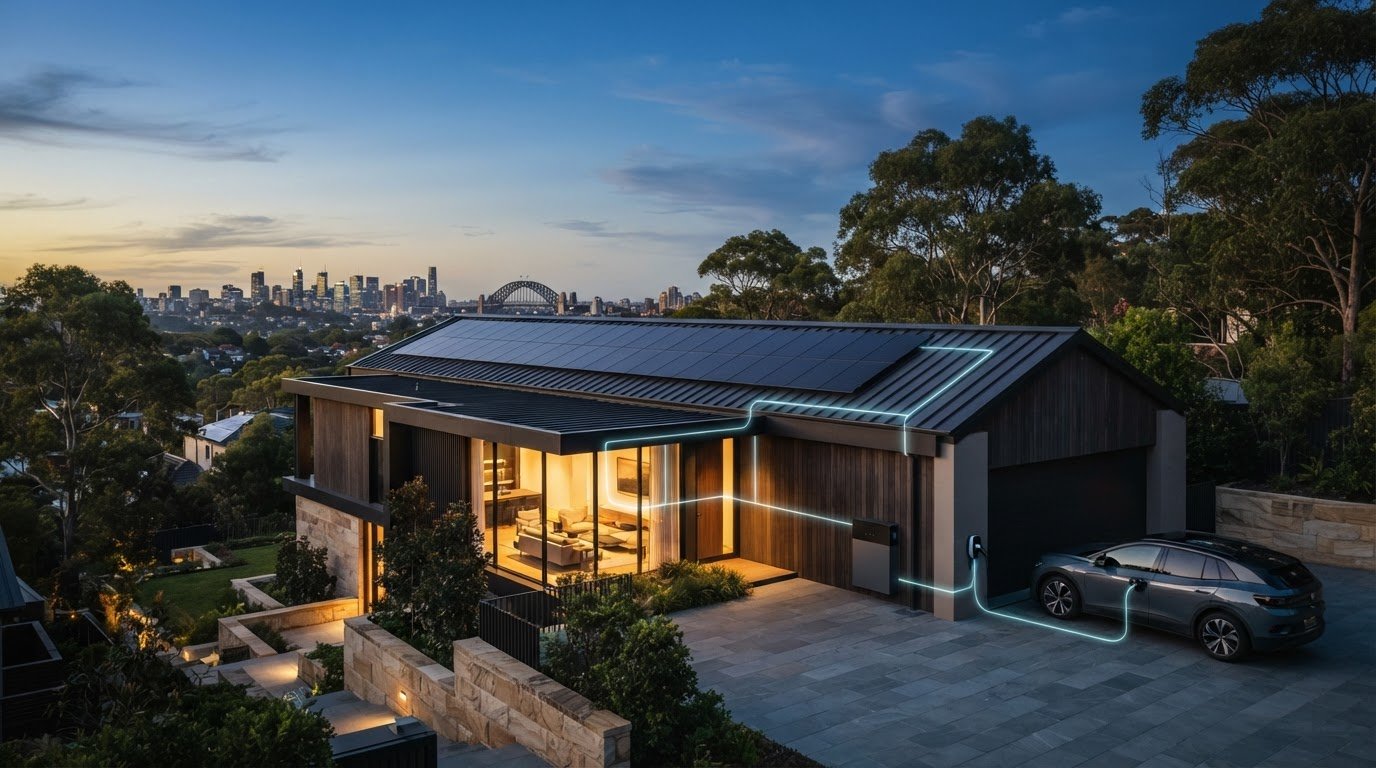
For households planning to transition to electric vehicles, the SigenStor Integrated Solar Inverter & EV DC Charger offers a unique value proposition. This 5-in-1 system combines the inverter, battery modules, and an EV DC charger into a single, sleek stack. By bundling these components, you save significantly on the separate labour and hardware costs of a standalone EV charger installation later. It’s an elegant, space-saving solution that handles everything from solar generation to fast vehicle charging with a single intelligent controller, making it the ideal choice for a fully electric lifestyle. If you’re looking to streamline your home’s energy footprint, you can explore the Residential Solar Solutions offered by Sky High Solar and Electrical to see how these systems integrate into your specific property layout.
GoodWe Hybrid Inverters: Lowering the Entry Barrier
If the cost of a fully integrated system feels out of reach, using a GoodWe ET G2 Hybrid HV Inverter can be a strategic way to lower the total entry price. This high-voltage hybrid inverter allows you to pair it with various compatible battery modules, offering a customised balance between hardware costs and performance. It provides a robust middle ground, ensuring you still benefit from high-voltage efficiency while keeping your initial out-of-pocket expenses manageable.
Navigating NSW Rebates and Federal Incentives in 2026
Securing a competitive solar battery price in Sydney now depends heavily on how effectively you stack state and federal incentives. While the hardware itself has become more efficient, the financial landscape in 2026 is defined by targeted support programs that reward early adoption and grid participation. By understanding the interaction between these schemes, you can significantly reduce your out-of-pocket expenses while ensuring your system meets the strict compliance standards required for eligibility.
The NSW Battery Rebate Explained
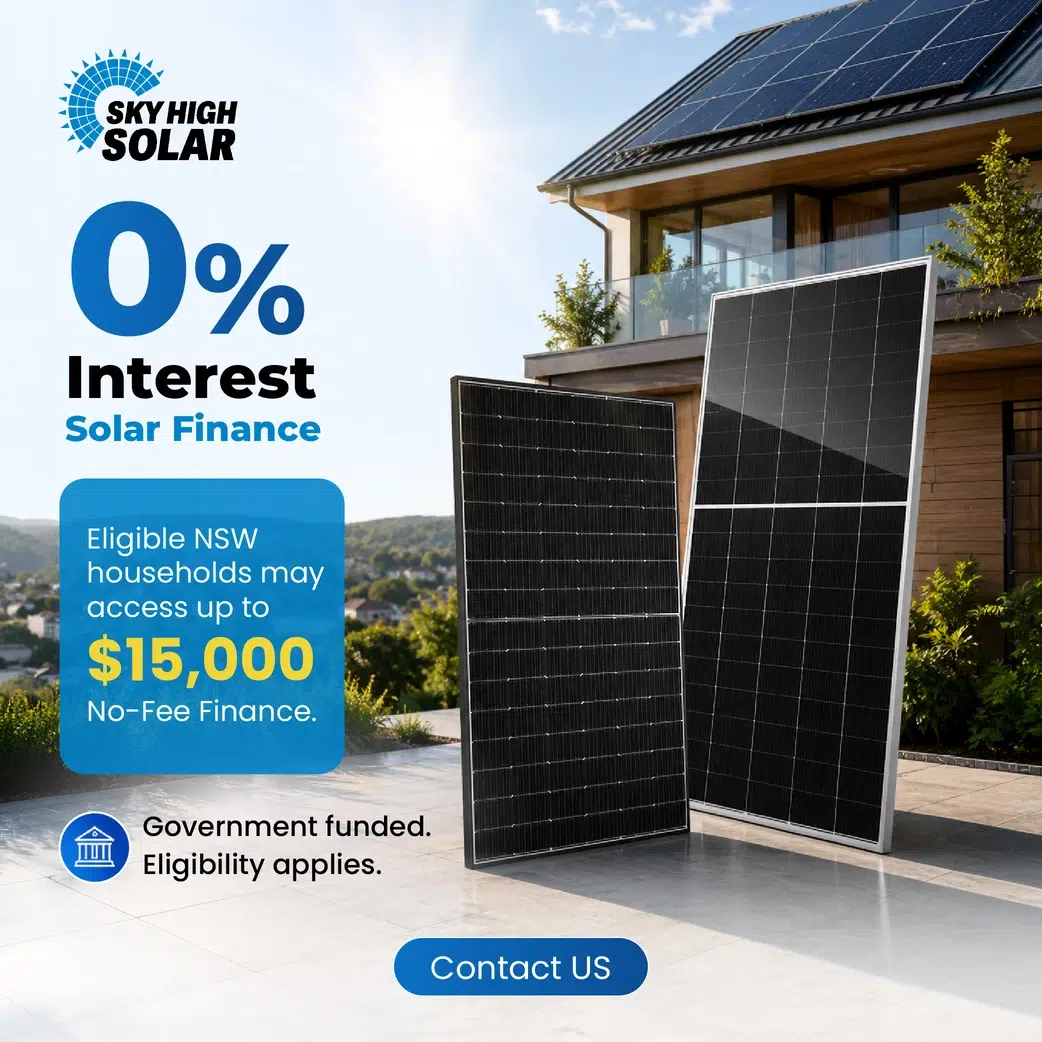
The Home Energy Saver Program, launched in June 2026, is the primary driver for affordability in New South Wales. For most Sydney homeowners and landlords with a combined household income of up to A$210,000, the program offers a zero-interest loan of up to A$15,000. This loan is repayable over ten years, effectively removing the high upfront cost barrier. Additionally, a discount of up to A$4,000 is scheduled to become available in late 2026 for lower-income households or concession card holders. To qualify, your system must be installed by a certified professional, and we handle this entire application process to ensure your documentation meets the July 2026 requirements.
Federal Support and the STC Stack
The federal Cheaper Home Batteries Program provides a tiered point-of-sale discount that directly lowers the invoice amount you see from your installer. For systems up to 14kWh, the rebate equates to approximately A$252 to A$258 per kWh of usable capacity. When you install a new solar array alongside your storage, this discount stacks with the existing Small-scale Technology Certificates (STCs). With STC market prices holding steady around A$39.60 to A$40 in mid-July 2026, the combined reduction makes a 10.0kw hybrid system more accessible than at any point in the last decade.
Virtual Power Plants (VPPs): Trading Control for Cash
Joining a Virtual Power Plant is a strategic way to further subsidise your investment. Many VPP providers in Sydney now offer sign-up bonuses exceeding A$1,000, which are applied as a direct credit or a reduction in the initial quote. In exchange, you allow the provider to occasionally draw small amounts of power from your battery during peak grid demand. While this reduces your absolute control over every kilowatt, the long-term impact on your electricity bill is often positive due to higher “VPP-exclusive” feed-in tariffs. We typically recommend partners who offer transparent contracts, ensuring you aren’t locked into agreements that diminish your self-consumption benefits.
Be cautious of “free” battery offers that frequently circulate on social media. These are almost always high-interest finance arrangements where the cost of the battery is hidden within inflated electricity rates or long-term service fees. True value comes from transparent, government-backed incentives that allow you to own your high-quality hardware outright, ensuring the long-term ROI stays in your pocket rather than the retailer’s.
Calculating ROI: When Will Your Battery Pay for Itself?
The “Payback Gap” in Sydney has widened significantly, but in a way that actually favours storage owners. While retail electricity prices have climbed, the Feed-in Tariffs (FiTs) paid to solar owners for exporting power have generally stagnated or fallen. This means the energy you send back to the grid is worth far less than the energy you buy from it. By capturing that excess power in a battery, you bridge this gap and ensure every kilowatt your roof produces provides maximum financial benefit. Your solar battery price is essentially an upfront payment for a decade of heavily discounted evening electricity.
A 10kW solar system paired with a Fox ESS battery in Sydney typically achieves a full return on investment within 7 to 9 years, depending on household energy habits and current tariff structures. This timeline is heavily influenced by your “Self-Consumption” rate. If your home is empty during the day, your self-consumption without a battery might be as low as 20%. Adding storage can push this above 80%, allowing you to run your air conditioning and appliances during the expensive evening peak using “free” stored energy rather than drawing from the grid.
Factors That Fast-Track Your Payback
Transitioning to Time-of-Use (ToU) tariffs is one of the most effective ways to accelerate your ROI. These plans charge a premium during peak evening hours, exactly when most Sydney families need power. By shifting your peak load to your battery, you avoid these high-cost windows entirely. This strategy also helps you navigate the “Duck Curve,” where grid demand spikes just as solar production drops. Additionally, smart storage helps you avoid the emerging “Solar Tax” or export charges that some networks apply to households sending too much power back during the day, further protecting your long-term savings.
Maintenance and Longevity
For a battery to reach its ROI target, it must be built for the long haul. A 10-year warranty is the absolute minimum standard we recommend to protect your investment. While battery cells do degrade slightly over thousands of cycles, modern high-voltage systems are designed to retain the vast majority of their capacity well beyond their payback period. It’s also worth planning for the future; while the battery itself may last 15 years, the hybrid inverter might require a refresh around year 12. Regular professional servicing ensures your system remains compliant and operates at peak efficiency, preventing small technical issues from impacting your financial returns. To get a personalised estimate of your potential savings, you can request a custom solar system quote tailored to your home’s energy profile.
Choosing the Right Storage Solution for Your Sydney Home
Deciding on a specific system is the final step in securing your home’s energy future. While the technical merits of various brands are clear, the best choice for your household depends on your specific daily consumption and property constraints. A premium solar battery price is an investment in reliability, but it only delivers maximum value if the system is sized correctly for your actual needs. Choosing a “Visionary Specialist” to guide this process ensures that you don’t just buy a battery, but rather a long-term solution that integrates seamlessly with your lifestyle.
Selecting Capacity Based on Your Bill
Matching your storage capacity to your evening energy usage is critical for a fast return on investment. Small households consuming under 15kWh per day generally find the best balance with a 5kWh to 8kWh system, while larger family homes often require 10kWh to 15kWh to cover the “Duck Curve” spike. It is a common mistake to think bigger is always better; “oversizing” your battery can actually hurt your ROI because you may never fully cycle the stored energy, leading to a higher cost per kilowatt-hour used. If you plan to add an electric vehicle or more panels later, we recommend a modular system like the Fox ESS CQ7, which allows you to expand your storage capacity as your requirements evolve.
Next Steps: From Quote to Installation
Sydney’s diverse architecture, from Paddington terrace homes to multi-storey residences in the Hills, requires a specialised approach to installation. A site inspection is vital to identify necessary switchboard upgrades or the need for fire-safe backing boards before you sign a contract. These technical details often determine the final solar battery price and prevent unexpected costs on the day of installation. Once your site is assessed, the timeline for installation and rebate approval typically moves quickly, often taking only a few weeks from the initial deposit to a fully operational system.
Before you commit to a quote, use this final checklist to ensure your investment is protected:
- Is the battery high-voltage (HV) for maximum round-trip efficiency?
- Does the quote include all necessary switchboard and compliance work?
- Is the installer certified for the specific brand (e.g., Tesla or Fox ESS)?
- Has the NSW Home Energy Saver Program rebate been clearly deducted?
- Is the system VPP-ready to allow for future grid-participation bonuses?
The transition to a modern, battery-supported home should be a rewarding experience that offers peace of mind for years to come. By focusing on quality hardware and local Sydney expertise, you ensure your system remains a high-performing asset. To begin your journey toward energy independence, you can Book a Sydney Solar Assessment with Sky High Solar and Electrical today for a transparent, professional evaluation of your home’s potential.
Securing Your Energy Independence in 2026
The shift in the Sydney energy market means that waiting is no longer the most economical choice. By stacking the latest federal discounts with the 2026 NSW Home Energy Saver Program, you can secure a competitive solar battery price that would’ve been impossible just a few years ago. High-voltage systems like the Fox ESS CQ7 and the integrated Tesla Powerwall 3 have set a new standard for efficiency, ensuring your home remains powered by clean energy long after the initial investment has paid for itself.
Success in this transition depends on more than just hardware; it requires a steady hand to manage the technical compliance and switchboard upgrades essential for modern storage. As licensed Sydney electricians since 2013 and certified installers for both Fox ESS and Tesla, we specialise in removing the complexity from your energy upgrade. We’re here to ensure your system is safe, compliant, and perfectly sized for your property’s unique profile.
Get a Personalised Solar Battery Quote for Your Sydney Home
Take the first step toward a more resilient and sustainable future for your household today.
Frequently Asked Questions
Is a solar battery worth it in NSW in 2026?
Yes, a battery is increasingly viable in 2026 due to the widening “Payback Gap” between low feed-in tariffs and high retail electricity rates. With the Home Energy Saver Program now offering zero-interest loans, the upfront solar battery price is no longer the hurdle it once was for most families. Sydney households find that the ability to use their own solar power during expensive evening peaks provides a reliable return on investment over the system’s life.
How much does a Tesla Powerwall 3 cost installed in Sydney?
The final installed cost of a Tesla Powerwall 3 depends on several factors, including your existing electrical setup and whether you require a backup gateway for blackout protection. While the hardware has a premium market position, the 2026 federal battery rebate provides a significant point-of-sale discount based on the unit’s 13.5kWh capacity. We always recommend a site assessment to determine if your switchboard needs upgrading to handle the Powerwall’s high power output safely.
Can I add a battery to my existing 6.6kW solar system?
You can certainly add a battery to an existing 6.6kW solar system, though the method depends on your current hardware’s age and type. If your existing inverter isn’t “hybrid-ready,” we typically use an AC-coupled battery or replace the old inverter with a modern hybrid model like the GoodWe ET G2. This is a common way for Sydney residents to modernise their energy setup without the expense of replacing their functional solar panels.
What is the current NSW government rebate for solar batteries?
The 2026 NSW Home Energy Saver Program currently offers a zero-interest loan of up to A$15,000 for eligible households to help manage the solar battery price. For homeowners with a combined income under A$80,000 or those with concession cards, an additional discount of up to A$4,000 is expected to be available later this year. These incentives are designed to make high-quality storage accessible to a broader range of Sydney residents than ever before.
Do solar batteries provide power during a blackout?
Most modern solar batteries can provide power during a blackout, but it depends on how the system is configured during installation. Units like the Tesla Powerwall 3 or the Fox ESS CQ7 require an additional backup gateway or an Emergency Power Supply (EPS) circuit to operate when the grid goes down. This allows you to keep essential appliances like fridges, lights, and internet routers running until the sun rises or the grid is restored.
How long do solar batteries actually last in the Australian climate?
Most lithium-ion batteries installed in Sydney are expected to last between 10 and 15 years before their capacity drops significantly. A 10-year manufacturer’s warranty is the industry standard in Australia, ensuring your investment is protected through its primary payback period. To maximise longevity in our climate, we ensure batteries are installed in shaded, well-ventilated areas to protect the cells from extreme summer heat.
What is the difference between a hybrid inverter and a battery inverter?
A hybrid inverter manages both your solar panels and your battery in a single unit, making it the most efficient choice for new installations. A battery inverter, often used in AC-coupled systems, is a separate unit that only manages the storage component. While a hybrid system is generally more streamlined, a dedicated battery inverter is often the best solution for retrofitting storage to an older solar array that you don’t want to replace.
How much can I save on my quarterly bill with a 10kWh battery?
Savings vary based on your energy habits, but a 10kWh battery can significantly reduce your quarterly bill by shifting your peak electricity usage to stored solar power. By avoiding the highest Time-of-Use (ToU) tariffs during the evening, many Sydney families find they can reduce their grid reliance by 70% or more. The exact saving depends on whether you have high-drain appliances, such as pool pumps or electric vehicle chargers, running during those peak windows.