

 Sydney
 0452 243 240
Blog
High-Efficiency Solar Panels in Australia: 2026 Guide

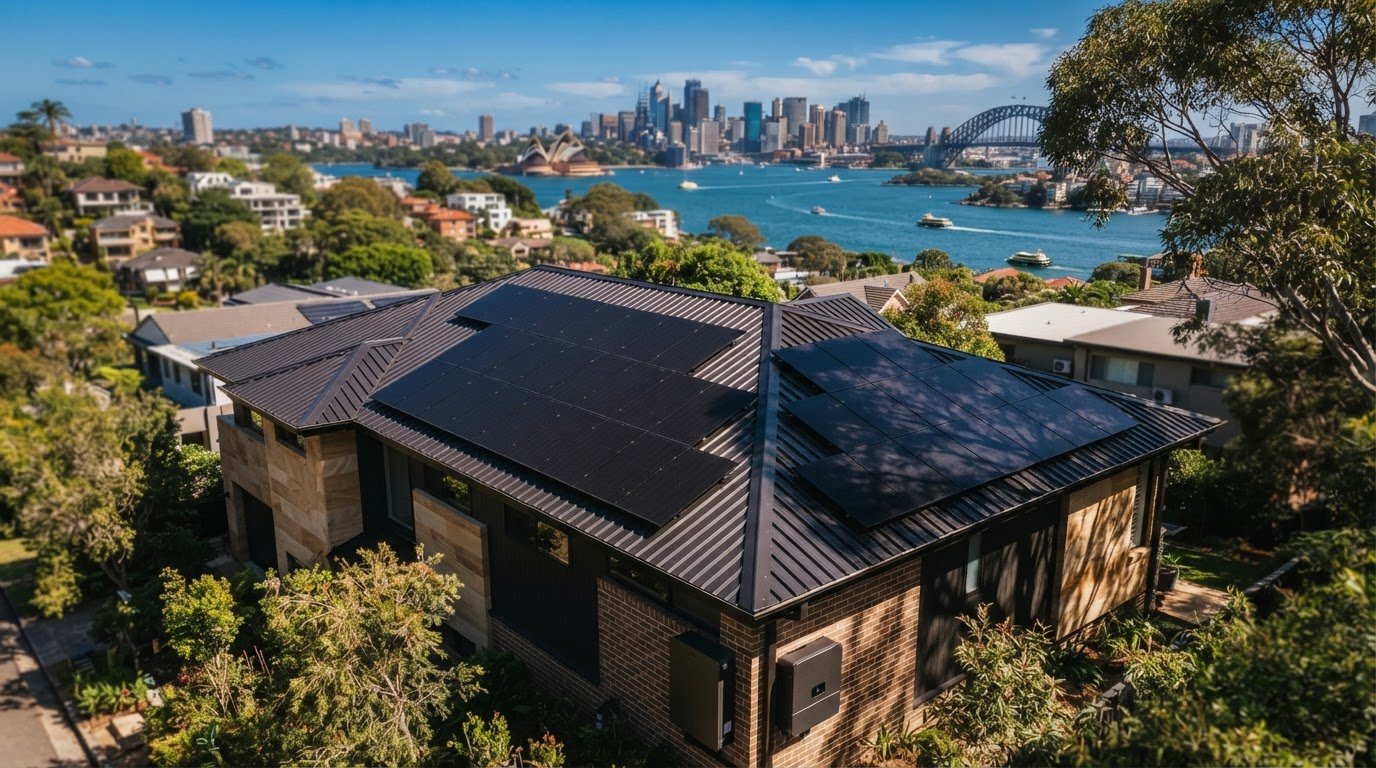
The panel with the highest efficiency rating may not be the best choice for your Sydney roof. If you’re searching for “high efficiency solar panels Australia”, look beyond the headline percentage: available roof space, orientation, shading and heat all affect how a complete system performs.
It’s reasonable to want more power from every square metre, especially if your roof space is limited. But efficiency is only one part of the decision. A well-matched system also depends on panel performance in local conditions, inverter design, household energy use and clear warranty terms.
This guide explains how to compare panel specifications on a like-for-like basis and assess what could suit your home. You’ll learn how efficiency ratings relate to real-world output, what to check in degradation and warranty information, and why system design matters alongside panel choice. It also outlines practical questions to raise with your installer about roof suitability, professional installation, compliance and current incentive eligibility, including the federal STC upfront discount and separate NSW schemes. A considered proposal helps you weigh long-term value and environmental benefits without relying on a single rating.
Key Takeaways
- For high efficiency solar panels Australia, compare more than the headline rating: panel dimensions, temperature data and warranty terms can all affect suitability.
- Check how roof direction, shade, available space and ventilation may influence system design for your Sydney home.
- Use a like-for-like comparison to see whether a higher-efficiency panel makes practical sense for your roof and energy needs.
- Ask your installer to explain the proposed system, applicable Australian standards and current incentive eligibility, and request supporting product documents.
- A site assessment connects panel selection with your roof constraints and complete system. Sky High Solar and Electrical provides solar installation and electrical services in Sydney.
What makes a solar panel high efficiency in Australia?
A solar panel’s module efficiency is the share of sunlight converted into electrical energy under stated test conditions. Rated efficiency describes a panel under those conditions; expected household generation estimates how the complete system may perform at your property. The measures are related, but they are not interchangeable.
Efficiency can matter when usable roof area is limited. A higher-rated module may produce more power from a given panel area, which could help fit a system around roof features or make better use of available space. If your roof has ample suitable area, however, the rating alone may not determine which panel offers the best fit. Consider the panel, inverter and site design together.
For background on the underlying concept, read this explanation of solar cell efficiency. For a purchase decision, focus on how the panel’s published figures compare with the proposed system and your roof conditions.
How solar panel efficiency ratings are measured
Manufacturers publish efficiency ratings based on specified test conditions. These provide a consistent reference for comparing modules, but they don’t reproduce every rooftop condition in Sydney. Heat, shade and roof orientation can differ from the controlled conditions used for a product rating.
When reviewing datasheets, compare the same rating units and test basis. Check that you’re looking at module efficiency rather than a different performance measure, and ask the installer to clarify any figures that aren’t directly comparable.
Why a high rating does not guarantee higher household output
A panel rating applies to an individual module, not the whole system. The energy your home receives also depends on roof direction, shading, temperature and how the inverter is selected and configured. A high-rated panel can still be a poor match if the roof layout or system design limits its performance.
Ask for a site-specific proposal that explains the assumptions behind its expected generation, including how roof constraints and inverter design have been considered. Treat generic output claims cautiously because they can’t account for the conditions at your address.
For Sydney homes, the practical question isn’t simply which panel has the highest rating. It’s whether its efficiency helps meet your household’s needs within the available roof area, as part of a professionally designed system.
How Australian conditions affect high-efficiency solar panel performance
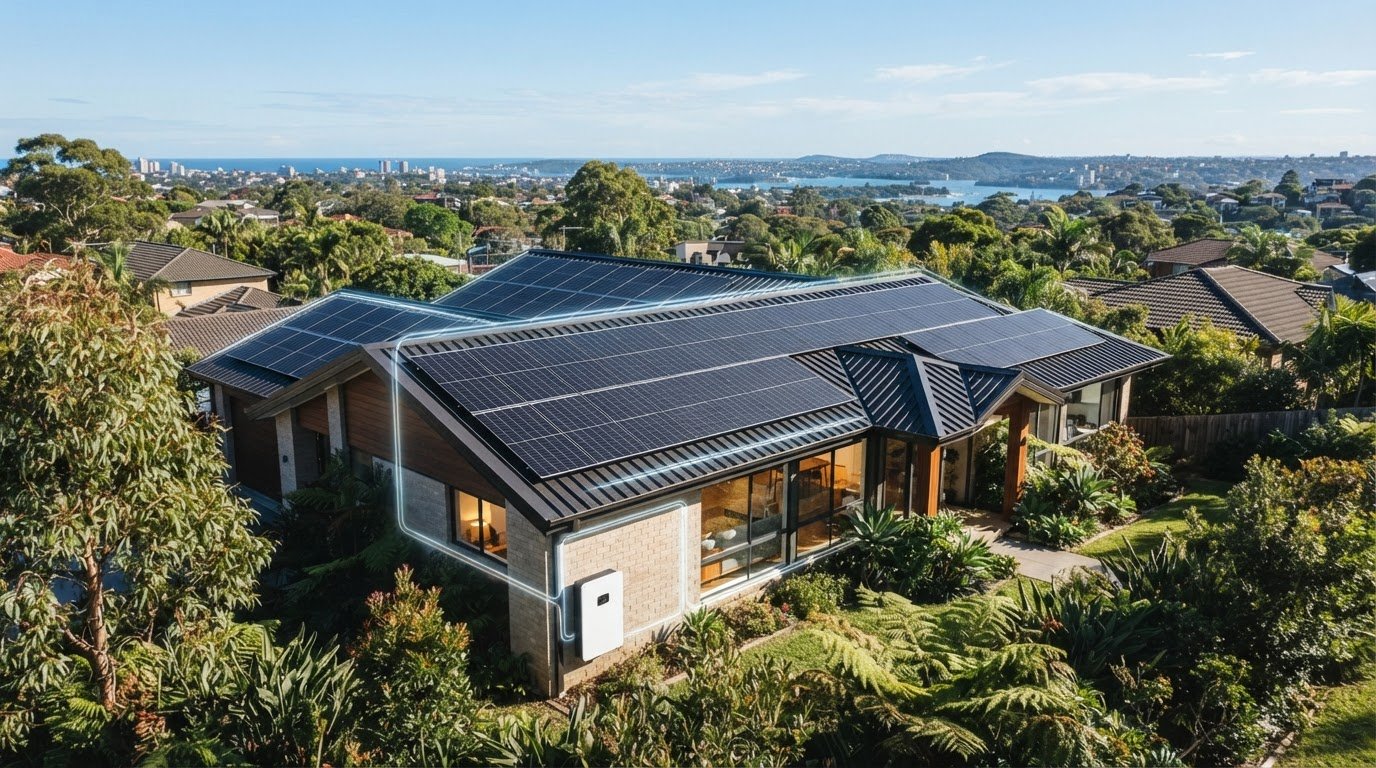
A panel’s rating can help narrow your options, but your roof determines how that specification translates into a system design. Sydney homes vary widely: a roof may have several usable faces, nearby trees, chimneys or neighbouring buildings that cast shade, or limited clear space between obstructions. The same panel choice won’t suit every property.
Before estimating output, an installer should assess usable roof area, orientation, pitch, shading, ventilation and exposure to local conditions such as heat and coastal salt mist.
Roof conditions to assess before comparing panels
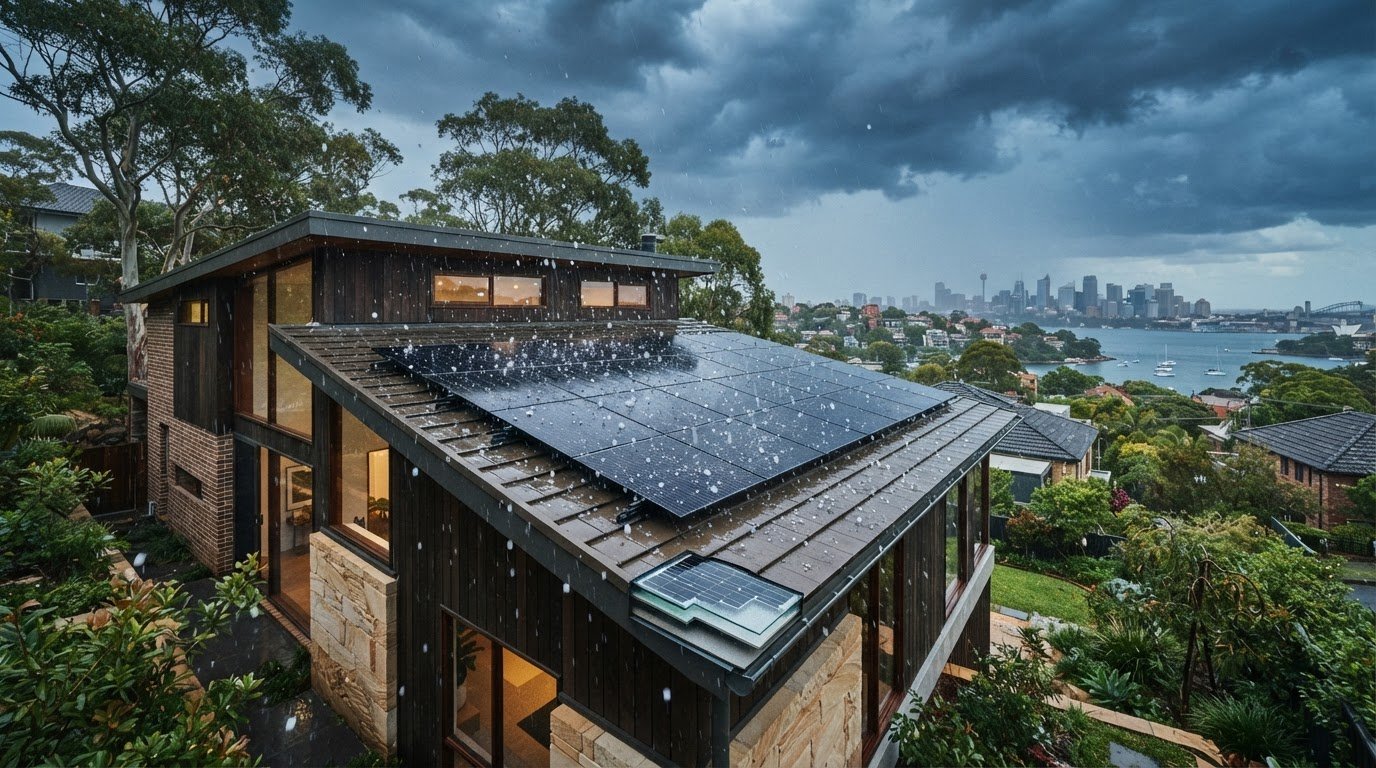
Start with the roof, not the efficiency shortlist. Ask the installer to identify which sections are suitable and explain how orientation and pitch shape the proposed layout. A tree or chimney can shade panels at particular times, so mention seasonal changes or planned tree work. For a coastal property, ask how salt-mist exposure is considered when selecting panels and installation components.
Temperature, panel design and system matching
Heat performance is worth checking, but compare temperature data only when it comes from compatible manufacturer test information. Ask how the panel’s stated figures relate to your roof and proposed system. Don’t treat a single specification as a prediction of household generation. Panel selection, inverter design and system configuration should be reviewed together.
Bifacial panels capture light on both front and rear sides, but their suitability depends on the installation and product evidence. Ask what conditions would allow the rear side to receive useful light at your property, rather than assuming the panel type will increase output on every roof.
During a site visit or proposal review, ask the installer to show how these details affect the layout:
- Which roof sections have the clearest access to sunlight, and when could nearby objects shade them?
- How will the proposed panel layout account for roof direction, pitch and available area?
- How are ventilation and local heat considered in product selection and installation design?
- For a coastal home, what product documentation supports suitability for the site’s salt-mist exposure?
- How do the chosen panels and inverter work together in the proposed configuration?
The value of high efficiency solar panels Australia depends on how well the product suits the site, not just its published rating. Request a site-specific proposal that explains its assumptions and expected output, and ask for supporting manufacturer information where relevant. Sky High Solar and Electrical can assess panel suitability as part of a complete solar system proposal in Sydney.
High efficiency solar panels Australia: how to compare beyond the headline rating
A higher efficiency rating can be useful where roof space is tight, but it doesn’t tell you whether a panel is right for your home. Compare the model’s specifications, warranty documents and proposed system design together. This gives you a clearer basis for weighing panel area against expected system performance.
Panel specifications and warranty terms to check
Use the manufacturer’s datasheet for the exact panel model in each quote. Similar product names can refer to different models, so check that every figure and warranty document matches the module being proposed.
| What to compare | What to check |
|---|---|
| Efficiency | Confirm the published rating and test basis so you’re comparing like with like. |
| Dimensions | Check the panel’s size against usable roof area and the proposed layout. |
| Temperature data | Compare manufacturer figures on the same basis, and ask how they inform the system proposal. |
| Warranty terms | Separate product coverage, performance commitments and installation workmanship terms. |
| Documentation | Request the matching datasheet and full warranty documents, including exclusions and claim steps. |
Read the solar panel warranty carefully rather than relying on a summary in a quote. Confirm what each warranty covers, who provides it, what exclusions apply and how a claim is made. Product, performance and workmanship coverage may have different terms and processes, so ask for them to be explained separately.
If roof space is limited, compare how many proposed panels fit and the system capacity each layout provides. A more efficient module may help make better use of a constrained area, but check that the design also accounts for obstructions, shading and roof layout.
Compare complete system proposals, not panel labels
Review the panel capacity, inverter selection and your household’s energy needs as one design. Ask each installer to explain how the proposed layout addresses your roof’s shade and orientation, and what assumptions underpin its generation estimate.
For a fair comparison, request documented estimates based on consistent assumptions, such as the same site details and comparable system configuration. If proposals use different assumptions, ask the installers to clarify before weighing their projected output. The goal is to understand the design, not just compare a headline number.
When comparing high efficiency solar panels Australia, use the datasheet and proposal as a pair: one describes the module, while the other shows how it is intended to work at your property. A Sydney solar professional can help assess panel suitability within a complete solar system proposal.
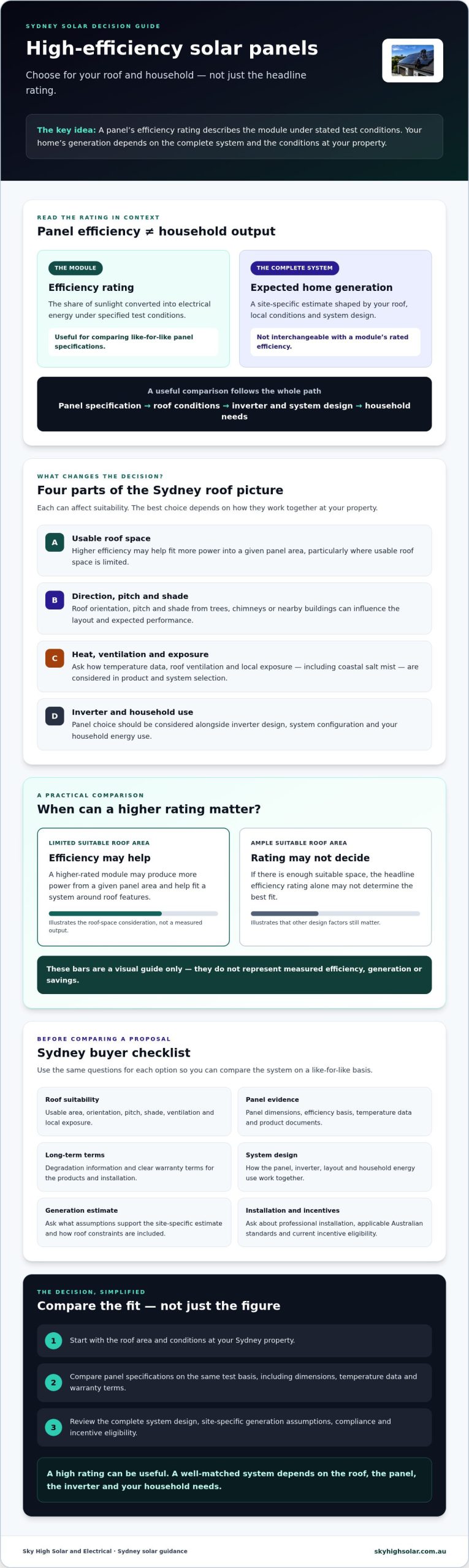
A Sydney buyer checklist for choosing high-efficiency solar panels
A clear proposal should show why the selected panels suit your roof, household use and complete system design. Use this checklist to compare quotes and identify details that need explanation before you commit.
Questions to ask a Sydney solar installer
- Review the roof. Ask which roof areas are usable and how orientation, pitch, obstructions, shade and coastal exposure affect the proposed panel choice.
- Check the household assumptions. Ask what electricity-use patterns and future needs were considered when sizing the system.
- Match the documents to the quoted product. Request current manufacturer datasheets and written warranty terms for each panel model in the proposal.
- Clarify installation and documentation. Confirm who will complete the installation and provide the certificate of compliance electrical work (CCEW), and ask what the document covers.
- Compare system sizing. Ask how panel capacity and inverter selection work together. If the proposal relies on the 133% oversizing rule, ask the installer to verify its current applicability and explain how it relates to your specific system.
- Verify incentives. Before relying on an upfront discount, ask the installer to confirm current Small-scale Renewable Energy Scheme (SRES) eligibility, applicable terms and the steps required for registration. Check the details before signing, as eligibility and requirements can change.
- Agree on the final checks. Ask what the post-installation review includes, how applicable compliance steps will be confirmed, and who handles any rebate registration steps relevant to your installation.
Check sizing, incentives and the finished installation
Keep the answers in writing. A proposal should connect the roof assessment, panel and inverter selection, expected generation assumptions and household requirements, rather than relying on a panel rating alone. If you’re comparing system sizes, the 6.6kW Sydney solar system guide can help you understand sizing considerations.
For high efficiency solar panels Australia, use this checklist to test whether a recommendation is supported by site details and product documents, not simply a label. Make sure you understand the applicable Australian standards the installer identifies for the proposed work and how compliance will be documented. Don’t assume the same sizing approach or incentive eligibility applies to every home.
Panel choice is only one part of a solar design. A Sydney solar professional can discuss how it fits your roof and system design in a site-specific proposal.
Choosing a high-efficiency solar panel system with a Sydney installer
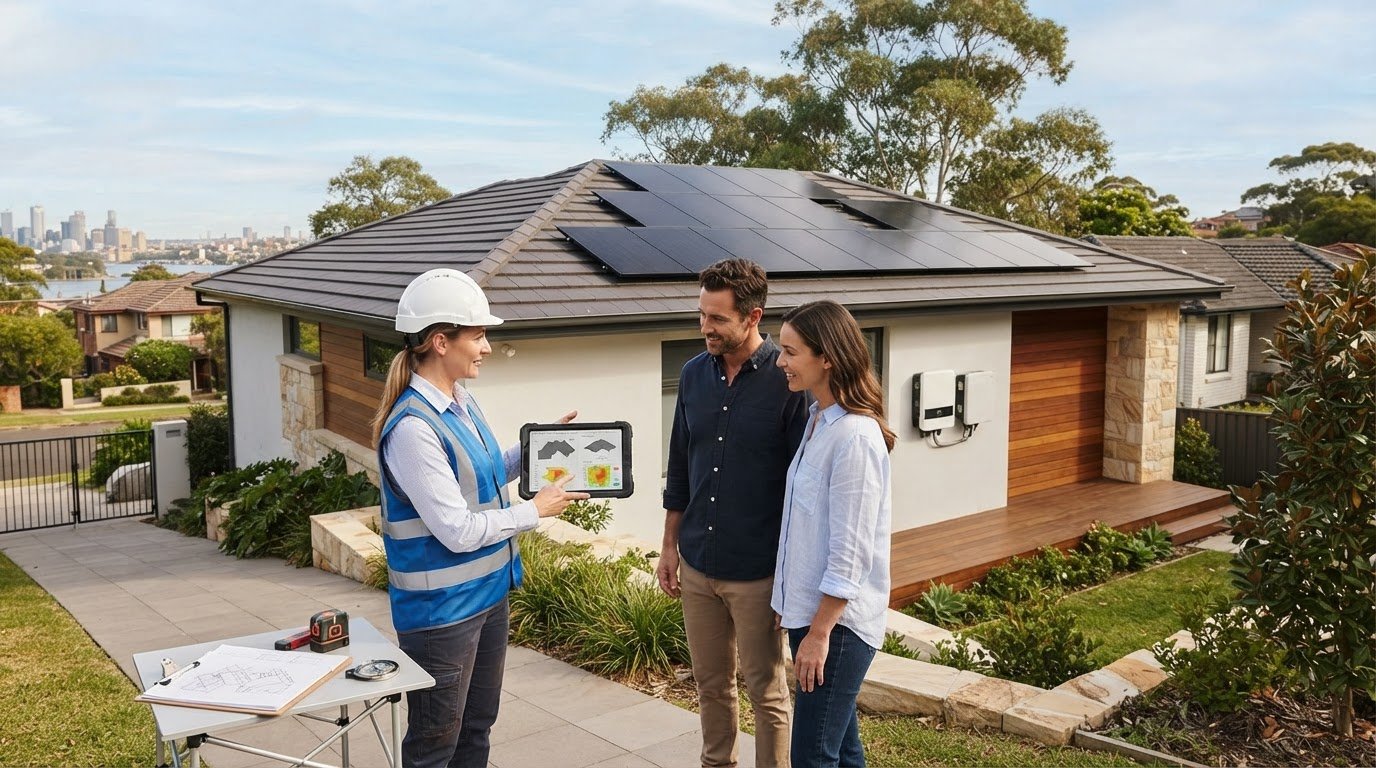
Choosing a panel is only one part of designing a solar system. A site assessment connects the panel’s dimensions and specifications with your roof constraints, inverter configuration and household energy plans. It should also make the reasons for the recommended design clear, so you can assess the proposal rather than relying on a rating alone.
Sky High Solar and Electrical provides solar installation, battery storage and licensed electrical services in Sydney. Its team can assess panel suitability within a complete system proposal for your home.
What a site-specific proposal should make clear
Look for a written explanation of how roof conditions informed the panel layout and how the panels and inverter work together. Any estimated generation should include its assumptions, such as the site details and system configuration used. It’s an estimate, not a promise of output or savings.
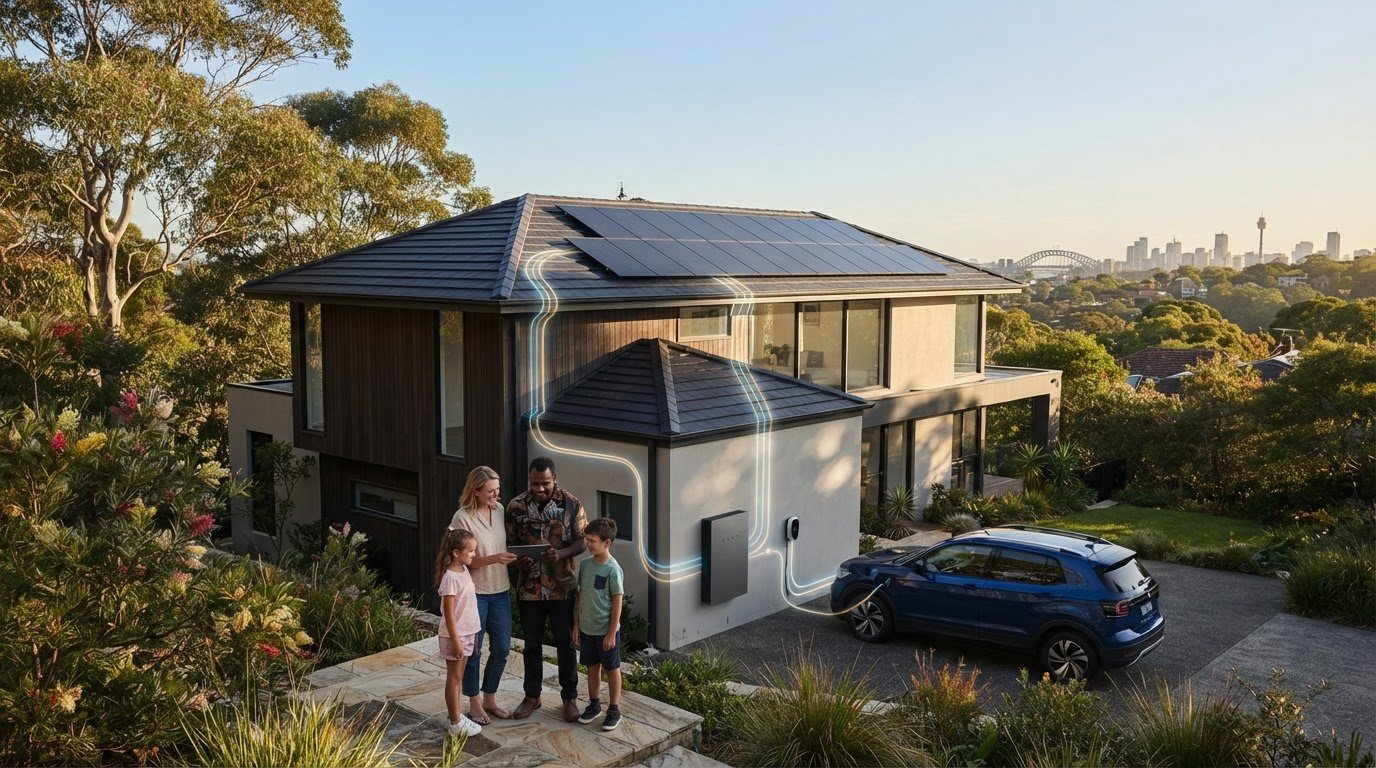
The proposal should identify the quoted products and provide matching documentation, including datasheets and written warranty terms. Ask which installation and compliance steps apply, who is responsible for completing them, and what documentation you’ll receive. If a battery is part of your plan, review how storage fits the proposed system; the Sydney solar battery storage guide can help you prepare.
If you’re considering a larger system, use the 10kW solar system guide to explore sizing considerations before comparing proposals.
Next steps for Sydney homeowners
A little preparation can make an assessment more useful. Gather recent electricity usage information and note any changes you’re planning, such as adding new household loads. Then prepare questions about the proposed panel specifications, roof suitability, inverter configuration and available servicing after installation.
Use the discussion to check that the proposal reflects your actual site and needs. If it refers to a sizing rule or incentive, ask the installer to confirm current applicability and explain the conditions relevant to your system before you rely on it.
A site-specific assessment can clarify which panels suit your roof, how the wider system is configured and what assumptions support the proposal. Sky High Solar and Electrical offers solar installation and system servicing in Sydney.
Choose a solar system that fits your Sydney home
The right panel choice is the one that works with your roof, household energy use and complete system design. Efficiency ratings help you compare modules, but roof conditions, inverter selection and clear product documentation matter too. For high efficiency solar panels Australia, a site-specific proposal is a better basis for choosing than a headline rating alone.
Before committing, check that the panel datasheets and warranty terms match the products quoted, and ask how the installer has accounted for your roof and explained the system’s estimated generation. Confirm applicable compliance steps and current incentive eligibility rather than assuming they’re the same for every installation.
Sky High Solar and Electrical provides solar system servicing and licensed electrical services, including certificate of compliance electrical work (CCEW), supporting a considered approach from installation through ongoing system care.
Ready to compare a design for your home? Arrange a solar assessment with Sky High Solar and Electrical to discuss your roof, system options and the details behind a documented proposal.
Frequently Asked Questions
Are high-efficiency solar panels worth it in Australia?
They can be worth considering if your roof has limited usable space or your system needs to fit around obstructions. The value depends on how the panel suits your roof, inverter and household energy use, not efficiency alone. For high efficiency solar panels Australia, compare like-for-like specifications and review the complete system proposal. If your roof has ample suitable area, a lower-rated option may still be a better fit.
What is considered a high-efficiency solar panel?
A high-efficiency panel converts a larger share of sunlight into electricity under stated test conditions. In 2026, the research for this guide identifies panels rated at 24% or above as high efficiency, while 22% to 25% is considered a good range. Check current manufacturer datasheets before comparing products, and confirm that each figure uses the same test basis. The rating describes the module, not the expected generation of your whole system.
Do high-efficiency solar panels produce more power in hot weather?
No. A high efficiency rating doesn’t mean a panel produces more power as it gets hotter. Panel temperature can affect output, and the result depends on the model’s temperature-performance data and conditions at your property. Ask the installer to compare manufacturer information for the quoted panels and explain how heat is considered in the system design. Don’t treat an efficiency rating as a guarantee of generation on hot Sydney days.
Are bifacial panels a good choice for Australian homes?
Bifacial panels capture light on both front and rear sides, but that doesn’t make them the right choice for every home. Their suitability depends on the product and installation design, including whether the rear side can receive useful light. Ask the installer what site conditions would support their use and request product documentation behind any expected yield estimate. Compare that proposal with other panel options using the same site assumptions.
How do I compare solar panel warranties in Australia?
Compare the written terms, not just the warranty period stated in a sales summary. Check product coverage, performance commitments and installation workmanship separately, as each may have different conditions. Confirm that the documents match the exact panel model quoted, then review exclusions, who handles claims and the steps required to make one. Ask the installer to explain any unclear terms before you decide, and keep the documents with your system records.
Can high-efficiency panels fit a 6.6kW or 10kW solar system?
They may be suitable for either system size, but the panel count and layout depend on the selected module, available roof area and inverter configuration. Sky High Solar and Electrical installs 6.6kW and 10kW solar systems, but suitability needs to be assessed for your property. Ask for a proposal that identifies the panel model and capacity, explains the inverter selection, and shows how roof constraints have informed the design.
What should I ask a Sydney installer before choosing solar panels?
Ask how roof direction, pitch, shading, available area and household energy use shaped the panel recommendation. Request current datasheets and written warranty terms for the exact products quoted, plus an explanation of the assumptions behind estimated generation. Confirm which Australian standards apply to the proposed work, who will complete the installation, and what compliance documents you’ll receive, including the certificate of compliance electrical work (CCEW). Check current incentive eligibility before relying on it.