

 Sydney
 0452 243 240
Blog
Integrated Solar EV Charger Guide: Maximising Your Sydney Home Energy in 2026

Why are you still sending your hard-earned solar energy back to the grid for a measly 4 cents per kilowatt-hour when you could be using it to fuel your daily commute for free? It’s a common frustration for Sydney homeowners who see their rooftop investment underutilised while petrol prices and grid electricity costs continue to climb. You might worry that your current switchboard isn’t up to the task or feel overwhelmed by the technical jargon surrounding fast charging. We understand that the transition to electric transport should feel like a step forward, not a complicated headache.
This guide explains how an integrated solar EV charger can solve these challenges by creating a seamless, DC-coupled energy ecosystem. We’ll show you why moving away from traditional AC charging is a game-changer for efficiency and how the right technology can provide full energy independence. From understanding the benefits of the SigenStor 5-in-one system to preparing your home for the standards of 2026, you’ll gain the clarity needed to choose a future-proof setup that delivers faster charging and total app-controlled convenience.
Key Takeaways
- Understand how an integrated solar EV charger merges your inverter and charger into one high-efficiency unit, removing the complexity and clutter of traditional setups.
- Discover why DC-to-DC charging is a game-changer for efficiency, sending solar energy straight to your car battery without the energy losses found in standard AC conversion.
- Learn how to maximise your ROI in Sydney by shifting focus from low feed-in tariffs to total self-consumption for your daily commute.
- Explore premium solutions like the SigenStor 5-in-one hub that integrate your battery, inverter, and charger for a truly intelligent and future-proof home energy ecosystem.
- Gain clarity on necessary switchboard upgrades and site requirements to ensure your installation meets Australian standards and supports faster charging speeds.
What is an Integrated Solar EV Charger?
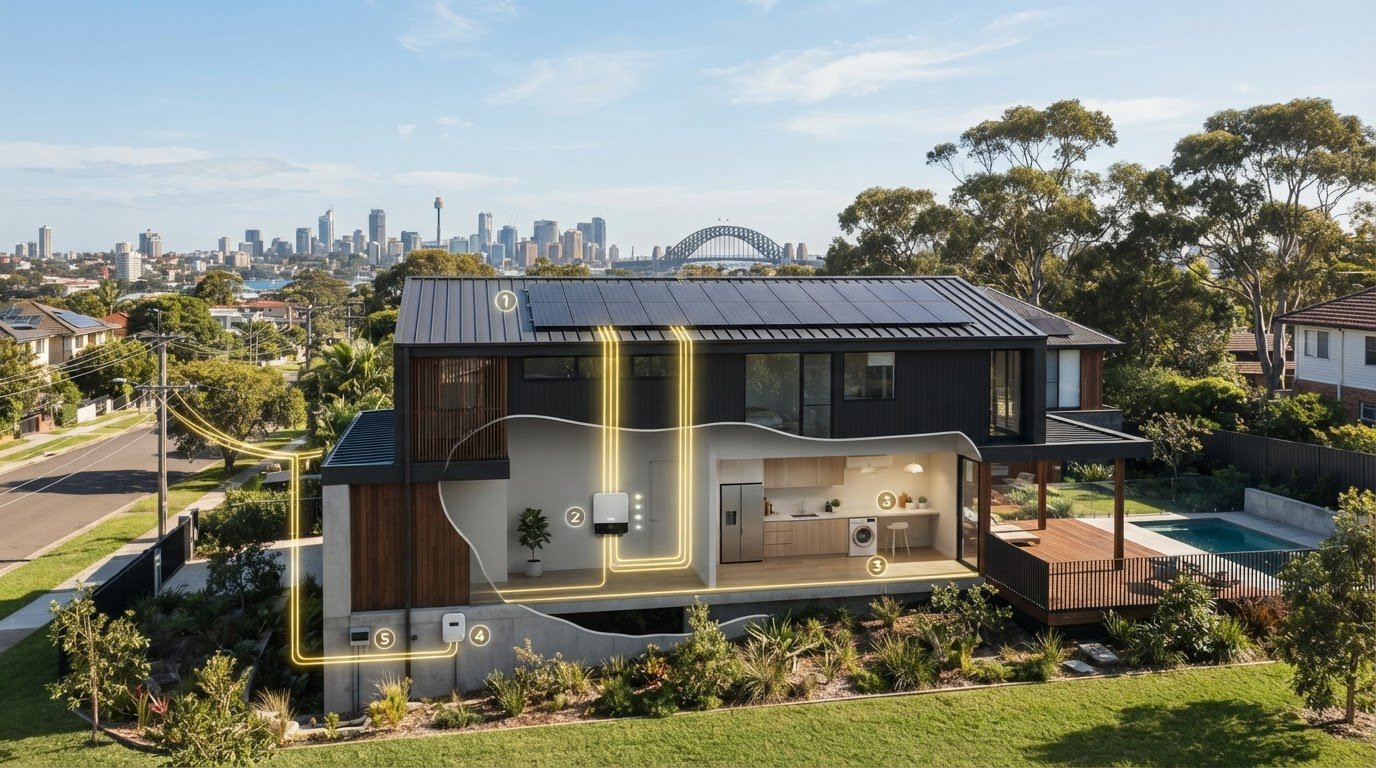
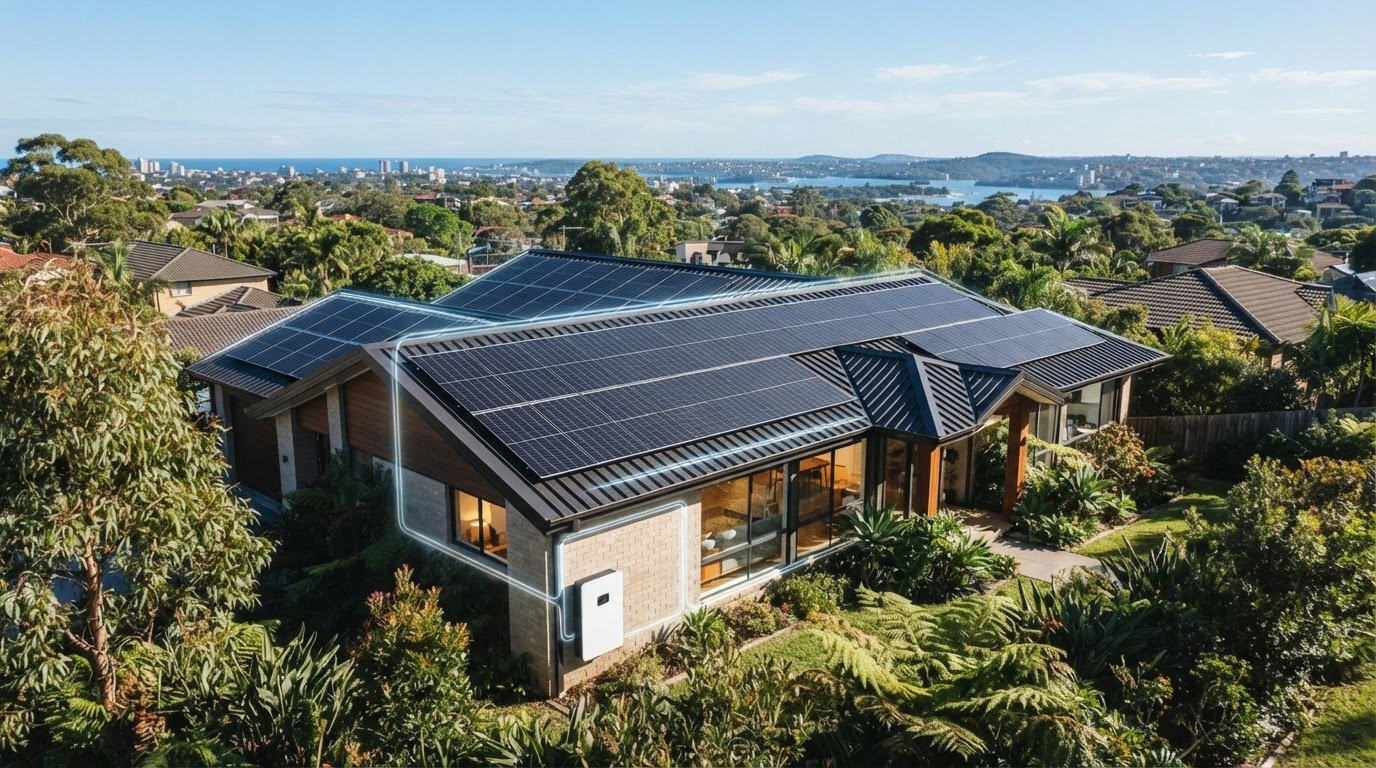
An integrated solar EV charger represents the next stage of home energy management. While many people think of an EV charger as a separate box on the wall, a truly integrated system functions as a single hardware unit with your solar inverter. This unity allows your home to treat your car not just as a vehicle, but as a sophisticated mobile battery storage unit. By removing the physical and digital barriers between your power generation and your transport, you create a more reliable and efficient energy ecosystem.
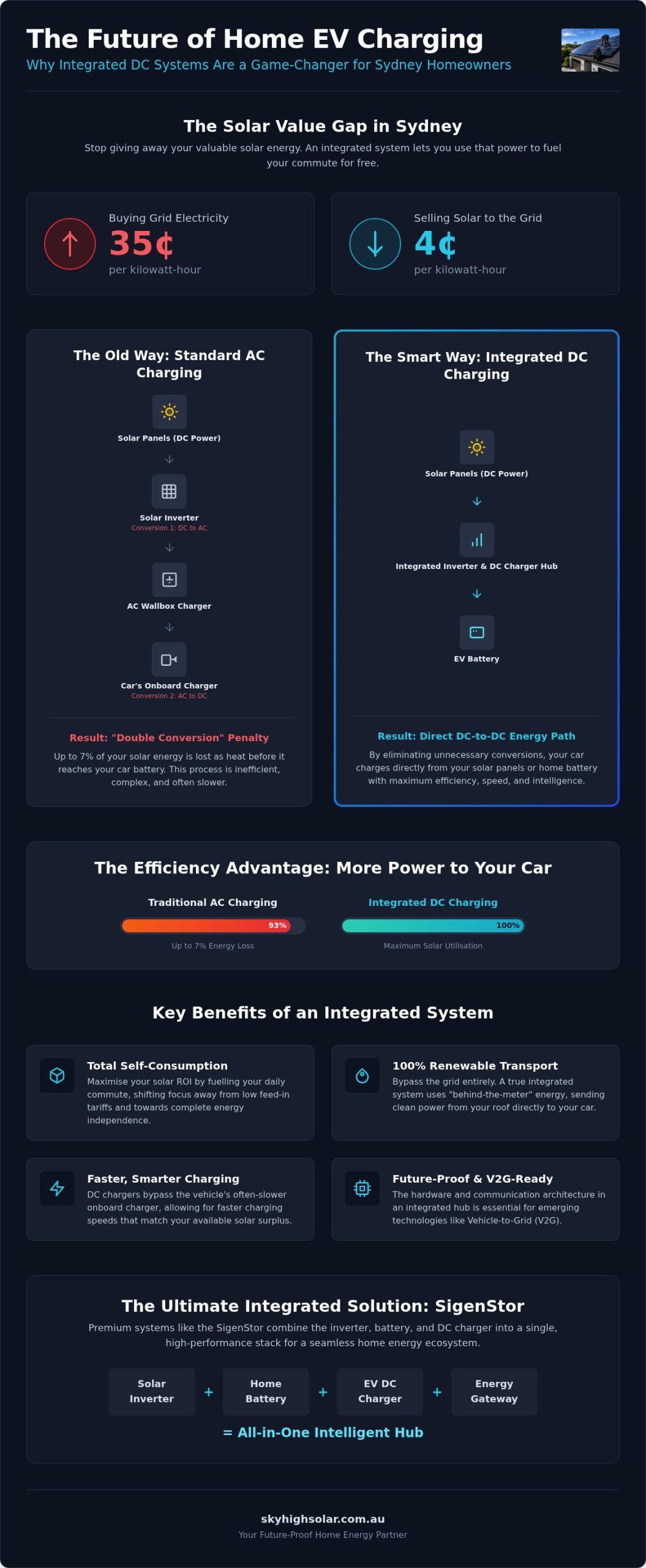
The primary objective of this setup is to achieve 100% renewable transport. By utilising “behind-the-meter” energy, you bypass the traditional grid entirely. In Sydney, where retail electricity prices sit around 35 cents per kilowatt-hour, using your own solar power directly is far more rewarding than exporting it for a small feed-in tariff. A true integrated solar EV charger ensures you avoid the retail mark-ups and network charges that make grid power so expensive, keeping your transport costs as close to zero as possible.
The Evolution of Home Charging
Charging technology has moved quickly to keep pace with modern electric vehicles. Most owners start with a Level 1 “granny” cable, which is a standard 10A plug providing a slow trickle of power. It’s often inefficient and can take over 24 hours for a full charge. Level 2 AC wallboxes improved this by offering faster speeds, but they remain largely grid-reliant and suffer from energy conversion losses. The new standard is the integrated DC-coupled charging hub. These systems are designed to communicate directly with your solar panels and battery storage, ensuring that every possible watt of sunshine is diverted into your car battery with minimal waste.
Smart Charging vs. Real Integration
It’s easy to confuse smart charging with real integration. Smart chargers typically use current transformer (CT) clamps to monitor your home’s energy flow and “chase” the sun by adjusting charging speeds based on solar surplus. While this is a clever use of software, real integration goes much deeper. In an integrated system, the hybrid inverter acts as the central brain. It manages the flow of electricity between the panels, the home battery, and the car simultaneously. This architecture is essential for emerging Vehicle-to-grid (V2G) technology, where your car can actually provide power back to your home or the grid during peak times. Real integration isn’t just about software talking; it’s about hardware working in total harmony.
How DC-Coupled Integration Changes the Game
To truly understand why a premium system outperforms a standard setup, we need to look at how energy moves through your home. Most homeowners assume that as long as the sun is shining, their car is charging efficiently. However, traditional systems suffer from a “double conversion” penalty that quietly drains your solar harvest before it even reaches your vehicle. Every time electricity is forced to change states, you lose a portion of that energy to heat.
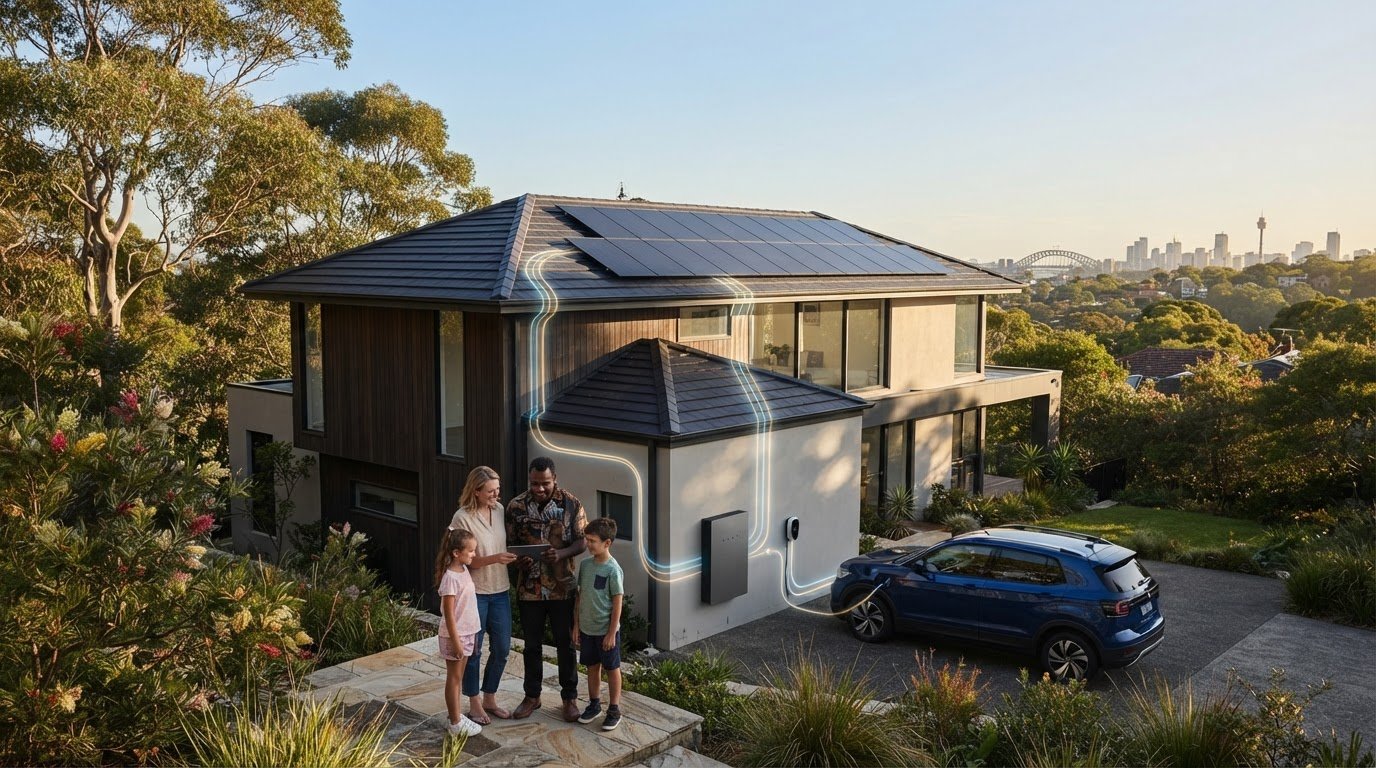
Standard solar setups generate DC power, which an inverter converts to AC for your home. When you plug in a standard AC wallbox, that AC power travels to the car, where an onboard charger converts it back to DC to fill the battery. An integrated solar EV charger eliminates this inefficiency by allowing DC power to flow directly from your panels or home battery into the car. This DC-to-DC path can retain up to 5-7% more energy, ensuring your roof’s output is fully utilised rather than wasted as heat during conversion.
AC vs. DC Charging at Home
Standard AC wallboxes are essentially just smart switches. They don’t actually charge the car; they provide AC power to the vehicle’s onboard charger, which does the heavy hardware lifting. This onboard component is often a bottleneck, limiting charging speeds even if you have a massive solar surplus available. Integrated DC chargers bypass this limitation entirely. By delivering power directly to the car’s battery, they offer more precise control and can often provide faster speeds than a standard wallbox, making them a superior choice for those who value performance and technical excellence.
The Efficiency Advantage
Efficiency isn’t just about speed; it’s about longevity and long-term value. Reducing heat loss during energy conversion protects your equipment and ensures you aren’t paying for energy that simply vanishes into thin air. DC-coupled charging is the most efficient path from roof to road. By choosing a system like the SigenStor 5-in-one hub, you’re investing in a sophisticated ecosystem that combines the inverter, battery, and DC charger into a single, high-performance stack. It’s a clean, reliable way to organise your home energy while ensuring every single photon captured by your panels is put to work. This level of hardware harmony is what distinguishes a visionary energy setup from a collection of mismatched components.
The Financial and Environmental Payback in Sydney
The financial logic for solar in Sydney has fundamentally shifted over the last few years. In 2026, we are navigating the “Feed-in Tariff Cliff,” where exporting excess energy to the grid is a losing game for most households. With median export rates across NSW sitting as low as 4 cents per kilowatt-hour, sending your hard-earned power back to the retailer provides almost no return on your investment. Conversely, purchasing that same power back at night to charge your car costs roughly 35 cents per kilowatt-hour. This 30-cent gap is exactly where the value of an integrated solar EV charger becomes undeniable.
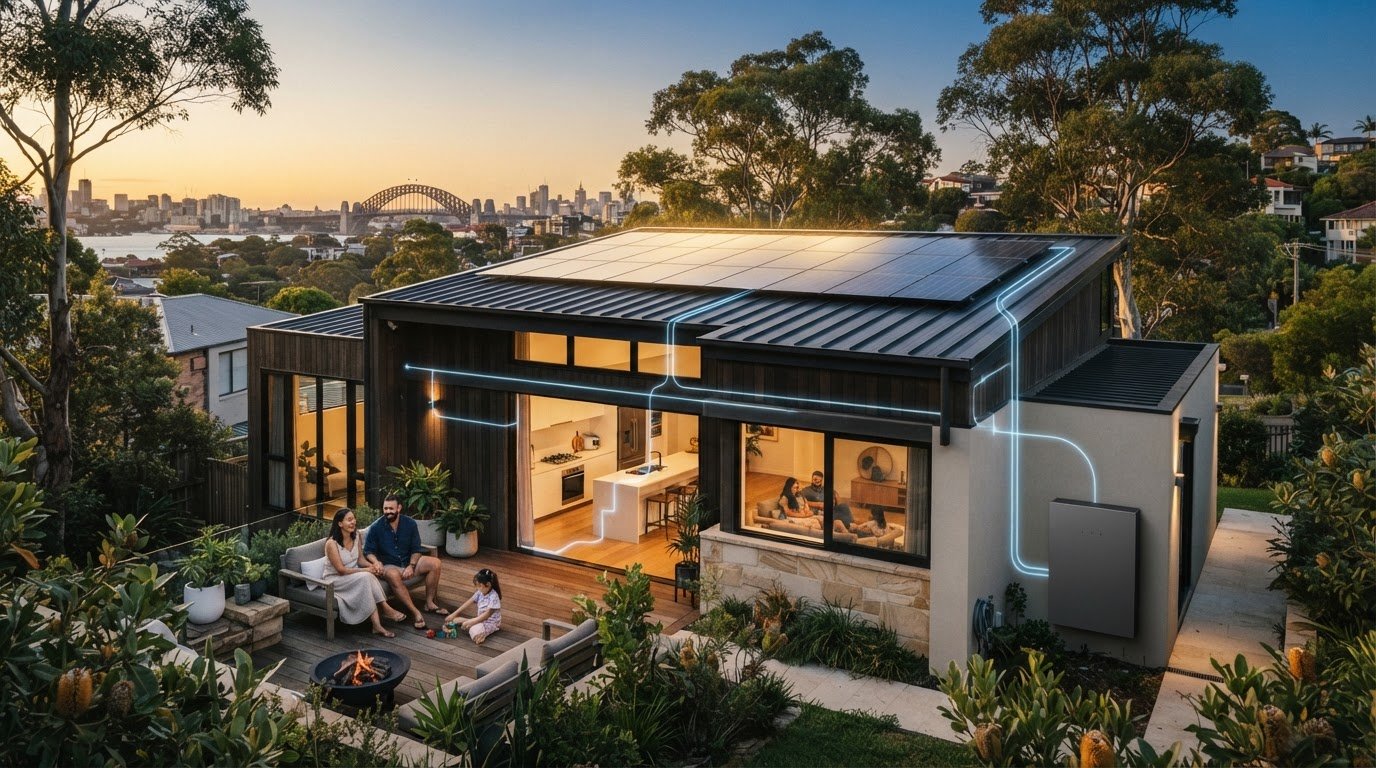
By focusing on self-consumption, you turn your electric vehicle into a “solar sponge.” Instead of letting your panels’ midday peak go to waste, you soak up that energy for your daily commute. This makes your transport miles effectively free. When you compare this to public fast-charging rates, which can exceed 60 cents per kilowatt-hour, the savings accumulate rapidly. For many households, ensuring your system is sized correctly is the first step toward this independence. You can explore our 6.6kW solar system Sydney guide to understand how different array sizes impact your ability to charge an EV while still powering your home.
Beating the Low Feed-in Tariff
The mathematics of modern energy are simple but powerful. Exporting solar for a measly 5 cents is a poor investment when you could be using it to offset a 35-cent retail cost. An integrated system automates this process by prioritising your car’s battery during peak production hours. This strategy ensures you use every possible watt “behind-the-meter,” avoiding the network charges and retail mark-ups that inflate your bill. It’s a grounded, practical way to ensure your solar investment pays for itself as quickly as possible.
Future-Proofing Your Property Value
Sydney buyers are increasingly looking for homes that are energy-independent and technologically advanced. An integrated system using premium components like SigenStor or Fox ESS battery Sydney isn’t just a utility; it’s a high-value asset. These systems are often designed to be bidirectional-ready, meaning they are prepared for the wider adoption of Vehicle-to-Home (V2H) and Vehicle-to-Grid (V2G) capabilities. This allows your car to act as a backup generator for your house during a blackout or peak demand period. Investing in this high-tier technology now ensures your property remains competitive and technologically relevant for the long term.
Planning Your Sydney Installation
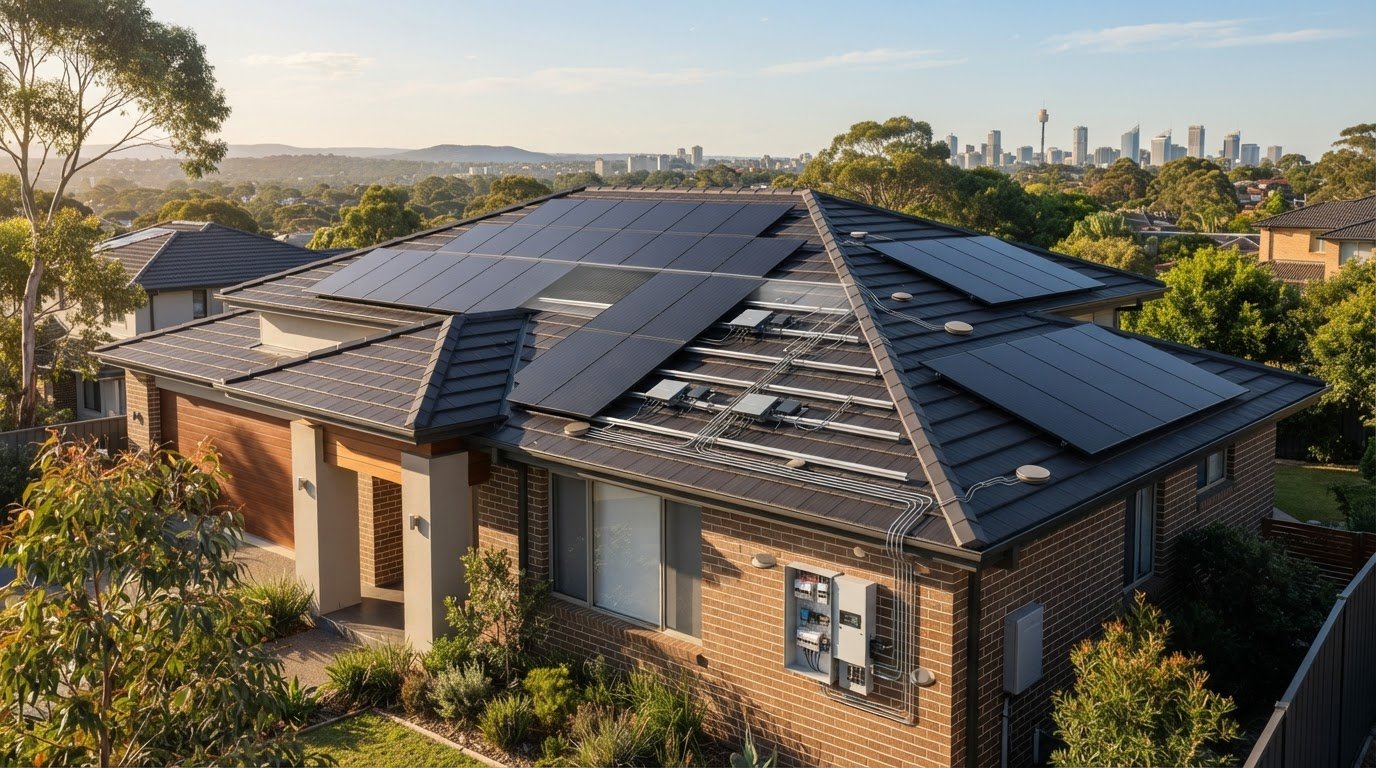
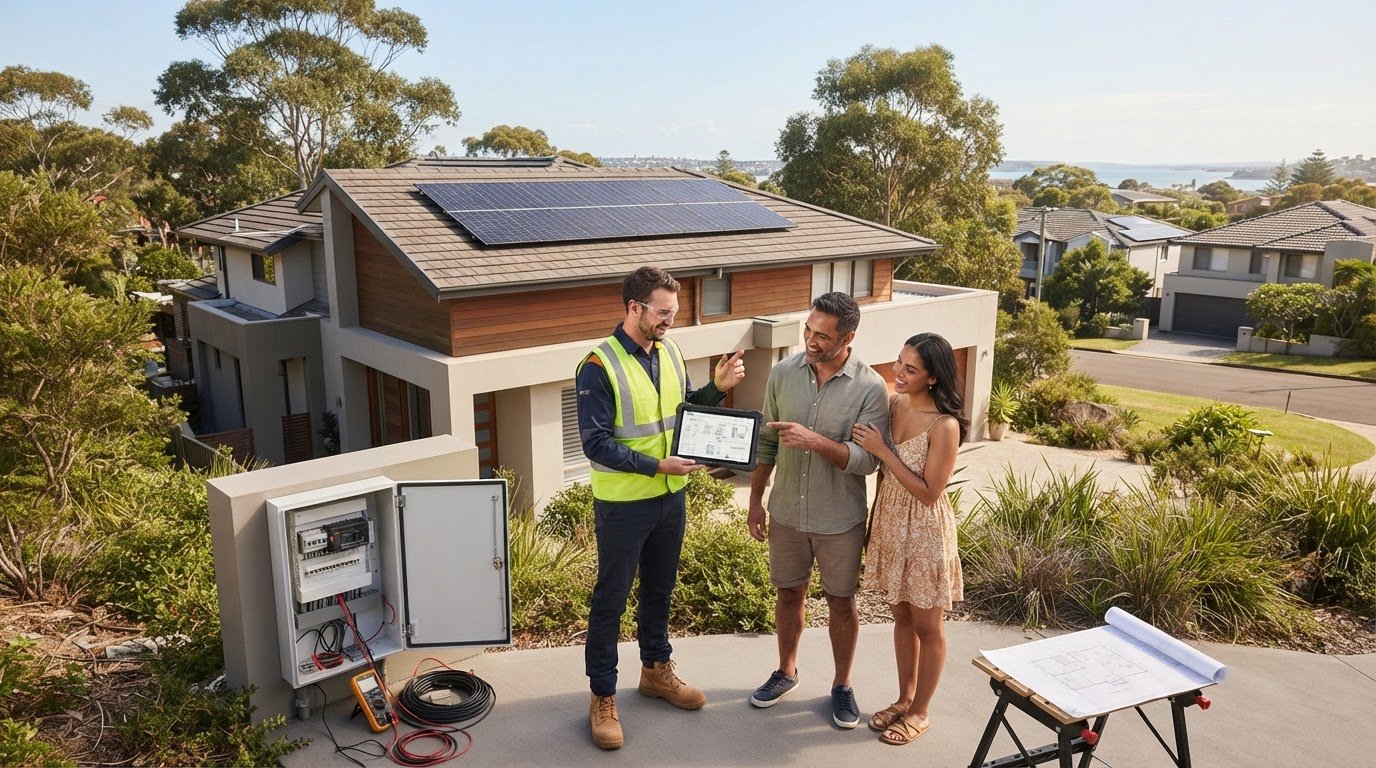
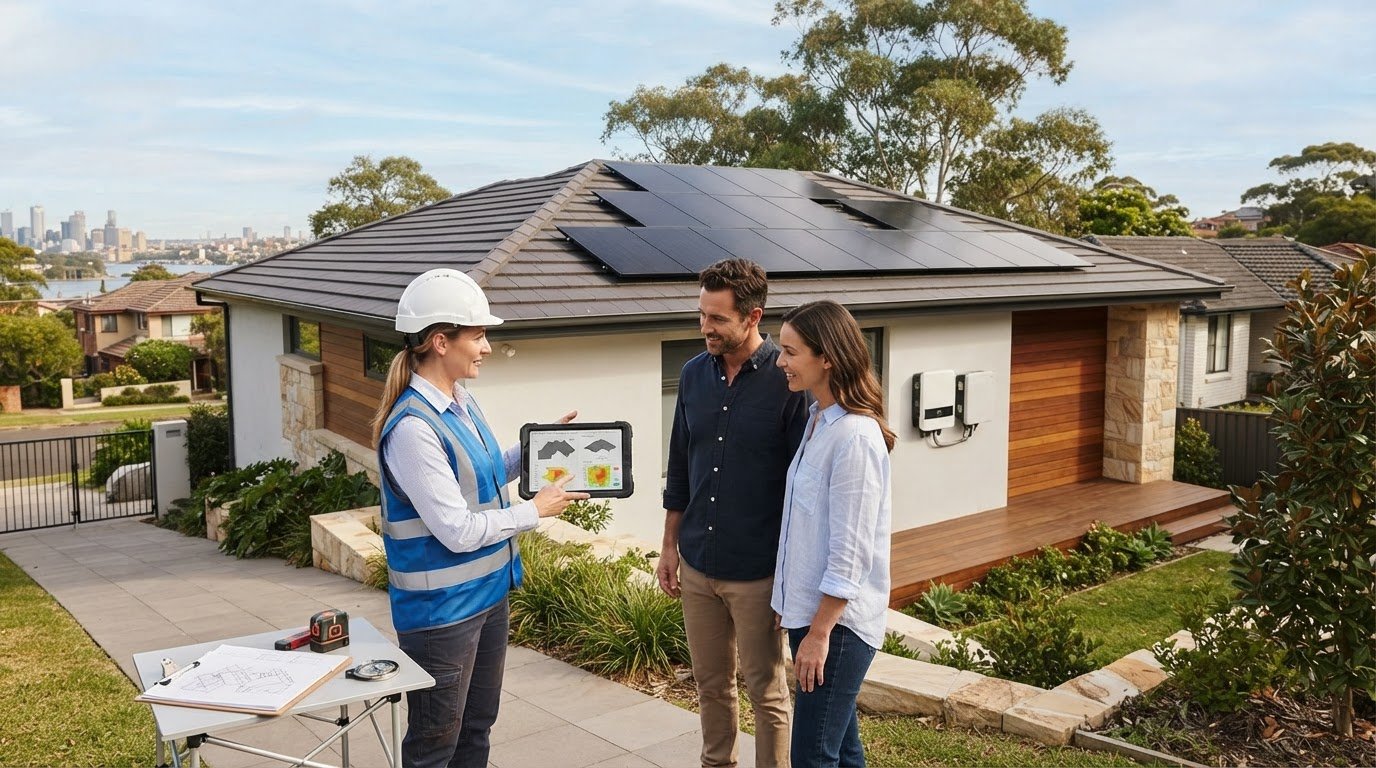
Moving from a standard solar setup to a fully integrated energy ecosystem requires more than just mounting a new box on the wall. The transition involves a sophisticated technical shift that starts with a comprehensive site audit by a licensed Sydney electrician. Because an integrated solar EV charger manages high-capacity electrical loads, your home’s existing infrastructure must be up to the task. We often find that Sydney’s unique mix of heritage terraces and modern builds requires a tailored approach to ensure the system operates at peak performance without compromising safety.
One of the first variables we assess is whether your home operates on a single-phase or three-phase connection. Most residential properties in Sydney are single-phase, which typically limits your EV charging speed to around 7kW. If you have a three-phase connection, you can potentially reach speeds of up to 22kW, provided your vehicle’s onboard charger can accept it. Understanding these limits early prevents disappointment and allows us to design a system that matches your car’s capabilities with your home’s electrical capacity.
The Switchboard Audit
Your switchboard is the heart of your home’s energy system, and adding a high-load device like an EV charger often necessitates an upgrade. Many older Sydney homes still rely on ceramic fuses or outdated circuit breakers that aren’t designed for the sustained 32-amp draw required by modern chargers. During our audit, we check for RCD (Residual Current Device) safety switches and ensure your service fuse can handle the additional load. For a deep dive into the electrical preparation required for high-capacity systems, you can view our detailed advice on switchboard upgrades within our 10kW solar guide. We prioritise long-term safety over “quick and cheap” installs because a premium system deserves a premium foundation.
Positioning and Aesthetics
The physical placement of your hardware is just as important as the internal wiring. We consider the distance to your vehicle’s charging port and the path of the cabling to ensure a clean, unobtrusive finish. Premium systems like the SigenStor feature a modular, stackable design that saves significant space in your garage or carport. Furthermore, Sydney’s coastal environment presents specific challenges. Salt air and high humidity can take a toll on inferior hardware. We select components designed for durability, ensuring your investment is protected against the elements while maintaining a sleek, modern aesthetic that adds value to your property. To begin your transition to a smarter home, you can book a professional site assessment with our expert team today.
SigenStor: The Ultimate Integrated Solution
The SigenStor Integrated Solar Inverter & EV DC Charger stands as the premier example of what a modern integrated solar EV charger should be. It is the world’s first 5-in-one home energy hub, bringing together the solar inverter, battery storage, DC EV charger, and Energy Management System (EMS) into a single, cohesive unit. This isn’t just about convenience; it’s about creating a smarter way to manage power. The system uses AI-driven energy management that can actually predict Sydney weather patterns. If the forecast suggests a cloudy afternoon, the system will prioritise charging your car or filling the battery during the morning sun to ensure you aren’t forced to buy expensive grid power later. For a comprehensive look at the hardware specifications, you can read our SigenStor pillar article.
Why 5-in-One is Better Than 5 Separate Boxes
Sydney properties often have limited space in garages or carports. Traditional solar setups with separate batteries and chargers often look like a messy science experiment. The SigenStor’s stackable, space-saving design removes this clutter. By choosing an integrated solution, you also enjoy the simplicity of a single app. You can monitor your solar production, battery level, and car charging status from one screen. This unified approach also reduces potential points of failure. Instead of multiple manufacturers blaming each other for a fault, you have a single point of accountability and a simplified warranty process.
Charging Modes for Every Scenario
Flexibility is key to making solar work for your lifestyle. The SigenStor offers three primary charging modes to suit different needs. Solar Only Mode is the ultimate goal for many, allowing for a “zero cost” commute by using only excess energy from your roof. Fast Mode is available when you need to get back on the road quickly, combining power from your panels, home battery, and the grid simultaneously to achieve maximum charging speeds. Finally, Time-of-Use Mode is perfect for rainy days or winter months. It automatically schedules charging when grid prices are at their lowest, typically in the early hours of the morning. Selecting an integrated solar EV charger like this ensures that your home is ready for the energy landscape of 2026 and beyond.
Future-Proof Your Sydney Home Today
The transition to electric transport is most rewarding when your home and vehicle work in total harmony. By moving away from the “double conversion” losses of standard chargers and embracing a DC-coupled ecosystem, you ensure that every watt of sunshine from your roof is utilised effectively. In a Sydney market defined by low feed-in tariffs, an integrated solar EV charger is no longer just a luxury; it is the most practical tool for achieving true energy independence and protecting yourself against rising retail electricity costs.
As certified SigenStor and FOX ESS installers with over 10 years of renewable energy experience, our expert Sydney-based electrical team is ready to help you navigate this transition with confidence. We focus on premium, durable installations that remove complexity and deliver long-term value for your property. Take the first step toward a seamless, intelligent energy hub and Get a Custom SigenStor Integration Quote for Your Sydney Home. We look forward to helping you drive on sunshine and master your home’s energy potential with absolute peace of mind.
Frequently Asked Questions
Is an integrated solar EV charger worth it if I already have solar?
Yes, upgrading to an integrated system is a strategic move if your current inverter is older or lacks hybrid capabilities. True integration allows for DC-to-DC charging, which is approximately 5-7% more efficient than standard AC setups. By consolidating your hardware into one ecosystem, you gain superior control through a single app and maximise your self-consumption. This ensures you aren’t wasting solar energy on low feed-in tariffs when you could be fueling your car.
Can I charge my EV at night using my solar battery?
You certainly can, provided your home battery has enough stored capacity to meet your vehicle’s needs. An integrated solar EV charger like the SigenStor allows you to discharge stored solar energy directly into your vehicle after the sun goes down. This is an ideal solution for Sydney residents who work during the day and want to ensure their daily commute is powered by 100% renewable energy without relying on the grid.
Do I need to upgrade to three-phase power for an integrated charger?
An upgrade is not mandatory, but it depends on your desired charging speed. Most single-phase Sydney homes support charging up to 7kW, which is sufficient for overnight replenishment. If you require faster speeds, such as 11kW or 22kW, a three-phase upgrade is necessary. During our site audit, we evaluate your switchboard and driving habits to help you decide if the additional speed is worth the investment for your specific property.
Will an integrated charger work with any brand of solar panels?
Yes, integrated charging systems are compatible with virtually all high-quality solar panels. The integration occurs at the inverter and charger level, meaning the brand of panels on your roof doesn’t restrict your choice of charger. Whether you have an existing 6.6kW system or are planning a new 10kW installation, an integrated solar EV charger will seamlessly manage the energy flow from your roof to your car battery with total precision.
How much faster is a SigenStor DC charger compared to a standard wallbox?
The SigenStor DC charger offers a performance advantage by bypassing the vehicle’s onboard AC charger, which is often a bottleneck. While standard wallboxes are limited by the car’s internal hardware, a DC-coupled system delivers power more directly to the battery. This results in less energy lost to heat and more efficient power delivery. It is the premier choice for homeowners who want the fastest, most intelligent home charging experience available in 2026.
Can I still charge from the grid if it is a rainy week in Sydney?
Absolutely. Integrated systems are designed for total reliability and will automatically draw power from the grid if solar production is low and your battery is depleted. You can use intelligent charging modes to schedule these grid sessions during off-peak windows when electricity prices are at their lowest. This ensures your vehicle remains fully charged and ready for use, regardless of Sydney’s unpredictable weather or seasonal changes in sunlight.
Does the NSW government offer any rebates for integrated EV chargers in 2026?
As of August 2026, there are no direct NSW government rebates for residential EV charger hardware in freestanding properties. However, commercial properties may still access the NSW EV Fleets Incentive for infrastructure costs. We recommend checking the current status of the Peak Demand Reduction Scheme, as battery storage incentives can often reduce the overall financial outlay when installing a comprehensive, integrated energy hub for your Sydney home. Homeowners considering modular storage options can also explore our guide to Fox ESS battery Sydney solutions to understand how scalable energy storage can complement an integrated EV charging setup.
What happens to my car charging if the power goes out?
If your system includes a battery with backup functionality, you can continue to charge your vehicle during a blackout. Premium systems like SigenStor can operate in “off-grid” mode, using stored energy to power essential loads and your car. Without a battery backup, Australian safety standards require all grid-connected inverters and chargers to shut down during a power outage to protect technicians working on the lines from unexpected energy exports.