

 Sydney
 0452 243 240
Blog
Commercial EV Charging Station Installation: A Sydney Case Study for 2026

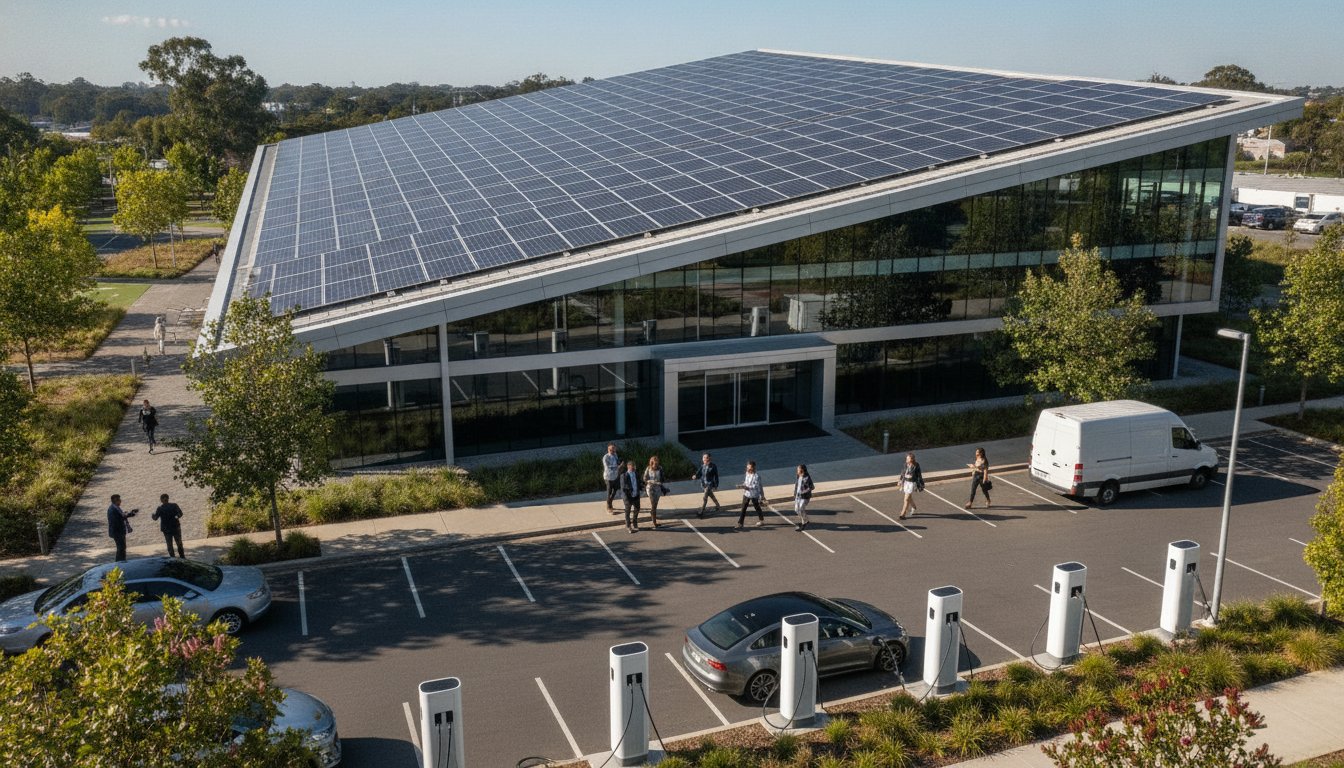
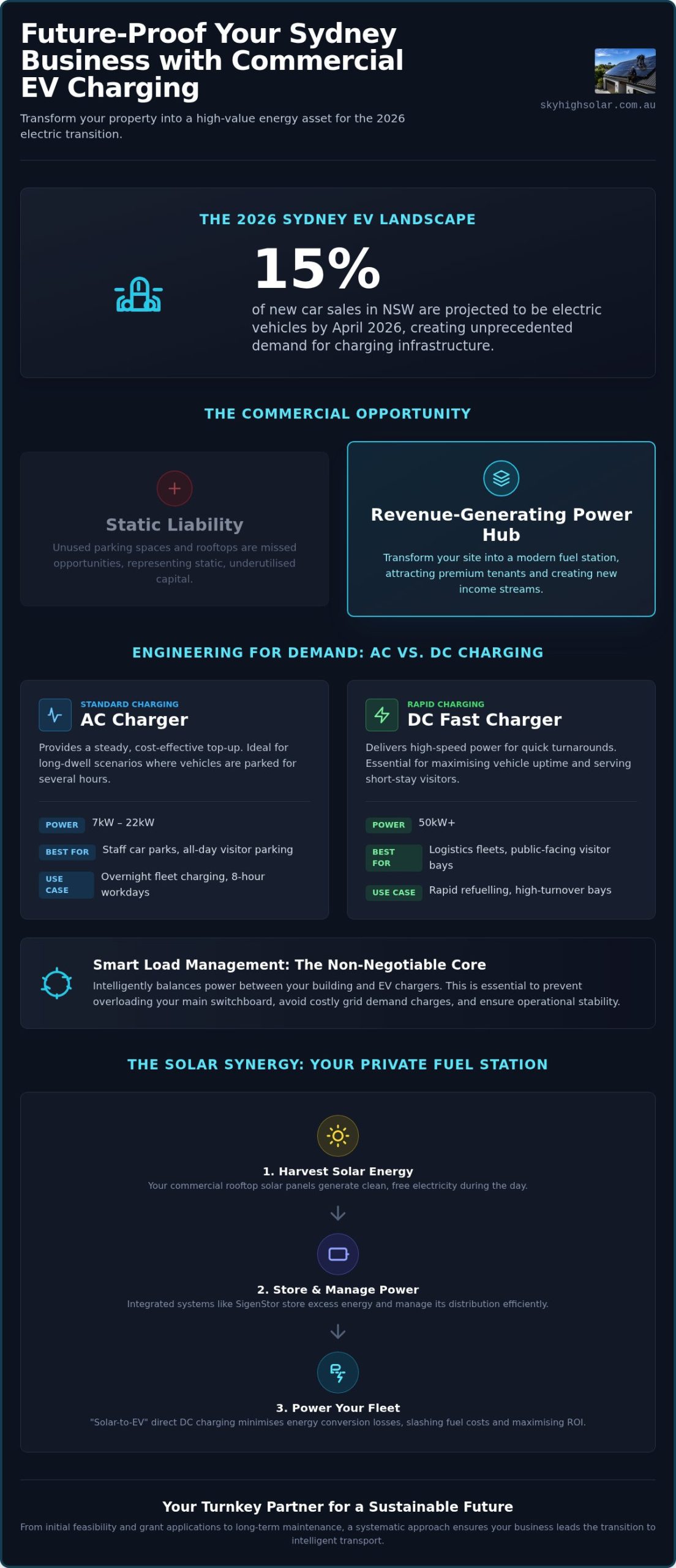
By April 2026, electric vehicles have reached a 15% share of new car sales in NSW, yet most Sydney businesses still view their parking lots as static liabilities rather than revenue-generating power hubs. This gap represents a missed opportunity for those who haven’t yet realised that their existing roof space can do more than just lower a quarterly bill.
It’s understandable if you feel hesitant about the transition. Navigating the complexity of NSW government grant applications and worrying about whether the Sydney grid can handle the load are genuine hurdles that often stall progress. You need a solution that simplifies the technical jargon and provides a clear path toward energy independence.
This article reveals how a well-executed commercial EV charging station installation transforms these challenges into a competitive advantage by turning your roof’s solar potential into high-speed fuel for your fleet. You’ll discover how to integrate smart load management to protect your infrastructure while meeting the strict fleet reporting standards of 2026.
We’ll examine a 2026 Sydney case study where integrated solutions, such as the SigenStor DC charger and essential switchboard upgrades, created a turnkey, future-proofed asset. This systematic approach ensures your business remains a leader in the shift toward sustainable, intelligent transport.
Key Takeaways
- Define the engineering standards required for a successful commercial EV charging station installation, focusing on switchboard capacity and smart load management to protect your site.
- Evaluate the strategic differences between AC and DC charging speeds to ensure your infrastructure matches the specific dwell times of your staff and visitors.
- Identify the current eligibility criteria for 2026 NSW government grants to maximise your return on investment through available co-funding opportunities.
- Explore how integrated solar and battery systems allow Western Sydney businesses to scale their fleets even in areas with limited grid capacity.
- Master the transition with a turnkey approach that simplifies the journey from initial feasibility assessments to long-term infrastructure maintenance and servicing.
Future-Proofing Sydney Businesses with Commercial EV Infrastructure
Sydney has reached a decisive moment in its energy transition. By April 2026, electric vehicles account for roughly 15% of new car sales in NSW. This isn’t just a trend for early adopters anymore; it’s a fundamental shift in how people move through the city. For property owners and facility managers, a commercial EV charging station installation is no longer a luxury upgrade. It’s the critical infrastructure that ensures your building remains relevant as petrol-powered vehicles begin their steady decline.
Modern charging solutions have evolved far beyond the simple wall-mounted units of the past. Today, sophisticated electric vehicle supply equipment (EVSE) acts as a central hub in a building’s energy ecosystem. These systems do more than just deliver power. They manage load, track usage for fleet reporting, and communicate with the grid to avoid expensive peak-time surcharges. This level of intelligence is necessary because Sydney’s high urban density and aging grid infrastructure create unique pressures. You can’t just plug in ten fast chargers and hope for the best without risking a tripped main switchboard or astronomical demand charges.
Attracting premium tenants now requires meeting strict corporate ESG (Environmental, Social, and Governance) targets. Providing high-yield energy assets in your parking spaces makes your property a preferred destination for businesses looking to lower their carbon footprint. It’s about moving from a reactive mindset to a proactive strategy that treats energy as a manageable resource rather than an uncontrollable cost.
The 2026 Sydney EV Landscape
The demand for car park charging has surged as local councils across Sydney increasingly mandate EV-ready provisions in new commercial developments. What was once considered a “perk” for executives has become an essential utility. Employees and clients now expect to arrive at a workplace and find reliable, high-speed charging available as a standard service. In this landscape, a commercial EV charging station installation serves as a visible commitment to innovation and modern standards.
Commercial Solar Energy: The Engine of EV Charging
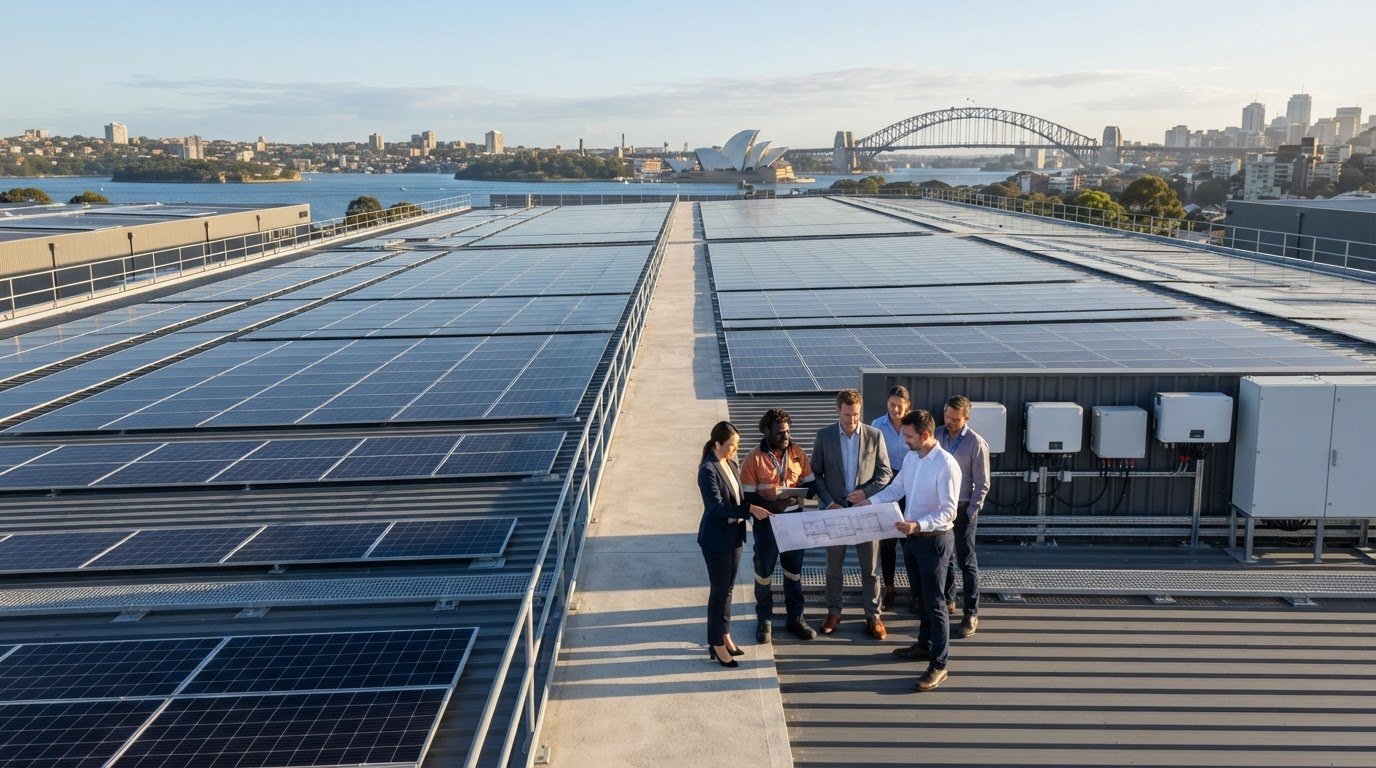
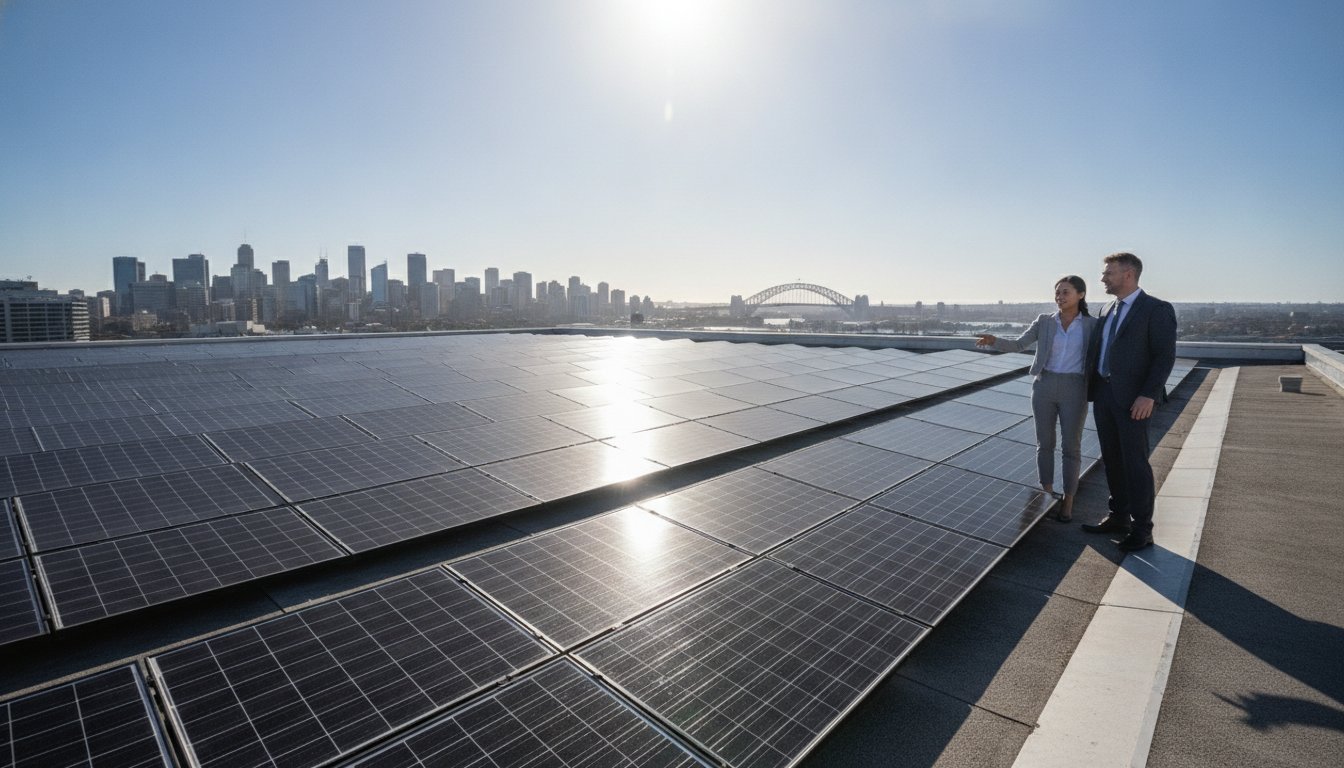
Standalone charging can be prohibitively expensive if it relies solely on the grid during business hours. Linking your infrastructure to a commercial solar installation is the most effective way to secure a high ROI. By utilising “Solar-to-EV” direct DC charging, you bypass the inefficiencies of multiple conversions. This allows you to harvest the sun’s energy during the day to power your fleet, effectively turning your roof into a private fuel station that operates at a fraction of the cost of traditional energy prices.
Designing for Demand: The Engineering of High-Capacity Charging
A successful commercial EV charging station installation is an exercise in precise engineering rather than a simple electrical addition. Unlike residential setups, commercial environments must balance high-load demands with existing building operations. This requires a shift from viewing chargers as standalone appliances to seeing them as part of a broader national strategy for Future-Proofing Sydney Businesses. Designing for 2026 means anticipating a future where every second parking bay may require power, necessitating a scalable approach from day one.
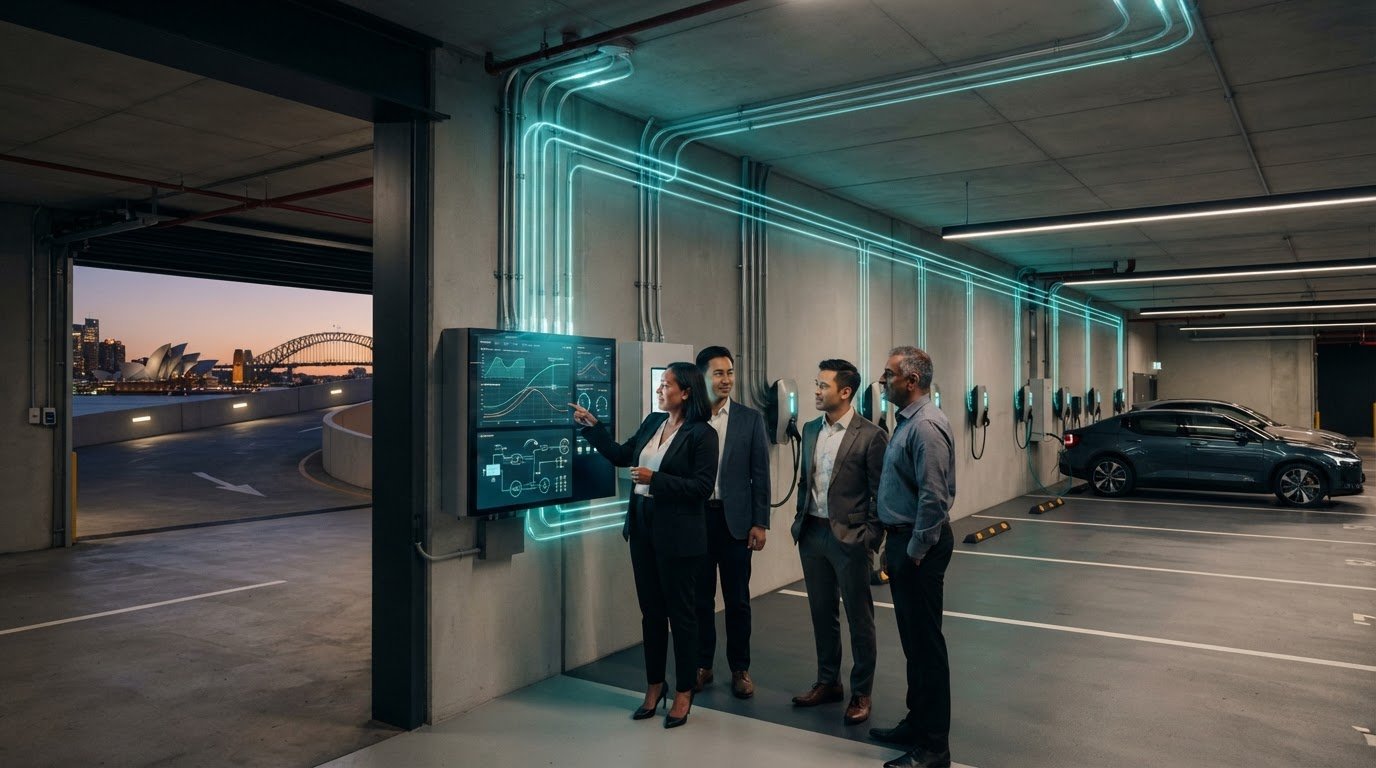
Choosing between AC and DC charging is the first strategic hurdle. AC charging (typically 7kW to 22kW) is the standard for staff who remain on-site for eight hours, providing a steady, cost-effective top-up. Conversely, DC fast charging is essential for visitor bays or logistics fleets where rapid turnover is a priority. However, the higher the speed, the greater the strain on your infrastructure. Implementing Dynamic Load Management (DLM) is non-negotiable here; it acts as a digital traffic controller, protecting your site from blackouts by automatically throttling power during peak building usage times.
Switchboard Upgrades and Grid Capacity
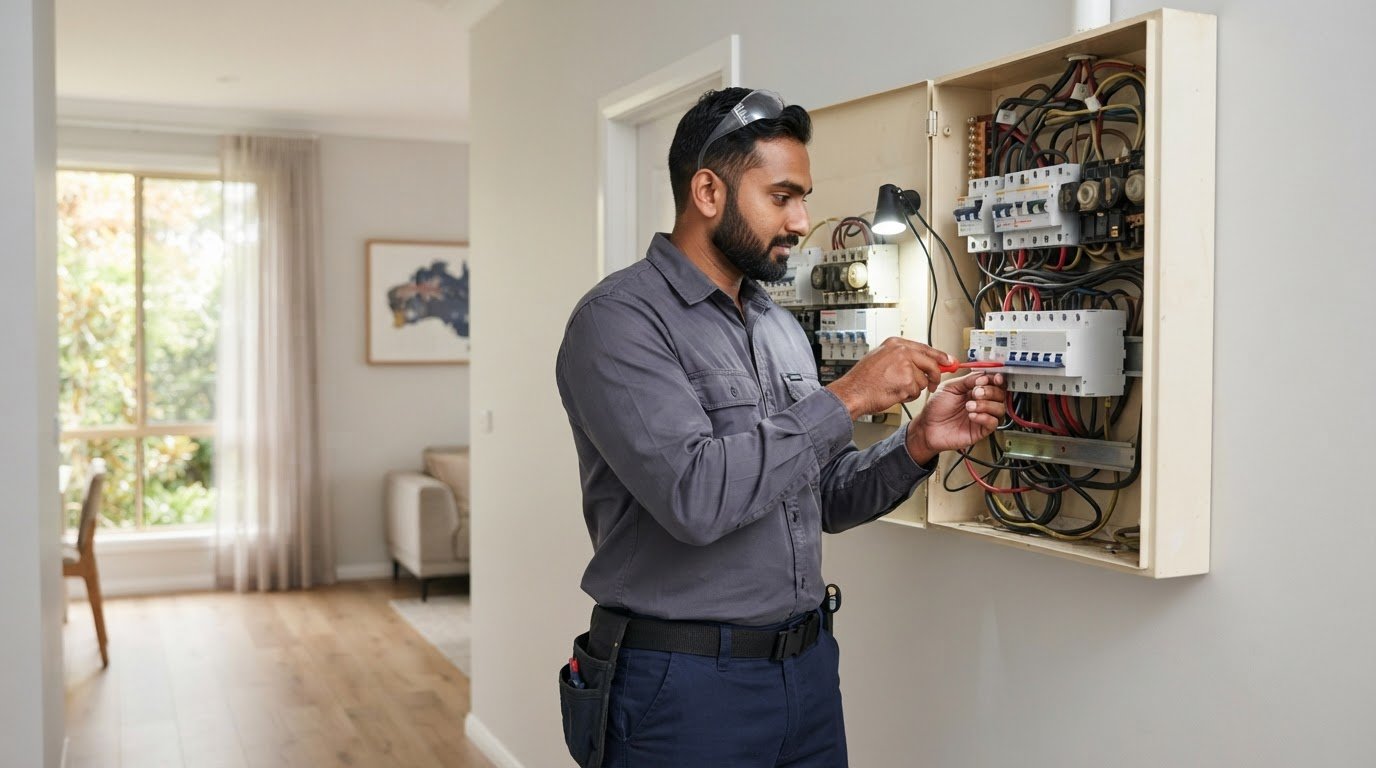
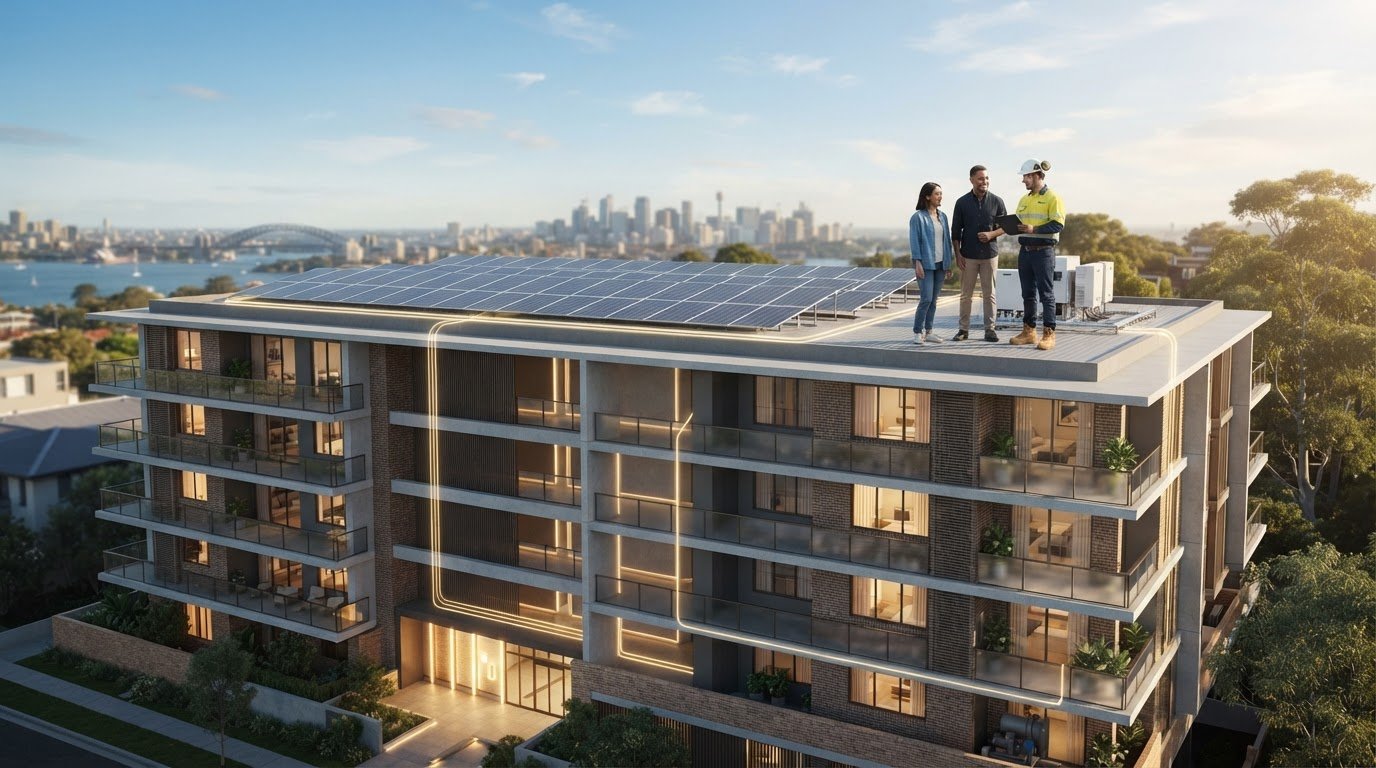
Most commercial buildings in Sydney, particularly those in established hubs like Parramatta or the CBD, were not designed with the spare capacity to fuel a fleet of vehicles. A comprehensive site assessment often reveals that a switchboard upgrade is the first essential step. Navigating the requirements of Ausgrid or Endeavour Energy for these upgrades requires technical precision to ensure compliance with modern safety standards. In this context, load balancing is the intelligent distribution of available electrical capacity across multiple charging points to ensure no single circuit is overloaded while maintaining optimal charging speeds. If you are unsure about your current capacity, a professional site audit from the Sky High Solar and Electrical team can clarify your building’s readiness.
Smart Software and Access Control
Engineering the hardware is only half the battle; managing the energy is where long-term value is found. Modern commercial EV charging station installation projects now include Open Charge Point Protocol (OCPP) compliant software. This allows facility managers to implement sophisticated billing and cost recovery models. You can set different rates for employees versus the public or integrate the system directly into your existing Building Management System (BMS) for total energy transparency. Using RFID tags or mobile apps ensures that only authorised users can access the chargers, preventing energy theft and providing detailed data for fleet emissions reporting.
Case Study: Integrating SigenStor for a Western Sydney Commercial Fleet
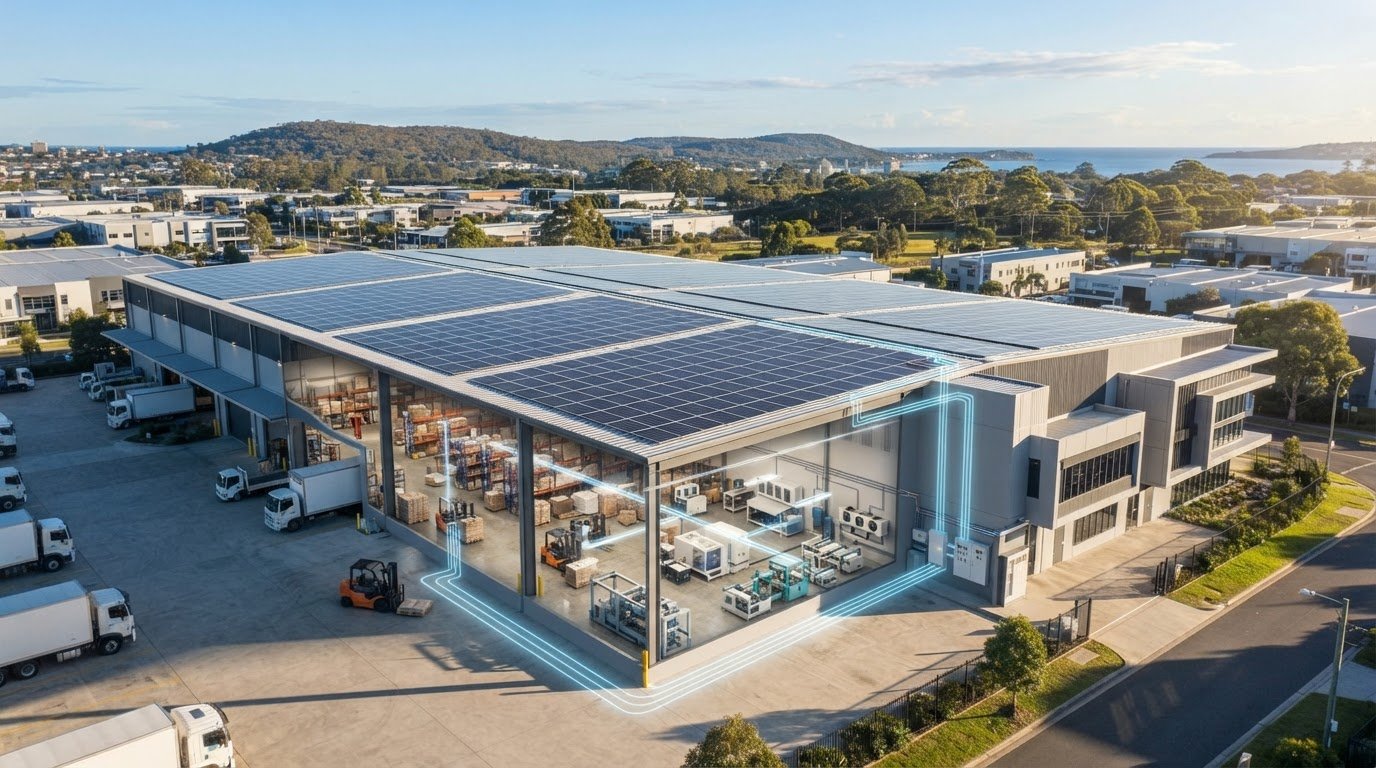
In 2026, Western Sydney has become the engine room for the city’s green logistics transition. A mid-sized logistics firm in Penrith, operating a fleet of ten electric delivery vans, recently faced a significant operational bottleneck. Their existing warehouse electrical setup couldn’t support rapid midday charging without triggering massive demand charges from the grid. This scenario is common for businesses attempting a commercial EV charging station installation without a unified energy strategy. The challenge was twofold: they needed to charge their vehicles quickly between shifts while keeping daytime electricity costs from eroding their margins.
The solution wasn’t just more power; it was smarter, integrated power. By installing a 30kW solar array paired with SigenStor Integrated EV DC Chargers, the firm moved away from total grid dependency. This system allowed them to harvest the abundant Western Sydney sunshine and feed it directly into their fleet. The project demonstrated that even in areas where the local grid is under pressure, businesses can thrive by becoming their own energy producers.
Hardware Spotlight: Why SigenStor?
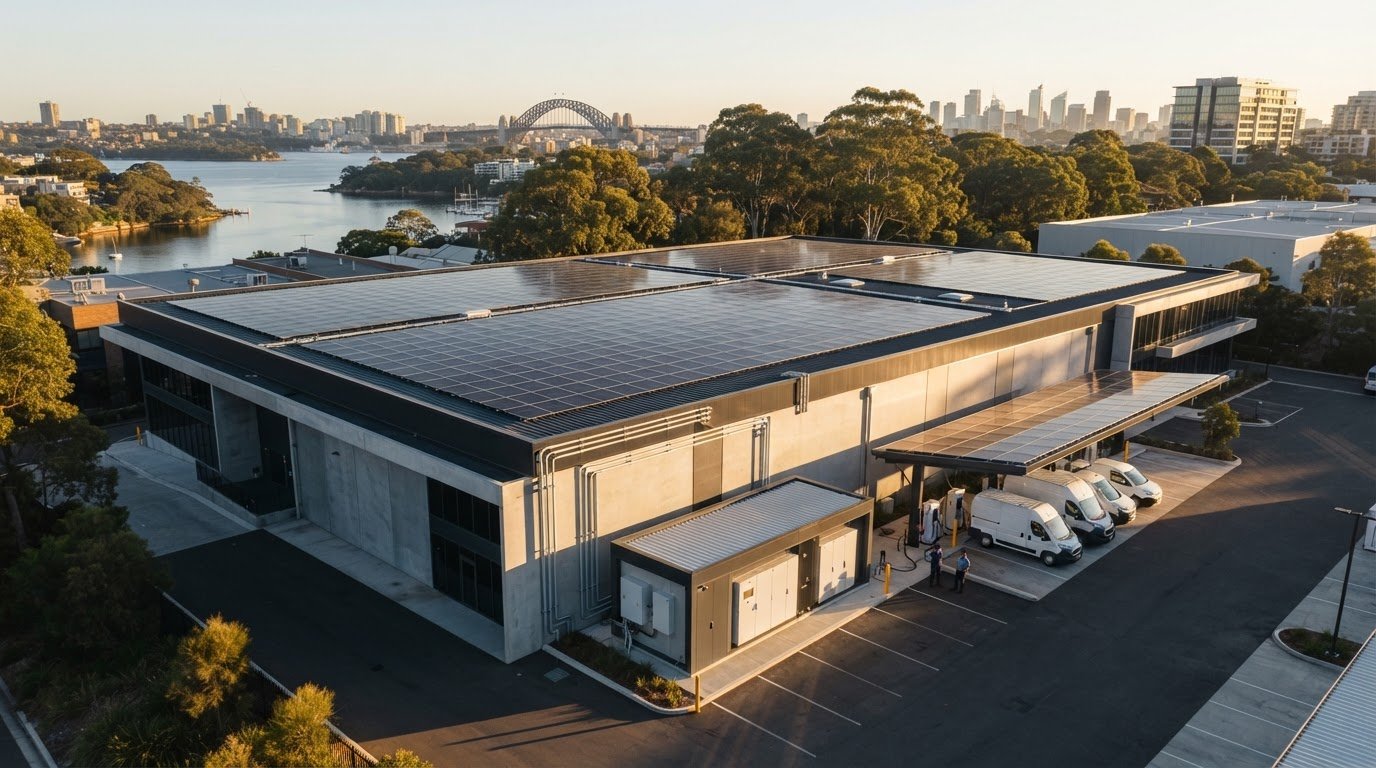
When planning a commercial EV charging station installation, the choice of hardware dictates the long-term operational costs. For the Penrith site, SigenStor was selected because it combines the solar inverter and the DC charger into a single, modular unit. This integration significantly reduced the complexity of the installation and the physical footprint required in the car park. Because it’s a DC-to-DC system, the energy flows directly from the solar panels to the vehicle batteries with minimal conversion loss. The delivery vans achieved consistent charging speeds that allowed for a full top-up during the drivers’ lunch breaks, ensuring the fleet remained on the road during peak delivery windows.
Battery Storage Synergy
To manage the expensive 4pm to 8pm peak tariff window, the site incorporated FOX ESS battery storage. This allows the firm to store excess solar energy generated during the quiet midday hours and deploy it when the fleet returns for evening charging. This “peak shaving” strategy protects the business from Sydney’s highest energy rates and ensures the switchboard isn’t stressed during high-demand periods. The results were immediate. The firm recorded a 70% reduction in fleet fuel costs and achieved zero grid-overload incidents. By leveraging NSW Government co-funding for EV charging, the business also managed to significantly lower the initial capital outlay, proving that sustainable infrastructure is a sound financial investment.
Navigating NSW Grants and Financial Incentives in 2026
The financial landscape for a commercial EV charging station installation has shifted significantly as we move through 2026. While the initial capital expenditure was once a primary barrier, the current mix of state and federal incentives has turned these installations into highly accessible assets. Sydney business owners who act now can leverage substantial co-funding to offset the costs of both hardware and the necessary electrical upgrades. This isn’t just about a one-off rebate; it’s about a strategic tax position that rewards companies for modernising their energy footprint.
Eligibility for these programs generally requires an active ABN and a fleet of at least three vehicles, though specific provisions exist for destination charging in the hospitality and retail sectors. Beyond direct grants, the Australian tax system offers accelerated depreciation and instant asset write-off opportunities for eligible small and medium enterprises. These mechanisms allow you to recover a portion of your investment much faster than traditional infrastructure projects, provided the installation is completed and operational within the current financial year. Understanding how to fully leverage these deductions is covered in detail in our guide to commercial solar tax benefits NSW, which outlines the latest write-off thresholds and rebate structures for 2026.
NSW Climate and Energy Action Incentives
The NSW Government’s “EV Ready” program remains the cornerstone of local support, providing targeted funding for commercial landlords to upgrade their car parks. To secure the highest level of funding, many businesses are choosing to bundle their charging infrastructure with a 10kW solar system or larger, as integrated energy solutions often receive priority in the application queue. The NSW EV Fleets Incentive program is scheduled to close on 30 November 2026, though the rapid uptake of remaining funds suggests the pool will be empty months before that date. Avoiding common application mistakes, such as failing to provide a detailed site assessment from a licensed contractor, is essential for a successful claim.
ROI and Long-term Financial Planning
The transition from a Capital Expenditure (CapEx) model to an Operational Expenditure (OpEx) mindset is a growing trend in the Sydney market. Charging-as-a-Service models allow businesses to install premium hardware with minimal upfront costs, instead paying a monthly service fee that covers maintenance and software updates. Over a ten-year horizon, the energy savings compared to traditional diesel or petrol fuel are immense, especially when paired with on-site solar generation. For businesses looking to treat their energy infrastructure as a high-yield financial asset, our commercial solar investment NSW finance guide details how to structure your project to maximise cash-flow benefits and tax depreciation under 2026 rules. Furthermore, properties equipped with high-speed charging infrastructure are seeing a measurable uplift in valuation, as tenants increasingly demand “green-certified” tenancies. If you want to see how these incentives apply to your specific site, you can request a detailed grant eligibility assessment to maximise your return.
Partnering with Sky High Solar and Electrical for Turnkey Sydney Installation
Local expertise is the foundation of a successful commercial EV charging station installation. Sydney’s electrical network is complex, and navigating the specific requirements of Ausgrid or Endeavour Energy requires a partner who understands the local grid’s limitations and opportunities. Unlike national providers who often outsource their labour, our team consists of licensed Sydney electrical contractors who are deeply familiar with local council codes and the unique infrastructure challenges found in our city’s commercial hubs. This localised knowledge ensures that your project moves through the approval and connection phases without unnecessary delays.
Sky High Solar and Electrical provides a complete turnkey service that removes the complexity of managing multiple vendors. From the initial feasibility study to final commissioning, we handle every technical detail. This includes essential switchboard upgrades to support high-load charging and the seamless integration of your system with existing building management software. Our commitment to quality is reflected in our choice of premium hardware. We specialise in SigenStor integrated chargers, FOX ESS batteries, and Enphase systems to ensure your infrastructure is durable, intelligent, and capable of meeting 2026 standards.
Comprehensive Electrical Contracting
A robust commercial EV charging station installation involves much more than just mounting a unit to a wall. It requires a holistic view of your site’s electrical health. We specialise in high-load commercial switchboard upgrades and can integrate energy-efficient lighting solutions to improve your facility’s overall performance. Once your system is live, we provide ongoing solar system servicing to ensure your panels and chargers operate at peak efficiency for years to come. Our local team is fully insured and highly specialised, providing the peace of mind that comes from working with established Sydney energy experts.
Request Your Commercial Site Audit
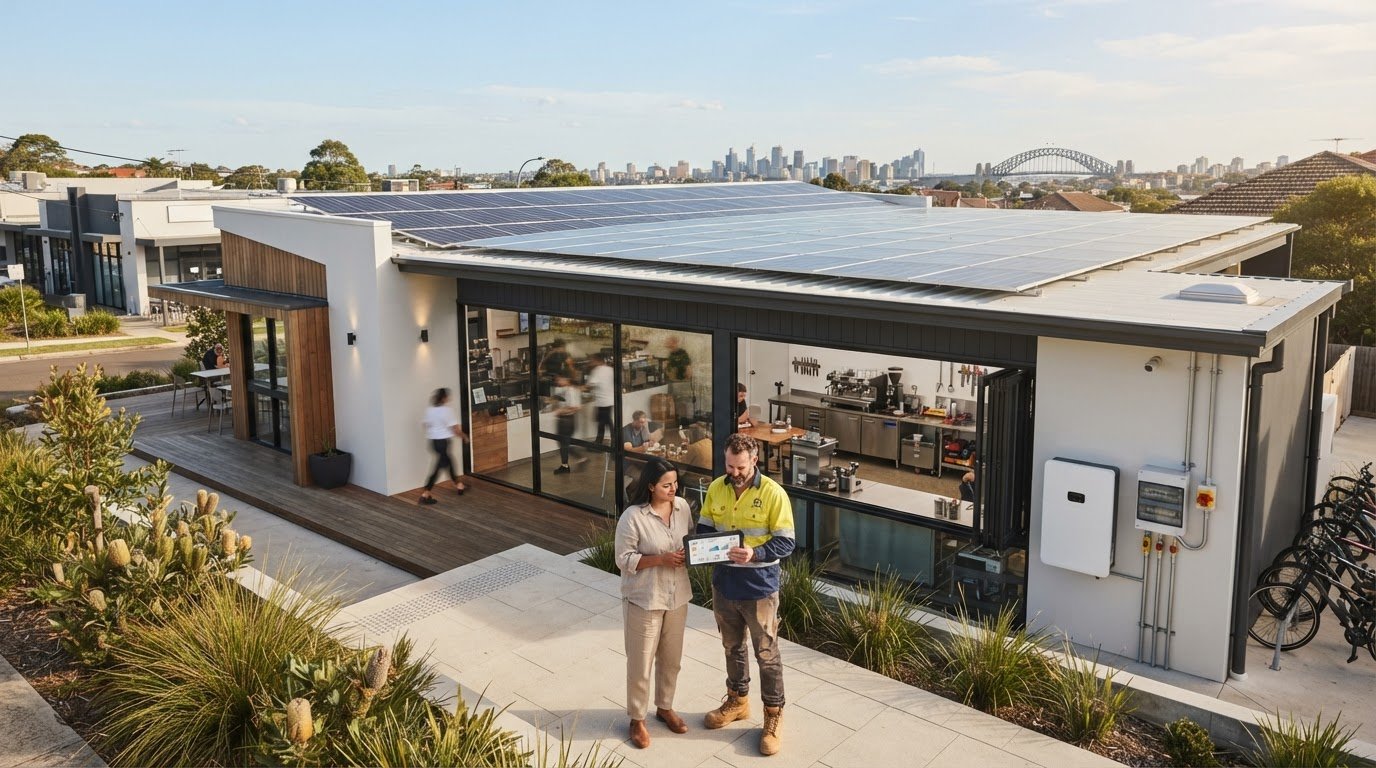
Every business has different energy requirements, whether you are managing a retail centre in Chatswood, an office block in North Sydney, or an industrial warehouse in Western Sydney. During a Sky High Solar and Electrical commercial consultation, we perform a deep-dive energy analysis to tailor a solution that fits your specific industry and usage patterns. We evaluate your current capacity, identify potential grant opportunities, and design a scalable roadmap for your future fleet goals. Secure your business’s energy future today by booking a comprehensive site audit and taking the first step toward a high-yield, solar-integrated charging network.
Securing Your Position in Sydney’s Energy Future
Sydney’s transition to electric mobility is no longer a distant prospect; it’s a present-day commercial reality. By integrating smart engineering with on-site solar generation, your business can transform simple parking spaces into high-yield energy assets that attract premium tenants and lower long-term operational costs. We’ve explored how a strategic commercial EV charging station installation serves as the backbone of this modernisation, especially when paired with intelligent load management and battery storage to protect your infrastructure from grid volatility.
As grant deadlines approach in late 2026, the window to maximise your return on investment is narrowing. Partnering with a specialist who understands the local grid and council landscape ensures your project moves from feasibility to commissioning with absolute clarity. As a SigenStor Certified Installer and NSW Licensed Electrical Contractor, our Sydney-based specialist team at Sky High Solar and Electrical is ready to guide you through this evolution with precision and purpose.
Take the first step toward energy independence today. Request a Commercial EV Site Audit from Sky High Solar and Electrical to discover how we can tailor a future-proofed solution for your facility. The shift toward a cleaner, more efficient Sydney is well underway, and we look forward to helping your business lead the charge.
Frequently Asked Questions
How much does a commercial EV charging station installation cost in Sydney?
The total investment for a commercial EV charging station installation depends on several variables, including your choice of AC or DC hardware and the extent of civil works required. Factors such as trenching, cabling distance, and the need for switchboard upgrades will influence the final project scope. Every site is unique, so a detailed audit is necessary to provide an accurate reflection of the infrastructure needs for your specific property.
Do I need to upgrade my building’s switchboard for EV charging?
Most commercial buildings in Sydney require a switchboard upgrade because they weren’t originally designed to support the high electrical load of multiple vehicles. Older switchboards often lack the necessary circuit protection and spare capacity to fuel an EV fleet safely. Upgrading your board ensures your building meets modern safety standards while providing the stable power required to support fast-charging hardware without interrupting other business operations.
What is the difference between AC and DC charging for commercial sites?
AC charging is the standard solution for workplaces where vehicles are parked for several hours, providing a steady top-up for staff or long-stay tenants. DC fast charging is essential for high-turnover locations or logistics fleets that need to return to the road quickly. While AC units are generally simpler to install, DC chargers provide the rapid charging speeds required for delivery vans and visitor bays where dwell time is limited.
Can I integrate my existing commercial solar system with new EV chargers?
You can certainly integrate your existing solar array, provided you use a smart energy management system or a compatible hybrid inverter. This integration allows you to direct your self-generated solar power straight into your vehicles, significantly reducing your reliance on the grid. It’s a strategic way to lower your operational costs and ensure your commercial EV charging station installation delivers the best possible return on investment.
Are there government grants available for Sydney businesses installing EV chargers in 2026?
Yes, the NSW Government currently offers incentives such as the “EV Ready” program for commercial landlords and fleet incentives for eligible ABN holders. These programs are designed to assist with the costs of hardware and installation, though funding pools are being exhausted quickly as adoption increases. It’s important to act before the November 2026 deadline for many of these rebates to ensure your business can access the available co-funding.
How long does the installation process typically take for a commercial property?
The timeline for a commercial project varies from a few weeks for simple setups to several months for larger, more complex installations. Smaller AC projects move quickly once the hardware is secured, but larger DC installations often involve detailed grid connection approvals from Ausgrid or Endeavour Energy. Civil works like trenching and concrete cutting can also extend the schedule, so early planning is vital for a smooth rollout.
Can I charge customers or staff for using the EV charging stations?
Smart charging software allows you to implement billing and cost recovery models tailored to your specific needs. You can set different rates for employees, clients, or the general public using RFID tags or mobile apps. This functionality allows you to recover your electricity costs and can even transform your parking spaces into a self-sustaining revenue stream that supports the long-term maintenance of the infrastructure.
Is load management necessary for a small commercial EV setup?
Load management is essential even for smaller setups because it protects your building from site-wide blackouts during peak usage periods. The system intelligently monitors the building’s total power draw and throttles the chargers if the load gets too high. This digital oversight prevents you from exceeding your capacity limits and helps you avoid expensive peak demand charges from your energy provider, ensuring the system remains cost-effective.