

 Sydney
 0452 243 240
Blog
Solar Panel Costs for a 3 Bed Sydney House (2026 Guide)

What if the cheapest quote you’ve received for solar is actually the most expensive mistake you’ll make for your Sydney home? While it’s tempting to hunt for the absolute lowest average cost of solar panels for a 3 bedroom house Sydney families often find that budget systems fail just as the 2026 rebate landscape shifts. You’re likely feeling the weight of rising quarterly power bills and the frustration of navigating complex new standards like CSIP-AUS compliance. It’s a confusing time to transition to renewables; especially with the federal STC multiplier decreasing again this year.
We’ve designed this guide to provide the clarity you need to make an informed, long-term investment. You’ll discover the real-world value of 6.6kW versus 10kW systems and how premium components like Enphase microinverters or Tesla Powerwalls offer superior durability in the Harbour City’s climate. We’ll also break down the latest 2026 battery incentives and the NSW Peak Demand Reduction Scheme to ensure you maximise your savings. This journey moves from high-level pricing factors to the specific technical details that ensure your system remains a high-tier asset for decades.
Key Takeaways
- Understand why a 6.6kW system is the optimal capacity for most 3-bedroom Sydney households to maximise self-consumption and long-term value.
- Discover how the average cost of solar panels for a 3 bedroom house Sydney varies between entry-level and premium systems, including the impact of 2026 federal rebate changes.
- Evaluate the performance benefits of high-tier components like Enphase microinverters and Tesla Powerwalls for superior reliability in the Sydney climate.
- Learn why a compliant switchboard upgrade is a critical step for electrical safety and future-proofing your home for high-voltage storage or EV charging.
- Navigate the updated 2026 incentive landscape, including the NSW Peak Demand Reduction Scheme, to significantly reduce your total investment.
Understanding the Solar Investment for a 3-Bedroom Sydney Home
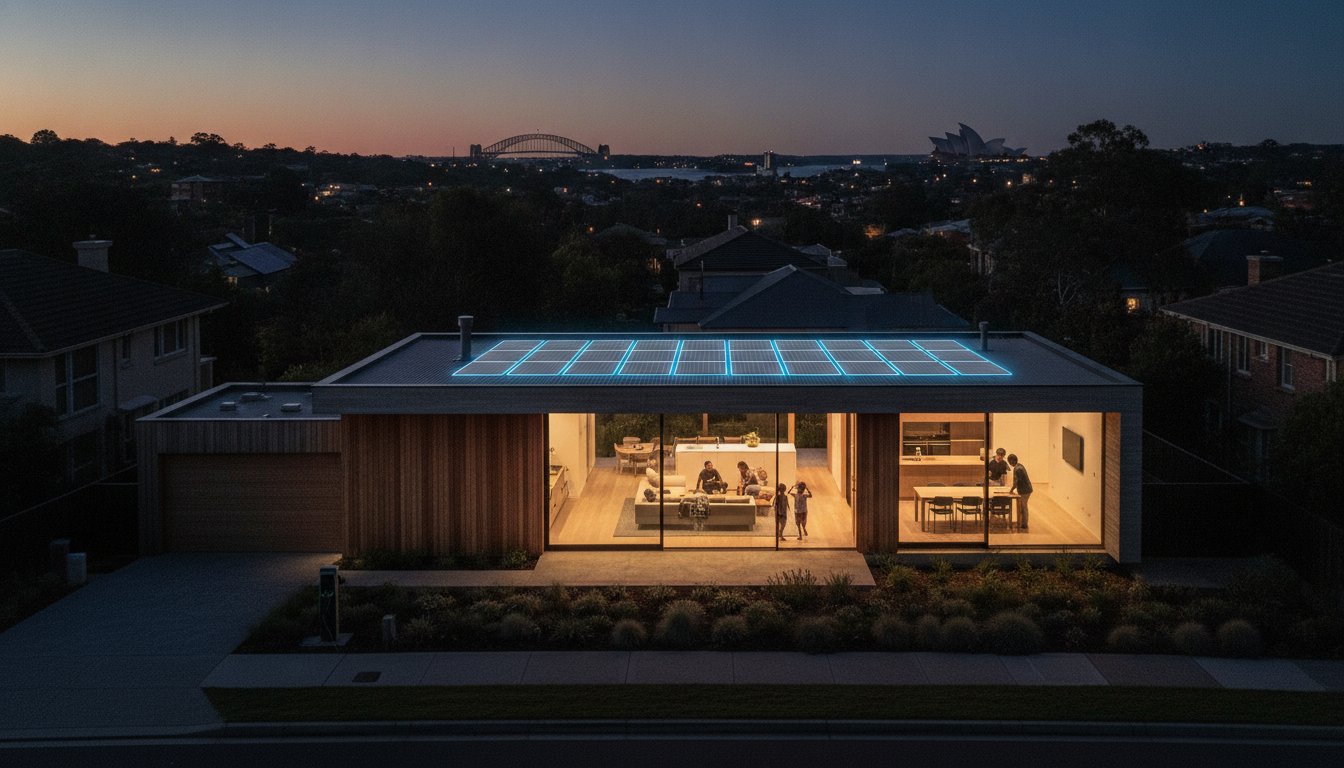
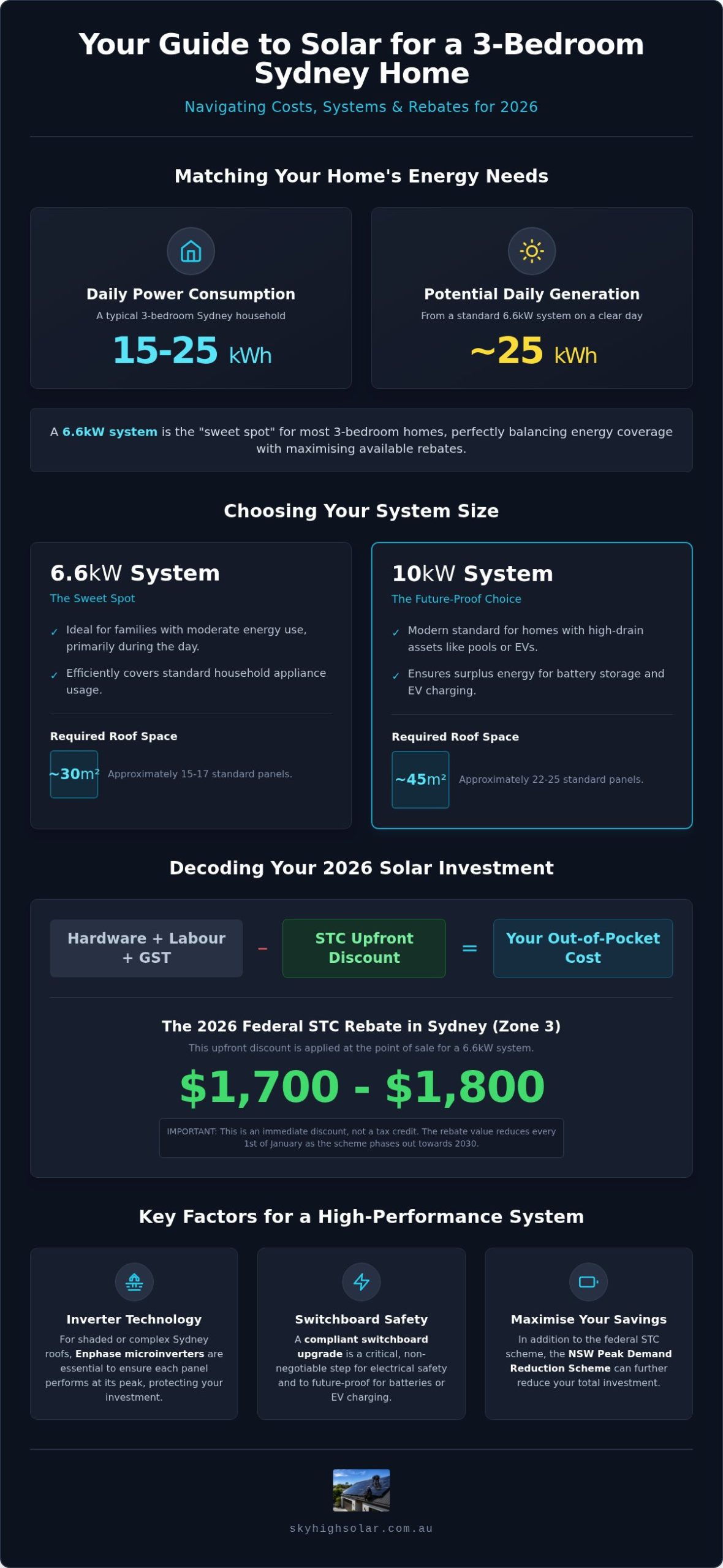
A typical 3-bedroom Sydney household consumes between 15kWh and 25kWh of electricity daily. This fluctuates based on seasonal demands like ducted air conditioning during a humid February or electric heating in July. When homeowners research the average cost of solar panels for a 3 bedroom house Sydney, they often land on the 6.6kW system as the baseline. This size has become the “sweet spot” because it maximises the federal rebate while remaining compatible with most single-phase grid connections. It generates roughly 25kWh on a clear day, which covers the standard needs of a growing family while leaving room for modest export credits.
The broader landscape of Solar power in Australia is shifting toward “future-proofing” through high-voltage hybrid inverters. By choosing a system that is battery-ready today, you avoid the expensive hurdle of replacing hardware when you decide to add storage later. Systems featuring the GoodWe ET G2 or the FOXESS Three Phase 10.0kw Hybrid Inverter allow for seamless integration with high-performance storage solutions like the FOX ESS CQ7 when your budget or energy needs expand.
6.6KW vs 10kW: Which Size Suits Your Household?
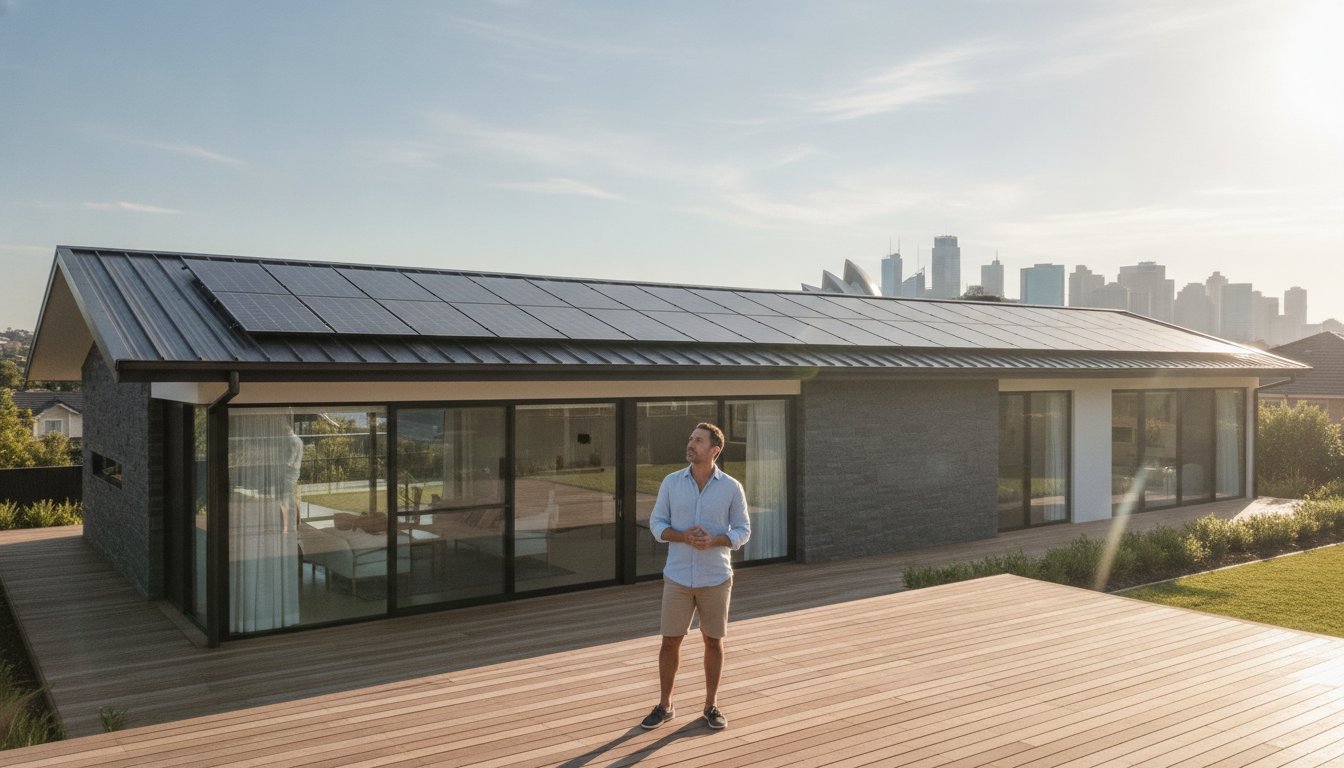
The decision between a 6.6kW and 10kW system depends on your specific electrical footprint. A 6.6kW system is ideal for families with moderate energy use who are primarily home during the day. However, a 10kW system is the modern standard for homes with high-drain assets like swimming pools or electric vehicles. If you plan to install a SigenStor Integrated Solar Inverter & EV DC Charger, the larger 10kW capacity ensures you have enough surplus energy to charge your car without relying on expensive peak-period grid power. You’ll need approximately 45 square metres of roof space for a 10kW array using 400W+ panels, compared to about 30 square metres for a 6.6kW setup.
The Impact of Roof Orientation on Sydney Solar Yield
North-facing roofs provide the highest total yield, but Sydney’s coastal weather patterns often make East-West arrays more practical for morning and evening energy peaks. If your property is shaded by tall gum trees or neighbouring multi-storey developments, standard string inverters will struggle. We recommend Enphase microinverters for these scenarios. They allow each panel to perform at its peak regardless of what is happening to its neighbour. This ensures that a small amount of shade doesn’t compromise your entire investment, providing the reliability required for a long-term return on your energy transition.
Breaking Down the Average Cost of Solar in Sydney (2026)
When evaluating the average cost of solar panels for a 3 bedroom house Sydney families often find that the “gross price” and the “out-of-pocket” expense tell two different stories. The gross price encompasses the total value of high-tier hardware, specialised labour, and GST. However, the amount you actually pay is reduced by federal incentives that act as an upfront discount. In 2026, the investment required for a 6.6kW or 10kW system depends heavily on whether you choose a standard string inverter or opt for premium microinverter technology. Higher-tier systems involve a greater initial outlay but offer significantly better longevity and efficiency in the Sydney climate.
The total price of your installation is a combination of four primary pillars. First is the hardware, which includes your panels and the inverter system. Second is the professional labour provided by licensed electrical contractors. Third is the GST, and fourth is the deduction from the Small-scale Technology Certificate (STC) scheme. To get an accurate picture of how these components apply to your specific roof, it’s best to request a tailored quote from a local specialist who can assess your site’s unique electrical needs.
How the 2026 Solar Rebate (STCs) Reduces Your Price
The STC scheme remains the most significant driver of solar affordability across New South Wales. Sydney is classified as Zone 3, meaning a standard 6.6kW installation typically generates between 65 and 70 certificates. In 2026, this provides an upfront discount of approximately $1,700 to $1,800, which is applied directly at the point of sale. This isn’t a tax credit you wait until the end of the financial year to claim; it’s an immediate reduction in your out-of-pocket costs. You should be aware that the value of these certificates reduces every January 1st as the federal program phases out toward 2030, making earlier installations more financially advantageous.
The Hidden Factors Influencing Sydney Quotes
Local variables often cause quotes to fluctuate, even for houses of the same size. Two-storey homes in established areas like the Inner West or Northern Beaches require specialised scaffolding and safety equipment, which increases the labour component. The material of your roof also plays a role; mounting panels on traditional terracotta tiles requires more time and care than a standard tin or Kliplok roof. Additionally, if your home requires a switchboard upgrade to meet 2026 Australian Standards, this will be reflected in the final investment to ensure the safety and compliance of your new energy system.
Quality vs Price: Choosing Components for Longevity
Selecting the right hardware is a balance between immediate savings and decades of dependable energy production. While the average cost of solar panels for a 3 bedroom house Sydney families see in entry-level quotes may look attractive, it often involves trade-offs in durability. We view the inverter as the brain of your home energy system. It dictates how efficiently your panels perform and how safely the electricity is managed. Choosing a premium system isn’t just about higher output; it’s about securing a 25-year warranty that protects your investment against the harsh Australian sun and coastal salt air.
Tier 1 panels are the industry standard for a reason. They are manufactured by established companies with the financial stability to honour long-term performance guarantees. Budget alternatives often carry only 10 or 12-year warranties, which can leave you stranded if a component fails mid-way through its expected lifespan. High-quality panels maintain their efficiency much better over time, ensuring that your return on investment continues to grow as grid electricity prices inevitably rise.
Microinverters (Enphase) vs String Inverters (GoodWe)
Microinverters represent the pinnacle of residential solar technology. By placing a small inverter under every panel, systems like Enphase allow for individual panel monitoring and superior safety. If one panel is shaded by a chimney or a stray branch, the rest of the array continues to perform at 100 per cent capacity. For homeowners seeking a more cost-effective yet highly reliable solution, a GoodWe ET G2 hybrid string inverter offers excellent performance. It’s a robust choice for roofs with clear, unobstructed sun access. Enphase is the premium choice for complex Sydney roofs because its decentralised architecture eliminates single points of failure and provides the highest level of fire safety for your family.
Battery-Ready Systems: FOX ESS and Tesla Powerwall 3
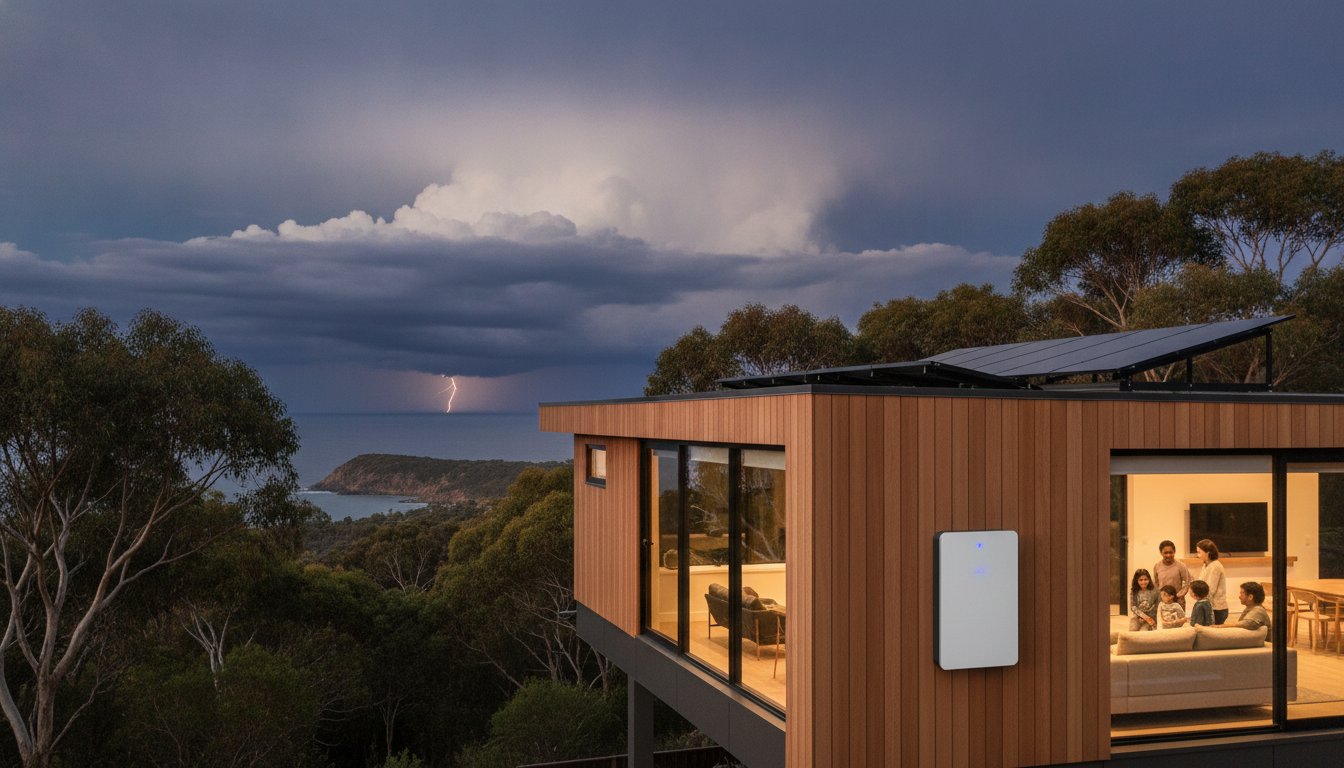
The gap between a solar-only setup and a hybrid system is narrowing as technology improves. A hybrid system includes an inverter capable of managing both your panels and a battery, which is essential for achieving true energy independence. Integrating high-voltage storage like the FOX ESS CQ7 allows you to store surplus daytime energy for use during expensive peak evening periods. While adding a Tesla Powerwall 3 or a FOX ESS system increases the initial investment, it significantly shortens your long-term payback period by reducing your reliance on the grid to near zero. Modern high-voltage batteries are more efficient than older low-voltage models, providing faster charging and better support for high-drain appliances like ducted air conditioning.
Installation Logistics: Switchboards and Site Conditions
Sydney’s architectural diversity means that no two installations are identical. While the average cost of solar panels for a 3 bedroom house Sydney provides a helpful starting point, your home’s age and roof type can influence the logistics of the project. Older properties in established suburbs often feature original wiring that wasn’t designed for the bidirectional energy flow of a modern solar array. We prioritise electrical safety above all else, ensuring that your investment doesn’t just lower your bills but also modernises your home’s core infrastructure.
Does Your Sydney Home Need a Switchboard Upgrade?
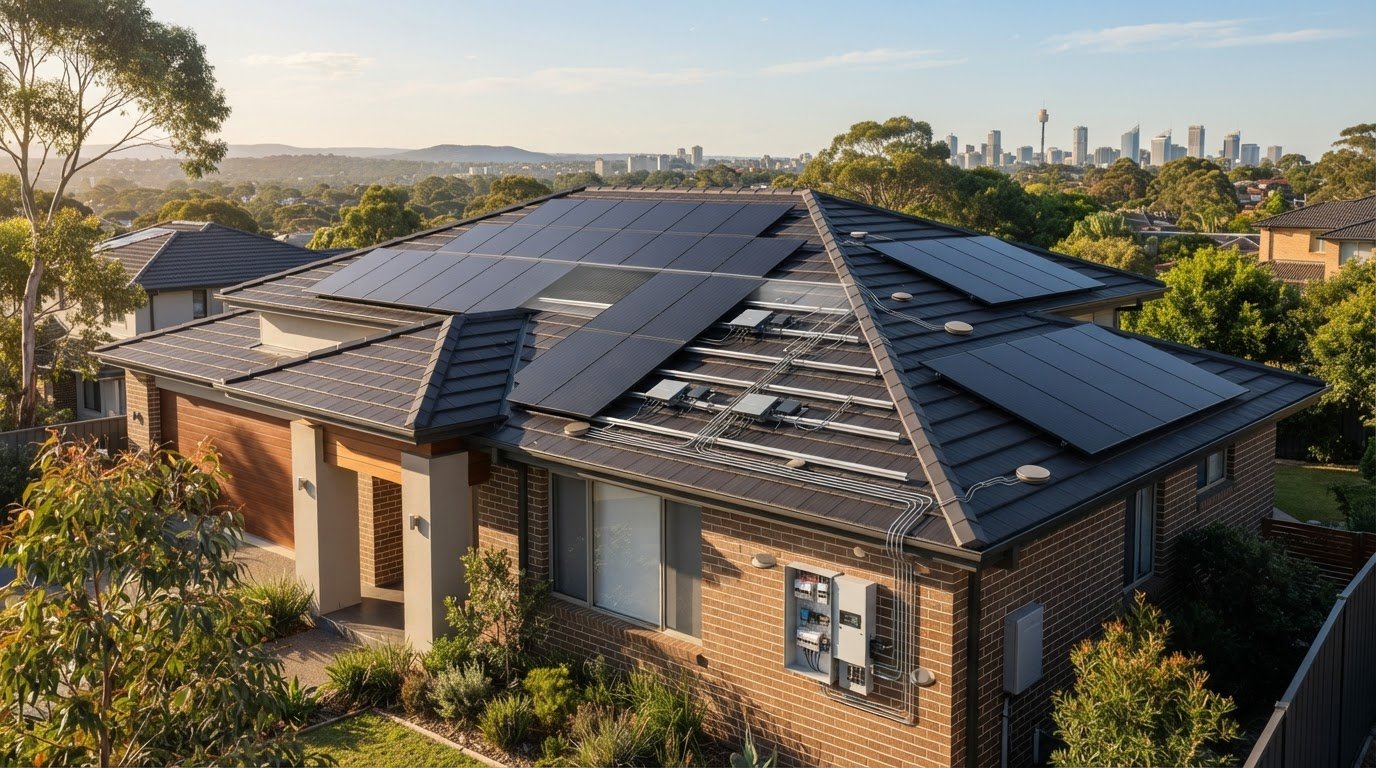
Many homes built before the 1990s still rely on outdated Zincalume boards or ceramic fuses. These components are incompatible with the smart meters required for the 2026 Sydney grid. Completing essential switchboard upgrades is a legal necessity to meet Australian Standards. This process involves installing modern circuit breakers and residual current devices (RCDs) that offer far superior protection against electrical faults. It’s a critical step for families planning to integrate high-voltage storage or EV charging solutions, as it provides the stable foundation needed for advanced energy management.
The Installation Timeline: What to Expect
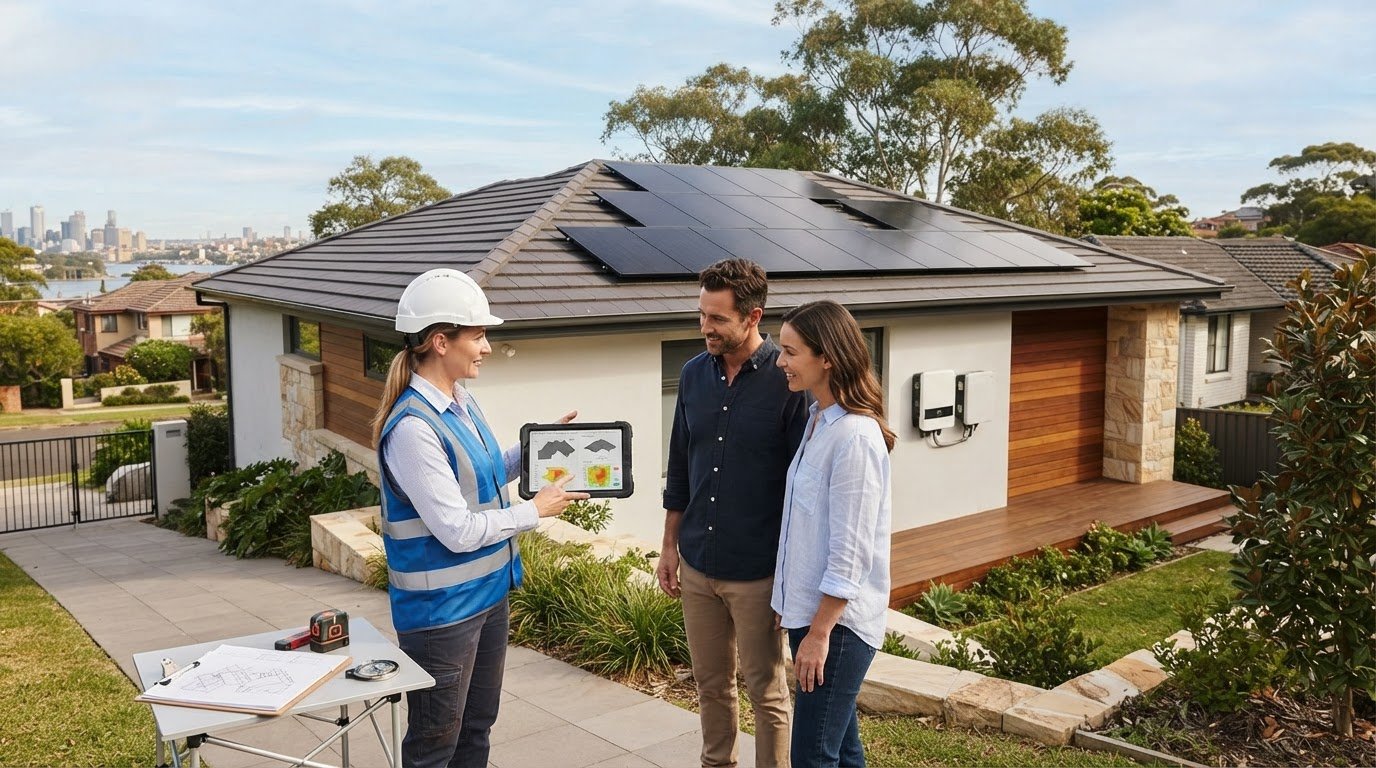
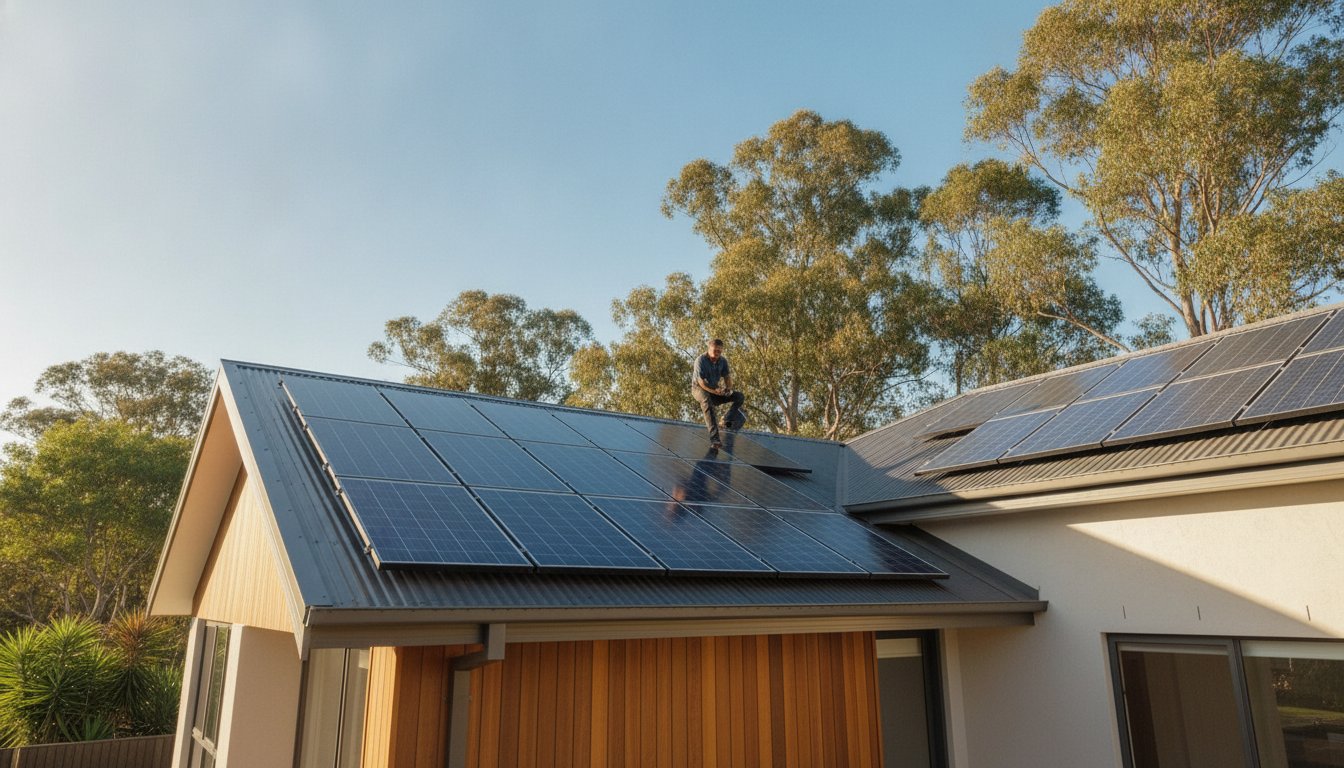
Our methodical approach begins with a physical inspection of your roof and electrical system. We take extra care with fragile terracotta tiles, which are common across Sydney’s older residential pockets. Our team uses specialised mounting hardware to ensure a watertight and secure fit. Once the panels and inverter are in place, we manage the administrative side of the connection. This involves liaising with Ausgrid or Endeavour Energy to finalise your meter upgrade and secure your Permission to Operate (PTO).
Following the installation, we provide a thorough walkthrough of your system’s monitoring software. This allows you to see your energy production and consumption in real time. We also schedule post-installation servicing to ensure your array remains free of debris and continues to meet the strict performance standards required for your long-term warranties. To get started with a compliant and high-quality installation, contact our licensed electricians for a comprehensive site evaluation.
Maximising Your ROI with Sky High Solar and Electrical
A bespoke design is what separates a long-term asset from a short-term gamble. While the average cost of solar panels for a 3 bedroom house Sydney families might see in a generic flyer looks low, it usually lacks the technical depth required for a high-performing system. Sky High Solar and Electrical approaches every project from the perspective of licensed electrical contractors. This means we prioritise the structural and electrical integrity of your home above simple sales targets. We don’t just bolt panels to a roof; we engineer a solution that integrates with your existing switchboard and future energy goals. This grounded, practical focus ensures that every component, from the mounting rails to the high-voltage battery, is selected for its durability in our specific coastal climate.
Integrated Solutions: Solar, Battery, and EV
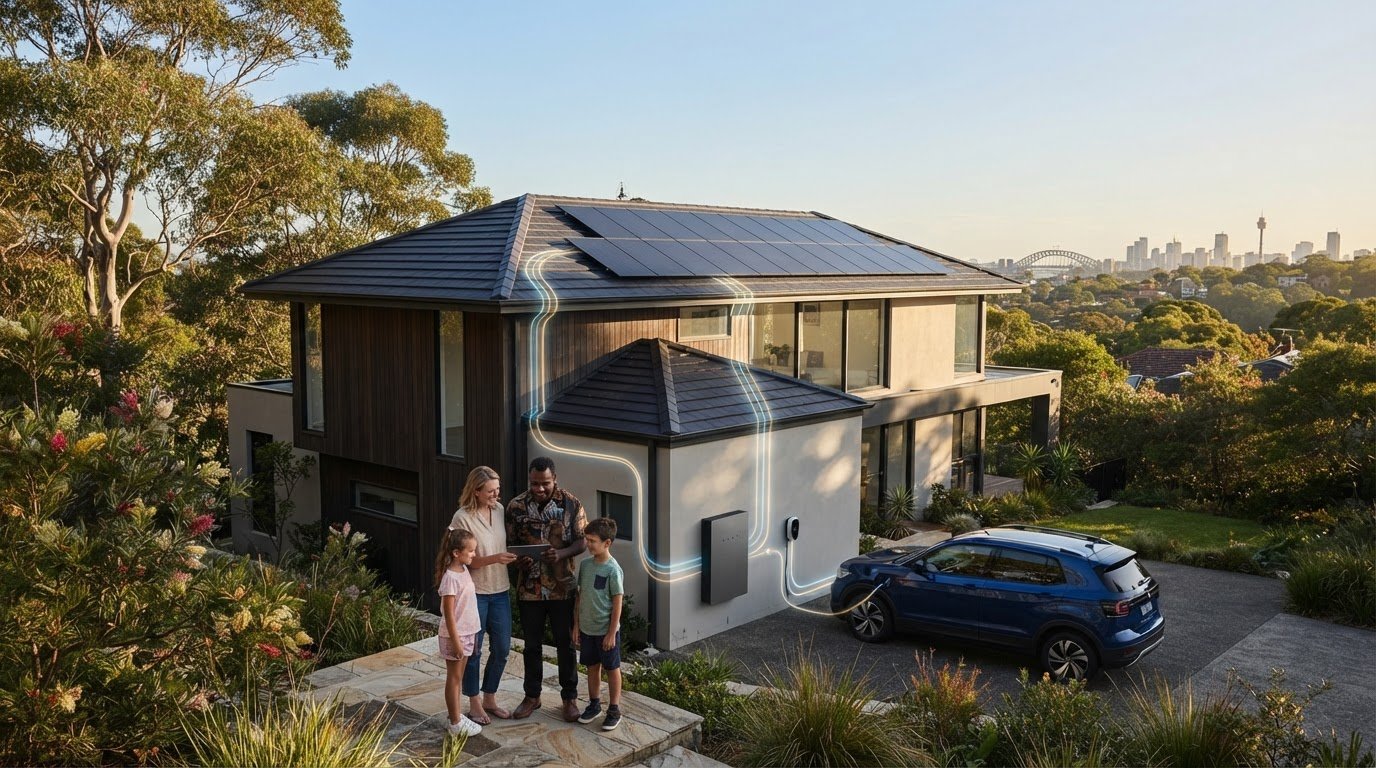
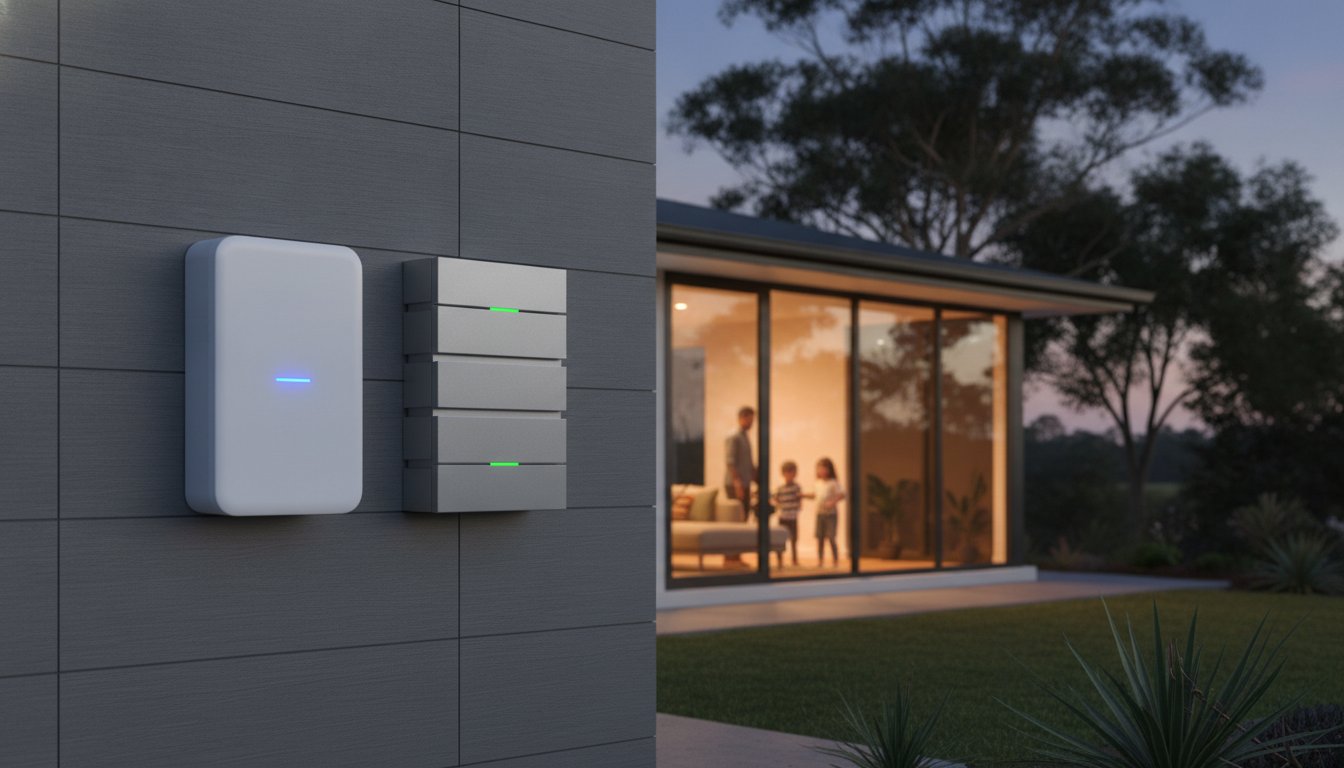
Modern energy management is moving toward total consolidation. The SigenStor 5-in-one energy hub is a prime example of this evolution, combining the inverter, battery, and an EV DC charger into a single, stackable unit. This is particularly useful for 3-bedroom Sydney homes where garage or wall space is limited. By accessing the NSW battery rebate, you can significantly lower the barrier to entry for high-voltage storage. This integrated system simplifies the transition to electric transport, ensuring your car is charged using surplus sun rather than expensive grid power. It represents a shift toward a more intelligent, seamless energy footprint that grows with your family’s needs.
Why Choose a Local Sydney Installer?
Local expertise is about more than just proximity; it’s about understanding the specific electrical standards and grid requirements of the Sydney basin. Sky High Solar and Electrical maintains deep partnerships with premium global brands like Tesla and Enphase, ensuring that our clients receive verified, high-tier hardware. We don’t believe in the “install and forget” model. The commitment of Sky High Solar and Electrical to quality includes ongoing support and servicing to keep your system performing at its peak for the full 25-year lifespan of the panels. This provides the peace of mind that comes from knowing your energy partner is a stable, established leader in the industry. When you’re ready to move beyond generic estimates and see the real value for your property, the next step is to Get a personalised 6.6kW or 10kW quote from our technical team.
Secure Your Harbour City Energy Future
Investing in renewables is a strategic move to future-proof your household against rising energy costs. While the average cost of solar panels for a 3 bedroom house Sydney residents encounter varies, the real value lies in matching high-tier components like Enphase or Tesla with your home’s unique electrical footprint. A tailored approach works best. You’ve seen how critical switchboard compliance and smart inverter standards have become in 2026. Choosing quality hardware ensures your system remains a high-performing asset for decades, rather than a short-term fix.
Sky High Solar and Electrical brings professional authority to every project. As licensed Sydney electrical contractors and certified Enphase and Tesla installers, we specialise in SigenStor EV solutions and complex high-voltage storage. We’re here to help you navigate rebate changes and technical requirements with ease and transparency. Request a tailored solar quote for your Sydney home today to start your journey toward energy independence. It’s time to take control of your power with a partner who values quality and electrical safety as much as you do.
Frequently Asked Questions
How much does a 6.6kW solar system cost in Sydney in 2026?
Market averages for a 6.6kW installation typically range from $4,000 to $8,000 depending on component quality and installation complexity. This price includes the federal STC discount, which is applied upfront at the point of sale. While entry-level systems sit at the lower end, premium solutions featuring microinverters or high-efficiency panels require a larger initial investment. These higher-tier systems offer superior durability and longer warranties, which are essential for the variable Sydney climate.
Is a 3-bedroom house big enough for a 10kW solar system?
Most 3-bedroom Sydney homes have sufficient roof space for a 10kW system, provided there is at least 45 to 50 square metres of usable area. This capacity is becoming the preferred choice for families planning to add an electric vehicle or a high-voltage battery. If your roof has complex angles or shading, using microinverters can help maximise the available space. It’s a smart way to future-proof your property as energy demands increase.
What is the current NSW solar battery rebate for 2026?
As of late 2026, the federal battery rebate provides approximately $272 per usable kWh of storage capacity. For a standard 10kWh battery, this can reduce your upfront costs by over $2,700. Additionally, the NSW Peak Demand Reduction Scheme offers one-off payments of up to $1,500 for connecting your battery to a Virtual Power Plant. These incentives make high-performance storage like the FOX ESS CQ7 far more accessible for residential homeowners.
How much can I save on my Sydney power bill with solar panels?
A well-designed 6.6kW system can save a Sydney homeowner over $2,500 per year on their electricity bills. Your actual savings depend on how much solar energy you consume during the day versus how much you export to the grid. Adding a battery allows you to use your own clean energy during expensive peak evening periods. This shift significantly reduces your reliance on retailers and provides protection against future electricity price hikes.
Do I need to upgrade my switchboard to install solar panels?
Many older Sydney homes require a switchboard upgrade to meet current Australian Standards before solar can be safely installed. If your property still uses ceramic fuses or an outdated Zincalume board, it must be replaced with a modern unit featuring RCD protection. This ensures your home can handle the bidirectional energy flow and the high-voltage requirements of modern storage systems. It’s a vital investment in the long-term electrical safety of your household.
What happens to the cost of solar if I have a two-storey house?
Installing solar on a two-storey house typically increases the total investment due to additional safety requirements and labour. Licensed installers must use specialised scaffolding or roof-edge protection to comply with NSW WorkCover regulations. These measures ensure the safety of the electrical team while working at height. While this adds to the initial outlay, the long-term benefits of a high-quality installation on a larger roof often outweigh these minor upfront logistics costs.
Is it better to get a battery now or add it later?
Installing a battery alongside your solar panels is often more cost-effective because it allows you to claim multiple incentives simultaneously. The current federal battery rebate is designed to step down every six months, meaning earlier adopters receive the highest financial support. Integrating storage now also simplifies the electrical work, as a single hybrid inverter can manage both systems. This approach provides immediate energy independence and maximises your total return on investment from day one.
How long is the payback period for solar in Sydney?
The typical payback period for a solar system in Sydney is currently between 3 and 5 years. This rapid return is driven by the average cost of solar panels for a 3 bedroom house Sydney being at record lows while grid electricity prices remain high. By choosing premium components with long warranties, you ensure the system continues to generate profit long after it has paid for itself. It’s a grounded, practical investment in your home’s future value.