

 Sydney
 0452 243 240
Blog
Solar Panel Installation Cost Sydney 2026: The Complete Homeowner’s Pricing Guide

The cheapest solar quote sitting on your kitchen table right now might actually be the most expensive mistake you make this decade. It’s a common trap in a market where “too-good-to-be-true” prices often lead to system failures and vanished warranties within a few short years. Understanding the genuine solar panel installation cost Sydney 2026 demands is about more than just the bottom line; it’s about securing a reliable, high-performance energy future for your property.
You’ve likely felt the frustration of fluctuating STC values or wondered if the new NSW battery rebates actually make sense for your family. We’ll clear that confusion by providing a transparent look at real-world pricing benchmarks and the latest government incentives, including the $252 per kWh federal battery discount. This guide explores everything from 6.6kW efficiency to the ROI of 10kW systems integrated with EV charging. You’ll gain the technical clarity and confidence needed to bypass the “solar cowboys” and invest in a premium, intelligent system that delivers genuine longevity for your Sydney home.
Key Takeaways
- Discover the current benchmarks for solar panel installation cost Sydney 2026 homeowners should expect for high-performance 6.6kW and 10kW systems.
- Learn how to maximise the new NSW battery rebate and the 2026 STC phase-out to significantly reduce your initial investment.
- Understand why roof complexity and essential switchboard upgrades are critical variables that influence the final price and reliability of your installation.
- Evaluate whether a standard 6.6kW setup or a 10kW integrated energy hub with EV charging better aligns with your long-term household energy goals.
- Identify the specific warranty and servicing standards that distinguish established local specialists from low-cost installers who may not offer long-term support.
Benchmarking Solar Panel Installation Costs in Sydney for 2026
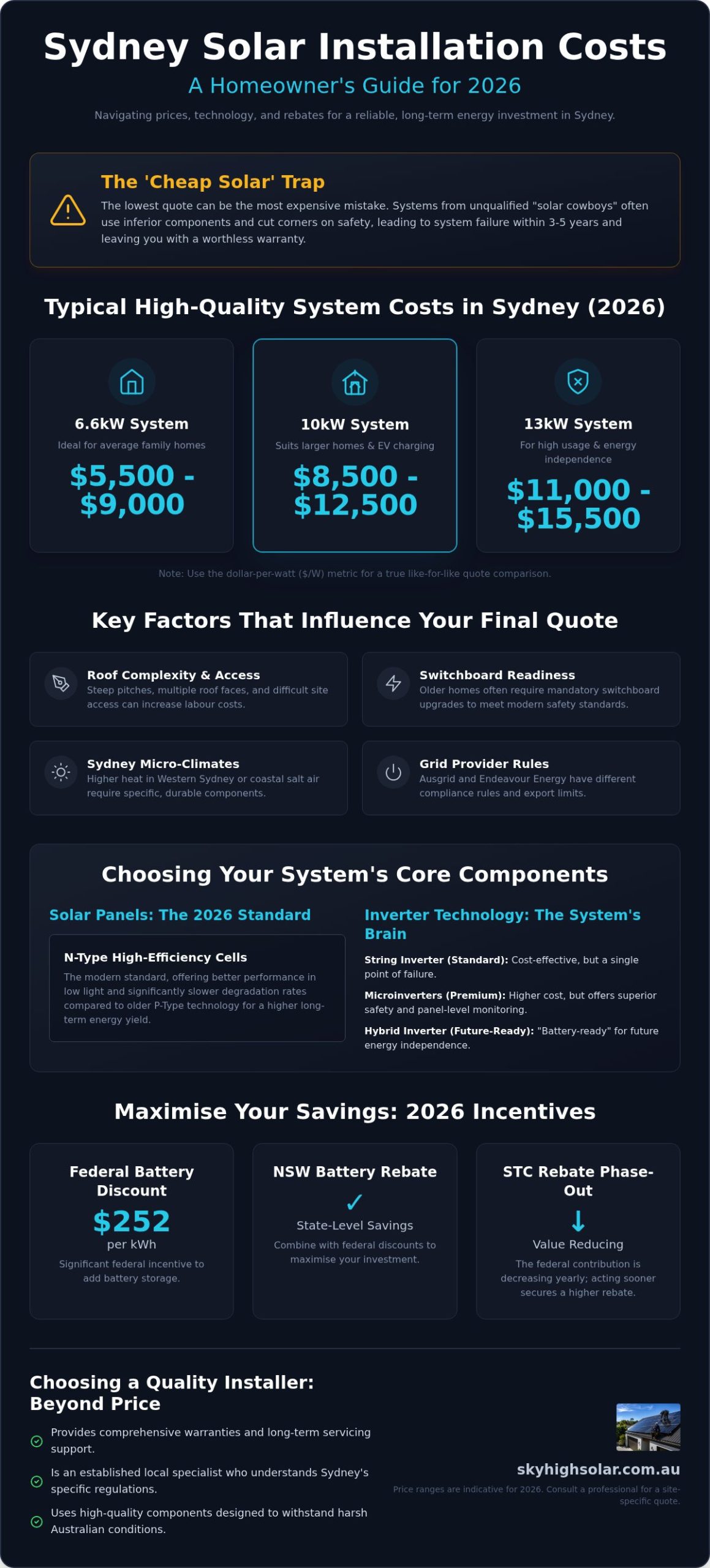
Comparing quotes for solar can feel like a moving target. To find clarity, professional installers rely on the dollar-per-watt ($/W) metric. This figure represents the total system price divided by the total wattage. It allows you to strip away marketing jargon and see the raw value of the hardware and labour. In 2026, Sydney homeowners typically see a $/W that reflects higher local compliance standards and the city’s unique architectural challenges. Using this benchmark is the only way to ensure you’re comparing like-for-like quality across different providers.
The broader context of Solar power in Australia shows a market that has matured rapidly. Most Sydney installations now utilise N-Type high-efficiency panels as the standard. These cells offer better performance in low light and slower degradation rates than older P-Type technology. While this shift adds a slight premium to the initial solar panel installation cost Sydney 2026 homeowners face, the long-term energy yield makes it the smarter financial choice. It’s an investment in durability that pays dividends over the twenty-five-year life of the system.
Typical price ranges for high-quality, professionally installed systems in the current Sydney market include:
- 6.6kW systems: $5,500 to $9,000
- 10kW systems: $8,500 to $12,500
- 13kW systems: $11,000 to $15,500
Beware the “cheap solar” trap. Quotes significantly below these ranges often signal the use of “solar cowboys” who cut corners on mounting gear or electrical safety. These systems frequently fail within three to five years, leaving you with a “dead” roof and no recourse when the fly-by-night installer disappears. A reliable system is built on quality components that can withstand the harsh Sydney sun and coastal salt air.
The 2026 Price Index: What You Get for Your Money
Your investment level dictates the intelligence and flexibility of your system. Entry-level systems use a single string inverter, which is cost-effective but creates a single point of failure for the entire array. Premium Enphase microinverter systems cost more upfront but offer panel-level monitoring and superior safety. The 2026 STC rebate reduction means the federal government’s contribution has dropped again, making the choice between a standard inverter and a “battery-ready” hybrid system, like a GoodWe ET G2, a pivotal decision for your home’s future energy independence.
Commercial vs. Residential Pricing Dynamics
Commercial solar pricing scales differently than residential work. While a residential 6.6kW system carries higher per-watt costs due to individualised design and residential labour rates, commercial SMEs benefit from economies of scale. Larger roof spans and higher daytime energy consumption often lead to a more aggressive ROI for businesses. A 30kW commercial system in Sydney typically achieves full payback significantly faster than a 6.6kW residential setup because the business consumes almost 100% of the generated power during peak tariff hours.
Factors That Influence Your Solar Quote in the Sydney Region
Sydney’s geography and diverse architecture mean that a one-size-fits-all quote rarely exists. The final solar panel installation cost Sydney 2026 residents receive depends heavily on their specific postcode and property age. For instance, homeowners in Western Sydney often face temperatures significantly higher than those on the coast. This intense heat impacts panel efficiency, requiring specific mounting heights and high-temperature-rated components to ensure adequate airflow and longevity. Ignoring these micro-climate variables is a common mistake that leads to premature system degradation.
Your local grid provider also dictates technical requirements that can shift the price. Whether you’re in an Ausgrid area (covering the Inner City, North, and East) or an Endeavour Energy zone (Western and South-Western Sydney), compliance rules vary. Ausgrid often enforces strict export limits in congested areas, which might necessitate advanced inverter programming or additional hardware. These distributor-specific hurdles are frequently overlooked by national companies but are essential for a legal, grid-connected system in 2026.
Electrical Infrastructure and Switchboard Readiness
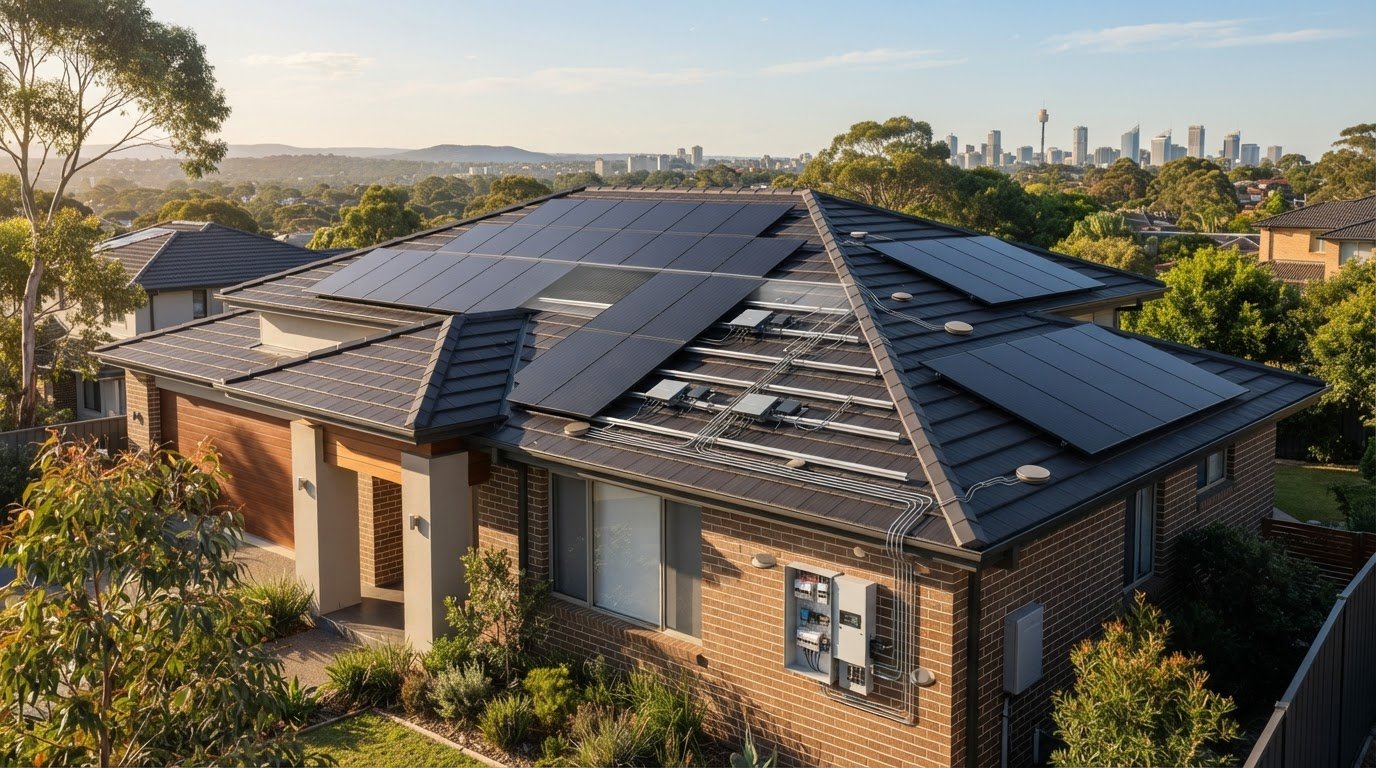
Older homes in the Inner West or North Shore frequently require a mandatory switchboard upgrade to meet modern safety standards. If your board still uses ceramic fuses, it’s not just a recommendation; it’s a compliance necessity for any new solar install. Moving from single-phase to three-phase power for 10kW+ systems also adds to the initial investment but is often necessary to support large-scale generation and high-speed EV charging. Most 2026 installs also require the inclusion of a Smart Meter if the property isn’t already equipped with one.
Logistics and Site Access
The pitch and material of your roof dictate the labour intensity. Heritage terracotta tiles in suburbs like Haberfield require specialised handling to prevent breakage, while narrow, multi-storey terraces in Paddington often require scaffolding for safe access. For those planning larger setups, our 10kW solar systems for Sydney homes guide explains how split arrays across multiple roof faces can increase wiring complexity. Every additional roof face used adds to the installation time and the amount of cabling required to bring the system online.
Before making a final decision, it’s helpful to consult the Australian Government’s Solar Consumer Guide for unbiased advice on system sizing. If you’re looking for a clear, site-specific breakdown of these variables for your property, you can request a detailed assessment from our licenced electrical team.
Comparing 6.6kW vs. 10kW vs. Integrated Energy Hubs
In 2026, selecting a system size is no longer just about covering your current quarterly bill. It’s about anticipating a lifestyle that increasingly includes electric vehicles and sophisticated home energy management. While the solar panel installation cost Sydney 2026 market offers various entry points, the choice between a standard array and an integrated energy hub defines your home’s efficiency for the next two decades. Future-proofing your property by installing a larger inverter or a modular system now can save you thousands in future labour and hardware upgrades as your energy needs evolve.
The 6.6kW System Investment
The 6.6kW solar system in Sydney remains the “sweet spot” for many average sized households. This size typically produces enough energy to offset the daily needs of a family of four, provided their consumption is prioritised during daylight hours. With 2026 electricity rates continuing to climb, the payback period for these systems has shortened significantly. When designing these setups, we focus on hardware like FOX ESS for its balance of durability and value, ensuring the system remains a reliable asset rather than a maintenance burden for the homeowner.
The 10kW and Hybrid Advantage
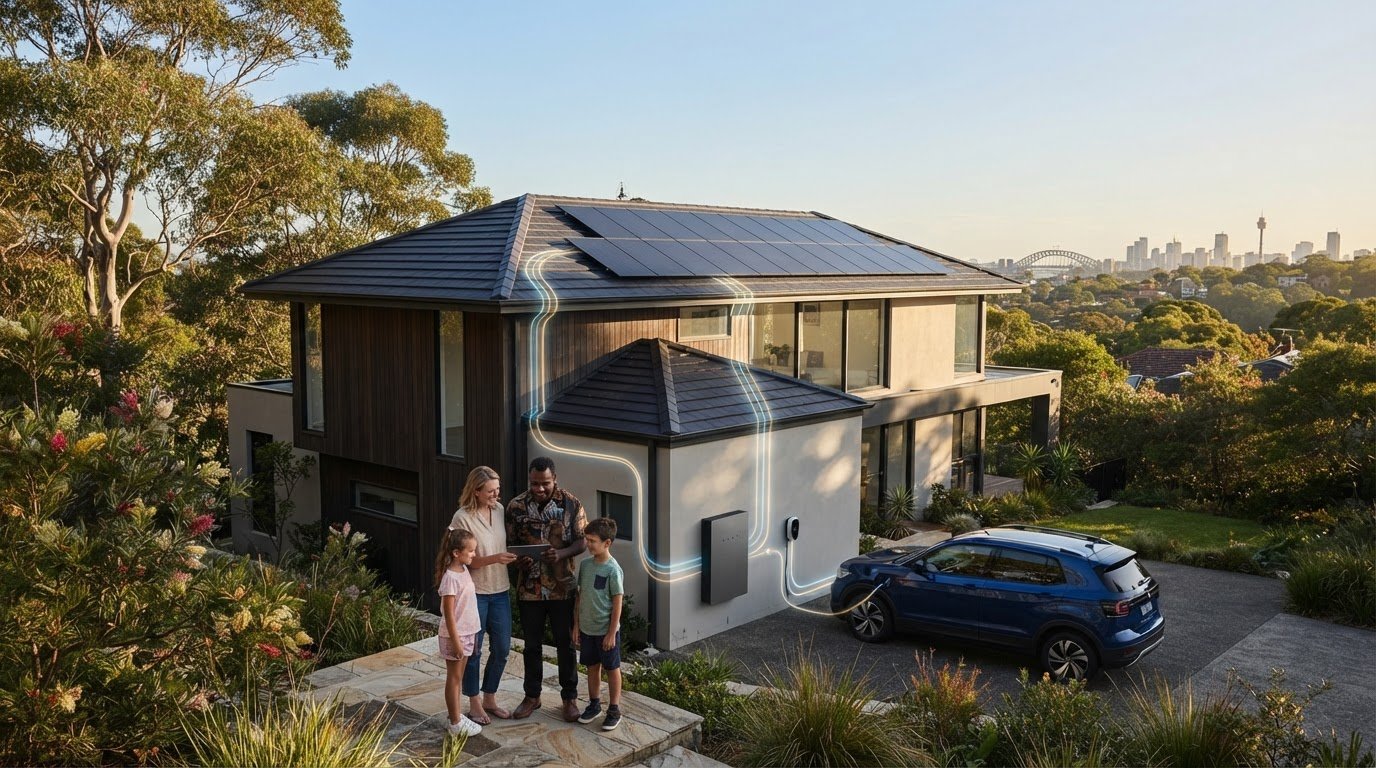
For homes equipped with pool pumps, ducted air-conditioning, or those planning to add a Tesla Powerwall or FOX ESS CQ7 battery, the 10kW evolution is the logical step. These larger systems provide the “headroom” required to charge a high-capacity battery while simultaneously running high-drain appliances. Utilising a GoodWe ET G2 hybrid inverter ensures that complex energy loads are managed intelligently without stressing your home’s electrical infrastructure. 10kW systems offer a better $/W value than smaller arrays because the fixed costs of design, council compliance, and site mobilisation are spread across a higher volume of panels, making them a cornerstone of the solar panel installation cost Sydney 2026 landscape for growing families.
SigenStor: The All-in-One Solution
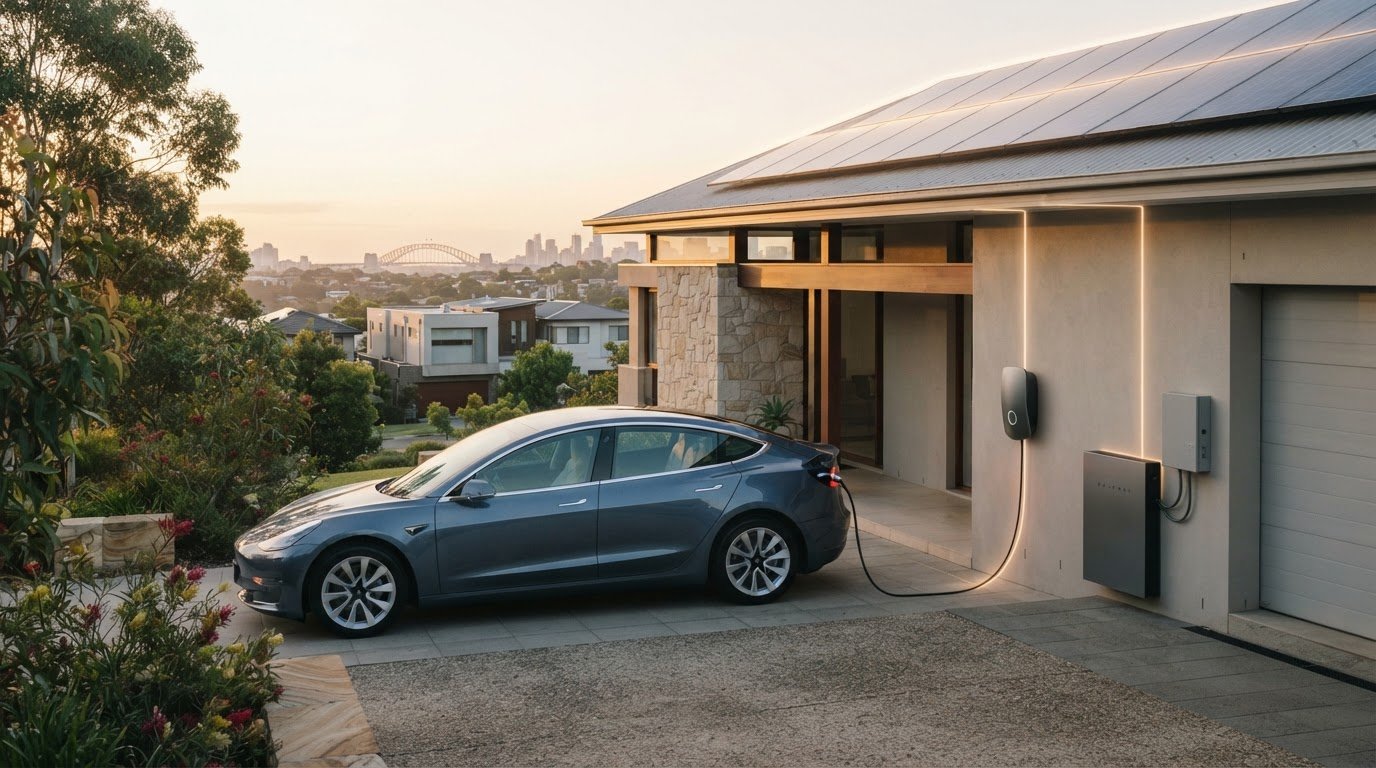
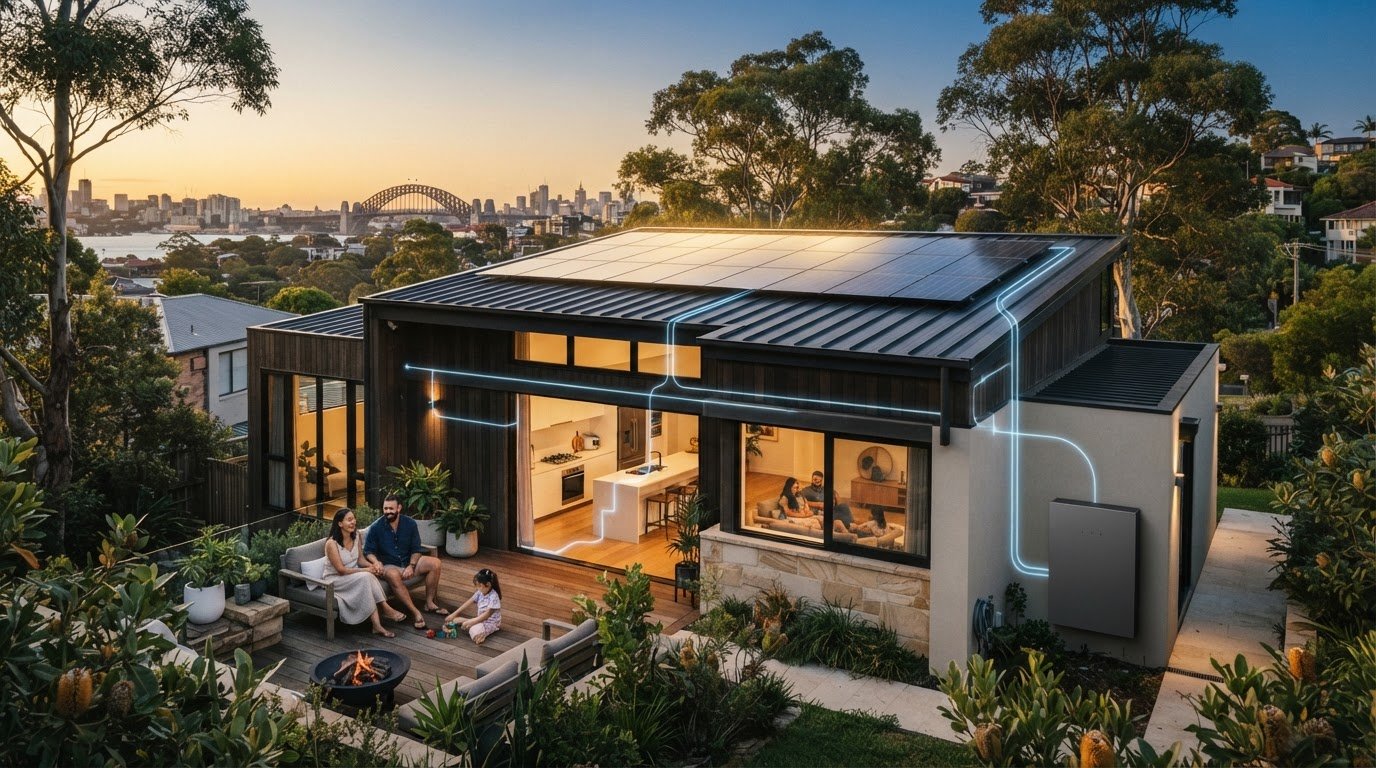
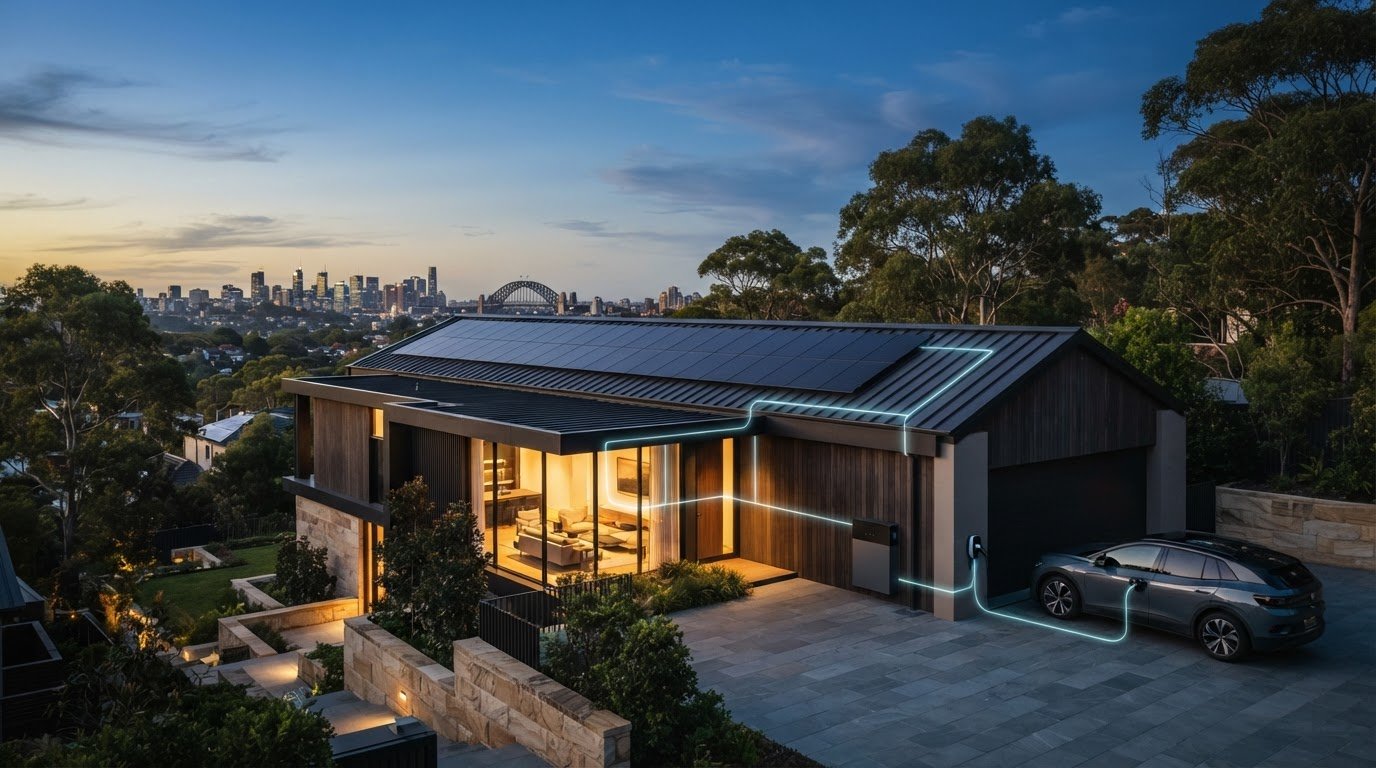
The rise of integrated energy hubs has changed the landscape for Sydney homeowners seeking a seamless transition to renewables. Systems like the SigenStor integrated chargers combine the solar inverter, battery storage, and an EV DC charger into a single, sleek unit. This integration reduces total installation costs by eliminating the need for multiple separate components and redundant wiring. For EV owners, the DC charging advantage allows for faster, more efficient top-ups directly from the sun. The modular footprint of these hubs is also far more space-efficient than traditional separate components, making them ideal for modern Sydney blocks where wall space is at a premium.
Sydney Solar Rebates and Incentives in 2026
The financial landscape for renewables has shifted significantly this year. While the solar panel installation cost Sydney 2026 homeowners encounter is influenced by hardware quality, the available rebates act as a critical offset. We’ve moved past the era of “free” solar; 2026 is about targeted incentives that reward high-efficiency systems and smart storage. Understanding how to stack these incentives is the difference between a mediocre return and a system that pays for itself in under four years.
Federal and state programs now focus heavily on grid stability. This means that while some traditional rebates are winding down, new opportunities for battery integration have emerged. It’s no longer just about generating power; it’s about when you use it and how you help the Sydney grid during peak periods. Navigating these changes requires a clear look at the “deeming period” and the latest battery-specific discounts available to NSW residents.
Calculating Your Federal STC Discount
The Small-scale Technology Certificate (STC) scheme remains the primary driver for reducing upfront costs. However, on 1 January 2026, the deeming period reduced again as part of the federal phase-out. For a 6.6kW system in Sydney, this typically translates to a point-of-sale discount of approximately $1,700 to $1,800. If you’re opting for a 10kW array, you’ll see a reduction of roughly $2,600 to $2,800. Most reputable Sydney installers apply this discount directly to your quote, so you don’t have to claim it yourself, but you should always verify the certificate count to ensure you’re receiving the full 2026 value.
The NSW Battery Incentive Scheme
The most significant change for 2026 is the maturity of the Cheaper Home Batteries Program. Sydney households adding solar battery storage can now access a federal discount of approximately $252 per kWh of usable capacity. For a standard 13.5kWh battery like the Tesla Powerwall or a high-voltage FOX ESS CQ7, this creates an immediate price drop of about $3,400. When combined with NSW Virtual Power Plant (VPP) incentives, which offer additional payments between $1,000 and $1,500, the ROI for storage has never been more compelling. These incentives are specifically designed for homes that can support the grid during peak evening hours.
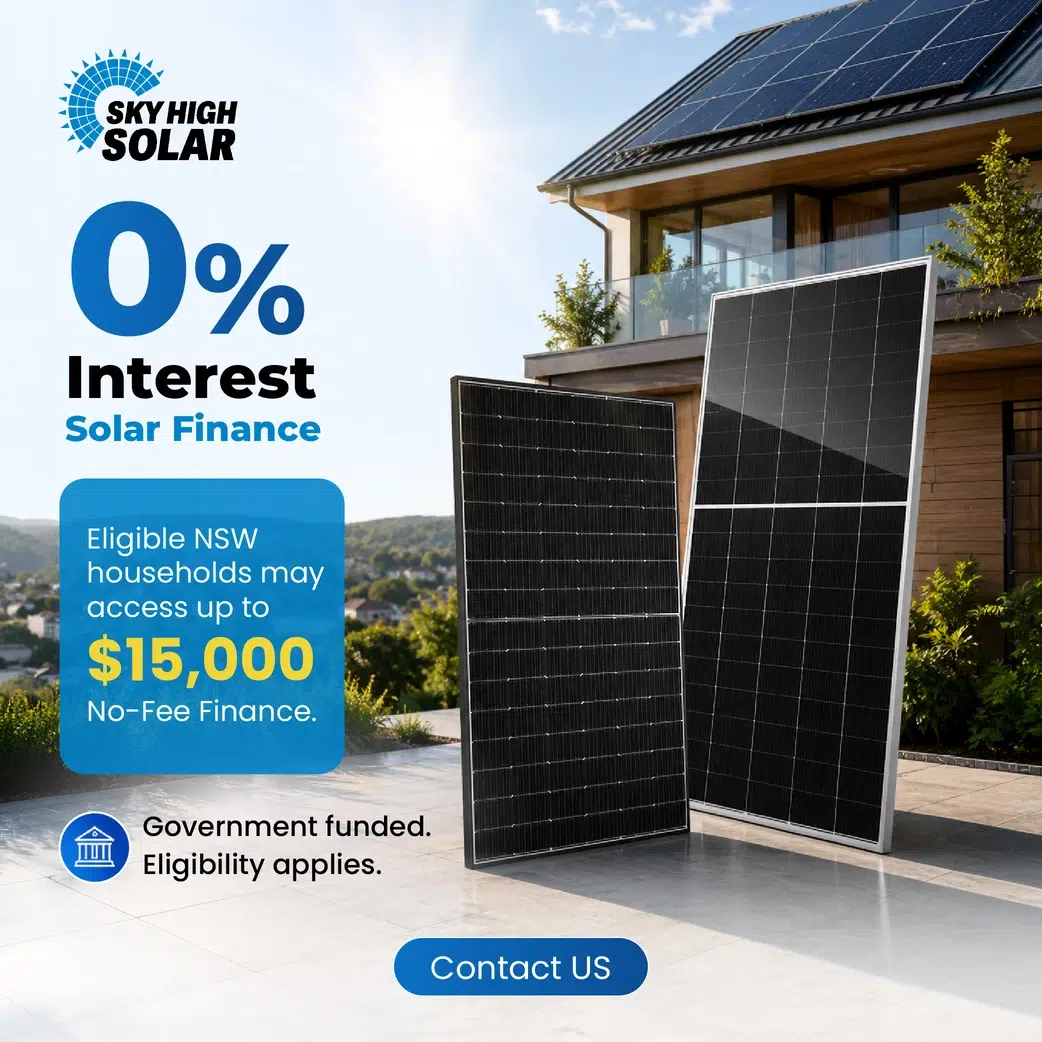
Beyond direct rebates, Sydney residents can access the NSW Home Energy Saver Program, providing interest-free loans of up to $15,000 for eligible households. This allows you to install a premium system with zero upfront cost while using your electricity bill savings to pay off the balance. While feed-in tariffs in Sydney have stabilised at a benchmark of 3.4 to 6.5 cents per kWh, the real value lies in using your stored energy to avoid the 30c+ peak grid rates. To see exactly how these 2026 incentives apply to your property, contact our team for a personalised rebate assessment.
Choosing a Quality Sydney Installer: Beyond the Lowest Quote
Selecting an installer in 2026 is an exercise in risk mitigation. While the competitive solar panel installation cost Sydney 2026 market offers plenty of choice, the “cheapest” quote often hides the highest long-term risks. A solar system is a twenty-year electrical asset. It requires a partner who will still be operational in a decade to honour warranties and provide technical support. Sky High Solar and Electrical has operated as a stable, specialist presence in Sydney since 2013, providing homeowners with the peace of mind that comes from a decade of local experience and mission-driven quality.
The distinction between a “sales-only” company and a dedicated electrical specialist is found in the installation team. Many low-cost retailers rely on third-party subcontractors to meet high volumes, which can lead to inconsistent workmanship and safety shortcuts. Opting for a provider with an in-house, licensed electrical team ensures that complex tasks, such as switchboard upgrades or SigenStor EV integrations, are handled with precision. This unified approach removes complexity for the homeowner and ensures that every component is seamlessly integrated into the property’s existing infrastructure.
Evaluating Your Solar Quote
A transparent 2026 quote should be based on a comprehensive site inspection rather than a generic satellite estimate. This allows the installer to identify potential hurdles like heritage roof tiles or aging switchboards before work begins. Be wary of quotes that rely on generic “Tier 1” panels without naming the specific manufacturer or model. Premium brands like Enphase and Tesla offer superior performance and more robust labour warranties than budget alternatives. If an installer cannot provide a clear breakdown of their labour warranty alongside the product and performance warranties, it is a major red flag for your investment’s longevity.
Maximising ROI Through Maintenance
Your system’s return on investment depends on its ability to perform at peak efficiency year after year. Regular solar system servicing is essential for protecting your hardware from the salt air and dust common in the Sydney basin. Modern monitoring apps, such as the Tesla App or the SigenStor Hub, provide real-time intelligence into your energy production and consumption patterns. These tools allow you to optimise your usage to match solar generation, further accelerating your payback period. The next logical step for any homeowner is to book a professional energy audit to ensure their system is sized correctly for their future energy footprint.
Securing Your Energy Independence in 2026
Investing in renewable energy is no longer just about reducing a quarterly bill; it’s about future-proofing your home against a volatile energy market. By understanding the benchmark solar panel installation cost Sydney 2026 homeowners now face, you can move beyond the “cheap solar” trap and choose a system designed for longevity. We’ve explored how the 2026 STC phase-out and the new NSW battery incentives have changed the ROI landscape, making high-efficiency integrated hubs more accessible than ever before.
Choosing a partner with a decade of local experience ensures your system is installed by an expert in-house electrical team rather than transient subcontractors. As a Tesla Certified Installer and Enphase Specialist, Sky High Solar and Electrical has spent over 10 years serving the Sydney community with reliable, premium energy solutions that stand the test of time. Taking the right steps today means your property will be ready for the electric vehicle and battery-driven world of tomorrow.
Ready to move forward with a safe pair of hands? Get a Personalised 2026 Solar Quote for Your Sydney Home and start your journey toward seamless energy independence with a team you can trust. Our specialists are here to help you navigate the complexities of modern energy with clarity and confidence.
Frequently Asked Questions
Is solar still worth it in Sydney in 2026 with the reduced rebates?
Yes, solar remains a highly effective investment because rising electricity rates have outpaced the reduction in federal rebates. While the STC deeming period has decreased again this year, the increased efficiency of N-Type panels and the introduction of the federal battery rebate provide new ways to accelerate your ROI. Most Sydney households still see their systems pay for themselves within three to five years while providing decades of free energy.
How much does a 6.6kW solar system cost in Sydney this year?
A high-quality 6.6kW solar system typically ranges between $5,500 and $9,000 after the federal STC rebate is applied. This variation in the solar panel installation cost Sydney 2026 homeowners see depends on the choice between budget string inverters and premium microinverter technology. While entry-level systems are available for less, investing in a mid-range or premium setup ensures better durability against the harsh Sydney sun and salt air.
What is the average payback period for solar panels in Sydney?
The typical payback period for a residential solar system in Sydney is currently between three and five years. This rapid ROI is driven by high grid prices and the significant annual savings, which often range from $1,800 to $2,800 for a 6.6kW array. By maximising self-consumption and using smart monitoring tools, you can further reduce this timeframe and begin generating pure profit from your roof much sooner.
Can I get a rebate for a solar battery in NSW in 2026?
Yes, the Cheaper Home Batteries Program offers a significant discount of approximately $252 per kWh of usable capacity for NSW residents. For a standard 13.5kWh battery, this equates to a point-of-sale reduction of about $3,400. You can also combine this with Virtual Power Plant incentives to receive additional payments, making it the most financially viable time to add storage to your solar panel installation cost Sydney 2026 budget.
Will a 10kW solar system cover my entire electricity bill?
A 10kW system can potentially eliminate your electricity bill if you align your heavy appliance usage with daylight hours or include battery storage. While you’ll still receive a daily supply charge from the grid, the energy generated by a 10kW array is often enough to offset the costs of air-conditioning, pool pumps, and EV charging. Success depends on your specific consumption patterns and the efficiency of your system hardware.
Do I need to upgrade my switchboard to install solar in Sydney?
You will likely need a switchboard upgrade if your home is an older property with ceramic fuses or lacks modern safety switches. Meeting current Australian electrical standards is a mandatory requirement for any new solar installation. Our in-house licensed electrical team assesses your existing infrastructure during the site inspection to ensure your board can safely handle the bidirectional power flow of a modern solar and battery system.
What happens to my solar cost if I have a steep or multi-storey roof?
Labour costs increase for complex roofs because of the additional safety equipment and time required for the installation. Multi-storey terraces or steep pitches often necessitate scaffolding and specialised harnesses to ensure the team can work securely. These logistical factors are why a comprehensive on-site inspection is essential for an accurate quote, as they directly impact the complexity of the mounting and cabling process.
Are Enphase microinverters worth the extra cost over string inverters?
Enphase microinverters offer superior value for properties with shading issues or complex roof orientations. Unlike traditional string inverters, they allow each panel to operate independently, ensuring a single shaded panel doesn’t drag down the performance of the entire array. They also provide panel-level monitoring and a longer lifespan, making them a premium choice for homeowners who prioritise system visibility, safety, and long-term energy yield over the lowest upfront price.